
Inspiring the Next Generation: Lessons from Women of the PC Revolution (19702000)

Welcome to WomenInScienceHistory.com!
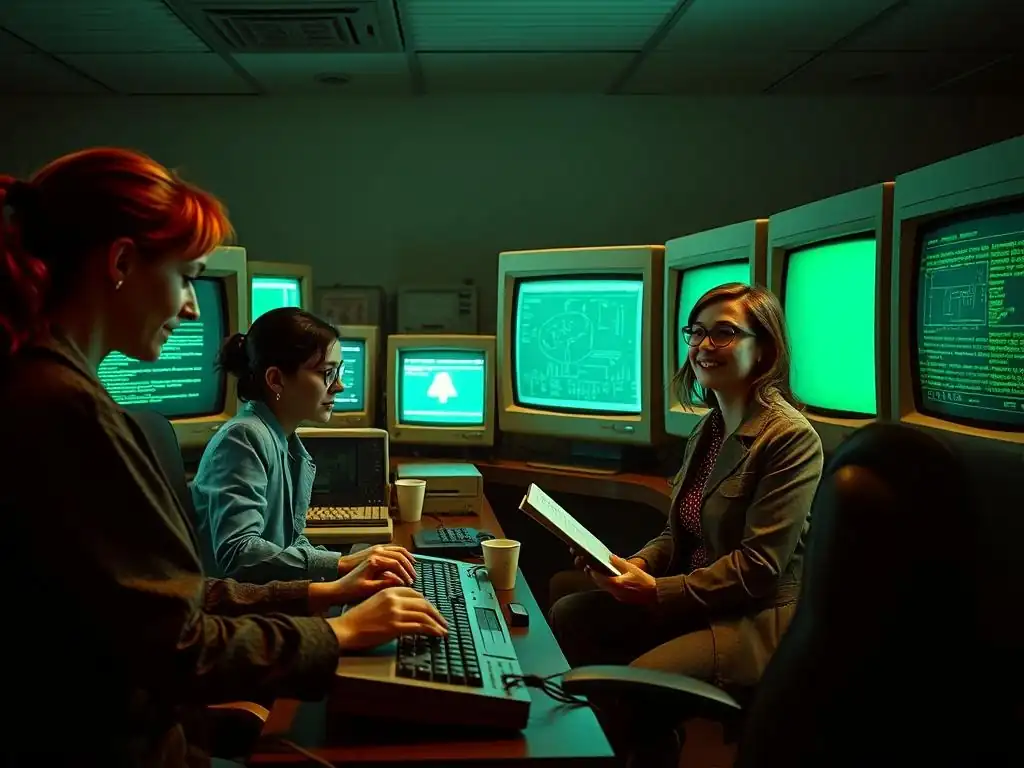
Delve into the fascinating and often untold stories of women who shaped the scientific landscape. Are you ready to uncover the groundbreaking contributions of women in the digital age? This week, we're shining a spotlight on Women in computer science history. Discover the inspiring journeys and pivotal roles these pioneers played in the PC Revolution (1970-2000), and explore the lasting impact they've had on the world we live in today. What challenges did they overcome, and what lessons can we learn from their perseverance? Let's explore together!
- Introduction: Remembering the Pioneers of the Personal Computer Era
- The Rise of the Personal Computer: A Landscape of Innovation and Opportunity
-
Trailblazing Women in Computer Science History: Key Figures and Their Contributions
- Ada Lovelace's Legacy: Inspiring Future Generations of Female Programmers
- Grace Hopper: A Visionary Leader in Computer Science and Programming
- Carol Shaw: Pioneering Game Design and Programming for the Atari
- Radia Perlman: Revolutionizing Network Protocols and Spanning Tree Algorithm
- Sophie Wilson: Co-Designing the ARM Architecture and the BBC Micro
- Overcoming Obstacles: Challenges Faced by Women in Computer Science (1970-2000)
- Lessons Learned: Key Takeaways from Women's Experiences in the PC Revolution
- Inspiring Future Generations: How to Encourage More Women in Computer Science
- The Enduring Impact of Women in the PC Revolution
- Conclusion: Celebrating the Achievements of Women in Computer Science History
-
Frequently Asked Questions
- What were some of the biggest obstacles women faced in computer science between 1970 and 2000?
- Why is it important to study the history of women in computer science?
- What kind of contributions did women make to the PC revolution (1970-2000)?
- How can WomenInScienceHistory.com inspire the next generation of women in STEM?
- What is the 'PC Revolution' and why is the period between 1970-2000 relevant?
- Final Reflection: The Enduring Legacy of Innovation
- Ignite Your Tech Passion: Carry the Torch!
Introduction: Remembering the Pioneers of the Personal Computer Era
The Undervalued Contributions of Women in the Early PC Revolution
The period between 1970 and 2000 marked a transformative era, witnessing the birth and rapid evolution of the personal computer. This revolution fundamentally reshaped industries, homes, and daily life, yet the contributions of many pioneering women in computer science history during this time often remain undervalued or entirely overlooked. While names like Steve Jobs and Bill Gates dominate the popular narrative, countless women worked tirelessly in programming, hardware design, network architecture, and game development, laying critical groundwork for the digital age. Their ingenuity and persistence were instrumental in turning complex mainframe technology into accessible, user-friendly personal devices.
Despite their significant impact, women's roles were frequently minimized due to prevailing gender biases within the burgeoning tech industry. Often relegated to less visible roles or simply not receiving the recognition afforded to their male counterparts, their stories have historically been marginalized. For instance, while the number of women graduating with computer science degrees reached a peak of approximately 37% in 1984, this figure began to decline steadily thereafter, partly due to shifts in industry culture and marketing, further obscuring the substantial contributions made by women in the early decades of the PC revolution.
Why Recounting Women's History in Computer Science Matters
Recounting the history of women in computer science history is not merely an act of historical correction; it is a vital endeavor for inspiring future generations and fostering a more inclusive technological landscape. By shining a light on the achievements of these forgotten or underappreciated pioneers, we provide tangible role models for young girls and women considering careers in STEM. Understanding the challenges these women faced and how they overcame them offers invaluable lessons in perseverance, innovation, and advocacy.
Moreover, a comprehensive understanding of computing history is incomplete without acknowledging the diverse talents that shaped it. Highlighting the pivotal roles of women in the personal computer era enriches our collective memory and demonstrates that innovation is not exclusive to any single demographic. This historical perspective reinforces the importance of diversity in technology, showing that varied perspectives lead to more robust, creative, and universally beneficial solutions. It is crucial for ensuring that the full narrative of technological progress is told, empowering the next wave of female innovators.
The Rise of the Personal Computer: A Landscape of Innovation and Opportunity
Key Technological Advancements Shaping the PC Revolution (1970-2000)
The personal computer revolution was fueled by a series of groundbreaking technological advancements that democratized computing power. In the early 1970s, the development of microprocessors like the Intel 8080 paved the way for machines such as the Altair 8800, which, despite its rudimentary nature, symbolized the dawn of personal computing.
By the late 1970s and early 1980s, the Apple II, Commodore 64, and IBM PC became household names, driven by more powerful processors and the emergence of user-friendly operating systems like DOS and early versions of Apple's Mac OS. The Commodore 64 alone sold over 17 million units worldwide, becoming the best-selling single personal computer model of all time.
Further innovation throughout the 1980s and 1990s saw the rapid evolution of storage solutions, from floppy disks to hard drives, increasing data accessibility exponentially. Graphical User Interfaces (GUIs), popularized by Apple and later Microsoft Windows, transformed how users interacted with computers, making them far more intuitive.
The development of programming languages like C++ and the rise of the Internet, transitioning from academic networks like ARPANET to a global public utility, further cemented the PC's role as an indispensable tool. These advancements collectively transformed computers from niche scientific instruments into widespread consumer devices, creating an unprecedented landscape of opportunity for technological innovation.
The Societal Impact of the Personal Computer: A New Era
The societal impact of the personal computer during this period was profound and far-reaching, ushering in a new era of information access and connectivity. Before the PC, computing was primarily confined to large corporations, government agencies, and universities, requiring specialized knowledge and significant resources. The advent of affordable personal computers brought computational power directly to homes, schools, and small businesses, democratizing access to information and tools. This shift enabled individuals to perform tasks previously unimaginable outside of professional settings, from word processing and spreadsheet management to graphic design and early desktop publishing.
The PC also catalyzed the growth of entirely new industries, including software development, computer gaming, and online services. Early online bulletin board systems (BBSs) and nascent internet services fostered new forms of communication and community. Education was transformed as schools began integrating computers into curricula, preparing students for an increasingly digital world. The personal computer laid the foundation for the information age, fundamentally altering how people worked, learned, communicated, and entertained themselves, setting the stage for the mobile and interconnected world we inhabit today.
Trailblazing Women in Computer Science History: Key Figures and Their Contributions
Ada Lovelace's Legacy: Inspiring Future Generations of Female Programmers
While predating the PC revolution by over a century, Ada Lovelace's visionary work laid a foundational intellectual framework that continues to inspire women in computer science history. As the daughter of Lord Byron, she possessed a unique blend of poetic imagination and scientific rigor. Collaborating with Charles Babbage on his Analytical Engine in the mid-19th century, Lovelace recognized the machine's potential beyond mere calculation. She envisioned it not just for arithmetic, but for manipulating symbols and creating complex sequences of operations, essentially conceiving the concept of a computer program.
Her detailed notes, particularly Note G, described an algorithm for the Analytical Engine to calculate Bernoulli numbers, which is widely regarded as the world's first computer program. Lovelace's profound insight into the non-numerical applications of computing—such as composing music or creating graphics—demonstrated a foresight that anticipated modern computing by decades. Her legacy serves as a powerful reminder that the theoretical underpinnings of computer science were, in part, articulated by a woman, providing a historical precedent for female innovation in a field that would later become predominantly male-dominated.
Grace Hopper: A Visionary Leader in Computer Science and Programming
Rear Admiral Dr. Grace Murray Hopper was a true luminary whose contributions profoundly shaped the landscape of computer science, particularly during the early and mid-20th century, influencing the direction of the PC era. A brilliant mathematician, Hopper joined the U.S. Naval Reserve during World War II and became one of the first programmers of the Mark I computer at Harvard University. Her most significant contribution was her pioneering work in developing compiler technology, which translates human-readable programming code into machine code, making programming vastly more accessible.
Hopper's philosophy was that computer programs should be written in a language closer to English rather than complex mathematical symbols, a radical idea at the time. This vision led to her instrumental role in the development of FLOW-MATIC, one of the first English-like data processing languages, and subsequently, the widely adopted COBOL (Common Business-Oriented Language) in the late 1950s.
COBOL became the dominant programming language for business applications, running on countless mainframes and later influencing software development for personal computers. Her relentless advocacy for standardization and her famous phrase "It's easier to ask forgiveness than permission" exemplify her trailblazing spirit and enduring impact on women in computer science history.
Carol Shaw: Pioneering Game Design and Programming for the Atari
Carol Shaw stands as a pivotal figure in the early history of video games, a burgeoning industry that would become a cornerstone of the personal computer revolution. Joining Atari in 1978, she became one of the first female video game designers and programmers in an industry overwhelmingly dominated by men. Her work at Atari and later Activision demonstrated exceptional technical skill and creative vision, directly contributing to the burgeoning home console market that preceded and paralleled the rise of personal computers.
Shaw is most renowned for programming the highly successful 1982 game River Raid for Activision, which sold over one million copies. She also developed 3-D Tic-Tac-Toe and Video Checkers for Atari. Her ability to optimize code for the limited memory and processing power of early consoles like the Atari 2600 was remarkable.
Shaw's success in a nascent, often male-centric field provided a powerful example for other women interested in technology and game development, proving that technical prowess and creativity knew no gender boundaries. Her legacy highlights the significant, yet often overlooked, contributions of women in computer science history to the entertainment software industry.
Radia Perlman: Revolutionizing Network Protocols and Spanning Tree Algorithm
Often dubbed the "Mother of the Internet," Radia Perlman's foundational work in network protocols was absolutely critical to the development and scalability of the internet, which became intrinsically linked with the personal computer. While working at Digital Equipment Corporation (DEC) in the 1980s, Perlman developed the Spanning Tree Protocol (STP) in 1985. This protocol transformed how network switches operate, preventing loops in local area networks (LANs) and ensuring network stability and efficiency. Without STP, the internet as we know it, with its vast interconnectedness, would likely be far less robust and prone to catastrophic failures.
Perlman's innovative algorithm simplified network design, making it possible for large, complex networks to function reliably. Her work allowed for the creation of redundant paths without causing network storms, a fundamental requirement for the reliable transmission of data across the burgeoning global network. Beyond STP, she holds over 100 patents and has made significant contributions to areas like network security, including the creation of TRILL (TRansparent Interconnection of Lots of Links). Her brilliance in network architecture underscores the profound impact of women in computer science history on the very infrastructure that underpins modern digital communication.
Sophie Wilson: Co-Designing the ARM Architecture and the BBC Micro
Sophie Wilson is another extraordinary figure whose work directly influenced the personal computer landscape, particularly through her co-design of the ARM (Acorn RISC Machine) architecture. While working at Acorn Computers in the early 1980s, Wilson was a key architect of the BBC Micro, a highly influential home computer that became ubiquitous in British schools and homes, selling over 1.5 million units. Her work on the BBC Micro's operating system and BASIC interpreter demonstrated her exceptional programming and hardware design skills.
Following the success of the BBC Micro, Wilson, along with Steve Furber, embarked on designing a new processor architecture that would be efficient and powerful. This led to the creation of the ARM architecture in 1985.
The ARM design's emphasis on power efficiency and simplicity made it ideal for portable devices, and it has since become the most widely used processor architecture in the world, powering billions of smartphones, tablets, and embedded systems. Wilson’s pioneering work on ARM is a testament to the profound and lasting impact of women in computer science history on the fundamental building blocks of modern computing, from the early educational computers to today's pervasive mobile technology.
Overcoming Obstacles: Challenges Faced by Women in Computer Science (1970-2000)
Gender Bias and Discrimination in the Tech Industry
The rapid growth of the tech industry from 1970 to 2000, while creating immense opportunities, was not without its significant challenges for women. Pervasive gender bias and discrimination were common, often manifesting as subtle microaggressions or overt exclusion.
Women in technical roles frequently reported being underestimated, having their ideas dismissed, or being perceived as less competent than their male peers, even when possessing superior skills or experience. This was often exacerbated by the "bro culture" that began to define parts of the Silicon Valley scene, where informal networks and social gatherings often excluded women, limiting their access to crucial information and opportunities.
Furthermore, hiring practices and promotion pathways often favored men. Despite the proven capabilities of women in computer science history, many faced uphill battles to secure senior positions or lead critical projects. For example, while women comprised a significant portion of early programmers, stereotypes increasingly pushed them towards roles considered "softer," like user support or documentation, rather than core development or hardware design. This systemic bias not only hindered individual career progression but also contributed to the declining percentage of women pursuing computer science degrees from the mid-1980s onward, as the field became less welcoming.
Lack of Mentorship and Support for Women in STEM
Another significant obstacle faced by women in computer science during this period was the severe lack of mentorship and adequate support structures. With fewer women in senior technical or leadership roles, aspiring female professionals often struggled to find role models or mentors who could guide their careers, offer advice, or advocate on their behalf. This isolation could be particularly challenging in a fast-paced, competitive industry where informal networks and personal connections often played a crucial role in career advancement.
The absence of formal or informal support systems meant that women often had to navigate complex professional landscapes largely on their own. They might have been the sole woman on a development team or in an entire department, leading to feelings of alienation and a lack of understanding from colleagues regarding their unique challenges.
This lack of mentorship also meant fewer opportunities for sponsorship—where a senior colleague actively champions one's career—which is vital for breaking into leadership positions and influencing strategic decisions within organizations. This structural void made it exceptionally difficult for many talented women in computer science history to reach their full potential.
Balancing Personal and Professional Life in a Demanding Field
The demanding nature of the burgeoning tech industry, characterized by long hours, intense project deadlines, and a culture of constant innovation, presented unique challenges for women attempting to balance their personal and professional lives. Societal expectations often placed a disproportionate burden on women for domestic responsibilities and childcare, making it difficult to commit to the rigorous schedules often required in tech. The "always-on" mentality that began to emerge in the industry, fueled by the rapid pace of development, was particularly challenging for those with family commitments.
Moreover, many companies in the 1970s, 80s, and 90s lacked comprehensive parental leave policies or flexible work arrangements, forcing women to make difficult choices between career progression and family needs. This often led to women leaving the workforce or stepping back from highly demanding roles, contributing to the persistent gender gap in leadership positions. The cultural expectation that an "ideal worker" was someone who could dedicate their entire life to their career, unburdened by external responsibilities, implicitly disadvantaged women and limited their sustained participation in a field they were passionate about.
Lessons Learned: Key Takeaways from Women's Experiences in the PC Revolution
The Importance of Perseverance and Resilience
The experiences of women in computer science history during the PC revolution underscore the profound importance of perseverance and resilience. Despite facing systemic biases, a lack of support, and the demanding nature of the field, many women pushed forward, driven by their passion for technology and their belief in their own abilities. Figures like Radia Perlman, who developed foundational networking protocols, continued to innovate even when their contributions were not immediately recognized or widely celebrated. Their stories are a testament to the power of unwavering dedication in the face of adversity.
Their resilience was not just about enduring challenges, but about actively seeking solutions and continuing to innovate. Whether it was Grace Hopper fighting for the adoption of higher-level programming languages or Sophie Wilson meticulously designing a groundbreaking processor architecture, these women demonstrated an incredible capacity to persist despite being outsiders in a male-dominated world. Their ability to remain focused on their technical work, often producing groundbreaking results, serves as a powerful lesson for anyone navigating challenging professional environments.
The Power of Collaboration and Networking
While isolation was a common challenge, the experiences of women in computer science history also highlight the critical power of collaboration and networking. Even in environments with limited formal support, women often found ways to connect with each other, forming informal networks that provided mutual encouragement, shared knowledge, and professional opportunities. These connections, whether through professional organizations or personal friendships, offered a vital lifeline in an often unwelcoming industry.
Furthermore, successful projects, even those led by individual innovators, often relied on effective collaboration. Sophie Wilson's co-design of the ARM architecture with Steve Furber exemplifies how strong partnerships can lead to revolutionary breakthroughs. The ability to work effectively within teams, share ideas, and build on each other's strengths was crucial for advancing technology. These lessons emphasize that while individual brilliance is important, collective effort and supportive networks are indispensable for sustained innovation and for empowering underrepresented groups.
Advocating for Diversity and Inclusion in STEM Fields
The historical struggles of women in computer science history during the PC revolution provide a compelling case for the ongoing need to advocate for diversity and inclusion in STEM fields. The decline in the percentage of women in computer science from the mid-1980s, despite the field's explosive growth, serves as a stark reminder of how cultural and systemic factors can inadvertently push talented individuals out. Early awareness of these issues, even if not fully addressed at the time, laid the groundwork for future initiatives.
The lessons learned from this era emphasize that true innovation flourishes in diverse environments where all voices are heard and valued. Advocating for diversity means not only encouraging more women to enter STEM but also actively working to create equitable and supportive workplaces where they can thrive, advance, and lead. This involves challenging biases, implementing inclusive policies, and fostering a culture that celebrates differences. The experiences of these pioneers underscore that a concerted and continuous effort is required to ensure that the talent of all individuals is recognized and harnessed for the benefit of technological progress.
Inspiring Future Generations: How to Encourage More Women in Computer Science
Role Models and Mentorship Programs: Guiding the Next Wave
One of the most effective strategies for inspiring future generations and encouraging more women in computer science is through the visibility of role models and the establishment of robust mentorship programs. When young girls and women see successful female engineers, programmers, and leaders, it demystifies the field and makes a career in technology seem attainable and exciting. Highlighting the achievements of historical figures like Grace Hopper or Carol Shaw provides tangible examples of impact and innovation.
Beyond historical figures, contemporary role models who actively engage with aspiring students can provide invaluable guidance. Mentorship programs, both formal and informal, offer personalized support, career advice, and networking opportunities. A mentor can help navigate academic challenges, provide insights into industry practices, and offer encouragement during moments of doubt. By connecting experienced women in tech with the next wave of talent, these programs help build confidence, foster a sense of belonging, and significantly increase the likelihood that women will pursue and persist in computer science careers.
STEM Education Initiatives: Fostering Early Interest in Computer Science
Fostering early interest in computer science through targeted STEM education initiatives is crucial for building a strong pipeline of female talent. Introducing foundational computing concepts and programming skills in primary and secondary education, in engaging and accessible ways, can spark curiosity before societal stereotypes take root. Programs that emphasize creativity, problem-solving, and collaborative projects, rather than just rote coding, can make computer science more appealing to a broader range of students.
Initiatives that specifically target girls, such as coding camps, robotics clubs, or workshops led by female technologists, can help dismantle misconceptions about who belongs in tech. Providing hands-on experiences with hardware and software, and demonstrating the real-world applications of computer science—from developing impactful apps to solving complex scientific problems—can show young women the immense potential of the field. By making computer science exciting and relatable from an early age, these programs lay the groundwork for a lifelong passion and a future career in technology.
Creating Inclusive and Supportive Work Environments
While inspiring interest is vital, retaining women in computer science requires creating truly inclusive and supportive work environments. A workplace culture that actively values diversity, equity, and inclusion is essential for ensuring that women can thrive and advance. This goes beyond mere representation and involves implementing policies that address work-life balance, such as flexible work arrangements, comprehensive parental leave, and accessible childcare support.
Furthermore, organizations must actively combat gender bias and discrimination through unconscious bias training, transparent promotion processes, and clear anti-harassment policies. Fostering a culture of psychological safety, where women feel comfortable speaking up, sharing ideas, and taking risks without fear of retribution or dismissal, is paramount. When companies prioritize creating environments where women feel respected, supported, and empowered to contribute fully, they not only retain valuable talent but also unlock greater innovation and productivity for the entire organization.
The Enduring Impact of Women in the PC Revolution
How Early Female Innovators Shaped Modern Computing
The early female innovators of the PC revolution fundamentally shaped modern computing in ways that are often overlooked. Their work on core technologies, from operating systems and programming languages to network protocols and processor architectures, forms the bedrock upon which today's digital world is built. Grace Hopper's vision for English-like programming languages directly influenced the accessibility of software development, making it possible for a broader range of individuals to create applications that powered early personal computers. Without her pioneering work on compilers and COBOL, the software landscape would look vastly different.
Similarly, Radia Perlman's Spanning Tree Protocol remains a critical component of network stability, ensuring the smooth flow of data across the internet and within corporate networks. Sophie Wilson's co-design of the ARM architecture led to processors that are now ubiquitous in mobile devices, consuming minimal power while delivering high performance. These foundational contributions by women in computer science history are not just historical footnotes; they are living legacies that continue to drive innovation and underpin the technology we interact with daily, from our smartphones to cloud infrastructure.
Continuing the Legacy: Women Leading the Way in Today's Tech Industry
The legacy of the pioneering women in computer science history from the PC revolution continues to inspire and empower women who are leading the way in today's tech industry. While challenges persist, there has been a renewed focus on diversity and inclusion, with many women now holding prominent roles in software development, cybersecurity, artificial intelligence, and executive leadership. These contemporary leaders stand on the shoulders of giants like those who navigated the early PC era, benefiting from their paved pathways and learning from their struggles.
Today, women are at the forefront of developing cutting-edge technologies, founding successful startups, and advocating for equitable practices within the tech sector. Their leadership is crucial for designing inclusive products, fostering diverse teams, and ensuring that technology serves all segments of society. By continuing to innovate, mentor, and advocate, women in today's tech industry are not only building on the achievements of their predecessors but also expanding the boundaries of what is possible, ensuring that the future of computing is more diverse, equitable, and impactful.
Conclusion: Celebrating the Achievements of Women in Computer Science History
A Call to Action: Supporting and Empowering Women in STEM
The stories of women in computer science history from the personal computer revolution are a powerful testament to their ingenuity, resilience, and profound impact on the technological landscape. From programming languages to network protocols and processor design, their contributions were foundational, yet often unrecognized. Celebrating their achievements is not just about historical accuracy; it is a vital call to action for supporting and empowering women in STEM fields today and in the future.
This call to action encompasses several key areas:
- Educate and Inspire: Actively promote the stories of female pioneers in STEM, providing visible role models for young girls and women.
- Mentor and Sponsor: Establish and participate in mentorship programs that connect experienced women with aspiring talent, offering guidance and advocating for their advancement.
- Advocate for Equity: Challenge biases, implement inclusive policies, and foster workplace cultures that prioritize diversity, fairness, and psychological safety.
- Invest in STEM Education: Support initiatives that introduce computer science and related fields to girls from an early age, making learning engaging and accessible.
By taking these steps, we can ensure that the next generation of innovators is diverse, talented, and fully equipped to tackle the challenges and opportunities of the digital age.
Resources for Further Exploration of Women's Contributions to Computing
To delve deeper into the rich history of women in computer science history and their invaluable contributions to computing, numerous resources are available. These include:
- Historical Archives and Collections: Many universities and technology museums maintain extensive archives dedicated to the history of computing, often featuring documents, photographs, and oral histories of pioneering women.
- Biographical Works and Academic Papers: A growing body of literature, from detailed biographies to academic research papers, provides in-depth analyses of the lives and technical achievements of women in technology.
- Organizations Dedicated to Women in Tech: Various professional organizations and non-profits are specifically focused on promoting and supporting women in STEM, offering resources, networking events, and educational materials.
- Online Digital Libraries and Encyclopedias: Reputable online platforms often host comprehensive articles and curated collections that highlight the roles of women throughout computing history.
Exploring these resources offers a deeper appreciation for the indelible mark made by women on the personal computer revolution and the broader field of computer science.
Frequently Asked Questions
What were some of the biggest obstacles women faced in computer science between 1970 and 2000?
Women often faced gender bias, lack of mentorship, and limited access to opportunities in a male-dominated field. This made career advancement difficult.
Why is it important to study the history of women in computer science?
Understanding their contributions helps correct historical inaccuracies and inspires future generations by showcasing the impact of women's work. It also highlights the importance of diversity and inclusion.
What kind of contributions did women make to the PC revolution (1970-2000)?
Women contributed significantly to software development, hardware design, and programming languages. They also played key roles in early computer companies and academic research.
How can WomenInScienceHistory.com inspire the next generation of women in STEM?
By providing role models and sharing stories of success, the site encourages young women to pursue careers in computer science. It also promotes awareness of historical challenges and the need for continued progress.
What is the 'PC Revolution' and why is the period between 1970-2000 relevant?
The PC Revolution refers to the development and widespread adoption of personal computers. The period of 1970-2000 is crucial because it represents a time of rapid technological advancement and significant contributions from women.
Final Reflection: The Enduring Legacy of Innovation
The stories we've explored, the triumphs and tribulations of women who shaped the PC revolution, are not just historical anecdotes. They are a vibrant testament to the power of perseverance and the critical need for diverse voices in shaping technology, a need that resonates even more powerfully in today's rapidly evolving digital landscape. Their contributions, often overlooked, laid the foundation for the world we inhabit now.
The impact of these women extends far beyond the lines of code they wrote or the hardware they designed. Their courage to break barriers and challenge societal norms continues to inspire generations of women to pursue careers in STEM fields. Their legacy is a powerful reminder that innovation thrives on inclusivity and that diverse perspectives are essential for creating technology that serves all of humanity. You can't be what you can't see.
This quote, often attributed to Marian Wright Edelman, perfectly encapsulates the importance of these role models and their enduring influence.
As we close this chapter on the women of the PC revolution, let us not simply admire their achievements from afar. Instead, let us embrace their spirit of innovation, their unwavering determination, and their commitment to creating a more equitable and inclusive technological future. Consider how you can champion diversity in your own sphere of influence, whether it's by mentoring young women, advocating for inclusive hiring practices, or simply amplifying the voices of those who are often unheard. The future of technology depends on it.
Ignite Your Tech Passion: Carry the Torch!
Thank you for exploring the stories of these incredible women who shaped the PC revolution! We hope their journeys have inspired you and revealed the power of perseverance and innovation. Now, it's your turn to contribute!
Here are a few ways you can carry their torch:
- Dig deeper: Research a woman from the PC revolution era who isn't widely known and share her story on social media using #WomenInTechHistory.
- Mentor a young woman interested in STEM. Share your experiences and encourage her to pursue her passions.
- Start a book club focused on biographies of women in science and technology.
What's one small action you can take this week to honor these pioneers and inspire the next generation of women in tech?