
[Name]: The Challenges and Triumphs of a Woman Scientist in [Specific Historical Period]


Welcome to WomenInScienceHistory.com!
Delve into the remarkable world of women who defied expectations and shaped the course of scientific history. Prepare to be captivated by stories of resilience, innovation, and groundbreaking discoveries, as we explore the “Women scientists historical challenges triumphs”. This biography, and many others like it, unveils the specific hurdles and extraordinary achievements of [Name], a woman scientist who navigated the complexities of [Specific Historical Period]. Intrigued? Discover what it took for her to make her mark and inspire generations to come.
- Vera Rubin: The Challenges and Triumphs of a Woman Scientist in the Mid-20th Century
- Introduction: Honoring Vera Rubin's Legacy in Women in Space Science & Astronomy
- Early Life and Education: The Seeds of Scientific Curiosity
- Navigating the Male-Dominated World of Science: Historical Challenges Faced by Women Scientists
- Key Scientific Contributions and Discoveries of Vera Rubin
- Triumphs and Recognition: Celebrating Vera Rubin's Achievements
- The Importance of Remembering Women Scientists Historical Challenges Triumphs
- Conclusion: Vera Rubin - A Pioneer and Inspiration for Women in Science
-
Frequently Asked Questions
- What kinds of historical challenges did women scientists commonly face?
- How did women scientists triumph over these challenges?
- What impact did the groundbreaking work of women scientists have on their respective fields?
- Why is it important to highlight the stories of women in science history?
- What is "WomenInScienceHistory.com" aiming to achieve?
- Final Reflection: Celebrating Resilience and Inspiring Future Generations
- Champion Her Legacy: Inspire Future Generations!
Vera Rubin: The Challenges and Triumphs of a Woman Scientist in the Mid-20th Century
Introduction: Honoring Vera Rubin's Legacy in Women in Space Science & Astronomy
Highlighting the Contributions of Women Scientists in History
Throughout history, countless brilliant minds have contributed to the advancement of science, yet the narratives often overlook the profound impact of women. In fields like space science and astronomy, pioneering female scientists faced systemic barriers, gender bias, and a lack of recognition that often obscured their groundbreaking work. Unearthing and celebrating these stories is crucial not only for historical accuracy but also to inspire future generations.
Platforms dedicated to documenting the contributions of women in science, such as WomenInScienceHistory.com, play a vital role in rectifying this oversight. By shining a light on the lives and achievements of figures like Vera Rubin, we gain a more complete understanding of scientific progress and acknowledge the immense resilience and dedication embodied by women scientists historical challenges triumphs in their pursuit of knowledge.
Vera Rubin's Groundbreaking Work in Galaxy Rotation and Dark Matter
Vera Rubin stands as a pivotal figure in 20th-century astrophysics, renowned for her groundbreaking observational work that provided compelling evidence for the existence of dark matter. Her meticulous studies of galaxy rotation curves revealed a profound discrepancy between the visible matter in galaxies and the gravitational effects observed, leading to a revolutionary shift in our understanding of the universe's composition.
Her contributions fundamentally reshaped cosmology, moving the concept of dark matter from a theoretical possibility to a central pillar of modern astrophysics. Rubin's persistent pursuit of empirical data, even in the face of skepticism, ultimately led to the widespread acceptance of a concept that accounts for approximately 27% of the universe's mass-energy density, demonstrating a remarkable triumph of scientific inquiry.
Early Life and Education: The Seeds of Scientific Curiosity
Vera Rubin's Formative Years and Influences
Vera Cooper Rubin was born in Philadelphia in 1928 and grew up in Washington D.C., where her fascination with the stars blossomed from a young age. By the age of 10, she was already captivated by the night sky, often staying up late to watch meteor showers. Her father, Philip Cooper, an electrical engineer, nurtured her curiosity by helping her build her first telescope from a cardboard tube and ground lenses, and taking her to amateur astronomy meetings.
Her supportive family environment, particularly her father's encouragement, was instrumental in shaping her early scientific inclinations. She excelled academically and, despite facing prevailing societal norms that often discouraged girls from pursuing science, her passion for astronomy remained unwavering, setting the stage for her future contributions.
Overcoming Educational Barriers for Women in the 1940s and 1950s
Rubin's educational journey immediately highlighted the significant barriers faced by women in science during the mid-20th century. After graduating from Vassar College in 1948 with a degree in astronomy, she famously applied to Princeton University for graduate studies, only to have her application returned without consideration because Princeton's graduate astronomy program did not admit women until 1975.
Undaunted, she pursued her master's degree at Cornell University, where she studied under eminent physicists such as Philip Morrison and Richard Feynman, earning her M.A. in 1951. She then went on to complete her Ph.D. at Georgetown University in 1954, under the supervision of George Gamow. Her doctoral thesis, which suggested that galaxies were clumping together rather than uniformly expanding, was initially met with skepticism but was later vindicated by subsequent research, showcasing her early ability to challenge established paradigms and hinting at the women scientists historical challenges triumphs to come.
Gender Bias and Discrimination in Vera Rubin's Scientific Career
Vera Rubin's career was marked by persistent gender bias and discrimination, a common experience for women scientists historical challenges triumphs in her era. A notorious example involved her initial attempts to gain observing time at Palomar Observatory, a premier astronomical facility. For years, she was denied access, largely because the observatory lacked women's restrooms and accommodations, a seemingly trivial but deeply symbolic barrier to entry.
When she finally did secure observing time, she famously drew a skirted figure on the door of the men's restroom to designate it for her use, a defiant act against institutional sexism. Even after her groundbreaking discoveries, she often encountered a subtle but pervasive reluctance to fully acknowledge her contributions, sometimes being excluded from important conferences or collaborative opportunities that were readily available to her male counterparts.
Securing Funding and Recognition: The Struggle for Resources
Obtaining research grants and precious telescope time was a constant uphill battle for Vera Rubin, reflecting a broader pattern of resource allocation that favored male scientists. She often had to exert extraordinary effort to justify her proposals and secure the necessary instruments and funding compared to male colleagues, even those with less compelling research agendas. This disparity in access to resources significantly amplified the women scientists historical challenges triumphs.
Despite her pivotal work on dark matter gaining traction from the 1970s onwards, formal recognition, particularly the Nobel Prize, famously eluded her. While she received numerous prestigious awards later in her career, the fact that the Nobel Prize was not awarded for her fundamental contribution to cosmology is often cited as a significant oversight, underscoring the systemic delays and biases in recognizing women's scientific achievements.
Maintaining Work-Life Balance: A Constant Battle for Women Scientists
The mid-20th century placed immense societal expectations on women, often forcing them to choose between family and career. Vera Rubin, however, managed to raise four children, all of whom went on to earn Ph.D.s in science, while simultaneously conducting groundbreaking research. This required an extraordinary level of dedication and meticulous time management, as she juggled demanding domestic responsibilities with her rigorous scientific work.
This struggle for work-life balance was not unique to Rubin; it was a systemic issue for many women scientists historical challenges triumphs. The absence of institutional support for childcare, flexible work arrangements, or equitable division of labor meant that many talented women either abandoned their scientific aspirations or navigated an incredibly difficult path, often at significant personal cost, to pursue their intellectual passions.
Key Scientific Contributions and Discoveries of Vera Rubin
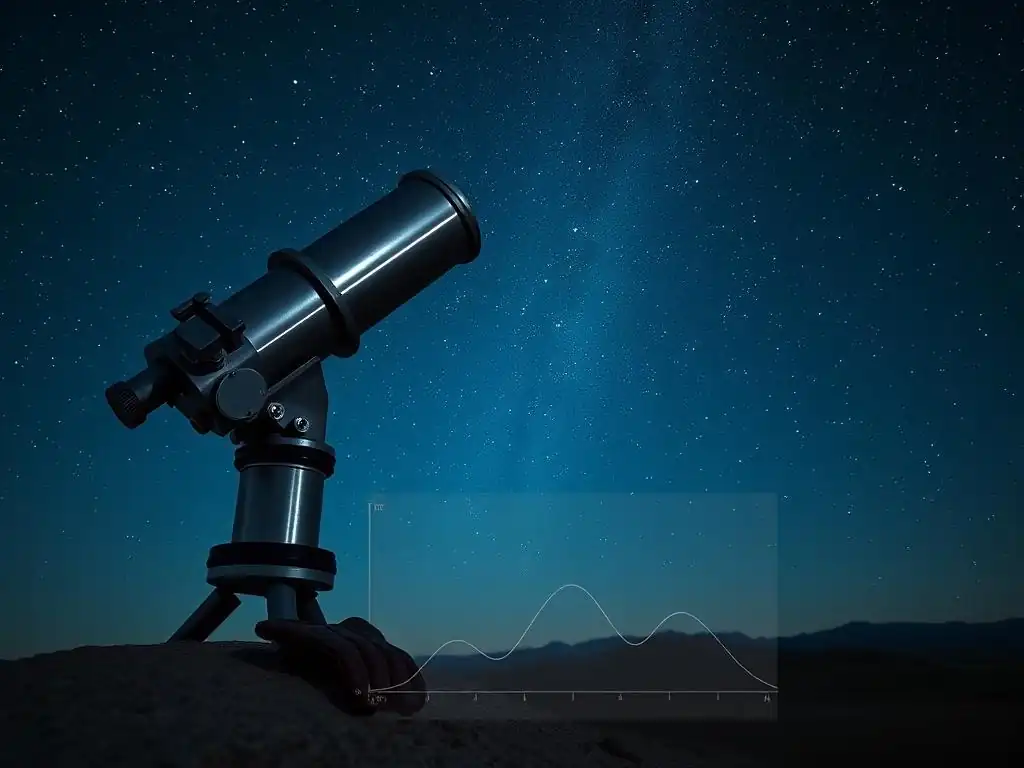
Galaxy Rotation Curves and the Discovery of Dark Matter: Impact and Significance
Vera Rubin's most significant contribution began in the early 1970s with her collaboration with instrument designer Kent Ford at the Carnegie Institution's Department of Terrestrial Magnetism. Using Ford's highly sensitive image intensifiers, they meticulously observed the rotation speeds of stars within spiral galaxies, most notably the Andromeda galaxy (M31). Their precise measurements revealed a startling anomaly: stars at the outer edges of galaxies were orbiting at unexpectedly high velocities, far too fast to be held together by the gravitational pull of the visible matter alone.
This groundbreaking observation directly contradicted Newtonian mechanics and the prevailing understanding of galactic dynamics. The only plausible explanation was the presence of an enormous amount of unseen, non-luminous mass—a gravitational halo of "dark matter"—surrounding the galaxies. Rubin's robust empirical evidence provided the most compelling case for dark matter up to that point, fundamentally reshaping cosmology and initiating decades of intensive research into this mysterious component of the universe.
Collaboration with Kent Ford: Advancing the Field of Galactic Astronomy
The enduring partnership between Vera Rubin and Kent Ford was instrumental in their revolutionary discoveries. Ford's innovative development of highly sensitive image intensifiers, which could capture faint light from distant galaxies with unprecedented clarity, was a critical technological breakthrough. This instrumentation allowed Rubin to make the precise spectroscopic measurements of galactic rotation curves that were previously impossible to obtain.
Their collaboration exemplified the power of interdisciplinary synergy in scientific advancement. Ford's technical expertise in building cutting-edge astronomical instruments, combined with Rubin's keen observational skills and theoretical insights, enabled them to push the boundaries of what was known about galactic dynamics and the distribution of mass in the cosmos. Their work set a new standard for observational astrophysics.
Challenging Newtonian Physics: Questioning Existing Paradigms
Rubin's findings on galaxy rotation curves posed a direct challenge to the established understanding of gravity and mass distribution in the universe, which was largely based on the visible matter within galaxies. Her data indicated that either Newton's laws of gravity needed significant modification on galactic scales, or there was a substantial amount of invisible matter contributing to the gravitational pull, far exceeding what could be accounted for by stars, gas, and dust.
This scientific bravery in questioning existing paradigms was a hallmark of Rubin's career. While the concept of "missing mass" had been theorized before, her robust and consistent observational data from numerous galaxies provided the undeniable evidence that forced the scientific community to seriously consider the existence of dark matter. Her work laid the foundation for modern cosmological models that incorporate dark matter as a fundamental, albeit still mysterious, component of the universe.
Triumphs and Recognition: Celebrating Vera Rubin's Achievements
Awards and Accolades Received by Vera Rubin
Despite the significant women scientists historical challenges triumphs she faced, Vera Rubin accumulated numerous prestigious awards throughout her career, underscoring the eventual recognition of her monumental contributions. She was the first woman officially granted observing time at the Palomar Observatory. In 1981, she was elected to the National Academy of Sciences, becoming only the second female astronomer to achieve this honor after Annie Jump Cannon.
In 1993, Rubin received the National Medal of Science, the highest scientific honor in the United States, presented to her by President Bill Clinton. Other accolades included the Gold Medal of the Royal Astronomical Society in 1996, making her only the second woman to receive it after Caroline Herschel in 1828, and numerous honorary doctorates from institutions worldwide. While the Nobel Prize famously eluded her, these honors highlight her enduring impact and the eventual, if sometimes belated, acknowledgment of her profound work.
Breaking Barriers and Inspiring Future Generations of Women in Science
Vera Rubin was not only a brilliant scientist but also a passionate advocate for women in science, actively working to break down the very barriers she encountered. She consistently encouraged female students, mentored young researchers, and served on numerous committees dedicated to promoting diversity and inclusion within scientific institutions. Her personal philosophy was clear: "Science is for everyone," and she lived by that principle.
Her persistence in the face of adversity and her unwavering commitment to her research served as a powerful inspiration. By demonstrating that profound scientific breakthroughs were possible despite the prevailing women scientists historical challenges, Rubin became a powerful role model, showing countless aspiring female scientists that they too could achieve greatness in fields historically dominated by men.
Vera Rubin's Lasting Impact on Cosmology and Astrophysics
Vera Rubin's profound impact on cosmology and astrophysics is undeniable. Her compelling evidence for dark matter fundamentally shifted the trajectory of cosmological research, making dark matter a central, indispensable component of the standard model of cosmology. Her work spurred countless subsequent research efforts, leading to the development of new theories, sophisticated experiments, and ambitious missions designed to detect and understand this mysterious substance.
Beyond dark matter, her meticulous observational techniques and unwavering dedication to empirical evidence set a high standard for future astronomical research. Her legacy extends to influencing generations of astrophysicists who continue to build upon the foundational work she laid, cementing her place as one of the most influential astronomers of the 20th century.
The Importance of Remembering Women Scientists Historical Challenges Triumphs
Preserving the Stories of Women in Space Science & Astronomy
It is critically important to diligently document and celebrate the narratives of women like Vera Rubin, particularly within fields such as space science and astronomy. Their stories are not merely accounts of scientific discovery; they are powerful testaments to resilience, perseverance, and the often-arduous struggle for equality within historically biased systems. These narratives offer invaluable insights into the societal and institutional barriers that existed.
By remembering these women scientists historical challenges triumphs, we achieve several vital objectives. We provide crucial role models for young girls and women contemplating STEM careers, demonstrating that scientific excellence is achievable despite obstacles. Moreover, we ensure a more complete, accurate, and inclusive history of scientific progress, acknowledging the contributions that were, for too long, overlooked or minimized.
Vera Rubin's Enduring Influence on Contemporary Science
Vera Rubin's scientific legacy continues to exert a profound influence on contemporary science. Current dark matter research, encompassing everything from direct detection experiments like LUX-ZEPLIN to searches for weakly interacting massive particles (WIMPs) and investigations into modified gravity theories, is directly built upon the observational foundation she established. Large-scale astrophysical surveys, such as the Dark Energy Survey, and future observatories are still grappling with the implications of her pioneering findings.
Furthermore, her advocacy for women in science has an enduring impact. Her efforts contributed to a gradual but significant shift in academic culture, leading to more inclusive environments and increased opportunities for women in STEM, though much work remains. Her life's journey serves as a powerful reminder of the importance of empirical observation, the courage to challenge the status quo, and the profound contributions women scientists historical challenges triumphs have made to our understanding of the cosmos.
Conclusion: Vera Rubin - A Pioneer and Inspiration for Women in Science
Reflecting on Vera Rubin's Journey and Legacy
Vera Rubin's journey through the scientific landscape of the mid-20th century is a compelling narrative of intellectual brilliance, relentless curiosity, and remarkable resilience in the face of significant obstacles. Her meticulous observations of galactic rotation curves were instrumental in uncovering the universe's hidden mass, fundamentally reshaping our understanding of cosmology and establishing the indispensable role of dark matter.
Her life exemplifies the profound women scientists historical challenges triumphs that characterized the experiences of female pioneers in science. Despite confronting gender bias and systemic discrimination, Rubin remained steadfast in her pursuit of knowledge, leaving an indelible mark on humanity's understanding of the cosmos and inspiring generations with her unwavering dedication.
Encouraging Future Generations of Women to Pursue STEM Careers
The legacy of Vera Rubin serves as a powerful beacon for future generations, particularly for young women considering careers in STEM fields. While challenges for women in science persist, the path has been significantly illuminated and smoothed by the courageous efforts of pioneers like Rubin. Her story demonstrates that intellectual curiosity, perseverance, and a commitment to scientific inquiry can lead to groundbreaking discoveries, regardless of societal barriers.
By celebrating her achievements and acknowledging the women scientists historical challenges triumphs she overcame, we reinforce the message that science needs diverse perspectives and talents. Encouraging girls and women to pursue STEM careers is not just about equity; it's about fostering innovation and ensuring that humanity continues to push the boundaries of knowledge for a more inclusive and scientifically advanced future.
Frequently Asked Questions
What kinds of historical challenges did women scientists commonly face?
Women scientists often encountered discrimination and bias due to societal norms that limited their access to education and professional opportunities. They also faced difficulties in obtaining funding and recognition for their research.
How did women scientists triumph over these challenges?
Many women scientists persevered through sheer determination and resilience, often working independently or collaborating with supportive colleagues. They also fought for equal access to education and professional advancement.
What impact did the groundbreaking work of women scientists have on their respective fields?
Women scientists made significant contributions to diverse fields, including physics, chemistry, biology, and mathematics. Their discoveries and innovations have advanced scientific knowledge and improved our understanding of the world.
Why is it important to highlight the stories of women in science history?
Recognizing the achievements of women scientists helps to correct historical biases and inspire future generations of female scientists. It also demonstrates that science is a field open to all, regardless of gender.
What is "WomenInScienceHistory.com" aiming to achieve?
The website aims to celebrate the contributions of women to science, shed light on their overlooked narratives, and inspire future generations by sharing their stories of challenges and triumphs.
Final Reflection: Celebrating Resilience and Inspiring Future Generations
The journey of women scientists throughout history, as explored in this article, is not merely a historical account; it is a powerful testament to the enduring spirit of innovation and the relentless pursuit of knowledge in the face of adversity. The challenges they faced, and the triumphs they achieved, resonate deeply even today, reminding us of the ongoing need for equity and inclusion in STEM fields.
The stories of these pioneering women, their struggles against societal expectations and institutional barriers, continue to shape the cultural landscape. Their legacy serves as a constant reminder of the importance of perseverance and the transformative power of diverse perspectives in scientific discovery. Science knows no country, because knowledge belongs to humanity, and is the torch which illuminates the world.
- Louis Pasteur. This quote encapsulates the spirit of these women, who, despite facing immense obstacles, contributed significantly to the collective knowledge of humankind.
Let us all, then, take inspiration from these remarkable women scientists. Let their stories fuel our commitment to creating a more equitable and inclusive world, where every individual, regardless of gender, has the opportunity to pursue their scientific passions and contribute to a brighter future. Reflect on their courage, their resilience, and their unwavering dedication, and ask yourself: how can I contribute to building a world where the triumphs of women in science are not just celebrated, but expected?
Champion Her Legacy: Inspire Future Generations!
Thank you for exploring the remarkable journey of a trailblazing scientist. Her story exemplifies perseverance and brilliance that have left a lasting mark on scientific history. Now, let’s turn that inspiration into action.
- Share her story: Spread the word about her contributions by sharing this article with your network on social media.
- Explore Further: Discover other unsung heroines on WomenInScienceHistory.com and learn more about women’s impactful roles in science.
- Mentor a Young Mind: Volunteer your time to encourage young girls’ interest in STEM. You can tutor them in math and science or participate in a mentorship program.
How will you use her legacy to empower the next generation of female scientists?