
Hazel Bishop: The Chemist Who Revolutionized Cosmetics with KissProof Lipstick

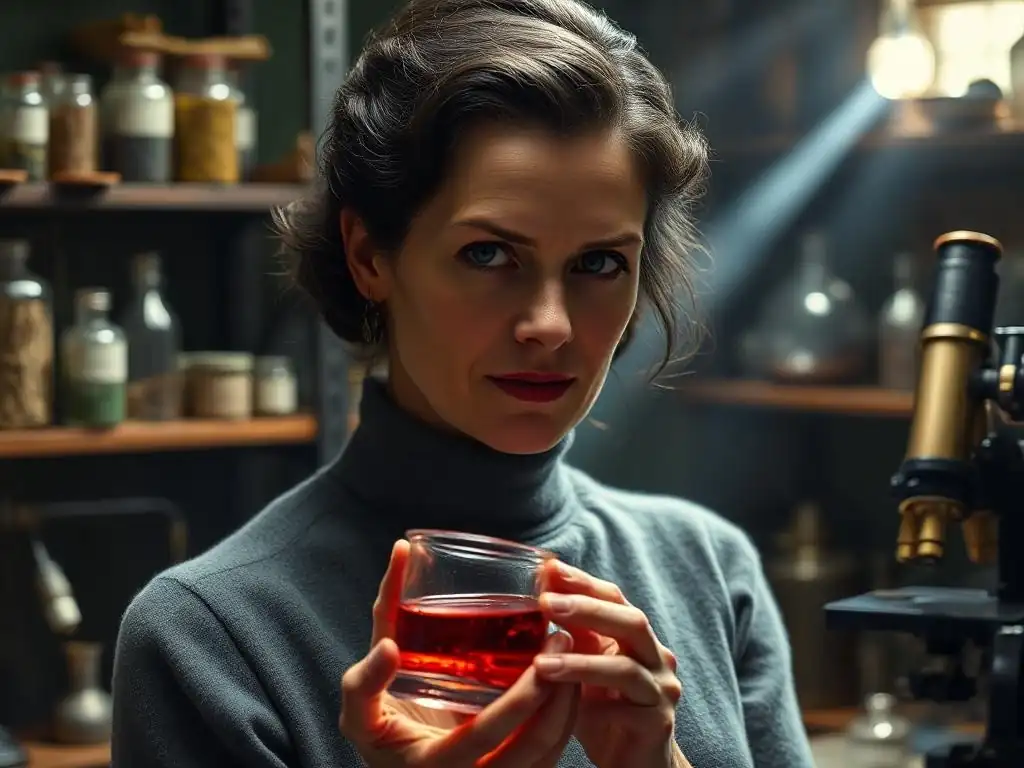
Welcome to WomenInScienceHistory.com, where we illuminate the groundbreaking achievements of women who have shaped the scientific landscape. Ever wondered how the perfect, long-lasting lipstick came to be? Dive into the captivating story of Hazel Bishop, the chemist whose innovative Hazel Bishop lipstick formulation history not only revolutionized the cosmetics industry but also challenged societal norms. Discover the science behind her success and the obstacles she overcame in this fascinating biography, and prepare to be inspired by her ingenuity and resilience. What secrets does this pioneering formula hold? Let's explore!
- Introduction: Hazel Bishop, A Woman in Chemistry History
- The Hazel Bishop Lipstick Breakthrough: Kiss-Proof Technology
- Hazel Bishop Cosmetics: Building a Beauty Empire
- Hazel Bishop's Legacy: Beyond Kiss-Proof Lipstick
- Understanding the Hazel Bishop Lipstick Formulation History
- The Impact of Hazel Bishop Lipstick on the Cosmetics Market
- Overcoming Obstacles: Challenges Faced by Hazel Bishop in a Male-Dominated Field
- Conclusion: Hazel Bishop's Lasting Contribution to Science and Beauty
-
Frequently Asked Questions
- What was Hazel Bishop's key contribution to the cosmetics industry?
- What were some of the challenges Hazel Bishop faced as a woman in science?
- What was so unique about Hazel Bishop's lipstick formula?
- Where can I learn more about other women in science throughout history?
- Why is it important to highlight the stories of women like Hazel Bishop in science history?
- Final Reflection: The Enduring Power of Innovation
- Unleash Your Inner Innovator: Take Action Now!
Introduction: Hazel Bishop, A Woman in Chemistry History
Pioneering Female Scientist: Hazel Bishop's Early Life and Education
Born in Hoboken, New Jersey, in 1906, Hazel Bishop emerged as a pivotal figure whose scientific acumen would profoundly impact the cosmetics industry. From a young age, Bishop displayed a keen intellect and an early fascination with scientific inquiry, setting her on a path of rigorous academic pursuit.
Her foundational education at Barnard College culminated in a Bachelor of Arts degree in Chemistry in 1929, a period when opportunities for women in advanced scientific fields were considerably limited. Following her undergraduate studies, Bishop continued her academic journey, embarking on graduate work at Columbia University, further solidifying her expertise in chemical principles and laboratory methodologies.
This robust scientific background provided Bishop with an exceptional understanding of organic compounds, emulsions, and the intricate reactions of various substances, knowledge that would later prove invaluable. Her initial aspirations leaned towards a career in medicine, reflecting a desire to apply her chemical knowledge to practical, problem-solving applications. This early focus on health and science, coupled with her strong academic foundation, underscored her methodical approach to experimentation and analysis, characteristics that would define her later groundbreaking work in a seemingly disparate field.
From Medical Research to Cosmetics Innovation: Bishop's Career Trajectory
Hazel Bishop's professional journey began not in the realm of beauty, but in medical research, where she applied her chemical expertise to dermatological studies. For over a decade, she worked as a research assistant and laboratory technician, notably for a prominent dermatologist, Dr. M.L. Rhein. Her work involved investigating skin conditions, allergies, and the development of topical treatments, granting her extensive experience with various chemical formulations, including dyes, oils, and waxes, and their interactions with human skin. This period of meticulous research provided her with a deep understanding of cosmetic chemistry's fundamental building blocks, albeit with a therapeutic focus.
The transition from medical research to cosmetics innovation was driven by a personal frustration and an astute recognition of an unmet market need. Bishop, like many women of her time, found existing lipsticks to be unsatisfactory, prone to smudging, fading, and leaving unsightly marks.
Drawing upon her extensive background in chemical formulation and her understanding of material science, she began to experiment in her home laboratory in the late 1940s. This pivot was not a departure from science but an application of her rigorous scientific methodology to a consumer product, ultimately leading to the revolutionary Hazel Bishop lipstick formulation history.
The Hazel Bishop Lipstick Breakthrough: Kiss-Proof Technology
Addressing the Lipstick Problem: The Need for a Long-Lasting Formula
Before Hazel Bishop's intervention, lipstick was a beautiful but often inconvenient cosmetic. The formulations prevalent in the mid-20th century were primarily wax- and oil-based, designed for smooth application and rich color, but notoriously prone to smudging, feathering, and transferring onto clothing, cups, and indeed, other people. Women frequently faced the embarrassment of leaving lipstick stains and the constant need for reapplication, often multiple times an hour during social engagements or meals. This pervasive issue represented a significant gap in the beauty market, a problem that consumers endured rather than had solved.
The demand for a lipstick that offered both vibrant color and staying power was immense, yet no existing product adequately met this need. The everyday challenges faced by women, from professional settings to social gatherings, highlighted the practical limitations of conventional lipsticks. Hazel Bishop, a chemist with a keen eye for practical solutions, recognized this widespread frustration. Her personal experience with these shortcomings fueled her determination to apply her scientific knowledge to create a truly innovative product that would fundamentally change how women interacted with their makeup.
Hazel Bishop's Innovative Lipstick Formulation: A Scientific Approach
Driven by the clear market need for a durable lipstick, Hazel Bishop embarked on a systematic and scientific quest in her small home laboratory in New York City. Unlike many cosmetic developers who might rely on intuitive mixing or minor adjustments to existing formulas, Bishop approached the challenge with the precision of a trained chemist. She dedicated her evenings and weekends to meticulous experimentation, testing hundreds of combinations of oils, waxes, and pigments. Her goal was not just to create a new shade, but to engineer a fundamental change in the lipstick's physical properties.
Her method involved carefully measuring ingredients, observing their interactions, and rigorously testing the resulting mixtures for qualities like adhesion, durability, and transfer resistance. This exhaustive process was central to the Hazel Bishop lipstick formulation history. She focused on creating a formula that would dry on the lips to form a flexible, long-wearing film, rather than remaining a greasy, transferable coating. This disciplined, analytical approach, rooted in her years of medical research, was the bedrock of her success, transforming a common beauty frustration into a solvable chemical challenge.
The Science Behind Kiss-Proof: Understanding the Lipstick Chemistry
The true genius of Hazel Bishop's "Kiss-Proof" lipstick lay in its innovative chemistry, marking a significant milestone in Hazel Bishop lipstick formulation history. While exact proprietary details remain closely guarded, the core breakthrough involved a careful balance of ingredients that allowed the lipstick to adhere firmly to the lips and resist transfer. Traditional lipsticks were primarily composed of high percentages of waxes and oils, which provided slip and shine but also facilitated smudging. Bishop's formulation significantly reduced the oily components and increased the proportion of film-forming agents and specific dyes.
A key element was the strategic use of lanolin, known for its emollient properties, combined with various waxes and pigments. The innovation was not just in the individual ingredients, but in their precise ratios and the way they interacted to create a durable, yet comfortable, film.
The formula was designed to "set" on the lips, forming a thin, flexible layer that was resistant to typical wear-and-tear from eating, drinking, and kissing. This scientific ingenuity differentiated her product, making "non-smear" or "long-lasting" a tangible reality rather than just a marketing claim, and setting a new standard for performance in the cosmetics industry.
Hazel Bishop Cosmetics: Building a Beauty Empire
Founding Hazel Bishop Inc.: From Lab to Business
With her revolutionary "Kiss-Proof" lipstick formulation perfected in her home lab, Hazel Bishop faced the formidable challenge of transitioning from chemist to entrepreneur. In 1950, she officially founded Hazel Bishop Inc., a daring move for a woman in an era when female leadership in business was exceptionally rare. Her initial capital was reportedly a modest sum, around $10,000, secured with the help of investor Raymond Spector, a shrewd advertising executive. The early days of the company were a testament to her tenacity, with production initially taking place in her own kitchen.
Bishop personally oversaw the early manufacturing, mixing batches of her groundbreaking lipstick in her apartment, then pouring them into molds. This hands-on approach ensured the quality and consistency of her innovative product. The establishment of Hazel Bishop Inc. was not merely the creation of a company; it was the birth of a new category within the cosmetics market, driven by a chemist's vision and a pioneering spirit that defied the gender norms of the time.
Marketing the Revolutionary Lipstick: A New Era in Cosmetics
The success of Hazel Bishop Inc. was propelled not only by its innovative product but also by a groundbreaking marketing strategy orchestrated by Raymond Spector. Recognizing the unique selling proposition of the "Kiss-Proof" formula, Spector launched an aggressive and memorable advertising campaign. The iconic slogan, "Stays on you, not on him!" directly addressed the primary consumer frustration and instantly communicated the lipstick's revolutionary benefit. This bold messaging captivated the public's attention.
Crucially, Spector leveraged the nascent power of television advertising, a relatively new and impactful medium for consumer products in the early 1950s. The visual demonstrations of the lipstick's non-transfer properties on live television were incredibly compelling, showcasing its practicality and reliability. This innovative marketing approach, coupled with the genuine efficacy of the Hazel Bishop lipstick formulation, led to unprecedented sales growth. Within just three years, Hazel Bishop Inc. reportedly achieved annual sales exceeding $10 million, transforming the beauty landscape and ushering in a new era of performance-driven cosmetics.
The Rise and Fall: Challenges and Controversies in the Cosmetics Industry
Despite its meteoric rise, Hazel Bishop Inc. faced significant internal and external challenges that ultimately led to its founder's departure. A major point of contention arose between Hazel Bishop, the scientific innovator, and Raymond Spector, the aggressive marketer. Bishop, who held 25% ownership, found herself increasingly marginalized as Spector gained more control over the company's direction. The disputes escalated, culminating in a bitter legal battle that saw Hazel Bishop ousted from her own company in 1954, losing the right to use her name on the products she created.
Furthermore, the immense success of the Hazel Bishop lipstick formulation quickly attracted fierce competition. Rivals like Revlon swiftly developed their own long-lasting formulas, such as Revlon's "Living Lipstick," launched in 1953. This intense market saturation, combined with the internal strife and Bishop's forced exit, contributed to the brand's eventual decline from its peak. The episode highlights the complex interplay between innovation, business acumen, and legal challenges in the competitive world of consumer goods, even for a product with such a revolutionary Hazel Bishop lipstick formulation history.
Hazel Bishop's Legacy: Beyond Kiss-Proof Lipstick
Contributions to Cosmetics Chemistry: Bishop's Impact on Lipstick Technology
Hazel Bishop's most enduring contribution lies in her profound impact on cosmetics chemistry, particularly in the realm of lipstick technology. Her "Kiss-Proof" formulation did not merely introduce a new product; it fundamentally redefined consumer expectations for lipstick performance. By demonstrating the feasibility of a long-wearing, non-transferable formula, she effectively created a new standard for the entire industry. Her scientific approach to solving a common beauty problem elevated cosmetics development from simple mixing to a rigorous application of chemical principles.
Bishop's work spurred further research and development into film-forming polymers, durable pigments, and advanced delivery systems within cosmetic science. Every modern long-wear lipstick, matte liquid lipstick, or transfer-resistant lip stain owes a debt to her pioneering efforts. She showed that cosmetics could be engineered for specific functional benefits, moving beyond mere aesthetics to provide tangible convenience and improved performance for consumers, thereby legitimizing the field of cosmetic chemistry as a serious scientific discipline.
Hazel Bishop's Influence on Women in Science: Inspiring Future Generations
Beyond her specific chemical innovations, Hazel Bishop stands as a powerful symbol and inspiration for women in science, technology, engineering, and mathematics (STEM). In an era when women were largely relegated to traditional roles, Bishop pursued a demanding scientific education and then leveraged that knowledge to build a successful enterprise. Her story demonstrates that scientific ingenuity knows no gender boundaries and that significant contributions can emerge from unexpected fields, including consumer products.
Her journey, marked by both groundbreaking success and formidable challenges, serves as a testament to perseverance and intellectual courage. By forging a path as a chemist and entrepreneur, she opened doors and challenged perceptions about what women could achieve. Her legacy encourages future generations of women to pursue scientific careers with confidence, reminding them that their unique perspectives and problem-solving abilities can lead to transformative innovations across diverse industries.
Hazel Bishop: Recognition and Later Ventures
Despite the contentious end to her association with Hazel Bishop Inc., Hazel Bishop's innovative spirit remained undimmed. She continued to apply her chemical and business acumen to new ventures. In the mid-1950s, she developed and marketed other successful products, such as "Lanolin Plus," a popular line of face creams, and even diversified into non-cosmetic items like "Perma-Life" shoe polish and disposable tissues. Her versatility underscored her deep understanding of product development and market dynamics.
Later in her career, Bishop transitioned into financial analysis, serving as a respected stockbroker and investment advisor. This pivot showcased her remarkable intellectual agility and adaptability. Although the initial recognition for her pioneering work in "Kiss-Proof" lipstick was overshadowed by corporate disputes, her lasting contribution to cosmetics chemistry and her role as an entrepreneurial force became increasingly acknowledged over time. Her life story is a compelling narrative of continuous innovation and resilience, securing her place as a notable figure in both scientific and business history.
Understanding the Hazel Bishop Lipstick Formulation History

The Original Formula: Key Ingredients and Their Functions
The original Hazel Bishop lipstick formulation was a closely guarded trade secret, yet its revolutionary performance offers insights into its likely chemical composition. The key to its "kiss-proof" and long-lasting nature lay in a carefully balanced blend of specific types of ingredients, departing significantly from the traditional wax-heavy formulas of the era. The formulation history suggests a lower proportion of emollient oils (like castor oil), which are prone to transfer, and a higher concentration of film-forming agents.
Waxes, such as beeswax and carnauba wax, were still present to provide structure and a solid stick form, but their role was likely calibrated to enhance adhesion rather than just lubrication. A critical component was the strategic use of lanolin, which offers both emollience and a unique ability to form a barrier. The pigments, typically D&C Red No.
21 and other certified colorants, were finely dispersed to ensure vibrant, even color payoff. The innovation was in the precise ratio and synergy of these components, enabling the lipstick to "set" on the lips, creating a flexible, transfer-resistant film that fundamentally changed the Hazel Bishop lipstick formulation history.
Evolution of the Lipstick Formula: Color Variations and Packaging Changes
The initial success of Hazel Bishop's "Kiss-Proof" lipstick quickly led to an expansion of the product line, marking further chapters in Hazel Bishop lipstick formulation history. While the core "non-smear" technology remained consistent, the brand rapidly introduced a wider array of color variations to appeal to diverse consumer preferences. Early popular shades included vibrant reds like "Rhapsody in Red," bold fuchsias, and soft corals, reflecting the popular aesthetics of the 1950s. This expansion demonstrated the versatility of the base formulation to accommodate various pigments without compromising its unique performance.
In terms of packaging, early Hazel Bishop lipsticks featured a relatively simple, elegant design, often in gold-toned metal casings with a classic bullet shape. As the brand grew and the market became more competitive, packaging might have seen subtle refinements to maintain a modern appeal and differentiate from a growing number of imitators. However, the primary focus remained on the functional benefit of the product—its long-lasting wear—rather than elaborate external presentation, underscoring the brand's emphasis on scientific efficacy.
Hazel Bishop Lipstick Patents: Protecting the Innovation
While Hazel Bishop's innovation was groundbreaking, the specific "Kiss-Proof" technology itself was not protected by a single, comprehensive patent filed by Bishop herself or by Hazel Bishop Inc. that explicitly covered the entire formulation. This lack of patent protection for the precise Hazel Bishop lipstick formulation allowed competitors to quickly reverse-engineer and launch their own long-lasting lipsticks. The cosmetics industry often relies more on trade secrets and rapid market penetration than on patenting every formulation nuance, which can be challenging given the commonality of many cosmetic ingredients.
The innovation was more in the application of known chemical principles and the specific combination of ingredients to achieve a novel effect, rather than the discovery of a completely new chemical compound. Therefore, while individual components or processes might have been patented by others in the broader field of cosmetic chemistry, the unique efficacy of Hazel Bishop's product was primarily safeguarded by its initial market lead and aggressive marketing.
This absence of a direct patent on the core formulation became a critical factor in the brand's eventual decline as rivals swiftly introduced similar products, intensifying the competition in the burgeoning market for long-lasting lipsticks.
The Impact of Hazel Bishop Lipstick on the Cosmetics Market
Competitors and Imitations: The Race for Long-Lasting Lipstick
The unprecedented success of Hazel Bishop's "Kiss-Proof" lipstick sent shockwaves through the cosmetics industry, triggering an immediate and intense race among established brands to develop their own long-lasting formulas. Major players like Revlon, Coty, and Max Factor quickly recognized the immense consumer demand for non-smear lipstick and invested heavily in their own research and development. Revlon, a dominant force in the beauty market, famously launched its direct competitor, "Living Lipstick," in 1953, just three years after Hazel Bishop Inc. began.
This fierce competition, often dubbed the "lipstick wars" of the 1950s, validated the viability and profitability of the long-lasting lipstick segment that Bishop had pioneered. While it led to increased market saturation and eventually contributed to Hazel Bishop Inc.'s challenges, it also spurred innovation across the industry. The rapid proliferation of similar products underscored the revolutionary nature of the original Hazel Bishop lipstick formulation history, as it forced an entire market to adapt to a new standard of performance.
Consumer Reception: How Hazel Bishop Lipstick Changed Beauty Standards
The consumer reception to Hazel Bishop's "Kiss-Proof" lipstick was overwhelmingly positive and transformative. Women, long accustomed to the inconvenience of smudging and fading lipsticks, embraced the product with enthusiasm. The promise of "stays on you, not on him!" resonated deeply, offering a practical solution to an everyday annoyance. This innovation fundamentally changed consumer expectations for lipstick, shifting the focus from mere color and texture to performance and longevity.
Hazel Bishop's lipstick became more than just a cosmetic; it was a tool that empowered women. It reduced the need for constant mirror checks and frequent reapplication, allowing women greater freedom and confidence in their daily lives, whether at work, social events, or on dates. It became a staple for millions, demonstrating how a scientific breakthrough in Hazel Bishop lipstick formulation history could directly enhance personal convenience and elevate beauty standards across the nation.
Hazel Bishop Lipstick: Its Influence on Modern Lipstick Formulations
The influence of Hazel Bishop's pioneering work extends far beyond the 1950s, shaping the very foundation of modern lipstick formulations. Her concept of creating a durable, transfer-resistant film on the lips laid the groundwork for countless innovations in cosmetic chemistry. Today's popular matte lipsticks, long-wear liquid lipsticks, and highly pigmented, non-smear formulas are direct descendants of her initial breakthrough.
Contemporary cosmetic scientists continue to build upon the principles Bishop established, utilizing advanced polymers, silicones, and film-forming agents to achieve even greater longevity and comfort. The focus on performance-driven cosmetics, where products are engineered to solve specific problems like transfer and fading, can largely be traced back to the revolutionary impact of the Hazel Bishop lipstick formulation history. Her legacy is evident in every long-lasting lip product on the market, cementing her status as a true pioneer in the field.
Overcoming Obstacles: Challenges Faced by Hazel Bishop in a Male-Dominated Field
Gender Bias in Science and Business: Bishop's Experiences
Hazel Bishop's journey as a chemist and entrepreneur was inextricably linked to the pervasive gender bias prevalent in the mid-20th century. As a woman in science, she likely faced skepticism and limited opportunities compared to her male counterparts, despite her strong academic background and evident talent. When she transitioned into business, these challenges intensified. The corporate world of the 1950s was overwhelmingly male-dominated, making it difficult for women to secure funding, command respect, and maintain control over their own ventures.
Her contentious relationship with Raymond Spector and her eventual ousting from Hazel Bishop Inc. serve as a stark illustration of these systemic biases. Despite being the scientific mind behind the revolutionary product, she struggled to retain power and ownership in a business environment that often undervalued women's contributions, particularly in leadership roles. Her experience highlights the significant hurdles pioneering women faced in establishing and maintaining their authority in both scientific and commercial arenas.
Securing Funding and Recognition: Bishop's Fight for Success
Securing initial funding for Hazel Bishop Inc. was a significant hurdle. In an era when venture capital was nascent and largely inaccessible to women, Bishop's ability to raise even modest capital was a testament to her persuasive vision and the undeniable efficacy of her product. Her initial investment of $10,000, while seemingly small, was crucial in launching her venture. This early struggle for financial backing underscored the inherent difficulties for women entrepreneurs of the time.
Beyond financial capital, Bishop also fought for recognition and control over her own innovation. After her forced departure from the company she founded, she endured a protracted legal battle to reclaim the use of her own name for commercial purposes, a struggle that was ultimately unsuccessful for the cosmetic brand itself. This fight for recognition and intellectual property, despite her clear scientific authorship of the Hazel Bishop lipstick formulation, illustrates the immense personal and professional costs of navigating a male-dominated industry where women's contributions were frequently appropriated or devalued.
Despite the significant obstacles she faced, Hazel Bishop employed several key strategies that allowed her to navigate and ultimately thrive in a male-dominated industry. Foremost among these was her unwavering reliance on her scientific expertise. Her deep understanding of chemistry was her strongest asset, providing her with the credibility and unique ability to innovate where others could not. She focused on creating a superior product that spoke for itself through its performance, a tangible demonstration of her scientific prowess.
Furthermore, Bishop exhibited remarkable persistence and adaptability. Even after losing control of Hazel Bishop Inc., she did not retreat. Instead, she pivoted, applying her entrepreneurial spirit and chemical knowledge to other successful product lines and even a new career in finance. Her ability to consistently identify market needs and develop effective solutions, coupled with her resilience in the face of adversity, allowed her to continue making significant contributions throughout her career, serving as a powerful example of how to succeed against formidable societal barriers.
Conclusion: Hazel Bishop's Lasting Contribution to Science and Beauty
Hazel Bishop: A Role Model for Women in STEM
Hazel Bishop's life story is an inspiring testament to the power of scientific innovation and entrepreneurial spirit, establishing her as a vital role model for women in STEM fields. Her journey from a chemistry student to a pioneering cosmetic chemist and business owner exemplifies resilience, intellectual curiosity, and a relentless drive to solve problems. In a time when women's roles were often narrowly defined, Bishop carved out a path that challenged conventions, demonstrating that scientific talent and business acumen are not limited by gender.
Her experiences, including both her groundbreaking successes and the formidable obstacles she overcame, provide invaluable lessons for aspiring female scientists and entrepreneurs. She proved that a deep understanding of chemistry could lead to revolutionary consumer products, and that women could lead significant commercial ventures. Bishop's legacy encourages future generations to pursue their scientific passions with confidence, to innovate fearlessly, and to persist in the face of challenges, contributing meaningfully to both science and society.
Celebrating Hazel Bishop's Achievements: A Pioneer in Cosmetics Chemistry
Hazel Bishop's achievements fundamentally reshaped the cosmetics industry and solidified her place as a pioneer in cosmetics chemistry. Her development of "Kiss-Proof" lipstick was not merely a new product; it was a paradigm shift in the expectations consumers had for their makeup. By applying rigorous scientific principles to a common beauty problem, she transformed lipstick from a fleeting adornment into a durable, functional cosmetic. This innovation directly influenced the entire Hazel Bishop lipstick formulation history and spurred a new era of performance-driven beauty products.
Her work laid the essential groundwork for the sophisticated long-wear formulations that are ubiquitous today, from matte liquid lipsticks to transfer-resistant foundations. Beyond the tangible products, Bishop's narrative highlights the critical, often overlooked, contributions of women to scientific and industrial progress. Celebrating Hazel Bishop's achievements means recognizing not only her specific chemical breakthroughs but also her broader impact as a woman who defied societal norms, brought scientific rigor to a consumer-focused industry, and continues to inspire those who seek to innovate at the intersection of science and everyday life.
Frequently Asked Questions
What was Hazel Bishop's key contribution to the cosmetics industry?
Hazel Bishop is best known for her Kiss-Proof lipstick formulation, which revolutionized the cosmetics industry by offering a lipstick that stayed on longer than traditional products. This innovation significantly impacted the lipstick market and consumer preferences.
What were some of the challenges Hazel Bishop faced as a woman in science?
As a woman in science during her time, Hazel Bishop undoubtedly faced gender discrimination and limited opportunities in a male-dominated field. This makes her achievements even more remarkable.
What was so unique about Hazel Bishop's lipstick formula?
Bishop's formula was unique because it was long-lasting and smear-proof, unlike other lipsticks available at the time. This was achieved using a unique combination of ingredients and innovative chemistry.
Where can I learn more about other women in science throughout history?
Websites like WomenInScienceHistory.com provide biographies and information about the contributions of women to various scientific fields. These resources help shed light on often-overlooked narratives.
Why is it important to highlight the stories of women like Hazel Bishop in science history?
Highlighting these stories helps to inspire future generations, particularly young women, to pursue careers in STEM fields. It also promotes equity and recognition for the significant contributions of women in science.
Final Reflection: The Enduring Power of Innovation
The story of Hazel Bishop and her revolutionary Kiss-Proof lipstick is more than just a tale of cosmetic innovation; it's a testament to the unyielding spirit of entrepreneurship and the transformative power of scientific curiosity. In a world saturated with beauty products, understanding the Hazel Bishop lipstick formulation history reminds us that even the smallest idea, meticulously crafted and passionately pursued, can disrupt an entire industry and leave an indelible mark on society.
The impact of Bishop's invention extends far beyond the realm of cosmetics. It represents a pivotal moment in the history of women in science and business, challenging societal norms and paving the way for future generations of female innovators. Her journey, fraught with challenges and ultimately marked by both triumph and disappointment, underscores the importance of perseverance and the enduring value of intellectual property. The most important thing is to keep trying and never give up.
- Hazel Bishop (attributed). This quote perfectly encapsulates the resilience required to navigate the complexities of innovation and the business world.
As we reflect on Hazel Bishop's legacy, let us be inspired by her unwavering dedication to her craft and her courage to challenge the status quo. Consider how you can apply her spirit of innovation and resilience to your own endeavors. What problems can you solve? What new ideas can you bring to life? Embrace your curiosity, pursue your passions, and remember that even the smallest innovation can have a profound and lasting impact on the world.
Unleash Your Inner Innovator: Take Action Now!
Thank you for diving into Hazel Bishop's inspiring journey and discovering how she transformed the cosmetics industry. Now, let's turn that inspiration into action!
Here are a few steps you can take to honor her legacy and spark your own innovative spirit:
- Reimagine a problem in your daily life and brainstorm three unconventional solutions. What needs fixing, streamlining, or completely rethinking? Let Bishop's tenacity inspire you.
- Share Hazel Bishop's story! Help us celebrate unsung heroines in STEM by spreading the word about this incredible woman to your friends, family, and social networks.
- Explore other fascinating stories of women in science history on WomenInScienceHistory.com and leave a comment about which woman's journey resonates with you the most.
What small innovation will you commit to bringing into the world this week?