
[Name]: The Earth Shaker – A Woman Geologist Who Redefined Our Planet's Story

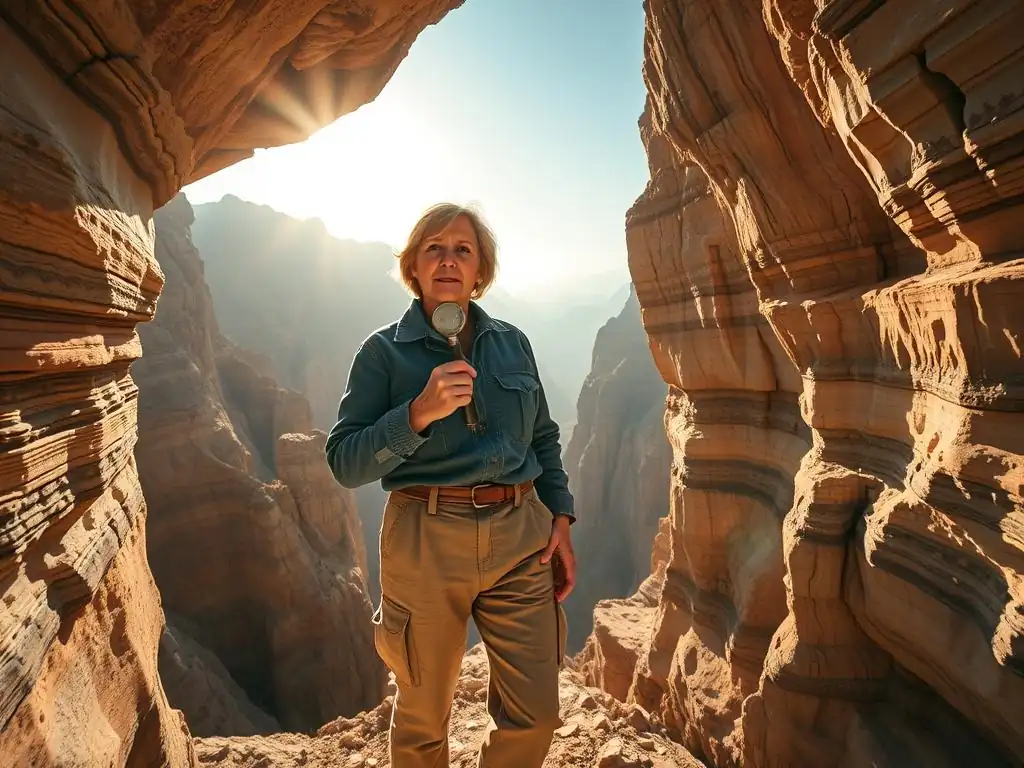
Welcome to WomenInScienceHistory.com!
Prepare to be amazed by the untold stories of brilliant women who shaped the world of science. Today, we delve into the fascinating life of Vesna Marković, a geologist whose groundbreaking discoveries challenged conventional wisdom and redefined our understanding of the Earth. Intrigued? Join us as we unearth her remarkable journey and the enduring legacy she left behind.
- Marie Tharp: Mapping the Seafloor – A Woman Geologist Who Revolutionized Oceanography
- Introduction to Marie Tharp: A Pioneer in Oceanographic Cartography
- Marie Tharp's Key Oceanographic Contributions
- Overcoming Challenges in a Male-Dominated Field
- Marie Tharp's Significant Oceanographic Discoveries
- The Impact of Marie Tharp's Work on Future Generations of Geologists
- Marie Tharp: Further Research and Resources
-
Frequently Asked Questions
- What is WomenInScienceHistory.com about?
- Who is Vesna Marković and what is she known for in geology?
- What kind of challenges did women like Vesna Marković face in science?
- What impact did Vesna Marković's geological discoveries have on the field?
- Why is it important to highlight the stories of women in science history?
- Final Reflection: Echoes of Discovery
- Ignite Your Inner Explorer: Unearth Your Own Discoveries!
Marie Tharp: Mapping the Seafloor – A Woman Geologist Who Revolutionized Oceanography
Introduction to Marie Tharp: A Pioneer in Oceanographic Cartography
Celebrating Women in Science: Marie Tharp's Legacy
Marie Tharp stands as a towering figure in the annals of geology and oceanography, a pioneering cartographer whose meticulous work fundamentally reshaped our understanding of Earth's dynamic processes. Her groundbreaking efforts in mapping the ocean floor, particularly the discovery of the Mid-Atlantic Ridge's rift valley, provided the critical visual evidence that solidified the theory of plate tectonics. Despite facing significant professional barriers as a woman in a male-dominated scientific field during the mid-20th century, Tharp's intellectual rigor and unwavering dedication ultimately led to one of the most profound geological discoveries of her era.
Her enduring legacy extends far beyond her scientific contributions; Marie Tharp serves as a powerful inspiration for aspiring scientists, particularly young women, demonstrating that perseverance and vision can overcome systemic obstacles. Her story highlights the often-overlooked narratives of women who have made invaluable contributions to scientific progress, reminding us that diverse perspectives are essential for truly revolutionary insights into our planet and the universe.
The Early Life and Education of a Visionary Cartographer
Born in Ypsilanti, Michigan, in 1920, Marie Tharp's intellectual curiosity was fostered early by her father, a soil surveyor for the U.S. Department of Agriculture. This early exposure to mapping and the intricacies of the Earth's surface undoubtedly influenced her future career path. She initially pursued a liberal arts education, earning a B.A. in English and music from Ohio University in 1943. However, the exigencies of World War II, which opened doors for women in scientific roles as men went to war, steered her towards geology.
Tharp went on to earn a master's degree in geology from the University of Michigan in 1944. She later obtained another master's degree in mathematics from the University of Tulsa in 1950, a multidisciplinary academic background that proved instrumental in her unique approach to data analysis and visualization. Her early career involved working for oil companies, but her true calling emerged when she joined the Lamont Geological Observatory (now Lamont-Doherty Earth Observatory) at Columbia University in 1948, where she began her transformative collaboration with Bruce Heezen.
Marie Tharp's Key Oceanographic Contributions
Unveiling Tharp's Impact on Understanding Plate Tectonics
Before Marie Tharp's meticulous mapping efforts, the vast expanse of the ocean floor remained largely an enigmatic realm, its topography and underlying geological structures largely unknown. Her painstaking analysis of echo-sounding data, collected by research vessels crisscrossing the Atlantic, began to reveal a remarkably complex and structured seafloor. It was her keen eye and analytical prowess that first identified a continuous, deep rift valley running down the center of the Mid-Atlantic Ridge, a feature that provided compelling evidence for the then-controversial theory of continental drift and, subsequently, the emerging paradigm of plate tectonics.
This visual confirmation of a central rift, where new crust was hypothesized to be forming, was a monumental step. It transformed the abstract concept of seafloor spreading, proposed by Harry Hess, into a tangible reality. Tharp's maps offered the first clear, empirical support for the idea that Earth's crust was not static but composed of moving plates, constantly interacting and reshaping the planet's surface. Her geological discoveries were foundational to the scientific consensus that solidified around plate tectonics in the 1960s.
Tharp's Creation of the First Comprehensive Map of the Ocean Floor
Working alongside Bruce Heezen, Marie Tharp embarked on the monumental task of creating the first comprehensive physiographic diagrams of the world's ocean floors. Their initial masterpiece, the "Physiographic Diagram of the North Atlantic Ocean," published in 1957, was a revelation. This map, and later the "World Ocean Floor" map completed in 1977, represented a colossal undertaking, synthesizing vast amounts of sonar data collected over decades from various sources, including naval expeditions and scientific research cruises.
These maps were not mere technical drawings; they were artistic and scientific triumphs that provided humanity with its first holistic and detailed view of the submerged 70% of Earth's surface. They unveiled previously unimagined features such as abyssal plains, vast networks of fracture zones, trenches, and seamounts, revolutionizing marine geology and oceanography. The clarity and detail of Tharp's maps became indispensable tools for understanding submarine topography and its implications for global geological processes.
Innovative Techniques Employed by Marie Tharp in Mapping the Seafloor
Marie Tharp's ingenuity lay not just in her interpretations but also in her innovative approach to processing and visualizing complex bathymetric data. While Bruce Heezen spent extensive time at sea collecting raw sonar soundings, Tharp was confined to the laboratory, where she meticulously translated these linear echo-sounder profiles into three-dimensional representations of the seafloor. She developed a unique methodology of cross-referencing and projecting data from multiple ship tracks, using geometric principles to infer the true shape of the ocean floor.
Her most significant methodological contribution was the development of "physiographic diagrams," which employed shaded relief and perspective drawings to convey the topography of the ocean floor in a visually intuitive and scientifically accurate manner. Unlike traditional contour maps, Tharp's diagrams brought the submarine landscape to life, making complex geological features understandable to a broader audience. This blend of scientific rigor and artistic flair was revolutionary, setting a new standard for cartographic representation in Earth sciences and enhancing the impact of her geological discoveries.
Overcoming Challenges in a Male-Dominated Field
The Obstacles Faced by Women Geologists in the Mid-20th Century
In the mid-20th century, the field of geology, particularly oceanography, was overwhelmingly male-dominated, presenting significant barriers for women aspiring to scientific careers. Societal norms and institutional policies often excluded women from fieldwork, especially aboard research vessels. This meant that while Marie Tharp was the analytical genius behind the maps, she was largely confined to the laboratory at Lamont, processing data that her male colleagues, including Bruce Heezen, collected at sea.
Beyond the practical limitations, women scientists frequently encountered professional skepticism and a general lack of recognition for their intellectual contributions. Their ideas were often dismissed or attributed to their male counterparts, making it difficult to gain respect and acceptance within the scientific community. This pervasive gender bias was a constant undercurrent throughout Tharp's career, even as she made some of the most pivotal geological discoveries of the century.
Marie Tharp's Resilience and Determination in Scientific Pursuits
Despite these formidable challenges, Marie Tharp demonstrated extraordinary resilience and determination. Barred from participating in oceanographic expeditions, she channeled her formidable intellect into the painstaking work of data analysis and visualization. She spent years meticulously plotting thousands of miles of sonar soundings, a task that required immense patience, precision, and an unwavering belief in her scientific intuition.
Her intellectual fortitude was particularly evident when her initial identification of the rift valley along the Mid-Atlantic Ridge was met with skepticism, even from her collaborator, Bruce Heezen, who famously dismissed it as "girl talk" or "pseudo-science." Undeterred, Tharp continued to gather and analyze data, confident in her observations. Her persistence in the face of doubt ultimately led to the undeniable confirmation of her findings, a testament to her profound understanding of geological processes and her commitment to scientific truth.
Tharp's Collaboration with Bruce Heezen and the Initial Skepticism Towards Her Findings
Marie Tharp's scientific journey is inextricably linked to her long-standing collaboration with Bruce Heezen at Lamont Geological Observatory. Their partnership was a powerful synergy: Heezen was the intrepid data collector at sea, while Tharp was the brilliant interpreter and visualizer on land. However, their collaboration also starkly illuminated the gender disparities prevalent in science at the time. Heezen, as the male scientist, often received more public recognition and credit for their joint work, especially in the early stages.
The initial skepticism surrounding Tharp's discovery of the Mid-Atlantic Ridge rift valley is a poignant example of the challenges she faced. When she first presented evidence of the rift, Heezen was highly resistant, suggesting it was merely an artifact of the data collection or even "Communism." It took further corroborating evidence, including earthquake epicenter data that aligned perfectly with her mapped rift valley, for Heezen to finally accept the validity of her observation. This pivotal moment underscores the deep-seated biases of the era and the immense intellectual battle Tharp waged to ensure her geological discoveries were acknowledged.
Marie Tharp's Significant Oceanographic Discoveries

Detailed Examination of the Mid-Atlantic Ridge Rift Valley
One of Marie Tharp's most profound geological discoveries was the identification and precise mapping of the continuous rift valley running along the crest of the Mid-Atlantic Ridge. As she meticulously plotted thousands of sonar soundings across the Atlantic Ocean, she began to discern a consistent, V-shaped indentation, approximately 25-30 kilometers wide and 1-2 kilometers deep, extending for thousands of kilometers along the ridge axis. This seemingly minor topographical feature held immense geological significance.
This rift valley was not merely a depression; it was the clearest morphological evidence yet for the theory of seafloor spreading. Tharp's interpretation, initially met with skepticism, proposed that this valley was the site where new oceanic crust was being generated as magma rose from the Earth's mantle, pushing older crust away. This process, now known as divergent plate boundary activity, explained how the ocean basins were expanding and how continents could drift apart.
The Significance of the Rift Valley Discovery in the Context of Plate Tectonics
The discovery of the Mid-Atlantic Ridge rift valley was a game-changer for the nascent theory of plate tectonics. Prior to Tharp's work, the concept of continental drift, though compelling, lacked a clear mechanism for how continents could move across the Earth's surface. The rift valley provided the crucial empirical evidence that linked the dynamic processes within the Earth's interior to observable features on the seafloor.
By showing a continuous seam where the Earth's crust was actively pulling apart, Tharp's maps offered the strongest visual confirmation of seafloor spreading. This mechanism, coupled with the subduction of oceanic crust at trenches, completed the picture of a dynamic Earth, leading to the widespread acceptance of plate tectonics as the unifying theory in geology. Her geological discoveries transformed our understanding of Earth's crust from a static shell to a system of constantly moving plates.
Exploring the Topography of the Ocean Floor and its Implications
Beyond the Mid-Atlantic Ridge, Marie Tharp's comprehensive mapping efforts revealed the intricate and varied topography of the entire ocean floor. Her maps meticulously charted vast abyssal plains, the deepest ocean trenches such as the Puerto Rico Trench, extensive networks of fracture zones that offset mid-ocean ridge segments, and numerous seamounts and guyots. These features, previously largely unknown, were brought to light with unprecedented clarity.
These detailed topographical revelations transformed oceanography and marine geology. They provided a fundamental baseline for understanding complex oceanic processes, including deep-sea currents, the distribution of marine life, and the global heat budget. The maps allowed scientists to visualize the "hidden" 70% of Earth's surface, opening up entirely new avenues for research into Earth's bathymetry, gravity anomalies, and magnetic patterns.
Tharp's Interpretation of Seafloor Features and its Impact on Geological Theories
Marie Tharp's genius extended beyond simply plotting data; she possessed an extraordinary ability to interpret patterns and relationships within the complex seafloor topography, inferring the underlying geological processes at play. For instance, her maps not only showed the rift valley but also revealed that earthquake epicenters precisely aligned along its axis, providing compelling evidence of active tectonic boundaries.
Her profound geological discoveries and their visual representation directly influenced the development and rapid acceptance of plate tectonics. By providing concrete, observable evidence of seafloor features consistent with spreading at ridges and consumption at trenches, her maps became indispensable teaching tools and research instruments. They solidified the modern understanding of Earth's dynamic crust, moving geology from a largely descriptive science to one underpinned by a powerful, unified theory.
Analyzing Submarine Canyons: A Key to Understanding Sediment Transport
Among her many detailed mappings, Marie Tharp meticulously charted the morphology of massive submarine canyons, such as the Hudson Canyon off the coast of New York. These colossal erosional features, often comparable in scale to terrestrial canyons like the Grand Canyon, were precisely delineated on her maps, revealing their intricate dendritic patterns extending far across continental shelves and slopes into the deep ocean.
The detailed mapping of these submarine canyons provided crucial insights into the processes of sediment transport in the marine environment. Tharp's work helped scientists understand the role of turbidity currents—dense, fast-moving flows of sediment-laden water—in carving these immense features and in distributing vast quantities of terrestrial sediments from the continents to the abyssal plains. This understanding was vital for marine geology, revealing the dynamic processes that shape deep-sea environments and influence global sediment budgets.
Submarine Canyons' Contribution to Our Understanding of Deep-Sea Ecosystems
While Marie Tharp's primary focus was on geological mapping, her detailed charting of submarine canyons indirectly contributed significantly to our understanding of deep-sea ecosystems. These canyons create highly diverse and dynamic habitats, characterized by steep slopes, varying sediment types, and unique current regimes. The physical structure revealed by Tharp's maps provided the essential geographical context for subsequent biological studies.
The deep-sea ecosystems within and around these canyons are often unique, supporting specialized flora and fauna adapted to extreme conditions, including chemosynthetic communities. By providing the foundational cartographic data of these submerged landscapes, Tharp's work laid the groundwork for future biological expeditions aimed at exploring these unique environments. Understanding the physical contours of these canyons remains essential for predicting the distribution of deep-sea species and for informing conservation efforts in these vulnerable marine habitats.
The Impact of Marie Tharp's Work on Future Generations of Geologists
Inspiring Young Women to Pursue Careers in Oceanography and Cartography
Marie Tharp's extraordinary life and groundbreaking geological discoveries serve as a powerful beacon for young women contemplating careers in science, particularly in fields like oceanography, geology, and cartography. Her story is a compelling narrative of a woman who, despite being excluded from fieldwork and facing pervasive professional skepticism, persevered through sheer intellect and determination to achieve revolutionary scientific insights. Her ability to visualize and interpret complex data, transforming raw numbers into a coherent understanding of the Earth's dynamics, continues to inspire.
Her legacy is actively celebrated by numerous organizations and educational initiatives dedicated to promoting diversity in STEM. By highlighting Tharp's contributions, these programs aim to dismantle the perception that science is an exclusively male domain and to encourage girls and young women to pursue their passions in the earth sciences. Her journey underscores the vital importance of diverse perspectives in scientific inquiry and demonstrates that groundbreaking contributions can come from unexpected places.
Tharp's Influence on Modern Seafloor Mapping Techniques
Although technology has advanced dramatically since Marie Tharp's pioneering efforts, her foundational approach to interpreting and visualizing bathymetric data continues to influence modern seafloor mapping techniques. While today's multibeam sonar systems and satellite altimetry gather data with unparalleled speed and precision, the core principles of data synthesis, cross-referencing, and geological interpretation pioneered by Tharp remain crucial for translating raw data into meaningful scientific understanding.
Her innovative physiographic diagrams, which brought clarity and visual impact to complex bathymetric information, set a new standard for scientific communication. Modern sophisticated 3D mapping software and visualization tools build upon the visual language and interpretive insights she developed. Tharp's emphasis on clear, intuitive representation ensures that complex geological data can be effectively communicated not only to the scientific community but also to the broader public, reinforcing the enduring importance of effective data visualization in scientific discovery.
Marie Tharp's Enduring Legacy in the World of Geology and Oceanography
Marie Tharp's enduring legacy in the world of geology and oceanography is profound and undeniable. Her maps, particularly those depicting the Mid-Atlantic Ridge and its central rift valley, transformed our understanding of Earth from a static, unchanging sphere to a dynamic, ever-evolving planet. Her meticulous work provided the critical empirical evidence that helped usher in the plate tectonics revolution, a paradigm shift that fundamentally reshaped Earth sciences.
She is rightly recognized as one of the most influential geologists of the 20th century. Her name is synonymous with the mapping of the ocean floor, and her geological discoveries are inextricably linked to the acceptance of plate tectonics. Tharp's contributions continue to be celebrated globally, ensuring that her pioneering spirit and intellectual courage continue to inspire new generations of scientists to explore the mysteries of our planet.
Marie Tharp: Further Research and Resources
[Link to the Marie Tharp Collection at the Library of Congress]
The Library of Congress houses a remarkable collection of Marie Tharp's work, providing an invaluable resource for researchers, historians of science, and anyone interested in the intricate process behind her groundbreaking geological discoveries. This extensive archive includes original hand-drawn profiles, working maps, correspondence, and research notes, offering a unique glimpse into her meticulous methodology and intellectual journey.
Exploring this collection allows for a deeper appreciation of the sheer scale of her undertaking and the intellectual rigor she applied to her scientific endeavors. It provides firsthand insight into her collaboration with Bruce Heezen and the evolution of the iconic ocean floor maps that revolutionized our understanding of Earth's submerged landscapes.
[Suggestions for further reading on Marie Tharp and her work, including biographies and articles]
For those seeking to delve deeper into Marie Tharp's life and the significance of her contributions, several excellent biographical works and scientific articles are available. A notable biography that vividly recounts her story is "Soundings: The Story of the Sea" by Hali Felt, which offers a compelling narrative of her challenges and triumphs.
Additionally, numerous articles in scientific journals and historical publications provide detailed accounts of her specific geological discoveries and their profound impact on geological theory. These resources offer a comprehensive understanding of the scientific landscape in which she operated and how her unwavering dedication fundamentally altered our perception of the Earth's dynamic crust.
Frequently Asked Questions
What is WomenInScienceHistory.com about?
This website celebrates the contributions of women to various scientific fields throughout history. It features biographies, discussions of their work, and the challenges they faced, aiming to inspire future generations.
Who is Vesna Marković and what is she known for in geology?
Vesna Marković is a pioneering woman geologist whose work has significantly impacted our understanding of the planet. She is particularly known for her geological discoveries and contributions to the field.
What kind of challenges did women like Vesna Marković face in science?
Women in science often faced male-dominated environments, limited opportunities, and societal biases. They had to overcome significant hurdles to gain recognition and advance their careers.
What impact did Vesna Marković's geological discoveries have on the field?
Her discoveries redefined our understanding of certain geological processes and structures. Her work has advanced knowledge and opened new avenues for research in geology.
Why is it important to highlight the stories of women in science history?
Highlighting these stories inspires future generations, particularly young women, to pursue careers in science. It also corrects historical oversights and provides a more complete picture of scientific progress.
Okay, here's a final reflection designed to fit your article "The Earth Shaker – A Woman Geologist Who Redefined Our Planet's Story," optimized for the keyword "Vesna Marković geological discoveries," and following the structure you provided:
Final Reflection: Echoes of Discovery
The remarkable story of Vesna Marković, as we've explored, isn't just a historical account; it's a vibrant testament to the enduring power of scientific curiosity and the profound impact of Vesna Marković geological discoveries on our understanding of the Earth. Her groundbreaking work continues to shape geological research and inspire future generations of scientists to challenge conventional wisdom and pursue their own earth-shattering insights.
The legacy of Vesna Marković extends far beyond textbooks and academic papers. Her unwavering dedication to unraveling the Earth's secrets serves as a powerful reminder that scientific progress often requires courage, perseverance, and a willingness to question established norms. It's a story that resonates deeply, particularly in a world grappling with the consequences of climate change and the urgent need for innovative solutions. As the renowned geologist Marie Tharp once said: I think the mapping was crucial because it showed the world that there was something going on at the bottom of the ocean.
This quote encapsulates the spirit of discovery that Vesna Marković embodied, pushing boundaries and revealing hidden truths about our planet.
Now, consider the implications of Vesna Marković's journey for your own life. What "Earth" are you called to shake? What hidden truths are you driven to uncover? Let her story be a catalyst for your own exploration, a reminder that even the most daunting challenges can be overcome with passion, dedication, and a relentless pursuit of knowledge. Embrace your curiosity, challenge the status quo, and contribute your own unique chapter to the ongoing story of our planet.
Ignite Your Inner Explorer: Unearth Your Own Discoveries!
Thank you for joining us in celebrating the remarkable life and work of a pioneering woman in science. We hope her story has inspired you to see the world with fresh eyes and appreciate the profound impact women have had on scientific understanding. Now, let's put that inspiration into action!
- Embark on Your Own Geological Journey: Visit a local geological site—such as a park, quarry, or road cut—and observe the rock formations with curiosity. What stories do they tell?
- Share this article with friends or family on your preferred social media channel and use the hashtag #WomenInScienceHistory. Tell us in the comments about another inspiring woman in science history!
- Dive deeper: Consider taking a geology course at a nearby college or community center.
What small step will you take to follow in her footsteps and deepen your connection with the Earth?