
Shannon Lucid: The SixTime Shuttle Flyer Who Mastered Mir


Welcome to WomenInScienceHistory.com!
Delve into the untold stories of remarkable women who shaped the scientific landscape. Prepare to be inspired as we uncover their groundbreaking achievements and the hurdles they overcame. Curious about how women defied gravity, literally? Then explore our latest feature on the incredible Shannon Lucid, a name synonymous with perseverance and innovation in space exploration. Discover the fascinating details of her Shannon Lucid space shuttle mission and learn how she became a six-time flyer and a master of the Mir space station. Read on to uncover her journey and the impact she had on space science & astronomy!
- Introduction: Celebrating Shannon Lucid's Contributions to Space Exploration
- Early Life and Education: Laying the Foundation for a Scientific Career
- From Biochemist to Astronaut: Lucid's Journey to NASA
- Shannon Lucid's Space Shuttle Missions: A Career in Orbit
-
Shannon Lucid and the Mir Space Station: A Record-Breaking Mission
- Preparing for the Mir Mission: Training and Collaboration with Russian Cosmonauts
- Arrival at Mir: Adapting to Life Aboard the Space Station
- Scientific Experiments on Mir: Lucid's Research Contributions
- Challenges and Triumphs: Overcoming Obstacles During the Extended Mission
- Shannon Lucid's Return to Earth: A Hero's Welcome
- Shannon Lucid's Record-Breaking Spaceflight: Longest U.S. Space Mission for a Woman
- Post-Mir Career and Legacy: Inspiring Future Generations of Scientists and Astronauts
- Shannon Lucid: A Pioneer for Women in Space Science
- Conclusion: Shannon Lucid's Enduring Legacy in Space Exploration
-
Frequently Asked Questions
- How many space shuttle missions did Shannon Lucid participate in?
- What was significant about Shannon Lucid's mission to the Mir space station?
- What were some of the challenges faced by women in science during Shannon Lucid's career?
- What scientific contributions did Shannon Lucid make during her space missions?
- How does "WomenInScienceHistory.com" aim to inspire future generations of female scientists through stories like Shannon Lucid's?
- Final Reflection: Reaching for the Stars and Beyond
- Uncover Your Own Potential for Extraordinary Achievements!
Introduction: Celebrating Shannon Lucid's Contributions to Space Exploration
Dr. Shannon Matilda Wells Lucid stands as a towering figure in the annals of space exploration, a trailblazer whose remarkable career spanned five Shannon Lucid space shuttle mission flights and a record-breaking stay aboard the Russian Mir space station. Her journey from a biochemist to a pioneering astronaut not only showcased her exceptional scientific acumen and unwavering resilience but also significantly advanced humanity's understanding of long-duration spaceflight. Lucid's achievements paved the way for future generations of astronauts, particularly women, demonstrating the critical role of scientific expertise and sheer determination in the unforgiving environment of space.
Her contributions extend beyond mere flight hours; Shannon Lucid embodied the spirit of international collaboration and scientific inquiry during a pivotal era of space exploration. Her unique blend of scientific rigor and pioneering spirit made her an indispensable asset to NASA, solidifying her legacy as one of the most influential figures in space history. Through her dedication, Lucid helped redefine the boundaries of human endurance and scientific discovery in orbit.
Early Life and Education: Laying the Foundation for a Scientific Career
Born on January 14, 1943, in Shanghai, China, to American missionary parents, Shannon Lucid's early life was marked by unique experiences before her family returned to the United States, settling in Oklahoma. From a young age, she harbored a deep fascination with science and the intricacies of the natural world, a curiosity that would ultimately define her academic and professional pursuits. This early inclination towards inquiry and understanding laid the groundwork for her future endeavors in highly complex scientific fields.
Lucid's foundational years instilled in her a strong work ethic and an insatiable desire for knowledge. Despite the societal norms of the time, which often steered women away from rigorous scientific disciplines, her passion for chemistry and biology remained steadfast, guiding her educational choices and setting her on a distinct path towards a career in scientific research.
Shannon Lucid's Academic Achievements and Scientific Interests
Shannon Lucid pursued her higher education with remarkable dedication, earning a Bachelor of Science degree in Chemistry from the University of Oklahoma in 1966. Her academic journey continued at the same institution, where she further distinguished herself by obtaining a Master of Science degree in Biochemistry in 1970, followed by a Doctor of Philosophy in Biochemistry in 1973. This rigorous academic background provided her with a robust understanding of complex biological and chemical processes, essential for her later work in space medicine and microgravity research.
Throughout her doctoral studies, Lucid focused on various aspects of biochemistry, honing her skills in laboratory research and critical analysis. Her deep engagement with subjects like enzyme kinetics and cellular metabolism prepared her for the scientific challenges she would face as an astronaut, where she would conduct groundbreaking experiments designed to understand the human body's adaptation to the unique conditions of spaceflight. Her comprehensive scientific training was a cornerstone of her success at NASA.
From Biochemist to Astronaut: Lucid's Journey to NASA
Before joining NASA, Dr. Shannon Lucid established herself as a respected research biochemist, contributing significantly to her field. Her professional experience included work at various institutions, where she applied her extensive knowledge to practical research problems. This period of her career was crucial in developing the meticulous attention to detail and problem-solving skills that would later prove invaluable during her demanding space missions.
Lucid's transition from a biochemist to an astronaut was not a common trajectory, but it underscored her exceptional qualifications and adaptability. She applied for the astronaut program in 1978, at a time when NASA was making a historic shift by opening its doors to women for the first time. Her scientific background, coupled with her pilot's license and adventurous spirit, made her an ideal candidate for the burgeoning space shuttle program.
The NASA Astronaut Selection Process: Overcoming Barriers in a Male-Dominated Field
The 1978 NASA astronaut selection class was groundbreaking, as it marked the first time women were admitted into the astronaut corps. Shannon Lucid was one of the six women chosen among 35 new astronaut candidates, selected from an applicant pool of over 8,000 individuals. This rigorous process demanded not only exceptional intellectual capacity and physical fitness but also a profound psychological resilience, as candidates faced intense scrutiny and competition.
Entering an environment historically dominated by men, Lucid and her female colleagues faced the additional challenge of proving their capabilities in a field where preconceived notions about gender roles in space still lingered. Their selection was a powerful statement about NASA's commitment to diversity and recognized the immense talent these women brought. Lucid's calm demeanor, scientific expertise, and unwavering dedication helped to dismantle these barriers, solidifying her place as a pioneer.
Shannon Lucid's Space Shuttle Missions: A Career in Orbit
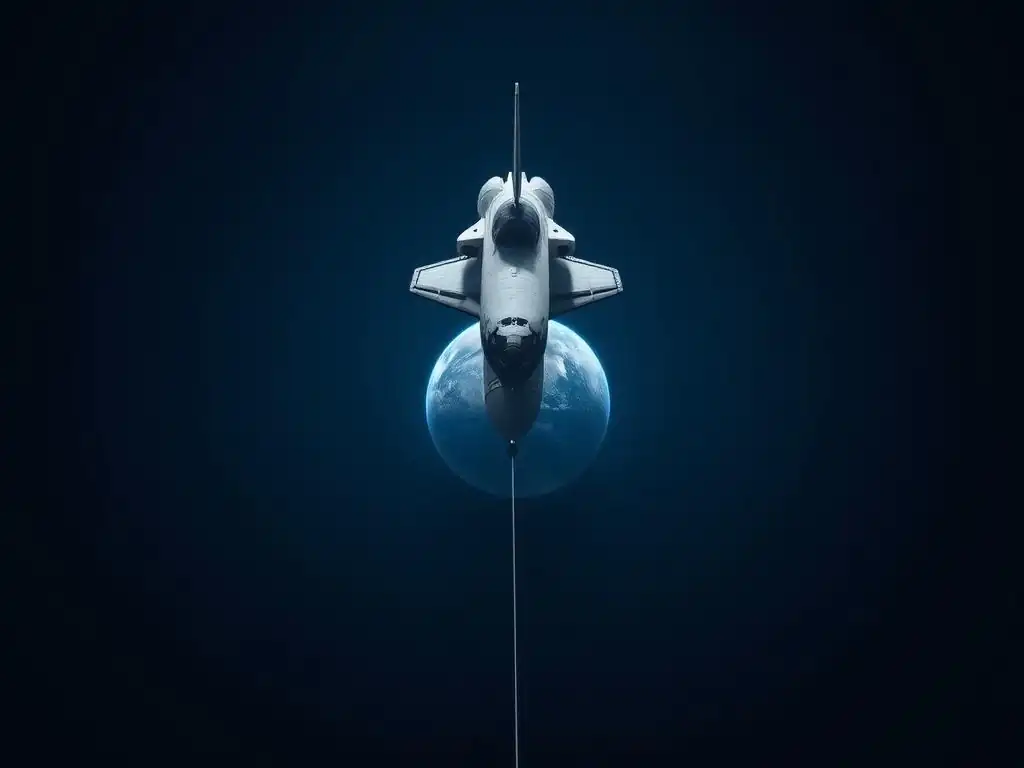
Before her historic long-duration mission aboard the Mir space station, Shannon Lucid accumulated significant spaceflight experience across four separate Shannon Lucid space shuttle mission flights. Each of these missions contributed to her growing expertise in orbital operations, scientific experimentation, and the complex dynamics of working in microgravity. These early flights were crucial in building the foundation for her later, more extended stay in space.
Her shuttle career demonstrated a remarkable versatility, as she served as a mission specialist on flights dedicated to satellite deployment, scientific research, and technological demonstrations. This breadth of experience across different types of missions underscored her adaptability and comprehensive understanding of various facets of spaceflight, preparing her for the challenges of longer durations.
STS-51-G: Shannon Lucid's First Space Shuttle Flight
Dr. Shannon Lucid made her inaugural journey into space on June 17, 1985, aboard Space Shuttle Discovery as part of the STS-51-G mission. Serving as a Mission Specialist, she played a crucial role in deploying three communications satellites: Arabsat-1B for the Arab Satellite Communications Organization, Morelos-B for Mexico, and Telstar 303 for AT&T. This mission highlighted the Space Shuttle's growing role in commercial and international satellite deployment.
Beyond satellite deployments, STS-51-G also involved the deployment and subsequent retrieval of the SPARTAN-1 (Shuttle Pointed Autonomous Research Tool for Astronomy) payload, a free-flying science platform designed to conduct astronomical observations. Lucid's participation in this mission marked the beginning of her distinguished career in space, providing her with invaluable experience in orbital mechanics and payload operations.
STS-34: Deploying the Galileo Probe
Shannon Lucid's second Shannon Lucid space shuttle mission was STS-34, which launched on October 18, 1989, aboard the Space Shuttle Atlantis. On this flight, she served as a Mission Specialist, with the primary objective of deploying the Galileo probe, a crucial spacecraft destined for a multi-year journey to Jupiter. The successful deployment of Galileo was a significant milestone for planetary science, as it would eventually provide unprecedented insights into Jupiter's atmosphere and moons.
The mission also included various secondary payloads and scientific experiments, allowing Lucid to engage in a broader range of in-orbit activities. Her involvement in the deployment of such a vital scientific instrument underscored her importance to NASA's deep space exploration initiatives and further cemented her reputation as a skilled and versatile astronaut.
STS-43: Aboard Atlantis for Scientific Experiments
On August 2, 1991, Shannon Lucid embarked on her third Shannon Lucid space shuttle mission, STS-43, once again aboard the Space Shuttle Atlantis. This mission's primary objective was the deployment of the Tracking and Data Relay Satellite-5 (TDRS-5), a vital component of NASA's communication network for space operations. The TDRS satellites are essential for maintaining continuous communication with orbiting spacecraft, including the Space Shuttle itself and later the International Space Station.
In addition to the TDRS deployment, STS-43 carried a diverse array of scientific experiments within the payload bay and middeck. These experiments covered fields such as materials science, fluid dynamics, and biomedical research, allowing Lucid and her crewmates to conduct valuable in-orbit investigations. Her participation in these experiments further demonstrated her commitment to advancing scientific knowledge through spaceflight.
STS-58: Life Science Research in Spacelab
Shannon Lucid's fourth Shannon Lucid space shuttle mission, STS-58, launched on October 18, 1993, aboard the Space Shuttle Columbia. This mission was particularly significant as it was a dedicated Spacelab Life Sciences (SLS-2) mission, focusing extensively on biomedical research. Serving as the Payload Commander, Lucid was responsible for overseeing a wide range of experiments designed to study the physiological adaptations of humans and animals to microgravity.
During the 14-day flight, which was one of the longest shuttle missions at the time, the crew conducted intricate studies on the cardiovascular, musculoskeletal, and neurovestibular systems of both themselves and onboard rodents. These experiments provided critical data on bone density loss, muscle atrophy, and fluid shifts, all of which are vital for planning future long-duration human space missions. Lucid's leadership role on this mission highlighted her deep scientific expertise and her commitment to understanding the biological impacts of spaceflight.
Shannon Lucid and the Mir Space Station: A Record-Breaking Mission
The pinnacle of Shannon Lucid's spaceflight career was her historic, record-breaking mission aboard the Russian Mir space station. This extended stay, part of the Shuttle-Mir program, was a crucial precursor to the International Space Station, fostering international collaboration and providing invaluable insights into the challenges and opportunities of long-duration human presence in space. Lucid's mission was a testament to her endurance, adaptability, and scientific dedication.
Her time on Mir was not just about breaking records; it was about living and working continuously in microgravity for nearly half a year, conducting vital research, and serving as a bridge between the American and Russian space programs. This mission marked a significant shift in how NASA approached long-duration spaceflight, moving beyond the confines of the Space Shuttle's typical two-week missions to embrace the sustained presence offered by a space station.
Preparing for the Mir Mission: Training and Collaboration with Russian Cosmonauts
Preparing for her extended mission on Mir required Shannon Lucid to undergo intensive and culturally immersive training, primarily at the Yuri Gagarin Cosmonaut Training Center in Star City, Russia. This training was far more extensive than her previous Shannon Lucid space shuttle mission preparations, focusing not only on Mir's complex systems but also on mastering the Russian language, which was essential for daily communication with her cosmonaut crewmates and ground control. She spent months learning Mir's intricate life support, navigation, and propulsion systems, often in older, less automated environments than NASA's.
The collaboration with Russian cosmonauts during training was vital, as it built the trust and understanding necessary for a successful joint mission. Lucid adapted to different operational philosophies and cultural nuances, demonstrating remarkable flexibility. This period of preparation also involved simulations of various emergency scenarios, ensuring she was ready to respond to any challenge in the isolated environment of the space station, a critical aspect of her mission's success.
Arrival at Mir: Adapting to Life Aboard the Space Station
Shannon Lucid arrived at the Mir space station on March 22, 1996, transported by the Space Shuttle Atlantis as part of the STS-76 mission. Her arrival marked the official start of her 188-day residency, making her the first American woman to live on Mir and the second American to have an extended stay there. The transition from the spacious shuttle to the more compact and lived-in environment of Mir presented immediate adaptations, including navigating its complex, often cluttered modules.
Life aboard Mir was significantly different from her previous shuttle flights, characterized by longer periods of isolation, continuous operations, and a more intimate living arrangement with her Russian crewmates. Lucid quickly adapted to the station's routines, its unique environmental controls, and the specific challenges of living in a confined space for an extended period, demonstrating her remarkable resilience and capacity for adjustment.
Scientific Experiments on Mir: Lucid's Research Contributions
During her 188 days aboard the Mir space station, Shannon Lucid served as a dedicated research scientist, conducting a broad spectrum of experiments crucial for understanding the long-term effects of microgravity on the human body and various biological systems. Her research encompassed life sciences, physical sciences, and Earth observation, building upon data collected during previous Shannon Lucid space shuttle mission flights and setting the stage for future International Space Station research. Key experiments included studies on bone demineralization, muscle atrophy, and cardiovascular changes, using herself as a primary subject.
Lucid also performed experiments on plant growth in space, investigating how microgravity affected cellular processes and development in botanical specimens. Her work provided valuable insights into the feasibility of growing food for future long-duration missions. Furthermore, she conducted materials science experiments, observing how various alloys and crystals formed in the absence of gravity, contributing to advancements in industrial processes. Her meticulous record-keeping and data collection were fundamental to the success of these scientific endeavors.
Challenges and Triumphs: Overcoming Obstacles During the Extended Mission
Shannon Lucid's mission on Mir was not without its significant challenges, which tested her endurance and problem-solving skills. The aging Mir station experienced several technical malfunctions during her stay, including issues with the Elektron oxygen generator, which required manual intervention and created a temporary reliance on stored oxygen. There were also concerns about the station's environmental control system, leading to fluctuations in temperature and humidity, which added to the discomfort.
Beyond the technical difficulties, Lucid faced the psychological rigors of prolonged isolation and confinement, coupled with communication delays and cultural differences with her Russian crewmates. Despite these obstacles, her steadfast resolve and calm demeanor were pivotal in maintaining morale and ensuring the continuity of scientific operations. Her return was also delayed by a hurricane, extending her mission by six weeks, a testament to her extraordinary resilience and adaptability in the face of unforeseen circumstances.
Shannon Lucid's Return to Earth: A Hero's Welcome
After 188 days in orbit, Shannon Lucid returned to Earth on September 26, 1996, aboard the Space Shuttle Atlantis (STS-79), completing her record-breaking mission. Upon re-entry and landing at Kennedy Space Center, she faced the immediate physical challenges of readapting to gravity after nearly half a year in microgravity. Her muscles had weakened, and her balance was significantly affected, requiring assistance to walk initially.
Despite the physical toll, Lucid's return was met with widespread acclaim and a hero's welcome, both from NASA and the public. She had not only broken the American record for the longest continuous spaceflight but also served as a vital bridge in U.S.-Russian space cooperation. Her successful mission underscored the human capacity for endurance and the importance of international collaboration in advancing space exploration.
Shannon Lucid's Record-Breaking Spaceflight: Longest U.S. Space Mission for a Woman

Shannon Lucid's 188-day, 4-hour, and 0-minute mission aboard the Mir space station set a new record for the longest spaceflight by any American astronaut, male or female, at the time. This monumental achievement, which began with her launch on STS-76 and ended with her return on STS-79, surpassed the previous U.S. record by more than a month. It cemented her status as a pioneer in long-duration spaceflight and provided invaluable data for future missions to the International Space Station and beyond.
Her extended stay demonstrated the human body's capacity to adapt to microgravity for prolonged periods, although with significant physiological changes. The record she set stood for several years before being surpassed by other astronauts, including fellow American women like Peggy Whitson, yet it remains a foundational milestone in the history of human space exploration.
Reflecting on the Mir Experience: Lucid's Insights and Perspectives
Upon her return, Shannon Lucid shared profound insights into her Mir experience, emphasizing the unique challenges and rewards of living in space for an extended period. She often spoke about the psychological resilience required to cope with isolation and the importance of maintaining a strong relationship with her crewmates. Lucid highlighted the subtle yet significant adaptations her body underwent, from fluid shifts to changes in bone density, providing firsthand accounts vital for medical research.
Her reflections also underscored the critical nature of international cooperation, particularly between the U.S. and Russia, in advancing space exploration. Lucid often described her time on Mir as a testament to what can be achieved when nations collaborate towards a common scientific goal, laying the groundwork for the enduring partnership that defines the International Space Station. Her narrative offered a human perspective on the scientific and operational complexities of living off-world.
Post-Mir Career and Legacy: Inspiring Future Generations of Scientists and Astronauts
Following her historic Mir mission, Shannon Lucid continued to be a vital asset to NASA, demonstrating her enduring commitment to space exploration and scientific advancement. Her experience provided unparalleled insights into long-duration spaceflight, which were crucial for the development and operation of the International Space Station. She transitioned from active flight duty to various leadership and advisory roles within the astronaut office, ensuring her vast knowledge was passed on to future generations.
Lucid's post-Mir career was characterized by her dedication to supporting new missions and mentoring incoming astronauts. She served as Chief Astronaut for Science at the Johnson Space Center, a role that allowed her to directly influence the scientific objectives and training protocols for upcoming spaceflights. Even after her retirement from the astronaut corps in 2012, she continued to work for NASA in a part-time capacity, assisting with technical reviews and providing expert guidance, a testament to her lifelong passion for space.
Awards and Recognition: Honoring a Pioneer in Space Exploration
Shannon Lucid's extraordinary contributions to space exploration have been widely recognized and honored with numerous prestigious awards. In 1996, she was awarded the Congressional Space Medal of Honor by President Bill Clinton, becoming the first woman to receive this highest honor for an American astronaut. This award acknowledged her record-breaking mission on Mir and her overall distinguished career.
Among her many other accolades, Lucid received the NASA Distinguished Service Medal, the highest award given by NASA, on multiple occasions. She was also inducted into the International Space Hall of Fame in 1996 and the U.S. Astronaut Hall of Fame in 2005. Furthermore, in recognition of her significant role in U.S.-Russian space cooperation, she was awarded the Order of Friendship by Russian President Boris Yeltsin, underscoring her global impact.
Shannon Lucid's Impact on Women in Science and Space
Dr. Shannon Lucid's career profoundly impacted the perception and participation of women in science and space exploration. As one of the first six women selected as NASA astronauts in 1978, she broke through significant gender barriers in a field historically dominated by men. Her consistent performance across five Shannon Lucid space shuttle mission flights and her endurance during the record-breaking Mir mission served as a powerful testament to women's capabilities in demanding scientific and operational environments.
Lucid became an enduring role model, inspiring countless girls and young women to pursue careers in science, technology, engineering, and mathematics (STEM). Her calm demeanor, sharp intellect, and unwavering dedication demonstrated that gender was no barrier to reaching the highest echelons of scientific achievement and exploration. Her legacy continues to resonate, encouraging diversity and inclusion within the space community and beyond.
Shannon Lucid: A Pioneer for Women in Space Science
Shannon Lucid''s career is a testament to the power of perseverance and scientific excellence, firmly establishing her as a pioneer for women in space science. Her journey from a research biochemist to a veteran astronaut, accumulating significant flight hours and groundbreaking achievements, reshaped what was perceived as possible for women in the highly demanding field of space exploration. She didn't just participate; she excelled, setting new standards for endurance and scientific contribution.
Her accomplishments were not isolated events but rather integral steps in a larger narrative of increasing female representation and influence in space. Lucid's consistent performance across diverse missions and her resilience during her extended Mir stay provided tangible evidence of women's invaluable capabilities, directly influencing how future astronaut selections and mission planning would consider gender.
Influence on Subsequent Female Astronauts
Shannon Lucid's pioneering efforts and record-setting achievements directly influenced and opened doors for subsequent generations of female astronauts. Her success on the Mir station, in particular, demonstrated the physiological and psychological feasibility of long-duration spaceflight for women, challenging previous assumptions and paving the way for extended stays on the International Space Station. Astronauts like Peggy Whitson and Sunita Williams, who later surpassed Lucid's records for cumulative time in space, built upon the foundation she established.
Lucid's quiet professionalism and scientific rigor served as a blueprint for aspiring female spacefarers. Her ability to seamlessly integrate into male-dominated crews and her focus on scientific objectives normalized the presence of women in space, making it less of a novelty and more of an accepted, integral part of space exploration. Her legacy is evident in the increasing number of women in leadership roles within NASA and other space agencies globally.
Contributions to Advancing Women in STEM
Beyond her direct spaceflight accomplishments, Shannon Lucid's career significantly contributed to advancing the broader cause of women in STEM fields. By excelling in a highly technical and visible profession, she became a tangible example of female intellectual prowess and capability. Her story resonated with young girls and women, showing them that careers in science, engineering, and mathematics were not only attainable but also offered paths to extraordinary achievements.
Lucid frequently participated in educational outreach, sharing her experiences and encouraging students, particularly girls, to pursue their scientific curiosities. Her presence in the astronaut corps and her public visibility helped to dismantle stereotypes about women's roles in technical professions. Her life's work continues to inspire a greater push for diversity and inclusion across all scientific and technological disciplines, emphasizing that talent knows no gender.
Conclusion: Shannon Lucid's Enduring Legacy in Space Exploration
Dr. Shannon Lucid's journey from a biochemist to a record-breaking astronaut is a testament to her exceptional intellect, unwavering determination, and pioneering spirit. Her five Shannon Lucid space shuttle mission flights and her historic 188-day residency aboard the Mir space station not only pushed the boundaries of human endurance in orbit but also provided invaluable scientific data crucial for the future of long-duration spaceflight. She embodied the spirit of international collaboration and scientific inquiry, leaving an indelible mark on both the American and Russian space programs.
Lucid's legacy extends far beyond her flight hours and broken records; she shattered gender barriers, inspiring countless women and girls to pursue careers in STEM. Her quiet strength and profound contributions have ensured her place as one of the most influential figures in space history, a true pioneer whose impact continues to resonate, guiding and motivating future generations of scientists and explorers to reach for the stars.
Frequently Asked Questions
How many space shuttle missions did Shannon Lucid participate in?
Shannon Lucid participated in six space shuttle missions, making her a highly experienced astronaut. Her career highlights her dedication to space exploration.
What was significant about Shannon Lucid's mission to the Mir space station?
Lucid's mission to Mir was significant because she spent a record-breaking 188 days on the station. This was a long-duration mission that tested the limits of human endurance in space.
What were some of the challenges faced by women in science during Shannon Lucid's career?
Women in science often faced discrimination and limited opportunities in male-dominated fields. They had to work harder to prove themselves and overcome societal biases.
What scientific contributions did Shannon Lucid make during her space missions?
During her missions, Shannon Lucid conducted numerous experiments in biology and physics. Her work contributed to our understanding of human physiology in space and the effects of microgravity.
How does "WomenInScienceHistory.com" aim to inspire future generations of female scientists through stories like Shannon Lucid's?
The website showcases the achievements and resilience of female scientists like Shannon Lucid. By highlighting these stories, it aims to encourage young women to pursue careers in STEM fields.
Final Reflection: Reaching for the Stars and Beyond
The story of Shannon Lucid, a six-time shuttle flyer and Mir resident, resonates powerfully today because it reminds us of the enduring human spirit of exploration. Her dedication and resilience in the face of challenges, both on Earth and in space, serve as a potent symbol of what we can achieve when we push the boundaries of our capabilities. In a world often divided, Lucid's collaborative work with international partners on Mir highlights the unifying power of scientific endeavor.
The impact of Lucid's achievements extends far beyond the technical realm of space exploration. Her journey inspires countless individuals, particularly women and girls, to pursue careers in STEM fields, demonstrating that the sky is not the limit when there are footprints on the moon. Exploration is really the essence of the human spirit, and to lose that would be a great tragedy.
This quote, often attributed to astronauts, perfectly encapsulates the driving force behind Lucid's remarkable career and the lasting legacy she leaves for future generations.
As we reflect on Shannon Lucid's extraordinary space shuttle missions and her extended stay on Mir, let us be inspired to embrace challenges with courage and determination. Consider how her story can motivate you to pursue your own dreams, no matter how audacious they may seem. Just as Lucid reached for the stars, may we all strive to reach our full potential and contribute to a brighter future for humanity, both on Earth and among the stars.
Uncover Your Own Potential for Extraordinary Achievements!
Thank you for exploring the inspiring journey of Shannon Lucid. We hope you’ve discovered new perspectives on resilience, dedication, and the power of pursuing your dreams, no matter how ambitious they may seem. Now, let's translate that inspiration into action in your own life!
- Start by identifying one seemingly impossible goal in your life and break it down into manageable, daily steps. Just like Dr. Lucid prepared rigorously for space, what daily habits can you implement to reach your 'Mir'?
- Share this article with someone who needs a boost of inspiration to pursue their own dreams. You never know whose life you might touch!
- Take some time to reflect on a time you overcame a significant challenge. What lessons did you learn from that experience, and how can you apply them to your current goals?
What "impossible" goal are you inspired to start tackling today?