
Liu Yang: China's First Woman Taikonaut and Her Journey to the Tiangong Space Station

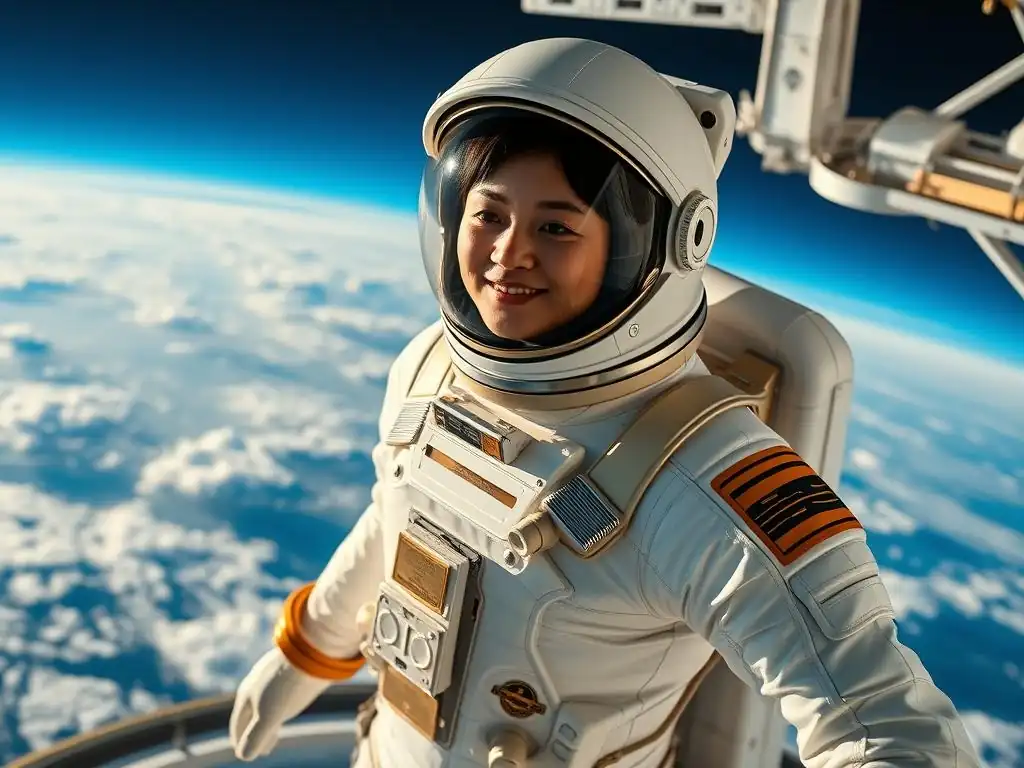
Welcome to WomenInScienceHistory.com, where we unearth the remarkable stories of women who shaped the world of science. Discover the untold narratives of brilliance and perseverance, often overshadowed in traditional history. Today, we invite you to delve into the extraordinary journey of Liu Yang, China's first woman taikonaut, and explore her pioneering role in the nation's space program and the Tiangong Space Station.
What challenges did she overcome to reach the stars, and what impact did her mission have on the future of space exploration? Join us as we uncover her inspiring legacy, and the broader context of women's contributions to Space Science & Astronomy.
- Introduction: Celebrating Liu Yang's Pioneering Role in Chinese Space Exploration
- Early Life and Education: The Foundation of a Future Taikonaut
- Selection and Training: Preparing for Spaceflight
- The Shenzhou 9 Mission: Liu Yang's Historic Spaceflight
- The Tiangong Space Station: A New Chapter in China's Space Program
- Overcoming Challenges: Gender and Representation in Space
- Liu Yang's Legacy: Inspiring Future Generations
- Conclusion: Liu Yang, a Symbol of Progress and Innovation in Chinese Space Exploration
-
Frequently Asked Questions
- How did Liu Yang become China's first woman in space?
- What was the name of the space station where Liu Yang worked?
- What type of training did Liu Yang undergo to prepare for her space mission?
- What challenges did Liu Yang likely face as a woman entering the male-dominated field of space exploration?
- What impact did Liu Yang's space journey have on inspiring future generations, particularly women, in science and technology?
- Final Reflection: Reaching for the Stars and Inspiring Generations
- Embark on Your Own Exploration!
Introduction: Celebrating Liu Yang's Pioneering Role in Chinese Space Exploration
Women In Science History: Highlighting Liu Yang's Contributions to Space Science
Liu Yang stands as a monumental figure in the annals of space exploration, particularly for her groundbreaking achievement as the first Chinese woman to journey into space. Her historic flight aboard the Shenzhou 9 spacecraft in June 2012 not only marked a significant milestone for China's burgeoning space program but also served as a powerful testament to the capabilities of women in highly demanding scientific and technological fields. Her contributions extend beyond merely being a passenger; she actively participated in critical mission operations and scientific experiments, solidifying her place among the pioneering women celebrated by platforms like WomenInScienceHistory.com.
Her story is a beacon for aspiring female scientists and engineers, demonstrating that dedication and talent can overcome historical barriers and societal expectations. Liu Yang's ascent into orbit shattered stereotypes and opened new pathways for women in a domain traditionally dominated by men, directly impacting the narrative of women's involvement in cutting-edge science and technology. Her journey underscores the importance of recognizing and celebrating the often-overlooked achievements of women who have pushed the boundaries of human knowledge and endeavor.
Liu Yang's Space Exploration Journey: A Historic Milestone for China and Women in STEM
The successful launch of Shenzhou 9 with Liu Yang as a crew member represented a pivotal moment for China, making it the third nation globally to independently send a woman into space, following the Soviet Union and the United States. This achievement was not just a technological triumph but also a profound cultural and social statement. It showcased China's commitment to gender equality within its elite scientific and military programs, inspiring countless individuals across the nation and around the world.
Liu Yang's space exploration journey resonated deeply within the scientific, technological, engineering, and mathematics (STEM) fields, particularly for women. Her success provided tangible proof that women are not only capable of excelling in these demanding professions but can also lead humanity into new frontiers of discovery. This historic flight invigorated discussions about diversity in STEM, encouraging young girls and women to pursue ambitious careers in areas like aerospace engineering, astrophysics, and mission control, fields that had historically seen limited female representation.
Early Life and Education: The Foundation of a Future Taikonaut
From Pilot to Astronaut: Liu Yang's Path to Space
Born in Zhengzhou, Henan province, in 1978, Liu Yang's trajectory towards space began not with a direct ambition for astronautics, but through a distinguished career in aviation. She joined the People's Liberation Army Air Force (PLAAF) in 1997, where she honed her skills as an exceptional pilot. During her tenure, she accumulated over 1,680 hours of flight experience, primarily piloting transport aircraft. Her exemplary performance, sharp intellect, and calm demeanor under pressure marked her as an elite aviator, attributes that are crucial for the rigorous demands of spaceflight.
This extensive background as a seasoned pilot provided Liu Yang with an invaluable foundation in aerospace operations, complex systems management, and emergency procedures. Her transition from an accomplished pilot to a taikonaut candidate was a natural progression, leveraging her existing expertise in high-stakes environments. The discipline, precision, and resilience cultivated during her years flying for the PLAAF were directly transferable skills that proved indispensable in the challenging world of astronaut training.
Academic Background: Air Force Aviation University
Liu Yang's robust academic foundation was laid at the PLA Air Force Aviation University, one of China's premier military flight training institutions. It was here that she received comprehensive training in aeronautical theory, flight dynamics, navigation, and aircraft systems. Her studies at this prestigious university equipped her with the deep technical understanding necessary for operating sophisticated machinery and comprehending the intricate physics of flight.
The rigorous curriculum at the Air Force Aviation University not only provided her with the theoretical knowledge but also instilled in her the discipline and structured thinking essential for a career in aviation and, subsequently, space exploration. This academic rigor, combined with her practical flight experience, created a formidable profile that made her an ideal candidate for China's ambitious human spaceflight program. Her intellectual prowess and commitment to continuous learning were evident throughout her academic and professional career, culminating in her selection as a taikonaut.
Selection and Training: Preparing for Spaceflight
Rigorous Training Regimen: The Challenges of Becoming a Taikonaut
Becoming a taikonaut involves an incredibly arduous and multifaceted training regimen designed to prepare individuals for the extreme conditions of space. Liu Yang, along with her cohort, underwent years of intense physical, psychological, and technical preparation. This included enduring simulated G-forces in centrifuges, practicing manual docking procedures in advanced simulators, and undergoing survival training in diverse environments, from deserts to oceans. The physical demands were immense, requiring peak cardiovascular fitness, muscular endurance, and coordination to withstand launch and reentry forces, often exceeding 8 Gs.
Beyond the physical, the psychological resilience of candidates is rigorously tested. Trainees must demonstrate exceptional mental fortitude, ability to cope with isolation, handle high-pressure situations, and maintain focus during long durations of confinement. Liu Yang's training involved extensive classroom instruction on spacecraft systems, orbital mechanics, astronomy, and medical procedures, ensuring she possessed a comprehensive understanding of every aspect of spaceflight. This holistic approach to training ensures that taikonauts are not just physically capable but also intellectually sharp and emotionally stable.
The Shenzhou 9 Mission: Liu Yang's Selection and Role
Liu Yang's selection for the Shenzhou 9 mission was the culmination of years of dedicated training and fierce competition. She was chosen from China's second batch of taikonauts, which included two women, alongside Wang Yaping. Her exemplary performance throughout the selection and training process, which began in 2010, distinguished her as the prime candidate for this historic flight. The Shenzhou 9 mission was particularly significant as it aimed to achieve China's first manned manual docking with the Tiangong-1 space laboratory module, a critical step towards building a larger, permanent space station.
As a crew member aboard Shenzhou 9, Liu Yang's role was crucial. She served as the mission's primary medical officer, responsible for monitoring the crew's health and conducting various biomedical experiments to understand the effects of microgravity on the human body. Her extensive training in emergency medical procedures and her keen observational skills were vital to the mission's success, ensuring the well-being of her fellow taikonauts during their historic orbital operations.
The Shenzhou 9 Mission: Liu Yang's Historic Spaceflight
Launch and Orbital Operations: A Detailed Account of the Mission
On June 16, 2012, Liu Yang made history as she launched aboard the Shenzhou 9 spacecraft from the Jiuquan Satellite Launch Center. The mission, commanded by Jing Haipeng and also including Liu Wang, marked China's fourth manned spaceflight and its first with a female taikonaut. The primary objective was to achieve the nation's first manual rendezvous and docking with the Tiangong-1 space laboratory module, a complex maneuver critical for the development of a permanent space station.
Over the course of their approximately 13-day mission, the crew performed the delicate manual docking, demonstrating China's advanced capabilities in orbital mechanics and spacecraft control. This intricate operation involved precise maneuvering and communication between the Shenzhou 9 and Tiangong-1, a testament to the crew's rigorous training and the ground control teams' expertise. Once docked, the taikonauts entered Tiangong-1, conducting various experiments and evaluations of the module's habitability and systems.
Scientific Experiments and Contributions Aboard Shenzhou 9: Medical Experiments and Space Environment Research
During her time aboard Shenzhou 9 and inside the Tiangong-1 module, Liu Yang was instrumental in conducting a series of critical scientific investigations. Her primary focus, given her role as the mission's medical officer, was on biomedical research. She performed experiments designed to assess the physiological responses of the human body to prolonged microgravity exposure, collecting data on cardiovascular changes, bone density, and muscle atrophy. This data was vital for understanding the long-term health implications of space travel and for developing countermeasures for future, longer-duration missions.
In addition to medical studies, Liu Yang also participated in research related to the space environment. This included monitoring radiation levels within the module and observing the effects of microgravity on various biological samples. Her meticulous execution of these experiments provided valuable insights that contributed to China's growing body of knowledge in space science, directly informing the design and operation of future space habitats and missions.
Liu Yang's Impact on the Mission: Skills and Expertise
Liu Yang's contributions to the Shenzhou 9 mission extended far beyond her symbolic role as China's first woman in space. Her background as an experienced pilot provided her with an innate understanding of complex systems and operational procedures, which proved invaluable during the mission's critical phases, particularly the manual docking. Her ability to remain calm and focused under immense pressure was a significant asset, ensuring the smooth execution of tasks and the rapid resolution of any unforeseen challenges.
Furthermore, her meticulous attention to detail and her strong communication skills were essential for successful coordination with ground control and her fellow crew members. As the medical officer, her expertise in human physiology and her proactive approach to monitoring the crew's health ensured that the taikonauts remained in optimal condition throughout the demanding flight. Liu Yang's active participation and professional competence highlighted that female taikonauts are not only capable but indispensable members of any space exploration journey.
The Tiangong Space Station: A New Chapter in China's Space Program
Liu Yang's Shenzhou 14 Mission to Tiangong: Furthering Scientific Research
A decade after her historic first flight, Liu Yang once again ventured into space, this time as a crew member of the Shenzhou 14 mission, launched on June 5, 2022. This mission marked a significant new chapter in China's space program, as its primary objective was to oversee the final stages of the construction and outfitting of the Tiangong space station, China's permanent orbital outpost. Liu Yang's return to space underscored her continued value and expertise within the taikonaut corps.
During her six-month stay aboard the Tiangong station, Liu Yang participated in numerous complex operations, including multiple spacewalks (extravehicular activities or EVAs) for external assembly and maintenance, and the activation of new scientific modules, such as the Wentian and Mengtian laboratory modules. Her role involved conducting extensive scientific experiments in various fields, from space life science and microgravity physics to material science and space medicine. This extended mission allowed for more in-depth research and demonstrated the station's capabilities as a robust orbiting laboratory.
Significance of Tiangong for Chinese Space Exploration
The Tiangong space station represents the cornerstone of China's ambitious long-term space exploration strategy. It is designed as a modular, multi-module orbital laboratory capable of hosting prolonged human presence and conducting a wide array of cutting-edge scientific research. Unlike the temporary Tiangong-1 and Tiangong-2 modules, Tiangong is intended for continuous operation, providing a stable platform for Chinese and potentially international scientific collaboration.
The successful construction and operation of Tiangong elevate China's status as a major space power, enabling the nation to conduct independent long-duration human spaceflight missions and foster significant advancements in space science and technology. For Liu Yang, being part of the crew that brought this vision to fruition further cemented her legacy, illustrating her direct involvement in shaping the future of China's human presence in space. The station's operational capability provides a critical foundation for future deep-space missions and an ongoing commitment to scientific discovery.
Overcoming Challenges: Gender and Representation in Space
Breaking Barriers: Liu Yang as a Role Model for Women in STEM
Liu Yang's journey into space was not just a personal triumph but a profound statement against historical gender biases prevalent in highly technical and traditionally male-dominated fields. Before her flight, the world of taikonauts in China was exclusively male, reflecting a broader global trend in early space exploration. Her selection and successful mission unequivocally demonstrated that gender is no barrier to achieving excellence in the most demanding scientific and engineering pursuits.
As China's first woman in space, Liu Yang became an immediate and potent role model for millions of young girls and women, not just in China but globally. Her story dismantled the perception that space exploration or advanced scientific careers are unsuitable or unattainable for women. She inspired a new generation to look beyond traditional gender roles and pursue their passions in STEM, showing them that with dedication and skill, they too can reach for the stars.
The Importance of Female Representation in Space Missions
The inclusion of women like Liu Yang in space missions is crucial for several compelling reasons, extending beyond mere symbolism. Diversity in space crews, encompassing gender, background, and expertise, brings a broader range of perspectives and problem-solving approaches to complex challenges encountered in space. Studies have shown that diverse teams often lead to more innovative solutions and better decision-making, which is paramount in high-stakes environments like spaceflight.
Furthermore, female representation in space missions reflects the global population and encourages a wider talent pool to contribute to scientific advancement. When young girls see women like Liu Yang and Wang Yaping performing critical roles on a space station, it normalizes the idea of women in science and engineering, breaking down subconscious barriers. This visibility is vital for fostering an inclusive scientific community that harnesses the full potential of all individuals, regardless of gender, to push the boundaries of human knowledge and exploration.
Liu Yang's Legacy: Inspiring Future Generations
Liu Yang's Influence on China's Space Program
Liu Yang's pioneering spirit and exceptional performance have left an indelible mark on China's space program, paving the way for greater gender inclusion and diversity. Her initial flight on Shenzhou 9 opened the door for subsequent female taikonauts, most notably Wang Yaping, who became the first Chinese woman to perform a spacewalk and to live on the Tiangong space station for an extended period. Liu Yang's success demonstrated the viability and necessity of integrating women fully into all aspects of space exploration.
Her continued involvement, particularly her second mission to the Tiangong space station, solidified her status as a seasoned veteran and a core member of the taikonaut corps. She serves as an active advocate for China's space ambitions and a living example of the program's commitment to excellence and progress. Her influence helps shape training protocols, mission planning, and public outreach efforts, ensuring that the lessons learned from her unique Liu Yang space exploration journey benefit future generations of spacefarers.
Inspiring Young Women to Pursue Careers in Science and Technology
Beyond the direct impact on the space program, Liu Yang's most profound legacy lies in her role as a powerful inspiration for young women globally. Her story resonates deeply, illustrating that dedication, hard work, and intellectual curiosity can lead to extraordinary achievements, even in fields perceived as inaccessible. She frequently engages in public appearances and educational initiatives, sharing her experiences and encouraging students, particularly girls, to embrace STEM subjects.
Liu Yang's narrative serves as a compelling counter-narrative to historical gender biases, proving that women are not only capable of technical excellence but also possess the resilience and determination required for pioneering endeavors. Her example transforms abstract concepts of scientific careers into tangible, aspirational goals for aspiring female scientists and engineers. The enduring impact of her Liu Yang space exploration journey will continue to motivate countless individuals to pursue their dreams in science and technology, contributing to a more diverse and innovative future.
Conclusion: Liu Yang, a Symbol of Progress and Innovation in Chinese Space Exploration
Remembering Liu Yang's Historic Space Exploration Journey
Liu Yang's remarkable career as a taikonaut is a testament to human ingenuity, perseverance, and the boundless potential of individuals to achieve extraordinary feats. As China's first woman in space, and later a key figure in the construction of the Tiangong space station, she embodies the nation's rapid advancements in space technology and its commitment to pushing the boundaries of scientific discovery. Her historic flight aboard Shenzhou 9 in 2012 marked a pivotal moment, not just for China but for the global narrative of women in science and exploration.
Her ongoing contributions and her role as a trailblazer have cemented her place in history. Liu Yang's space exploration journey serves as a powerful symbol of progress, innovation, and the breaking of barriers. She continues to inspire countless individuals, particularly young women, to pursue ambitious careers in STEM, demonstrating that the sky is not the limit when it comes to human endeavor and the pursuit of knowledge.
Frequently Asked Questions
How did Liu Yang become China's first woman in space?
Liu Yang was selected for the taikonaut program due to her exceptional skills as a fighter pilot and her rigorous training. Her dedication and performance earned her a spot on the Shenzhou 9 mission, making her China's first woman in space.
What was the name of the space station where Liu Yang worked?
Liu Yang worked aboard the Tiangong space station, which is a key part of China's space exploration program. Her mission contributed significantly to the station's early operations and research.
What type of training did Liu Yang undergo to prepare for her space mission?
Liu Yang's training involved extensive physical and psychological preparation, including simulated space environments, survival training, and learning to operate the spacecraft's systems. This ensured she was fully prepared for the challenges of spaceflight.
What challenges did Liu Yang likely face as a woman entering the male-dominated field of space exploration?
Liu Yang likely faced challenges related to gender bias and the need to prove her abilities in a field traditionally dominated by men. She also likely navigated societal expectations and pressures unique to being a female astronaut.
What impact did Liu Yang's space journey have on inspiring future generations, particularly women, in science and technology?
Liu Yang's journey served as a powerful symbol of achievement and possibility, inspiring young women to pursue careers in STEM fields. Her story highlights the importance of representation and breaking down barriers in science.
Final Reflection: Reaching for the Stars and Inspiring Generations
The story of Liu Yang, China's first woman taikonaut, is more than just a chronicle of space exploration; it's a powerful testament to the unwavering pursuit of dreams and the breaking of barriers. Her journey to the Tiangong space station resonates deeply today, reminding us that the seemingly impossible can be achieved with dedication, resilience, and a pioneering spirit. In a world constantly seeking inspiration, Liu Yang's story provides a beacon of hope and a tangible example of human potential.
Liu Yang's impact extends far beyond the scientific community, profoundly influencing the cultural and social landscape, particularly for women in STEM fields. Her achievements serve as a potent symbol of empowerment, demonstrating that gender is no barrier to reaching for the stars, both literally and figuratively. The vast universe is so beautiful, and I hope more people can join us to explore and understand it.
This quote encapsulates the spirit of exploration and inclusivity that Liu Yang embodies, inspiring countless individuals to pursue their own ambitions, regardless of societal expectations.
As we reflect on Liu Yang's extraordinary journey, let us consider the lessons it imparts. Her story is not just about space exploration; it's about pushing boundaries, challenging norms, and inspiring future generations. Embrace the spirit of exploration in your own life, dare to dream big, and remember that the pursuit of knowledge and the breaking of barriers are within reach for all who dare to reach for them. Let Liu Yang's journey be a constant reminder that the sky is not the limit when there are footprints on the moon.
Embark on Your Own Exploration!
Thank you for delving into the inspiring journey of Liu Yang! We hope you’ve discovered new appreciation for the dedication and groundbreaking achievements of women in space. Now, it's your turn to take action and further explore the wonders around you.
Here are a few steps you can take:
- Dive deeper into the world of space exploration by researching ongoing missions to the Tiangong Space Station and the scientific breakthroughs they're achieving.
- Share Liu Yang's incredible story with your friends and family to inspire the next generation of female scientists and astronauts.
- Unearth the untold stories of other pioneering women in STEM fields—you might just find a new role model or discover a passion you never knew you had!
What small step will you take today to champion women in science and explore the vastness of space?