
Alice Parker's Warming Vision: The Early Gas Furnace That Inspired Modern Central Heating

Welcome to WomenInScienceHistory.com!
Dive into the fascinating story of Alice Parker, a visionary whose ingenious gas furnace design laid the groundwork for modern central heating. But what were the challenges she faced in bringing her innovative idea to life, and how did her work pave the way for a more comfortable future? Explore this groundbreaking contribution and the often-unseen impact of women in engineering and technology.
Highlighting the Overlooked Contributions of Women Inventors
Throughout history, the groundbreaking work of countless women in science and technology has often been relegated to the footnotes, or entirely omitted, from mainstream narratives. This historical oversight stems from deeply entrenched societal biases and systemic barriers that actively discouraged women from pursuing scientific careers and, even when they did, often denied them the recognition they deserved. From early computing pioneers to medical innovators, the contributions of women have shaped our world in profound ways, yet their stories remain largely untold, diminishing a vital part of our collective human ingenuity.
Unearthing and celebrating these forgotten figures is crucial for a complete understanding of scientific progress and for inspiring future generations. By shining a light on inventors like Alice Parker, we not only correct historical inaccuracies but also demonstrate that innovation knows no gender, race, or social boundary. Her story, like many others, underscores the resilience and brilliance of women who pushed the boundaries of possibility despite facing immense challenges in male-dominated fields.
The Significance of the Alice Parker Gas Furnace Design for Modern Central Heating
Alice Parker stands as a pivotal, though often unacknowledged, figure in the evolution of home heating technology. In an era when homes were typically heated by inefficient and often dangerous fireplaces or coal-burning stoves, Parker envisioned a revolutionary system that would transform domestic comfort. Her patented invention, the Alice Parker gas furnace design, laid foundational principles that are still evident in the central heating systems we rely on today.
Granted U.S. Patent 1,325,901 on December 23, 1919, Parker's design was a visionary leap forward, addressing critical needs for greater efficiency, safety, and widespread heat distribution. Her innovative approach to using natural gas for a centralized heating system not only improved the quality of life for countless families but also paved the way for the sophisticated climate control technologies that are now ubiquitous in modern buildings. The impact of the Alice Parker gas furnace design on domestic infrastructure cannot be overstated.
- Highlighting the Overlooked Contributions of Women Inventors
- The Significance of the Alice Parker Gas Furnace Design for Modern Central Heating
- How did Alice Parker's gas furnace design differ from earlier heating methods?
- What was the significance of Alice Parker's invention in the context of early 20th-century America?
- Was Alice Parker's gas furnace design immediately adopted and implemented widely?
- What challenges might Alice Parker have faced as a woman inventor in the early 1900s?
- How does "WomenInScienceHistory.com" aim to highlight Alice Parker's contributions?
The Context: Early 20th Century Heating Challenges and Innovations
The Limitations of Traditional Heating Methods Before Central Heating
Before the widespread adoption of central heating, homes in the early 20th century relied predominantly on localized heating sources such as wood-burning stoves, coal furnaces, and open fireplaces. While these methods provided some warmth, they came with a host of significant drawbacks. Heating was often uneven, with rooms closest to the heat source becoming excessively warm while distant areas remained chilly, leading to uncomfortable temperature disparities throughout a dwelling.
Furthermore, these traditional methods were labor-intensive, requiring constant stoking of fuel, regular ash removal, and frequent cleaning to manage soot and debris. Safety was another major concern, with open flames and embers posing significant fire risks, and the incomplete combustion of fuels often leading to hazardous carbon monoxide buildup indoors. The inefficiency of these systems meant a substantial portion of the heat generated was lost, contributing to high fuel consumption and environmental pollution.
The Emergence of Gas Heating as a Potential Solution
The turn of the 20th century saw the gradual expansion of natural gas infrastructure, particularly in urban and suburban areas, presenting a cleaner and more convenient alternative to solid fuels. Natural gas offered the promise of instantaneous heat, eliminating the need for manual stoking and ash disposal, and reducing the pervasive indoor air pollution associated with coal and wood. This emerging availability spurred interest in designing heating systems that could harness gas more effectively.
Early attempts at gas heating often involved localized radiant heaters or small, inefficient gas stoves that still largely failed to distribute heat evenly across an entire home. The challenge lay in developing a system that could centralize the heating process, distribute warmth efficiently, and incorporate essential safety features. It was within this context of evolving energy sources and persistent heating limitations that the ingenuity of inventors like Alice Parker found fertile ground for groundbreaking solutions.
Alice Parker: A Biography of Innovation
Early Life and Influences Shaping Parker's Inventive Mind
Alice Parker was born in 1885 in Morristown, New Jersey, into a world grappling with profound social and technological shifts. While specific details about her early life and education are scarce, it is reasonable to infer that her inventive spirit was likely nurtured by the practical challenges of daily living in an era defined by rapid industrialization and the ongoing quest for domestic improvements. Her background as an African American woman in the early 20th century meant navigating a society with significant racial and gender barriers, yet her pursuit of innovation demonstrates remarkable determination and intellectual curiosity.
The daily experience of cold winters and the inefficiencies of common heating methods, such as tending a coal-fired furnace or huddling around a fireplace, may have profoundly influenced her thinking. Observing the pervasive problems of uneven heating, the labor involved in stoking fires, and the inherent safety risks, Parker likely recognized a pressing need for a more effective, safer, and less burdensome heating solution. This keen observation of practical problems, combined with a fertile mind, set the stage for her future invention.
The Spark of Innovation: What Inspired Parker's Gas Furnace Design?
The inspiration for the Alice Parker gas furnace design likely stemmed from a desire to fundamentally improve the comfort and safety of homes. Parker sought to move beyond the limitations of individual room heating, envisioning a comprehensive system that could warm an entire dwelling uniformly and efficiently. Her innovative concept centered on harnessing the emerging availability of natural gas, which offered a cleaner and more controllable fuel source compared to traditional solid fuels.
Parker's key insight was to design a central heating unit that could distribute heated air through a network of ducts, rather than relying on localized heat sources. This concept aimed to eliminate cold spots, reduce fire hazards associated with open flames, and significantly decrease the manual labor involved in heating a home. The Alice Parker gas furnace design was a direct response to the need for a modern, convenient, and effective central heating solution, demonstrating her foresight in anticipating the demands of a rapidly modernizing society.
The Alice Parker Gas Furnace Design: A Revolutionary Concept
Understanding the Mechanics of Parker's Heating System
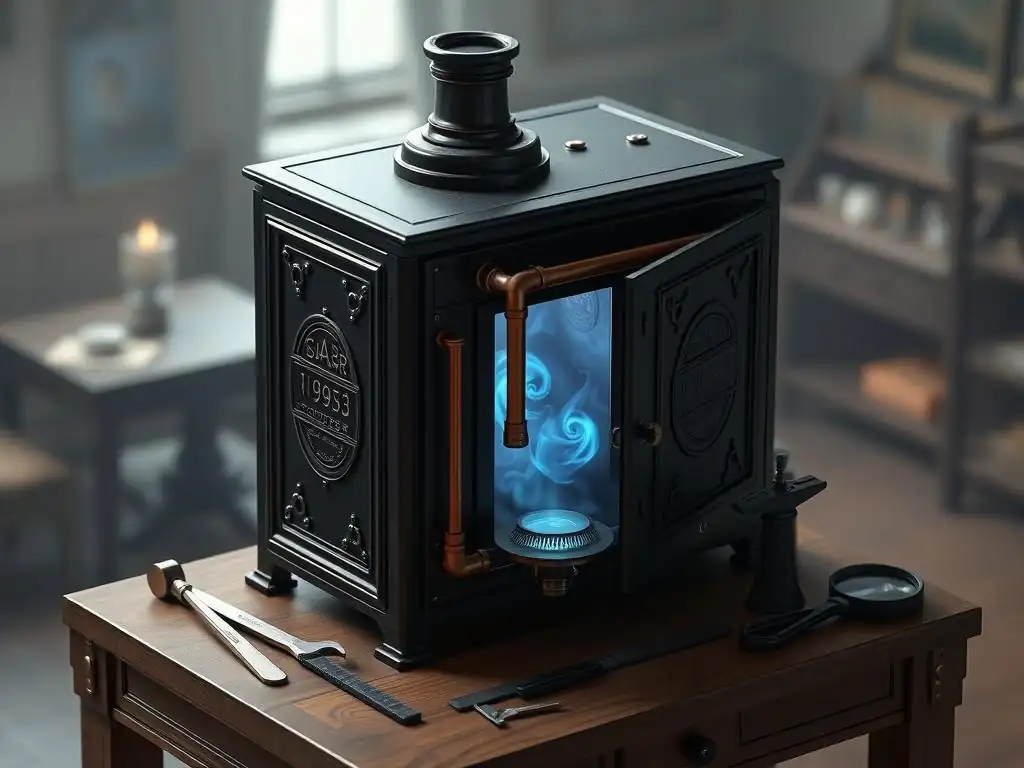
Alice Parker's heating system, as detailed in her 1919 patent, represented a significant departure from the heating methods common at the time. At its core, her design envisioned a central heating unit that utilized natural gas as its fuel source.
Instead of simply radiating heat from a single point, Parker’s system was designed to draw in cold air, pass it over a heat exchanger warmed by the combustion of gas, and then distribute the warmed air throughout a dwelling via a series of ducts. This forced-air circulation was a critical innovation, ensuring that heat could be delivered to multiple rooms simultaneously and more evenly than ever before.
The mechanics involved a carefully constructed combustion chamber where gas was burned safely. The heat generated was then transferred to air circulating around this chamber, which was subsequently propelled through a network of vents and registers strategically placed throughout the home. This systematic approach to heat generation and distribution marked a pivotal step towards what we now recognize as modern central heating, making the Alice Parker gas furnace design a truly foundational concept.
Key Features and Innovations of the Alice Parker Patent
U.S. Patent 1,325,901, granted to Alice Parker, outlined several groundbreaking features that distinguished her gas furnace design. One of the most significant innovations was the concept of multiple heat exchangers. This design element aimed to maximize heat transfer efficiency, ensuring that as much thermal energy as possible from the burning gas was captured and transferred to the circulating air, rather than being lost up a chimney.
Another crucial feature was the incorporation of a secure, enclosed combustion chamber, which drastically reduced the risk of fire and prevented the escape of dangerous fumes like carbon monoxide into the living space—a common hazard with open fireplaces and early stoves. Furthermore, Parker’s patent detailed a system for drawing external cold air into the furnace, heating it, and then distributing it, rather than simply reheating stale indoor air. This focus on efficiency, safety, and the systematic distribution of heat through ductwork was a testament to the foresight embedded within the Alice Parker gas furnace design.
How Parker's Design Improved Upon Existing Heating Technologies
The Alice Parker gas furnace design offered substantial improvements over the prevailing heating technologies of the early 20th century. Unlike fireplaces and coal stoves, which provided localized and often inconsistent heat, Parker's system promised uniform warmth across an entire house, eliminating cold spots and improving overall comfort. This was achieved through the forced-air circulation system, which ensured that heated air was actively moved to all desired areas.
Moreover, Parker's design significantly enhanced safety. By enclosing the combustion process and channeling exhaust fumes safely away, it drastically reduced the risks of house fires and carbon monoxide poisoning that were prevalent with open flames and less contained heating units. The cleanliness aspect was also a major advantage; eliminating the need for manual stoking, ash removal, and the associated soot and smoke meant a cleaner indoor environment. The Alice Parker gas furnace design thus represented a monumental leap forward in terms of efficiency, safety, and convenience, setting a new standard for home heating.
The Impact and Legacy of Parker's Gas Furnace
From Patent to Practice: The Adoption and Evolution of Central Heating
While the direct commercialization of Alice Parker's specific gas furnace design by Parker herself is not widely documented, the principles embedded within her 1919 patent proved profoundly influential. Her visionary concepts—centralized heating, a network of ducts for heat distribution, and the use of natural gas as a clean fuel—were gradually adopted and evolved by the broader heating industry. The idea of a single, central unit warming an entire home, rather than individual fireplaces or stoves in each room, began to gain traction throughout the 1920s and beyond.
By the mid-20th century, forced-air central heating systems, built upon the fundamental ideas pioneered by Parker, became the standard in new residential constructions across North America. This widespread adoption transformed domestic living, providing unprecedented levels of comfort and convenience. The transition from labor-intensive, localized heating to automated, centralized systems was a slow but steady process, with Parker's patent serving as an important early blueprint for this monumental shift in home infrastructure.
Alice Parker's Influence on Modern Central Heating Systems
The core tenets of the Alice Parker gas furnace design are undeniably reflected in the sophisticated heating, ventilation, and air conditioning (HVAC) systems that are commonplace today. Her emphasis on a central heat source, the use of ductwork to distribute warmed air, and the integration of safety features are all fundamental components of modern furnaces and air handlers. Contemporary systems, while far more technologically advanced with features like smart thermostats and zoned heating, operate on the same foundational principles of forced-air circulation and centralized temperature control that Parker envisioned.
Her innovative approach to utilizing natural gas efficiently and safely for home heating laid critical groundwork for the development of the entire HVAC industry. The Alice Parker gas furnace design was not merely an incremental improvement; it was a conceptual leap that anticipated the future of domestic climate control. Her vision contributed significantly to creating healthier, safer, and more comfortable indoor environments, making her an unsung hero in the story of modern convenience.
Challenges Faced by Alice Parker as a Woman Inventor
Overcoming Gender Bias in the Early 20th Century Engineering Field
Alice Parker's journey as an inventor in the early 20th century was undoubtedly fraught with significant challenges, compounded by the pervasive gender bias of the era. Engineering and technology were overwhelmingly male-dominated fields, and women pursuing patents or attempting to commercialize inventions often faced skepticism, dismissal, and outright discrimination. Access to capital, manufacturing facilities, and professional networks—all crucial for an inventor—were largely closed off to women.
Beyond professional barriers, women inventors frequently struggled for recognition and credit. Their ideas might be dismissed, or their contributions downplayed, simply because of their gender. For an African American woman like Alice Parker, these challenges were further magnified by racial discrimination, creating an even more formidable uphill battle against deeply entrenched societal prejudices that questioned both her intellectual capacity and her right to participate in the world of innovation.
The Difficulties in Commercializing Inventions as a Woman
Even after securing a patent, the path to commercializing an invention was particularly arduous for women in the early 20th century. Unlike their male counterparts, women typically lacked access to the established business networks, investment capital, and industrial connections necessary to transform a patented idea into a marketable product. Many women inventors, despite holding truly groundbreaking patents, found themselves unable to secure the funding or partnerships required to mass-produce and distribute their creations.
While precise statistics for this specific period are hard to isolate, historical data indicates that women held only a minuscule percentage of U.S. patents in the early 1900s—likely less than 3% in 1919 when Parker received her patent. Even among those who successfully obtained patents, the leap from invention to commercial success was rarely achieved by women independently. This systemic disadvantage meant that brilliant innovations like the Alice Parker gas furnace design, while foundational in concept, often relied on others to fully realize their commercial potential.
Alice Parker's Lasting Contribution to Women in Science and Engineering
Inspiring Future Generations of Female Inventors and Engineers
The story of Alice Parker, and her pioneering Alice Parker gas furnace design, serves as a powerful source of inspiration for future generations of female inventors and engineers. By bringing her achievements to the forefront, we provide tangible proof that women have always been at the vanguard of innovation, even when their contributions were historically marginalized. Her perseverance in pursuing a patent in an era of profound gender and racial inequality demonstrates remarkable resilience and intellectual courage.
Highlighting Parker's ingenuity encourages young girls and women to envision themselves in STEM fields, breaking down outdated stereotypes about who can be a scientist or an engineer. Her narrative underscores the critical importance of diversity in innovation, reminding us that valuable insights and solutions can emerge from all segments of society, leading to more inclusive and effective technological advancements. Her legacy is a beacon, illuminating the path for those who follow.
Celebrating Alice Parker's Place in Women in Science History
Alice Parker's place in the annals of women in science history is not merely as the inventor of a significant heating system, but as a symbol of the countless unsung female pioneers whose ideas shaped the modern world. Her Alice Parker gas furnace design is a testament to her inventive genius, but her broader impact lies in representing the spirit of innovation that persisted despite systemic barriers. Celebrating her story contributes to a more accurate and equitable historical record, ensuring that the narratives of women are fully integrated into the grand tapestry of scientific and technological progress.
Her story is a vital component of the ongoing effort to correct historical oversights and to recognize the full scope of human ingenuity. By acknowledging figures like Alice Parker, platforms dedicated to women in science history reinforce the message that every contribution, regardless of the inventor's background, holds intrinsic value and deserves recognition. Her enduring legacy is a powerful reminder of the profound impact one individual's vision can have on daily life and future technologies.
Conclusion: Alice Parker's Enduring Legacy in Home Heating
Reinforcing the Significance of the Alice Parker Gas Furnace Design
Alice Parker's 1919 patent for a centralized gas furnace design stands as a monumental, though often overlooked, contribution to modern living. Her foresight in envisioning a system that could efficiently and safely heat an entire home using natural gas laid the essential groundwork for the central heating systems that are ubiquitous today.
The Alice Parker gas furnace design revolutionized domestic comfort, moving beyond the limitations of localized, inefficient, and often hazardous heating methods of her time. Her innovative integration of a central heat source, forced-air circulation, and safety features fundamentally altered the trajectory of home heating technology, providing a blueprint for the widespread adoption of modern furnaces and HVAC systems.
Her invention not only provided a practical solution to a pressing societal need but also embodied a forward-thinking approach to energy use and domestic convenience. The principles she outlined continue to underpin the climate control technologies we rely on daily, making her an indispensable figure in the narrative of engineering and technological advancement. The enduring impact of the Alice Parker gas furnace design is a testament to her ingenuity and vision.
Encouraging Further Exploration of Women's Contributions to Science and Technology
The story of Alice Parker is but one example among myriad of the incredible, yet often uncelebrated, contributions of women to science and technology throughout history. Her journey highlights the imperative to continue uncovering and promoting these narratives, not only to correct historical omissions but also to inspire future generations. By actively seeking out and sharing the achievements of women like Parker, we enrich our understanding of scientific progress and foster an environment where innovation is recognized and encouraged from all corners of society.
Encouraging further exploration of women's roles in scientific and technological fields is crucial for building a more inclusive and equitable future. It demonstrates that brilliance knows no gender or race, and that the path to discovery is paved by diverse minds and persistent spirits. Alice Parker's legacy calls us to appreciate the hidden figures of history and to champion the ongoing efforts to ensure that every innovator receives the recognition they rightfully deserve.
Frequently Asked Questions
How did Alice Parker's gas furnace design differ from earlier heating methods?
Alice Parker's design used natural gas rather than wood or coal, offering a more efficient and cleaner-burning alternative. This was a significant departure from the prevailing heating technologies of the time.
What was the significance of Alice Parker's invention in the context of early 20th-century America?
Her gas furnace design offered a safer and more reliable heating solution, contributing to the development of central heating systems that would improve living conditions. It was a forward-thinking invention addressing comfort and convenience.
Was Alice Parker's gas furnace design immediately adopted and implemented widely?
While her design was innovative, it wasn't immediately widely adopted. However, it laid the groundwork for future developments in gas-powered central heating, influencing subsequent designs.
What challenges might Alice Parker have faced as a woman inventor in the early 1900s?
She likely encountered gender bias and discrimination common in the scientific and engineering fields during that era, hindering her access to resources and recognition. This was a male-dominated industry.
How does "WomenInScienceHistory.com" aim to highlight Alice Parker's contributions?
The website aims to showcase her groundbreaking design and impact on modern central heating, ensuring her story is not overlooked and inspires future generations of female scientists and inventors. It celebrates her ingenuity.
Final Reflection: Igniting Innovation, Heating the Future
The story of Alice Parker's gas furnace design, though often overlooked, resonates profoundly today, highlighting the enduring power of untapped potential and the importance of recognizing diverse voices in innovation. Her early vision for central heating, a concept ahead of its time, serves as a potent reminder that progress often stems from unexpected sources and that acknowledging these contributions is crucial for a more equitable and technologically advanced future.
The impact of Parker's design, even if not directly implemented in her lifetime, continues to ripple through our modern world. It underscores the vital role of perseverance and the lasting influence of ideas, even those initially dismissed or marginalized. The important thing is not to stop questioning. Curiosity has its own reason for existing.
- Albert Einstein. This quote perfectly encapsulates the spirit of Parker's work and its enduring relevance in inspiring future generations of innovators.
Let us all take a moment to reflect on the lessons learned from Alice Parker's journey. Consider how we can actively champion inclusivity and encourage diverse perspectives in our own lives and fields. By recognizing and supporting the innovative spirit in everyone, regardless of background, we can collectively build a warmer, brighter, and more equitable future for all.
Ignite Your Own Innovation!
Thank you for exploring the story of Alice Parker and her groundbreaking invention. We hope you've found her journey as inspiring as we do! Now, it's your turn to take action and spark change in your own way.
Here are a few things you can do right now:
- Dive deeper: Research other unsung female inventors and share their stories to help correct the historical record.
- Consider how Parker's invention influences modern energy efficiency and brainstorm sustainable solutions for heating and cooling in your own home or community.
- Start a conversation! Share this article with your friends and family and discuss the importance of recognizing and celebrating women in STEM.
What innovative idea, big or small, will you champion today?