
Radioactive Resonance: Does the Marie Curie Biopic Capture Her True Scientific Spirit?

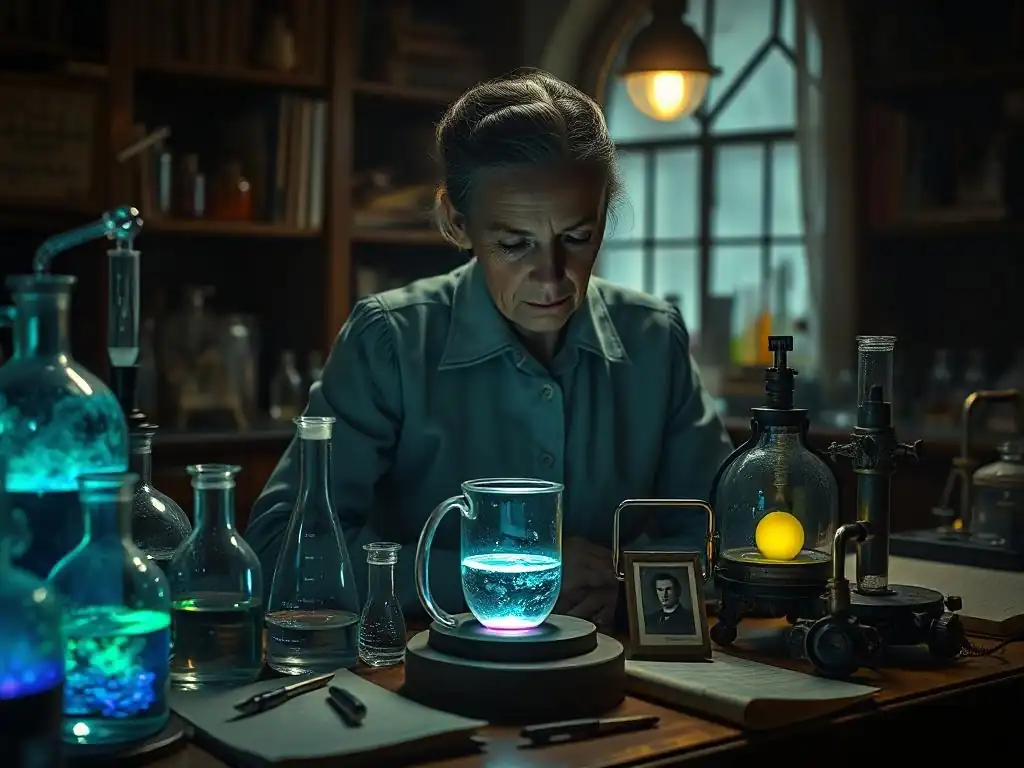
Welcome to WomenInScienceHistory.com!
Dive into the compelling story of Marie Curie and the ongoing debate: Does the latest Marie Curie biopic truly capture the essence of her scientific genius and the complex realities she faced? Join us as we analyze its portrayal, exploring both its artistic merit and its accuracy in representing a pivotal figure in science history. Uncover the nuances and controversies within, and decide for yourself if this cinematic interpretation does justice to Curie's remarkable legacy.
- Introduction: Exploring Marie Curie's Legacy Through Film
- Analyzing the Marie Curie Biopic: A Critical Review
- Marie Curie: Beyond the Biopic – A Deeper Dive into Her Scientific Achievements
- Challenges and Triumphs: Reflecting on Marie Curie's Journey
- Marie Curie Biopic Analysis: Comparing Different Interpretations
- The Marie Curie Effect: Inspiring Future Generations in STEM
- Conclusion: Radioactive Resonance – A Final Verdict on the Marie Curie Biopic
-
Frequently Asked Questions
- How accurately do Marie Curie biopics typically portray her scientific dedication?
- What challenges did Marie Curie face as a woman in science, and how are these depicted in biopics?
- Do biopics tend to focus more on Marie Curie's personal struggles or her scientific achievements?
- How do Marie Curie biopics handle the ethical considerations of her research on radioactivity?
- What is the overall impact of Marie Curie biopics on public perception of women in STEM?
- Final Reflection: Illuminating the Enduring Spirit of Discovery
- Ignite Your Inner Scientist!
Introduction: Exploring Marie Curie's Legacy Through Film
The Enduring Fascination with Marie Curie: A Cinematic Lens
Marie Curie remains one of the most compelling figures in scientific history, a pioneering woman whose groundbreaking work revolutionized our understanding of the universe. Her story, rich with intellectual triumph, personal sacrifice, and profound societal impact, naturally lends itself to cinematic interpretation.
Filmmakers are drawn to her unique narrative: the first woman to win a Nobel Prize, the first person and only woman to win Nobel Prizes in two different scientific fields (Physics and Chemistry), and the first female professor at the University of Paris. Translating such a multifaceted life, particularly one intertwined with complex scientific discoveries, into a compelling film narrative presents a significant artistic and historical challenge, prompting keen interest in any Marie Curie biopic analysis.
The challenge lies not only in accurately portraying the immense scientific breakthroughs — the isolation of polonium and radium — but also in capturing the human element: the relentless dedication, the intellectual curiosity, the personal struggles, and the profound impact of her work on both her own life and the world. Biopics offer a powerful medium to bring these stories to a wider audience, shaping public perception of scientific endeavor and the individuals behind it.
Therefore, a critical Marie Curie biopic analysis is essential to determine if these cinematic portrayals truly resonate with her extraordinary scientific spirit and historical reality.
Women in Science History: Contextualizing Curie's Impact
Our website, WomenInScienceHistory.com, is dedicated to illuminating the often-overlooked contributions of women to scientific progress. Within this context, Marie Curie stands as an unparalleled beacon, her life story exemplifying both the immense potential and the formidable barriers faced by women in male-dominated scientific fields throughout history. Her journey from impoverished Polish student to world-renowned scientist is a cornerstone of the narrative we aim to convey.
Marie Curie's achievements did not occur in a vacuum; they were forged in an era where educational and professional opportunities for women in science were severely limited. Her perseverance against systemic sexism and skepticism paved the way for countless future generations of female scientists. Understanding her story through the lens of a Marie Curie biopic analysis allows us to assess how well modern interpretations uphold this crucial historical context, ensuring that her struggles and triumphs are presented with the depth and accuracy they deserve, inspiring future innovators.
Analyzing the Marie Curie Biopic: A Critical Review
Plot and Narrative: Strengths and Weaknesses in Portraying Curie's Life
The 2019 film Radioactive, directed by Marjane Satrapi and starring Rosamund Pike, offers a visually distinctive and emotionally charged interpretation of Marie Curie's life. A notable strength of its narrative lies in its attempt to intertwine Curie's personal life, particularly her passionate relationship with Pierre Curie, with her scientific pursuits. The film excels in conveying the intense intellectual partnership between Marie and Pierre, depicting their shared excitement and collaborative spirit in the laboratory. It also bravely tackles the personal tragedies she endured, such as Pierre's untimely death and the public scandal that followed, showcasing her resilience.
However, the film's narrative choices sometimes lean heavily into dramatic license, occasionally at the expense of scientific detail or chronological accuracy. For instance, Radioactive employs jarring flash-forwards to depict the devastating future consequences of radioactivity, such as the atomic bombings of Hiroshima and Nagasaki, which, while visually impactful, can disrupt the historical flow of Curie's own story. This stylistic approach, though aiming to highlight the profound impact of her discoveries, can sometimes overshadow the meticulous, painstaking scientific process that defined her work, making a thorough Marie Curie biopic analysis crucial to discern historical fidelity.
Scientific Accuracy: Evaluating the Film's Depiction of Curie's Research
When assessing Radioactive's scientific accuracy, the film makes an earnest effort to show the laborious nature of the Curies' work. It depicts the cramped, rudimentary laboratory conditions and the sheer physical effort involved in processing tons of pitchblende to isolate minute quantities of new elements. Viewers witness scenes of Marie stirring bubbling cauldrons of radioactive material, a visual representation of the arduous fractional crystallization process she employed. This portrayal helps to demystify the "magic" of scientific discovery and emphasizes the grit behind their breakthroughs.
Despite these efforts, the film, like many biopics, occasionally simplifies complex scientific concepts for broader audience accessibility. While it conveys the general idea of radioactivity and its applications, it doesn't delve deeply into the theoretical framework or the specific experimental designs.
For example, the precise methodology of how they distinguished polonium and radium from other elements, beyond the basic concept of their unique radiation, is largely condensed. A rigorous Marie Curie biopic analysis might point out that while the film captures the spirit of scientific endeavor, it sometimes sacrifices the nuanced details of the scientific process itself, which could be a missed opportunity for an educational piece.
Marie Curie's Character: Authenticity vs. Artistic License
Rosamund Pike’s portrayal of Marie Curie in Radioactive captures a compelling blend of intense intellect, fierce independence, and emotional vulnerability. Pike embodies Curie's unwavering dedication to her research, often depicting her as driven, focused, and somewhat detached from social conventions, which aligns with many historical accounts of her personality. The film highlights her defiance against societal expectations and her singular devotion to science, particularly in scenes where she challenges male colleagues or dismisses public opinion.
However, artistic license is evident in certain characterizations. Some critics and historians suggest that the film exaggerates her perceived "otherness" or "coldness" in early scenes, perhaps to emphasize her transformation through her relationship with Pierre.
While Marie Curie was indeed known for her reserved nature and intense focus, the film occasionally veers into portraying her as overtly abrasive or socially awkward, which might not fully capture the nuanced complexities of her character. A balanced Marie Curie biopic analysis acknowledges that while such portrayals can create dramatic tension, they must be weighed against the historical record to ensure a truly authentic representation of this extraordinary woman.
Marie Curie: Beyond the Biopic – A Deeper Dive into Her Scientific Achievements
Unveiling Curie's Groundbreaking Research on Radioactivity
Before Marie Curie's pivotal contributions, the phenomenon of radioactivity was a nascent field. Henri Becquerel had accidentally discovered in 1896 that uranium salts emitted a new type of invisible radiation. Marie Curie, then a doctoral student, chose to investigate this mysterious "uranic rays" for her thesis. She systematically examined numerous elements and minerals, employing a sensitive electrometer (designed by Pierre and his brother Jacques) to measure the tiny electrical currents produced by these rays.
Her meticulous measurements quickly revealed that thorium also emitted similar rays. More remarkably, she observed that pitchblende and torbernite, two uranium ores, were significantly more radioactive than pure uranium itself. This groundbreaking observation led her to hypothesize that these minerals must contain undiscovered elements far more radioactive than uranium. This bold hypothesis, unsupported by previous scientific consensus, marked the true beginning of her pioneering work and laid the foundation for the revolutionary discoveries that followed.
The Significance of Polonium and Radium Discoveries
Driven by her hypothesis, Marie and Pierre Curie embarked on the monumental task of isolating these hypothetical elements from tons of pitchblende, a process that was both physically demanding and scientifically challenging. They employed a painstaking method of fractional crystallization, separating the ore into its chemical components based on their differing solubilities and properties. After months of arduous work, often performed in a poorly ventilated shed, they announced the discovery of a new element in July 1898, which Marie named Polonium, in honor of her native Poland.
Just five months later, in December 1898, the Curies announced the discovery of a second, even more intensely radioactive element, which they named Radium, derived from the Latin word for ray. The isolation of radium in a pure, measurable form was an even greater feat, taking another four years of relentless effort to extract just a tenth of a gram of pure radium chloride from several tons of pitchblende.
These discoveries were not merely additions to the periodic table; they fundamentally altered physics and chemistry, introducing the concept of atomic disintegration and demonstrating that atoms were not immutable, as previously believed.
Curie's Impact on Physics and Chemistry: A Lasting Legacy
Marie Curie's work, particularly her isolation of polonium and radium, had a profound and lasting impact on both physics and chemistry. Her findings directly led to the recognition of radioactivity as an inherent property of certain elements, rather than a chemical reaction. This paved the way for the development of nuclear physics, inspiring scientists like Ernest Rutherford to propose the nuclear model of the atom and leading to the understanding of isotopes and nuclear energy. Her work also laid the foundation for the use of radioactive isotopes in medical applications, particularly in cancer treatment.
In 1903, Marie and Pierre Curie, along with Henri Becquerel, were jointly awarded the Nobel Prize in Physics "in recognition of the extraordinary services they have rendered by their joint research on the radiation phenomena discovered by Professor Henri Becquerel." Eight years later, in 1911, Marie Curie received her second Nobel Prize, this time in Chemistry, "in recognition of her services to the advancement of chemistry by her discovery of the elements radium and polonium, by the isolation of radium and the study of the nature and compounds of this remarkable element."
She remains the only person to win Nobel Prizes in two different scientific fields, a testament to her unparalleled contributions and a central aspect of any comprehensive Marie Curie biopic analysis.
Challenges and Triumphs: Reflecting on Marie Curie's Journey

Overcoming Obstacles in a Male-Dominated Scientific World
Marie Skłodowska Curie's path to scientific greatness was fraught with obstacles, many stemming from the pervasive gender discrimination of her era. In her native Poland, women were barred from attending university, forcing her to pursue her education through clandestine "Flying University" classes. Her eventual move to Paris to study at the Sorbonne was itself a radical step, and even there, she faced skepticism and prejudice. Upon completing her degrees, finding a laboratory to conduct her research was a significant challenge, until Pierre Curie, already an established physicist, offered her space in his own lab.
Even after her monumental discoveries, recognition was not easily granted. Initially, the Nobel Committee for Physics in 1903 intended to award the prize only to Henri Becquerel and Pierre Curie, overlooking Marie's crucial role. It was only through Pierre's insistence and the intervention of a committee member that her name was eventually included. This incident highlights the systemic bias she faced, where her intellectual contributions were often undervalued simply because of her gender. Her steadfast refusal to be deterred by such barriers remains a powerful testament to her resilience.
The Price of Genius: Examining the Personal Cost of Scientific Discovery
Marie Curie's scientific brilliance came at a profound personal cost, a stark reminder of the inherent dangers of pioneering research, particularly in unexplored fields like radioactivity. She and Pierre worked for years with highly radioactive materials without any knowledge of the health risks. Marie carried test tubes of radium in her pockets and stored samples by her bedside, fascinated by their luminosity.
This prolonged exposure led to severe health consequences, most notably aplastic anemia, which ultimately claimed her life in 1934 at the age of 66. Her notebooks and even her cookbooks from the 1890s are still highly radioactive and require special handling.
Beyond the physical toll, Curie also endured immense personal tragedy and public scrutiny. The sudden death of her beloved husband and scientific partner, Pierre, in a street accident in 1906, left her devastated and a single mother to two young daughters.
Later, in 1911, she faced a public scandal and xenophobic attacks when her relationship with a married colleague, Paul Langevin, became public, threatening to derail her career and even preventing her from accepting her second Nobel Prize initially. Her ability to continue her groundbreaking work amidst such profound sorrow and public condemnation speaks volumes about her extraordinary mental fortitude.
Marie Curie's Perseverance: A Source of Inspiration for Future Scientists
Despite the numerous professional and personal adversities, Marie Curie's perseverance never wavered. Her dedication to scientific discovery transcended personal comfort, public opinion, and even her own health. A remarkable example of her unwavering commitment was her decision not to patent her discoveries of radium and polonium. She believed that scientific knowledge should be freely accessible for the benefit of humanity, rather than hoarded for personal profit. This act of selfless dedication to open science stands as a powerful ethical beacon.
During World War I, Curie further demonstrated her indomitable spirit by developing mobile X-ray units, known as "petites Curies," which she personally drove to the front lines to assist wounded soldiers. This practical application of her scientific knowledge saved countless lives and showcased her humanitarian spirit. Her relentless pursuit of knowledge, her resilience in the face of adversity, and her profound ethical stance continue to serve as an unparalleled source of inspiration for future generations, especially for women aspiring to careers in science, technology, engineering, and mathematics (STEM).
Marie Curie Biopic Analysis: Comparing Different Interpretations
Comparison of Radioactive (2019) with Marie Curie: The Courage of Knowledge (2016)
When undertaking a comprehensive Marie Curie biopic analysis, it is insightful to compare Radioactive (2019) with Marie Curie: The Courage of Knowledge (2016), a Polish-German co-production directed by Marie Noëlle. While Radioactive adopts a more stylized, almost comic-book aesthetic with its use of flash-forwards and dramatic visual metaphors, The Courage of Knowledge offers a more traditional, grounded, and perhaps more intimate portrayal of Curie's life, primarily focusing on the period after Pierre's death and her struggles with the Langevin affair and her second Nobel Prize.
The Courage of Knowledge tends to delve deeper into the emotional turmoil and personal sacrifices Marie Curie made, often presenting a more somber and reflective tone. It emphasizes her intellectual isolation and the societal pressures she faced as a woman in a male-dominated field. Radioactive, by contrast, while acknowledging her struggles, aims for a broader scope, attempting to contextualize her discoveries within a larger historical and scientific continuum. Both films contribute uniquely to the cinematic understanding of Marie Curie, each offering a distinct lens through which to view her extraordinary life.
The Role of Script and Direction in Shaping the Narrative
The distinct interpretations of Marie Curie's life in these biopics are heavily influenced by their respective scripts and directorial visions. Marjane Satrapi's direction in Radioactive, known for her work on Persepolis, brings a bold, often surreal visual language to the film.
The screenplay, adapted by Jack Thorne from Lauren Redniss's graphic novel Radioactive: Marie & Pierre Curie: A Tale of Love and Fallout, emphasizes the dual nature of scientific discovery—its potential for both progress and destruction. This is evident in the inclusion of scenes depicting the future applications of radioactivity, from medical treatments to nuclear warfare, which are not directly part of Curie's historical experience but serve as narrative devices.
In contrast, Marie Noëlle's direction in The Courage of Knowledge (for which she also co-wrote the screenplay) is more restrained and historically focused. Her film prioritizes psychological depth and emotional nuance, often using quiet moments to convey Curie's inner world and intellectual struggles. The narrative is largely linear, allowing the audience to follow Curie's journey through her personal and professional challenges with a sense of chronological fidelity. This comparative Marie Curie biopic analysis reveals how directorial choices can profoundly shape audience perception of a historical figure, emphasizing different facets of her complex legacy.
Acting Performances: Capturing the Essence of Marie Curie
The success of any biopic heavily relies on the lead actor's ability to embody the historical figure, and this holds true for both Radioactive and The Courage of Knowledge. Rosamund Pike's performance as Marie Curie in Radioactive is characterized by a strong, almost austere intensity. She portrays Curie as fiercely intelligent and unyielding, particularly in her scientific pursuits and her resistance to societal norms. Pike captures the intellectual rigor and the quiet, almost obsessive dedication that defined Curie's work, making her a formidable presence on screen.
Karolina Gruszka, playing Marie Curie in The Courage of Knowledge, offers a more vulnerable and emotionally nuanced portrayal. Gruszka’s performance highlights Curie’s internal struggles, her grief after Pierre’s death, and the personal cost of her scientific endeavors. She conveys a sense of quiet determination mixed with profound sadness, providing a different perspective on Curie's resilience. A thorough Marie Curie biopic analysis would recognize that both actresses deliver compelling performances, each bringing a unique interpretation to the iconic scientist, collectively enriching the cinematic landscape of women in science history.
The Marie Curie Effect: Inspiring Future Generations in STEM
Marie Curie as a Role Model: Encouraging Women in Science
Marie Curie's legacy extends far beyond her scientific discoveries; she stands as an enduring symbol of intellectual prowess and perseverance, particularly for women in science. Her story demonstrates that with dedication, brilliance, and unwavering commitment, women can not only participate in but also lead groundbreaking scientific revolutions. As the first woman to win a Nobel Prize and the first person to win Nobel Prizes in two different sciences, she shattered numerous glass ceilings, proving that gender is no barrier to the highest echelons of scientific achievement.
Her life serves as a powerful antidote to historical narratives that often sideline or ignore women's contributions to science. By highlighting her struggles against sexism and her ultimate triumphs, her story encourages young girls and women to pursue careers in STEM fields, reassuring them that their intellectual curiosity and ambition are valid and deserving of pursuit. A well-crafted Marie Curie biopic analysis can amplify this message, ensuring that her role model status continues to inspire future generations to break new ground.
The Importance of Accurate Representation in Scientific Biopics
The way scientific figures, especially women, are portrayed in popular culture, such as biopics, has a significant impact on public perception and the encouragement of new talent. Accurate representation is crucial because it not only honors the historical truth but also provides realistic and relatable role models. When films depict scientists as complex, multi-dimensional individuals who face challenges and make sacrifices, it demystifies the scientific profession and makes it more accessible. Conversely, overly romanticized or scientifically inaccurate portrayals can misrepresent the true nature of scientific work.
For a figure like Marie Curie, whose life was defined by rigorous inquiry and profound personal sacrifice, it is vital that biopics convey the painstaking nature of her research and the intellectual fortitude required. An insightful Marie Curie biopic analysis should assess how well a film balances dramatic storytelling with historical and scientific fidelity, ensuring that the essence of her scientific spirit is not lost in translation. This accuracy is essential for fostering a genuine appreciation for science and inspiring future scientists.
Marie Curie's Enduring Influence on Scientific Research and Education
Marie Curie's influence continues to permeate scientific research and education globally. Her fundamental discoveries of polonium and radium laid the bedrock for entire new fields, including nuclear physics, radiochemistry, and nuclear medicine. The applications of radioactivity, from carbon dating to cancer therapy and medical imaging, are direct descendants of her pioneering work. Her establishment of the Radium Institute in Paris, which became a world-renowned center for radioactivity research, continues to be a hub of scientific discovery, now known as the Institut Curie.
Moreover, her commitment to open science and her refusal to patent her discoveries set a powerful precedent for collaboration and the free exchange of knowledge within the scientific community. Her story is a staple in science curricula worldwide, not just for her scientific achievements but also for her unwavering dedication, ethical stance, and resilience in the face of adversity. This enduring presence in both the scientific landscape and educational systems underscores her timeless relevance and the profound impact she continues to have on shaping future scientific endeavors.
Conclusion: Radioactive Resonance – A Final Verdict on the Marie Curie Biopic
Radioactive Resonance: A Sympathetic but Imperfect Portrait
In conclusion, Radioactive offers a compelling, if at times unconventional, Marie Curie biopic analysis. The film successfully captures the intense intellectual partnership between Marie and Pierre Curie and highlights Marie's unwavering dedication to her work amidst personal tragedy and societal prejudice. Rosamund Pike delivers a strong performance that conveys Curie's formidable intellect and quiet intensity. The film’s visual style is distinctive, and its attempt to contextualize Curie's discoveries within their future implications is ambitious.
However, the film's narrative liberties, particularly its stylistic anachronisms and occasional simplification of complex scientific processes, mean it serves as a sympathetic but ultimately imperfect portrait of Marie Curie's true scientific spirit. While it excels at conveying the emotional and personal aspects of her life, it sometimes sacrifices the nuanced details of her painstaking research and the precise historical context for dramatic effect. For those seeking a purely factual account, other resources may be more appropriate, but as an accessible entry point into her story, it holds value.
Marie Curie's Enduring Relevance in the 21st Century
Despite any cinematic imperfections, the very existence of biopics like Radioactive underscores Marie Curie's enduring relevance in the 21st century. Her story continues to resonate because it embodies universal themes of scientific curiosity, perseverance against adversity, and the profound impact of individual genius. In an era where STEM fields are increasingly vital, and the push for diversity in science is paramount, Marie Curie stands as an unparalleled inspiration.
Her legacy reminds us of the critical importance of fundamental research, the ethical responsibilities that come with scientific discovery, and the immense potential of human intellect, regardless of gender or background. Whether through films, books, or educational initiatives, sharing Marie Curie's story, and engaging in critical Marie Curie biopic analysis, ensures that her pioneering spirit continues to ignite the passion for science in generations to come, reaffirming her indelible mark on history.
Frequently Asked Questions
How accurately do Marie Curie biopics typically portray her scientific dedication?
Many biopics attempt to capture Curie's dedication to science, but often romanticize her personal life, sometimes at the expense of accurately depicting her research methods. They struggle to balance scientific accuracy with dramatic narrative.
What challenges did Marie Curie face as a woman in science, and how are these depicted in biopics?
Curie faced significant gender discrimination in academia. Biopics often show these challenges, depicting her struggle for recognition and access to resources in a male-dominated field, though perhaps sometimes simplifying the nuance.
Do biopics tend to focus more on Marie Curie's personal struggles or her scientific achievements?
While varying from film to film, biopics tend to balance both. However, the personal struggles – romantic relationships and family life – often receive more screen time than the intricate details of her scientific breakthroughs with radioactivity.
How do Marie Curie biopics handle the ethical considerations of her research on radioactivity?
Some biopics touch upon the ethical implications of radioactivity, showing the dangers of exposure. However, many primarily focus on the discovery and initial excitement, sometimes downplaying the long-term consequences.
What is the overall impact of Marie Curie biopics on public perception of women in STEM?
Biopics can inspire future generations of women in STEM by showcasing Curie's achievements and perseverance. However, it's crucial that they present a realistic and nuanced portrayal, avoiding oversimplification or romanticization that could be misleading.
Final Reflection: Illuminating the Enduring Spirit of Discovery
The analysis of Marie Curie's portrayal in biopics, as explored throughout this article, underscores the persistent fascination with scientific pioneers and the challenges of translating complex realities into compelling narratives. The enduring resonance of Curie's story lies not just in her groundbreaking discoveries, but also in the human drama of ambition, sacrifice, and the relentless pursuit of knowledge, making her a perpetually relevant figure in a world still grappling with scientific advancements and their ethical implications.
The impact of Marie Curie extends far beyond the laboratory; she has become a symbol of female empowerment, scientific dedication, and the transformative power of intellectual curiosity. Her legacy serves as a constant reminder that groundbreaking achievements often come at a personal cost, and that true progress requires unwavering commitment and resilience. Nothing in life is to be feared, it is only to be understood. Now is the time to understand more, so that we may fear less.
This quote, often attributed to Curie, perfectly encapsulates her spirit and the enduring need for scientific literacy and understanding in our own time.
As we reflect on Marie Curie's life and the ways in which her story is told and retold, let us be inspired by her unwavering dedication to truth and her relentless pursuit of knowledge. Consider how you can cultivate a similar spirit of inquiry in your own life, embracing challenges, questioning assumptions, and contributing to a world where understanding triumphs over fear. Let Curie's legacy be a beacon, guiding us towards a future where scientific progress and human compassion go hand in hand.
Ignite Your Inner Scientist!
Thank you for delving into Marie Curie's extraordinary life with us! We hope you've found inspiration in her unwavering dedication and groundbreaking discoveries. Now, it's time to channel that inspiration into action.
Here are a few ways to keep Curie's spirit alive:
- Embark on your own scientific exploration: Choose one scientific question that intrigues you and dedicate a weekend to researching it thoroughly. Share your findings with a friend or family member – just like Curie shared hers with Pierre!
- Discover other unsung heroes of science. Explore the archives of WomenInScienceHistory.com and share an article that resonates with you on social media to shine a light on their contributions.
- Join or support a local science outreach program. Inspire the next generation of scientists!
What small experiment, inspired by Curie's dedication, will you undertake this week?