
Lab Coats & Red Carpets: When Biopics Get Women Scientists Right (and Wrong)

Welcome to WomenInScienceHistory.com!
Ever wondered how accurately Hollywood portrays the brilliant minds of women in science? Dive into Lab Coats & Red Carpets: When Biopics Get Women Scientists Right (and Wrong) and discover the fascinating truth behind the silver screen's depiction of these trailblazers. We explore the nuances of biopics women scientists accurate portrayal, separating fact from fiction and revealing the real stories behind the lab coats. Are these films truly celebrating their achievements, or are they rewriting history? Let's find out...
- Introduction: The Power and Peril of Science Biopics Featuring Women
- The Good: Biopics That Celebrate Accurate Portrayals of Women Scientists
- The Bad: Where Biopics of Women Scientists Fall Short
- The Ugly: Distorting History for Dramatic Effect
- Analyzing the Impact of Biopics on Public Perception of Women in Science
- Striving for Authenticity: Recommendations for Future Biopics of Women Scientists
- Conclusion: The Future of Portraying Women in Science on Screen
-
Frequently Asked Questions
- How often do biopics about women scientists accurately portray their lives and work?
- What are some common pitfalls biopics encounter when depicting women scientists?
- Why is an accurate portrayal of women scientists in biopics important?
- What sources can viewers consult to verify the accuracy of a biopic about a woman scientist?
- How can biopics balance entertainment value with historical and scientific accuracy when depicting women scientists?
- Final Reflection: Beyond the Lab Coat: Honoring Women in Science
- Unveil Your Inner Scientist!
Introduction: The Power and Peril of Science Biopics Featuring Women
Why Accurate Portrayals of Women Scientists in Biopics Matter
Media, particularly film, holds immense power in shaping public perception and historical understanding. When it comes to women in science, biopics serve as a crucial window into their lives and groundbreaking work, often introducing these figures to a wider audience for the first time. Therefore, achieving accurate portrayals of women scientists in these cinematic narratives is not merely a matter of historical fidelity; it is an essential step in rectifying historical omissions and celebrating their rightful place in scientific progress. An authentic depiction can inspire, educate, and dismantle long-held stereotypes about who can be a scientist.
Conversely, inaccurate or sensationalized depictions can perpetuate harmful myths, diminish the true intellectual rigor and dedication required for scientific breakthroughs, and inadvertently discourage future generations of women from pursuing STEM fields. When a biopic prioritizes dramatic flair over factual integrity, it risks trivializing the genuine struggles and triumphs of these pioneering women. Thus, the pursuit of biopics women scientists accurate portrayal becomes a vital educational and societal imperative, ensuring that the legacy of these extraordinary individuals is honored truthfully.
Setting the Stage: Exploring the Landscape of Biopics About Female Scientists
In recent years, there has been a noticeable surge in biopics centered on female scientists, reflecting a growing public appetite for stories that highlight diverse contributions to scientific history. From mathematicians and physicists to primatologists and chemists, these films attempt to bring complex scientific lives and monumental discoveries to the silver screen. However, the quality and historical accuracy of these productions vary widely, presenting a complex landscape for those seeking genuine insights into the lives of these remarkable women.
The inherent challenge in adapting a scientist's life for film lies in balancing compelling storytelling with factual precision. Scientific research is often a slow, meticulous, and sometimes solitary endeavor, which can be difficult to translate into a fast-paced, emotionally resonant narrative. This challenge is compounded for biopics women scientists accurate portrayal, as filmmakers must also navigate historical biases, societal constraints, and the pervasive gender stereotypes that often overshadowed these women's careers. The choices made in adapting their stories directly influence how the public perceives their intellectual contributions and personal journeys.
The Good: Biopics That Celebrate Accurate Portrayals of Women Scientists
Released in 2016, Hidden Figures stands as a shining example of a biopic that not only achieved commercial success but also earned critical acclaim for its compelling narrative and commitment to historical truth. The film vividly portrays the untold story of Katherine Johnson, Dorothy Vaughan, and Mary Jackson, three brilliant African American women who served as human computers at NASA during the Space Race. Its success demonstrated that audiences are eager for stories of scientific achievement and the individuals behind them, especially when they represent historically marginalized groups.
Hidden Figures resonated deeply because it offered a refreshing departure from typical Hollywood narratives, celebrating intellectual prowess and perseverance over sensationalism. The film brought to light the pivotal contributions of these women, whose work was instrumental in launching astronauts into orbit and bringing them safely back to Earth. This commitment to an accurate portrayal of their scientific contributions and the societal barriers they overcame made the film a powerful educational tool and an inspiring cinematic experience.
Highlighting Katherine Johnson's Contributions Accurately
The film meticulously depicted Katherine Johnson's unparalleled mathematical abilities and her absolutely crucial role in the early days of NASA. For instance, it accurately showcased her work in calculating the trajectories for Project Mercury's orbital missions, including John Glenn's historic flight in 1962. Glenn famously requested Johnson personally verify the electronic computer's calculations before his launch, a testament to her reputation for precision and accuracy.
Furthermore, Hidden Figures illustrated Johnson's involvement in the Apollo 11 mission to the Moon in 1969, where her calculations were vital for plotting the trajectory that guided the lunar lander. The film conveyed the complexity of her work, such as orbital mechanics and re-entry calculations, without overly simplifying or sensationalizing the science itself. This dedication to depicting her intellectual contributions with integrity ensured a genuine accurate portrayal of her genius and indispensable role in space exploration.
Depicting the Challenges Faced by Katherine Johnson in a Realistic Way
Beyond the scientific achievements, Hidden Figures offered a stark and realistic portrayal of the racial segregation and gender discrimination prevalent at NASA in the 1960s. The film sensitively highlighted the everyday indignities faced by Katherine Johnson and her colleagues, such as the "colored" bathrooms located half a mile away, the separate coffee pots, and the constant struggle for recognition and equal opportunities in a predominantly white male environment. These scenes, while difficult to watch, were historically accurate and essential to understanding the full scope of their achievements.
The narrative skillfully wove these systemic challenges into the fabric of the story without overshadowing Johnson's scientific prowess. Instead, the obstacles served to underscore her resilience and determination, presenting a nuanced and truthful accurate portrayal of her struggle and ultimate triumph. The film did not shy away from the injustices but used them to amplify the extraordinary nature of these women's accomplishments against formidable odds.
Case Study 2: Gorillas in the Mist – Showcasing Primatology with Precision
Gorillas in the Mist, released in 1988, stands as another compelling example of a biopic that successfully honored both the scientific work and the personal dedication of its subject, Dian Fossey. The film meticulously chronicles Fossey's 18 years of groundbreaking research on mountain gorillas in Rwanda and her fierce efforts to protect them from poachers. It brought the nuanced world of primatology to a global audience, fostering a deeper understanding of meticulous observational science and the critical importance of conservation efforts.
The film's strength lies in its refusal to oversimplify Fossey's complex personality or her scientific methods. Instead, it portrays her as a driven, often uncompromising, but deeply passionate scientist whose life became inextricably linked with the fate of the gorillas she studied. This commitment to depicting her scientific endeavors with integrity ensured that Gorillas in the Mist served as an accurate portrayal of a scientist's life, highlighting the sacrifices and profound commitment often required in fieldwork.
The Impact of Accurate Scientific Representation in Gorillas in the Mist
Gorillas in the Mist was lauded for its meticulous recreation of Dian Fossey's fieldwork. The film accurately depicted her methods of habituating gorillas, including her patient, non-threatening approaches and her detailed recording of their individual behaviors and social structures. The use of actual gorilla footage, seamlessly integrated with the narrative, further enhanced the film's authenticity and respectful portrayal of the animals and their natural habitat. This level of detail educated viewers about the realities of primatological research, emphasizing the importance of long-term observation and data collection.
Moreover, the film did not shy away from the ethical dilemmas inherent in wildlife conservation, particularly the conflicts between local communities and anti-poaching efforts. It showed the physical and emotional toll of Fossey's work, including her battles against poachers and the devastating loss of beloved gorilla individuals. This comprehensive approach, which embraced both the scientific rigor and the socio-environmental challenges, reinforced the value of biopics women scientists accurate portrayal by presenting a holistic view of Fossey's life and legacy.
How Gorillas in the Mist Avoided Common Pitfalls in Biopics of Women Scientists
Unlike many biopics that tend to romanticize or sensationalize the lives of female subjects, Gorillas in the Mist deliberately avoided such pitfalls. The film focused squarely on Fossey's scientific mission and her unwavering commitment to the gorillas, rather than reducing her story to personal relationships or emotional melodrama. While it touched upon her personal struggles, it consistently prioritized her professional contributions and the scientific and conservation challenges she faced. This narrative choice allowed the audience to understand Fossey as a formidable scientist first and foremost.
By maintaining its focus on the intellectual and practical aspects of her work, the film successfully countered the common tendency to portray brilliant women as either eccentric recluses or tragic figures defined solely by their personal lives. Gorillas in the Mist presented Dian Fossey as a powerful, dedicated, and influential scientist whose impact on primatology and conservation was profound. This approach set a high standard for biopics women scientists accurate portrayal, demonstrating that a compelling story can be told without sacrificing factual integrity or succumbing to reductive stereotypes.
The Bad: Where Biopics of Women Scientists Fall Short
Common Tropes and Inaccuracies in Biopics
Despite the increasing number of biopics featuring female scientists, many productions still fall prey to common narrative tropes and inaccuracies that undermine their effectiveness. These pitfalls often stem from a desire to create a more "cinematic" or "relatable" story, but in doing so, they inadvertently distort the reality of scientific work and the lives of the women who pursued it. Such issues can range from subtle mischaracterizations to significant historical liberties, all of which contribute to a less than accurate portrayal of these remarkable individuals.
These inaccuracies, even when seemingly minor, can have a cumulative effect, perpetuating misconceptions about what it truly means to be a woman in science. They might reinforce outdated stereotypes, downplay intellectual achievements, or overemphasize personal drama at the expense of professional rigor. Consequently, the challenge of achieving biopics women scientists accurate portrayal remains significant, as filmmakers often struggle to balance the demands of commercial entertainment with the imperative of historical and scientific fidelity.
Romanticization vs. Reality: The Dangers of Oversimplifying Scientific Dedication
A frequent misstep in biopics about female scientists is the tendency to romanticize their lives, often by prioritizing romantic subplots or emotional melodrama over the laborious, often solitary, and intellectually demanding nature of scientific research. For instance, a film might dedicate significant screen time to a scientist's love affair, depicting it as the primary driver of her emotional arc, while glossing over years of painstaking laboratory work, failed experiments, and iterative problem-solving. This can suggest that a woman's scientific pursuits are secondary to her personal relationships or emotional turmoil.
This oversimplification dangerously misrepresents the true passion, rigorous discipline, and intellectual resilience required for scientific breakthroughs. It can dilute the portrayal of a scientist's genuine dedication, making their achievements seem less a product of their intellect and perseverance and more a consequence of personal circumstances. Such narrative choices ultimately fail to deliver biopics women scientists accurate portrayal, as they diminish the professional commitment that defined these women's lives.
The "Mad Scientist" Trope: How It Misrepresents Female Scientists
The "mad scientist" trope, while traditionally applied to male characters, can subtly manifest in portrayals of female scientists, often with equally damaging effects. When applied to women, it can demonize their intensity, unconventional methods, or single-minded focus, portraying them as obsessive, socially inept, or emotionally unhinged rather than simply dedicated. A film might depict a female scientist as neglecting her family or personal hygiene due to her work, not as a sign of profound commitment, but as an indication of instability.
This trope reinforces negative stereotypes about intelligence and femininity, suggesting that brilliant women are inherently strange or unstable, incapable of balancing their intellectual pursuits with societal expectations. It fails to recognize that intense focus is often a prerequisite for groundbreaking discovery. By portraying female scientists through this distorted lens, biopics undermine efforts for accurate portrayals of women scientists, suggesting that extraordinary intellect in a woman must come at the cost of her sanity or social normalcy.
Erasing or Minimizing the Contributions of Female Collaborators
Another pervasive issue in biopics is the tendency to focus solely on a singular "genius" figure, often male, while overlooking or significantly downplaying the crucial contributions of female colleagues, assistants, or collaborators. Historically, women's scientific work has often been marginalized, dismissed, or even directly attributed to men, and biopics can inadvertently perpetuate this injustice. For example, a film might portray a male scientist as having a sudden "eureka" moment, when in reality, his breakthrough was built upon years of data collected by uncredited female researchers.
This practice continues the historical marginalization of women in science, failing to provide a holistic and accurate portrayal of the collaborative nature of scientific discovery. Many scientific advancements are the result of team efforts, and by omitting or minimizing the roles of female collaborators, these films not only distort history but also miss an opportunity to highlight the broader spectrum of women's vital roles in scientific progress. It's a disservice to both the individuals and the collective history of women in science.
The Ugly: Distorting History for Dramatic Effect
Case Study 3: Marie Curie (2016) – A Cautionary Tale of Historical Inaccuracy
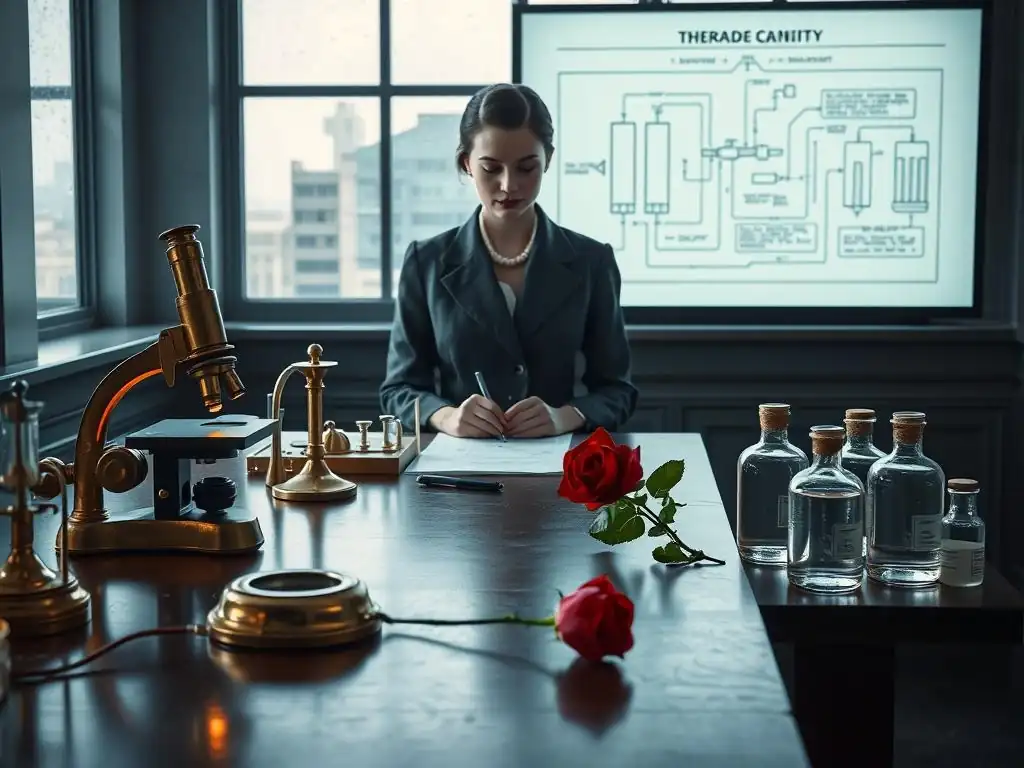
The 2016 French-German-Polish co-production Marie Curie, also known as Marie Curie: The Courage of Knowledge, serves as a stark example of a biopic that, despite its illustrious subject, struggled significantly with historical accuracy and narrative focus. While aiming to depict the life of the only person to win Nobel Prizes in two different scientific fields, the film regrettably chose to heavily emphasize Marie Curie's personal life, particularly her affair with Paul Langevin after Pierre Curie's death, often at the expense of her monumental scientific achievements.
The film dedicated considerable screen time to the scandal surrounding her relationship with Langevin, portraying her as a figure defined more by personal turmoil than by her intellectual brilliance. This narrative choice not only sensationalized her private life but also overshadowed the very scientific contributions that cemented her legacy. Consequently, the film largely failed to provide an accurate portrayal of the depth of her scientific work, leaving audiences with a skewed and incomplete understanding of one of history's most important scientists.
The Impact of Misrepresenting Marie Curie's Work
The film Marie Curie (2016) notably either simplified or almost entirely omitted key aspects of Curie's groundbreaking research on radioactivity, the isolation of polonium and radium, and the profound implications of her discoveries. Viewers might leave the cinema with a vague understanding that she worked with "radioactivity" but without any real grasp of the painstaking, dangerous, and intellectually demanding process involved in her breakthroughs. There was little emphasis on the meticulous experimentation, the conceptual leaps, or the sheer physical labor that characterized her laboratory work.
Such a misrepresentation not only fails to honor Curie's immense scientific achievements but also misses a critical opportunity to educate the public about the rigorous process of scientific discovery. By prioritizing personal drama over scientific content, the film undermined its own potential to inspire and inform, thus failing spectacularly in its aim for biopics women scientists accurate portrayal. It reduced a scientific titan to a figure primarily defined by a personal scandal rather than her revolutionary contributions to physics and chemistry.
Ethical Considerations: Responsibility in Biopic Storytelling
The case of Marie Curie (2016) raises important ethical considerations regarding the responsibility of filmmakers when creating biopics, especially those about historical figures who faced significant public and professional challenges. There is an inherent duty to present a truthful narrative, even when dramatizing elements for cinematic effect. When a film deviates significantly from historical fact, particularly by sensationalizing personal lives or inventing conflicts that diminish a subject's professional legacy, it becomes a disservice to both the individual and the audience.
Filmmakers possess immense power to shape public memory. When they choose to distort history for dramatic gain, they risk perpetuating misinformation and undermining the very purpose of a biopic – to illuminate a life. This is particularly problematic for biopics women scientists accurate portrayal, as these films are often the primary source of information for many viewers about women whose contributions were already historically marginalized. The ethical imperative is to ensure that the pursuit of entertainment does not compromise the integrity of historical truth.
The Problem with Sensationalism: When Drama Overpowers Scientific Truth
The pursuit of "drama" often leads to factual inaccuracies, character distortions, and the invention of conflicts that never occurred in the lives of real scientists. Filmmakers might create fictional rivalries, romantic entanglements, or exaggerated personal struggles to heighten tension and emotional appeal. While this can result in a compelling and entertaining story, it frequently comes at the cost of historical truth and an accurate portrayal of the subject's life and work. For instance, a scientist's quiet dedication might be replaced with a narrative of constant, dramatic breakthroughs.
There is a fine, often debated, line between creative interpretation and outright fabrication. When a biopic prioritizes sensationalism over scientific accuracy, it not only misleads the audience but also trivializes the real intellectual challenges and societal obstacles that groundbreaking women scientists faced. This "Hollywood effect" can embed fictionalized elements into public consciousness as fact, making it harder to appreciate the genuine contributions and struggles of these historical figures and directly impacting the ability to achieve biopics women scientists accurate portrayal.
Analyzing the Impact of Biopics on Public Perception of Women in Science
How Biopics Shape Our Understanding of Scientific History
Biopics wield significant influence on public memory and understanding of historical events and figures. For many viewers, these films become the primary source of information about individuals like Marie Curie, Katherine Johnson, or Dian Fossey, effectively shaping their entire perception of scientific history. A well-crafted and historically grounded biopic can illuminate overlooked narratives, correct past injustices, and foster a deeper appreciation for the intellectual contributions of marginalized groups, particularly women in science.
Conversely, a flawed or sensationalized biopic can solidify a particular, often inaccurate, narrative about a woman scientist, for better or worse. If a film emphasizes personal scandal over scientific rigor, that becomes the dominant public image, overshadowing years of dedicated research. Therefore, the narrative choices made in these films have long-lasting implications for how the public remembers and understands the roles and achievements of women throughout scientific history, making the pursuit of accurate portrayals of women scientists even more critical.
The Role of Biopics in Inspiring Future Generations of Female Scientists
The immense potential of biopics to inspire young women and girls to pursue careers in STEM fields cannot be overstated. By showcasing relatable role models who broke barriers, defied expectations, and achieved greatness in science, these films can ignite a passion for discovery and demonstrate that scientific careers are accessible and fulfilling. Seeing women on screen who are brilliant, determined, and successful in their scientific endeavors provides powerful validation and encouragement.
However, this inspiration is most powerful and authentic when it stems from accurate portrayals of women scientists. When films depict the real challenges these women faced—from sexism and racism to intellectual hurdles—and how they genuinely overcame them through perseverance and brilliance, it offers a more realistic and empowering message. Sanitized or sensationalized versions, while perhaps entertaining, can inadvertently convey that scientific success is either effortless or contingent on dramatic personal sagas, rather than on rigorous intellect and dedication.
Addressing Misconceptions: Combating the "Hollywood Effect"
One significant challenge posed by biopics, particularly those that prioritize drama over accuracy, is the phenomenon often referred to as the "Hollywood effect." This occurs when fictionalized elements or historical inaccuracies introduced in a film become widely accepted as historical fact by the public, sometimes even overshadowing documented historical records. For example, if a film invents a dramatic confrontation or a pivotal moment that never happened, that invented scene can become ingrained in popular memory as truth.
It is therefore crucial for educational platforms like Women in Science History to actively address these misconceptions and provide counter-narratives based on rigorous historical research. By offering factual corrections and deeper insights into the lives and work of these scientists, we can help combat the "Hollywood effect" and ensure that the public receives accurate portrayals of women scientists that extend beyond cinematic interpretations. This ongoing effort is vital for preserving historical integrity and promoting genuine understanding.
Striving for Authenticity: Recommendations for Future Biopics of Women Scientists
Consulting with Scientific Experts: Ensuring Technical Accuracy
To elevate the quality and accuracy of future biopics about women scientists, mandatory consultation with historians of science, subject matter experts in the relevant fields, and where applicable, living relatives or descendants, is paramount. This collaboration should occur at every stage of production, from script development to set design. Expert input can ensure that scientific concepts are explained clearly and accurately, avoiding oversimplification or factual errors that undermine credibility.
Furthermore, these consultations can help filmmakers faithfully represent the historical context, the scientific methods, and the specific challenges faced by the scientist. For instance, an expert might advise on the precise language used in a scientific discussion, the appearance of a historical laboratory, or the nuances of a particular discovery. Such dedication to detail is crucial for creating truly accurate portrayals of women scientists that are both entertaining and intellectually rigorous, providing a valuable educational experience for the audience.
Prioritizing Character Depth and Nuance over Stereotypes
Future biopics should prioritize developing complex, multifaceted characters that genuinely reflect the true personalities, intellectual rigor, and emotional landscapes of the scientists they portray, consciously avoiding one-dimensional tropes. Instead of relying on the "mad scientist," the "tragic heroine," or the "romantic lead" archetypes, filmmakers should delve into the unique motivations, struggles, and triumphs that defined these women. This means exploring their intellectual curiosity, their resilience in the face of adversity, and their contributions as fully realized individuals.
Emphasizing the full spectrum of a scientist's life – their passions, setbacks, triumphs, and intellectual pursuits – without resorting to sensationalism or romanticization is key to achieving biopics women scientists accurate portrayal. A nuanced portrayal allows audiences to connect with the human element of scientific discovery, appreciating the intelligence, perseverance, and dedication that truly characterize these extraordinary women, rather than seeing them through a reductive lens.
Showcasing the Collaborative Nature of Scientific Discovery
Moving beyond the isolated "genius" narrative, future biopics should acknowledge and depict the often collaborative nature of scientific work. Many significant scientific advancements are the result of teamwork, mentorship, and intellectual exchange within research groups or academic communities. By showcasing these dynamics, films can provide a more realistic and inclusive view of how science progresses, giving due credit to overlooked team members, especially women whose contributions might have been historically marginalized.
This approach not only provides a more accurate portrayal of scientific environments but also highlights the importance of collaboration and community in achieving breakthroughs. It can inspire viewers by demonstrating that science is a collective human endeavor, not just the solitary pursuit of a lone genius. By illustrating the networks of support, intellectual partnerships, and shared efforts that often underpin major discoveries, biopics can present a richer, more truthful picture of women's vital roles within these scientific ecosystems.
Conclusion: The Future of Portraying Women in Science on Screen
The Importance of Diverse and Accurate Representation
The increasing appetite for biopics about women in science signals a positive shift in public interest and a growing recognition of their historical importance. However, this momentum must be coupled with a steadfast commitment to diversity and accuracy. It is critically important to tell more varied stories of women in science, spanning different fields, eras, and cultural backgrounds, moving beyond the few well-known figures. Each new biopic offers an invaluable opportunity to correct historical omissions, challenge stereotypes, and inspire countless individuals.
Ultimately, biopics women scientists accurate portrayal is not just about historical record-keeping; it is a moral and educational imperative. These films shape perceptions, influence aspirations, and contribute to the collective memory of scientific progress. By championing authentic storytelling, we ensure that the legacies of these pioneering women are honored with the truth and depth they deserve, fostering a more inclusive and inspiring view of who can contribute to science.
Moving Beyond the "Genius" Narrative: Celebrating the Breadth of Women's Contributions to Science
To truly enrich the landscape of biopics about women in science, filmmakers should strive to move beyond the singular "genius" narrative, often focused on Nobel Prize winners or revolutionary figures. While these stories are vital, there is a vast, untapped reservoir of narratives about unsung heroes, dedicated technicians, pioneering educators, and crucial collaborators whose work was equally vital to scientific advancement. These women, though perhaps not household names, often laid the groundwork for major discoveries or maintained the infrastructure of scientific progress.
A broader scope of stories will paint a richer, more nuanced picture of women's historical impact on scientific progress, demonstrating that contributions come in many forms and at all levels of the scientific enterprise. Celebrating this breadth of involvement through accurate portrayals of women scientists will provide a more comprehensive and inspiring view of women's roles throughout history, showcasing the diverse ways women have shaped our understanding of the world.
Championing Biopics That Honor the Legacy of Women in Science History
The future of portraying women in science on screen lies in championing biopics that are not only entertaining but also deeply respectful of historical truth and scientific integrity. These films have the power to educate, inspire, and correct historical injustices, ensuring that the legacies of women in science are accurately remembered and celebrated for generations to come. By supporting and creating such films, we contribute to a more equitable and informed understanding of scientific history.
Ultimately, the goal is to create a cinematic canon that truly honors the intellectual prowess, resilience, and groundbreaking achievements of women in science history. This means embracing the complexities of their lives, the rigor of their work, and the societal contexts they navigated. By doing so, we can ensure that biopics women scientists accurate portrayal becomes the standard, illuminating their indispensable contributions and inspiring a new era of scientific exploration and discovery.
Frequently Asked Questions
How often do biopics about women scientists accurately portray their lives and work?
Accuracy varies significantly from film to film. While some biopics strive for historical accuracy, others prioritize dramatic storytelling, potentially sacrificing factual details about the scientist's life and scientific achievements.
What are some common pitfalls biopics encounter when depicting women scientists?
Common issues include romanticizing personal lives at the expense of their work, oversimplifying complex scientific concepts, and perpetuating stereotypes about women in STEM. They may also focus too much on the struggles they faced due to gender bias, overshadowing their scientific contributions.
Why is an accurate portrayal of women scientists in biopics important?
Accurate portrayals are crucial for inspiring future generations, providing positive role models, and rectifying historical imbalances. They also offer a more complete and nuanced understanding of the history of science.
What sources can viewers consult to verify the accuracy of a biopic about a woman scientist?
Viewers can consult scientific journals, biographies written by historians of science, and interviews with experts in the relevant field. Websites like WomenInScienceHistory.com also provide reliable information and context.
How can biopics balance entertainment value with historical and scientific accuracy when depicting women scientists?
Filmmakers can achieve this balance by consulting with scientific advisors and historians throughout the production process. This ensures that the story remains engaging while respecting the historical record and scientific principles.
Final Reflection: Beyond the Lab Coat: Honoring Women in Science
The exploration of biopics depicting women scientists reveals a crucial truth: accurate portrayal matters, not just for historical record, but for inspiring future generations. As we've seen, the power of these films lies not only in their entertainment value but also in their potential to shape perceptions of women in STEM and challenge persistent stereotypes. The impact of these narratives resonates deeply in a world still striving for gender equality in scientific fields.
The legacy of these biopics, both the triumphs and the missteps, continues to shape the cultural landscape. It's vital that we critically examine these portrayals, ensuring they reflect the complexities and contributions of these remarkable women, rather than perpetuating harmful tropes. As Marie Curie herself famously stated, Nothing in life is to be feared, it is only to be understood. Now is the time to understand more, so that we may fear less.
This understanding begins with honest and nuanced storytelling.
Consider the stories we tell ourselves and the stories we choose to amplify. How can we, as viewers and creators, demand more authentic and empowering representations of women in science? Let us strive to support films that celebrate the brilliance and resilience of these pioneers, ensuring that their legacies inspire a future where every aspiring scientist, regardless of gender, feels seen, valued, and empowered to pursue their dreams.
Unveil Your Inner Scientist!
Thank you for exploring the captivating world of women scientists in biopics! Now that you've journeyed through the triumphs and tribulations portrayed on screen, it's time to channel that inspiration into action.
Here are a few ways to keep the scientific spirit alive:
- Research a woman scientist whose story hasn't been told in a biopic yet and share her accomplishments on social media.
- Explore documentaries or biographies of the scientists mentioned in the article to delve deeper into their real lives.
- Start a book club focused on science biographies and discuss how these stories impact your understanding of the scientific field.
What's one small step you can take this week to celebrate the contributions of women in science?