
The Power of Perseverance: Cinematic Tales of Women Who Defied Scientific Dogma

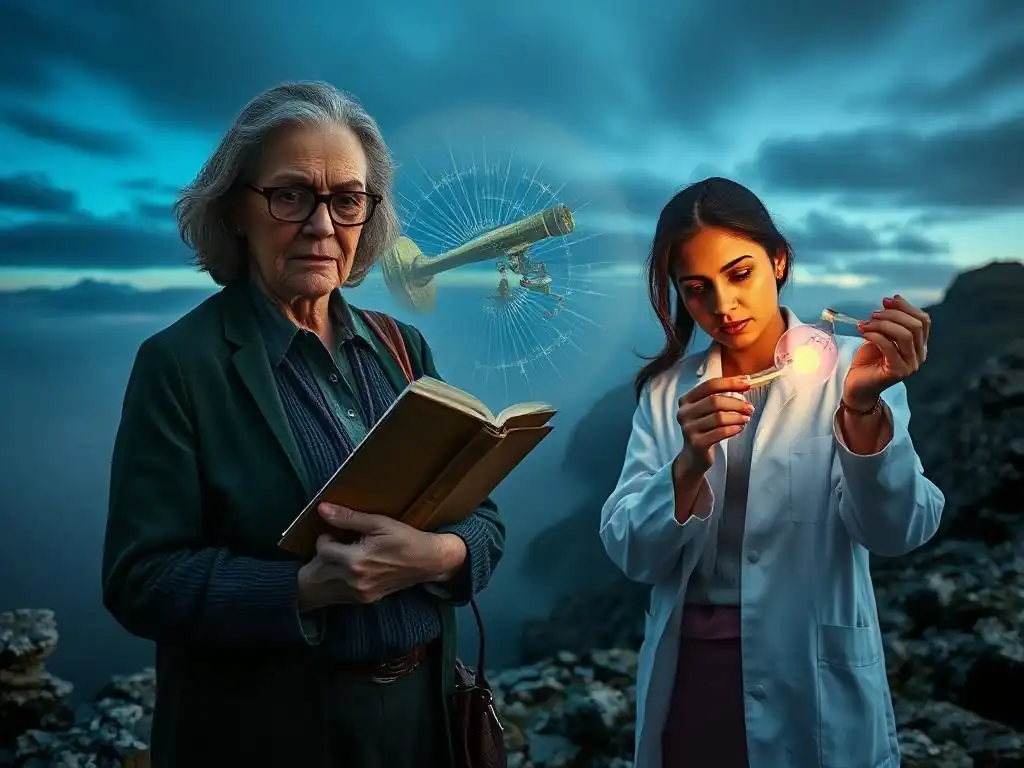
Welcome to WomenInScienceHistory.com!
Delve into the fascinating world where courage met intellect, and scientific boundaries were shattered by the unwavering dedication of women. Curious to know how women scientists overcame scientific dogma, even when faced with seemingly insurmountable obstacles? Prepare to be inspired by their cinematic stories of perseverance and groundbreaking discoveries – narratives often hidden in the annals of history, now brought to light. Explore our collection of biographies, analyses, and compelling insights into the extraordinary lives of these pioneering figures.
- Introduction: Celebrating Women Scientists Who Challenged Scientific Dogma on Film
- Cinematic Representations of Women Overcoming Scientific Obstacles
- Case Study 1: Hidden Figures - A Triumph Over Scientific Skepticism
- Case Study 2: Marie Curie: The Courage of Knowledge - Challenging Established Theories Through Tenacity
- Case Study 3: Agora - When Scientific Beliefs Collide with Female Innovation
- Analyzing Themes of Gender Bias and Scientific Misconceptions
- The Significance of These Films in Inspiring Future Generations of Women in STEM
- Conclusion: The Enduring Legacy of Women Scientists Who Defied Scientific Orthodoxy
-
Frequently Asked Questions
- What is "scientific dogma" and how did women scientists challenge it?
- Why is it important to highlight the stories of women scientists who overcame scientific dogma?
- What types of challenges did women scientists face when trying to overturn scientific dogma?
- Can you give an example of a scientific field where women scientists were particularly influential in overturning established dogma?
- How can learning about women scientists who overcame scientific dogma help inspire future generations?
- Final Reflection: The Unyielding Spirit of Discovery
- Unveil Your Inner Pioneer: Reimagine Science Through Her Lens!
Introduction: Celebrating Women Scientists Who Challenged Scientific Dogma on Film
Science, by its very nature, is a continuous process of questioning, observing, and revising. Yet, history shows that scientific progress is often hampered by deeply entrenched beliefs, or "dogma," that resist new evidence or revolutionary ideas. This resistance can be particularly formidable when the challengers are individuals from marginalized groups, such as women, who have historically faced immense societal and institutional barriers in scientific fields.
Cinema has emerged as a powerful medium for bringing these compelling narratives to life, showcasing the extraordinary resilience and intellectual bravery of women who dared to challenge established scientific orthodoxy. These films not only entertain but also educate, illuminating the struggles and triumphs of female pioneers who, against formidable odds, pushed the boundaries of human knowledge and demonstrated how women scientists overcame scientific dogma.
WomenInScienceHistory.com stands as a crucial digital archive dedicated to celebrating the indelible contributions of women across various scientific disciplines throughout history. This platform meticulously curates biographies, discusses groundbreaking research, and highlights the often-overlooked challenges faced by female scientists in male-dominated environments. It serves as a vital resource for anyone seeking to understand the true breadth of scientific achievement, ensuring that the narratives of brilliant women are not lost to history.
The website's mission aligns perfectly with the exploration of cinematic portrayals of women in science. By shedding light on these hidden narratives, WomenInScienceHistory.com complements the powerful visual storytelling of film, providing deeper context and further recognition for the women scientists who overcame scientific dogma and societal resistance to make their mark on the world.
The Enduring Appeal of Stories About Female Scientists Confronting Scientific Obstacles
The allure of stories featuring female scientists confronting scientific obstacles lies in their universal themes of persistence, intellectual courage, and the pursuit of truth against adversity. Audiences are drawn to narratives where individuals, often underestimated or dismissed, challenge prevailing wisdom and ultimately expand our understanding of the universe. These tales resonate deeply because they speak to the human spirit's capacity for innovation and resilience.
Moreover, these narratives offer crucial insights into the historical context of scientific discovery, revealing the additional layers of difficulty faced by women due to pervasive gender bias. Witnessing how women scientists overcame scientific dogma, often while simultaneously battling sexism and discrimination, transforms these stories into powerful inspirations, demonstrating the extraordinary fortitude required to advance knowledge in challenging circumstances.
Cinematic Representations of Women Overcoming Scientific Obstacles
Cinema has increasingly embraced the rich tapestry of stories involving women in science, moving beyond simplistic portrayals to explore the complex realities of their intellectual journeys. From historical biopics to fictionalized dramas, these films often highlight the immense intellectual and personal sacrifices made by women who dedicated their lives to scientific inquiry. They serve as a powerful mirror reflecting both the brilliance of these individuals and the systemic barriers they encountered.
These cinematic depictions specifically focus on the narrative arc of overcoming scientific obstacles, whether these are entrenched theories, skeptical colleagues, or institutional resistance. They meticulously craft scenes that illustrate the painstaking research, the intellectual debates, and the unwavering conviction that enabled these female protagonists to challenge and ultimately redefine accepted scientific truths.
Exploring the Portrayal of Perseverance in Science-Themed Films
The portrayal of perseverance in science-themed films is multifaceted, often showcasing the relentless dedication required to push the boundaries of knowledge. Directors and screenwriters meticulously craft sequences that depict long hours in laboratories, meticulous data analysis, and the repeated failures inherent in scientific experimentation, all leading to breakthroughs. For instance, a scientist might be shown conducting hundreds of experiments over years, or tirelessly sifting through reams of data, driven by an unshakeable belief in their hypothesis.
These films effectively convey the intellectual and emotional stamina necessary for women scientists to overcome scientific dogma. They illustrate that perseverance is not merely about enduring hardship but about maintaining intellectual rigor, adapting to new findings, and continuously refining one's approach despite skepticism or outright dismissal from the scientific establishment. This unwavering commitment is often the key differentiator that leads to revolutionary discoveries.
Beyond Biopics: Fictional Characters Inspired by Real Women Scientists
While biopics offer direct insights into the lives of historical figures, many fictional characters in science-themed films are also deeply rooted in the struggles and triumphs of real women scientists. These characters, though not bound by strict historical accuracy, serve as powerful composites, embodying the systemic challenges and intellectual bravery that define the experiences of pioneering women in STEM. They allow for a broader exploration of themes without being confined to a single individual's life story.
Such fictional narratives can sometimes even amplify the impact of real-world experiences, providing a relatable entry point for audiences to understand the historical context in which women scientists overcame scientific dogma. For example, a character might face a fictionalized version of institutional sexism or be ridiculed for a groundbreaking theory, mirroring the real-life dismissals faced by many historical female innovators. These portrayals, whether biographical or inspired, are vital for ensuring that the spirit of these women’s struggles and achievements continues to resonate.
Hidden Figures (2016) powerfully illuminates the often-unacknowledged contributions of three African American women working as human "computers" at NASA during the Space Race in the early 1960s. The film centers on Katherine Johnson, Dorothy Vaughan, and Mary Jackson, whose extraordinary mathematical abilities were instrumental in launching American astronauts into space. The scientific dogma they faced was multi-layered: the entrenched belief in the superiority of male, white engineers and the initial skepticism towards human calculation, especially when compared to the emerging, albeit fallible, electronic computers.
Specifically, Katherine Johnson encountered significant resistance due to both her race and gender. She was initially excluded from crucial mission briefings and denied access to classified information, including the calculations for the orbital mechanics, simply because she was a Black woman. This systemic bias meant her expertise was questioned, and she had to fight for the right to contribute her unparalleled analytical geometry skills to critical national projects.
In Hidden Figures, Katherine Johnson faced the scientific dogma that manual human calculation was inherently less reliable or sophisticated than emerging electronic computing systems, particularly for complex orbital mechanics. More profoundly, she confronted the deeply ingrained racial segregation and gender bias prevalent at NASA in the 1960s. Her white, male colleagues initially dismissed her capabilities, assuming that a Black woman could not perform calculations for critical space missions with the necessary precision.
This dogma manifested in tangible ways: Johnson was famously denied access to the "white only" restrooms, forcing her to run half a mile across the campus to use the appropriate facility. She was also initially barred from attending critical mission briefings where vital data, essential for her work, was shared. These barriers were not just social; they directly impeded her scientific work, forcing her to rely on incomplete information and prove her competence repeatedly in a hostile environment, highlighting the systemic challenges women scientists overcame scientific dogma within.
Katherine Johnson's Perseverance and Groundbreaking Calculations
Katherine Johnson's perseverance was legendary, as depicted in Hidden Figures. She relentlessly pursued access to the confidential data needed for her calculations, challenging norms by attending previously all-male briefings and speaking up for her right to contribute. Her most famous contribution was verifying the orbital equations for John Glenn's 1962 Friendship 7 mission. When the IBM mainframe computers were experiencing glitches, Glenn famously requested that "the girl" (Johnson) personally re-verify the calculations before his launch, trusting her accuracy over the nascent technology.
Her manual calculations, executed with extraordinary precision, confirmed the computer's trajectory, ensuring the safety of a pivotal mission in the Space Race. Johnson's work on subsequent missions, including the Apollo 11 lunar landing trajectory, further solidified her reputation as a "human computer" whose intellect transcended the limitations of both technology and societal prejudice. This demonstrated how a woman scientist overcame scientific dogma by proving the undeniable power of her intellect and meticulous work.
Hidden Figures vividly captures the multifaceted challenges faced by women in science, particularly Black women, in mid-20th century America. The film portrays the pervasive racial segregation, epitomized by separate facilities and discriminatory hiring practices, and the entrenched gender bias that relegated women to subordinate roles, regardless of their intellectual capabilities. Dorothy Vaughan's struggle to be recognized as a supervisor and Mary Jackson's fight to attend engineering courses at a segregated university are poignant examples of these systemic barriers.
The movie effectively illustrates that the fight for scientific recognition for women was not solely about intellectual prowess but also about dismantling deeply ingrained social structures. It highlights the immense personal and professional fortitude required for these women to navigate and ultimately succeed within a system designed to keep them marginalized. Hidden Figures serves as a powerful testament to the resilience and groundbreaking contributions of women scientists who overcame scientific dogma and societal prejudice to shape history.
Case Study 2: Marie Curie: The Courage of Knowledge - Challenging Established Theories Through Tenacity
Marie Curie: The Courage of Knowledge (2016) delves into the life of the trailblazing physicist and chemist, Marie Skłodowska Curie, focusing on her relentless pursuit of scientific truth in a late 19th and early 20th-century European scientific landscape dominated by men. The film portrays the immense scientific dogma of the time, which held a limited understanding of matter and energy, leading to widespread skepticism towards radical new concepts like radioactivity. Curie's work, particularly her isolation of new elements, directly challenged these prevailing atomic theories.
The film meticulously showcases the significant scientific resistance she encountered. Her initial findings on pitchblende and the subsequent discovery of polonium and radium were met with disbelief by many male peers who struggled to accept the existence of substances exhibiting such peculiar properties, especially when presented by a woman. This resistance extended beyond scientific skepticism to outright institutional bias, as evidenced by her being twice denied full membership in the prestigious French Academy of Sciences, despite her groundbreaking achievements.
The Context of Scientific Resistance in Marie Curie: The Courage of Knowledge
The scientific climate depicted in Marie Curie: The Courage of Knowledge was one of profound resistance to revolutionary ideas, especially those challenging the established Newtonian physics and atomic models. Before Curie's work, the atom was largely considered indivisible, and the concept of elements spontaneously emitting energy was almost unfathomable. Her discovery of radioactivity, a phenomenon where certain elements emit radiation, directly contradicted these long-held beliefs, prompting skepticism and even outright disbelief from the scientific community.
Beyond the intellectual resistance, Marie Curie, as a woman, faced an additional layer of prejudice. The scientific establishment was overwhelmingly male, and women were rarely admitted to universities or afforded research positions. Her pioneering work was often scrutinized more heavily, and her contributions initially downplayed or attributed primarily to her husband, Pierre Curie. This dual challenge of scientific skepticism and gender bias created an arduous path for a woman scientist to overcome scientific dogma.
The Role of Marie Curie's Determination in Overturning Scientific Consensus
Marie Curie's determination was the driving force behind her ability to overturn established scientific consensus. The film highlights her unwavering commitment to empirical evidence and her meticulous, often grueling, experimental work. She, alongside Pierre, processed tons of pitchblende in a dilapidated shed, enduring harsh conditions and physical exhaustion, to isolate minuscule amounts of radium and polonium. This painstaking process, which took years, provided irrefutable proof of the existence of these new radioactive elements.
Her relentless pursuit of pure samples and undeniable data ultimately forced the scientific community to accept the reality of radioactivity, fundamentally altering the understanding of atomic structure and energy. Her work laid the foundational groundwork for nuclear physics and medicine, including the development of X-rays and radium therapy. This monumental achievement stands as a testament to how a woman scientist overcame scientific dogma through sheer tenacity, intellectual rigor, and an unyielding commitment to scientific truth.
Marie Curie: The Courage of Knowledge as a Reflection of Historical Bias Against Women in Research
Marie Curie: The Courage of Knowledge serves as a poignant reflection of the pervasive historical bias against women in research. The film vividly portrays the obstacles Marie Curie faced, not just as a brilliant scientist but specifically as a woman in a deeply patriarchal academic world. She was initially unable to secure a university position due to her gender, despite her exceptional qualifications, and her early work was often dismissed or not taken seriously by male peers.
Even after her monumental discoveries and sharing the Nobel Prize in Physics in 1903, she continued to battle sexism. The film subtly illustrates how her intellectual contributions were sometimes overshadowed by Pierre's, and she faced intense public scrutiny and personal attacks, particularly after Pierre's death.
Her subsequent solitary win of the Nobel Prize in Chemistry in 1911, the first person ever to win two Nobels in different fields, was a testament to her independent brilliance, yet it still didn't fully erase the ingrained biases of her era. The film underscores the extraordinary fortitude required for women scientists to overcome scientific dogma and entrenched societal prejudice.
Case Study 3: Agora - When Scientific Beliefs Collide with Female Innovation

Agora (2009) transports viewers to 4th century CE Alexandria, a city at the intellectual heart of the Roman Empire, where the brilliant philosopher, astronomer, and mathematician Hypatia (played by Rachel Weisz) teaches and researches. The film masterfully depicts a society on the cusp of profound change, where scientific beliefs, particularly the geocentric model of the universe, were deeply intertwined with burgeoning religious dogma and political upheaval. Hypatia’s pursuit of knowledge, especially her inquiries into planetary orbits, directly challenged the Ptolemaic system, which had been accepted for over 1,400 years.
As a pagan woman teaching in a male-dominated, increasingly Christian society, Hypatia faced immense societal and intellectual barriers. Her commitment to empirical observation and rational inquiry stood in stark contrast to the growing religious fundamentalism that sought to suppress scientific questioning. Her very existence as an independent, intellectual woman in a position of authority was a defiance of the prevailing social and religious norms, making her a target for those who sought to enforce orthodoxy.
Examining the Societal and Scientific Barriers in Agora
In Agora, Hypatia navigates a complex web of societal and scientific barriers. Scientifically, she is challenging the geocentric model of the universe, a theory enshrined by Ptolemy for centuries, which posits that the Earth is the center of the cosmos. This was not merely a scientific idea but a philosophical and theological cornerstone, making any deviation from it highly contentious. Her groundbreaking work on elliptical orbits, though incomplete in the film, represented a radical departure from the prevailing circular orbit theory.
Societally, Hypatia faced immense prejudice as a pagan woman in a city increasingly dominated by Christian zealotry. Her independence, intellectual prowess, and refusal to convert were seen as threats to established religious and patriarchal order. The film powerfully illustrates how her scientific pursuits were not isolated but deeply entangled with the volatile socio-religious landscape of Alexandria, where the pursuit of knowledge could literally be a matter of life and death for women scientists trying to overcome scientific dogma.
Hypatia's Unwavering Pursuit of Knowledge Despite Opposition
Hypatia's unwavering pursuit of knowledge, despite the escalating religious and political turmoil, is a central theme of Agora. She is depicted as a beacon of rationality, dedicated to astronomical observation, mathematical reasoning, and philosophical debate, even as the world around her descends into fanaticism. Her refusal to abandon her scientific inquiries, despite facing ostracization, threats, and ultimately violence, underscores her profound intellectual integrity.
Her relentless work on understanding planetary motion, using observational data, directly challenged the entrenched Aristotelian and Ptolemaic models. While the film portrays her tragically unable to complete her work on elliptical orbits before her death, her intellectual courage in questioning established views and her dedication to empirical evidence mark her as a true pioneer. Her story highlights how some women scientists overcame scientific dogma through sheer intellectual bravery and an unyielding commitment to the truth, even when it cost them their lives.
The Impact of Agora on Raising Awareness About Gender Inequality in Science
Agora profoundly impacts awareness about gender inequality in science by dramatically illustrating the extreme consequences faced by women who challenged established dogmas in historical contexts. Hypatia's story is a harrowing portrayal of how intellectual freedom, especially for women, can be brutally suppressed when it clashes with societal and religious orthodoxy. Her tragic murder by a mob, fueled by religious fervor and misogyny, serves as a stark reminder of the vulnerability of female scholars throughout history.
The film powerfully conveys that the fight for scientific recognition for women was not just about intellectual debate but often about survival. It highlights how societal biases and patriarchal structures could weaponize scientific or religious dogma against women, leading to persecution and the suppression of their contributions. Agora thus stands as a potent cautionary tale and a call to remember the sacrifices made by women scientists who overcame scientific dogma and societal oppression in their pursuit of knowledge.
Analyzing Themes of Gender Bias and Scientific Misconceptions
Across the cinematic narratives of women in science, a pervasive theme emerges: the recurring motif of gender bias and scientific misconceptions. These films consistently portray the systemic challenges faced by women, who often struggled for recognition, access, and respect within scientific institutions historically controlled by men. Whether it's the 1960s NASA or ancient Alexandria, the struggle for intellectual parity is a constant.
This bias manifests in various forms, from outright dismissal of ideas to subtle undermining of authority, and even the appropriation of credit for groundbreaking discoveries. These cinematic representations are not merely dramatizations but reflections of historical realities, where women scientists overcame scientific dogma only to find themselves battling entrenched professional hurdles and societal prejudices that sought to minimize their achievements.
The Recurring Motif of Male Dominance in Scientific Institutions
The recurring motif of male dominance in scientific institutions is a stark reality depicted in nearly every film about pioneering women in science. Historically, universities, research labs, and scientific societies were almost exclusively male preserves, often excluding women from education, employment, and recognition. This created an environment where women's contributions were often overlooked, undervalued, or even actively suppressed.
Films like Hidden Figures and Marie Curie: The Courage of Knowledge vividly illustrate this dominance through scenes of all-male meetings, women being denied access to resources, and their ideas being dismissed or attributed to male colleagues. This pervasive male control meant that even when women scientists overcame scientific dogma with groundbreaking discoveries, they still had to fight for basic professional respect and acknowledgment within a system designed to keep them out.
The Power of Collaboration and Mentorship in Overcoming Gendered Obstacles
Despite the pervasive gender bias, films often highlight the crucial role of collaboration and mentorship in enabling women to overcome gendered obstacles and advance their scientific work. In Hidden Figures, Al Harrison, Katherine Johnson's director, eventually champions her work, providing her with the necessary access and trust, demonstrating the impact of an ally. Similarly, the collaborative spirit among Katherine Johnson, Dorothy Vaughan, and Mary Jackson allowed them to support each other in a hostile environment, sharing knowledge and strategies.
In Marie Curie's case, while Pierre Curie initially received more recognition, their partnership was fundamentally collaborative, providing her with a crucial intellectual and emotional support system that allowed her to pursue her research. These instances underscore that while systemic barriers were formidable, supportive relationships, even within patriarchal systems, often provided the necessary leverage or emotional fortitude for women to persist and ultimately succeed in their scientific endeavors, proving how women scientists overcame scientific dogma with the help of crucial allies.
How Films Highlight the Importance of Recognizing Women's Contributions to Science
These films serve as powerful vehicles for highlighting the importance of recognizing women's contributions to science, often correcting historical oversights. By bringing the stories of figures like Katherine Johnson, Marie Curie, and Hypatia to a global audience, they challenge the traditional, male-centric narrative of scientific progress. They emphasize that countless women have been instrumental in groundbreaking discoveries, despite being marginalized or forgotten by history.
Moreover, these cinematic portrayals underscore that denying recognition to women not only perpetuates injustice but also impoverishes the collective understanding of scientific history. By showcasing the immense talent, perseverance, and intellectual bravery of women scientists who overcame scientific dogma and systemic bias, these films advocate for a more inclusive and accurate historical record, inspiring a greater appreciation for the diverse minds that have shaped our world.
The Significance of These Films in Inspiring Future Generations of Women in STEM
The significance of these films in inspiring future generations of women in STEM cannot be overstated. By presenting compelling narratives of female scientists who persevered against immense odds, these movies offer tangible and relatable role models for young girls and women considering careers in science, technology, engineering, and mathematics. They transform abstract concepts of scientific achievement into engaging human stories of determination and intellectual triumph.
These cinematic portrayals illustrate that intelligence, curiosity, and passion for science transcend gender, directly encouraging young women to pursue their scientific interests without being constrained by outdated stereotypes. They show that women scientists overcame scientific dogma through rigorous inquiry and unwavering belief in their work, providing a powerful blueprint for aspiring innovators.
Breaking Down Stereotypes: The Influence of Positive Role Models
Films featuring women scientists play a critical role in breaking down outdated gender stereotypes that often deter girls from pursuing STEM fields. For too long, the image of a "scientist" in popular culture was predominantly male, perpetuating the misconception that science is a masculine domain. By showcasing brilliant, determined, and successful female scientists, these films offer counter-narratives that challenge these ingrained biases.
Seeing characters like Katherine Johnson or Marie Curie on screen, actively engaged in complex scientific work and achieving monumental breakthroughs, provides positive and aspirational role models. These portrayals demonstrate that intellectual rigor, analytical thinking, and groundbreaking innovation are not exclusive to one gender, thereby inspiring young women to envision themselves in scientific roles and pursue careers where women scientists overcame scientific dogma and made invaluable contributions.
The Importance of Telling Stories of Female Scientists Who Persisted Against All Odds
The importance of telling stories of female scientists who persisted against all odds lies in their power to illuminate both the historical injustices and the extraordinary resilience of these individuals. These narratives are not merely historical accounts; they are compelling human dramas of intellectual bravery, unwavering commitment, and profound personal sacrifice. They reveal the immense fortitude required to advance knowledge in the face of skepticism, discrimination, and sometimes even danger.
By highlighting how women scientists overcame scientific dogma, often while simultaneously battling societal prejudice, these stories provide invaluable lessons in perseverance and intellectual courage. They serve as a reminder that scientific progress is often the result of relentless effort and unwavering belief in one's work, even when the world is arrayed against you, making them powerful sources of inspiration for current and future generations.
Encouraging Young Women to Pursue Careers in Science and Challenge Existing Paradigms
Beyond inspiration, these films actively encourage young women to pursue careers in science and, crucially, to challenge existing paradigms. By vividly portraying the intellectual excitement of scientific discovery and the profound impact of groundbreaking work, they demystify complex fields and make them more accessible and appealing. They show that science is a dynamic arena where new ideas are essential, and questioning the status quo is a virtue.
The narratives of women scientists who overcame scientific dogma provide a powerful framework for aspiring innovators. They teach that true scientific progress often requires thinking differently, asking difficult questions, and having the courage to stand by one's convictions, even when they go against popular belief. This encourages a generation of young women to not only enter STEM fields but also to become the next wave of scientific pioneers, ready to challenge and reshape our understanding of the world.
Conclusion: The Enduring Legacy of Women Scientists Who Defied Scientific Orthodoxy
The cinematic tales of women who defied scientific dogma stand as powerful testaments to the enduring spirit of human inquiry and the extraordinary resilience of female intellect. From the groundbreaking calculations of Katherine Johnson to the revolutionary discoveries of Marie Curie and the philosophical pursuits of Hypatia, these films remind us that scientific progress is a collective human endeavor, enriched immeasurably by diverse perspectives and relentless determination.
These narratives underscore the invaluable contributions of women who, time and again, demonstrated how women scientists overcame scientific dogma, societal prejudice, and institutional barriers through their pioneering work. Their stories are not just historical footnotes; they are vibrant chronicles of courage, intelligence, and unwavering commitment to truth that continue to resonate today.
The Continued Need for Representation and Recognition of Women in STEM Fields
Despite significant progress, the need for representation and recognition of women in STEM fields remains critical. Gender disparities persist in many scientific disciplines, particularly in leadership roles and certain research areas. These films serve as a powerful reminder that the fight for full equality and acknowledgment of women's contributions is an ongoing process, requiring continuous advocacy and celebration of their achievements.
By consistently highlighting the historical and contemporary triumphs of women in science, we can inspire new generations and dismantle lingering stereotypes. Ensuring that the stories of women scientists who overcame scientific dogma are widely known and celebrated is essential for fostering an inclusive scientific community where talent knows no gender.
WomenInScienceHistory.com: Continuing the Conversation and Promoting Inclusivity
WomenInScienceHistory.com stands as a vital platform dedicated to continuing this crucial conversation and actively promoting inclusivity in science. Building upon the powerful narratives presented in films, the website delves deeper into the lives, struggles, and groundbreaking work of countless female scientists whose stories deserve to be heard and honored. It provides a comprehensive resource for students, researchers, and enthusiasts alike.
By championing the legacy of women scientists who overcame scientific dogma and shaped our world, WomenInScienceHistory.com not only educates but also inspires. It reinforces the message that scientific excellence is not limited by gender and encourages a future where every aspiring scientist, regardless of their background, feels empowered to pursue their intellectual curiosity and contribute to the advancement of human knowledge.
Frequently Asked Questions
What is "scientific dogma" and how did women scientists challenge it?
Scientific dogma refers to established and widely accepted beliefs within the scientific community. Women often challenged it by presenting new evidence and theories that contradicted prevailing views, despite facing resistance.
Why is it important to highlight the stories of women scientists who overcame scientific dogma?
It is important because it reveals the historical exclusion and biases within science, inspiring future generations by showcasing their perseverance and groundbreaking contributions. It also provides a more complete and accurate understanding of scientific progress.
What types of challenges did women scientists face when trying to overturn scientific dogma?
They faced challenges such as lack of access to education and resources, gender bias in academia, and the dismissal of their ideas due to their gender. This often meant working harder to prove their theories.
Can you give an example of a scientific field where women scientists were particularly influential in overturning established dogma?
Astronomy is one example, where women made significant contributions to understanding stars and galaxies despite facing skepticism and being relegated to lesser roles. Their meticulous work often disproved existing theories.
How can learning about women scientists who overcame scientific dogma help inspire future generations?
By showcasing their resilience, intelligence, and groundbreaking achievements, these stories demonstrate that gender is not a barrier to scientific success and encourage young women to pursue careers in STEM fields.
Final Reflection: The Unyielding Spirit of Discovery
The stories we've explored, showcasing women scientists who overcame scientific dogma, are not just historical anecdotes; they are powerful reminders of the enduring human spirit in the face of adversity. Their struggles and triumphs resonate deeply in a world still grappling with biases and systemic inequalities, proving that challenging established norms is not only possible but essential for progress.
The impact of these women extends far beyond their individual scientific contributions. They have become symbols of resilience, inspiring generations to question, to persist, and to break down barriers. Their legacy reminds us that scientific truth is not a static entity but a constantly evolving understanding shaped by diverse perspectives. Science knows no country, because knowledge belongs to humanity, and is the torch which illuminates the world.
- Louis Pasteur, a sentiment these women embodied despite facing exclusion.
As we conclude this exploration of cinematic tales, let us carry forward the unwavering spirit of these remarkable women. Let their stories fuel our own courage to challenge assumptions, to advocate for inclusivity, and to relentlessly pursue truth, even when the path is fraught with obstacles. Embrace the power of perseverance, and become a catalyst for positive change in your own sphere of influence.
Unveil Your Inner Pioneer: Reimagine Science Through Her Lens!
Thank you for delving into these inspiring stories of women who challenged scientific dogma. Now, it's your turn to become a force for change and continue their legacy. What will you do with this newfound inspiration?
- Share this article with friends, family, or colleagues to spark conversation and celebrate these unsung heroines.
- Dive deeper: Research one of the scientists mentioned and present your findings on your social media!
- Join the Women in Science History community: Visit WomenInScienceHistory.com and subscribe to our newsletter for exclusive content and updates.
What small, everyday action can you take to further advocate for inclusivity and challenge existing norms in science today?