
Quality Queens: The Women Who Revolutionized Manufacturing Standards and Control.

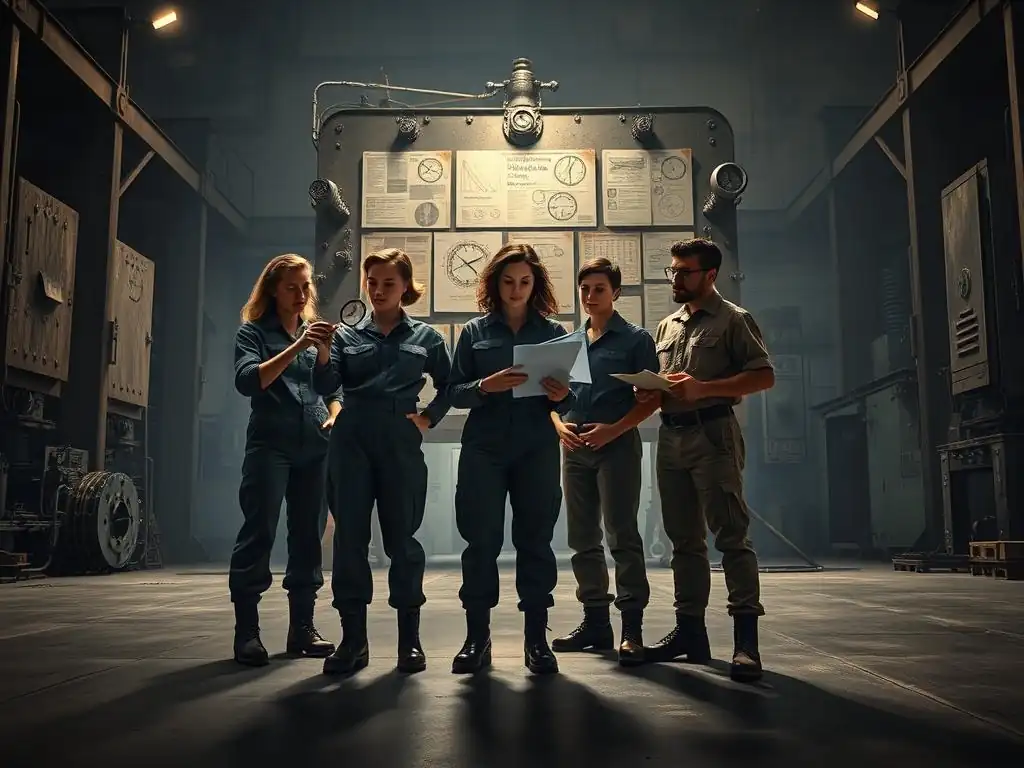
Welcome to WomenInScienceHistory.com, where we unearth the untold stories of remarkable women who shaped the world of science! Ever wondered how manufacturing achieved the precision and reliability we take for granted today? This isn't just a story of machines and processes; it's a story of ingenuity and determination. Dive into our latest article, " Quality Queens: The Women Who Revolutionized Manufacturing Standards and Control."
Discover how women revolutionized manufacturing quality control and left an indelible mark on Engineering & Technology, facing obstacles and shattering expectations along the way. Intrigued? Keep reading to learn more about their groundbreaking contributions and the lasting impact they had on industries worldwide.
- Introduction: Recognizing Women's Impact on Manufacturing Quality
- Early Pioneers: Laying the Foundation for Modern Quality Standards
- Women Revolutionizing Manufacturing Quality Control During World War II
- Post-War Advancements: Women Shaping Modern Quality Management
- The Rise of Statistical Quality Control and Women's Expertise
- Overcoming Challenges: Gender Bias in Manufacturing and Engineering
- Legacy and Inspiration: The Enduring Impact of Women in Quality Assurance
- Conclusion: Honoring the Women Who Shaped Manufacturing Excellence
-
Frequently Asked Questions
- What is the primary focus of "Women in Science History"?
- How did women contribute to manufacturing quality control?
- What were some challenges faced by women in manufacturing quality control during the early 20th century?
- Why is it important to highlight the contributions of women in fields like manufacturing quality control?
- What impact did the work of these "Quality Queens" have on modern manufacturing?
- Final Reflection: Honoring the Legacy of Quality
- Ignite Your Inner Innovator!
Introduction: Recognizing Women's Impact on Manufacturing Quality
The Unsung Heroines of Industrial Efficiency
Throughout history, the narrative of industrial progress has often centered on male figures, overlooking the pivotal contributions of women. Yet, behind many advancements in productivity and product reliability were women who meticulously shaped processes, ensuring precision and upholding stringent standards. These unsung heroines, often working in laboratories, on factory floors, or in administrative roles, were instrumental in establishing the foundational principles that underpin modern manufacturing quality control. Their tireless dedication and innovative approaches laid the groundwork for the efficient, high-standard production systems we rely on today, proving that women revolutionized manufacturing quality control in profound ways.
Their work, though sometimes less publicized, directly influenced everything from the ergonomics of assembly lines to the statistical methods used for defect prevention. From the early 20th century to the post-war industrial boom, women consistently adapted, innovated, and excelled in roles that demanded rigorous attention to detail and a scientific mindset. Their impact transcended mere compliance; they actively forged new paradigms for ensuring excellence in an increasingly complex industrial landscape.
Why Women's Contributions to Quality Control Matter
The contributions of women to quality control are not just a footnote in history; they are central to understanding the evolution of industrial efficiency and product safety. Their involvement brought diverse perspectives and problem-solving approaches that were crucial for identifying and mitigating production flaws, thereby enhancing overall product reliability. For instance, their emphasis on human factors and systematic process improvement led to safer working conditions and higher-quality goods, directly benefiting both workers and consumers.
By integrating women into these critical roles, manufacturing industries gained access to a wider talent pool, which was especially vital during periods of rapid expansion or labor shortages, such as during wartime. The meticulous nature of quality assurance, often requiring patience and precision, found natural champions in many women who excelled in these demanding environments. Recognizing how women revolutionized manufacturing quality control highlights their invaluable role in shaping the economic competitiveness and technological advancement of nations.
Early Pioneers: Laying the Foundation for Modern Quality Standards
Lillian Gilbreth: Championing Ergonomics and Efficiency
Lillian Gilbreth, a pioneering industrial psychologist and engineer, made indelible contributions to efficiency and quality in manufacturing through her focus on human factors and motion studies. Holding a Ph.D. in psychology, she brought a unique perspective to the traditionally male-dominated field of industrial engineering, emphasizing that efficiency was not just about machines, but about optimizing the human element. Her work, often in collaboration with her husband Frank Gilbreth, led to significant improvements in workplace design and operational flow, directly influencing how tasks were performed and how products were assembled with greater precision and less fatigue.
After her husband's untimely death in 1924, Gilbreth continued her groundbreaking work, consulting for numerous companies and applying her principles to diverse industries. She developed techniques such as micromotion studies, using film to analyze worker movements to eliminate unnecessary steps and reduce wasted effort. Her innovations led to more streamlined processes, which inherently contributed to higher quality outputs by reducing errors and improving consistency in production lines.
Lillian Gilbreth's Key Contributions to Manufacturing
Lillian Gilbreth's impact on manufacturing quality control extended to practical applications that are still evident today. She was instrumental in designing kitchens that optimized workflow, leading to the standardized heights of kitchen counters and the organized placement of appliances, principles that translate directly to factory floor layouts. She also held patents for everyday items like the foot-pedal trash can and shelves inside refrigerator doors, all designed with user efficiency and convenience in mind—a direct application of her ergonomic principles to product design.
Her consulting work for General Electric during the Great Depression is a prime example of her influence. She advised on the design of electric appliances, ensuring they were not only functional but also user-friendly and efficient, thereby improving their perceived and actual quality. Gilbreth's insistence on the "one best way" for performing tasks, derived from her detailed time and motion studies, became a cornerstone of quality assurance, ensuring that processes were standardized to yield consistent, high-quality results.
Florence Nightingale: Implementing Sanitary Standards in Healthcare
While primarily known as the founder of modern nursing, Florence Nightingale's systematic approach to healthcare management laid crucial groundwork for what would later be understood as quality control, particularly through her rigorous application of data and statistical analysis. During the Crimean War in the 1850s, she observed appalling sanitary conditions and a staggering mortality rate among soldiers, prompting her to implement strict hygiene protocols and systematic patient care procedures. Her meticulous record-keeping and data collection were revolutionary, providing undeniable evidence of the link between sanitation and patient outcomes.
Nightingale used innovative visual aids, such as her famous coxcomb diagrams (polar area graphs), to illustrate the preventable causes of death in military hospitals. These charts powerfully demonstrated that far more soldiers died from preventable diseases due to unsanitary conditions than from battle wounds. Her data-driven advocacy led to fundamental reforms in military healthcare, reducing the mortality rate at the Scutari hospital from over 40% to approximately 2% within six months of her arrival, a testament to her effective quality management.
Florence Nightingale's Innovative Quality Management Techniques
Florence Nightingale's influence on quality management, though not directly in manufacturing, established a powerful precedent for data-driven decision-making and continuous improvement. She implemented stringent protocols for cleanliness, ventilation, and patient nutrition, essentially creating a standardized, quality-controlled environment within hospitals. Her insistence on systematic data collection and analysis allowed her to identify deficiencies, propose solutions, and monitor their effectiveness, a process directly analogous to modern statistical process control.
Her work demonstrated the critical importance of a systematic approach to quality, where standards are established, adherence is monitored, and improvements are based on empirical evidence. Nightingale’s relentless pursuit of better patient outcomes through methodical observation and intervention serves as an early, powerful example of how a commitment to quality, driven by data and a holistic understanding of processes, can revolutionize practices and save lives.
Women Revolutionizing Manufacturing Quality Control During World War II
The Wartime Demand for Precision and Reliability
World War II spurred an unprecedented demand for rapid, large-scale manufacturing, placing immense pressure on industries to produce vast quantities of war materials—from aircraft and tanks to ammunition and uniforms—with absolute precision and reliability. The stakes were incredibly high; a faulty component could mean the failure of a mission or the loss of lives. This intense pressure catalyzed a significant evolution in manufacturing quality control, moving from informal checks to rigorous, standardized inspection and testing procedures.
As millions of men went to war, women stepped into critical roles across the industrial sector, including those traditionally held by men. Their meticulousness and adaptability proved indispensable in meeting the stringent quality requirements of wartime production. This period unequivocally demonstrated how women revolutionized manufacturing quality control by becoming the backbone of the precision economy.
Women Filling Critical Roles in Inspection and Testing
With male workers deployed to the front lines, women rapidly filled crucial positions in factories, taking on complex tasks in inspection, testing, and quality assurance. These roles demanded acute attention to detail, technical understanding, and often, the ability to operate sophisticated testing equipment. Women worked as inspectors of aircraft engines, calibrators of delicate instruments, testers of explosive materials, and meticulous checkers of thousands of small components.
This mass entry of women into quality-focused roles was not merely a temporary measure; it fundamentally altered perceptions of women's capabilities in technical and engineering fields. Their contributions ensured that the weapons, vehicles, and supplies produced for the war effort met the exacting standards necessary for battlefield success, solidifying their status as integral to the advancement of manufacturing quality control.
Elsie Eaves: Ensuring Quality in Construction Materials for the War Effort
Elsie Eaves, a trailblazing civil engineer and statistician, played a significant role in ensuring the quality and integrity of construction materials during World War II. As the first woman associate member of the American Society of Civil Engineers (ASCE) in 1927, her expertise was highly valued. During the war, her work focused on the critical aspects of material specifications and quality assurance for the massive government construction projects needed for the war effort, including military bases, defense factories, and housing for war workers.
Eaves's analytical skills were instrumental in establishing standards for various building materials, such as steel, concrete, and timber, ensuring they met the rigorous demands of wartime construction. Her efforts helped prevent structural failures and ensured the longevity and reliability of essential infrastructure, directly contributing to the nation's ability to support the war. Her work exemplified how women revolutionized manufacturing quality control through systematic engineering and statistical application.
Naomi Weinstein: Developing New Inspection Methods for Aircraft Components
During World War II, the rapid expansion of aircraft production necessitated innovative and efficient inspection methods to ensure the safety and performance of every plane. Women like Naomi Weinstein, representing a broader cohort of female engineers and technicians, were at the forefront of developing and implementing these crucial inspection techniques for aircraft components. Their work was vital in detecting hidden flaws in materials and assemblies, which could have catastrophic consequences in flight.
These women often devised new non-destructive testing methods, improved existing visual inspection protocols, and developed statistical sampling plans to manage the immense volume of components. Their meticulous efforts ensured that critical parts, from engine components to fuselage sections, met stringent quality specifications. This direct involvement in developing advanced inspection methods illustrates how women revolutionized manufacturing quality control, particularly in the high-stakes aerospace industry during a period of intense innovation.
Post-War Advancements: Women Shaping Modern Quality Management
Myra H. Fairweather: Integrating Quality into Textile Design and Production
Myra H. Fairweather was a significant figure in the post-war era, instrumental in integrating rigorous quality standards into the textile manufacturing sector. As consumer demand surged after the war, ensuring the durability, consistency, and performance of textiles became paramount. Fairweather's work focused on the scientific testing and standardization of fabrics, moving the industry away from subjective assessments towards objective, measurable quality control.
Her contributions involved developing and implementing testing protocols for various textile properties, such as tensile strength, colorfastness, shrinkage, and abrasion resistance. This meticulous approach ensured that military uniforms, industrial fabrics, and consumer garments met specific performance criteria, leading to higher-quality products that built consumer trust and reduced waste from defects. Her efforts exemplified how women revolutionized manufacturing quality control by embedding scientific rigor into an industry often seen as more art than science.
Myra H. Fairweather's Impact on the Textile Manufacturing Sector
Myra H. Fairweather's impact on the textile industry was transformative, helping to standardize production processes and elevate the overall quality of textile goods. By establishing clear, measurable quality benchmarks, she helped textile manufacturers achieve greater consistency in their output, leading to fewer product returns and enhanced brand reputation. Her work directly contributed to the post-war boom in American manufacturing by ensuring that textiles were not only produced in vast quantities but also maintained a high level of quality.
Her pioneering work in textile testing and quality assurance laid the groundwork for future advancements in material science and engineering within the textile industry. She demonstrated that applying scientific principles to material production could lead to significant improvements in product performance and consumer satisfaction, solidifying the role of women in shaping modern quality management.
Kaoru Ishikawa: Pioneering Total Quality Management (TQM) Principles (Acknowledging Ishikawa's work and influence on women in the field)
While Kaoru Ishikawa was a male Japanese quality control expert, his pioneering work in Total Quality Management (TQM) and his emphasis on company-wide participation profoundly influenced the integration and empowerment of women in quality control roles. Ishikawa advocated for quality circles and the belief that quality improvement should be a collective responsibility, involving every employee from top management to the factory floor. This philosophy created an environment where the practical insights and problem-solving abilities of all workers, including women, were actively sought and valued.
His development of the Ishikawa (fishbone) diagram, a cause-and-effect tool for problem analysis, empowered workers at all levels to identify root causes of defects and contribute to solutions. By promoting statistical quality control methods and fostering a culture of continuous improvement ( kaizen), Ishikawa's principles inadvertently yet significantly opened doors for women to participate more actively and effectively in the quality assurance process, moving beyond simple inspection to analytical problem-solving.
Kaoru Ishikawa's Focus on Continuous Improvement (Acknowledging Ishikawa's work and influence on women in the field)
Kaoru Ishikawa's relentless focus on continuous improvement and the democratization of quality knowledge directly benefited women in manufacturing. He championed the idea that every employee should be trained in basic statistical methods and quality control tools, enabling them to identify and address issues within their own work areas. This emphasis on education and empowerment provided women with the necessary skills and confidence to take on more significant roles in quality analysis and improvement.
His advocacy for quality circles, where small groups of workers collaborated to solve production problems, offered women an invaluable platform to contribute their on-the-ground expertise and lead improvement initiatives. By fostering an inclusive approach to quality, Ishikawa's methodologies helped solidify the role of women in shaping modern quality management, allowing them to contribute their unique perspectives and problem-solving skills to the ongoing pursuit of manufacturing excellence.
The Rise of Statistical Quality Control and Women's Expertise
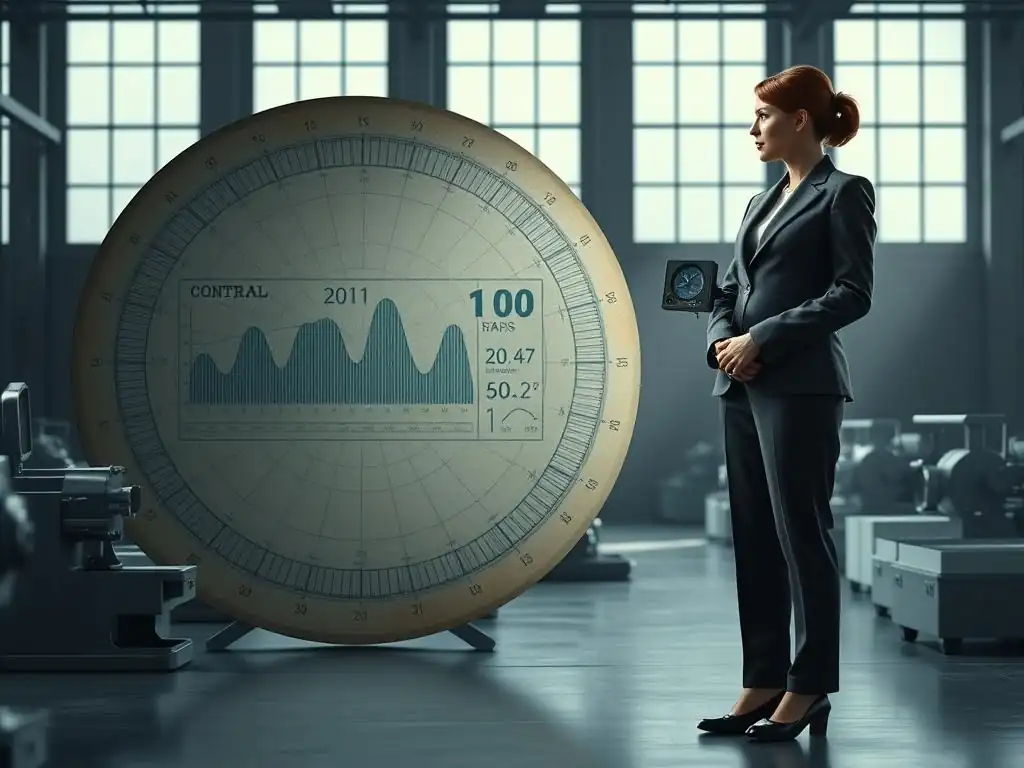
Statistical Analysis: A Crucial Tool for Manufacturing Excellence
The mid-20th century witnessed a paradigm shift in manufacturing quality control with the widespread adoption of statistical analysis. Moving beyond simple inspection of finished goods, statistical process control (SPC) allowed manufacturers to monitor production processes in real-time, predict potential defects, and make adjustments before errors occurred. This proactive approach significantly reduced waste, improved efficiency, and ensured a higher and more consistent level of product quality.
Statistical methods, such as control charts and sampling plans, became indispensable tools for achieving manufacturing excellence. The ability to interpret data, identify trends, and apply rigorous statistical principles became a highly sought-after skill, transforming quality control from a reactive "fix-it" function into a preventative science.
Women as Leaders in Statistical Process Control (SPC) Implementation
As statistical quality control gained prominence, women, often with backgrounds in mathematics, statistics, or engineering, emerged as key figures in its implementation. Their analytical acumen and meticulous attention to detail made them ideal candidates for developing and applying complex statistical models on the factory floor. They were instrumental in designing sampling plans, training production staff on data collection, and interpreting control charts to ensure processes remained within acceptable quality limits.
These women not only performed the statistical analyses but also often led teams, translating complex data into actionable insights for engineers and managers. Their leadership in SPC implementation was crucial for industries striving to achieve higher levels of precision and reliability in their products, further demonstrating how women revolutionized manufacturing quality control through their intellectual contributions.
Mary G. Natrella: Applying Statistical Methods to Improve Product Quality
Mary G. Natrella was a highly influential statistician whose work at the National Bureau of Standards (now NIST) significantly advanced the practical application of statistical methods in scientific and industrial settings. Her contributions were instrumental in making complex statistical techniques accessible and understandable to engineers, scientists, and quality control professionals across various manufacturing sectors.
Natrella authored the seminal handbook, "Experimental Statistics" (NBS Handbook 91), first published in 1963. This comprehensive guide became an essential resource for designing experiments, analyzing data, and interpreting results for quality improvement. Her work provided practical, step-by-step guidance on statistical hypothesis testing, confidence intervals, and regression analysis, directly enabling manufacturers to improve product quality through more rigorous testing and data-driven decision-making. Through her efforts, countless industries adopted more scientifically sound quality control practices, showcasing how women revolutionized manufacturing quality control by disseminating critical statistical knowledge.
Overcoming Challenges: Gender Bias in Manufacturing and Engineering
The Underrepresentation of Women in STEM Fields
Historically, and even today, women have been significantly underrepresented in STEM (Science, Technology, Engineering, and Mathematics) fields, including industrial engineering and manufacturing. This underrepresentation stems from a combination of societal biases, limited educational opportunities, and cultural norms that steered women away from technical professions. The perception of engineering and factory work as "male domains" created formidable barriers to entry and advancement, often leading to isolation and a lack of mentorship for aspiring female professionals.
Despite these systemic challenges, the women who chose to pursue careers in manufacturing quality control did so with remarkable resilience and determination. They often faced skepticism regarding their capabilities, had to prove themselves repeatedly, and sometimes earned less than their male counterparts for the same work. This pervasive gender bias meant that their groundbreaking contributions often went unrecognized or uncelebrated.
Breaking Barriers: Women's Persistence in Quality Control Roles
Despite the significant hurdles posed by gender bias, women demonstrated extraordinary persistence and fortitude in carving out vital roles within quality control and manufacturing. Their ability to excel in meticulous tasks, coupled with their strong analytical skills, allowed them to not only enter these fields but also to make substantial, undeniable impacts. They often had to navigate workplaces where they were the sole female engineer or technician, requiring immense self-belief and a commitment to their professional goals.
Their persistence was not just about personal success; it was about breaking down preconceived notions about women's capabilities in technical and industrial environments. By consistently delivering high-quality work and demonstrating expertise in statistical analysis, process improvement, and inspection, they chipped away at the barriers, proving that competence knows no gender. This relentless dedication was a key factor in how women revolutionized manufacturing quality control.
Stories of Resilience and Achievement in Male-Dominated Environments
Numerous stories of resilience and achievement illuminate the paths of women who thrived in male-dominated manufacturing and engineering sectors. For example, during World War II, women working on assembly lines often took on the highly skilled roles of calibrating precision instruments for aircraft, a task requiring extreme accuracy and technical understanding. They learned complex machinery quickly and became experts in ensuring components met exact specifications, directly contributing to the safety and effectiveness of wartime equipment.
One such story might involve a woman who, despite initial skepticism from male colleagues, meticulously identified a recurring defect in a critical engine part, leading to a significant design change that prevented numerous failures. These women often formed informal networks of support, sharing knowledge and strategies to navigate the challenging environment. Their quiet determination and tangible successes paved the way for future generations of women in STEM, demonstrating that true expertise and commitment could overcome even deeply ingrained biases.
Legacy and Inspiration: The Enduring Impact of Women in Quality Assurance
Women's Contributions to Global Manufacturing Competitiveness
The enduring impact of women in quality assurance extends far beyond individual achievements; it has profoundly shaped global manufacturing competitiveness. By pioneering systematic approaches to quality, implementing rigorous statistical methods, and advocating for human-centered design, women helped industries produce more reliable, efficient, and safer products. This commitment to excellence translated into reduced waste, lower production costs, and enhanced consumer trust, giving companies a significant edge in competitive markets.
From the early days of industrial efficiency to the era of total quality management, the contributions of women ensured that manufacturing processes were continuously improved, leading to higher product standards across various sectors, including textiles, aerospace, and general consumer goods. Their work solidified the notion that robust quality control is not just a regulatory requirement but a fundamental driver of economic success and innovation.
Inspiring Future Generations of Female Engineers and Quality Professionals
The stories of these pioneering women serve as powerful sources of inspiration for future generations of female engineers and quality professionals. By highlighting their often-overlooked achievements, WomenInScienceHistory.com aims to demonstrate that women have always been, and continue to be, at the forefront of scientific and technological advancement. These narratives encourage young women to pursue careers in STEM fields, particularly in industrial engineering and manufacturing, by showcasing role models who defied societal expectations and achieved remarkable success.
Understanding how women revolutionized manufacturing quality control provides a historical foundation for current efforts to promote diversity and inclusion in engineering. It empowers young women to see themselves as innovators, problem-solvers, and leaders in industries that are critical to global progress, fostering a sense of possibility and breaking down lingering stereotypes about gender roles in technical professions.
The Importance of Recognizing and Celebrating Women's Achievements in Industrial Engineering
Recognizing and celebrating the achievements of women in industrial engineering and quality control is not merely about correcting historical oversights; it is crucial for building a more equitable and innovative future. Acknowledging their contributions validates their struggles and triumphs, providing much-needed visibility for their groundbreaking work. This recognition also encourages a more inclusive environment within STEM, demonstrating that talent and expertise are valued irrespective of gender.
By shining a light on these "Quality Queens," we reinforce the idea that diversity of thought and experience leads to superior problem-solving and greater innovation. Celebrating how women revolutionized manufacturing quality control ensures that their legacy continues to inspire, shaping not only the next generation of engineers but also the very fabric of industrial progress.
Conclusion: Honoring the Women Who Shaped Manufacturing Excellence
The Future of Women in Quality Control and Manufacturing
The future of women in quality control and manufacturing is brighter than ever, building upon the foundational work of the pioneers discussed. As industries embrace advanced manufacturing, Industry 4.0, and smart factory concepts, the demand for highly skilled professionals in data analytics, automation, and intelligent quality systems will only grow. Women are increasingly entering these fields, bringing diverse perspectives and critical analytical skills necessary for navigating the complexities of modern production.
Emerging technologies like AI-driven quality inspection, predictive maintenance, and blockchain for supply chain transparency offer new avenues for women to lead innovation in quality assurance. Their historical contributions underscore their capacity to adapt to new challenges and continue to shape the evolution of manufacturing excellence. The ongoing push for STEM education and mentorship programs for girls and young women further ensures a robust pipeline of female talent ready to tackle future quality challenges.
Continuing the Legacy of Innovation and Quality Leadership
The legacy of women who revolutionized manufacturing quality control is a powerful testament to their ingenuity, resilience, and unwavering commitment to excellence. From Lillian Gilbreth's ergonomic insights to Florence Nightingale's data-driven sanitation reforms, and from the wartime contributions of Elsie Eaves and Naomi Weinstein to Mary G. Natrella's statistical prowess, these women laid the groundwork for modern quality management. Their stories remind us that innovation often comes from unexpected places and diverse minds.
To continue this legacy, it is imperative that we actively promote inclusivity in all facets of industrial engineering and manufacturing. By celebrating their achievements, we not only honor their past contributions but also inspire a new generation of women to pursue careers in quality leadership, ensuring that the pursuit of manufacturing excellence remains a diverse and dynamic endeavor.
Frequently Asked Questions
What is the primary focus of "Women in Science History"?
The website focuses on celebrating the contributions of women to various scientific fields throughout history, highlighting their groundbreaking work and the challenges they faced. It aims to inspire future generations.
How did women contribute to manufacturing quality control?
Women introduced innovative statistical methods and systematic processes that improved product reliability and efficiency in manufacturing. Their contributions significantly reduced defects and increased overall quality.
What were some challenges faced by women in manufacturing quality control during the early 20th century?
They often faced gender bias and lack of recognition in male-dominated industries, making it difficult to advance and have their contributions acknowledged. They had to overcome societal expectations and institutional barriers.
Why is it important to highlight the contributions of women in fields like manufacturing quality control?
Highlighting these stories helps to correct historical inaccuracies and provides role models for young women interested in STEM fields. It also acknowledges the diverse perspectives that contribute to scientific advancement.
What impact did the work of these "Quality Queens" have on modern manufacturing?
Their foundational work laid the groundwork for modern quality management systems, like Six Sigma, and continues to influence manufacturing practices focused on continuous improvement and customer satisfaction.
Final Reflection: Honoring the Legacy of Quality
The journey through the lives and contributions of these pioneering women reveals a profound truth: quality is not just a metric, but a reflection of dedication, innovation, and a commitment to excellence. Their impact on manufacturing standards and control resonates powerfully today, as we navigate an era where quality and precision are paramount in every industry. Their legacy reminds us that progress is often driven by those who dare to challenge the status quo and champion a better way.
The influence of these "Quality Queens" extends far beyond the factory floor; it has shaped our understanding of leadership, perseverance, and the importance of diverse perspectives in problem-solving. Their stories serve as a potent reminder that true innovation often arises from those who are underestimated or overlooked. The most profound technologies are those that disappear. They weave themselves into the fabric of everyday life until they are indistinguishable from it.
- Mark Weiser. This quote perfectly encapsulates the impact of their work; their contributions are so deeply embedded in our manufacturing processes that we often take them for granted, forgetting the revolutionary nature of their initial efforts.
As we reflect on the remarkable achievements of these women, let us be inspired to embrace their spirit of innovation and unwavering commitment to quality in our own lives. Let us strive to create a world where excellence is not just an aspiration, but a standard, and where the contributions of all individuals, regardless of gender or background, are recognized and celebrated. Consider how you can champion quality in your own sphere of influence, and how you can contribute to a future where innovation and excellence are the cornerstones of progress.
Ignite Your Inner Innovator!
Thank you for exploring the incredible stories of these pioneering women and their impact on manufacturing. Now, it's your turn to build on their legacy and make your mark!
- Embrace precision: Identify one area in your work or life where you can apply more rigorous quality control principles. Document the current process, implement improvements inspired by the women in this article, and track the results.
- Share their stories: Inspire others by sharing this article with your network or discussing these women's contributions in relevant forums.
- Dive Deeper: Explore online resources from organizations like the American Society for Quality to learn more about modern quality control techniques.
What small but significant change will you implement today to elevate the quality of your work?