
More Than Mentors: The Women Who Forged Mathematical Communities Against All Odds

Welcome to WomenInScienceHistory.com!
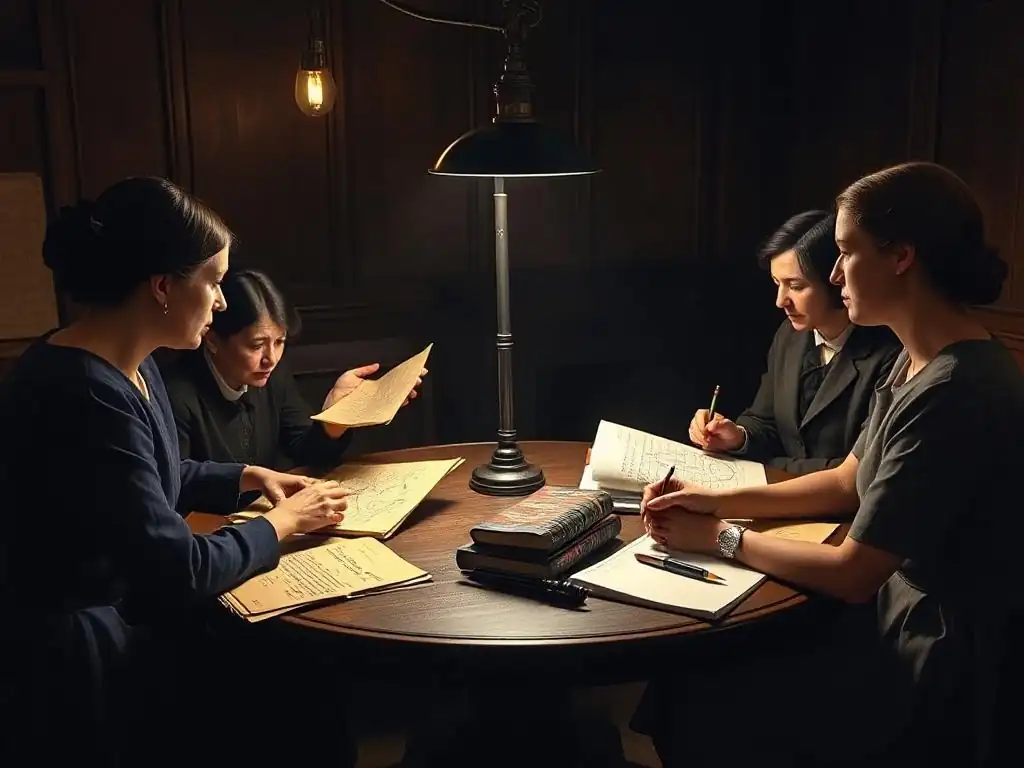
Delve into the fascinating world where brilliant minds defied expectations and shaped scientific progress. Today, we uncover the untold stories behind "Women’s mathematical community building challenges", exploring how these pioneering figures not only conquered complex equations but also forged vital support networks in a landscape often resistant to their presence. What obstacles did they face, and how did their collaborative spirit revolutionize mathematics? Join us as we reveal the inspiring resilience and ingenuity that built these communities, leaving an indelible mark on the scientific world.
- Introduction: Recognizing the Unsung Heroines of Early 20th Century Mathematics
- The Landscape of Early 20th Century Mathematics: A Male-Dominated Field
- Pioneering Women Who Built Mathematical Networks
- Strategies for Fostering Mathematical Communities in Hostile Environments
- The Impact of Women’s Mathematical Communities
- Examples of Collaborative Mathematical Projects Led by Women
- The Enduring Legacy of Women’s Mathematical Community Building
- Conclusion: Celebrating the Resilience and Ingenuity of Women in Mathematics
-
Frequently Asked Questions
- How did historical gender biases affect women seeking to build mathematical communities?
- What were some common strategies used by women to overcome these challenges and build mathematical communities?
- What role did mentorship play in the success of women's mathematical community building?
- What kind of impact did these women's mathematical communities have on the broader scientific landscape?
- What lessons can be learned from the historical challenges and successes of women's mathematical community building that are relevant today?
- Final Reflection: The Enduring Power of Connection
- Ignite Your Inner Mathematician: Start Building Your Community Today!
Introduction: Recognizing the Unsung Heroines of Early 20th Century Mathematics
Highlighting the Crucial Role of Community in Women's Mathematical Success
In the early 20th century, a period marked by profound societal shifts and scientific advancements, the landscape of academia remained largely inhospitable to women, particularly in rigorous fields like mathematics. For women daring to pursue mathematical careers, community was not merely beneficial; it was often the very bedrock of their success and survival. These networks provided intellectual exchange, emotional support, and a vital sense of belonging in environments that frequently sought to isolate or diminish their contributions. Without such communal foundations, many brilliant minds might have been lost to history, their potential stifled by isolation and systemic exclusion.
These nascent communities, whether formal or informal, offered spaces where ideas could be freely debated, research problems could be collaboratively tackled, and encouragement could be found amidst pervasive skepticism. They served as crucial incubators for talent, allowing women to hone their skills and gain confidence in their abilities, often far from the traditional male-dominated seminars and common rooms. This collective strength was instrumental in navigating the often-arduous path toward recognition and achievement in a field that was slow to embrace diversity.
The Overlooked History of Women’s Mathematical Community Building Challenges
The narrative of scientific progress often focuses on individual genius, overlooking the intricate web of relationships and support systems that underpin groundbreaking work. This oversight is particularly pronounced when examining the history of women in mathematics, where the extraordinary efforts made to forge communities are frequently unacknowledged. The Women’s mathematical community building challenges of the early 20th century were formidable, ranging from societal expectations that confined women to domestic roles to institutional policies that actively barred them from universities, research positions, and professional societies.
These pioneers faced a unique set of obstacles in their quest to establish intellectual networks. They contended with limited access to formal education, a scarcity of female peers or mentors, and the prevailing belief that women lacked the intellectual capacity for advanced mathematics. Despite these profound Women’s mathematical community building challenges, they ingeniously devised strategies to connect, collaborate, and uplift one another, laying the groundwork for future generations. Understanding this overlooked history is essential to fully appreciate the resilience and ingenuity of these women and to recognize the enduring importance of community in fostering an inclusive scientific landscape.
The Landscape of Early 20th Century Mathematics: A Male-Dominated Field
Barriers Faced by Women Pursuing Mathematical Careers (1900-1950)
The period between 1900 and 1950 presented a daunting array of barriers for women aspiring to mathematical careers. Societal norms rigidly dictated that a woman's primary role was within the domestic sphere, making the pursuit of advanced academic degrees and professional careers seem unconventional, if not outright rebellious.
Universities, even those that eventually admitted women, often maintained discriminatory policies, such as denying them full degrees, excluding them from certain courses, or limiting their participation in academic life. For instance, at institutions like Cambridge University, women could sit for the prestigious Mathematical Tripos examinations, often achieving high honors, yet they were not granted full degrees until 1948.
Beyond educational access, professional opportunities were exceedingly scarce. Women who managed to complete their studies often struggled to secure faculty positions, research grants, or even recognition for their work. Many were relegated to lower-paying, less prestigious roles, such as teaching in women's colleges or secondary schools, with little opportunity for advanced research. This systemic exclusion meant that even highly talented women faced immense uphill battles to establish themselves and contribute meaningfully to the mathematical discourse of their time, compounding the inherent Women’s mathematical community building challenges.
Limited Opportunities for Collaboration and Mentorship
The isolation experienced by women in early 20th-century mathematics extended beyond formal barriers to include a severe lack of collaborative and mentorship opportunities. Academic environments were predominantly male, with informal networks, discussions in common rooms, and exclusive clubs forming the backbone of intellectual exchange and career advancement. Women were largely excluded from these crucial interactions, making it exceedingly difficult to find peers for collaborative research, gain insights from senior scholars, or receive the crucial sponsorship needed for career progression.
This dearth of interaction created a significant hurdle for women seeking to develop their research agendas and build a professional identity. Without readily available mentors to guide them through the complexities of academic politics or to introduce them to influential figures, their paths were often solitary and fraught with uncertainty. The absence of a visible female presence in senior academic roles meant that aspiring women had few role models to emulate, further intensifying the Women’s mathematical community building challenges and making the pursuit of a mathematical career seem like an almost impossible endeavor.
Pioneering Women Who Built Mathematical Networks
Emmy Noether: A Beacon of Collaboration and Mathematical Innovation
Emmy Noether stands as an unparalleled figure in the history of abstract algebra, and equally, as a central force in fostering a vibrant intellectual community at the University of Göttingen. Despite facing significant discrimination—initially working without pay or formal title for years, and later holding an "unofficial" professorship—Noether attracted a dedicated group of students and collaborators. Her seminar, known as the "Noether school," became a crucible for mathematical innovation, characterized by an open, informal, and deeply collaborative atmosphere. She encouraged her students to explore new ideas, often guiding them collectively through complex problems rather than delivering traditional lectures.
Noether's collaborative spirit was legendary; she often allowed her students and colleagues to publish results that were largely her own, demonstrating a profound dedication to the advancement of mathematics over personal recognition. Figures like B. L. van der Waerden, who extensively incorporated Noether's work into his seminal textbook Moderne Algebra, openly acknowledged her profound influence. Her ability to cultivate such a fertile intellectual environment, attracting minds from across Europe, stands as a testament to her unique leadership and her unwavering commitment to overcoming the inherent Women’s mathematical community building challenges of her era.
Grace Chisholm Young, the first woman to officially receive a doctorate in Germany (from Göttingen in 1895), provides a compelling example of how a unique form of community enabled profound mathematical contributions while navigating considerable personal responsibilities. After her marriage to William Henry Young, a fellow mathematician, the couple chose to live primarily in Göttingen and later in Switzerland, deliberately creating a home environment conducive to collaborative mathematical research. This partnership became their primary mathematical community, allowing Grace to pursue demanding intellectual work alongside raising six children.
Their collaboration was extensive and highly productive, resulting in over 200 joint papers and several books on topics ranging from set theory and measure theory to geometry. While William often took on the role of formal presenter due to societal norms, Grace was an equal, if not primary, intellectual force behind much of their shared work. Their unique partnership demonstrated a powerful strategy for overcoming the Women’s mathematical community building challenges of isolation and balancing professional ambition with family life, proving that a dedicated two-person community could yield extraordinary mathematical output.
Sofia Kovalevskaya: Advocating for Women's Education and Mathematical Opportunities
While Sofia Kovalevskaya's most prolific period of mathematical research occurred in the late 19th century, her enduring legacy and tireless advocacy profoundly influenced the landscape for women in mathematics well into the early 20th century. As the first woman to earn a doctorate in mathematics (also from Göttingen, in 1874) and the first woman appointed to a full professorship in Northern Europe (at Stockholm University in 1889), Kovalevskaya broke monumental barriers. Her very existence as a successful, recognized mathematician served as an powerful beacon, inspiring countless young women who faced the daunting Women’s mathematical community building challenges.
Kovalevskaya actively campaigned for women's access to higher education and academic positions. She corresponded with aspiring female students, offering advice and encouragement, effectively serving as an informal mentor and advocate.
Her groundbreaking work on partial differential equations and the rotation of a rigid body not only earned her international acclaim, including the prestigious Prix Bordin of the French Academy of Sciences, but also provided undeniable proof of women's intellectual capabilities in mathematics. Her career paved a crucial path, demonstrating that it was possible for women to achieve the highest levels of mathematical scholarship, thus fostering a vital "community of aspiration" for those who followed.
Strategies for Fostering Mathematical Communities in Hostile Environments
Creating Informal Networks and Support Systems
In an era where formal academic structures largely excluded women, the creation of informal networks and support systems became an essential strategy for survival and advancement. Women mathematicians often relied on extensive correspondence networks, exchanging ideas, sharing research, and offering mutual encouragement across geographical distances.
For instance, women like Charlotte Angas Scott, a prominent mathematician at Bryn Mawr College, maintained robust correspondence with peers and former students, fostering a sense of intellectual connection. Small study groups or "salons" also emerged, where women could meet in private homes or discreet locations to discuss mathematical problems, present their work, and receive constructive feedback in a safe space away from judgmental male colleagues.
These informal communities provided not only intellectual stimulation but also crucial emotional support. They served as vital lifelines, helping women navigate the professional isolation, skepticism, and outright hostility they frequently encountered. By circumventing the rigid institutional barriers, these resilient women demonstrated ingenuity in their quest to build a collective identity and sustain their passion for mathematics, directly addressing the pervasive Women’s mathematical community building challenges.
Mentorship and Guidance for Aspiring Female Mathematicians
The role of mentorship, even in its informal guises, was paramount in fostering early mathematical communities for women. Pioneering women, and occasionally supportive male colleagues, took on the responsibility of guiding younger female mathematicians through the complex and often unforgiving academic landscape. Figures like Mary Cartwright, a Cambridge mathematician, while not a full professor, quietly mentored numerous students and colleagues, providing intellectual direction and practical advice on navigating career paths. This guidance often extended beyond academic topics to include strategies for dealing with gender bias, identifying publication opportunities, and securing scarce positions.
Such mentorship was critical because it provided aspiring female mathematicians with insights into the unwritten rules of academia and helped them identify potential allies. It also served as a powerful form of sponsorship, opening doors to opportunities that might otherwise have remained closed. The transfer of knowledge and experience from one generation of women to the next was a quiet but powerful force against the systemic Women’s mathematical community building challenges, cultivating a sense of continuity and shared purpose.
Overcoming Institutional Barriers and Gender Bias
The strategies employed by women to overcome institutional barriers and gender bias were often multifaceted, requiring immense perseverance and strategic action. One common approach was sheer academic excellence; by consistently outperforming their male counterparts in examinations and producing undeniable research, women forced institutions to acknowledge their intellectual prowess. For example, many women, like Dorothy Wrinch at Oxford, achieved top honors in their mathematical examinations, making it increasingly difficult for universities to justify their exclusion. Another strategy involved finding influential male allies within institutions who were willing to champion their cause, advocate for their admission, or support their research.
Furthermore, some women engaged in persistent application processes, slowly chipping away at discriminatory policies. The gradual admission of women to certain university programs or the eventual granting of degrees, as seen at Cambridge in 1948, was often the result of decades of pressure from women themselves and their supporters. These efforts, though slow and arduous, were essential in dismantling the formal structures that perpetuated the Women’s mathematical community building challenges, paving the way for more equitable access and recognition in the mathematical world.
The Impact of Women’s Mathematical Communities
Advancing Mathematical Knowledge and Research
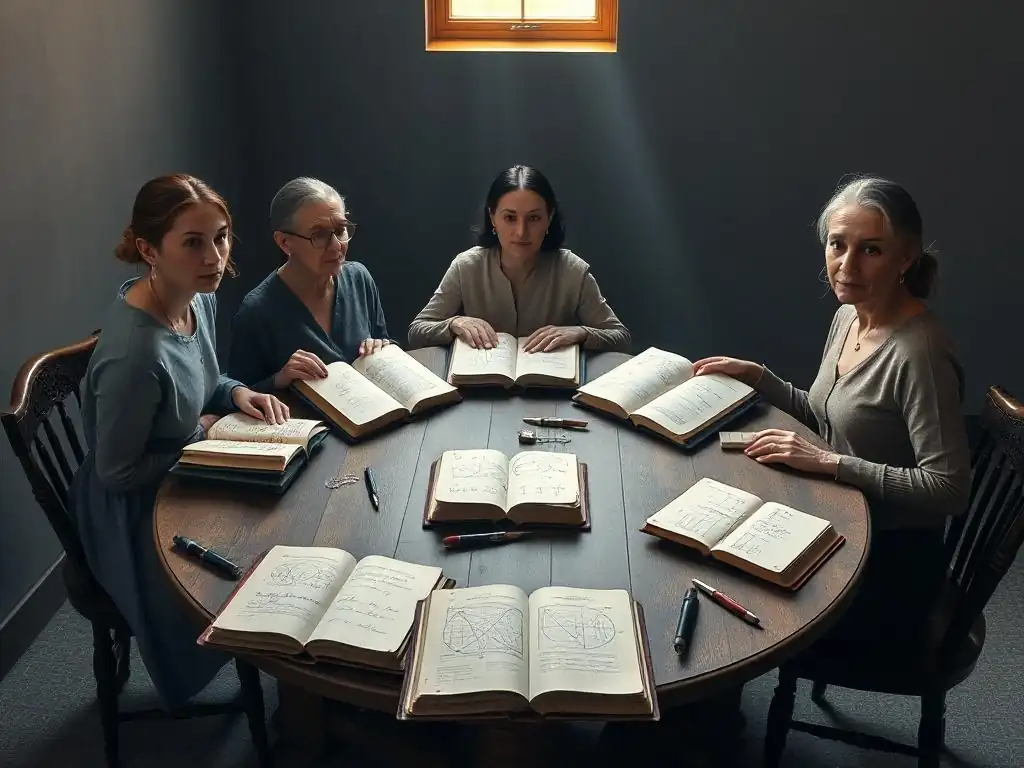
The communities forged by women in mathematics, despite their often informal and challenging origins, had a profound impact on the advancement of mathematical knowledge and research. These collaborative environments fostered a rich exchange of ideas, leading to significant breakthroughs that might not have occurred in isolation. Emmy Noether's "school" at Göttingen is a prime example; her leadership in abstract algebra, particularly in the development of ring theory and ideal theory, was highly collaborative. Her students and colleagues built upon her foundational work, spreading her revolutionary concepts across the mathematical world and contributing to a new era of algebraic thought.
Similarly, the collaborative work of Grace Chisholm Young and William Henry Young led to substantial contributions in fields like set theory and measure theory, including the development of the Denjoy-Young-Saks theorem on the differentiability of functions. The unique perspectives and rigorous approaches cultivated within these networks often led to innovative solutions and the exploration of new areas of inquiry. These communities not only sustained individual women but also enriched the entire field of mathematics, demonstrating that diverse perspectives are crucial for intellectual progress, even amidst significant Women’s mathematical community building challenges.
Empowering Future Generations of Female Mathematicians
One of the most enduring impacts of these early women’s mathematical communities was their role in empowering future generations of female mathematicians. By creating visible examples of success and collaboration, these pioneers inspired younger women to pursue careers that were once considered impossible. The existence of figures like Emmy Noether and Sofia Kovalevskaya, who achieved international acclaim despite immense obstacles, provided tangible proof that women could excel in mathematics. Their stories served as powerful counter-narratives to the prevailing gender stereotypes, demonstrating intellectual capability and leadership.
The networks they established, however informal, provided pathways and encouragement for those who followed. Knowing that other women had navigated similar Women’s mathematical community building challenges offered both practical advice and psychological fortitude. This ripple effect meant that each woman who succeeded and built a community contributed to a growing pool of female talent, slowly but surely transforming the demographic landscape of mathematics and fostering a more inclusive environment for those who would come after.
Challenging Gender Stereotypes in STEM Fields
The very existence and success of women’s mathematical communities served as a powerful direct challenge to entrenched gender stereotypes in STEM fields. For centuries, mathematics was widely perceived as an exclusively male domain, with prevailing beliefs that women lacked the necessary logical reasoning or abstract thinking abilities. The collaborative work and significant contributions of women like Emmy Noether, Grace Chisholm Young, and others provided undeniable evidence to the contrary. Their publications, presentations, and the recognition they slowly garnered chipped away at these deeply ingrained prejudices.
By demonstrating their intellectual prowess, leadership, and capacity for rigorous scientific inquiry, these women proved that gender was irrelevant to mathematical ability. Their collective efforts, born out of necessity due to Women’s mathematical community building challenges, slowly but surely began to dismantle the myth of male intellectual superiority in science. This cultural shift, though gradual, laid critical groundwork for a more equitable future in STEM, opening doors not just for mathematicians but for women across all scientific disciplines.
Examples of Collaborative Mathematical Projects Led by Women
Noether's Influence on Abstract Algebra and Ring Theory
Emmy Noether's work on abstract algebra, particularly her foundational contributions to ring theory and ideal theory, is a prime example of collaborative mathematical development driven by a woman's intellectual leadership. Her "Noether school" at Göttingen was not merely a collection of students; it was a dynamic, interactive research group where ideas were collectively explored, debated, and refined.
Noether herself was known for her generosity in sharing her ideas, often allowing her students and collaborators to publish results that originated from her insights. For instance, her work on the ascending and descending chain conditions for ideals, which led to the concept of Noetherian rings, was developed through intense discussions and collaborations with her students.
The impact of this collaborative environment is evident in the seminal works of her students. B. L. van der Waerden's Moderne Algebra (1930-1931), which became a standard textbook for decades, extensively incorporated Noether's ideas on abstract algebra, acknowledging her profound influence on its structure and content. This widespread dissemination of her work through her students and collaborators solidified her legacy and demonstrated how a woman's intellectual leadership, despite facing significant Women’s mathematical community building challenges, could profoundly reshape an entire field of mathematics.
Young's Contributions to Mathematical Education and Geometry
The collaborative partnership between Grace Chisholm Young and William Henry Young stands as a unique and highly productive example of a mathematical community centered around a woman's contributions. Their joint work spanned several areas, including set theory, measure theory, and geometry, resulting in over 200 published papers and several books. Notably, their 1906 textbook, The Theory of Sets of Points, was a pioneering work in English on set theory, demonstrating their collective expertise and pedagogical commitment.
Their research also led to significant results like the Denjoy-Young-Saks theorem, which concerns the differentiability of functions. This theorem, a cornerstone in real analysis, is a testament to the depth and rigor of their joint intellectual endeavors. Grace often worked from home, managing a large family, while William traveled and presented their joint findings, navigating the professional world on their behalf. This highly effective division of labor and intellectual synergy allowed Grace to contribute profoundly to mathematics, overcoming the Women’s mathematical community building challenges of her domestic responsibilities through a committed intellectual partnership.
Kovalevskaya's Work on Partial Differential Equations and Rigid Body Motion
While Sofia Kovalevskaya's mathematical research was largely individual, her pioneering achievements served as a powerful, indirect form of "community building" by inspiring and paving the way for other women. Her most famous work, which earned her the prestigious Prix Bordin in 1888, involved the complete solution to the problem of the rotation of a rigid body about a fixed point, a notoriously difficult problem in mechanics. This breakthrough demonstrated her exceptional analytical skills and her profound understanding of partial differential equations, leading to the identification of the "Kovalevskaya top."
Her earlier work also included significant contributions to the Cauchy-Kovalevskaya theorem, fundamental in the theory of partial differential equations. The sheer intellectual caliber of her research, recognized by leading mathematicians of her time, provided undeniable proof of women's capabilities in the most complex mathematical domains. By achieving such high levels of success and recognition, Kovalevskaya created a "community of aspiration" for women facing Women’s mathematical community building challenges, showing them that even in the most hostile environments, groundbreaking mathematical contributions were possible. Her legacy encouraged a new generation to pursue their mathematical dreams.
The Enduring Legacy of Women’s Mathematical Community Building
Lessons Learned from the Early 20th Century
The history of women forging mathematical communities in the early 20th century offers invaluable lessons that resonate profoundly today. One primary lesson is the paramount importance of resilience and perseverance in the face of systemic adversity. These women demonstrated an unwavering commitment to their intellectual pursuits, often in environments that actively sought to exclude them. Their experience highlights the power of informal networks and mutual support systems when formal institutions are exclusionary; these often-invisible bonds were crucial for survival and intellectual growth.
Furthermore, their journey underscores the necessity of actively challenging systemic biases and rigid gender stereotypes. By consistently demonstrating their intellectual prowess and leadership, these pioneers slowly but surely chipped away at deeply entrenched prejudices. Their strategies, born out of necessity due to pervasive Women’s mathematical community building challenges, provide a blueprint for how marginalized groups can create their own spaces for innovation and support, proving that community is not just a comfort, but a fundamental tool for progress and change.
Inspiring Contemporary Efforts to Promote Diversity and Inclusion in Mathematics
The historical struggles and successes of women in building mathematical communities continue to inspire and inform contemporary efforts to promote diversity and inclusion in mathematics and STEM fields more broadly. Modern organizations like the Association for Women in Mathematics (AWM), founded in 1971, directly trace their lineage back to the needs and challenges faced by these early pioneers. The AWM's mission to encourage women and girls to study and have careers in the mathematical sciences, and to promote equal opportunity, directly addresses the historical Women’s mathematical community building challenges that once seemed insurmountable.
Today, universities and professional societies are actively working to create more inclusive environments, offering formal mentorship programs, networking events, and scholarships specifically for women and underrepresented groups in mathematics. These initiatives are built upon the understanding that community, support, and visible role models are essential for fostering a diverse and thriving mathematical landscape. The historical narrative serves as a powerful reminder of how far the field has come, while also highlighting the ongoing need for vigilance and proactive efforts to dismantle remaining barriers.
The Continued Importance of Mathematical Networks for Women Today
Even in the 21st century, with greater access and opportunities, mathematical networks remain critically important for women. While the overt Women’s mathematical community building challenges of the early 20th century may have diminished, subtle biases, impostor syndrome, and the need for work-life balance persist. Professional organizations, online forums, and informal peer groups continue to provide vital platforms for mentorship, collaboration, and emotional support, helping women navigate academic and career paths.
These modern networks facilitate the sharing of research, offer opportunities for joint projects, and provide a sense of belonging that combats potential isolation, especially for women in specialized or emerging mathematical fields. They ensure that women have access to the same informal advantages—such as access to unadvertised opportunities or insider advice—that have historically benefited their male counterparts. The enduring legacy of these early mathematical pioneers emphasizes that community is not a luxury, but an essential component for the continued success and flourishing of women in mathematics.
Conclusion: Celebrating the Resilience and Ingenuity of Women in Mathematics
Acknowledging the Lasting Contributions of These Mathematical Pioneers
The stories of Emmy Noether, Grace Chisholm Young, Sofia Kovalevskaya, and countless other unsung heroines underscore a profound truth: women have always been integral to the advancement of mathematics, often against staggering odds. These mathematical pioneers were not merely brilliant individuals; they were architects of connection, forging vital communities that sustained their intellectual lives and enabled groundbreaking research. Their contributions to abstract algebra, measure theory, differential equations, and many other fields are not just footnotes in history; they are foundational pillars upon which much of modern mathematics stands.
Their resilience in the face of pervasive gender bias, institutional exclusion, and societal skepticism is a testament to their extraordinary determination and ingenuity. They navigated a landscape designed to deter them, yet they managed to cultivate intellectual havens where ideas flourished and talent was nurtured. Recognizing their lasting impact means acknowledging not only their individual achievements but also their collective power to build and sustain intellectual life under duress, overcoming immense Women’s mathematical community building challenges.
Fostering a More Equitable and Inclusive Mathematical Future
The legacy of these pioneering women serves as a powerful call to action for fostering a more equitable and inclusive mathematical future. By understanding the historical Women’s mathematical community building challenges they faced and the innovative strategies they employed, we gain invaluable insights into how to cultivate environments where all talent can thrive. Their stories remind us that intellectual excellence is not confined by gender, and that diversity enriches the entire scientific enterprise.
Today, building upon their foundations means actively promoting mentorship, creating robust support networks, and dismantling any remaining systemic barriers in mathematics. It involves celebrating diverse voices, ensuring equitable access to resources, and championing policies that support work-life integration. By learning from the resilience and ingenuity of these historical figures, we can collectively work towards a mathematical community that truly embraces all its members, ensuring that future generations of women in mathematics can pursue their passions without the undue burdens faced by their trailblazing predecessors.
Frequently Asked Questions
How did historical gender biases affect women seeking to build mathematical communities?
Historical gender biases created significant barriers to entry and limited access to resources, making it difficult for women to connect and collaborate in mathematics. This often led to feelings of isolation and the need to create their own supportive spaces.
What were some common strategies used by women to overcome these challenges and build mathematical communities?
Women often formed informal networks, mentorship programs, and collaborative research groups to support each other academically and professionally. These initiatives provided a sense of belonging and opportunities for advancement.
What role did mentorship play in the success of women's mathematical community building?
Mentorship was crucial in providing guidance, encouragement, and sponsorship for women navigating the male-dominated field. Mentors helped women overcome institutional barriers and gain recognition for their work.
What kind of impact did these women's mathematical communities have on the broader scientific landscape?
These communities fostered innovation and collaboration, leading to significant contributions to mathematical research. They also helped to challenge gender stereotypes and pave the way for future generations of women in STEM.
What lessons can be learned from the historical challenges and successes of women's mathematical community building that are relevant today?
We can learn the importance of creating inclusive spaces, addressing systemic biases, and actively supporting women in mathematics. Building strong communities remains essential for fostering diversity and promoting equity in STEM.
Final Reflection: The Enduring Power of Connection
The stories of these pioneering women, who built mathematical communities despite facing immense obstacles, resonate powerfully today. Their resilience and dedication to fostering collaboration serve as a potent reminder of the transformative power of inclusivity in STEM fields. Their struggles highlight the persistent need to dismantle systemic barriers and create environments where all individuals, regardless of gender or background, can thrive and contribute their unique talents.
The impact of these early mathematical communities extends far beyond the theorems proven and papers published. Their legacy lies in the creation of supportive networks that nurtured talent, challenged prevailing biases, and paved the way for future generations of women in mathematics. This ongoing influence underscores the critical role of mentorship and community in shaping not only individual careers but also the broader landscape of scientific progress. Alone, we can do so little; together, we can do so much.
- Helen Keller, a sentiment that perfectly captures the spirit of these women's collective efforts.
As we reflect on the challenges and triumphs of these remarkable women, let us be inspired to cultivate our own communities of support and encouragement. Let us actively seek out opportunities to mentor and uplift those around us, fostering a culture of inclusivity and collaboration that empowers everyone to reach their full potential. The future of mathematics, and indeed all fields of endeavor, depends on our collective commitment to building bridges and breaking down barriers.
Ignite Your Inner Mathematician: Start Building Your Community Today!
Thank you for exploring the inspiring stories of these groundbreaking women and their fight to create supportive mathematical communities. Now it's your turn to build upon their legacy.
Here are a few things you can do right now:
- Identify and connect with a local STEM organization or group focused on supporting women and girls in mathematics or a related field. Your involvement can make a huge difference!
- Share this article with your network to further celebrate these unsung heroines. Let their stories inspire others!
- Reflect on your own experiences: What simple act can you do today to foster a more inclusive and supportive community for women in STEM?