
The PreHistory of Code: Women Who Wrote the Rules for Machines Unbuilt

Welcome to WomenInScienceHistory.com!
Dive into the fascinating world where innovation meets resilience. We're thrilled to explore the untold stories of women who shaped science, and today, we're uncovering a particularly captivating chapter: Women coding early history. Before the digital age as we know it, brilliant minds were already crafting the very language that would speak to machines yet to exist. Curious about the pioneers who laid the groundwork for modern computer science, often in the face of incredible adversity? Keep reading to discover the prehistory of code and the remarkable women who wrote the rules.
- Introduction: Unveiling the Forgotten Pioneers of Early Computation
- Ada Lovelace: The Enchantress of Numbers and the First Algorithm
- Beyond Lovelace: Other Female Figures Shaping Early Computation
- The Power Loom and Punch Cards: Early Automation and Female Expertise
- Mechanical Marvels and Calculating Machines: Women's Role in Pre-Electronic Computing
- The Legacy of Pre-Electronic Women Coders: Inspiring Future Innovation
- Conclusion: Recognizing the Enduring Impact of Women Coding Early History
-
Frequently Asked Questions
- ### Who is often considered the first computer programmer, and why?
- ### What were some of the biggest challenges faced by women in science, particularly in coding's early history?
- ### The website mentions "machines unbuilt." What does this refer to in the context of early women in coding?
- ### How does WomenInScienceHistory.com aim to inspire future generations through its content?
- ### Why is it important to remember and celebrate the contributions of women in coding's early history?
- Final Reflection: Honoring the Unsung Architects of the Digital Age
- Unveil the Untold Stories: Keep the Legacy Alive!
Introduction: Unveiling the Forgotten Pioneers of Early Computation
Women Coding Early History: Beyond the Binary Narrative
The conventional narrative of computing often begins with the advent of electronic machines in the mid-20th century, typically featuring prominent male figures. However, a deeper look into the "pre-history" of code reveals a much richer tapestry, where the foundational concepts of algorithms and machine instruction were conceived and developed long before silicon chips and digital displays. This exploration unearths the significant, yet frequently overlooked, contributions of women who were instrumental in shaping these nascent ideas, challenging the narrow, binary view of computing's origins.
These early pioneers, often working in the shadows of their male counterparts or in roles deemed secondary, were the true architects of computational thought. Their intellectual labor laid the groundwork for what would become modern programming, demonstrating that the very essence of "coding" — the process of translating logic into actionable instructions for a machine — was not solely a product of the digital age but an evolving discipline with roots stretching back centuries, firmly intertwined with the ingenuity of women.
The Seeds of Code: Exploring Pre-Digital Computation
Before the hum of electronic circuits, the principles of computation manifested in various mechanical and theoretical forms. From intricate mechanical calculators designed to automate arithmetic to the sophisticated patterns woven by early automated looms, the concept of a machine following a set of instructions was already taking shape. These pre-digital machines, while far removed from today's computers, represented the earliest attempts to externalize human thought processes into automated systems.
The underlying "seeds of code" in this era were not lines of syntax on a screen, but rather physical configurations, gears, levers, and punch cards that dictated a machine's behavior. Understanding this era is crucial for appreciating the full scope of "women coding early history," as it reveals how women were involved in both the theoretical conceptualization and the practical implementation of these early forms of machine control, often in roles that demanded acute logical thinking and meticulous execution.
Ada Lovelace: The Enchantress of Numbers and the First Algorithm
Ada Lovelace's Analytical Engine: A Vision of General-Purpose Computing
Ada Lovelace, daughter of Lord Byron, possessed an extraordinary intellect that transcended the societal constraints placed upon women in the 19th century. Her collaboration with Charles Babbage on his Analytical Engine, a mechanical general-purpose computer designed but never fully built, positioned her at the very forefront of computational theory. Lovelace uniquely grasped the machine's potential beyond mere numerical calculation, envisioning it as a device capable of manipulating symbols and performing complex logical operations.
Her insights were revolutionary for the time, extending Babbage's initial vision of a sophisticated calculator into that of a machine capable of composing music, generating graphics, and performing any task that could be reduced to a sequence of logical steps. This foresight into the Analytical Engine's symbolic manipulation capabilities marked a pivotal moment in "women coding early history," demonstrating an understanding of what we now call general-purpose computing.
Early Programming Concepts: Lovelace's Notes as a Foundation
Lovelace's most significant contribution lies within her extensive "Notes" appended to her translation of Luigi Menabrea's article on the Analytical Engine. In these notes, she meticulously described an algorithm for calculating Bernoulli numbers using the Analytical Engine, widely regarded as the world's first computer program. This wasn't merely a calculation; it was a detailed sequence of operations, including concepts like looping (repetition of instructions) and conditional branching, fundamental elements of modern programming.
Her detailed explanation of how the machine would process a series of operations, anticipating the flow of data and control, showcased an unparalleled grasp of computational logic. These notes provided the theoretical bedrock for future programming languages and methodologies, making Ada Lovelace not just a visionary, but a pragmatic architect of the very first "rules for machines unbuilt," solidifying her place in "women coding early history."
Legacy of Ada Lovelace: Inspiring Future Generations of Women Coders
Ada Lovelace's pioneering work, though largely unappreciated in her lifetime, has gained significant recognition in the modern era as the true genesis of programming. Her conceptualization of an algorithm, decades before the first electronic computer, serves as a powerful testament to her genius and foresight. Her legacy extends beyond her technical contributions, becoming a beacon for women pursuing careers in technology and science.
Today, Lovelace's story is a cornerstone in discussions about "women coding early history," inspiring countless individuals to challenge boundaries and pursue their passions in STEM fields. Her intellectual courage and ability to envision the future of computing continue to motivate new generations of women coders, proving that innovative thought knows no gender or temporal limits.
Beyond Lovelace: Other Female Figures Shaping Early Computation
Grace Hopper: Contributions to Compiler Development and Programming Languages
While Ada Lovelace laid the theoretical groundwork, Grace Hopper emerged as a transformative figure in the practical application and accessibility of programming in the mid-20th century, building upon the foundational concepts of "women coding early history." A trailblazing computer scientist and U.S. Navy Rear Admiral, Hopper revolutionized how humans interacted with machines by developing the first compiler. Her A-0 System, introduced in 1952, allowed programmers to write code in a more human-readable language, which the compiler would then translate into machine code.
Hopper's relentless advocacy for machine-independent programming languages culminated in her pivotal role in the development of FLOW-MATIC, which significantly influenced COBOL (COmmon Business-Oriented Language). Her vision democratized "coding," moving it from a specialized, machine-specific skill to a more accessible and widely applicable discipline, directly impacting the way "rules for machines" were written and disseminated across various industries.
Mary Coombs: Innovating in Early Commercial Computing in Britain
Mary Coombs stands as a remarkable figure in the practical application of early computing, particularly within the commercial sphere in Britain. As the first female programmer for LEO I (Lyons Electronic Office I), one of the world's earliest commercial computers, Coombs was at the forefront of translating complex business problems into machine-executable instructions. Her work involved meticulously designing and implementing programs for tasks such as payroll processing and bakery order management, demonstrating the nascent power of automated data handling.
Her contributions exemplified the practical side of "women coding early history," showcasing how women were not just theorists but also hands-on innovators who applied logical principles to solve real-world problems. Coombs’s work on LEO I laid critical groundwork for future business computing, proving the viability of using machines to streamline operations and manage vast datasets, a testament to the essential role women played in shaping the early commercial landscape of computing.
Despite their groundbreaking contributions, these pioneering women in computing, from Ada Lovelace to Grace Hopper and Mary Coombs, consistently faced significant challenges in male-dominated academic and professional environments. Systemic biases often limited their access to education, resources, and recognition, forcing them to navigate a landscape where their intellectual capabilities were frequently underestimated or outright dismissed.
Many of their achievements were initially overlooked, attributed to male colleagues, or simply not documented with the same prominence. The narrative of "women coding early history" is therefore also a story of resilience and perseverance against entrenched societal norms and institutional barriers. Their successes, achieved often without the full support or acknowledgement they deserved, underscore not only their individual brilliance but also the pervasive struggle for equity in scientific and technological fields.
The Power Loom and Punch Cards: Early Automation and Female Expertise
Women and the Jacquard Loom: Weaving Patterns of Code
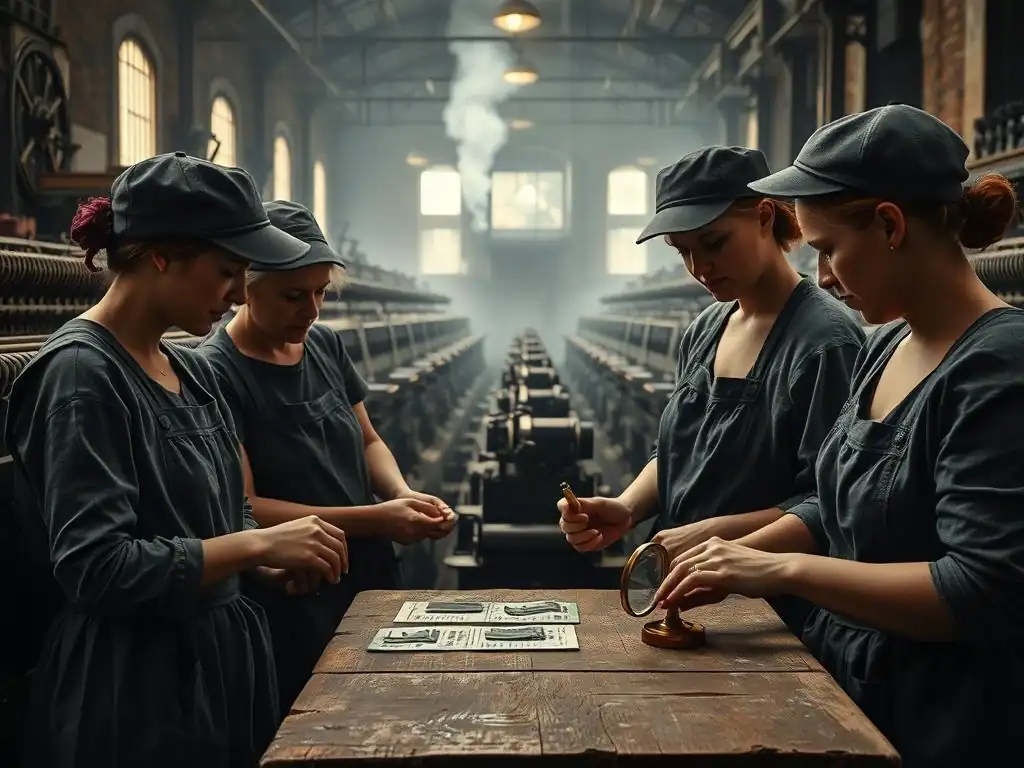
Long before electronic computers, the Jacquard loom, invented in 1801 by Joseph Marie Jacquard, represented a remarkable leap in automation, effectively using a form of "programming" to create intricate textile patterns. This mechanical loom utilized a series of interconnected punch cards to dictate the movement of individual warp threads, allowing for the automatic production of complex designs that were previously impossible or prohibitively time-consuming to weave by hand.
In many textile mills, women were the primary operators of these sophisticated machines. They were not merely laborers but skilled artisans who understood the intricate "logic" embedded in the punch cards, often responsible for setting up the looms and even designing new patterns. This hands-on engagement with the Jacquard loom marked a foundational chapter in "women coding early history," as these women were, in essence, "programming" complex machinery through physical instructions.
Punch Card Technology: A Precursor to Modern Data Storage
The punch card, perfected by Jacquard for his loom, proved to be a profoundly influential technology, serving as a crucial precursor to modern data storage and input methods. Each hole (or lack thereof) on a card represented a binary piece of information, instructing the loom on how to weave. This concept of encoding instructions or data onto a physical medium was later adapted for various other applications, including Charles Babbage's Analytical Engine and Herman Hollerith's tabulating machines used for the 1890 U.S. Census.
The evolution of punch card technology from controlling looms to processing census data highlights its versatility and fundamental importance in the "pre-history of code." It provided a tangible, repeatable way to store and retrieve information, laying crucial conceptual groundwork for the digital data storage systems we rely on today, illustrating how early forms of "women coding early history" were deeply intertwined with this pivotal innovation.
Female Operators: Mastering the Language of the Loom
The mastery required to operate Jacquard looms went far beyond simple manual dexterity; it demanded a deep understanding of the machine's "language" – the patterns encoded on the punch cards. Female operators were often responsible for interpreting these patterns, troubleshooting mechanical issues related to the card sequences, and ensuring the correct execution of the automated weaving process. Their intimate knowledge of how the punched holes translated into woven designs made them critical interpreters and implementers of early machine logic.
These women were effectively "debugging" and "running programs" through their daily work, making them unsung contributors to "women coding early history." Their expertise in manipulating and understanding the "rules" prescribed by punch cards for the loom provided a practical, hands-on experience with automated instruction sets, long before the term "programmer" entered the common lexicon.
Mechanical Marvels and Calculating Machines: Women's Role in Pre-Electronic Computing
Calculating Machines: Women's Involvement in Design and Operation
Before the advent of electronic computers, an array of mechanical calculating machines, ranging from simple adding machines to complex difference engines, were developed to automate tedious arithmetic. While often designed by men, the operation of these mechanical marvels frequently fell to women, who were perceived as having the patience and precision required for repetitive, detail-oriented tasks. These women became expert operators, performing intricate calculations for businesses, scientific endeavors, and government agencies.
Beyond mere operation, some women even contributed to the conceptual understanding and refinement of these machines. Their practical experience in identifying operational inefficiencies or potential improvements provided valuable feedback to designers, indirectly influencing the development of more advanced mechanical calculators. This direct engagement with the physical "rules for machines" marks another significant, if often overlooked, aspect of "women coding early history."
Human Computers: The Essential Role of Women in Mathematical Computation
One of the most pervasive and vital roles for women in pre-electronic computing was that of "human computers." Throughout the late 19th and early 20th centuries, women were employed in large numbers by observatories, government agencies, and research institutions to perform complex mathematical calculations by hand or with the aid of mechanical calculators. For instance, the "Harvard Computers," a group of women at the Harvard College Observatory, meticulously analyzed astronomical photographic plates, discovering stars, nebulae, and even a new system for stellar classification.
Similarly, during both World Wars and the early space race, women at organizations like the National Advisory Committee for Aeronautics (NACA), the precursor to NASA, performed critical calculations for ballistics trajectories and aerodynamic designs. These "human computers" were essentially executing complex algorithms manually, often developing shortcuts and efficient methods, making them indispensable to scientific and engineering progress. Their systematic approach to solving problems laid the empirical groundwork for future machine-based computation, unequivocally demonstrating the breadth of "women coding early history."
The Transition to Electronic Computers: Building on Early Foundations
The immense computational demands of the mid-20th century, particularly during World War II, highlighted the limitations of even large teams of "human computers." The need for faster, more accurate calculations directly spurred the development of electronic digital computers. Significantly, the very first programmers of these nascent electronic machines were often the same women who had served as human computers. They brought their deep understanding of mathematical algorithms and problem-solving methodologies to the new technology.
For example, the six original programmers of the ENIAC, the Electronic Numerical Integrator and Computer, were all women: Kathleen Antonelli, Jean Bartik, Betty Holberton, Marlyn Meltzer, Frances Spence, and Ruth Teitelbaum. They transitioned from manual calculation to writing the "rules for machines" on the world's first electronic computer, demonstrating a direct continuity from the era of human computation to the dawn of the digital age, a critical link in the narrative of "women coding early history."
The Legacy of Pre-Electronic Women Coders: Inspiring Future Innovation
Acknowledging the Unsung Heroines of Computer Science
For far too long, the contributions of women to the foundational stages of computer science have been minimized, ignored, or simply forgotten. The narratives of computing's origins often center exclusively on male inventors and engineers, leaving out the crucial theoretical insights of Ada Lovelace, the practical programming innovations of Grace Hopper and Mary Coombs, and the indispensable labor of countless "human computers" who performed the actual calculations that fueled scientific advancement.
Acknowledging these unsung heroines is not merely about historical correction; it is about providing a complete and accurate understanding of how the field of computing evolved. By bringing these stories to light, we begin to dismantle the myth that computing is an inherently male domain, revealing a rich history where "women coding early history" played an active and often leading role in shaping the technological landscape.
The Importance of Recognizing Women's Contributions to Early Computing
Recognizing the pivotal role of women in early computing is essential for several reasons. Firstly, it offers a more truthful and comprehensive account of technological history, demonstrating that innovation is a diverse and collaborative endeavor. Secondly, it provides powerful role models for current and future generations of women and girls who might otherwise feel disconnected from STEM fields. Seeing that women have always been at the forefront of logical thought and technological development can be profoundly empowering.
Furthermore, understanding the context of "women coding early history" helps to illuminate the systemic barriers they faced, fostering a greater appreciation for their achievements and encouraging continued efforts towards gender equity in technology today. It underscores that talent and intellectual capacity are universal, and that overlooking contributions based on gender leads to an impoverished understanding of history and hinders future progress.
Women in Science History: Celebrating the Pre-Digital Pioneers
The mission of WomenInScienceHistory.com is precisely to illuminate these often-obscured narratives, ensuring that the pre-digital pioneers of computing receive the recognition they so rightly deserve. By celebrating the intellectual courage and practical ingenuity of women like Ada Lovelace, the Jacquard loom operators, the human computers, and the early electronic programmers, the website aims to inspire a new generation to see themselves within the grand continuum of scientific and technological innovation.
These stories of "women coding early history" are not just historical curiosities; they are vibrant testaments to the enduring impact of female intellect on the development of one of humanity's most transformative technologies. By spotlighting these contributions, we enrich our collective understanding of history and empower future innovators to break new ground.
Conclusion: Recognizing the Enduring Impact of Women Coding Early History
The Pre-History of Code: A Foundation for Modern Computing
The journey through the "pre-history of code" reveals a truth often overlooked: the fundamental concepts and practical applications of computation did not emerge fully formed with the advent of electronic computers. Instead, they evolved through centuries of theoretical insights, mechanical innovations, and meticulous human labor. At every critical juncture of this evolution, from the abstract algorithms envisioned by Ada Lovelace to the physical "programming" of Jacquard looms and the exhaustive calculations performed by human computers, women were central figures.
Their contributions formed an indispensable foundation for modern computing, shaping the very language and logic that define today's digital world. Understanding "women coding early history" is therefore not just an academic exercise; it is essential to grasping the true origins and trajectory of one of humanity's most influential technologies, acknowledging that the "rules for machines unbuilt" were often penned by female minds.
Inspiring Future Generations of Women in STEM
The narratives of these pioneering women are more than historical facts; they are powerful sources of inspiration for future generations. By highlighting the ingenuity, perseverance, and intellectual prowess of women who shaped the early landscape of computing, we provide tangible role models for girls and young women considering careers in science, technology, engineering, and mathematics (STEM). These stories challenge persistent stereotypes and demonstrate that women have always been, and continue to be, vital innovators.
Recognizing the enduring impact of "women coding early history" is crucial for fostering a more inclusive and diverse future in STEM. It encourages young minds to pursue their curiosities, knowing they are part of a rich legacy of female innovators who dared to write the rules for the machines of tomorrow, whether those machines were theoretical, mechanical, or yet to be conceived.
Frequently Asked Questions
### Who is often considered the first computer programmer, and why?
Ada Lovelace is often considered the first computer programmer because she wrote the first algorithm intended to be processed by a machine, the Analytical Engine. Her notes included a detailed method for calculating Bernoulli numbers.
### What were some of the biggest challenges faced by women in science, particularly in coding's early history?
Women faced significant gender bias and discrimination in accessing education and opportunities. They were often excluded from formal training and relegated to less visible roles, despite their contributions.
### The website mentions "machines unbuilt." What does this refer to in the context of early women in coding?
"Machines unbuilt" refers to the fact that many of the early algorithms and concepts were developed for theoretical machines. These women were laying the groundwork for future computing technologies.
### How does WomenInScienceHistory.com aim to inspire future generations through its content?
The website inspires future generations by highlighting the achievements of female scientists. It showcases their resilience and contributions, demonstrating that women have always been integral to scientific progress.
### Why is it important to remember and celebrate the contributions of women in coding's early history?
Remembering these women helps to rewrite the historical narrative and acknowledge their often-overlooked impact. It also challenges stereotypes and encourages greater inclusivity in STEM fields.
Final Reflection: Honoring the Unsung Architects of the Digital Age
The echoes of punch cards and mechanical calculators might seem distant, but the foundational logic crafted by women in the early days of computing resonates powerfully today. Their contributions, often obscured by history, are not mere footnotes; they are the very blueprints upon which our digital world is built. Understanding their pioneering work is not just about historical accuracy; it's about recognizing the diverse roots of innovation and inspiring future generations.
This journey into the prehistory of code has profoundly impacted my perspective, revealing the critical role women played in shaping the technological landscape we inhabit today. It underscores the importance of actively seeking out and celebrating these hidden figures. The most effective way to do it, is to do it.
- Amelia Earhart. This quote, while not directly about coding, perfectly encapsulates the spirit of these women who dared to venture into uncharted territory and create something extraordinary.
Let us not forget the women who wrote the rules for machines unbuilt. As we navigate the complexities of our increasingly digital lives, let us remember their ingenuity, their perseverance, and their unwavering commitment to innovation. Consider how their legacy can inspire you to challenge assumptions, break barriers, and contribute your own unique voice to the ongoing evolution of technology. The future of coding, and indeed the future itself, depends on our ability to learn from the past and embrace the diverse talents that will shape tomorrow.
Unveil the Untold Stories: Keep the Legacy Alive!
Thank you for diving into the hidden history of women who shaped the digital world before computers even existed. We hope you’ve gained a new appreciation for their ingenuity and impact. Now, let’s ensure their stories continue to inspire future generations.
Here’s how you can make a difference:
- Share this article with your friends, family, and networks to shine a light on these unsung heroes. Let's amplify their contributions and ensure they receive the recognition they deserve.
- Explore our website, WomenInScienceHistory.com, and discover more captivating stories of remarkable women who have changed the world.
- Dig deeper and research one of these women to write a short paper about her life's achievements. Submit to our blog via the contact section and Become a contributor to WomenInScienceHistory.com.
Which of these pioneering women's stories resonates most with you, and how can you use their example to inspire others in your community?