
From Skepticism to Celebration: Tracing the Evolution of Perceptions of Women Scientists (and the Stereotypes That Still Linger)

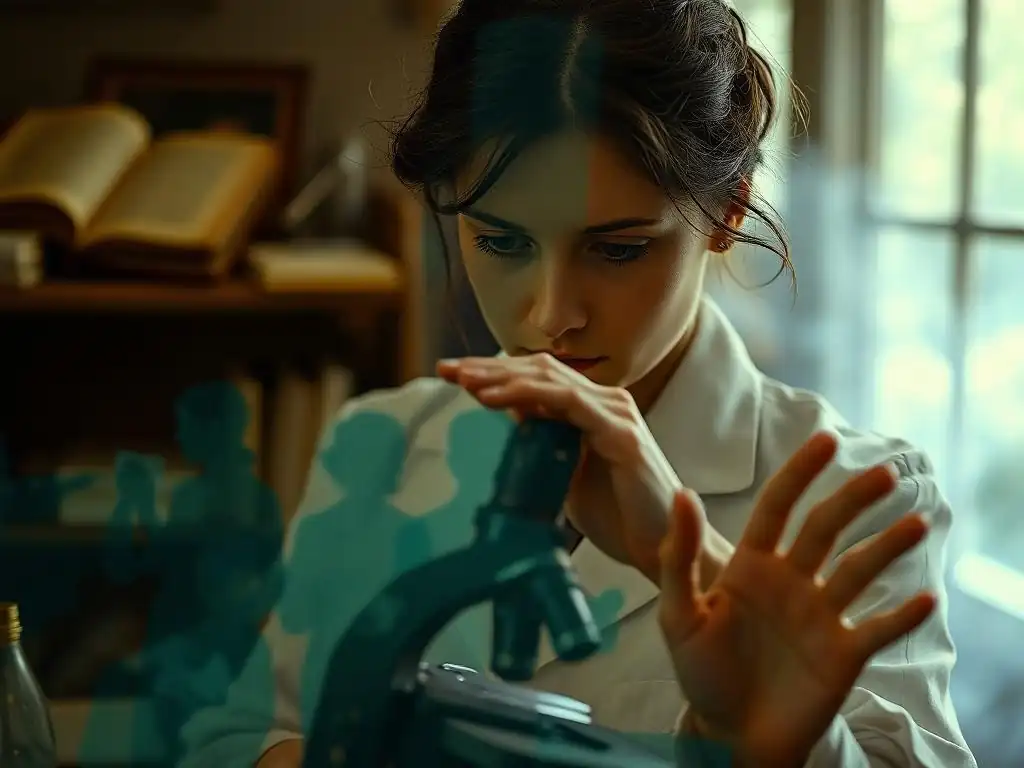
Welcome to WomenInScienceHistory.com!
Delve into the captivating, often untold, stories of remarkable women who shaped the world of science. This website is dedicated to celebrating their groundbreaking achievements and illuminating the obstacles they overcame. This article, "From Skepticism to Celebration: Tracing the Evolution of Perceptions of Women Scientists (and the Stereotypes That Still Linger)," explores the historical context surrounding women scientists historical stereotypes challenges, offering a fascinating glimpse into how perceptions evolved – and the battles that continue to be fought. Ready to uncover the systemic biases and triumphs that defined their journeys? Explore the article below and prepare to be inspired.
- Introduction: The Historical Underrepresentation of Women in Science
- Early Skepticism and Resistance: The Roots of Gender Bias in Science
- The Emergence of Trailblazers: Challenging Prevailing Stereotypes
- World War II and Beyond: Shifting Gender Roles and the Rise of Women in STEM
- Modern Challenges: Lingering Stereotypes and Implicit Bias
- Celebrating Achievements and Advocating for Change
- Conclusion: The Ongoing Journey Towards Equity for Women in Science
-
Frequently Asked Questions
- How did historical stereotypes affect women’s access to scientific education and careers?
- What were some common stereotypes about women in science throughout history?
- What types of challenges did pioneering women scientists face in male-dominated fields?
- How has the perception of women scientists evolved over time, and what factors contributed to this change?
- Despite progress, what stereotypes and challenges do women in science still face today?
- Final Reflection: Embracing the Brilliance Within
- Empower Change: Celebrate Women in Science!
Introduction: The Historical Underrepresentation of Women in Science
Setting the Stage: A Brief Overview of Women's Scientific Contributions Through History
For centuries, the narrative of scientific discovery has predominantly focused on male figures, often obscuring the significant, albeit frequently uncredited, contributions of women. From ancient philosophers like Hypatia of Alexandria, who made advancements in mathematics and astronomy in 4th-century Egypt, to medieval alchemists and herbalists whose knowledge formed the bedrock of early medicine, women were undeniably involved in scientific pursuits. However, their work was often confined to informal settings, domestic spheres, or attributed to male relatives, making formal recognition rare.
As the Scientific Revolution took hold in Europe during the 16th and 17th centuries, science began to institutionalize, moving into academies and universities that largely excluded women. Despite these growing barriers, pioneering women like Émilie du Châtelet, an 18th-century French mathematician and physicist, translated and commented on Newton's Principia Mathematica, a work foundational to modern physics. Her detailed annotations and original scientific insights, including her prescient arguments for the conservation of energy, highlight the intellectual prowess of female scientists even when formal avenues were closed.
The Shifting Narrative: From Obscurity to Recognition for Female Scientists
The 19th and early 20th centuries marked a glacial shift, with some women slowly gaining access to higher education, often through newly established women's colleges or limited entry into traditionally male universities. This period saw the emergence of women who, despite immense societal pressure and systemic discrimination, managed to forge scientific careers, although recognition for their work remained an uphill battle. Many were relegated to assistant roles or denied credit for their discoveries, exemplifying the deep-seated women scientists historical stereotypes challenges.
In recent decades, there has been a concerted effort to unearth and celebrate these previously overlooked contributions, challenging the long-held perception of science as an exclusively male domain. Historical research and renewed advocacy have brought to light the stories of countless female scientists whose work was pivotal but unacknowledged. This ongoing re-evaluation helps to dismantle persistent gender stereotypes in science and rewrite a more accurate and inclusive history of scientific progress, acknowledging the full spectrum of contributions.
Early Skepticism and Resistance: The Roots of Gender Bias in Science
The "Unscientific Woman": Examining 19th-Century Attitudes Towards Women's Intellectual Capabilities
The 19th century was rife with pseudoscientific theories that sought to justify the exclusion of women from intellectual and professional spheres, including science. Prominent medical and scientific figures propagated the idea that women's brains were smaller, less developed, or too delicate for rigorous intellectual work, asserting that such pursuits would divert energy from their reproductive organs, thereby endangering their health or fertility. Dr. Edward Clarke's 1873 book, Sex in Education; or, A Fair Chance for the Girls, famously argued that higher education for women would lead to "neuralgia, uterine disease, hysteria, and other maladies."
These pervasive beliefs fostered the image of the "unscientific woman," implying that women were inherently incapable of objective thought, logical reasoning, or the intellectual rigor required for scientific inquiry. Such attitudes were not merely abstract theories; they directly translated into policies that denied women access to universities, research institutions, and professional scientific societies, contributing significantly to women scientists historical stereotypes challenges and hindering their advancement.
Societal Barriers: Limited Access to Education and Resources for Aspiring Women Scientists
Beyond pseudoscientific justifications, tangible societal barriers systematically excluded women from formal scientific training and careers. Until the late 19th century, most universities, particularly in Europe and North America, were exclusively male. Women who sought education often had to do so through private tutors, correspondence courses, or by attending "ladies' colleges" that, while providing education, often lacked the advanced scientific facilities or faculty of traditional universities.
Even when women gained limited entry into academic institutions, they frequently faced a profound lack of resources. They were often denied access to laboratories, libraries, and fieldwork opportunities, effectively preventing them from conducting independent research. Many worked as unpaid assistants, often performing meticulous but uncredited labor, or conducted their research from home laboratories, relying on personal funds and sheer determination to overcome these immense obstacles, further highlighting the historical challenges for women in science.
The Myth of Female Inferiority: Debunking Pseudoscientific Justifications for Exclusion
The concept of "female inferiority" was a powerful tool used to maintain the patriarchal structure of science, often buttressed by flawed scientific reasoning. Theories comparing brain size between genders, or asserting that women's emotional nature precluded scientific objectivity, were widely accepted despite lacking empirical validity. These arguments, often presented as scientific fact, served to reinforce existing social hierarchies rather than reflect genuine biological differences relevant to intellectual capability.
However, the actual scientific achievements of women, even under conditions of extreme disadvantage, consistently debunked these myths. The very act of a woman pursuing and excelling in science provided irrefutable evidence against these pseudoscientific claims. Their perseverance and groundbreaking discoveries, despite being told they were intellectually inferior, demonstrated that the barriers were societal and prejudicial, not biological, paving the way for a more accurate understanding of the capabilities of all female scientists.
The Emergence of Trailblazers: Challenging Prevailing Stereotypes
Highlighting Pioneering Women Scientists: Marie Curie and Her Impact
Marie Skłodowska Curie stands as an unparalleled figure among pioneering women scientists, whose work profoundly impacted both science and the perception of women in the field. Born in Poland in 1867, she moved to Paris to pursue her education, eventually becoming the first woman to earn a doctorate at the Sorbonne. Her groundbreaking research with her husband, Pierre Curie, led to the discovery of polonium and radium, fundamentally advancing the understanding of radioactivity.
Curie's achievements were recognized with two Nobel Prizes: the 1903 Nobel Prize in Physics (shared with Pierre Curie and Henri Becquerel) and the 1911 Nobel Prize in Chemistry, making her the first person to win Nobel Prizes in two different scientific fields. Her undeniable brilliance and relentless dedication shattered the prevailing gender stereotypes of her time, demonstrating that women were not only capable of rigorous scientific thought but could lead revolutionary discoveries. Her legacy inspired countless future women in science, despite the persistence of historical stereotypes and the challenges she personally faced.
Overcoming Obstacles: Stories of Perseverance and Determination in the Face of Adversity
The path of many early female scientists was paved with relentless obstacles, demanding extraordinary perseverance. Lise Meitner, an Austrian-Swedish physicist, is a compelling example. Despite her pivotal role in the discovery of nuclear fission, her male collaborator, Otto Hahn, was solely awarded the Nobel Prize in Chemistry in 1944. Meitner, a Jewish woman who fled Nazi Germany, not only faced gender discrimination but also anti-Semitism, yet she continued her crucial research and collaboration via correspondence.
Her intellectual contributions, including coining the term "nuclear fission" and providing the theoretical explanation for the process, were fundamental to the discovery. Meitner’s story, alongside many others, illustrates how these women often had to work twice as hard, prove themselves repeatedly, and sometimes faced professional isolation or denial of credit. Their immense determination against significant women scientists historical stereotypes challenges underscores their profound commitment to scientific advancement.
Scientific Achievements That Shattered Expectations: Redefining the Role of Women in Scientific Discovery
The undeniable impact of scientific breakthroughs by women played a crucial role in gradually eroding the deeply ingrained gender stereotypes surrounding their capabilities. Rosalind Franklin, a British chemist and X-ray crystallographer, is a prime example. Her meticulous X-ray diffraction images of DNA, particularly "Photo 51," were critical evidence that led James Watson and Francis Crick to propose the double helix structure of DNA in 1953.
Despite her foundational contribution, Franklin's work was largely unrecognized during her lifetime, and she was not included in the 1962 Nobel Prize awarded to Watson, Crick, and Maurice Wilkins. However, her posthumous recognition has grown, highlighting how her precise scientific achievements fundamentally redefined understanding in molecular biology. These breakthroughs by female scientists forced a re-evaluation of who could lead scientific discovery, slowly but surely chipping away at the notion that science was solely a male pursuit.
World War II and Beyond: Shifting Gender Roles and the Rise of Women in STEM

The Wartime Labor Force: Opportunities for Women in Scientific and Technical Fields
World War II dramatically reshaped societal roles, creating an urgent and unprecedented demand for labor across all sectors, including scientific and technical fields. With men mobilized for combat, women stepped into roles previously deemed unsuitable or inaccessible to them. This period saw women working in laboratories, engineering plants, and manufacturing facilities, contributing to war efforts in areas like munitions, radar development, and cryptology. A notable example is the "human computers" at the University of Pennsylvania, a team of six women who programmed the ENIAC, the first electronic digital computer, for ballistic trajectory calculations.
While many of these roles were considered temporary "war work," they provided invaluable experience and demonstrated women's capabilities in complex scientific and technical tasks. This period challenged traditional views of gender roles in the workplace and set a crucial precedent for future engagement of women in STEM, even if many were expected to return to domestic life after the war.
Following World War II, there was a societal push for women to return to traditional domestic roles, leading to a rollback of some wartime gains in professional spheres. Many women who had gained scientific and technical experience found themselves marginalized or dismissed from their positions to make way for returning servicemen. However, some persevered, maintaining their scientific careers despite the societal pressure and economic changes.
Even as formal barriers to education and employment slowly began to erode, female scientists continued to navigate a predominantly male-dominated scientific landscape. They often faced limited promotion opportunities, lower pay, and persistent implicit bias in hiring, funding, and recognition. This period illustrates the enduring nature of women scientists historical stereotypes challenges, as women continued to fight for equitable treatment and professional advancement in a field still resistant to full inclusion.
The Cold War and the Space Race: Increased Demand for STEM Professionals and Opportunities for Women
The onset of the Cold War and the subsequent Space Race, particularly after the Soviet Union launched Sputnik in 1957, spurred a significant national imperative for scientific and technological advancement in the United States and other Western nations. Governments heavily invested in STEM education and research, leading to an increased demand for scientists, engineers, and mathematicians across various disciplines.
This heightened demand, coupled with the nascent women's rights movement of the mid-20th century, created new, albeit still limited, opportunities for women in science. Fields like computer science, aerospace engineering, and nuclear physics saw a slow but steady increase in female participation. While pervasive gender stereotypes still existed, the national urgency for scientific prowess sometimes superseded traditional biases, allowing more female scientists to contribute to critical projects, further challenging entrenched perceptions.
Modern Challenges: Lingering Stereotypes and Implicit Bias
The Persistence of Gender Stereotypes: Examining Modern Manifestations of Historical Bias
Despite significant progress, gender stereotypes continue to influence perceptions of women scientists in contemporary society. Popular culture often perpetuates the image of the "mad scientist" or "brilliant but socially awkward genius" as overwhelmingly male, subtly reinforcing who "belongs" in science. Research shows that children often associate science with men, a perception that can begin as early as age six. These ingrained cultural narratives contribute to self-limiting beliefs among young girls and women.
Beyond overt stereotypes, more subtle manifestations of historical bias persist. Studies have revealed instances where women are perceived as less competent than male counterparts with identical qualifications, receive less credit for collaborative work, or face microaggressions in academic and industry settings. For example, a 2012 study published in the Proceedings of the National Academy of Sciences found that science faculty rated male applicants as significantly more competent and hirable than identical female applicants for a lab manager position, highlighting the subtle yet pervasive nature of these biases.
Addressing Implicit Bias in STEM Fields: Strategies for Promoting Gender Equity
Implicit bias, operating unconsciously, significantly impacts decisions in hiring, promotion, grant allocation, and recognition within STEM fields. It can lead to unintentional discrimination against female scientists, even among individuals who consciously value diversity. Recognizing and addressing this pervasive issue is crucial for promoting true gender equity. This includes acknowledging that biases can stem from societal conditioning rather than explicit prejudice.
Effective strategies to mitigate implicit bias include awareness training, which helps individuals recognize their own unconscious biases. Furthermore, implementing structured interview processes, blind review for grant applications and publications (where names are removed), and establishing clear, objective evaluation criteria can reduce subjective decision-making. Promoting diverse hiring committees and fostering mentorship programs also helps create a more equitable environment where women in science are judged on merit rather than preconceived notions, directly tackling women scientists historical stereotypes challenges.
The "Leaky Pipeline": Understanding Attrition Rates for Women in Science Careers
The "leaky pipeline" phenomenon refers to the observation that while women are increasingly entering STEM fields at undergraduate and graduate levels, their representation significantly decreases at higher academic and professional ranks. For instance, while women earn approximately 50% of science and engineering bachelor's degrees, they hold only about 28% of science and engineering jobs. This attrition means that despite initial interest and talent, many female scientists do not persist in their careers.
Multiple factors contribute to this "leakage." These include a lack of visible role models and effective mentorship, persistent work-life balance challenges (particularly around childbearing and family care), and subtle hostile work environments characterized by microaggressions, exclusion, and implicit bias. These systemic issues, rooted in the enduring gender stereotypes and historical challenges for women in science, lead talented women to leave STEM careers at higher rates than men, representing a significant loss of expertise and diversity for the scientific community.
Celebrating Achievements and Advocating for Change
Highlighting Contemporary Women Scientists: Jennifer Doudna and Her Contributions
Celebrating the achievements of contemporary women scientists is vital for inspiring future generations and demonstrating the ongoing impact of female leadership in discovery. Jennifer Doudna, an American biochemist, exemplifies this perfectly. In 2020, she, along with Emmanuelle Charpentier, was awarded the Nobel Prize in Chemistry for their development of CRISPR-Cas9, a revolutionary genome editing technology. This breakthrough allows for precise alterations to DNA, offering unprecedented potential for treating genetic diseases, developing new crops, and advancing fundamental biological research.
Doudna's recognition as a Nobel laureate serves as a powerful testament to the intellectual leadership and groundbreaking contributions of female scientists in the 21st century. Her work not only reshapes the landscape of biology and medicine but also provides a highly visible and inspiring example, directly countering lingering gender stereotypes and showing that women are at the forefront of the most significant scientific advancements.
Initiatives Promoting Gender Diversity in STEM: Organizations and Programs Supporting Women Scientists
Recognizing the persistent challenges, numerous organizations and programs are actively working to promote gender diversity and support women in STEM. Initiatives like the National Science Foundation's ADVANCE program in the U.S., or the Organization for Women in Science for the Developing World (OWSD), provide critical resources. These programs often focus on institutional transformation, aiming to create more equitable academic and professional environments.
Their common goals include providing scholarships and fellowships to support women's education and research, establishing robust mentorship and networking opportunities, and advocating for policy changes that address systemic barriers such as work-life balance issues, implicit bias, and lack of promotion opportunities. By actively supporting female scientists and challenging women scientists historical stereotypes challenges, these initiatives are crucial in fostering a more inclusive and representative scientific workforce.
Inspiring Future Generations: The Importance of Role Models and Mentorship for Young Women in Science
The visibility of successful women scientists as role models is paramount for inspiring young girls and women to pursue careers in STEM. When girls see diverse individuals, including women from various backgrounds, excelling in scientific fields, it helps to dismantle preconceived notions about who can be a scientist. This representation validates their aspirations and demonstrates that scientific careers are not only attainable but also rewarding and impactful.
Equally important is mentorship, which provides invaluable guidance, support, and advocacy for aspiring and early-career female scientists. Mentors can help navigate academic and professional hurdles, offer career advice, provide emotional support, and open doors to opportunities. A strong mentorship network can significantly improve retention rates for women in science, fostering a pipeline of talented individuals who can overcome obstacles and persist in their careers, ultimately enriching the entire scientific community.
Conclusion: The Ongoing Journey Towards Equity for Women in Science
Reflecting on the Progress Made: Acknowledging the Achievements of Women in Science History
The journey of women scientists from historical obscurity and systemic exclusion to increasing recognition and celebration has been long and arduous. We can reflect on the immense progress made, moving from a period where women were largely denied access to formal scientific education and careers, to a present where their contributions are increasingly acknowledged and celebrated. The groundbreaking discoveries of figures like Marie Curie, Lise Meitner, and Rosalind Franklin, despite facing immense historical stereotypes and challenges, irrevocably shaped our understanding of the world.
This shift represents a significant evolution in perceptions, acknowledging that scientific brilliance knows no gender. The recognition of these pioneering female scientists has not only corrected historical oversights but also provided powerful narratives that continue to inspire. Their achievements serve as a testament to their perseverance and the undeniable value that women bring to scientific inquiry.
The Work That Remains: Emphasizing the Importance of Continued Advocacy and Awareness
Despite the notable progress, the journey towards full equity for women in science is far from complete. Significant disparities persist, as evidenced by the "leaky pipeline" phenomenon and the continued presence of subtle biases in academic and industry settings. The historical legacy of gender stereotypes still casts a shadow, manifesting in unconscious biases that affect hiring, promotion, and recognition for female scientists.
Therefore, celebrating past achievements must be coupled with sustained advocacy and awareness campaigns. It is crucial to continue dismantling systemic barriers, addressing implicit biases, and fostering truly inclusive cultures within scientific institutions. The work that remains involves not just opening doors, but ensuring that once inside, women in science are fully supported, valued, and empowered to reach their full potential without facing undue women scientists historical stereotypes challenges.
Looking to the Future: A Call to Action for a More Inclusive Scientific Community
The future of science depends on harnessing the talents of all individuals, regardless of gender. A truly inclusive scientific community is not merely a matter of fairness; it is essential for fostering innovation, broadening perspectives, and tackling the complex global challenges of our time. Diverse teams, including those with equitable gender representation, have been shown to produce more impactful and novel research.
Therefore, the call to action extends to individuals, institutions, and policymakers alike. It requires active commitment to mentorship, equitable policies, transparent evaluation processes, and a continuous effort to challenge and eliminate gender stereotypes. By ensuring that all women scientists receive the recognition, resources, and support they deserve, we can build a scientific community that is not only more just but also more dynamic, insightful, and ultimately, more capable of shaping a better future for everyone.
Frequently Asked Questions
How did historical stereotypes affect women’s access to scientific education and careers?
Historical stereotypes often led to the denial of educational opportunities and the undervaluing of women's intellectual capabilities, limiting their access to scientific careers. This created a cycle of exclusion and underrepresentation.
What were some common stereotypes about women in science throughout history?
Common stereotypes included the belief that women were intellectually inferior to men, too emotional for objective scientific inquiry, and better suited for domestic roles rather than professional pursuits.
What types of challenges did pioneering women scientists face in male-dominated fields?
Pioneering women scientists faced challenges such as lack of recognition for their work, exclusion from professional networks, and difficulty obtaining funding and resources for their research.
How has the perception of women scientists evolved over time, and what factors contributed to this change?
The perception of women scientists has evolved from skepticism and dismissal to greater acceptance and celebration, driven by increased educational opportunities, successful examples of women's scientific achievements, and growing awareness of gender bias.
Despite progress, what stereotypes and challenges do women in science still face today?
Despite progress, women in science still face subtle biases, gender pay gaps, and underrepresentation in leadership positions, contributing to ongoing challenges in achieving true equality.
Final Reflection: Embracing the Brilliance Within
The journey from skepticism to celebration, as explored in this article, highlights a profound shift in how we perceive women scientists and their invaluable contributions. While progress has undoubtedly been made in dismantling historical stereotypes, the lingering shadows of bias remind us that the fight for true equality in STEM is far from over. The echoes of past prejudices still reverberate, subtly influencing opportunities and perceptions even today.
This evolution, and the persistent challenges, profoundly impact the cultural landscape, shaping not only the scientific community but also the aspirations of future generations. Witnessing the resilience and brilliance of women who defied expectations throughout history inspires us to challenge our own biases and actively promote inclusivity. The world needs science, and science needs women.
- Irina Bokova, former Director-General of UNESCO. This quote encapsulates the fundamental truth that a diverse and equitable scientific community is essential for progress and innovation.
Let us not rest on the laurels of progress made. Instead, let us actively champion the voices of women in science, challenge the stereotypes that still linger, and create a future where every aspiring scientist, regardless of gender, has the opportunity to reach their full potential. Reflect on the stories shared, the challenges overcome, and the brilliance that has been unleashed. What can you do, in your own sphere of influence, to further dismantle these stereotypes and celebrate the invaluable contributions of women scientists? The future of science depends on it.
Empower Change: Celebrate Women in Science!
Thank you for exploring the inspiring journey of women scientists throughout history! You've gained valuable insights into their struggles and triumphs, and now it's time to champion their legacy and future.
Here are a few ways you can make a difference:
- Share this article to amplify the voices of these remarkable women and challenge lingering stereotypes.
- Discover a woman scientist whose story resonates with you and create a presentation for local schools or community groups, sharing their achievements.
- Nominate a deserving woman in STEM for an award or recognition to celebrate their contributions in real-time.
What actions will you take to actively support and encourage future generations of women in science?