
Unsung Arithmeticians: The Pre1700 Women Who Mastered the Art of Numbers

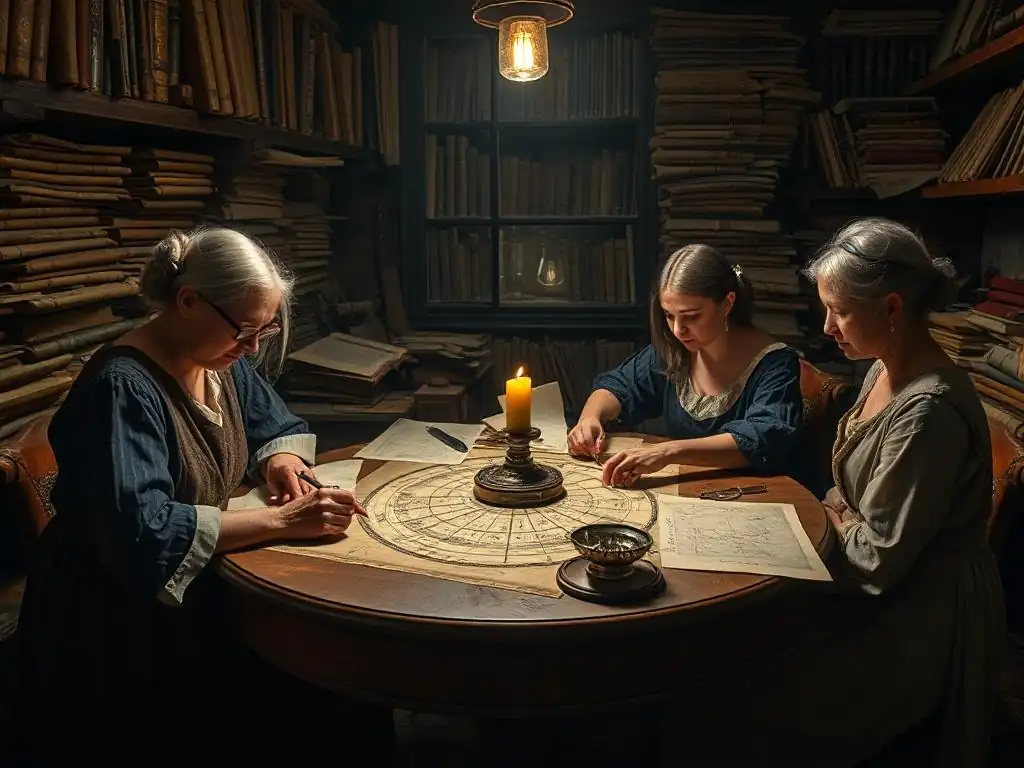
Welcome to WomenInScienceHistory.com, where we unearth the fascinating stories of women who shaped the scientific landscape. Prepare to be amazed as we delve into a little-known chapter of mathematical history. This month, we explore the unsung arithmeticians of the pre-1700s, revealing the women’s early math contributions history that often goes unacknowledged. What ingenious minds quietly advanced the art of numbers before the era of formal recognition? Join us as we uncover their remarkable achievements and the obstacles they overcame. Let's begin!
- Introduction: Unveiling Women's Early Math Contributions History
- Early Barriers and Opportunities for Women in Mathematics
- Notable Pre-1700 Female Arithmeticians and Their Work
- Practical Applications of Arithmetic by Women in the Pre-1700 Era
- The Influence of Family and Mentors on Women's Mathematical Pursuits
- Challenges Faced by Women in Gaining Recognition for Their Mathematical Skills
- Preserving and Promoting the Legacy of Pre-1700 Female Arithmeticians
- Conclusion: Recognizing the Enduring Impact of Women's Early Contributions to Arithmetic
-
Frequently Asked Questions
- What specific period does WomenInScienceHistory.com focus on when discussing women's mathematical contributions?
- Why is it important to study "Women's early math contributions history"?
- What kind of challenges did women face in pre-1700 mathematics?
- Does WomenInScienceHistory.com only focus on famous female mathematicians?
- How does WomenInScienceHistory.com inspire future generations of female scientists?
- Final Reflection: Illuminating the Forgotten Figures
- Ignite Your Inner Number Navigator!
Introduction: Unveiling Women's Early Math Contributions History
Rediscovering Forgotten Female Mathematicians Before 1700
For centuries, the narrative of scientific and mathematical progress has largely been dominated by male figures, creating a pervasive misconception that women played little to no role in these intellectual pursuits, particularly before the 18th century. This oversight has led to a significant gap in our understanding of how mathematical knowledge evolved and who contributed to its development. The prevailing historical accounts often omit the quiet dedication and intellectual prowess of countless women who, despite profound societal limitations, engaged with the art of numbers.
This article aims to challenge that narrow perspective by bringing to light the largely "unsung arithmeticians" – women who mastered and applied mathematical principles in various capacities before 1700. By delving into the often-overlooked corners of history, we can begin to uncover the rich and complex tapestry of women’s early math contributions history, revealing that mathematical acumen was not exclusively a male domain, even in eras where formal education for women was virtually non-existent.
The Importance of Recognizing Women's Historical Role in Arithmetic
Unearthing and acknowledging the historical presence of women in mathematics is not merely an academic exercise; it is crucial for a complete and accurate portrayal of intellectual history. Ignoring the contributions of half of humanity distorts our understanding of how scientific thought progressed and overlooks the diverse pathways through which knowledge was acquired and disseminated. Recognizing these forgotten figures provides a more nuanced and comprehensive picture of intellectual development, demonstrating that mathematical skills were cultivated and utilized by women in both practical and, at times, theoretical contexts.
Furthermore, celebrating women’s early math contributions history serves a vital inspirational purpose for contemporary and future generations. By showcasing these pioneering female mathematicians who navigated immense societal barriers, we provide powerful role models. Their stories of perseverance and intellectual curiosity remind us that talent and dedication transcend gender, encouraging young women today to pursue careers in STEM fields with the knowledge that they are part of a long and rich lineage of female intellectual achievement.
Early Barriers and Opportunities for Women in Mathematics
Societal Constraints on Women's Education in Pre-1700 Europe
In pre-1700 Europe, societal norms severely restricted women's access to formal education, particularly in subjects considered intellectual or scientific, such as mathematics. Education for girls was predominantly focused on domestic skills, religious instruction, and accomplishments like music or embroidery, intended to prepare them for marriage and household management. Universities were exclusively male institutions, and even private tutors for girls were often limited to basic literacy and arithmetic deemed necessary for managing a household, rather than rigorous academic pursuits.
The prevailing patriarchal beliefs of the era often posited that women lacked the intellectual capacity for abstract thought or complex reasoning, effectively barring them from scholarly circles and public intellectual life. For instance, in many parts of Europe, a woman’s legal status was often tied to her father or husband, limiting her independence and opportunities for self-directed study or professional engagement. This systemic exclusion meant that the vast majority of women, regardless of their innate mathematical talent, were denied the foundational knowledge and advanced training required to contribute formally to the field, significantly impacting the documented women’s early math contributions history.
Nuns and Noblewomen: Accessing Mathematical Knowledge
Despite the pervasive societal barriers, certain environments offered unique, albeit limited, opportunities for women to access mathematical knowledge. Convents, for example, occasionally served as intellectual havens where women, particularly nuns from aristocratic families, could pursue scholarly interests beyond domestic duties. While not dedicated mathematical academies, some convents possessed libraries and fostered a culture of learning, allowing women to engage with texts on philosophy, astronomy, and even basic arithmetic and geometry, often for practical applications within the convent's administration or for personal spiritual and intellectual enrichment.
Similarly, noblewomen and women from wealthy merchant families sometimes had the privilege of private tutors or access to extensive family libraries. While their primary education still often centered on social graces, an enlightened father or a scholarly brother might provide instruction in subjects like astronomy, geography, and the arithmetic necessary for estate management, trade, or simply intellectual curiosity. For instance, a noblewoman managing a large estate, as was common for widows or unmarried heiresses, would need to understand complex calculations for rents, taxes, and agricultural yields, thereby developing practical mathematical skills that contributed to women’s early math contributions history in an informal capacity.
Notable Pre-1700 Female Arithmeticians and Their Work
Maria Gaetana Agnesi's Mathematical Foundations
While Maria Gaetana Agnesi (1718–1799) is primarily known for her seminal work published in the mid-18th century, her prodigious early life and intellectual development were deeply rooted in the educational traditions and intellectual climate that carried over from the pre-1700 era. Born into a wealthy and intellectually stimulating Milanese family, Agnesi was a child prodigy who mastered multiple languages by age nine and engaged in philosophical debates with learned guests at her father's salon.
Her foundational understanding of mathematics, including algebra, geometry, and the nascent concepts of calculus, was cultivated through extensive private study of the works of luminaries like René Descartes, Isaac Newton, and Gottfried Wilhelm Leibniz, whose groundbreaking ideas had emerged in the late 17th century.
Agnesi's early education reflects the highest level of private tutelage available to women of her social standing, mirroring the access to advanced learning enjoyed by some noblewomen in the preceding centuries. Her ability to synthesize and comprehend these complex mathematical theories, even before her major publications, demonstrates a profound mastery of the mathematical foundations that were being solidified around the turn of the 18th century. Her work, though published later, stands as a testament to the intellectual capacity that could be nurtured in women when afforded the necessary resources and encouragement, building upon the informal women’s early math contributions history laid by earlier generations.
Maria Gaetana Agnesi's Contributions to Calculus
Maria Gaetana Agnesi's most renowned contribution is her two-volume work, Instituzioni analitiche ad uso della gioventù italiana (Analytical Institutions for the Use of Italian Youth), published in 1748. This comprehensive textbook was one of the first and most complete works on differential and integral calculus, and its clarity and systematic approach made it an invaluable resource for students across Europe. Agnesi's work effectively consolidated the revolutionary concepts of calculus developed by Newton and Leibniz in the late 17th century, presenting them in an accessible and structured manner.
Within this work, Agnesi analyzed various curves, including the famous "Witch of Agnesi" (versiera), a cubic curve that had been studied by Fermat and Newton. Her detailed analysis of this curve, along with her elucidation of other complex mathematical concepts, showcased her exceptional analytical skills and her ability to translate abstract mathematical ideas into understandable terms. While her major publication falls slightly outside the pre-1700 timeframe, her contributions were critical in disseminating and solidifying the very calculus principles that emerged in the late 17th century, thus highlighting the continuity of women’s early math contributions history into the Enlightenment era.
Elena Cornaro Piscopia: First Woman to Receive a Doctorate
Elena Cornaro Piscopia (1646–1684) stands as a monumental figure in women’s early math contributions history, recognized as the first woman in recorded history to receive a doctoral degree. Born into a noble Venetian family, Elena displayed extraordinary intellectual gifts from a young age, mastering Latin, Greek, Hebrew, Spanish, French, and Arabic by her early teens. Her father, a procurator of San Marco, recognized her brilliance and ensured she received an education typically reserved for men, including instruction in philosophy, theology, astronomy, and mathematics.
In 1678, after overcoming significant resistance from ecclesiastical authorities who initially opposed a woman receiving a theological doctorate, Piscopia was awarded a doctorate in philosophy from the University of Padua. Her public examination, attended by professors, senators, and students, was a remarkable event, showcasing her profound knowledge and rhetorical prowess. While her degree was officially in philosophy, the curriculum of the time encompassed a broad range of subjects, including rigorous logic, natural philosophy (which included physics and astronomy), and mathematics, all of which she demonstrated mastery over.
Elena Cornaro Piscopia: Expertise in Philosophy and Mathematics
Elena Cornaro Piscopia's intellectual pursuits extended well beyond the confines of her doctoral degree, encompassing a deep expertise in various fields, including mathematics. She was not only proficient in the arithmetic and geometry necessary for her philosophical studies but also engaged in scholarly debates and public discourses on scientific topics, often demonstrating her understanding of mathematical principles. Her command of logic and analytical reasoning, honed through her extensive philosophical studies, undoubtedly strengthened her mathematical comprehension and problem-solving abilities.
Piscopia's life exemplifies how women, even in the highly restrictive 17th century, could achieve extraordinary intellectual heights with exceptional talent and family support. Though she did not publish original mathematical treatises, her documented proficiency in the subject, her public intellectual engagements, and her groundbreaking academic achievement cemented her place as a significant figure in women’s early math contributions history. Her legacy highlights that mathematical acumen was an integral part of the broader intellectual landscape for those few women who managed to break through the era's severe educational barriers.
Practical Applications of Arithmetic by Women in the Pre-1700 Era
Women's Role in Accounting and Financial Management
In the pre-1700 era, women, particularly those from aristocratic or wealthy merchant families, frequently held significant responsibilities in managing estates and household finances, which demanded a robust understanding of arithmetic. As wives, widows, or unmarried daughters, many were tasked with overseeing vast landholdings, managing income from rents and agricultural produce, and budgeting for large households that could include dozens of servants. This involved meticulous record-keeping, balancing ledgers, calculating wages, and tracking the value of goods and assets, all of which required precise arithmetic skills.
Beyond noble households, women in religious orders, such as abbesses or bursars of convents, were often responsible for substantial financial administration. Convents were significant economic entities, owning land, collecting tithes, and managing complex expenditures for construction, provisions, and charity. The financial records of convents from this period often reveal sophisticated accounting practices, underscoring the practical application of women’s early math contributions history in institutional financial management, far beyond simple domestic budgeting.
Arithmetic in Domestic Life: Managing Household Finances
For women across all social strata, arithmetic was an indispensable tool for daily domestic life, even if not formally recognized as "mathematics." From calculating the quantities of ingredients needed for cooking and baking for a family or a large gathering, to managing food stores and provisions, basic arithmetic was essential for efficient household operations. A woman might calculate how much grain was needed for a year, how many candles could be made from a certain amount of tallow, or how to divide provisions among family members.
Furthermore, managing household budgets, even for families of modest means, involved constant mental and sometimes written calculations. This included tracking expenditures on food, clothing, and other necessities, ensuring that resources stretched to meet needs. While formal schooling for most girls was limited, many learned fundamental counting, addition, subtraction, and basic multiplication from their mothers or through practical experience, making these daily tasks a pervasive, though often unacknowledged, aspect of women’s early math contributions history.
Arithmetic in Trade and Commerce: Contributions to Business Practices
Women in the pre-1700 era also made significant, albeit often uncredited, contributions to trade and commerce through their application of arithmetic. In many urban centers, particularly among the merchant and artisan classes, women frequently assisted in or independently managed family businesses. Widows, in particular, often inherited and successfully ran their deceased husbands' enterprises, which could range from retail shops and inns to manufacturing workshops. For example, a woman running a textile business would need to calculate yardage, determine cost per unit, set selling prices, manage inventory, and handle complex transactions involving various currencies and credit, all requiring sophisticated arithmetic.
Historical records from cities like London or Amsterdam indicate that a notable percentage of businesses were managed by women, especially in trades like brewing, baking, and haberdashery. These entrepreneurial women were adept at keeping ledgers, calculating profits and losses, and engaging in bartering and exchange, demonstrating their crucial role in the economic fabric of society through their practical mathematical skills. These commercial applications represent a significant and often overlooked facet of women’s early math contributions history, highlighting their essential role in the economic sphere.
The Influence of Family and Mentors on Women's Mathematical Pursuits
Fathers and Brothers: Supporting Early Mathematical Education
For many women in the pre-1700 era, the primary, and often sole, avenue to advanced mathematical education was through their immediate family, particularly enlightened fathers or academically inclined brothers. Unlike male counterparts who might attend universities or formal apprenticeships, women's access to scholarly knowledge was largely confined to the domestic sphere. A father who was a scholar, a physician, or a merchant might recognize and nurture a daughter's intellectual curiosity, teaching her alongside his sons, or providing private instruction in subjects like Latin, philosophy, and arithmetic, which were foundational to broader scientific understanding.
These familial mentors provided not only direct instruction but also access to valuable resources such as personal libraries, scientific instruments, and scholarly correspondence. For instance, the father of Anna Maria van Schurman (1607–1678), a Dutch polymath, ensured her comprehensive education, including mathematics, allowing her to become one of the most learned women of her time. This direct, often informal, familial support was absolutely critical in fostering instances of women’s early math contributions history, enabling a select few to transcend the educational limitations imposed by society.
Family Support for Scientific Pursuits
Beyond direct instruction, family support for scientific pursuits often manifested in providing an environment conducive to learning and intellectual exploration. Wealthy or noble families could offer the financial stability and domestic freedom necessary for women to devote time to study without the pressures of earning a living or managing a household unaided. This included the provision of tutors, access to extensive private libraries filled with scientific treatises, and sometimes even dedicated spaces for study or experimentation.
Some families also facilitated informal intellectual gatherings or "salons" within their homes, where women could engage with male scholars, philosophers, and scientists. While women were often listeners rather than active participants in these discussions, such exposure allowed them to absorb complex ideas, deepen their understanding of various subjects, including mathematics, and connect with the broader intellectual currents of their time. These supportive family environments were crucial in cultivating the intellectual curiosity and providing the resources that underpinned women’s early math contributions history.
Mentorship and Collaboration: Impact on Women's Mathematical Development
Formal mentorship for women in mathematics was virtually non-existent in the pre-1700 period due to their exclusion from universities and academic societies. However, informal mentorship and collaborative practices played a vital role in the mathematical development of exceptional women. Private tutors, engaged by wealthy families, sometimes became significant mentors, recognizing and nurturing a student's talent beyond the basic curriculum. They might guide women through challenging mathematical texts, introduce them to advanced concepts, or even facilitate intellectual exchanges with other scholars.
Furthermore, women often engaged in collaborative efforts, even if their contributions were not formally credited. Many women assisted male relatives—such as astronomers, apothecaries, or philosophers—in their scientific work. This could involve meticulous calculations, transcribing and translating scholarly texts, maintaining observational records, or assisting with experimental setups. For example, women in aristocratic households might have helped manage astronomical observations, requiring precise arithmetic for data recording and analysis. These unacknowledged collaborations were instrumental in deepening women's own mathematical skills and contributed indirectly to the broader women’s early math contributions history, even if their direct involvement remained largely invisible.
Challenges Faced by Women in Gaining Recognition for Their Mathematical Skills
Overcoming Gender Bias in the Scientific Community
One of the most formidable challenges faced by women in the pre-1700 era was the pervasive gender bias within the nascent scientific community. The prevailing belief was that women were intellectually inferior and lacked the capacity for abstract reasoning, which was deemed essential for higher mathematics and scientific inquiry. This deeply ingrained prejudice led to the systematic exclusion of women from universities, scientific societies, and intellectual salons, effectively barring them from formal training, academic discourse, and professional recognition.
Even when women demonstrated exceptional mathematical talent, their achievements were often downplayed, dismissed as anomalies, or attributed to male relatives. For instance, if a woman displayed a profound understanding of geometry or algebra, it was often assumed she had merely memorized concepts taught by her father or brother, rather than possessing genuine intellectual insight. This entrenched bias meant that opportunities for women to publish their work, present their findings, or gain peer recognition were virtually non-existent, significantly hindering the documentation and acknowledgment of women’s early math contributions history.
The Difficulty of Publishing Mathematical Work
The practical barriers to publishing mathematical work were immense for women before 1700, making it exceedingly difficult for their contributions to gain widespread recognition. Access to printing presses, academic networks, and the financial resources required for publication were almost exclusively controlled by men. Scientific journals, which began to emerge in the late 17th century, were male-dominated forums, and women were rarely, if ever, invited to submit their work or participate in public intellectual debates.
Consequently, when women did produce scholarly or mathematical work, it often remained in manuscript form, circulated privately among a small circle of family and acquaintances, or was published anonymously or under male pseudonyms. In some cases, women's ideas or calculations were incorporated into the published works of their male relatives without explicit attribution. This systemic lack of formal publication channels, combined with the prevailing gender bias, meant that much of women’s early math contributions history was either lost to time or deliberately obscured, requiring painstaking archival research in modern times to piece together their narratives.
Preserving and Promoting the Legacy of Pre-1700 Female Arithmeticians
Archival Research: Uncovering Evidence of Women's Mathematical Achievements
Preserving and promoting the legacy of pre-1700 female arithmeticians relies heavily on meticulous archival research. Since formal publications by women were rare, historians and scholars must delve into less conventional sources to uncover evidence of their mathematical achievements. This includes sifting through personal letters, family account books, household ledgers, wills, convent records, and other informal documents that might contain fragments of mathematical work, calculations, or references to women's intellectual pursuits. For example, a detailed household inventory might reveal a woman’s precise calculations for managing vast agricultural yields or trade goods.
Such research is often painstaking, as the evidence is dispersed and often not explicitly labeled as "mathematical work." However, it is through these dedicated efforts that the often-hidden women’s early math contributions history is slowly being brought to light. Each newly discovered letter or ledger entry that demonstrates a woman's engagement with numbers helps to reconstruct a more accurate and inclusive narrative of mathematical development, challenging the long-held assumption that women were absent from this intellectual sphere.
Celebrating Women's Early Math Contributions through Education and Scholarship
Celebrating women’s early math contributions history is crucial for ensuring that these previously unsung figures receive the recognition they deserve and that a more accurate account of mathematical history is presented. This involves actively incorporating their stories and achievements into educational curricula at all levels, from primary school textbooks to university courses. By presenting a more inclusive narrative, students can learn that mathematical talent and engagement have always spanned genders, fostering a more diverse and encouraging environment for aspiring mathematicians.
Furthermore, ongoing scholarship, historical societies, and digital humanities projects play a vital role in disseminating these rediscovered narratives to a wider audience. Conferences, academic papers, and online platforms dedicated to women in science help to bring these stories out of the archives and into public consciousness. By actively promoting the legacy of these pioneering female arithmeticians, we not only correct historical oversights but also inspire future generations, demonstrating that women’s early math contributions history is a dynamic and evolving field of study that continues to reveal remarkable achievements.
Conclusion: Recognizing the Enduring Impact of Women's Early Contributions to Arithmetic
The Significance of Acknowledging Women's Place in Mathematical History
The journey through the lives of pre-1700 women who engaged with the art of numbers reveals a compelling, albeit often obscured, chapter in intellectual history. Despite formidable societal barriers—limited access to formal education, pervasive gender bias, and severe restrictions on professional recognition—women applied arithmetic in myriad practical ways, from managing vast estates and household finances to running complex businesses. In rare, extraordinary instances, a few women, like Elena Cornaro Piscopia, even achieved academic prowess that defied the norms of their time, laying foundational groundwork for future generations.
Acknowledging women’s early math contributions history is profoundly significant because it rectifies a long-standing historical oversight, providing a more complete and accurate picture of human intellectual development. Ignoring the ingenuity and resilience of these female arithmeticians leads to an impoverished understanding of how mathematical knowledge was cultivated and disseminated across different social strata and through informal channels. Their stories are not mere footnotes but integral threads in the rich tapestry of mathematical evolution.
Inspiring Future Generations of Female Mathematicians
The rediscovery and celebration of these "unsung arithmeticians" holds immense power for inspiring future generations of female mathematicians. By showcasing the tenacity, intellectual curiosity, and practical skills of women who mastered numbers in challenging historical contexts, we provide tangible role models that resonate deeply with young women today. These historical figures demonstrate that mathematical aptitude is not a gender-specific trait and that barriers, while formidable, can be overcome with dedication and ingenuity.
In an era where encouraging more girls and women to pursue STEM fields is a global priority, the narratives of women’s early math contributions history serve as a potent source of empowerment. They remind us that the pursuit of knowledge and the mastery of complex subjects have long been within the grasp of women, regardless of the societal obstacles. By recognizing their enduring impact, we not only honor their legacy but also illuminate a path forward, demonstrating that the future of mathematics, like its past, is enriched by the diverse contributions of all who dare to explore the art of numbers.
Frequently Asked Questions
What specific period does WomenInScienceHistory.com focus on when discussing women's mathematical contributions?
The site primarily highlights women's contributions to science, including mathematics, across history, but with a particular focus on those whose stories are often overlooked.
Why is it important to study "Women's early math contributions history"?
Understanding this history reveals overlooked achievements, challenges gender biases in science, and provides role models for future generations.
What kind of challenges did women face in pre-1700 mathematics?
Women faced significant social and institutional barriers in accessing education and research opportunities, often being excluded from formal mathematical circles.
Does WomenInScienceHistory.com only focus on famous female mathematicians?
No, the site aims to shed light on both well-known and lesser-known figures, celebrating the diversity of contributions from women in science.
How does WomenInScienceHistory.com inspire future generations of female scientists?
By providing access to inspiring stories of pioneering women in science, the website encourages young women to pursue careers in STEM fields and overcome existing challenges.
Final Reflection: Illuminating the Forgotten Figures
The stories of these pre-1700 women arithmeticians are not just historical anecdotes; they are vital pieces of a puzzle that, when assembled, reveals a more complete and equitable understanding of mathematical history. Their contributions, often obscured by societal biases and limited access, resonate powerfully today as we strive for greater inclusivity and representation in STEM fields. By acknowledging their achievements, we challenge the pervasive narrative that mathematics was solely the domain of men.
The impact of these women extends far beyond the realm of numbers. Their perseverance and ingenuity, often in the face of significant obstacles, serve as a powerful inspiration for future generations of female mathematicians and scientists. Their stories remind us that talent and intellect are not bound by gender, and that diverse perspectives are essential for progress. The mind has no gender,
as Virginia Woolf eloquently stated, a sentiment that perfectly encapsulates the untapped potential that lies dormant when we fail to recognize and nurture the contributions of all individuals.
Let us not allow these remarkable women to remain unsung. Consider how their stories challenge your own assumptions about who can excel in mathematics. Reflect on the ways you can actively support and encourage women and girls in STEM, ensuring that their voices are heard and their contributions are celebrated. The future of mathematics, and indeed all fields of endeavor, depends on our willingness to embrace diversity and unlock the full potential of every mind.
Thank you for exploring the hidden history of women in mathematics! Now it's your turn to celebrate their legacy and deepen your own understanding. Let's turn inspiration into action:
- Delve deeper into the life of a pre-1700 female mathematician mentioned in the article and share a short biography on social media using #WomenInMathHistory.
- Explore your local library or online archives for primary sources related to women in mathematics from this period.
- Start a study group with friends or colleagues to collectively explore the contributions of underrepresented figures in STEM.
What hidden numerical talent will you uncover in your own journey?