
Surviving Records, Fading Legacies: How We Piece Together Herstory in Early Math

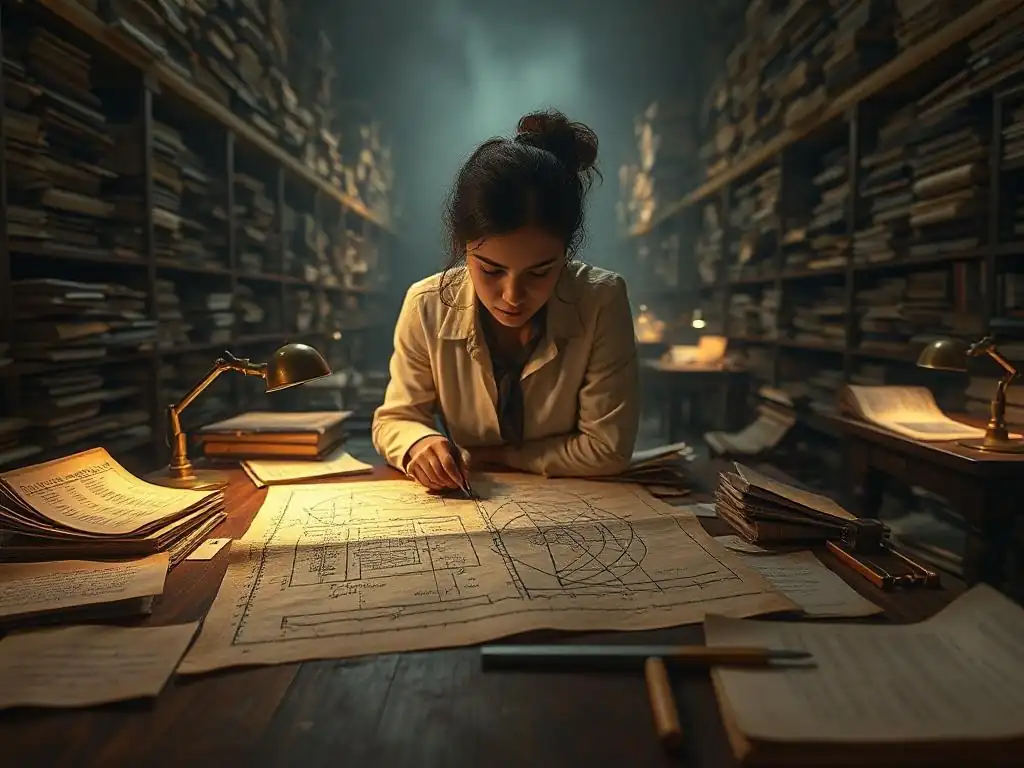
Welcome to WomenInScienceHistory.com, where we unearth the remarkable stories of women who shaped the scientific landscape. Ready to delve into a world often hidden in the annals of time? This month, we're exploring the fascinating – and often fragmented – legacies of women in early math. Surviving Records, Fading Legacies: How We Piece Together Herstory in Early Math reveals the challenges and triumphs of these unsung pioneers. Discover how their contributions are being rediscovered and celebrated, and why their stories matter now more than ever. Prepare to be inspired!
- Unearthing Hidden Figures: Reconstructing Women's Contributions to Early Mathematics
- Recovering the Lost Voices of Women in Mathematics
- Primary Sources for Reconstructing Women's Mathematical Work
- Notable Figures and Their Mathematical Accomplishments
- Mathematical Concepts and Women's Engagement
- The Social and Cultural Environment of Women in Early Mathematics
- Methodologies for Uncovering Women's Mathematical History
- Preserving and Promoting the Legacy of Women in Early Mathematics
-
Frequently Asked Questions
- How does WomenInScienceHistory.com contribute to understanding Women in early math?
- What are some of the biggest challenges in researching Women in early math?
- Why is it important to study Women in early math?
- What type of information can be found on WomenInScienceHistory.com related to Women in early math?
- How can the stories of Women in early math inspire future generations?
- Final Reflection: Echoes of Numbers, Voices of the Past
- Unearth Hidden Figures: Champion Women in Math!
Recovering the Lost Voices of Women in Mathematics
Challenges in Documenting Women's Mathematical Contributions Before the 18th Century
The historical record often presents a skewed view of intellectual endeavors, particularly when it comes to the contributions of women in early math. Before the 18th century, societal norms severely limited women's access to formal education and public life, making it exceptionally difficult for their mathematical work to be formally documented or widely recognized.
Universities were exclusively male domains, and publishing opportunities for women were virtually non-existent, often requiring male patronage or the guise of male authorship. This pervasive exclusion meant that even groundbreaking insights from women were either unrecorded, attributed to male relatives, or simply dismissed as domestic rather than intellectual pursuits.
Furthermore, the very nature of mathematical practice for many women was informal, integrated into household management, craft production, or private studies, rather than being part of the academic discourse that generated formal records. This informal engagement meant that their skills in arithmetic, geometry, and even early algebra, while vital for daily life and commerce, rarely translated into written treatises or public recognition. The challenge in documenting these women in early math lies in sifting through disparate, often non-academic sources, and recognizing the mathematical acumen embedded within them, despite the absence of explicit attribution or formal academic titles.
The Significance of Highlighting Women's Roles in Pre-18th Century Mathematics
Highlighting the roles of women in pre-18th century mathematics is crucial for several reasons, chief among them being the imperative to correct and enrich our understanding of scientific history. For too long, the narrative of mathematical development has been presented as an almost exclusively male endeavor, creating an incomplete and misleading picture of intellectual progress.
By unearthing the contributions of women in early math, we reveal a more nuanced and accurate tapestry of human ingenuity, demonstrating that mathematical talent and application were not confined by gender, even in restrictive historical contexts. This re-evaluation not only gives credit where it is due but also broadens our perception of who can be a mathematician.
Moreover, acknowledging these pioneering women serves as a profound source of inspiration for future generations, particularly young girls and women contemplating careers in STEM fields. Seeing that women, despite immense societal barriers, were actively engaged in and contributed to mathematical thought centuries ago, provides powerful role models and challenges contemporary stereotypes.
It underscores the resilience and intellectual prowess of women throughout history, reinforcing the idea that gender should never be a limitation to mathematical exploration and achievement. The stories of these women in early math offer a vital counter-narrative, proving that curiosity and analytical skill transcend era and social expectation.
Primary Sources for Reconstructing Women's Mathematical Work
Identifying Relevant Sources: Guild Records, Recipe Books, and Account Ledgers
To reconstruct the often-hidden contributions of women in early math, historians must look beyond traditional academic treatises and university archives. Instead, vital clues can be found in less conventional primary sources that reflect the practical application of mathematical skills in daily life. Guild records, for instance, occasionally reveal the involvement of women, particularly widows who inherited their husbands' businesses, requiring them to manage complex finances, inventory, and production schedules that relied heavily on arithmetic and measurement. While direct membership or apprenticeship for women was rare, their presence in managing family enterprises is a significant indicator.
Recipe books, often compiled and passed down by women, are another rich source. Beyond culinary instructions, these books frequently contained precise measurements, proportions, and calculations for everything from herbal remedies and dyes to brewing and textile production.
These entries demonstrate an implicit understanding of ratios, volumes, and even early chemistry, showcasing the practical mathematical skills employed by women in their domestic and artisanal roles. Similarly, personal and business account ledgers, meticulously kept by women managing estates, shops, or large households, provide concrete evidence of advanced bookkeeping, budgeting, and investment calculations, unequivocally demonstrating their proficiency as women in early math in financial management.
Limitations of Historical Records for Women in Mathematics
Despite the insights gleaned from these diverse sources, the historical records for women in early math present significant limitations. A primary challenge is the informal nature of much of women's mathematical practice; their calculations were often for immediate, practical purposes and rarely formalized into written works intended for public dissemination or academic scrutiny. This means that direct, explicit documentation of their mathematical methods or theories is exceedingly rare, unlike the published works of their male counterparts. Consequently, historians often rely on inferential evidence, piecing together fragments rather than encountering comprehensive treatises.
Furthermore, the patriarchal structures of society meant that even when women performed sophisticated mathematical tasks, their contributions were often uncredited, undervalued, or simply not deemed worthy of historical preservation. For example, a woman managing a complex estate might perform advanced calculations, but these would be seen as part of her domestic duties rather than as intellectual achievements.
Many records that might have contained evidence of women's mathematical work were also perishable or simply lost over time, as they were not considered as important as official academic or government documents. This systemic oversight and the inherent biases of historical documentation continue to pose considerable hurdles in fully appreciating the scope of women in early math.
Addressing Bias and Erasure in Historical Narratives
Addressing the pervasive bias and erasure of women in early math from historical narratives requires a deliberate and critical re-examination of existing sources and a proactive search for new ones. Traditional historical accounts, often written by and focused on men, unconsciously or consciously omitted female contributions, relegating them to footnotes or ignoring them entirely.
To counteract this, historians must adopt a "herstory" approach, actively seeking out the voices and experiences of women, even when they are subtle or indirect. This involves questioning the assumptions embedded in archival descriptions and analyzing the roles women played in contexts traditionally overlooked as "mathematical," such as household economy, crafts, and medicine.
Moreover, it is essential to recognize that the absence of explicit documentation does not equate to an absence of contribution. Instead, it often reflects the systemic barriers and societal constraints placed upon women.
By applying interdisciplinary methodologies, combining insights from gender studies, social history, and the history of science, researchers can better interpret the implicit mathematical knowledge and practices of women. This includes studying the social networks of intellectual women, the informal educational opportunities they created, and the practical applications of their skills, thereby actively restoring the presence of women in early math to its rightful place in the historical record.
Notable Figures and Their Mathematical Accomplishments
Hypatia of Alexandria: A Study in Early Mathematical and Philosophical Influence
Hypatia of Alexandria, living in the late 4th and early 5th centuries CE (c. 350-370 CE – 415 CE), stands as one of the earliest and most renowned women in early math whose intellectual prowess is well-documented. She was a prominent Neoplatonist philosopher, astronomer, and mathematician, teaching in the intellectual hub of Alexandria.
Her contributions primarily involved commentaries on the works of classical Greek mathematicians, including Apollonius of Perga's Conics and Diophantus's Arithmetica. While her original mathematical treatises have not survived, contemporary accounts by her students and colleagues, such as Synesius of Cyrene, attest to her profound understanding and innovative teaching, particularly in geometry and algebra.
Hypatia's influence extended beyond mere instruction; she is credited with improvements to astronomical instruments like the astrolabe and the hydroscope. Her ability to synthesize complex mathematical and philosophical ideas made her a leading intellectual figure of her time, attracting students from across the Roman Empire.
Her tragic death in 415 CE, at the hands of a Christian mob, underscores the volatile social and political environment in which a woman of such intellectual independence operated. Despite the limitations of surviving direct works, her legacy as a brilliant scholar and a pioneering woman in early math has endured through the centuries, inspiring countless individuals.
Maria Gaetana Agnesi: Reconstructing Her Contributions to Calculus
Maria Gaetana Agnesi (1718–1799) represents a pivotal figure among women in early math, particularly known for her groundbreaking work in calculus during the mid-18th century. Born in Milan, Italy, Agnesi was a child prodigy who mastered multiple languages by age nine and engaged in philosophical debates by her teens.
Her most significant contribution is the two-volume textbook Instituzioni analitiche ad uso della gioventù italiana (Analytical Institutions for the Use of Italian Youth), published in 1748. This comprehensive work was one of the first and most complete textbooks on calculus, covering differential and integral calculus, infinite series, and differential equations, and was widely praised for its clarity and systematic approach.
Agnesi's Analytical Institutions was instrumental in consolidating and disseminating the new mathematical concepts of calculus to a broader audience across Europe. It was translated into English in 1801, significantly impacting the teaching of mathematics. She is also famously associated with the curve known as the "Witch of Agnesi" (versiera), though this name resulted from a mistranslation.
In recognition of her unparalleled scholarship, Pope Benedict XIV appointed her to the chair of mathematics and natural philosophy at the University of Bologna in 1750, making her one of the first women appointed as a university professor in Europe. Her life exemplifies the extraordinary intellectual capacity of women in early math and their ability to shape the course of scientific education.
Émilie du Châtelet: Tracing Her Mathematical and Physics Legacy
Gabrielle Émilie Le Tonnelier de Breteuil, Marquise du Châtelet (1706–1749), was a formidable French natural philosopher and mathematician whose intellectual contributions significantly advanced the understanding of Newtonian physics in 18th-century Europe. While her work often intertwined with that of her famous contemporary Voltaire, du Châtelet's own mathematical and scientific acumen was profound and independent.
Her most enduring legacy is her translation of Isaac Newton's Principia Mathematica into French, published posthumously in 1756. This was not merely a translation but also included extensive commentaries, derivations, and her own original insights, making Newton's complex work accessible and comprehensible to a wider Continental audience.
Beyond her translation, du Châtelet conducted original research, notably her work on kinetic energy. In her Institutions de Physique (1740), she argued for the concept that kinetic energy is proportional to the square of velocity (E ∝ mv²), challenging the prevailing Cartesian view that it was proportional to velocity. This was a crucial insight that anticipated later developments in physics.
Du Châtelet's intellectual salon at Cirey served as a vibrant hub for scientific discourse, where she engaged with leading thinkers of her time. Her dedication to rigorous mathematical and scientific inquiry, despite societal expectations for noblewomen, firmly establishes her as an exceptional figure among women in early math and science history.
Mathematical Concepts and Women's Engagement

While direct evidence of women formally serving as cartographers or navigators in early modern periods is scarce, their indirect participation and practical application of related mathematical concepts were likely more prevalent than often acknowledged. In maritime communities, women often managed family shipping businesses in the absence of seafaring husbands. This role necessitated a practical understanding of trade routes, cargo calculations, and financial logistics, all of which relied on arithmetic and basic geographical knowledge. For example, a merchant's wife managing accounts might need to calculate distances, shipping costs, and potential profits for voyages, implicitly engaging with spatial and numerical mathematics.
Furthermore, in domestic settings, women often had practical knowledge of celestial phenomena related to timing, agriculture, and even simple navigation within their local environments. While not formal celestial navigation in the professional sense, understanding the movement of the sun and stars for timekeeping or seasonal planting involved an observational grasp of astronomical patterns. Although not formally trained as astronomers or cartographers, the wives and daughters of sailors, merchants, and landowners would have been exposed to, and sometimes actively participated in, the practical applications of these disciplines, making them uncredited women in early math from a functional perspective.
Financial Management and Early Women's Contributions: Bookkeeping and Investment
One of the most significant and historically overlooked areas where women in early math demonstrated profound practical skills was in financial management, bookkeeping, and investment. Across various social strata, women, particularly widows, spinsters, or those from merchant and gentry families, were frequently responsible for managing household economies, estates, and even substantial businesses.
This role demanded meticulous arithmetic, including tracking income and expenditures, managing debts and credits, calculating interest, and overseeing investments in property, goods, or loans. For instance, a wealthy widow in 17th-century England might manage hundreds of tenants, collect rents, and oversee agricultural production, all requiring complex financial calculations.
In urban settings, women often ran shops, taverns, or craft businesses, necessitating daily bookkeeping, inventory management, and pricing strategies. These tasks involved precise calculations of quantities, profit margins, and currency conversions, showcasing an advanced practical application of arithmetic and early accounting principles. Records from these businesses, though often informal, reveal the systematic numerical abilities of these women. Their contributions ensured the economic stability of families and local communities, making their role as women in early math in the realm of finance both pervasive and indispensable, even if rarely recognized as "mathematical" in the academic sense.
Practical Applications of Arithmetic: Weaving, Brewing, and Medicine
Beyond formal academic pursuits, women in early math routinely applied arithmetic in a multitude of practical, everyday activities that were central to household and community life. In crafts like weaving, intricate patterns and the construction of textiles required precise counting of threads, understanding of ratios for warp and weft, and often geometric planning for designs. A weaver creating a complex tapestry, for instance, would implicitly use advanced spatial reasoning and numerical sequences to achieve the desired outcome. This hands-on application of mathematics was fundamental to the quality and efficiency of their craft.
Similarly, brewing and baking, often managed by women, involved meticulous measurements of ingredients, calculations of proportions, and understanding of fermentation times and yields. A successful brew or loaf of bread depended on accurate numerical relationships between components, demonstrating a practical grasp of ratios and volumes.
In the realm of early medicine and herbal remedies, women as healers or midwives frequently calculated dosages, proportions of ingredients for compounds, and tracked patient progress, requiring careful numerical assessment. These widespread domestic and artisanal applications underscore how women in early math utilized essential mathematical skills in their daily lives, contributing significantly to society's functional needs, even without formal recognition.
Education and Access to Mathematical Knowledge for Women
The social and cultural environment before the 18th century presented significant barriers to women's access to formal mathematical knowledge. Universities were exclusively male institutions, effectively barring women from obtaining degrees or participating in structured academic learning.
This meant that the primary avenues for women to acquire mathematical skills were through informal means: private tutors, self-study, or instruction within the family home, often from fathers, brothers, or husbands who were themselves educated. For instance, women from aristocratic or wealthy merchant families might have had the privilege of hiring private tutors, as was the case for Maria Gaetana Agnesi, who benefited from an intellectually stimulating home environment and access to extensive libraries.
However, for the vast majority of women, even these informal opportunities were limited. Education for girls was often focused on domestic skills, religious instruction, and perhaps basic literacy, with mathematics considered largely unnecessary or even inappropriate for their roles. This societal expectation meant that any woman pursuing mathematical knowledge had to do so against the current of prevailing norms, often relying on personal determination and the support of a progressive family. The sporadic nature of such access underscores the remarkable tenacity of those women in early math who managed to acquire and apply advanced numerical and theoretical skills.
The pursuit of mathematical knowledge by women in early math was not merely an intellectual endeavor but also an act of navigating severe social constraints. Women who displayed an interest or aptitude for subjects considered "masculine," such as mathematics or natural philosophy, often faced societal disapproval, ridicule, or accusations of being "unfeminine" or neglecting their domestic duties. Public recognition for intellectual achievement was rarely extended to women, and their work was frequently dismissed or attributed to male relatives to maintain social decorum. This pressure often forced women to pursue their studies in seclusion or under pseudonyms.
Beyond social stigma, practical constraints were also immense. Women had limited access to scientific instruments, libraries, and intellectual networks that were readily available to men. Travel for study or collaboration was largely out of the question. The very act of engaging with complex mathematical problems required significant time and dedication, which was often in conflict with the extensive domestic responsibilities expected of women, regardless of their social standing. The stories of women in early math are, therefore, not just about their intellectual accomplishments but also about their remarkable resilience in overcoming formidable societal and practical obstacles.
The Impact of Salons and Academies on Women's Mathematical Pursuits
While formal academic institutions largely excluded women, the emergence of intellectual salons and, to a lesser extent, academies, provided alternative spaces that significantly impacted the mathematical pursuits of some women in early math. Salons, particularly prominent in 17th and 18th-century France, were informal gatherings hosted by aristocratic women where leading philosophers, scientists, and artists convened for discussions.
These salons, like that of Madame du Châtelet, offered women an unprecedented opportunity to engage directly with cutting-edge scientific and mathematical ideas, participate in debates, and forge crucial intellectual connections. Although not formal educational settings, they served as vital conduits for knowledge exchange and intellectual validation.
Academies, such as the French Académie Royale des Sciences, were more formal and generally excluded women from membership. However, some women gained recognition through association with male members, by presenting their work indirectly, or by being recognized for their patronage of scientific endeavors.
For example, some women in early math might have had their work read by a male proxy or received awards for their contributions to scientific instruments. These semi-formal and informal spaces, while still limited, were crucial for providing a platform for women's intellectual engagement, allowing a select few to circumvent the rigid barriers of traditional institutions and contribute to the mathematical discourse of their time.
Methodologies for Uncovering Women's Mathematical History
Examining Mathematical Texts for Indirect Evidence of Female Influence
Uncovering the history of women in early math often requires a close and critical examination of existing mathematical texts for indirect evidence of female influence, rather than explicit authorship. This methodology involves scrutinizing dedications, prefaces, footnotes, and correspondence associated with published works.
Sometimes, a male author might dedicate a work to a female patron who funded his research, or acknowledge a female relative or friend for insights or assistance, implicitly suggesting their mathematical engagement. For instance, some historical texts might refer to a woman providing data, proofreading calculations, or even contributing to the conceptual framework of a problem, even if her name is not on the title page.
Furthermore, analyzing the content and context of mathematical problems themselves can reveal clues. Problems involving domestic management, textiles, childcare, or specific crafts traditionally associated with women might indicate that these texts were either intended for a female audience or drew upon the practical mathematical experiences of women. While this method does not directly prove authorship, it helps to identify areas where women in early math were likely applying their skills and might have contributed to the development or dissemination of mathematical concepts, even if their roles were not formally recognized.
Utilizing Genealogical Research to Identify Women Involved in Mathematical Practices
Genealogical research offers a powerful, albeit indirect, methodology for identifying women who might have been involved in mathematical practices, particularly before the 18th century. By tracing family lines, historians can identify women from families known for their intellectual pursuits, scientific interests, or professional backgrounds that required mathematical skills (e.g., merchants, navigators, astronomers).
If a woman's father, brother, or husband was a mathematician, astronomer, or engineer, there is a higher probability that she would have had access to education, books, instruments, and intellectual discourse within her home environment. This familial connection could have fostered her own mathematical development, even if it was never publicly acknowledged.
For example, studying the family trees of prominent male mathematicians might reveal sisters or daughters who were privately tutored or engaged in collaborative work. While direct evidence of their mathematical contributions might be scarce, their presence within an intellectually stimulating household suggests potential involvement. This method helps to reconstruct the social networks and informal learning environments that enabled some women in early math to acquire and apply advanced numerical skills, providing a crucial context for understanding their unrecorded intellectual lives.
Employing Interdisciplinary Approaches to Reconstruct Lost Histories
Reconstructing the lost histories of women in early math necessitates a truly interdisciplinary approach, drawing insights from various fields beyond the traditional history of science. Combining historical research with gender studies, social history, economic history, and even archaeology can provide a more holistic understanding of women's lives and their potential mathematical engagements. For instance, social history can illuminate the daily lives and roles of women, revealing practical contexts where mathematical skills were essential, such as managing large households, overseeing agricultural production, or running businesses.
Economic history can provide data on female participation in commerce, trade, and finance, where bookkeeping, accounting, and calculation were indispensable. Archaeological findings, such as ancient measuring tools, weights, or architectural plans, can offer clues about the mathematical practices of early societies, and when combined with social historical context, might suggest women's involvement.
Furthermore, literary analysis of diaries, letters, and even fiction from the period can sometimes reveal implicit mathematical knowledge or attitudes towards women's education. By integrating these diverse perspectives, researchers can piece together a more comprehensive picture of the varied and often hidden contributions of women in early math.
Preserving and Promoting the Legacy of Women in Early Mathematics
Recognizing Women's Contributions to the Development of Mathematical Thought
Recognizing the contributions of women to the development of mathematical thought is fundamental to achieving a more accurate and inclusive historical narrative. For centuries, the history of mathematics has largely overlooked or minimized the roles of women, creating a distorted view of how mathematical ideas evolved.
By actively seeking out and highlighting the achievements of women in early math, we acknowledge that intellectual progress is not solely the domain of one gender but a collaborative effort, often involving individuals whose contributions were rendered invisible by societal norms. This recognition extends beyond famous figures to include the countless women who applied mathematical principles in practical, everyday contexts, from managing complex estates to designing intricate textile patterns.
This acknowledgment enriches our understanding of mathematical history itself. It reveals the diverse pathways through which mathematical knowledge was acquired, applied, and transmitted, demonstrating that innovation emerged not only from formal academic institutions but also from informal learning environments, domestic spheres, and practical trades. By fully integrating the stories of these women in early math, we gain a more nuanced appreciation for the breadth and depth of human intellectual endeavor across different cultures and time periods, ensuring that their ingenuity and resilience are finally given their rightful place in the annals of science.
Strategies for Enhancing the Visibility of Women in Early Mathematical History
Enhancing the visibility of women in early mathematical history requires a multi-faceted approach involving active research, educational reform, and public outreach. Firstly, sustained academic research is crucial, focusing on under-explored archives, personal documents, and unconventional sources to unearth new evidence of women's mathematical activities. This includes funding grants specifically for projects dedicated to rediscovering the contributions of women in early math and encouraging interdisciplinary collaborations.
Secondly, educational institutions must integrate these findings into curricula at all levels, from primary school to university. Textbooks and teaching materials should be updated to include biographies and discussions of these pioneering women, ensuring that students learn a more complete history of mathematics.
Furthermore, public outreach initiatives play a vital role. Websites like WomenInScienceHistory.com, dedicated to celebrating the achievements of women in science, are indispensable platforms for disseminating this knowledge to a broad audience. Creating digital databases of historical figures, developing engaging documentaries, and organizing public lectures and exhibitions can help raise awareness and inspire interest. By actively promoting these stories, we can ensure that the legacies of women in early math are not only preserved but also become widely known and celebrated, challenging historical biases and fostering a more inclusive appreciation for mathematical heritage.
Inspiring Future Mathematicians Through the Stories of Trailblazing Women
The stories of trailblazing women in early math offer invaluable inspiration for future generations of mathematicians, particularly young girls and women contemplating careers in STEM fields. By showcasing the intellect, perseverance, and ingenuity of figures like Hypatia of Alexandria, Maria Gaetana Agnesi, and Émilie du Châtelet, we provide powerful role models who demonstrate that mathematical talent knows no gender.
These narratives highlight how, despite immense societal barriers and limited access to formal education, these women pursued their intellectual passions and made significant contributions, proving that determination can overcome adversity. Learning about their struggles and triumphs can empower aspiring mathematicians to pursue their own intellectual journeys with confidence and resilience.
Moreover, by presenting a more inclusive history of mathematics, we challenge persistent stereotypes about who can excel in the field. When young students see that women have always been part of the mathematical landscape, it normalizes their presence and encourages them to envision themselves as future innovators. The rich tapestry of women in early math serves as a testament to the enduring human capacity for curiosity and problem-solving, regardless of gender. By celebrating these historical figures, we not only honor their legacies but also actively cultivate a more diverse, equitable, and vibrant future for mathematics.
Frequently Asked Questions
How does WomenInScienceHistory.com contribute to understanding Women in early math?
The site highlights the achievements of often-overlooked female mathematicians. It provides biographies and details of their groundbreaking work. This helps to restore their place in mathematical history.
What are some of the biggest challenges in researching Women in early math?
A primary challenge is the lack of surviving records. Many women's contributions were unattributed or erased. Additionally, societal biases prevented recognition during their lifetimes.
Why is it important to study Women in early math?
Studying them helps to correct historical imbalances. It provides role models for future generations. It also demonstrates the diversity of thought that strengthens scientific advancement.
The site features biographical profiles, detailing their lives and work. It also includes discussions about their mathematical contributions. Finally, it analyzes the historical context surrounding their achievements.
How can the stories of Women in early math inspire future generations?
These stories demonstrate resilience and determination. They show young women that they can succeed in STEM fields. They challenge stereotypes and encourage pursuit of their passions.
Final Reflection: Echoes of Numbers, Voices of the Past
The journey through surviving records and fading legacies reveals a profound truth: the contributions of women in early mathematics, though often obscured, are foundational to our understanding of the field today. Their stories, pieced together from fragmented evidence, are not just historical footnotes, but vital threads in the tapestry of mathematical progress, demanding recognition and celebration.
The enduring influence of these women resonates deeply, shaping our present and inspiring future generations. Their perseverance in the face of societal barriers underscores the importance of inclusivity and equitable access to education for all. The most effective way to do it, is to do it.
- Amelia Earhart. This quote, though not directly related to math, encapsulates the spirit of these women who, despite the odds, pursued their passion and left an indelible mark.
As we close this exploration of women in early math, I invite you to reflect on the power of uncovering hidden narratives. Consider how you can actively contribute to a more inclusive and representative understanding of history. Let us all strive to amplify the voices of those who have been silenced, ensuring that their legacies continue to inspire and empower future generations of mathematicians and beyond.
Thank you for delving into the stories of these remarkable women and the challenges they faced in shaping the world of early mathematics. Now, it's time to bring their legacies to life and ensure their contributions aren't forgotten. Here’s how you can play a part:
- Actively champion the inclusion of these women and their mathematical contributions in educational curricula. Contact your local school board or educational institutions to advocate for a more inclusive history of mathematics.
- Explore obscure archives and historical society collections in your area, you never know what hidden evidence of overlooked women in STEM you might unearth! Share your findings within our community and help expand our collective knowledge.
- Share this article on your social media platforms and tag WomenInScienceHistory.com to amplify these inspiring narratives. Encourage your friends, family, and colleagues to learn about these pioneers and share their stories with others.
Which of these actions inspires you the most to ensure these brilliant women finally receive their rightful recognition?