
Counting in a Man's World: The Unique Challenges for Female Mathematicians Pre1700

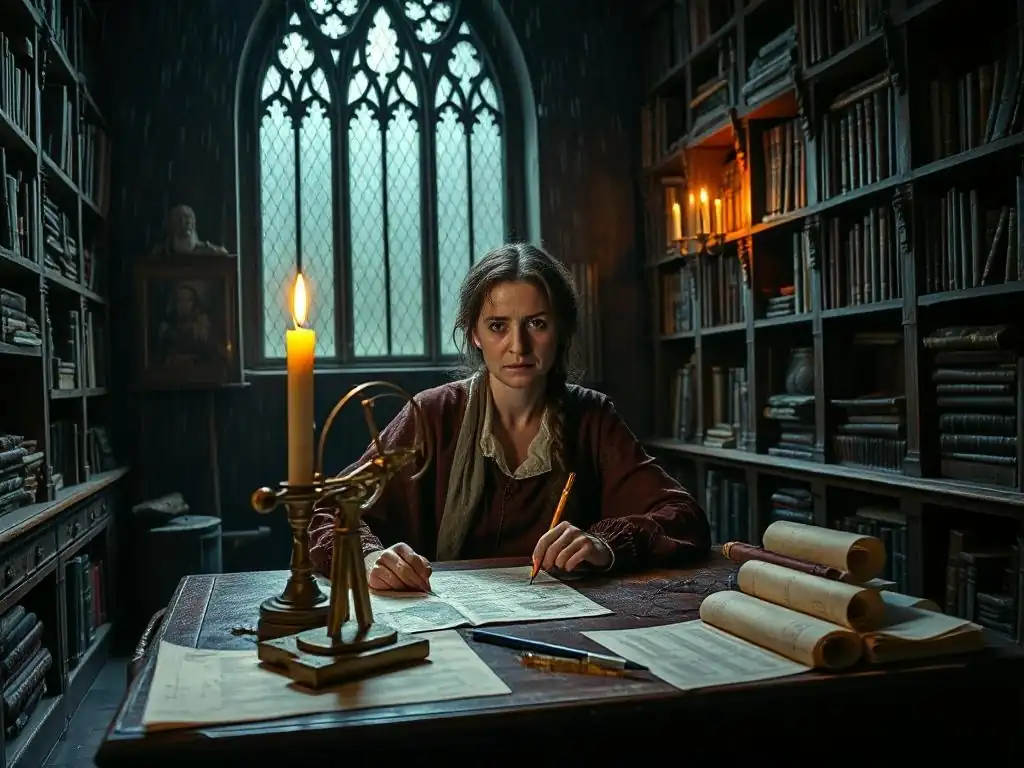
Welcome to WomenInScienceHistory.com!
Delve into the remarkable, and often untold, stories of women who dared to explore the world of science. Here, we shine a light on their groundbreaking contributions and the obstacles they overcame. Today, we begin with a fascinating exploration into the lives and work of female mathematicians pre1700, uncovering the unique challenges they faced in a world that often dismissed their intellect. Prepare to be inspired by their resilience and ingenuity – their stories are waiting to be discovered. What drove these brilliant minds in the face of adversity? Read on to find out!
- Introduction: Unveiling the Untold Stories of Early Female Mathematicians
- The Landscape of Mathematics Before the 18th Century: A Male-Dominated Field
- Unique Challenges Faced by Female Mathematicians Pre-1700
- Key Figures: Examples of Remarkable Female Mathematicians Before 1700
- The Impact of Social Class and Family on Opportunities for Women in Mathematics
- The Legacy of Pre-1700 Female Mathematicians: Inspiring Future Generations
- Conclusion: Celebrating the Resilience and Achievements of Early Women in Mathematics
-
Frequently Asked Questions
- What were some of the primary barriers preventing women from becoming mathematicians before 1700?
- How did the prevailing societal views of women's capabilities impact their opportunities in mathematics?
- Could you provide an example of a pre-1700 female mathematician who overcame these challenges?
- What kind of mathematical work might women have been involved in, even if not formally recognized as mathematicians?
- Why is it important to study the history of female mathematicians, particularly those before 1700?
- Final Reflection: Bridging the Numerical Divide
- Empower the Future: Champion Female Brilliance!
Introduction: Unveiling the Untold Stories of Early Female Mathematicians
The Importance of Recognizing Female Mathematicians Before 1700
The history of mathematics, as commonly taught, often presents a narrative dominated by male figures, creating an incomplete picture of intellectual progress. Yet, hidden within the annals of time are remarkable women who, against formidable odds, made significant contributions to this rigorous field. Recognizing these early female mathematicians is not merely an exercise in historical correction; it is a vital step in understanding the full spectrum of human ingenuity and resilience. Their stories reveal the profound societal barriers that existed, making their achievements even more extraordinary and highlighting the "Female mathematicians pre1700 challenges" they faced.
By bringing these narratives to light, we gain a deeper appreciation for the intellectual courage required to pursue mathematics in an era that largely denied women access to education and public intellectual life. These pioneers, despite the severe limitations imposed upon them, cultivated their minds, explored complex theories, and, in some instances, even published groundbreaking works. Their existence challenges the long-held misconception that women were inherently less capable of abstract thought, demonstrating that genius knows no gender, even when confronted with immense societal pressure and the unique "Female mathematicians pre1700 challenges."
The Landscape of Mathematics Before the 18th Century: A Male-Dominated Field
Societal Expectations and Barriers for Women in Pre-1700 Europe
Before the 18th century, European society rigidly defined women's roles, primarily confining them to the domestic sphere. A woman's principal duties revolved around managing the household, raising children, and supporting her husband, often within a framework of patriarchal control. Intellectual pursuits, especially those as demanding and abstract as mathematics, were largely considered unseemly or even dangerous for women, thought to distract them from their "natural" duties and potentially harm their delicate constitutions.
This pervasive societal expectation acted as a formidable barrier, effectively barring most women from engaging in academic or scientific endeavors. Public life, including universities, scientific academies, and learned societies, was almost exclusively a male domain. A woman who dared to express an interest in mathematics or science often faced ridicule, social ostracization, or direct familial disapproval, compounding the "Female mathematicians pre1700 challenges" to an already arduous intellectual path.
Access to Education: Limited Opportunities for Female Mathematical Learning
Formal education for girls and women in pre-1700 Europe was severely limited, if it existed at all. While boys from privileged families might attend grammar schools or universities, girls were typically educated at home, if at all, focusing on domestic skills, basic literacy, and religious instruction. Mathematics, beyond simple arithmetic for household management, was rarely part of their curriculum, nor was it considered an appropriate subject for a young woman's intellectual development.
Consequently, any woman aspiring to learn mathematics had to do so through unconventional means. This often involved self-study, poring over texts in private libraries, or receiving informal instruction from a supportive father, brother, or private tutor – a luxury available only to the most affluent families. Even then, such learning was often clandestine, undertaken without the formal recognition or academic infrastructure that male scholars took for granted, making access to advanced mathematical concepts one of the most significant "Female mathematicians pre1700 challenges."
The Prevailing Beliefs About Women's Intellectual Capabilities
Underlying the societal and educational barriers were deeply ingrained philosophical and pseudo-scientific beliefs about women's intellectual inferiority. Many influential thinkers of the era, from ancient philosophers to contemporary theologians, propagated the idea that women were inherently less rational, more emotional, and physically weaker than men, rendering them unsuited for rigorous intellectual pursuits. It was often argued that intense study, particularly of subjects like mathematics, could even lead to physical ailments or mental instability in women.
These prevailing beliefs served as a powerful ideological justification for excluding women from academic institutions and intellectual discourse. They created a pervasive cultural climate where a woman's intellectual ambition was not only discouraged but actively dismissed as unnatural or even dangerous. Overcoming such deeply entrenched prejudices was an immense "Female mathematicians pre1700 challenges," requiring extraordinary determination and often a quiet defiance of widely accepted norms.
Unique Challenges Faced by Female Mathematicians Pre-1700
Overcoming Obstacles to Mathematical Education for Women
For the rare women who managed to pursue mathematical studies before the 18th century, the journey was fraught with unique difficulties. Without access to formal universities or public lectures, their education was almost entirely self-directed or dependent on private, often informal, instruction. This meant tirelessly studying ancient texts, sometimes in multiple languages, and grappling with complex theories in isolation, without the benefit of peer discussion groups or dedicated professors to guide their learning.
The acquisition of mathematical knowledge was thus an act of immense personal will and resourcefulness. For instance, a woman might only gain access to books through a family library or by secretly borrowing texts. This clandestine nature of their education often meant that their learning was piecemeal and lacked the structured progression of formal curricula. The dedication required to master advanced concepts under such conditions truly encapsulates the spirit of "Female mathematicians pre1700 challenges."
Gaining Recognition in a Male-Centric Academic World
Even if a woman managed to acquire significant mathematical expertise, gaining recognition for her work in the male-dominated academic world was an almost insurmountable hurdle. Scientific societies, universities, and publishing houses were exclusively controlled by men, who often viewed female intellectual contributions with skepticism or outright disdain. Publishing under one's own name could lead to ridicule or jeopardize one's social standing, forcing some to publish anonymously, under male pseudonyms, or to circulate their work privately.
Furthermore, opportunities for presenting findings, engaging in scholarly debate, or collaborating with peers were virtually non-existent. Women were excluded from the coffee houses, salons, and academic gatherings where scientific ideas were exchanged and reputations built. This systemic exclusion meant that even groundbreaking work by "Female mathematicians pre1700 challenges" often went unrecognized, or its true authorship obscured, for centuries.
Securing Funding and Resources for Mathematical Pursuits
Unlike their male counterparts who might receive patronage from wealthy benefactors, secure academic positions, or inherit fortunes that allowed for intellectual leisure, pre-1700 female mathematicians rarely had independent financial means. Women were typically dependent on their fathers or husbands for financial support, and few families would deem the pursuit of abstract mathematics a worthy investment. Acquiring expensive mathematical instruments, rare books, or even simply having the time free from domestic duties required significant resources.
This lack of financial autonomy severely limited their ability to dedicate themselves fully to their studies or conduct experiments. The need to manage households, raise families, or contribute to family businesses often took precedence, leaving little time or energy for intellectual endeavors. The absence of institutional or private funding was a critical "Female mathematicians pre1700 challenges," forcing many to pursue their passions in the shadows and at great personal cost.
Beyond the practical barriers, female mathematicians faced a constant barrage of social biases and deeply entrenched gender stereotypes. They were often viewed as anomalies, their intelligence attributed to an unusual "masculine" trait rather than inherent intellectual capability. This could manifest as condescending praise, outright dismissal of their work, or even accusations of impropriety for stepping outside traditional female roles.
The psychological burden of constantly having to prove one's intellectual worth, often in hostile environments, was immense. Many women, despite their brilliance, chose to retreat from public intellectual life, finding solace in private study rather than enduring continuous societal judgment. This constant pressure to conform or face ostracization highlights the profound "Female mathematicians pre1700 challenges" that extended far beyond mere access to education.
Key Figures: Examples of Remarkable Female Mathematicians Before 1700

Hypatia of Alexandria: A Philosopher, Astronomer, and Mathematician
Hypatia of Alexandria, born around 350-370 CE, stands as one of the earliest recorded female mathematicians and a beacon of intellectual prowess in the ancient world. A Neoplatonist philosopher, astronomer, and mathematician, she was a prominent figure in the intellectual life of Alexandria, a major center of learning. Her father, Theon, himself a mathematician and astronomer, played a crucial role in her education, providing her with the foundation necessary to excel in multiple disciplines.
Hypatia's Contributions to Geometry and Astronomy
Hypatia excelled in geometry, contributing significantly to the understanding and commentary on classical works. She is credited with authoring commentaries on Diophantus's Arithmetica, Apollonius's Conics, and Ptolemy's Almagest, though sadly, these works have not survived. Her work on conic sections was particularly noted, building upon the foundational knowledge of her predecessors. In astronomy, she is believed to have improved the design and functionality of the astrolabe, a sophisticated instrument used for measuring celestial body positions, and the hydrometer, used for measuring the density of liquids.
Her intellectual contributions extended to teaching, where she attracted numerous students, both pagan and Christian, who came to learn philosophy, astronomy, and mathematics from her. She lectured publicly and engaged in philosophical debates, a rare and remarkable feat for a woman of her time. Her role as a commentator and teacher was crucial in preserving and transmitting ancient Greek mathematical and scientific knowledge.
Challenges Faced by Hypatia Due to Her Gender and Philosophical Beliefs
Despite her brilliance and influence, Hypatia faced immense challenges, not least due to her gender in a society that was becoming increasingly hostile to independent female intellectuals. As a pagan philosopher and a prominent public figure, she became a target during a period of intense religious and political upheaval in Alexandria, marked by growing Christian fundamentalism. Her association with Orestes, the Roman prefect of Alexandria, and her perceived influence over him, further exacerbated tensions with the city's Christian bishop, Cyril.
Ultimately, her independent thought, public role, and philosophical beliefs led to her brutal murder by a Christian mob in 415 CE. Her tragic end serves as a stark and chilling example of the extreme "Female mathematicians pre1700 challenges" faced by women who dared to pursue intellectual leadership and challenge prevailing norms, demonstrating the severe risks of standing out in a hostile patriarchal environment.
Maria Gaetana Agnesi: A Linguist and Mathematician
Maria Gaetana Agnesi, born in Milan in 1718, was an extraordinary polymath and one of the most significant female mathematicians of the 18th century, though her formative years and groundbreaking work fall within the scope of "Female mathematicians pre1700 challenges" due to the prevailing societal conditions. A child prodigy, she mastered multiple languages by early adolescence and was known for her intellectual curiosity. Her father, a mathematics professor, encouraged her studies, providing her with tutors and access to a vast library.
Agnesi's Analytical Institutions and its Impact on Mathematical Education
Agnesi is best known for her monumental work, Instituzioni analitiche ad uso della gioventù italiana (Analytical Institutions for the Use of Italian Youth), published in 1748. This two-volume treatise was a comprehensive textbook covering differential and integral calculus, as well as analytical geometry. It was designed to provide a clear, systematic, and accessible introduction to these advanced mathematical concepts, making them understandable to a wider audience, including her younger brothers.
The Analytical Institutions was lauded for its clarity, precision, and thoroughness, becoming one of the most widely used mathematics textbooks of its time. It was translated into English and French, influencing mathematical education across Europe. Her work notably included a discussion of the curve now known as the "Witch of Agnesi," a term that arose from a mistranslation of the Italian term versiera. This textbook’s widespread adoption underscores its pedagogical excellence and Agnesi's deep understanding of complex mathematics.
The Societal Impact of Her Work, Despite the Obstacles
The publication of Analytical Institutions brought Agnesi international acclaim. Pope Benedict XIV recognized her contributions by appointing her to the chair of mathematics and natural philosophy at the University of Bologna in 1750, making her one of the first women appointed to a university professorship. This was an unprecedented achievement, breaking centuries of tradition. Her work was seen as a testament to female intellectual capacity, challenging the prevailing beliefs about women's roles in academia.
However, Agnesi never actively taught at the university, primarily due to her retiring nature and increasing devotion to religious studies and charity work. Despite her intellectual triumphs, the societal pressures and expectations placed on a woman in such a prominent intellectual position were immense. Her eventual withdrawal from public scholarly life, dedicating herself to caring for the poor and sick, illustrates the profound "Female mathematicians pre1700 challenges" that even the most celebrated women faced in reconciling personal desires with public expectations.
Elena Cornaro Piscopia: The First Woman to Receive a Doctorate
Elena Cornaro Piscopia, born in Venice in 1646, was an extraordinary scholar who achieved a historic milestone: she became the first woman in the world to receive a doctoral degree. Her noble family recognized and nurtured her prodigious intellect from an early age, providing her with the best possible education. She mastered Latin, Greek, Hebrew, and Arabic, and excelled in philosophy, theology, astronomy, and mathematics.
Piscopia's Doctoral Studies and Philosophical Pursuits
Piscopia's intellectual prowess was evident in her profound understanding of diverse subjects. She engaged in public disputations, a common academic practice of the time, demonstrating her mastery of philosophy and theology before esteemed audiences. Her primary ambition was to earn a doctorate in theology, but the Church authorities deemed it "scandalous" for a woman to receive such a degree. Instead, she was permitted to pursue a doctorate in philosophy.
In 1678, at the University of Padua, Elena Cornaro Piscopia successfully defended her thesis, earning her Doctor of Philosophy degree cum laude. Her examination was conducted in Latin before a panel of eminent scholars and a large audience, a testament to her exceptional knowledge and skill. This historic event marked a significant, albeit singular, breach in the male-dominated academic fortress, inspiring generations to come despite the persistent "Female mathematicians pre1700 challenges."
Her Methods of Overcoming Gender-Based Discrimination
Piscopia's ability to achieve such a groundbreaking feat was a combination of her unparalleled intellect, her family's aristocratic status, and the support of influential mentors. Her father, Giovanni Battista Cornaro, actively promoted her education and leveraged his connections to secure her admission to the university and the opportunity to pursue her doctorate. This aristocratic privilege provided her with resources and protection that most women lacked, allowing her to circumvent some of the typical educational barriers.
While her achievement was monumental, it was also an isolated incident, not immediately opening doors for other women. She did not go on to teach at the university, instead becoming a lecturer and tutor in mathematics and philosophy for private students. Her life demonstrates how, even with extraordinary talent and powerful backing, women still faced significant institutional and social resistance. Her degree was a symbolic victory, a testament to her resilience in the face of profound "Female mathematicians pre1700 challenges," rather than a widespread systemic change.
Aristocratic Women and Access to Private Tutoring in Mathematics
For women in pre-1700 Europe, social class played a pivotal role in determining their access to intellectual pursuits, particularly mathematics. Aristocratic and wealthy families possessed the financial means to provide their daughters with private tutors, who could instruct them in subjects beyond the typical domestic curriculum. Unlike the vast majority of women, these privileged few might have access to extensive family libraries, containing rare scientific and mathematical texts that were otherwise unobtainable.
This private, home-based education, though not formal, often served as the only avenue for a woman to delve into advanced mathematics. For instance, a noblewoman might have a scholar employed as a family tutor, who, recognizing her intellect, would introduce her to geometry, algebra, or even early calculus. This bespoke education, while rare, allowed certain women to circumvent the systemic exclusion from universities and public academies, illustrating how wealth could mitigate some of the "Female mathematicians pre1700 challenges."
The Role of Family Support in Enabling Female Mathematical Pursuits
Beyond financial resources, the active support and encouragement from family members were often indispensable for women pursuing mathematics. A father who was a scholar himself, or a brother who shared intellectual interests, could provide not only tutelage but also a crucial intellectual environment and a safe space for learning. These male relatives might introduce their female family members to their intellectual circles, share their libraries, and even advocate for their recognition.
Conversely, without such familial support, even a woman of exceptional talent from a privileged background would likely have her intellectual aspirations stifled. Families adhering strictly to traditional gender roles often viewed any deviation from domesticity with disapproval, actively discouraging or forbidding serious intellectual study. The presence or absence of a supportive family network was therefore a critical factor in determining whether a woman could overcome the inherent "Female mathematicians pre1700 challenges" of the era.
For women from lower social classes, the prospect of engaging with mathematics was virtually non-existent. Their lives were consumed by the immediate necessities of survival, including arduous domestic labor, agricultural work, or involvement in family trades. Formal education was a luxury they could not afford, and even basic literacy was not guaranteed. The idea of dedicating time to abstract intellectual pursuits like mathematics was an unimaginable privilege.
Without access to books, tutors, or even leisure time, women from these backgrounds had no opportunity to develop mathematical skills beyond basic arithmetic required for daily transactions. Their pathways to knowledge were blocked by economic hardship and the demands of their social standing, making the "Female mathematicians pre1700 challenges" for them insurmountable. Their stories, largely unrecorded, represent the vast majority of women whose intellectual potential was never realized due to systemic barriers.
The Legacy of Pre-1700 Female Mathematicians: Inspiring Future Generations
The Enduring Importance of Their Contributions to Mathematical History
The contributions of female mathematicians before the 18th century, though often overshadowed or erased from mainstream historical accounts, hold enduring importance for understanding the full scope of mathematical history. Figures like Hypatia, Maria Gaetana Agnesi, and Elena Cornaro Piscopia, despite their individual circumstances, demonstrated that intellectual brilliance and mathematical acumen were not exclusive to men. Their work, whether in commenting on ancient texts, developing new pedagogical approaches, or achieving unprecedented academic milestones, forms an integral part of the continuum of human intellectual progress.
Their very existence challenges the prevailing narrative of an exclusively male-driven scientific revolution, forcing us to re-examine the historical record with a more inclusive lens. These women laid foundational groundwork, not just in terms of specific mathematical advancements, but also by demonstrating the sheer intellectual capacity of women in a period that largely denied it. Their stories are a testament to the fact that talent can flourish even under the most restrictive conditions, proving that the "Female mathematicians pre1700 challenges" were formidable, but not always insurmountable.
Recognizing the Pioneers Who Paved the Way for Modern Female Mathematicians
The pioneering efforts of these early female mathematicians, however isolated their successes, slowly chipped away at the formidable barriers that excluded women from science and academia. Each woman who pursued mathematical knowledge, published a work, or achieved a degree, created a precedent, however small, that inspired future generations. Their struggles and triumphs served as distant beacons, signaling that intellectual life was indeed possible for women, even if the path was arduous and fraught with "Female mathematicians pre1700 challenges."
By acknowledging their resilience and achievements, we connect the past to the present, recognizing the long lineage of women who fought for their place in the scientific world. These early figures paved the way for later female mathematicians like Sophie Germain, Ada Lovelace, and Emmy Noether, whose work became more widely recognized due to the slow but steady progress initiated by their predecessors. Honoring these pioneers is essential for understanding the historical trajectory of gender equity in STEM fields.
Promoting the Study of Early Women in Mathematics
To truly grasp the rich tapestry of mathematical history, it is crucial to actively promote the study and recognition of early women in mathematics. This involves incorporating their stories into educational curricula, supporting scholarly research dedicated to uncovering more of their lives and works, and popularizing their narratives through accessible platforms. By doing so, we ensure that their contributions are no longer overlooked and that their struggles are understood within their historical context.
Promoting their study also serves a vital contemporary purpose: it inspires young girls and women today by showing them that women have always been capable of profound intellectual achievement, even when faced with immense "Female mathematicians pre1700 challenges." It reinforces the message that intelligence and scientific aptitude are universal, not gender-specific, and encourages future generations to pursue their passions in mathematics and science without reservation.
Conclusion: Celebrating the Resilience and Achievements of Early Women in Mathematics
The narratives of female mathematicians before the 18th century are more than just historical footnotes; they are powerful testaments to human perseverance and intellectual courage. Despite living in societies that largely denied them formal education, public recognition, and even the right to intellectual autonomy, these women found ways to engage with the most complex mathematical concepts of their time. Their stories remind us that history is often incomplete, and that there are countless untold tales waiting to be discovered and celebrated.
Therefore, it is imperative to continue the dedicated work of uncovering and sharing these often-forgotten stories. Through meticulous research and accessible storytelling, we can ensure that the legacy of these pioneering women is fully integrated into the broader history of science and mathematics. This ongoing effort not only enriches our understanding of the past but also provides invaluable inspiration for present and future generations, encouraging a more equitable and inclusive appreciation of intellectual achievement.
Why Remembering the Challenges Faced by Female Mathematicians Pre-1700 Matters Today.
Remembering the unique challenges faced by female mathematicians pre-1700 is not merely an academic exercise; it holds profound relevance for contemporary discussions about gender equity in STEM fields. Their struggles highlight the systemic nature of historical biases and the immense personal sacrifices required to pursue intellectual passions against societal norms. Understanding these historical obstacles helps us to recognize that the path to equality in science has been long and arduous, built upon the silent battles fought by countless women.
Moreover, acknowledging the "Female mathematicians pre-1700 challenges" reinforces the idea that talent and potential are universal, but opportunity and recognition are not. It compels us to reflect on lingering biases and barriers that, though less overt than in past centuries, may still impede women's full participation and advancement in mathematics and science today. By celebrating the resilience and achievements of these early pioneers, we not only honor their legacy but also strengthen our resolve to foster a truly inclusive scientific community where talent is nurtured, regardless of gender.
Frequently Asked Questions
What were some of the primary barriers preventing women from becoming mathematicians before 1700?
Social gender roles and limited access to formal education were significant obstacles. Women were often excluded from universities and scholarly circles, hindering their ability to pursue mathematical studies.
How did the prevailing societal views of women's capabilities impact their opportunities in mathematics?
The belief that women were intellectually inferior or unsuited for complex reasoning led to a denial of opportunities. This prejudice created a self-fulfilling prophecy, limiting women's access to resources and recognition.
Could you provide an example of a pre-1700 female mathematician who overcame these challenges?
While documented examples are rare, individuals within noble families or those tutored privately sometimes excelled. Unfortunately, their contributions were often unattributed or overshadowed by male counterparts.
What kind of mathematical work might women have been involved in, even if not formally recognized as mathematicians?
Women often contributed to practical calculations in domestic settings, such as managing household finances and creating intricate patterns. These skills, though not always acknowledged, demonstrated mathematical aptitude.
Why is it important to study the history of female mathematicians, particularly those before 1700?
Recognizing their struggles and contributions helps to correct historical biases and promotes a more inclusive understanding of scientific development. It also inspires future generations by demonstrating that women have always been capable of excelling in mathematics.
Final Reflection: Bridging the Numerical Divide
The stories of these pioneering women, meticulously pieced together from fragmented historical records, reveal a stark reality: the pursuit of mathematical knowledge for women before 1700 was a radical act of defiance against societal norms. Their struggles, often hidden in the shadows of male contemporaries, resonate powerfully today, reminding us that access to education and opportunity is not a given, but a battle fought and won, generation after generation.
The impact of these women, though often unacknowledged in their own time, continues to ripple through the cultural landscape. Their quiet perseverance laid the groundwork for future generations of female scientists and mathematicians, proving that intellectual capacity knows no gender. The most effective way to do it, is to do it.
- Amelia Earhart. This simple yet profound statement encapsulates the spirit of these women, who, despite facing immense obstacles, dared to pursue their passion for numbers.
As we reflect on the challenges faced by these female mathematicians pre-1700, let us not only celebrate their achievements but also commit to dismantling the remaining barriers that hinder women in STEM fields today. Consider how you can actively support and encourage the next generation of female mathematicians, ensuring that their voices are heard and their contributions are valued. Let their legacy inspire us all to create a more equitable and inclusive world, where every mind has the opportunity to flourish.
Empower the Future: Champion Female Brilliance!
Thank you for joining us on this journey through the uncharted territories faced by female mathematicians before 1700. We hope you found inspiration in their resilience and groundbreaking achievements. Now, it’s time to build on their legacy!
Here's how you can continue to support women in STEM:
- Actively champion aspiring female mathematicians by mentoring, sponsoring, or simply offering encouragement. Their journey deserves a supportive community.
- Explore educational resources on WomenInScienceHistory.com and share fascinating stories with your network, spreading awareness and appreciation.
- Consider researching a lesser-known female figure in mathematics and contributing their biography to an online resource like Wikipedia, enriching the historical record.
What small step will you take today to ensure that women in mathematics are not just counted, but celebrated?