
Engineering the War Effort: The Untold Stories of Women Engineers in Global Conflicts


Welcome to WomenInScienceHistory.com!
Dive into the often-unseen world where brilliant minds defied expectations and reshaped our understanding of science. This month, we're spotlighting a critical, yet largely unacknowledged, chapter: the women engineers wartime contributions that proved pivotal in global conflicts. Discover how these remarkable individuals, often facing immense societal barriers, engineered innovations and solutions that directly impacted the course of history. Uncover their stories and prepare to be inspired by their resilience and ingenuity, leaving you wondering why their crucial role has remained in the shadows for so long...
- Engineering Victory: Women Engineers in World War II
- Introduction: Recognizing Unsung Contributions
- Breaking Barriers: Women Entering Engineering During WWII
- Pioneering Women Engineers and Their Wartime Innovations
- The Impact of Women Engineers on Wartime Technological Advancements
- The Social and Cultural Impact: Shifting Perceptions of Women in STEM
- Obstacles and Discrimination Faced by Women Engineers
- Legacy and Inspiration: The Enduring Impact of Women's Contributions
- Conclusion: Acknowledging Vital Role in Shaping History
-
Frequently Asked Questions
- What types of roles did women engineers typically fill during wartime?
- What were some of the primary challenges women engineers faced during wartime?
- How did wartime experiences impact the long-term careers of women engineers?
- Can you name a specific example of a woman engineer who made a significant contribution during a war?
- How did the contributions of women engineers during wartime affect perceptions of women in STEM fields?
- Final Reflection: Honoring the Silent Architects of Victory
- Unveil Your Inner Engineer: Build on Their Legacy!
Engineering Victory: Women Engineers in World War II
Introduction: Recognizing Unsung Contributions
Highlighting the Overlooked Role of Women Engineers During WWII
World War II demanded an unprecedented mobilization of resources and human talent, transforming societies and economies on a global scale. Amidst this monumental effort, a significant, yet often overlooked, group emerged: women engineers. These pioneering individuals stepped into roles previously almost exclusively held by men, applying their skills in design, production, and innovation to bolster the Allied war machine. Their contributions, spanning from intricate electronics to large-scale industrial optimization, were foundational to the technological superiority that ultimately helped secure victory.
Despite their vital impact, the stories of these women engineers wartime contributions have largely remained on the periphery of historical narratives. Their work in factories, laboratories, and design offices was not merely supportive; it was integral to the development and mass production of essential military equipment, from aircraft and naval vessels to radar systems and advanced weaponry. This article aims to bring these unsung heroes to the forefront, acknowledging their ingenuity, resilience, and indispensable role in one of history's most defining conflicts.
Setting the Stage: The Historical Context of Gender Roles in 1940s Engineering
Prior to the outbreak of World War II, the field of engineering was overwhelmingly male-dominated, reflecting deeply entrenched societal gender roles. Women who pursued higher education in technical fields were rare, and professional opportunities were severely limited, often confined to teaching or clerical roles rather than direct engineering practice. The prevailing belief was that women lacked the aptitude or physical endurance for demanding industrial and technical work, a stereotype reinforced by educational and corporate structures.
However, the exigencies of total war dramatically altered this landscape. As millions of men were conscripted into military service, a massive labor vacuum emerged in industries critical to the war effort. This unprecedented demand for skilled workers forced a radical re-evaluation of who could perform complex technical tasks. The war created an urgent necessity that transcended traditional gender barriers, paving the way for women to enter engineering and manufacturing roles on a scale previously unimaginable, thereby setting the stage for their pivotal women engineers wartime contributions.
Breaking Barriers: Women Entering Engineering During WWII
The Impact of Manpower Shortages on Engineering Opportunities for Women
The global conflict of World War II led to an acute and widespread shortage of male labor in civilian industries, as millions of men were deployed to fighting fronts. In the United States alone, over 16 million men served in the armed forces by 1945, leaving critical gaps in factories, shipyards, and technical design offices. This massive drain on the traditional male workforce created an urgent need for skilled personnel to maintain and accelerate wartime production, directly opening doors for women in engineering.
Industries vital to the war effort, such as aviation, munitions, and electronics, faced immense pressure to increase output dramatically. With the traditional male labor pool depleted, employers reluctantly, then enthusiastically, turned to women to fill these roles. Women stepped into positions as draftsmen, stress analysts, laboratory technicians, and production engineers, proving their capabilities and dispelling pre-war stereotypes about their suitability for technical work. Their rapid integration was a direct response to the critical demand for specialized skills, making women engineers wartime contributions indispensable.
Government Initiatives and Training Programs for Women Engineers
Recognizing the critical need for skilled labor, governments and educational institutions launched ambitious initiatives to train women for technical and engineering roles. In the United States, the federal government funded programs like the Engineering, Science, and Management War Training (ESMWT) program, which offered intensive, short-term courses in engineering, chemistry, and physics. These programs were specifically designed to rapidly equip women with the practical skills needed for immediate deployment in war industries.
Universities across the nation, including institutions like Purdue University and Georgia Tech, opened their doors to thousands of women, providing accelerated curricula in fields such as mechanical drawing, industrial engineering, and electrical circuit design. By 1944, over 100,000 women had enrolled in ESMWT courses, directly contributing to the pool of technical talent. These government-backed training initiatives were crucial in enabling women to acquire the necessary qualifications, cementing their status as vital components of the nation's engineering workforce and highlighting the burgeoning women engineers wartime contributions.
Post-War Realities: The Struggle for Recognition and Retention
Despite their proven competence and essential contributions during the war, the post-war period brought significant challenges for women engineers. As servicemen returned home, there was immense societal and economic pressure for women to vacate their industrial and technical positions and return to traditional domestic roles. Many women were laid off or demoted, irrespective of their skills or the quality of their wartime work.
This widespread displacement led to a dramatic decline in the number of women actively practicing engineering by the late 1940s. Professional engineering societies often reverted to their pre-war, male-dominated exclusivity, further marginalizing women who wished to continue their careers. While the war undeniably showcased the capabilities of women in engineering, the immediate post-war era saw a concerted effort to restore pre-war gender norms, making the long-term retention and recognition of these pioneering women a significant struggle, despite their undeniable women engineers wartime contributions.
Pioneering Women Engineers and Their Wartime Innovations
Elsie Eaves: Calculating the Feasibility of Strategic Infrastructure Projects
Elsie Eaves, a distinguished civil engineer, played a crucial, albeit indirect, role in the war effort through her work at Engineering News-Record, a leading industry publication. While she wasn't designing tanks or aircraft, her expertise in analyzing construction costs, materials, and economic feasibility was invaluable. She managed detailed statistical data on construction projects across the nation, providing critical insights into the viability and resource requirements of large-scale infrastructure.
Her meticulous data analysis and statistical compilations helped inform strategic decisions regarding the allocation of resources for wartime construction. This included the rapid development of airfields, military bases, munitions factories, and expanded industrial plants—all essential components for supporting the massive war machine. Eaves's ability to assess the practical and economic feasibility of these projects ensured that resources were deployed efficiently and effectively, underscoring how even seemingly administrative roles were vital women engineers wartime contributions.
Beatrice Hicks: Designing and Improving Electronic Components for Military Applications
Beatrice Hicks stands as a prominent example of a woman engineer whose direct technical contributions were vital to the war effort. As one of the first women to earn an electrical engineering degree from Rensselaer Polytechnic Institute, she joined Western Electric during World War II, a company at the forefront of military communications technology. Hicks specialized in the design and testing of critical electronic components.
Her significant work involved the development and improvement of quartz crystal oscillators, which were indispensable for military communications systems, radar, and sonar. These components provided the precise timing and frequency control necessary for reliable signal transmission and reception, directly impacting the effectiveness of Allied intelligence and operational coordination. Hicks's precision engineering ensured the high performance of these vital devices, showcasing her direct involvement in critical technological advancements and a significant aspect of women engineers wartime contributions. She later co-founded the Society of Women Engineers, further cementing her legacy.
Case Studies: Examining Women's Contributions to the Manhattan Project
The Manhattan Project, the top-secret initiative to develop the atomic bomb, relied on an extraordinary array of scientific and engineering talent, much of which came from women. While often uncredited at the time, women played critical roles across various sites, including Los Alamos, Oak Ridge, and the University of Chicago. Many served as "human computers," performing complex mathematical calculations essential for nuclear fission research and bomb design.
These women, often with degrees in mathematics or physics, meticulously processed vast amounts of data, calculated trajectories, and analyzed experimental results, tasks that were fundamental to the project's success before the advent of modern electronic computers. Beyond calculations, women were involved in laboratory work, materials handling, and technical support, ensuring the smooth operation of experimental setups and production facilities. Their precision, dedication, and intellectual contributions were indispensable to the project's rapid progress and ultimate realization, representing some of the most profound women engineers wartime contributions.
The Impact of Women Engineers on Wartime Technological Advancements
Contributions to Radar Technology and Electronic Warfare
Women engineers and technicians played an instrumental role in the rapid advancement and deployment of radar technology during World War II. They were involved at every stage, from research and development in laboratories to the assembly lines of factories producing radar units. Their meticulous work ensured the quality and reliability of these complex electronic systems, which were crucial for detecting enemy aircraft, ships, and submarines.
In manufacturing plants, women assembled intricate components, wired circuits, and performed rigorous testing to ensure operational integrity under battlefield conditions. Their contributions directly led to improvements in radar range, accuracy, and reliability, providing Allied forces with a significant tactical advantage in air defense, naval warfare, and anti-submarine operations. The successful integration of women into this cutting-edge field underscores their vital role in shaping the technological landscape of electronic warfare and their significant women engineers wartime contributions.
Innovations in Mass Production and Supply Chain Optimization
The scale of World War II demanded an unprecedented level of industrial output. Women engineers, often working as industrial engineers or production managers, were instrumental in optimizing mass production processes and streamlining supply chains. They analyzed factory layouts, identified bottlenecks, and implemented more efficient assembly line techniques, dramatically increasing the speed and volume of war material production.
Their expertise in time-and-motion studies, quality control, and logistical planning helped factories pivot from civilian goods to military hardware with remarkable efficiency. For instance, in aircraft plants, women engineers helped reduce assembly times for bombers and fighters, ensuring that the Allied air forces received a steady supply of new planes. This focus on efficiency and optimization ensured that critical resources reached the front lines promptly, making their contributions to mass production a cornerstone of the broader women engineers wartime contributions.
Advancements in Weapons Development and Ballistics
Women engineers also made significant, though often unheralded, contributions to weapons development and ballistics. They worked in research facilities and arsenals, applying their scientific and mathematical skills to improve the performance and accuracy of military armaments. This included performing complex ballistics calculations for artillery shells, bombs, and machine gun ammunition, ensuring their precision and effectiveness in combat.
Their analytical work was crucial for designing new weapon systems and refining existing ones, ensuring that Allied forces had superior firepower. For example, in munitions factories, women engineers were involved in the testing and quality control of explosives and propellants, guaranteeing the safety and reliability of ammunition. These direct technical contributions to the very tools of war highlight the diverse and critical nature of women engineers wartime contributions across the entire spectrum of military technology.
Challenging Gender Stereotypes in Wartime Industries
The widespread entry of women into engineering and technical roles during World War II fundamentally challenged deeply ingrained gender stereotypes. Before the war, it was commonly believed that women lacked the physical strength, mechanical aptitude, or intellectual capacity for demanding industrial and scientific work. However, the sheer necessity of the war effort forced a rapid re-evaluation of these prejudices.
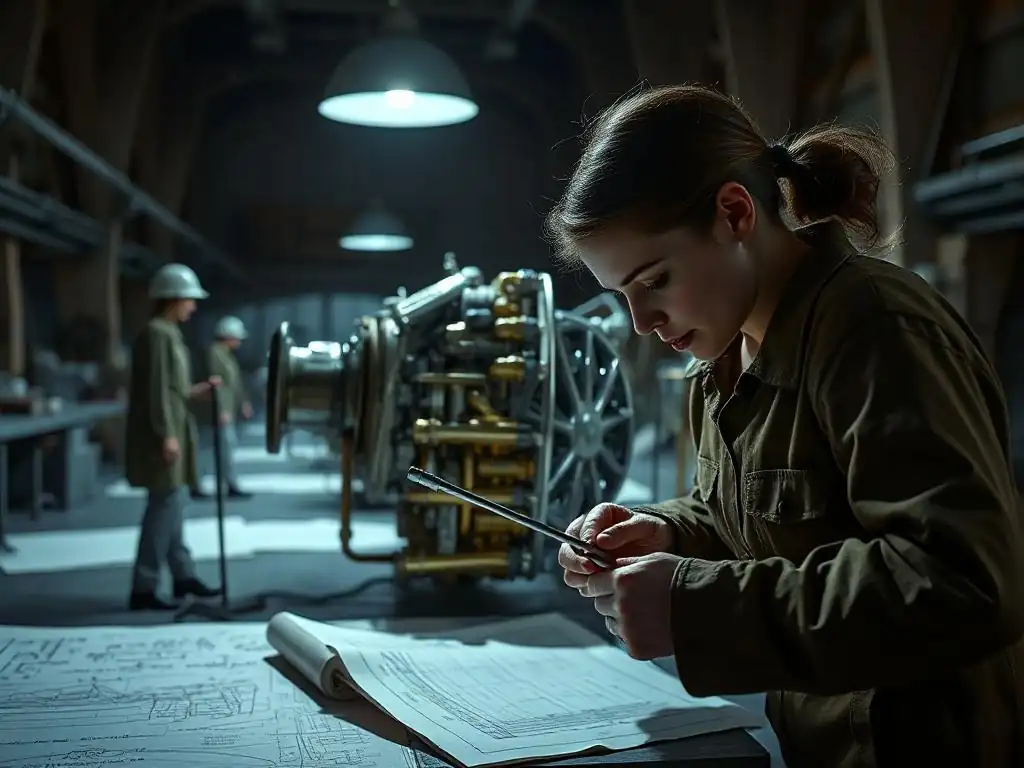
As women successfully operated heavy machinery, performed complex calculations, and designed intricate components, their competence and capabilities became undeniable. Their visible and successful integration into roles previously considered exclusively male proved that talent and skill were not confined by gender. This direct demonstration of women's abilities in high-stakes environments began to erode long-standing biases, initiating a gradual but significant shift in public perception about women's potential in STEM fields.
The Role of Propaganda and Media in Promoting Women in STEM
Government propaganda and media campaigns played a crucial role in legitimizing and encouraging women's entry into the wartime workforce, including technical and engineering positions. Iconic figures like "Rosie the Riveter" became powerful symbols, depicting women as capable, patriotic, and essential contributors to the national effort. These campaigns actively promoted the image of women in factories, shipyards, and laboratories, performing tasks that were previously unimaginable for them.
While often simplified or idealized, these media portrayals served to normalize the presence of women in traditionally male-dominated industries. They helped to shift public opinion, making it more acceptable for women to pursue technical training and employment. By showcasing women's dedication and skill, propaganda efforts contributed to a broader cultural acceptance of women in STEM roles, even if this acceptance was often framed as a temporary necessity for the war, thereby amplifying the visibility of women engineers wartime contributions.
Documenting the Experiences Through Oral Histories and Archives
To fully understand the profound impact of women engineers during World War II, it is essential to document and preserve their personal narratives. Oral histories, collected from the women who lived through this period, provide invaluable first-hand accounts of their experiences, challenges, and triumphs. These narratives offer intimate insights into the daily realities of working in wartime industries, the discrimination they faced, and the pride they felt in their contributions.
Complementing oral histories, archival research—including company records, government documents, personal letters, and professional society minutes—helps to piece together a comprehensive picture of their collective impact. These historical records shed light on specific projects, technical innovations, and the broader social dynamics at play. By diligently preserving and studying these sources, historians ensure that the vital stories of women engineers wartime contributions are not lost, but rather integrated into the broader tapestry of scientific and engineering history.
Obstacles and Discrimination Faced by Women Engineers
Unequal Pay and Limited Career Advancement Opportunities
Despite their critical contributions and often identical work to their male counterparts, women engineers during World War II frequently faced significant wage discrimination. It was common for women to earn substantially less than men for performing the same demanding engineering duties, sometimes as little as 60-70% of a man's wage. This disparity was often justified by employers based on gender, rather than skill or output.
Furthermore, opportunities for career advancement were severely limited. Even highly skilled and experienced women were often confined to junior positions, technical support roles, or specific "women's jobs" within the engineering hierarchy, regardless of their proven capabilities. Leadership roles or positions requiring significant decision-making authority were rarely open to them, reflecting a pervasive glass ceiling that hindered their professional growth and undervalued their significant women engineers wartime contributions.
Overcoming Resistance and Skepticism from Male Colleagues
Upon entering traditionally male-dominated engineering environments, women often encountered considerable resistance, skepticism, and sometimes outright hostility from male colleagues and supervisors. Many men doubted women's technical abilities, questioned their intellectual aptitude for complex tasks, or resented their presence in what they considered their exclusive domain. This created a challenging and sometimes isolating work environment.
Women engineers had to consistently prove their competence, often working twice as hard to gain respect and acceptance. They navigated a culture that often expected them to fail, relying on their meticulous work, problem-solving skills, and unwavering dedication to demonstrate their professional value. Overcoming this ingrained skepticism was a significant personal and professional hurdle that many women engineers wartime contributions had to conquer daily.
Balancing Wartime Demands with Societal Expectations
The women engineers of World War II faced the unique challenge of balancing demanding wartime work schedules with deeply ingrained societal expectations regarding their traditional roles. Many worked grueling shifts, often 10-12 hours a day, six or even seven days a week, in physically demanding industrial environments. Simultaneously, they were still largely expected to manage household duties, child-rearing, and family responsibilities, often with limited support.
This dual burden created immense pressure and stress. The prevailing societal narrative suggested that their wartime work was a temporary patriotic duty, and that they would gracefully return to homemaking once the conflict ended. This expectation often undermined their long-term career aspirations and professional identity, making it difficult for many to envision a sustained future in engineering despite their profound and impactful women engineers wartime contributions.
Legacy and Inspiration: The Enduring Impact of Women's Contributions
Recognizing Lasting Influence on Engineering Practice and Education
The unprecedented influx of women into engineering fields during World War II, despite the post-war retrenchment, left an indelible mark on the profession. It undeniably demonstrated that the talent pool for scientific and technical innovation was far broader than previously acknowledged. The wartime experience shattered the myth that engineering was an exclusively male domain, proving women's intellectual and practical capabilities in high-stakes environments.
This period laid crucial groundwork for future generations. While the immediate post-war era saw a decline in women's participation, the precedent had been set. The wartime efforts directly influenced the establishment of organizations such as the Society of Women Engineers (SWE) in 1950, founded by women who had witnessed and participated in the wartime surge. These organizations would continue the fight for equity and recognition, ensuring that the legacy of women engineers wartime contributions would eventually lead to greater inclusion in engineering education and practice.
Inspiring Future Generations of Women in STEM
The stories of these pioneering women engineers are powerful sources of inspiration for future generations of women in STEM. Their narratives of resilience, ingenuity, and perseverance in the face of immense challenges and societal barriers serve as compelling role models. By highlighting their significant contributions, we empower young women today to pursue careers in science, technology, engineering, and mathematics, knowing they stand on the shoulders of giants.
These historical accounts demonstrate that women have always been capable of groundbreaking work, even when their efforts were overlooked or marginalized. Sharing these narratives encourages young women to defy stereotypes, pursue their passions, and contribute their unique talents to solving the complex problems of the modern world. The legacy of women engineers wartime contributions is not just a historical footnote; it is a beacon guiding the path for aspiring female innovators.
Preserving the History Through Scholarship and Memorialization
Ensuring that the vital history of women engineers wartime contributions is not forgotten requires ongoing commitment to scholarship and memorialization. Historians, researchers, and institutions play a crucial role in unearthing, documenting, and disseminating these stories through academic publications, museum exhibits, and digital archives. This continuous effort helps to integrate these narratives into the broader historical understanding of scientific and engineering progress.
Memorialization efforts, such as plaques, dedicated programs, and public acknowledgments, further ensure that the sacrifices and achievements of these women are recognized and celebrated. By actively preserving this history, we not only honor the individuals who contributed so much but also provide tangible evidence of women's enduring impact on technological advancement and societal change. This ongoing work is essential for educating the public and inspiring continued progress towards gender equity in STEM.
Conclusion: Acknowledging Vital Role in Shaping History
Re-emphasizing the Significance of Women Engineers' WWII Contributions
The narrative of World War II is incomplete without a comprehensive understanding of the profound and indispensable contributions made by women engineers. Faced with unprecedented national demand and pervasive gender barriers, these women stepped into critical roles, applying their intelligence, skill, and dedication to every facet of the war effort. From the precise calculations for ballistics to the optimization of mass production lines and the development of cutting-edge radar technology, their work was foundational to the Allied victory.
Their efforts were not merely supportive or supplementary; they were integral to the technological superiority that defined the conflict. The war could not have been fought, much less won, without the ingenuity and perseverance of these remarkable individuals. Their women engineers wartime contributions represent a pivotal chapter in both engineering history and the broader story of women's empowerment, demonstrating their undeniable capacity to shape global events through scientific and technical prowess.
Call to Action: Promoting Equity and Inclusion in Engineering Today
The legacy of women engineers wartime contributions offers invaluable lessons for contemporary society. Their experiences highlight the persistent challenges of gender bias and the transformative power of necessity in breaking down barriers. Understanding their struggles and triumphs can inform ongoing efforts to promote diversity, equity, and inclusion within engineering and STEM fields today.
As we continue to face complex global challenges, the need for diverse perspectives and talents in engineering is more critical than ever. We must actively work to dismantle remaining systemic barriers, ensure equal opportunities, and celebrate the achievements of all individuals in STEM, regardless of gender. By honoring the past and learning from the extraordinary women who engineered victory during World War II, we can foster a more inclusive and innovative future for engineering.
Frequently Asked Questions
What types of roles did women engineers typically fill during wartime?
Women engineers often filled roles previously held by men, including designing and testing aircraft, developing new technologies, and managing production lines in factories.
What were some of the primary challenges women engineers faced during wartime?
They encountered significant challenges, including gender discrimination, lower pay than their male counterparts, and lack of recognition for their contributions to the war effort.
How did wartime experiences impact the long-term careers of women engineers?
For some, wartime experience opened doors to career advancement and increased opportunities in engineering, while others faced a return to traditional gender roles after the war.
Can you name a specific example of a woman engineer who made a significant contribution during a war?
Many women contributed significantly; for example, Beatrice "Tilly" Shilling was a British aeronautical engineer who designed a modification to the Rolls-Royce Merlin engines that powered the Supermarine Spitfire and Hawker Hurricane fighter planes.
How did the contributions of women engineers during wartime affect perceptions of women in STEM fields?
The demonstrable success of women in engineering during wartime helped to challenge gender stereotypes and demonstrate that women were capable of making significant contributions to scientific and technological advancements.
Final Reflection: Honoring the Silent Architects of Victory
The stories unearthed in this exploration of women engineers' wartime contributions reveal a truth that resonates powerfully today: innovation and resilience thrive even in the face of immense adversity. These women, often relegated to the shadows of history, were instrumental in shaping the outcome of global conflicts, proving that talent knows no gender and that dedication can overcome even the most entrenched societal barriers.
The impact of these unsung heroines continues to ripple through our cultural and social landscape. Their legacy serves as a potent reminder that inclusivity and diversity are not just ideals, but essential ingredients for progress and innovation. Their contributions challenge us to re-evaluate historical narratives and to actively seek out and celebrate the accomplishments of those whose voices have been historically marginalized. The most effective way to do it, is to do it.
- Amelia Earhart, a sentiment that perfectly encapsulates the spirit of these women who simply got the job done, regardless of societal expectations.
Let us carry forward the lessons learned from these remarkable women. Let us actively champion the inclusion of women in STEM fields, ensuring that future generations have the opportunity to contribute their talents to solving the complex challenges facing our world. Reflect on how you can personally contribute to creating a more equitable and inclusive environment, one where every individual has the chance to engineer a brighter future for us all.
Unveil Your Inner Engineer: Build on Their Legacy!
Thank you for exploring the inspiring stories of women engineers who shaped history through their contributions to global conflicts. Now, it's your turn to build upon their legacy and contribute to a brighter future.
Here's how you can get started:
- Dive deeper into the world of engineering: Research a specific woman engineer mentioned in the article and share your findings on social media using #WomenInScienceHistory.
- Explore educational resources and courses related to engineering and technology.
- Share this article with friends, family, or colleagues who would appreciate these untold stories and inspire them to discover the impact of women in STEM.
What innovative solution will you engineer to shape a better tomorrow?