
From Laboratories to Leadership: Women Who Rose in Scientific Ranks During WWII's Demands

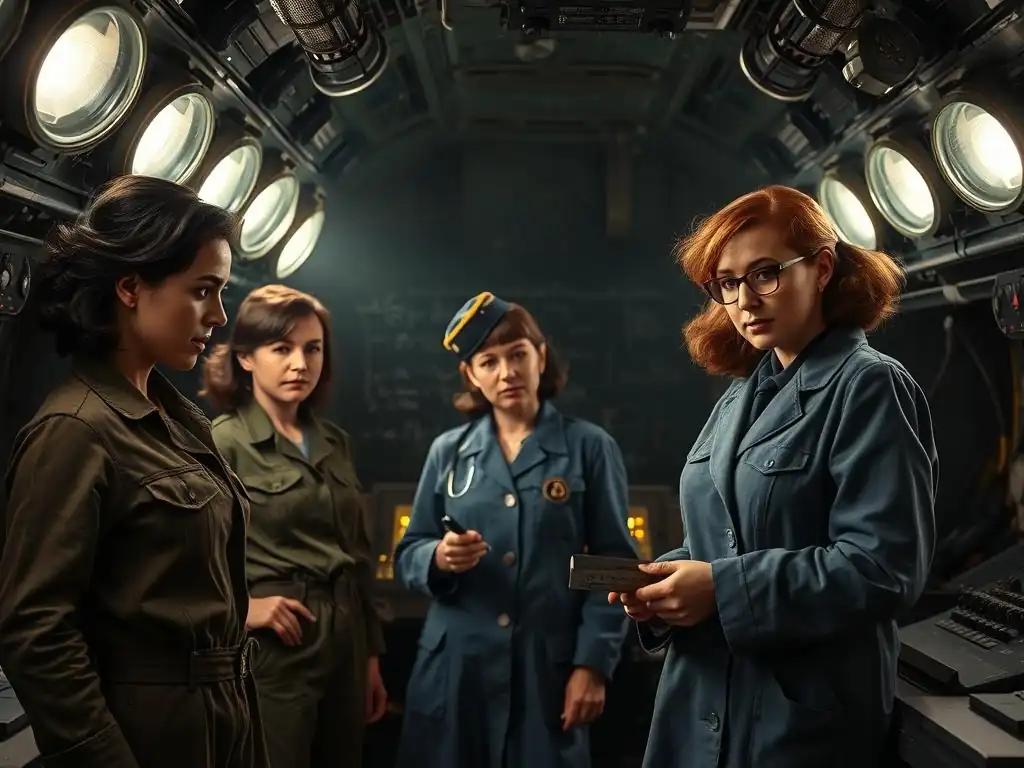
Welcome to WomenInScienceHistory.com, where we uncover the untold stories of remarkable women who shaped the scientific landscape. What if I told you that some of the most crucial scientific advancements during World War II were spearheaded by visionary women? Dive into our latest exploration of " Women Scientists WWII Leadership Roles" and discover how these brilliant minds rose to prominence amidst global crisis, challenging societal norms and leaving an indelible mark on history. Explore the historical context and prepare to be inspired.
- Introduction: The Unprecedented Rise of Women Scientists During WWII
- The Scientific Landscape Transformed by War: A Need for Female Expertise
- Women Scientists in WWII Leadership Roles: Breaking Barriers
- Case Studies: Profiles of Women Scientists Who Rose to Prominence
- The Challenges Faced by Women Scientists in Positions of Authority
-
The Lasting Impact of WWII on Women in Science
- Increased Opportunities for Women in Post-War Scientific Careers
- A Shift in Societal Perceptions of Women's Capabilities: Challenging Gender Stereotypes
- Laying the Foundation for Future Generations of Female Scientists: Inspiring Future Leaders
- Women Scientists WWII Leadership Roles: A Turning Point
- Conclusion: Celebrating the Achievements and Recognizing the Legacy
-
Frequently Asked Questions
- What kind of leadership roles did women scientists take on during WWII?
- What were some of the scientific fields where women made significant contributions during WWII?
- What challenges did women scientists face in achieving leadership roles during WWII?
- How did WWII impact the long-term careers of women scientists?
- Why is it important to highlight the stories of women scientists who held leadership roles during WWII?
- Final Reflection: Echoes of Scientific Strength
- Unleash Your Inner Pioneer: Ignite Change!
Introduction: The Unprecedented Rise of Women Scientists During WWII
The Pre-War Landscape: Limited Opportunities for Women in Science
Before the outbreak of World War II, the scientific landscape for women was largely restrictive and unwelcoming. While women had made significant strides in gaining access to higher education, particularly in fields like chemistry and biology, their opportunities for professional advancement were severely limited.
They were often relegated to supportive roles such as laboratory assistants, data analysts, or educators in women's colleges, rarely ascending to independent research positions or senior academic posts. Less than 5% of all science and engineering professorships in major universities were held by women, and even fewer held significant research grants or directed their own labs.
Societal norms heavily influenced these barriers, with prevailing attitudes suggesting that women's primary domain was the home, not the demanding and competitive world of scientific research. This resulted in a pervasive "glass ceiling" where even highly qualified women faced systemic discrimination, lower pay, and a notable absence from crucial decision-making bodies. The idea of women scientists WWII leadership roles was, for the most part, an anomaly in the pre-war era, with most scientific leadership positions firmly held by men.
Wartime Necessity: A Catalyst for Change in Scientific Fields
The onset of World War II dramatically altered this rigid landscape. As millions of men were conscripted into military service, a vast void emerged in industries, government agencies, and research institutions across the Allied nations. This sudden and acute shortage of skilled male labor created an unprecedented demand for qualified personnel in critical sectors, including science and technology. The exigencies of war, from developing new weapons to mass-producing life-saving medicines, necessitated an urgent mobilization of all available talent, irrespective of gender.
This wartime necessity served as a powerful catalyst, compelling institutions to reconsider their long-standing biases against women in scientific roles. The focus shifted from traditional gender roles to practical capability and urgent output. Women, many of whom possessed untapped scientific expertise, were actively recruited into positions previously closed to them, including those that would evolve into significant women scientists WWII leadership roles. This pragmatic shift, driven by survival and victory, began to dismantle, albeit temporarily, some of the entrenched prejudices.
The Scope of This Article: Focusing on Leadership Roles
This article aims to illuminate a specific and often overlooked aspect of women's contributions during World War II: their ascent into positions of scientific leadership. While countless women served as invaluable technicians, researchers, and support staff, our focus will be on those who, against significant odds, managed, directed, and strategically influenced scientific endeavors vital to the war effort. These were the women who moved beyond the laboratory bench to oversee projects, manage teams, and contribute to high-level scientific planning.
By highlighting these pioneering women scientists WWII leadership roles, we seek to provide a more nuanced understanding of their impact. We will explore the diverse fields in which they excelled, the unique challenges they navigated in positions of authority within a male-dominated environment, and the lasting legacy of their breakthroughs. Their stories are not merely about participation but about profound influence and groundbreaking leadership in a time of global crisis.
The Scientific Landscape Transformed by War: A Need for Female Expertise
The Shortage of Male Scientists: Filling the Gaps with Women's Talent
The scale of male enlistment during World War II was staggering, profoundly impacting civilian scientific and engineering sectors. In the United States alone, over 16 million men served in the armed forces, with a significant proportion drawn from universities, research institutions, and industrial laboratories. By 1943, many academic science departments reported a male student enrollment decline of over 50%, and industrial research labs faced severe staffing shortages. This created an immediate and critical need to fill thousands of vacancies.
Women, many of whom held degrees in chemistry, physics, mathematics, and engineering but had found limited professional outlets, were now actively sought after. Universities began offering accelerated training programs for women in technical fields, and government agencies like the Office of Scientific Research and Development (OSRD) actively recruited female scientists. This unprecedented demand allowed women to step into roles previously considered exclusive to men, often taking on responsibilities far beyond their pre-war opportunities, laying the groundwork for many women scientists WWII leadership roles.
Key Scientific Fields Where Women Excelled: Chemistry, Physics, and Engineering
Women scientists made pivotal contributions across a spectrum of critical wartime fields. In chemistry, they were instrumental in the development of synthetic materials, crucial for replacing natural resources cut off by war. For instance, women chemists worked on new formulations for synthetic rubber, vital for tires and other military equipment, and on improved explosives and propellants. In physics, their expertise was vital for radar development, ballistics research, and early work in nuclear physics.
Engineering also saw a remarkable influx of women, particularly in aeronautical and electrical engineering. Women became "Rosie the Riveters" in factories but also engineers designing aircraft components or working on complex electrical systems for military hardware. These fields, previously almost entirely male-dominated, witnessed women not just performing tasks but actively contributing to design, testing, and implementation, demonstrating the breadth of their capabilities and setting the stage for women scientists WWII leadership roles.
Contributions to the Manhattan Project, Radar Development, and Penicillin Production
The Manhattan Project, the top-secret initiative to develop the atomic bomb, employed thousands of women in various capacities. While many served as "computers" (human calculators performing complex mathematical equations), others, like Leona Woods Marshall Libby, were crucial physicists. Libby was the only woman on Enrico Fermi's team when the first self-sustaining nuclear chain reaction was achieved at Chicago Pile-1, and she later played a significant role in the project's later stages, often leading experimental setups.
In radar development, women at institutions like MIT's Radiation Laboratory were instrumental in designing, testing, and operating radar systems, crucial for Allied air and naval superiority. For instance, women developed testing procedures and analyzed performance data, directly influencing the effectiveness of radar technology. Similarly, in penicillin production, women scientists and technicians spearheaded the scaling up of this life-saving antibiotic.
At companies like Merck & Co., women chemists and microbiologists refined fermentation processes and quality control methods, ensuring the mass production of penicillin saved countless lives on the battlefield and home front. These critical contributions often involved supervising teams and managing complex processes, directly leading to women scientists WWII leadership roles.
Women Scientists in WWII Leadership Roles: Breaking Barriers
Leading Research Teams: Directing Research on Explosives and Pharmaceuticals
During WWII, the urgent demand for scientific innovation led to unprecedented opportunities for women to lead research teams. In chemistry, for instance, some women were placed in charge of groups tasked with developing more potent explosives or stabilizing existing ones. They directed experiments, analyzed results, and guided their teams through complex chemical syntheses. For example, at government-funded laboratories or industrial research divisions, a female chemist might oversee a team working on new incendiary devices or improved anti-malarial drugs, managing a budget and a small group of junior scientists and technicians.
These leadership roles were critical as they involved direct responsibility for scientific outcomes and resource allocation. Women in these positions made key decisions regarding experimental design and problem-solving, directly influencing the efficacy and safety of vital wartime materials. Their ability to step into and effectively manage these teams demonstrated their intellectual prowess and organizational skills, establishing a new precedent for women scientists WWII leadership roles.
Management Positions in Scientific Institutions: Overseeing Laboratory Operations and Resource Allocation
Beyond leading specific research projects, some women ascended to broader management positions within scientific institutions, universities, and industrial research facilities. They took on roles as laboratory managers, section chiefs, or even acting department heads, overseeing the day-to-day operations of large research units. These responsibilities included managing substantial budgets, allocating critical wartime resources, supervising both male and female staff, and ensuring the efficient flow of research.
For instance, a woman might be responsible for procuring scarce chemicals or specialized equipment for multiple research groups, or for managing the personnel logistics of a large government laboratory. These administrative and managerial roles were vital for sustaining the wartime scientific effort, requiring significant organizational skills and strategic thinking. Their success in these capacities marked a significant, albeit often unsung, advancement for women scientists WWII leadership roles.
Strategic Planning and Scientific Direction: Contributing to Wartime Scientific Advisory Boards
While less common, a select few highly accomplished women scientists contributed to strategic planning and scientific direction at higher levels, occasionally advising wartime scientific advisory boards or government agencies. Though formal positions on top-tier advisory boards like the OSRD were rare for women, their expertise was sometimes sought for specific sub-committees or informal consultations. For example, a leading female physicist might advise on the feasibility of a particular radar system or a chemist on the properties of a new synthetic material, influencing broader scientific priorities.
These roles, even if informal, represented the pinnacle of women scientists WWII leadership roles during the conflict. They involved contributing to high-level discussions, shaping research agendas, and influencing the overall trajectory of scientific endeavors crucial to the Allied war effort. Their insights and expertise helped guide strategic decisions that had wide-ranging implications for military operations and industrial production.
Case Studies: Profiles of Women Scientists Who Rose to Prominence
Katharine Burr Blodgett: Pioneering Surface Chemistry
Katharine Burr Blodgett (1898-1979) was a groundbreaking American physicist and chemist, renowned for her work on monomolecular films. She was the first woman to earn a Ph.D. in physics from Cambridge University in 1926 and spent her entire career at General Electric (GE) Research Laboratory, beginning in 1918. Blodgett was a protégé of Nobel laureate Irving Langmuir and became a leading expert in surface chemistry, developing techniques for creating extremely thin films on glass and metal surfaces.
Her contributions to the war effort were directly linked to her pioneering work in surface chemistry. She developed "invisible" or non-reflecting glass by applying a 44-layer monomolecular film, which significantly reduced glare and reflections. This innovation was critical for military optics, improving the visibility of submarine periscopes, aircraft instruments, camera lenses, and range finders, giving Allied forces a distinct advantage. Additionally, her research led to the development of improved smoke screens for troop concealment and more efficient gas masks, directly impacting soldier safety and battlefield tactics.
Leadership Qualities and Challenges Faced: Overcoming Gender Bias and Achieving Recognition
Katharine Blodgett demonstrated remarkable leadership qualities within her research group at GE. She not only conducted her own groundbreaking experiments but also directed the work of junior scientists and technicians, mentoring them in the precise techniques of surface chemistry. Her prolific inventiveness, evidenced by her eight U.S. patents, showcased her ability to translate fundamental research into practical applications, a key aspect of women scientists WWII leadership roles. She fostered a collaborative environment while maintaining rigorous scientific standards.
Despite her undeniable brilliance and the tangible impact of her inventions, Blodgett, like many women in science at the time, faced inherent gender biases. While GE was relatively progressive in employing women scientists, full recognition and equality in terms of career advancement and public accolades were often slow to materialize. Her achievements, however, undeniably paved the way for future generations of women in industrial research, proving that women could excel in highly technical and innovative leadership capacities.
Dorothy Hodgkin: X-ray Crystallography and Drug Development
Dorothy Hodgkin (1910-1994) was a British chemist who revolutionized biochemistry through her pioneering work in X-ray crystallography, a technique used to determine the three-dimensional structures of molecules. Her meticulous and groundbreaking work at Oxford University laid the foundation for structural biology and was critical for understanding the function of complex biological compounds.
During World War II, Hodgkin's expertise in X-ray crystallography became indispensable for the Allied war effort, particularly in the realm of drug development. She led the crystallographic analysis team that worked tirelessly to determine the complex 3D chemical structure of penicillin. This was not merely an academic exercise; understanding penicillin's precise atomic arrangement was absolutely crucial for pharmaceutical companies to synthesize it efficiently and scale up its mass production. Her structural determination allowed for the development of semi-synthetic penicillins and improved antibiotic therapies, saving countless lives on the battlefields and preventing widespread infections among civilian populations.
Impact and Legacy: Nobel Prize Winner and Pioneer in Structural Biology
The immediate impact of Dorothy Hodgkin's work on penicillin was immense, directly contributing to the drug's widespread availability and its role as a miracle drug during and after the war. Her methodological rigor and innovative application of X-ray crystallography to complex biological molecules set new standards for biochemical research. Her contributions during the war established her as a leading figure in her field, demonstrating critical women scientists WWII leadership roles in medical science.
Hodgkin's enduring legacy was recognized with the Nobel Prize in Chemistry in 1964, "for her determinations by X-ray techniques of the structures of important biochemical substances." This included her groundbreaking work on penicillin, vitamin B12, and later, insulin. She remains an icon for women in science, a testament to how wartime scientific necessity propelled a brilliant woman into a leadership position whose discoveries continue to influence medicine and structural biology to this day.
Despite the wartime necessity that opened doors, women scientists in leadership roles still faced pervasive gender bias and discrimination. They were often paid less than their male counterparts for equivalent work, a disparity that was institutionalized in many workplaces. Promotions were frequently withheld or delayed, and their authority was sometimes undermined by male subordinates or superiors who were unaccustomed to taking direction from a woman. Many women reported being subjected to skepticism regarding their intellectual capabilities and leadership potential.
This bias manifested in various ways: exclusion from informal professional networks where crucial information and opportunities were exchanged, lack of mentorship from senior male scientists, and being assigned less significant or less visible projects despite their qualifications. The constant need to prove their competence and overcome ingrained prejudices added an immense burden to their already demanding scientific duties. Navigating these deeply entrenched biases was a daily reality for women scientists WWII leadership roles.
Balancing Work and Family Responsibilities: Managing Wartime Demands with Personal Life
For many women scientists, especially those in positions of authority, the challenge of balancing demanding professional responsibilities with societal expectations regarding family life was immense. Even during wartime, traditional gender roles often dictated that women were primarily responsible for household management and childcare. This meant that after long hours in the laboratory or at an industrial plant, many women returned home to a "second shift" of domestic duties.
The wartime environment exacerbated these pressures. Shortages of domestic help, rationing of essential goods, and the general strain of living through a global conflict made daily life more arduous. Childcare facilities were often inadequate or non-existent, forcing many professional women to rely on family or friends, or to make difficult choices about their careers. This dual burden disproportionately affected women scientists WWII leadership roles, making their achievements even more remarkable given the personal sacrifices involved.
Lack of Recognition and Opportunity for Advancement: Struggles for Fair Treatment
A significant challenge for women scientists in positions of authority during WWII was the pervasive lack of formal recognition and limited opportunities for sustained advancement. Despite their critical contributions and leadership, their efforts were often downplayed, overlooked, or attributed to male supervisors or teams. This made it difficult for individual women to gain proper credit for their innovations and leadership, hindering their ability to build a recognized professional profile.
Moreover, as the war concluded, many women faced immense pressure, both societal and institutional, to vacate their wartime positions to make way for returning servicemen. This "return to normalcy" often meant that even highly skilled and experienced women scientists WWII leadership roles were demoted, laid off, or found their career paths abruptly curtailed. The struggle for fair treatment, equitable pay, and continued opportunities for advancement persisted long after the war ended, highlighting the temporary nature of many wartime gains.
The Lasting Impact of WWII on Women in Science
Increased Opportunities for Women in Post-War Scientific Careers
While many women were indeed pushed out of their wartime roles as men returned, World War II undeniably opened new avenues for women in science that persisted into the post-war era. The sheer volume of women who gained technical skills and scientific experience during the war meant that a larger pool of qualified female scientists existed than ever before. Some women were able to retain their positions, particularly in emerging fields or areas where the demand for scientific talent remained high.
The war also stimulated investment in scientific research and development, creating new jobs that women, now with proven track record, could pursue. Furthermore, the experience demonstrated women's capabilities in rigorous scientific and technical fields, leading to a slow but steady increase in female enrollment in STEM disciplines in universities. Though barriers remained substantial, the door to scientific careers was now slightly more ajar for women, building upon the foundations laid by women scientists WWII leadership roles.
A Shift in Societal Perceptions of Women's Capabilities: Challenging Gender Stereotypes
The visible and critical contributions of women across all sectors during WWII, including their groundbreaking work in science and technology, began to erode deeply ingrained societal stereotypes about women's intellectual and professional limits. The image of women as merely homemakers or support staff was challenged by the reality of women operating complex machinery, designing critical components, and leading scientific breakthroughs. This shift was not instantaneous or complete, but it planted seeds of change.
The war effectively demonstrated that women were capable of performing demanding, high-stakes work, including complex scientific problem-solving and leadership. This societal realization, even if not fully articulated or universally accepted, laid crucial groundwork for subsequent feminist movements and increased calls for gender equality in the workplace and higher education. The very existence of women scientists WWII leadership roles proved that women could not only participate but excel at the highest levels of scientific endeavor.
Laying the Foundation for Future Generations of Female Scientists: Inspiring Future Leaders
The pioneering efforts and achievements of women scientists during WWII, particularly those who rose to leadership, created an invaluable precedent. Even if their stories were not widely publicized at the time, their existence proved that women could excel in demanding scientific and leadership roles. These women, through their resilience and breakthroughs, quietly but powerfully demonstrated the transformative power of female intellect and dedication.
Their wartime achievements, particularly in women scientists WWII leadership roles, created a historical foundation. They showed that when given the opportunity, women could contribute decisively to national priorities and scientific advancement. This legacy continues to inspire future generations of women in STEM, serving as a powerful reminder that barriers can be broken and that women's contributions are essential for scientific progress.
Women Scientists WWII Leadership Roles: A Turning Point
World War II was an undeniable turning point for women in science, a forced experiment that unequivocally proved their capacity for scientific leadership. The necessity of war compelled institutions and societies to shed, even temporarily, long-held prejudices and tap into a previously underutilized talent pool. This period broke down barriers that might have taken decades longer to dismantle under normal circumstances.
The experiences of these women, their successes in leading projects, managing laboratories, and contributing to strategic scientific decisions, irrevocably altered the narrative of women's place in science. While the post-war era saw some retraction, the very existence and proven competence of women scientists WWII leadership roles created a new baseline. Their collective impact laid the groundwork for future generations, making it impossible to deny women's capabilities in scientific leadership going forward.
Conclusion: Celebrating the Achievements and Recognizing the Legacy
The Unsung Heroines of Wartime Science: Acknowledging their Invaluable Contributions
The story of World War II is often told through the lens of military campaigns and political figures, but it is equally a story of scientific innovation and industrial mobilization. Within this narrative, the contributions of women scientists, particularly those who took on leadership roles, remain largely unsung. These were the heroines who worked tirelessly in laboratories, factories, and research institutions, often without public recognition or fair compensation, yet whose breakthroughs were instrumental in the Allied victory and the advancement of critical scientific fields.
Their immense personal and professional sacrifices, often made while navigating deeply entrenched gender biases and balancing overwhelming domestic responsibilities, underscore the extraordinary dedication and skill they brought to their work. Acknowledging their invaluable contributions is not merely about historical revisionism; it is about providing a complete and accurate account of how scientific progress was achieved during one of humanity's most challenging periods.
The Importance of Documenting and Preserving Their Stories: Ensuring their Legacy Endures
The narratives of women scientists WWII leadership roles are vital pieces of our collective history that must be actively documented and preserved. Without dedicated historical research, oral histories, and accessible archives, these crucial stories risk being lost, diminishing our understanding of both scientific progress and the evolving role of women in society. Platforms like WomenInScienceHistory.com play an indispensable role in bringing these hidden figures to light, ensuring that their achievements are not forgotten.
By meticulously researching and sharing these accounts, we ensure that the legacy of these pioneering women endures. Their experiences offer invaluable lessons about resilience, innovation, and the persistent struggle for equality. Preserving their stories is an act of historical justice and a source of inspiration for future generations.
Inspiring Future Generations of Women in STEM: Encouraging Young Women to Pursue Careers in Science
The legacy of the women scientists WWII leadership roles extends far beyond the mid-20th century. Their courage, intellect, and tenacity continue to serve as powerful sources of inspiration for young women considering careers in STEM today. Their stories demonstrate that women have always been, and will always be, capable of groundbreaking scientific work and effective leadership, even in the most challenging of circumstances.
By celebrating these trailblazing figures, we not only honor their past achievements but also actively encourage future generations of women to pursue their scientific passions without reservation. Their journey from laboratories to leadership during a global conflict stands as a testament to the transformative power of women in science, reminding us that diversity in thought and talent is essential for solving the world's most pressing challenges.
Frequently Asked Questions
What kind of leadership roles did women scientists take on during WWII?
Women scientists often took on critical roles in research, development, and management, filling positions left vacant by men who were serving in the military. They led teams and oversaw projects crucial to the war effort.
What were some of the scientific fields where women made significant contributions during WWII?
Women contributed heavily to fields like chemistry, physics, and medicine. Their work ranged from developing new drugs to improving radar technology and contributing to the Manhattan Project.
What challenges did women scientists face in achieving leadership roles during WWII?
Despite their valuable contributions, women often faced gender bias and lower pay compared to their male counterparts. They also faced societal expectations that prioritized their roles as wives and mothers.
How did WWII impact the long-term careers of women scientists?
While some women were able to maintain their careers after the war, many were displaced by returning veterans. However, the war did highlight their abilities and paved the way for future generations of women in science.
Why is it important to highlight the stories of women scientists who held leadership roles during WWII?
It's crucial to recognize their contributions to correct historical inaccuracies and inspire future generations. Highlighting their achievements demonstrates that women have always been capable of scientific leadership and innovation.
Final Reflection: Echoes of Scientific Strength
The stories of these women scientists, once confined to laboratories and now celebrated for their unforeseen leadership roles during WWII, resonate powerfully today. Their contributions, often overlooked in historical narratives, highlight the crucial role of diverse perspectives in times of crisis and the enduring strength found in scientific innovation. Their legacy serves as a potent reminder that talent knows no gender and that necessity truly is the mother of invention.
The impact of these women extends far beyond the scientific advancements they achieved. Their rise to leadership positions shattered societal norms and paved the way for future generations of women in STEM. They demonstrated resilience, ingenuity, and unwavering dedication in the face of adversity, leaving an indelible mark on the cultural landscape. The most effective way to do it, is to do it.
- Amelia Earhart, a sentiment perfectly embodying the spirit of these pioneering women.
Let us carry forward the torch ignited by these remarkable women. Consider how their stories inspire you to challenge conventional limitations and embrace your own potential for leadership, regardless of the obstacles you may face. Embrace the spirit of innovation, champion inclusivity, and strive to create a world where every voice is heard and every talent is valued. The future of scientific discovery, and indeed the future of leadership, depends on it.
Unleash Your Inner Pioneer: Ignite Change!
Thank you for exploring the inspiring stories of women who shaped science during WWII. You’ve now seen how resilience and determination can shatter barriers. Ready to make your own mark?
Here are a few ways to channel that inspiration:
- Champion a STEM initiative: Mentor a young woman interested in science or math.
- Share this article! Spread the stories of these remarkable women across your social media to inspire others.
- Delve Deeper: Research a lesser-known female scientist from the WWII era and present your findings to your local library.
What small step will you take today to honor their legacy and further the advancement of women in science?