
The Electric Arc and Rippling Sands: Hertha Ayrton's Diverse Contributions

Welcome to WomenInScienceHistory.com!
Prepare to be inspired by the untold stories of women who shaped the scientific landscape. This month, we delve into the fascinating life and groundbreaking work of a true innovator. Ever heard of the woman who tamed the electric arc and understood the secrets of rippling sand? Discover the remarkable Hertha Ayrton, whose electrical inventions and scientific insights left an indelible mark. Her biography is a testament to perseverance and brilliance. Intrigued? Keep reading to uncover her incredible journey and legacy!
- Introduction: Unveiling the Genius of Hertha Ayrton
- Early Life and Education: Shaping a Scientific Mind
- Hertha Ayrton's Groundbreaking Work in Electrical Engineering
- The Ayrton Fan: Taming Rippling Sands and Battlefield Conditions
- Hertha Ayrton's Contributions to Mathematics and Physics
- Recognition and Awards: Celebrating Hertha Ayrton's Achievements
- Hertha Ayrton's Legacy: Inspiring Future Generations of Women in Science
- Conclusion: Remembering Hertha Ayrton's Scientific Prowess
-
Frequently Asked Questions
- What were Hertha Ayrton's most significant contributions to electrical engineering?
- Why is Hertha Ayrton considered a pioneering figure for women in science?
- What challenges did Hertha Ayrton face during her scientific career?
- Besides her work on the electric arc, what other inventions or areas did Hertha Ayrton contribute to?
- Where can I find a detailed biography of Hertha Ayrton and her electrical inventions?
- Final Reflection: Illuminating the Unseen
- Ignite Your Inner Spark: Become an Ayrton-Inspired Innovator!
Introduction: Unveiling the Genius of Hertha Ayrton
Hertha Ayrton: A Pioneer in Electrical Engineering and Physics
Hertha Ayrton, born Phoebe Sarah Marks in 1854, stands as a towering figure in the annals of electrical engineering and physics. Her pioneering work, particularly on the electric arc and its associated phenomena, revolutionized understanding and practical application in illumination technology during the late 19th and early 20th centuries. She was not merely an observer but an innovator, responsible for significant electrical inventions that advanced the field.
Ayrton's rigorous experimental approach and keen analytical mind set her apart in an era when scientific pursuits by women were often dismissed or overlooked. Her relentless pursuit of knowledge led to breakthroughs that improved the stability and efficiency of arc lamps, critical components of public lighting and industrial processes. This biography delves into the life and profound contributions of a woman who defied conventions to leave an indelible mark on science.
Women in Science History: Recognizing Hertha Ayrton's Legacy
The narrative of women in science history is incomplete without a deep appreciation for the contributions of individuals like Hertha Ayrton. Her journey from humble beginnings to becoming a respected authority in electrical science is a testament to her intellect and perseverance. She represents a crucial chapter in the ongoing story of how women navigated and excelled within male-dominated scientific institutions.
Hertha Ayrton's legacy extends beyond her specific scientific achievements; it encompasses her role as a trailblazer who challenged the systemic barriers facing female scientists. By highlighting her comprehensive biography, we aim to inspire future generations and ensure that her remarkable electrical inventions and broader impact on physics and engineering receive the recognition they rightfully deserve.
Early Life and Education: Shaping a Scientific Mind
Phoebe Sarah Hertha Marks: From Humble Beginnings to Scientific Promise
Phoebe Sarah Marks was born on April 28, 1854, in Portsea, Hampshire, England. Her father, Levi Marks, was a Polish Jewish watchmaker, and her mother, Alice Theresa Moss, was a seamstress. Hertha was the third of eight children, and her early life was marked by the challenges of a large family with modest means. Tragically, her father died in 1861, leaving her mother to raise the children.
Despite these hardships, Hertha displayed an early aptitude for mathematics and science. At the age of sixteen, she moved to London to live with her aunt, Marion Moss, who ran a school and introduced Hertha to the intellectual circles that would shape her future. This early exposure fostered her burgeoning scientific promise and set her on a path toward higher education.
Cambridge and Beyond: Pursuing Higher Education Against the Odds
In 1876, Hertha Marks gained admission to Girton College, Cambridge, one of the first residential colleges for women in England. Her studies were supported by prominent figures like George Eliot and Barbara Bodichon, who recognized her exceptional talent. At Cambridge, she focused on mathematics, a field in which she excelled.
Although women were permitted to attend lectures and sit for examinations, Cambridge University did not officially award degrees to women at that time. Nevertheless, Hertha passed the Mathematical Tripos examination in 1880, achieving the equivalent of a Third Class Honours degree. Following her time at Cambridge, she continued her education, ultimately earning a Bachelor of Science degree from the University of London in 1881, through external examinations, solidifying her academic foundation for a career in science.
Hertha Ayrton's Groundbreaking Work in Electrical Engineering
The Electric Arc: Ayrton's Comprehensive Research and Inventions
Hertha Ayrton's most significant contributions to electrical engineering revolved around her exhaustive study of the electric arc. At the time, arc lamps were a primary source of artificial light, but they suffered from instability, flickering, and a tendency to hiss. Hertha Ayrton embarked on a systematic investigation to understand and mitigate these issues, working initially alongside Professor William Edward Ayrton, whom she later married.
Her research involved meticulous experimentation, measuring the relationships between current, potential difference, and the length of the arc, as well as the effects of different carbon electrodes. She meticulously observed the behavior of the arc under varying atmospheric pressures and material compositions, leading to a profound understanding of its physical properties. These foundational studies directly informed her subsequent electrical inventions.
Understanding Arc Lamps: Hertha Ayrton's Contributions to Illumination Technology
Ayrton's in-depth understanding of the electric arc enabled her to pinpoint the causes of its instability and inefficiency. She discovered that the flickering and hissing were often due to the oxidation of the carbon electrodes and the varying resistance of the arc itself. Her work provided the first comprehensive explanation of these phenomena, moving beyond anecdotal observations to a scientific, quantitative analysis.
Her findings were crucial for improving the reliability and quality of arc lamps. By identifying the optimal conditions for stable arc operation, Hertha Ayrton's contributions led to the development of more consistent and brighter illumination technologies. Her insights were widely adopted by manufacturers, significantly enhancing the practical utility of arc lighting in public spaces and industrial settings across the globe.
Ayrton's Arc Lamp Patents: Securing Recognition for Her Inventions
Hertha Ayrton's theoretical insights were quickly translated into practical electrical inventions. She secured several patents for improvements to arc lamps, demonstrating her ability to innovate and protect her intellectual property. One notable example is her British Patent No. 6,861, granted in 1895, for an "improved arc lamp electrode." This patent addressed the issue of electrode wear and sought to maintain a more consistent arc.
These patents were not merely legal documents; they were concrete evidence of Hertha Ayrton's ingenuity and her direct impact on the technological landscape. They formally recognized her as a creator of valuable electrical inventions, solidifying her reputation as a leading figure in the field of electrical engineering and contributing significantly to her emerging biography as a scientific pioneer.
The Ayrton Fan: Taming Rippling Sands and Battlefield Conditions
Beyond Electrical Science: Ayrton's Innovative Solution to Trench Warfare
While renowned for her electrical inventions, Hertha Ayrton also demonstrated remarkable versatility during World War I. Recognizing the horrific impact of poison gas attacks in the trenches, she turned her scientific mind to an urgent humanitarian problem. Soldiers were suffering immensely from trapped gas in the dugouts and trenches, which could linger for hours after an attack.
Hertha Ayrton devised a simple yet ingenious non-electrical solution: the "Ayrton Fan." This invention, designed to disperse poisonous gases from confined spaces, showcased her ability to apply fundamental scientific principles to immediate, life-saving challenges. It was a clear departure from her usual work in electrical engineering but equally impactful.
The Science of Rippling Sands: Ayrton's Observations and Analysis
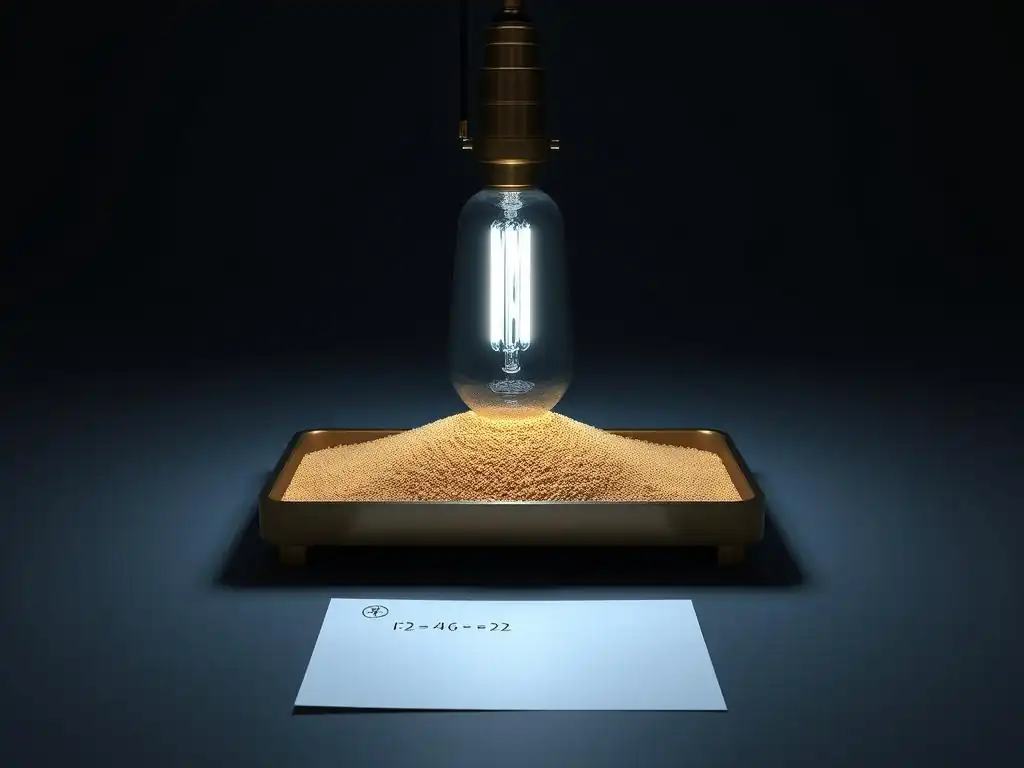
The design of the Ayrton Fan was not a sudden inspiration but rather an application of Hertha Ayrton's earlier, meticulous research into the movement of sand and water. From 1901 onwards, she had conducted extensive studies on the formation and movement of sand ripples in rivers and on beaches, publishing her findings in the Proceedings of the Royal Society in 1904. Her work on "The Origin and Growth of Ripple-Mark" provided a detailed analysis of how fluid dynamics influenced the formation of patterns in granular materials.
She observed that specific patterns of water currents created distinct ripple marks, and this understanding of how air or water could move particles and gases proved invaluable. This fundamental research into fluid dynamics and particle behavior laid the theoretical groundwork for her later invention, demonstrating her capacity for interdisciplinary scientific thought.
The Ayrton Fan's Impact: Alleviating Suffering in the Trenches
The Ayrton Fan was a manually operated device, typically constructed from canvas on a folding frame, resembling a large hand fan. Its simple yet effective design allowed soldiers to create a powerful current of air, effectively clearing lingering gas from trenches and dugouts. This was particularly crucial after a gas attack when the heavier-than-air gases settled in low-lying areas.
The British War Office officially adopted the Ayrton Fan in 1916. Reports indicate that approximately 100,000 fans were dispatched to the Western Front, proving instrumental in alleviating suffering and saving countless lives. This humanitarian invention cemented Hertha Ayrton's legacy not just as a brilliant scientist but also as a compassionate innovator.
Hertha Ayrton's Contributions to Mathematics and Physics
Independent Research: Ayrton's Theoretical and Experimental Work
Hertha Ayrton's scientific pursuits extended beyond her renowned electrical inventions. Her strong foundation in mathematics, honed during her studies at Cambridge, underpinned all her theoretical and experimental work in physics. She conducted independent research on various phenomena, including the resistance of carbon and the properties of electric arcs, consistently employing a rigorous scientific methodology.
Her investigations were characterized by meticulous data collection and precise measurements, allowing her to formulate accurate mathematical models for the physical processes she observed. This dedication to empirical evidence and theoretical understanding solidified her standing as a respected physicist, even in an era when women's contributions were often marginalized.
Overcoming Obstacles: Ayrtha Ayrton's Fight for Recognition in Male-Dominated Fields
Despite her undeniable scientific prowess, Hertha Ayrton faced significant institutional obstacles due to her gender. In 1902, she was nominated for a Fellowship of the Royal Society, a prestigious honor. However, her nomination was rejected on the grounds that married women could not be Fellows, a rule that highlighted the deeply entrenched sexism within scientific academies of the time.
Undeterred, Ayrton continued to present her papers before learned societies, such as the Physical Society, where she was the first woman to read her own paper in 1899. Her persistence in sharing her findings and challenging the status quo made her a powerful advocate for women's inclusion in science, a crucial aspect of her compelling biography.
Hertha Ayrton's Publications: Sharing Knowledge and Inspiring Others
Hertha Ayrton was not only a prolific researcher but also a dedicated communicator of scientific knowledge. Her magnum opus, "The Electric Arc," published in 1902, consolidated her extensive research on the subject and became an authoritative text in electrical engineering. This book was a comprehensive summary of her findings, detailing the physics and practical applications of arc lighting.
In addition to her book, she published numerous articles in leading scientific journals, including the Proceedings of the Royal Society and The Electrician. These publications ensured that her insights and electrical inventions were widely disseminated, influencing both academic discourse and industrial practice. Her commitment to sharing her work served to inspire a new generation of scientists, particularly women, who saw in her a model of intellectual courage and achievement.
Recognition and Awards: Celebrating Hertha Ayrton's Achievements
The Hughes Medal: Acknowledging Ayrton's Contributions to Physics
In 1906, Hertha Ayrton received one of the most significant accolades of her career: the Hughes Medal from the Royal Society. This prestigious award was bestowed "for her experimental investigations on the electric arc, and also on sand ripples." She was the first woman to be awarded the Hughes Medal, a testament to the profound impact of her work on both electrical physics and fluid dynamics.
The Hughes Medal represented a crucial recognition of her scientific contributions, particularly in light of the Royal Society's earlier refusal to admit her as a Fellow. It underscored the undeniable quality and originality of her research, acknowledging her as a leading figure in the scientific community, regardless of her gender.
The Institution of Electrical Engineers: Ayrton's Membership and Influence
Hertha Ayrton also broke barriers within professional engineering societies. In 1899, she became the first woman admitted as a Member of the Institution of Electrical Engineers (IEE), following an earlier admission as an Associate. This was a groundbreaking achievement, as the IEE was a highly respected and predominantly male professional body.
Her membership was not merely symbolic; she actively participated, presenting papers and contributing to discussions. Her influence within the IEE helped pave the way for other women to enter the field of electrical engineering and gain recognition for their expertise. Her active engagement cemented her status as a respected authority and a vital part of the IEE's history.
Hertha Ayrton's Legacy: Inspiring Future Generations of Women in Science
Breaking Barriers: Ayrton's Role as a Female Role Model in STEM
Hertha Ayrton's remarkable career, characterized by groundbreaking electrical inventions and profound scientific insights, established her as an enduring role model for women in STEM fields. At a time when societal norms and institutional barriers severely limited opportunities for women in science, she demonstrated that intellectual rigor and innovative thinking knew no gender.
Her perseverance in the face of discrimination, such as the Royal Society's refusal to grant her fellowship, highlights her unwavering commitment to her scientific pursuits. Her story serves as a powerful testament to resilience and determination, inspiring countless women to pursue their scientific passions and challenge existing boundaries in physics and engineering.
Hertha Ayrton: A Lasting Impact on Electrical Engineering and Physics
The impact of Hertha Ayrton's work resonates to this day. Her comprehensive studies on the electric arc laid the foundation for more stable and efficient illumination technologies, directly influencing the development of modern lighting systems. Her detailed understanding of arc behavior contributed significantly to the practical advancements in electrical engineering.
Beyond her electrical inventions, her interdisciplinary approach, exemplified by her research on sand ripples and the development of the Ayrton Fan, showcases a breadth of intellect that transcended conventional disciplinary boundaries. Hertha Ayrton's biography is a powerful reminder of the diverse and lasting contributions women have made to both theoretical physics and practical engineering.
Conclusion: Remembering Hertha Ayrton's Scientific Prowess
Hertha Ayrton: A Synopsis of Her Accomplishments
Hertha Ayrton's life was a testament to extraordinary scientific prowess and unwavering determination. From her seminal research on the electric arc, leading to crucial electrical inventions that revolutionized illumination, to her innovative design of the Ayrton Fan for battlefield use, her contributions spanned multiple critical fields. She meticulously investigated complex phenomena, translating theoretical understanding into practical solutions that improved lives and advanced technology.
Her accomplishments were not merely academic; they were tangible and impactful. Her patents, publications, and the widespread adoption of her inventions stand as clear markers of her genius. She was a true polymath, whose work on fluid dynamics complemented her expertise in electrical physics, showcasing a rare blend of scientific curiosity and engineering acumen.
Women in Physics: Hertha Ayrton's Enduring Place in Scientific History
Hertha Ayrton holds an indelible place in the history of women in physics and engineering. Her biography is a powerful narrative of overcoming adversity, achieving excellence, and leaving a legacy that continues to inspire. She challenged the prevailing attitudes of her time, not through activism alone, but primarily through the undeniable quality and significance of her scientific work.
As we look back at the pioneering women who shaped the scientific landscape, Hertha Ayrton stands out as a beacon of intellectual courage and innovation. Her contributions to electrical science and beyond underscore the vital importance of recognizing and celebrating the often-overlooked narratives of women in science, ensuring that her story continues to illuminate the path for future generations.
Frequently Asked Questions
What were Hertha Ayrton's most significant contributions to electrical engineering?
Hertha Ayrton is renowned for her work on the electric arc, developing equations to understand its behavior and improve its stability. She also made significant contributions to the study of ripple marks in sand and fluids.
Why is Hertha Ayrton considered a pioneering figure for women in science?
Ayrton faced significant gender bias in a male-dominated field, yet persevered to become a leading expert in her field. Her success serves as an inspiration to aspiring female scientists.
What challenges did Hertha Ayrton face during her scientific career?
Ayrton faced discrimination and skepticism due to her gender, often struggling to gain recognition and funding for her research. She was also initially denied membership to the Royal Society because she was married.
Besides her work on the electric arc, what other inventions or areas did Hertha Ayrton contribute to?
Beyond the electric arc, Ayrton designed an anti-gas fan used during World War I to clear poisonous gas from trenches. She also made significant contributions to understanding ripple marks in sand and water.
Where can I find a detailed biography of Hertha Ayrton and her electrical inventions?
Websites like WomenInScienceHistory.com provide detailed biographies and information about Hertha Ayrton's life, including her electrical inventions and the challenges she overcame. You can also find information in academic journals and books.
Final Reflection: Illuminating the Unseen
The story of Hertha Ayrton, often overshadowed by her male contemporaries, resonates powerfully today. Her unwavering dedication to scientific inquiry and her groundbreaking electrical inventions serve as a potent reminder that brilliance knows no gender. Her legacy, meticulously detailed in this biography, is not just a historical account; it's a call to recognize and celebrate the contributions of all individuals, regardless of societal biases, who dare to push the boundaries of knowledge.
Hertha Ayrton's influence extends far beyond the technical specifications of her inventions. Her perseverance in a male-dominated field, her unwavering belief in her own abilities, and her commitment to social justice continue to inspire generations of women in STEM. Her story underscores the importance of mentorship, advocacy, and creating inclusive environments where diverse perspectives can flourish. An error that as yet floats on the surface and can be skimmed off is far more dangerous than one that has sunk to the bottom and is out of sight.
This quote, reflecting her meticulous approach to science, also speaks to the importance of addressing systemic inequalities that hinder progress.
Let us all take a moment to reflect on Hertha Ayrton's journey. Consider how her story challenges us to confront our own biases and to actively champion the voices of those who are often marginalized. Embrace the spirit of curiosity and innovation that defined her life, and strive to create a world where every individual has the opportunity to contribute their unique talents to the advancement of science and society. Hertha Ayrton's legacy is a beacon, illuminating the path towards a more equitable and innovative future for all.
Ignite Your Inner Spark: Become an Ayrton-Inspired Innovator!
Thank you for delving into the inspiring story of Hertha Ayrton! We hope you've discovered a newfound appreciation for her diverse contributions and the power of persistent curiosity. Now, it's time to put that inspiration into action!
Here are a few ways you can channel your inner Ayrton:
- Boldly pursue your own intellectual curiosity: Identify one question that truly fascinates you, and dedicate just 30 minutes this week to researching it. No matter how small, that first step is crucial.
- Share Ayrton's legacy: Introduce a friend or family member to Hertha Ayrton's remarkable life. Spreading awareness is vital to celebrating women in science.
- Explore unconventional solutions: Next time you face a challenge, brainstorm at least three "outside the box" solutions you wouldn't normally consider.
What small, yet significant, action will you take today to honor Ayrton's legacy and fuel your own innovative spirit?