
More Than Tea Parties: The Serious Science Behind Early Women's Associations

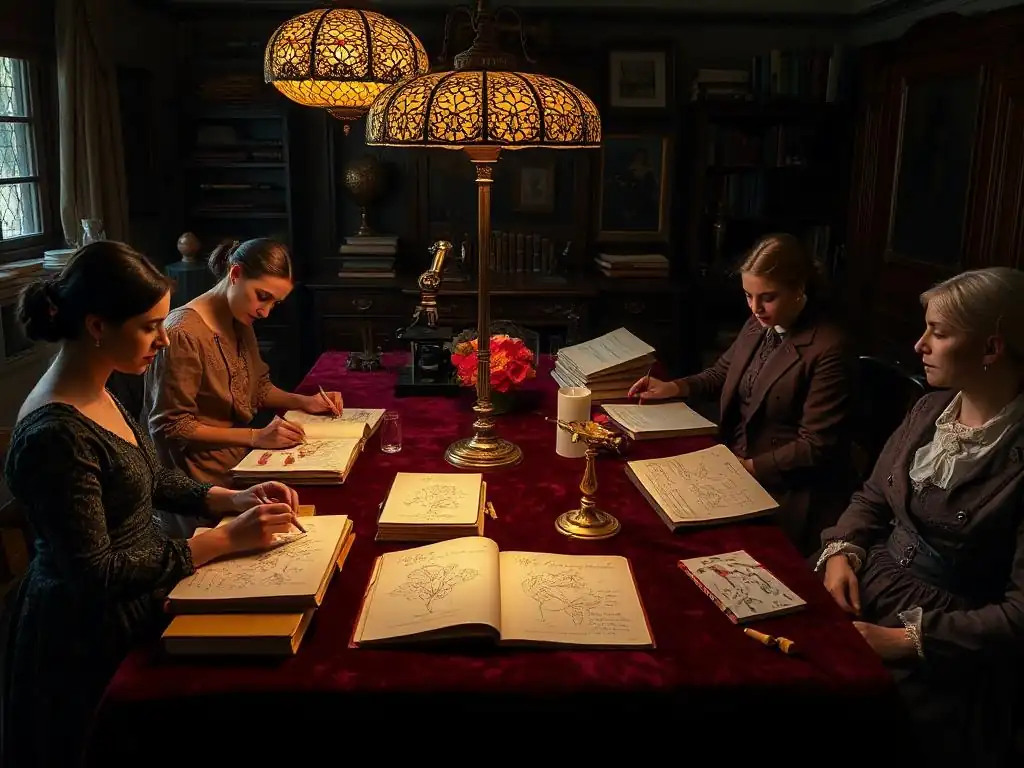
Welcome to WomenInScienceHistory.com!
Dive into the fascinating and often untold stories of women who shaped the world of science. Prepare to be surprised as we uncover the serious science woven into the fabric of early women’s science historical associations research. Forget simplistic narratives; here, we explore the complex contributions and groundbreaking work that these remarkable women achieved, often against incredible odds. Intrigued? Discover how these associations fostered innovation and left an enduring legacy, challenging the status quo and paving the way for future generations. Let's begin!
- Introduction: Unveiling the Scientific Contributions of Women's Associations
- The Genesis of Women's Science Networks: A Historical Overview
- Beyond Social Gatherings: The Scientific Activities of Women's Associations
- Case Studies: Examining Specific Women's Science Associations
- Challenges and Triumphs: Obstacles Faced by Women's Science Associations
- The Legacy and Impact of Women's Science Associations
- Methodologies for Women’s Science Associations Research
- Conclusion: Recognizing the Significance of Women’s Science Associations Research
-
Frequently Asked Questions
- How did early women's associations contribute to scientific advancement?
- What challenges did women face in pursuing science during the time of these associations?
- What types of scientific activities did these early women's associations typically engage in?
- Why is it important to study the history of women's involvement in science?
- Where can I find more information about women's science historical associations research?
- Final Reflection: Empowering Legacies Through Science
- Unveil Your Inner Pioneer: Join the Legacy!
Introduction: Unveiling the Scientific Contributions of Women's Associations
Reassessing the Role of Women's Networks in Scientific History
For too long, the historical narratives surrounding women's associations have often relegated them to the realm of social gatherings, philanthropic endeavors, or domestic pursuits. However, a deeper examination reveals that many of these early networks were vibrant intellectual hubs, actively engaged in scientific inquiry, education, and advocacy. These associations provided critical platforms for women who were systematically excluded from formal scientific institutions, allowing them to pursue their intellectual curiosities and contribute meaningfully to various fields.
These overlooked contributions represent a significant gap in conventional scientific history. Women's networks, whether formal societies or informal clubs, served as essential spaces for collaboration, mentorship, and the dissemination of scientific knowledge. They fostered environments where scientific questions were explored, methodologies debated, and findings shared, proving indispensable for the advancement of science in an era when women's participation was often dismissed or actively hindered.
The Need for Research on Women’s Science Associations
The imperative for focused research on women’s science associations is paramount to rectifying historical omissions and gaining a comprehensive understanding of scientific development. Without dedicated "Women’s science historical associations research," the full scope of female contributions to scientific progress remains largely invisible, perpetuating a skewed view of innovation and discovery. Such research unveils the ingenious ways women navigated societal barriers to establish their scientific credibility.
This vital "Women’s science historical associations research" illuminates not only the specific scientific discoveries and projects undertaken by these groups but also their innovative educational programs and persistent advocacy efforts. For instance, it reveals how early associations compiled astronomical observations, conducted public health surveys, or cataloged botanical species, often predating or complementing the work of more recognized, male-dominated institutions. Understanding these dynamics offers invaluable insights into the social and intellectual landscapes that shaped scientific progress.
The Genesis of Women's Science Networks: A Historical Overview
Early Scientific Societies and the Exclusion of Women
During the 17th to 19th centuries, the burgeoning landscape of scientific societies, such as the Royal Society in London or the Académie des Sciences in Paris, largely operated as exclusive male enclaves. Women were, with rare exceptions, explicitly or implicitly barred from membership, participation in formal meetings, or presentation of their research findings. While some aristocratic women might attend lectures as observers or act as patrons, their roles as active researchers or voting members were virtually nonexistent.
This systemic exclusion meant that women, regardless of their intellectual capabilities or scientific training, had no official avenues to share their work, engage in peer review, or collaborate within the established scientific community. For example, even brilliant polymaths like Émilie du Châtelet in the 18th century, despite her groundbreaking work on Newton and Leibniz, was not formally recognized by male-dominated academies, highlighting the profound barriers that necessitated alternative structures for women's scientific engagement.
The Emergence of Women-Led Scientific Organizations
The pervasive exclusion from mainstream scientific institutions directly spurred the emergence of women-led scientific organizations in the late 19th and early 20th centuries. Recognizing the urgent need for intellectual community, educational opportunities, and platforms for their scientific pursuits, pioneering women began to establish their own societies, clubs, and laboratories. These initiatives were born out of a collective desire to overcome systemic barriers and foster an environment where women's scientific talents could flourish.
These early women's science networks took diverse forms, ranging from informal reading circles focused on natural philosophy to more structured professional societies and educational initiatives. They provided crucial spaces for mentorship, collaborative research, and the dissemination of knowledge through internal publications and regular meetings. These organizations became vital incubators for scientific thought, allowing women to engage in rigorous inquiry, exchange ideas, and build a collective presence in the scientific world, significantly contributing to the history of "Women’s science historical associations research."
Key Figures in the Formation of Women's Science Associations
The formation of early women's science associations was often spearheaded by visionary women who understood the critical need for independent scientific spaces. One such pivotal figure was Ellen Swallow Richards, a chemist and the first woman admitted to MIT. Frustrated by the limited opportunities for women in formal scientific education and research, Richards was instrumental in founding the Women's Laboratory at MIT in 1876, a groundbreaking initiative that provided practical scientific training to women.
Another influential figure was Christine Ladd-Franklin, a mathematician and psychologist, who, despite completing her doctoral requirements at Johns Hopkins University in 1882, was denied a Ph.D. until 1926 due to her gender. Her experiences underscored the necessity of women creating their own intellectual communities and advocating for greater inclusion. These leaders, alongside countless others, championed the establishment of organizations that would not only educate women in science but also provide a supportive network and a platform for their often-unrecognized scientific contributions.
Conducting Research and Sharing Knowledge
Early women's associations were far from mere social clubs; many actively engaged in conducting original scientific research and meticulously sharing their findings. For instance, some botanical clubs organized systematic expeditions to collect and classify local flora, contributing valuable data to regional botanical surveys. Others engaged in epidemiological surveys, collecting data on public health issues like sanitation and water quality, often in collaboration with local authorities.
These groups developed sophisticated mechanisms for knowledge dissemination, including internal journals, regular meetings featuring formal presentations of research findings, and extensive informal networks. Women who were barred from presenting at mainstream scientific conferences found a receptive audience within their own associations, where their work was discussed, critiqued, and celebrated. This internal intellectual exchange was crucial for validating their scientific endeavors and fostering a sense of shared purpose among members.
Facilitating Scientific Education and Training for Women
A core mission of many early women's science associations was to provide scientific education and practical training to women who were largely excluded from university laboratories and formal curricula. These organizations often established their own teaching laboratories, organized lecture series by prominent scientists (both male and female), and conducted hands-on workshops in disciplines like analytical chemistry, microscopy, and horticulture. These educational initiatives filled a critical void, offering rigorous instruction that was otherwise inaccessible.
For example, the Women's Laboratory at MIT, founded by Ellen Swallow Richards, provided comprehensive training in chemistry, mineralogy, and sanitary science to hundreds of women between 1876 and 1883. This practical education equipped women with the skills necessary for emerging scientific careers, such as laboratory assistants, public health analysts, or science educators, thereby expanding the professional opportunities for women beyond traditional roles and demonstrating the tangible impact of "Women’s science historical associations research."
Promoting Scientific Literacy Within the Community
Beyond their internal research and educational programs, many women's science associations actively worked to promote scientific literacy within the broader community. They understood the importance of applying scientific principles to everyday life and frequently organized public lectures, published informative pamphlets, and spearheaded community-based projects. These efforts aimed to demystify science and make it accessible and relevant to a wider audience, including those without formal scientific backgrounds.
A notable example is the widespread involvement of women's clubs in public health campaigns during the late 19th and early 20th centuries. These groups advocated for improved sanitation, campaigned for clean water initiatives, and disseminated information on nutrition and disease prevention. Their practical application of scientific knowledge to societal betterment underscored their commitment to civic engagement and demonstrated that science was not an exclusive domain but a powerful tool for community improvement.
Case Studies: Examining Specific Women's Science Associations
Case Study 1: Association of Collegiate Alumnae (ACA) - Focus on Biology
The Association of Collegiate Alumnae (ACA), founded in 1881 and later becoming the American Association of University Women (AAUW), played a crucial role in advocating for and supporting women's scientific education, particularly in fields like biology. While not exclusively a science association, its early committees and initiatives frequently addressed the barriers women faced in accessing scientific training and research opportunities. The ACA's advocacy was instrumental in pushing universities to open their laboratories and advanced science courses to women.
Members of the ACA, many of whom held degrees in scientific disciplines, actively engaged in discussions and research concerning women's health, sanitation, and biological studies. They supported women seeking advanced degrees in fields such as botany and zoology, recognizing the importance of empirical research. Their efforts laid foundational groundwork for future generations of women in biology by emphasizing the need for rigorous scientific training and access to research facilities.
Research Contributions of Association of Collegiate Alumnae
While the ACA primarily functioned as an advocacy and educational support organization, its members often conducted individual research or contributed to collaborative projects under its umbrella. For instance, some members engaged in early ecological surveys, documenting local plant and animal life, or contributed to public health studies that involved biological analysis. These contributions, though sometimes informal or published outside traditional scientific journals, were vital.
The association also facilitated research by providing scholarships and fellowships specifically for women pursuing scientific studies, including biology. For example, the European Fellowship, established in 1890, supported women like Martha Ornstein, who pursued physics and mathematics abroad. While not exclusively biology, these fellowships often enabled women to access advanced scientific training and contribute to various fields, including biological sciences, which might not have been possible without the ACA's support.
Impact on Women in Biology
The ACA significantly impacted the presence and progression of women in biology by tirelessly advocating for their inclusion in higher education and research. By pressing institutions to grant women access to laboratories and field studies, the association directly contributed to an increase in the number of women pursuing biological sciences. This advocacy helped to normalize the idea of women as competent and capable biological researchers.
Furthermore, the ACA provided a vital network for women in biology, offering mentorship, career advice, and a sense of community that was often lacking in male-dominated academic environments. This support system was crucial for women navigating the challenges of a scientific career, helping them to persevere and ultimately establish themselves in biological fields, thereby enriching the landscape of "Women’s science historical associations research."
Case Study 2: Women's Laboratory at MIT - Focus on Chemistry
The Women's Laboratory at the Massachusetts Institute of Technology (MIT), established in 1876 by Ellen Swallow Richards, stands as a landmark example of a dedicated women's science association with a strong focus on chemistry. Richards, herself a pioneer in sanitary chemistry, created the laboratory to provide women with rigorous, hands-on training in chemistry, mineralogy, and later, public health and industrial chemistry. This initiative was a direct response to the fact that MIT, while admitting women, did not initially provide them with adequate laboratory access or practical scientific instruction.
The laboratory's curriculum was far from superficial, offering courses in qualitative and quantitative analysis, assaying, and food chemistry. Students conducted complex experiments, analyzing water samples, food products, and various materials for industrial applications. The Women's Laboratory trained approximately 600 women over its seven years of operation, equipping them with practical skills that were highly sought after in emerging scientific fields.
Scientific Publications and Presentations by Women's Laboratory at MIT
The work conducted at the Women's Laboratory at MIT led to significant scientific contributions, particularly in the nascent field of sanitary chemistry. Ellen Swallow Richards, with the assistance of her students, conducted pioneering research on water quality for the Massachusetts State Board of Health. Their comprehensive analyses of thousands of water samples from across the state laid the groundwork for modern environmental engineering and public health standards.
Many of the laboratory's findings were published in technical reports, government documents, and Richards's own prolific writings, including "The Chemistry of Cooking and Cleaning" (1882) and "Food Materials and Their Adulterations" (1885). These publications presented rigorous scientific data and practical applications, demonstrating the high caliber of research produced by women in the lab and directly informing public policy and consumer safety.
Overcoming Barriers in Chemistry
The Women's Laboratory at MIT was a powerful testament to women's capabilities in rigorous scientific work, directly challenging the prevailing skepticism and institutional barriers in chemistry. At a time when women were often deemed unsuited for laboratory work due to perceived physical or intellectual frailty, the lab proved that women could excel in demanding chemical analysis and research.
By providing a dedicated space and high-quality instruction, the laboratory helped to dismantle gender stereotypes and paved the way for greater inclusion of women in chemical education and professions. Its success ultimately influenced MIT's decision to integrate women into its main laboratory programs, demonstrating that women were not only capable but essential contributors to the field of chemistry.
Challenges and Triumphs: Obstacles Faced by Women's Science Associations
Gender Bias in Academia and Funding
Early women's science associations consistently grappled with pervasive gender bias within academia and the broader scientific community. Women scientists often faced skepticism from male peers, were denied academic appointments commensurate with their qualifications, and received lower salaries or less recognition for their work. This systemic bias extended to the very legitimacy of their scientific pursuits, frequently dismissing their research as "amateur" or "feminine" rather than serious scientific inquiry.
Securing adequate funding was another immense challenge for these associations. Unlike established male-dominated institutions that could tap into significant endowments or government grants, women's science groups largely relied on modest membership fees, private donations, and the personal resources of their founders. This financial precarity meant that acquiring necessary equipment, maintaining facilities, and sustaining long-term research projects were constant struggles, hindering their potential impact despite their intellectual rigor.
Securing Resources and Recognition for Women’s Science Associations
The struggle to secure physical resources was a persistent hurdle for women's science associations. Many operated from borrowed spaces, home-based laboratories, or on shoestring budgets that severely limited their access to state-of-the-art equipment, extensive libraries, and dedicated research facilities. For example, early botanical clubs might rely on members' private gardens or shared microscopes, a stark contrast to the well-funded university labs available to male scientists.
Beyond material resources, gaining recognition from the mainstream scientific establishment was an even greater challenge. Publications from women's associations were often ignored or marginalized, their members excluded from prestigious scientific societies, and their contributions systematically overlooked in historical records. This lack of formal acknowledgement made it difficult for them to attract broader support, validate their work, and secure the public and academic standing they deserved. This struggle highlights the importance of "Women’s science historical associations research" in bringing these efforts to light.
Building Alliances and Overcoming Isolation
Despite the formidable barriers, women's science associations often found strength in internal solidarity and strategic alliances. Within their networks, members provided crucial emotional support, shared knowledge, and offered mentorship, creating a vital sense of community in often isolating professional environments. These internal bonds were fundamental to sustaining their efforts and fostering scientific resilience.
Furthermore, some associations strategically formed alliances with progressive male scientists, philanthropic organizations, or broader social reform movements. For instance, early public health initiatives led by women's groups often collaborated with sympathetic physicians or municipal authorities to implement their findings. While these alliances sometimes came with their own power imbalances, they occasionally provided access to resources, legitimacy, and a wider platform, helping to overcome the profound isolation that many pioneering women in science experienced.
The Legacy and Impact of Women's Science Associations
Paving the Way for Future Generations of Female Scientists
The pioneering work of early women's science associations was instrumental in paving the way for future generations of female scientists. By providing education, practical training, and a supportive community, these organizations created a vital pipeline for women into scientific fields. They demonstrated that women were not only capable of rigorous scientific thought but could also contribute significantly to research and innovation.
Countless women who later achieved prominence in science, whether in academia, industry, or public service, benefited directly or indirectly from the efforts of these early associations. For instance, the networks fostered by groups like the Association of Collegiate Alumnae helped women secure academic positions, access research opportunities, and navigate the challenging landscape of scientific careers, leaving an enduring legacy for "Women’s science historical associations research."
Challenging Gender Stereotypes in Science
The very existence and success of women's science associations served as a powerful challenge to deeply entrenched gender stereotypes that portrayed science as an exclusively masculine domain. By actively conducting research, publishing findings, and engaging in public education, these groups provided irrefutable evidence of women's intellectual capabilities and scientific acumen. Their work directly contradicted prevailing notions that women lacked the necessary rationality, precision, or physical endurance for scientific pursuits.
Through their practical contributions, from advancements in public health to specific discoveries in various disciplines, these associations effectively demonstrated the societal value of women's scientific work. They proved that women were not merely observers but active agents of scientific progress, thereby helping to dismantle the cultural and institutional barriers that sought to exclude them from scientific endeavors.
The Enduring Relevance of Women's Science Networks in the 21st Century
While many formal barriers have diminished, the spirit and purpose of early women's science networks remain profoundly relevant in the 21st century. Contemporary women in STEM fields continue to face informal biases, challenges in leadership roles, and issues related to work-life balance. Modern professional associations for women in science draw direct inspiration from their historical predecessors, providing crucial support, mentorship, and advocacy.
The need for inclusive spaces where women scientists can collaborate, share experiences, and collectively address systemic issues persists. The historical model of mutual support, knowledge exchange, and collective advocacy established by early "Women’s science historical associations research" continues to inform and empower today's networks, demonstrating that fostering strong communities remains vital for ensuring equitable representation and full participation of women in science.
Methodologies for Women’s Science Associations Research
Archival Research: Uncovering Primary Sources
Archival research forms the bedrock of "Women’s science historical associations research," providing invaluable insights into the daily operations, intellectual pursuits, and challenges faced by these groups. Researchers meticulously examine primary sources such as organizational meeting minutes, membership rosters, internal newsletters, annual reports, and personal correspondence of key figures. These documents, often housed in university special collections, historical societies, or private family archives, offer direct evidence of their activities, discussions, and scientific contributions.
The process of uncovering these sources can be challenging, as records may be scattered, incomplete, or previously uncataloged. Researchers often need to cross-reference information from multiple archives and interpret fragmented data to piece together a coherent narrative. For example, a single mention in a personal letter might lead to the discovery of a previously unknown research project or a collaborative effort between different associations.
Oral Histories: Capturing the Experiences of Women Scientists
Oral histories provide a unique and invaluable qualitative dimension to "Women’s science historical associations research," particularly for associations that existed in the more recent past or for capturing the nuanced experiences of individual women scientists. Through structured interviews with surviving members, their descendants, or colleagues, researchers can gather firsthand accounts of challenges faced, triumphs celebrated, and the personal impact of these associations on their lives and careers.
This methodology offers insights into informal networks, personal motivations, and the emotional landscape of working as a woman in science that are often absent from written records. Ethical considerations, such as informed consent and privacy, are paramount in conducting oral histories. The transcribed and analyzed narratives complement archival findings, enriching the historical understanding by providing a human voice to the institutional records.
Quantitative Analysis: Measuring the Impact of Women's Associations
Quantitative analysis, though sometimes challenging for historical data, can offer powerful insights into the tangible impact of women's science associations. Researchers can employ methods such as tracking membership growth over time, analyzing the number and type of scientific publications produced by members, or counting the number of women trained through their educational programs. For instance, examining attendance records for scientific lectures or the number of scholarships awarded can provide measurable indicators of reach and influence.
While precise historical data can be elusive, even approximate quantitative data, carefully contextualized, can reveal significant trends. For example, comparing the number of women entering specific scientific fields before and after the establishment of certain associations can illustrate their catalytic effect. This approach helps to move beyond anecdotal evidence, providing statistical support for the profound influence of these organizations on women's participation and contributions to science.
Conclusion: Recognizing the Significance of Women’s Science Associations Research
Emphasizing the Importance of Studying Women's Contributions to Science
The study of women’s science associations is not merely an academic exercise; it is fundamental to constructing a complete and accurate history of scientific progress. Ignoring the contributions fostered by these networks leads to an incomplete and distorted view of how scientific knowledge was generated, disseminated, and applied. Dedicated "Women’s science historical associations research" acts as a corrective, ensuring that the ingenuity, perseverance, and intellectual achievements of women are rightfully recognized within the broader scientific narrative.
This research highlights that science is a collective endeavor, often thriving in diverse and inclusive environments. By bringing to light the crucial role of women's associations, we gain a more nuanced understanding of the social dynamics, educational pathways, and advocacy efforts that shaped scientific fields. This understanding is vital not only for historical accuracy but also for informing contemporary efforts to promote diversity and inclusion in STEM.
Future Directions for Research on Women in Science History
The field of "Women’s science historical associations research" is ripe for further exploration, offering numerous exciting directions for future inquiry. There is a pressing need for more interdisciplinary studies that connect the scientific activities of these associations with broader social, political, and cultural movements of their time. Comparative analyses across different countries and cultural contexts could reveal fascinating parallels and divergences in how women organized and contributed to science globally.
Deeper dives into the specific scientific content of their work, moving beyond just their organizational structures, would also be highly beneficial. For example, analyzing the methodology and impact of their public health campaigns or their contributions to specific scientific sub-disciplines could uncover overlooked innovations. Encouraging new "Women’s science historical associations research" will continue to uncover hidden narratives and broaden our understanding of scientific history.
Celebrating the Achievements of Early Women's Associations
Ultimately, "More Than Tea Parties: The Serious Science Behind Early Women's Associations" stands as a testament to the remarkable resilience, intellectual rigor, and unwavering commitment of pioneering women in science. These associations were not just social clubs; they were vital engines of scientific inquiry, education, and advocacy, operating against immense societal and institutional barriers. Their collective efforts laid foundational groundwork that profoundly shaped the landscape of scientific opportunity for women.
By celebrating the achievements of these early women's associations, we honor their legacy and ensure that their groundbreaking contributions are not forgotten. Their stories serve as powerful inspiration, reminding us of the enduring importance of community, collaboration, and perseverance in the pursuit of scientific knowledge, and underscore the critical role these networks played in advancing human understanding.
Frequently Asked Questions
How did early women's associations contribute to scientific advancement?
Early associations provided spaces for women to collaborate on research, share knowledge, and gain recognition that was often denied to them in formal academic settings. They fostered scientific inquiry and data collection.
What challenges did women face in pursuing science during the time of these associations?
Women faced significant gender bias and were often excluded from formal scientific education and institutions. They struggled to gain recognition for their contributions.
What types of scientific activities did these early women's associations typically engage in?
Activities varied, but often included collecting and analyzing data, conducting scientific observations, and engaging in citizen science projects. They might also have sponsored lectures and publications.
Why is it important to study the history of women's involvement in science?
Studying this history helps to correct historical biases, highlight the overlooked contributions of women, and inspire future generations of female scientists. It promotes a more inclusive understanding of scientific progress.
Where can I find more information about women's science historical associations research?
Websites like WomenInScienceHistory.com and academic databases are good starting points. Look for resources related to women's history, science history, and gender studies to delve deeper into this field.
Final Reflection: Empowering Legacies Through Science
The exploration of early women's associations reveals that these were far more than mere social gatherings; they were vital incubators of scientific thought and action. Their impact resonates today, reminding us that progress often stems from the collective efforts of those historically marginalized, and that their contributions deserve rigorous academic attention.
The legacy of these associations continues to shape our understanding of women's roles in science. Their struggles and triumphs serve as a powerful reminder of the persistent need for inclusivity and equity in STEM fields. The most effective way to do it, is to do it.
- Amelia Earhart. This quote encapsulates the spirit of these women, who, despite societal barriers, actively pursued their scientific passions and created spaces for others to do the same.
Let us not forget the lessons learned from these pioneering women. Consider how you can actively support initiatives that promote women in science, technology, engineering, and mathematics. By amplifying their voices and championing their contributions, we can ensure that the future of science is as diverse and vibrant as the women who paved the way.
Unveil Your Inner Pioneer: Join the Legacy!
Thank you for exploring the fascinating world of early women's associations and their remarkable impact on science. Now that you've discovered their contributions, it's time to become part of the continuing story.
Here are a few ways to connect and carry forward their legacy:
- Boldly research a local women's association from the past and share its story with your community – you might be surprised by what you uncover!
- Share this article with fellow history buffs and science enthusiasts to spark further conversation and exploration.
- Consider volunteering your time to a modern organization that supports women in STEM, amplifying their voices and creating new opportunities.
What unsung heroes will you champion next?