
Beyond Domesticity: How 19th Century Women Reengineered Public and Private Spheres

Welcome to WomenInScienceHistory.com!
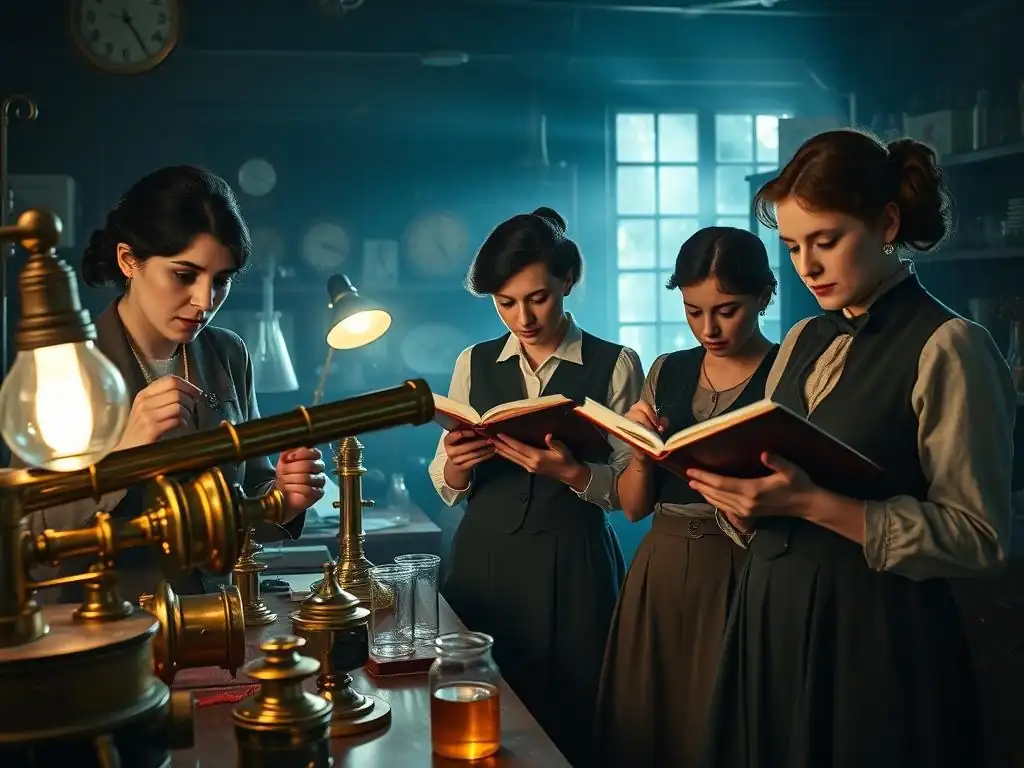
Dive into a world where brilliance transcends boundaries. In the article below, " Beyond Domesticity: How 19th Century Women Reengineered Public and Private Spheres," we explore the fascinating and often untold stories of 19th century women science roles. Discover how these pioneering figures navigated societal expectations and made invaluable contributions to Engineering & Technology, leaving an indelible mark on history. Intrigued? Uncover their struggles, triumphs, and the lasting impact they had on the scientific landscape!
- Introduction: Challenging Boundaries - 19th Century Women and Astronomy
- 19th Century Women's Impact on Mathematical and Scientific Labor
- Case Studies: Pioneering Women in Astronomy (19th Century)
- Reengineering the Public Sphere: Women's Influence on Scientific Institutions
- Transforming the Private Sphere: Science in the Home and Community
- Analyzing 19th Century Women's Roles: Challenges and Triumphs
- Legacy and Inspiration: The Enduring Impact of 19th Century Women in Science
-
Frequently Asked Questions
- How did societal expectations limit 19th century women's access to formal scientific roles?
- What types of scientific work were more accessible to 19th century women?
- How did some 19th century women overcome the challenges to make significant scientific contributions?
- What impact did 19th century women have on the development of scientific fields?
- How does understanding the experiences of 19th century women in science inform our perspective on contemporary issues of gender equality in STEM?
- Final Reflection: Seeds of Innovation
- Unveil Your Inner Pioneer: Carry on the Legacy!
Introduction: Challenging Boundaries - 19th Century Women and Astronomy
The 19th century, often characterized by rigid societal norms that confined women to the domestic sphere, paradoxically witnessed a quiet but profound revolution as women began to assert their intellectual capabilities in scientific fields. While the prevailing Victorian ideology emphasized women's roles as homemakers and caregivers, a growing number of determined individuals sought to transcend these limitations, particularly within the burgeoning field of astronomy. These pioneering women not only challenged traditional expectations but actively reengineered the very fabric of public and private life by demonstrating that significant scientific contributions could originate from unexpected places.
Their efforts in astronomy serve as a compelling case study of how 19th century women science roles evolved from informal contributions to recognized, albeit often undervalued, professional positions. Through meticulous observation, complex calculations, and groundbreaking discoveries, these women began to carve out spaces for themselves in a world largely dominated by male scientists, thereby expanding the definition of what was considered "women's work" and fundamentally altering perceptions of female intellectual capacity. This period laid crucial groundwork for future generations of women in STEM.
The Societal Context: Limited Educational and Professional Opportunities
During the 19th century, formal educational opportunities for women, especially in advanced scientific disciplines, were severely restricted. Most universities either did not admit women at all or relegated them to separate, less rigorous programs. For instance, while some women's colleges like Vassar (established 1861) and Wellesley (1875) began to offer scientific curricula, these were exceptions rather than the norm for much of the century. The prevailing belief was that women's brains were not suited for rigorous scientific thought, or that such intellectual pursuits would detract from their supposed primary duties within the home.
Consequently, professional pathways for women in science were virtually non-existent. The few 19th century women science roles available were often informal, unpaid, or limited to assistant positions, frequently leveraging pre-existing family connections within scientific circles. Without degrees or institutional affiliations, women struggled to gain recognition, publish their work under their own names, or secure salaried positions that matched their intellectual contributions. This systemic exclusion underscored the immense personal and societal barriers that had to be overcome for women to participate meaningfully in scientific endeavors.
Breaking Barriers: Women's Contributions to Astronomical Observation and Calculation
Despite these formidable obstacles, 19th century women found ingenious ways to contribute to astronomy, often through sheer perseverance and a passion for the cosmos. Many began as self-taught enthusiasts, utilizing private observatories or even basic telescopes from their homes. Their meticulous observational skills became invaluable, particularly in fields like comet hunting or variable star observation, where consistent, long-term data collection was crucial. These often solitary pursuits laid the foundation for more formalized contributions.
A significant breakthrough in expanding 19th century women science roles came with the demand for human "computers" at major observatories. As astronomical data proliferated, the need for individuals to perform complex, repetitive calculations – such as reducing photographic plates, calculating stellar positions, or analyzing spectroscopic data – became paramount. Women, often seen as possessing the patience and attention to detail required for such tasks, were increasingly hired for these roles, most famously at the Harvard College Observatory. While these positions were often low-paid and lacked prestige, they provided a crucial entry point into professional scientific work for many women.
19th Century Women's Impact on Mathematical and Scientific Labor
Redefining "Women's Work": From Calculation to Interpretation
The hiring of women as "computers" at observatories like Harvard fundamentally redefined what constituted acceptable "women's work" in the scientific realm. Initially, these roles were seen as extensions of traditional female domestic tasks – meticulous, repetitive, and requiring patience rather than perceived intellectual prowess. Women meticulously measured photographic plates, cataloged stars, and performed complex mathematical reductions. For example, at Harvard College Observatory, women processed hundreds of thousands of photographic plates, each containing images of countless stars, a monumental task that was essential for the progress of astronomy.
However, the sheer volume and complexity of this data soon led to a natural evolution in their roles. As these women became intimately familiar with the astronomical phenomena they were quantifying, they began to move beyond mere calculation. Their deep immersion in the data allowed them to identify anomalies, recognize patterns, and ultimately make significant scientific interpretations and discoveries. This transition from data processors to scientific analysts proved that women were not only capable of performing precise labor but also possessed the intellectual capacity for insightful scientific inquiry, thereby challenging the narrow definition of 19th century women science roles.
Engineering New Opportunities: The Rise of Women in Observatories and Research
The institutionalization of women as human computers effectively "engineered" new professional opportunities for women within scientific research, even if these opportunities were initially constrained. Observatories, particularly those with large photographic plate collections, became de facto training grounds for women in astronomical data analysis. For example, by the late 19th century, the Harvard College Observatory employed a team of over 80 women, known as "Pickering's Harem" (after Director Edward Charles Pickering), who systematically analyzed stellar spectra and variable stars.
This concentration of skilled female labor at observatories led to the development of systematic approaches to astronomical research that were groundbreaking for their time. Women like Williamina Fleming and Annie Jump Cannon, working within these structured environments, developed classification systems that are still foundational to astronomy today. Their collective efforts demonstrated that women could not only contribute to but also lead significant research initiatives, effectively integrating women into the core of scientific investigation and setting a precedent for future 19th century women science roles.
Case Studies: Pioneering Women in Astronomy (19th Century)
Maria Mitchell: Contributions to Comet Discovery and Astronomical Education
Maria Mitchell stands as a towering figure among 19th century women in science, renowned for her discovery of a new comet in 1847, subsequently named "Miss Mitchell's Comet." This discovery brought her international acclaim and earned her a gold medal from the King of Denmark, a rare honor for any astronomer, let alone a woman, at the time. Her meticulous observational skills, honed through years of assisting her father, a schoolteacher and amateur astronomer, at their private observatory on Nantucket Island, allowed her to identify the faint celestial visitor before anyone else.
Beyond her observational prowess, Mitchell made profound contributions to astronomical education. In 1865, she became the first professor of astronomy at Vassar College, one of the pioneering institutions for women's higher education in the United States. She was not only the first woman elected to the American Academy of Arts and Sciences in 1848 but also a founding member of the Association for the Advancement of Women in 1873. Her teaching philosophy emphasized hands-on learning and critical thinking, shaping a generation of young women to pursue scientific inquiry and effectively expanding 19th century women science roles into academia.
Overcoming Obstacles: Mitchell's Advocacy for Women's Scientific Education
Maria Mitchell’s path to scientific prominence was paved with personal resilience and an unwavering commitment to intellectual pursuits. Her Quaker upbringing, which valued education for both boys and girls, provided her with an unusual advantage in an era when most women were denied advanced schooling. However, she actively sought to dismantle the broader societal barriers facing women in science. As a professor at Vassar, she was a fierce advocate for women's access to rigorous scientific education, believing that women possessed the intellectual capacity to excel in any field.
Mitchell challenged the prevailing notion that science was an exclusively male domain. She encouraged her students to question, observe, and conduct their own research, fostering an environment of intellectual independence. Her advocacy extended beyond the classroom; she traveled widely, speaking about the importance of science education for women and inspiring many to consider careers that were previously deemed unattainable. Through her teaching and public engagement, Mitchell directly contributed to shaping the future landscape of 19th century women science roles, pushing for greater inclusivity and recognition.
Mitchell's Lasting Legacy in American Astronomy
Maria Mitchell's legacy extends far beyond her comet discovery; it lies in her pioneering role as an educator and a champion for women's intellectual equality. Her tenure at Vassar College established one of the earliest and most respected astronomy programs for women, producing numerous graduates who went on to make their own contributions to science, albeit often in less visible capacities. She modeled a life where scientific rigor and personal conviction could coexist, demonstrating that a woman could be a respected scholar and a public intellectual.
Her influence helped to slowly chip away at the institutional biases against women in science. The Maria Mitchell Association, founded in 1902 on Nantucket, continues her work by promoting scientific education and research, particularly for women and girls. Through her example, Mitchell proved that 19th century women science roles could encompass not only groundbreaking research but also transformative leadership in education and advocacy, opening doors for countless women who followed in her footsteps.
Williamina Fleming: Innovations in Stellar Classification
Williamina Fleming's journey into astronomy is a remarkable testament to talent recognized in an unconventional way. Originally a domestic servant for Edward Charles Pickering, the director of the Harvard College Observatory, Fleming was hired by Pickering in 1881 to assist with astronomical calculations and data analysis. Her meticulous attention to detail and exceptional organizational skills quickly became apparent, leading her to oversee a team of women tasked with classifying stars from photographic plates. This pivotal role transformed her from an assistant into a central figure in astronomical discovery.
Fleming's most significant contribution was her innovation in stellar classification. She developed a practical system for categorizing stars based on the hydrogen lines observed in their spectra, which was later adopted as the basis for the Harvard Stellar Classification System. This system, which organized stars into types (A, B, C, etc.) based on their spectral characteristics, allowed for systematic analysis of the vast numbers of stars captured on photographic plates. Her work was not merely clerical; it involved keen observational judgment and an understanding of astrophysical principles, embodying a highly skilled 19th century women science role.
Fleming's Unique Approach to Spectral Analysis
Fleming’s approach to spectral analysis was revolutionary for its systematic application to thousands of photographic plates. Instead of focusing on individual objects, she pioneered a method of rapidly scanning and classifying entire fields of stars. Her method involved visually inspecting the photographic spectra on glass plates, identifying patterns in the spectral lines that indicated different stellar compositions and temperatures. This was a highly skilled task requiring not only precision but also a deep understanding of the subtle variations in stellar light.
Through this painstaking work, Fleming discovered an astonishing number of celestial objects. Between 1886 and 1903, she personally discovered over 300 variable stars, 10 novae, and the first white dwarf star (Sirius B) in 1910. Her ability to identify these rare and significant objects amidst millions of stellar images highlights her extraordinary observational acuity and analytical prowess. Her discoveries were not accidents but the result of a systematic, innovative approach to astronomical data that profoundly impacted the field and solidified her place among leading 19th century women science roles.
Impact of Fleming's Work on Astronomical Cataloging
The impact of Williamina Fleming's work on astronomical cataloging cannot be overstated. Her classification system formed the backbone of the Henry Draper Catalogue, a monumental undertaking that systematically mapped the spectra of hundreds of thousands of stars. The first volume of the Draper Catalogue, published in 1890, was largely the result of her efforts and those of her team. This catalogue provided a standardized reference for astronomers worldwide, enabling comparative studies and the development of new theories about stellar evolution.
Fleming's meticulous work transformed raw data into organized, accessible scientific knowledge. She also produced the first catalog of nebulae and bright clusters in 1890 and oversaw the publication of the "Harvard Revised Photometry" in 1908. Despite the institutional biases that prevented her from achieving the same recognition or pay as her male counterparts, her contributions were indispensable to the advancement of astronomy. Her legacy demonstrates how 19th century women science roles, even when initially constrained, could lead to foundational innovations that shaped entire scientific disciplines.
Reengineering the Public Sphere: Women's Influence on Scientific Institutions
Observatories and Scientific Societies: Expanding Access and Recognition
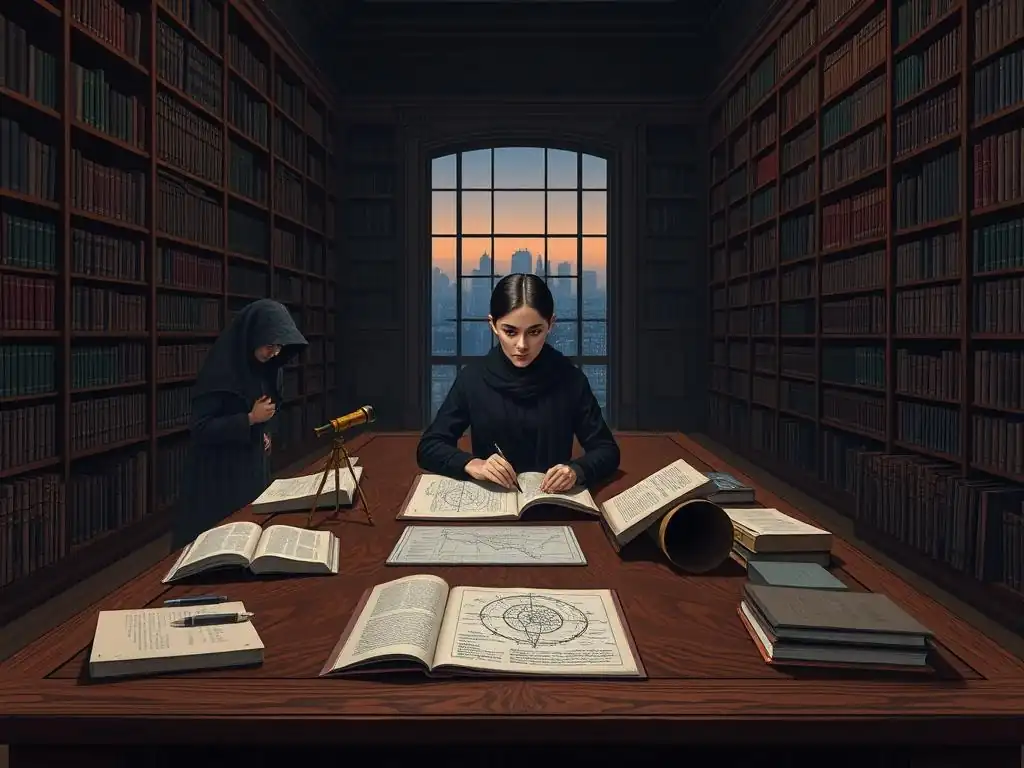
The presence of 19th century women in scientific institutions, particularly observatories, subtly but significantly reengineered the public sphere of science. While women were often relegated to "computer" roles with limited recognition, their sheer numbers and indispensable contributions gradually made it impossible for the scientific community to ignore their presence. Observatories like Harvard became pioneering, albeit imperfect, examples of workplaces where women performed professional scientific labor. This created a visible precedent for other institutions, slowly eroding the perception of science as an exclusively male domain.
Moreover, the increasing visibility of women's scientific work began to pressure established scientific societies to consider their membership. While progress was slow, by the late 19th and early 20th centuries, some societies began to admit women, albeit often as associate or honorary members. For instance, the Royal Astronomical Society admitted its first female Fellows (honorary) in 1835, though full membership was not granted until 1915. These incremental changes, driven by the undeniable contributions of women like Maria Mitchell and Williamina Fleming, were crucial steps in expanding access and recognition for 19th century women science roles within formal scientific structures.
Education and Outreach: Inspiring Scientific Curiosity in Women and Girls
Beyond institutional doors, 19th century women played a vital role in reengineering the public perception of science through education and outreach, thereby inspiring scientific curiosity in women and girls. Pioneering educators like Maria Mitchell not only taught at women's colleges but also lectured widely to public audiences, demonstrating that science was accessible and engaging for everyone, regardless of gender. These public engagements challenged the notion that women were inherently unsuited for scientific thought, presenting compelling role models.
Furthermore, women contributed to popular science literature, writing articles and books that made complex scientific concepts understandable to a broader audience. These efforts helped to demystify science and bring it into the homes of ordinary families, fostering an environment where young girls could envision themselves pursuing scientific interests. By actively participating in education and public discourse, these women helped to normalize the idea of women in scientific pursuits, expanding the societal understanding of potential 19th century women science roles and laying the groundwork for greater female participation in STEM.
Transforming the Private Sphere: Science in the Home and Community
Amateur Astronomy and Citizen Science: Engaging with the Cosmos
While formal institutions were slowly opening their doors, many 19th century women transformed the private sphere into a vibrant arena for scientific engagement, particularly through amateur astronomy and early forms of citizen science. Lacking access to university observatories, women often pursued their astronomical interests from their own homes, using personal telescopes or even just their unaided eyes. This grassroots engagement allowed them to participate in the scientific process on their own terms, free from the institutional biases of the era.
This private sphere involvement was not merely a hobby; it often yielded valuable data. For example, some women meticulously tracked variable stars or meteor showers from their backyards, contributing observations to professional astronomers who lacked the resources for continuous monitoring. This "citizen science" approach demonstrated that significant scientific contributions could originate from outside formal academic or professional settings, effectively democratizing scientific participation and highlighting the diverse ways 19th century women science roles could be fulfilled.
Women's Networks and Scientific Collaboration: Building Support Systems for Research
Crucially, 19th century women also transformed the private sphere by creating informal networks and collaborative support systems that circumvented male-dominated scientific institutions. Unable to formally join many scientific societies or access traditional mentorship, women formed their own intellectual communities through correspondence, salons, and informal gatherings. These networks provided invaluable opportunities for sharing knowledge, discussing research findings, and offering mutual encouragement in a largely unsupportive environment.
These private collaborations were essential for sustaining women's scientific work. For instance, prominent women in science corresponded regularly, exchanging observations, research ideas, and advice. These informal peer groups acted as vital lifelines, counteracting the isolation and marginalization many female scientists faced. By building these robust, often invisible, support structures, 19th century women effectively reengineered the private sphere into a fertile ground for scientific collaboration and intellectual growth, proving that scientific progress did not solely depend on formal institutional frameworks.
Analyzing 19th Century Women's Roles: Challenges and Triumphs
The Gender Gap in Science: Persistent Barriers and Limited Recognition
Despite their undeniable contributions, 19th century women in science faced persistent and significant gender-based barriers. The "gender gap" was starkly evident in their limited access to higher education, the absence of professional pathways, and the pervasive societal belief in female intellectual inferiority. Even when hired, women were typically paid significantly less than their male counterparts for similar, or even more demanding, work. For example, the "Harvard Computers" often earned as little as 25 to 50 cents an hour in the late 19th century, a fraction of what male assistants or astronomers earned.
Furthermore, their work often went uncredited or was attributed to the male directors of the observatories. While women like Williamina Fleming made groundbreaking discoveries, their names frequently appeared only in footnotes or were omitted entirely from publications. This lack of recognition denied them the prestige, promotions, and opportunities for independent research that their male colleagues enjoyed. These systemic prejudices and the limited scope of recognized 19th century women science roles underscore the uphill battle women faced in gaining equitable standing in the scientific community.
Celebrating Achievements: Recognizing the Contributions of Women Astronomers
Despite these formidable challenges, the achievements of 19th century women astronomers represent remarkable triumphs of intellect, perseverance, and dedication. Their meticulous work in observation, calculation, and classification was foundational to the advancement of astronomy, enabling breakthroughs in understanding stellar evolution, nebulae, and the vastness of the cosmos. Without their contributions, many of the major astronomical catalogs and discoveries of the era would have been impossible or significantly delayed.
Celebrating these achievements involves not only acknowledging their scientific output but also recognizing the profound societal impact of their work. By breaking into a male-dominated field, these women shattered stereotypes and demonstrated that intelligence and scientific aptitude were not exclusive to one gender. Their success, often achieved against immense odds, served as a powerful testament to their capabilities and laid crucial groundwork for future generations. Recognizing these pioneering 19th century women science roles is essential for a complete and accurate historical narrative of scientific progress.
Legacy and Inspiration: The Enduring Impact of 19th Century Women in Science
Inspiring Future Generations of Women in STEM Fields
The legacy of 19th century women in science, particularly those in astronomy, continues to inspire future generations of women in STEM fields. Their stories of perseverance, intellectual curiosity, and groundbreaking discoveries serve as powerful role models, demonstrating that despite systemic barriers, significant contributions are possible. By highlighting the lives of individuals like Maria Mitchell and Williamina Fleming, contemporary efforts to encourage girls and young women to pursue science and technology are strengthened, showing that women have always been, and will continue to be, integral to scientific advancement.
The narratives of these pioneering women underscore the importance of resilience and passion in the face of adversity. Their achievements remind us that talent knows no gender and that diversity in scientific thought leads to richer, more comprehensive understandings of the world. By learning about the challenges they faced and the triumphs they achieved, young women today can draw strength and motivation to pursue their own scientific ambitions, knowing they stand on the shoulders of giants who redefined 19th century women science roles.
Acknowledging the Unsung Heroines of Astronomical History
Finally, acknowledging the unsung heroines of astronomical history is crucial for a complete and accurate understanding of scientific progress. For too long, the contributions of 19th century women were marginalized, overlooked, or outright erased from historical accounts. Restoring their stories to prominence corrects this historical imbalance and provides a more nuanced and inclusive narrative of how scientific knowledge was built. It is a vital step in ensuring that all contributors to science, regardless of gender, receive the recognition they deserve.
By shining a light on these remarkable 19th century women science roles, we not only celebrate their individual accomplishments but also gain a deeper appreciation for the collective effort involved in scientific discovery. Their work laid foundational elements for modern astronomy and paved the way for greater gender equity in science. Recognizing these pioneers ensures that their enduring impact on both scientific methodology and societal perceptions of women's capabilities is fully understood and celebrated, inspiring continued progress towards a more inclusive scientific future.
Frequently Asked Questions
How did societal expectations limit 19th century women's access to formal scientific roles?
Answer: 19th century women faced significant barriers due to prevailing social norms that confined them to the domestic sphere. This resulted in limited educational opportunities and exclusion from professional scientific societies.
What types of scientific work were more accessible to 19th century women?
Answer: Many 19th century women contributed through avenues like teaching, assisting male scientists, and conducting research independently, often in fields like botany or astronomy where amateur participation was more common.
How did some 19th century women overcome the challenges to make significant scientific contributions?
Answer: 19th century women scientists often relied on family connections, self-education, and networks of support to access resources and opportunities. Some also published under pseudonyms to avoid discrimination.
What impact did 19th century women have on the development of scientific fields?
Answer: Despite facing obstacles, 19th century women made vital contributions to various fields, including astronomy, mathematics, and natural history. Their work often laid the foundation for future discoveries.
How does understanding the experiences of 19th century women in science inform our perspective on contemporary issues of gender equality in STEM?
Answer: Studying the historical struggles of 19th century women highlights the persistent biases and systemic inequalities that continue to affect women in STEM today, informing efforts to promote a more inclusive and equitable scientific community.
Final Reflection: Seeds of Innovation
The journey of 19th-century women into science, as explored in this article, isn't just a historical footnote; it's a powerful testament to resilience and the enduring human spirit of inquiry. Their struggles and triumphs in carving out spaces for themselves in a male-dominated field resonate deeply today, reminding us that progress is rarely linear and often requires challenging deeply ingrained societal norms.
The impact of these pioneering women extends far beyond their specific scientific contributions. Their defiance of societal expectations and their unwavering pursuit of knowledge laid the groundwork for future generations of women in STEM. Their stories serve as a constant reminder that intellectual curiosity knows no gender. The important thing is not to stop questioning. Curiosity has its own reason for existing.
- Albert Einstein, a sentiment these women embodied long before its articulation.
As we reflect on the legacy of these remarkable women, let us not only celebrate their achievements but also commit to fostering an environment where curiosity and innovation are nurtured in everyone, regardless of gender. Let their stories inspire us to challenge existing barriers and create a future where all individuals have the opportunity to contribute their unique talents to the advancement of science and knowledge.
Unveil Your Inner Pioneer: Carry on the Legacy!
Thank you for delving into the remarkable ways 19th-century women reshaped our understanding of public and private life. Now, it's your turn to contribute to the ongoing narrative!
Here's how you can keep the spirit of these pioneering women alive:
- Deepen your knowledge: Research and share the story of a lesser-known woman who challenged the norms of her time.
- Join or start a local book club focused on 19th-century literature and history.
- Engage with local historical societies and offer to give a presentation on what you have learned.
What small but significant change can you implement today to honor the spirit of these groundbreaking women?