
Pioneering Physics: A Timeline of Key Discoveries by 19th Century Women

Welcome to WomenInScienceHistory.com!
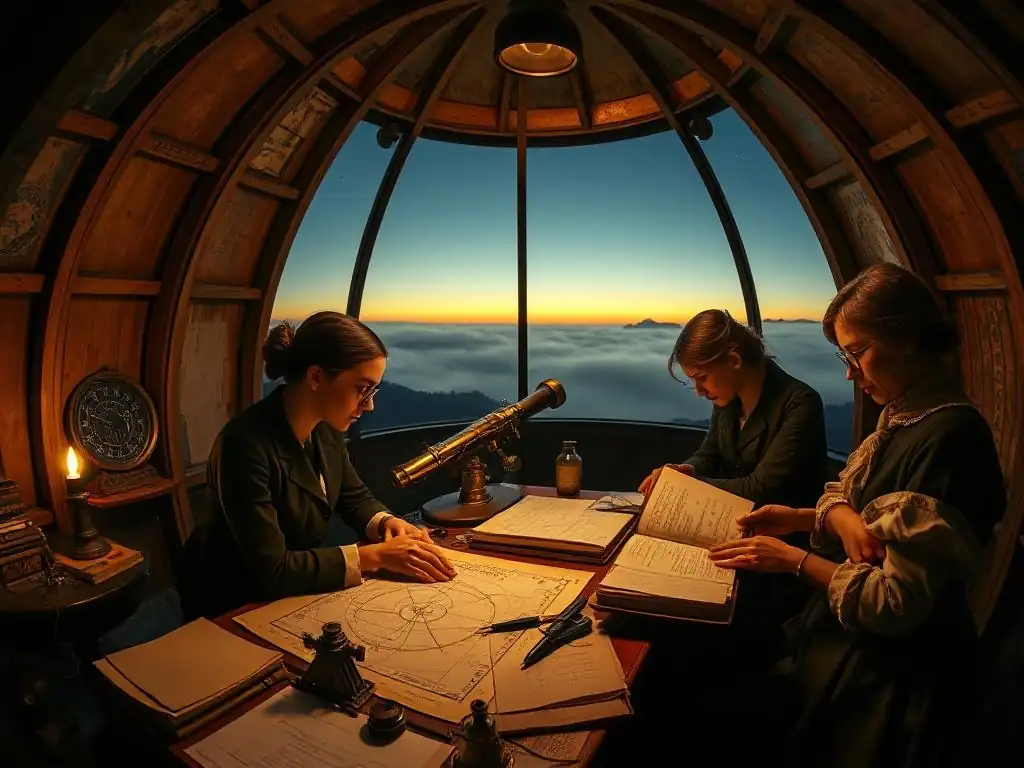
Prepare to be amazed by the untold stories of brilliance and perseverance. Did you know the 19th century saw a wave of groundbreaking physics discoveries driven by women who defied societal expectations? Dive into Pioneering Physics: A Timeline of Key Discoveries by 19th Century Women and uncover the pivotal contributions these remarkable scientists made, often in the face of immense obstacles. What secrets did they unlock, and how did their work shape our understanding of the universe? Let's explore together!
- Introduction: Unveiling the Contributions of 19th Century Women in Physics
- Early Pioneers and Foundational Contributions (Pre-1850)
- Mid-Century Breakthroughs: Advancing Physics Knowledge (1850-1875)
- Late 19th Century Innovations: Shaping Modern Physics (1875-1900)
- Challenges and Triumphs: The Societal Context of Women's Physics Discoveries
- The Lasting Impact of 19th Century Women's Physics Research
- Conclusion: Honoring the Pioneers of 19th Century Women in Physics
-
Frequently Asked Questions
- What were some of the biggest obstacles faced by women physicists in the 19th century?
- Can you name a few prominent 19th-century women who made significant contributions to physics?
- What kind of physics discoveries were women primarily involved in during the 19th century?
- Why is it important to highlight the contributions of 19th-century women in physics?
- Did any 19th-century women physicists receive official recognition for their work during their lifetimes?
- Final Reflection: Illuminating the Path of Scientific Progress
- Unveil the Legacy: Connect, Explore, and Inspire!
Introduction: Unveiling the Contributions of 19th Century Women in Physics
Rediscovering Forgotten Legacies: Why Focus on 19th Century Female Physicists?
The history of science, particularly physics, has often been told through a predominantly male lens, inadvertently sidelining the critical contributions of women. Focusing on 19th Century Women Physics Discoveries is not merely an act of historical revisionism; it is essential to paint a complete and accurate picture of scientific progress. These pioneering women navigated immense societal and institutional barriers to make fundamental breakthroughs, laying groundwork for future scientific advancements that are often attributed solely to their male counterparts. Their stories reveal the profound impact of diverse perspectives on scientific inquiry.
By highlighting these forgotten legacies, we gain a deeper appreciation for the intellectual resilience and innovative spirit that characterized these female physicists. Their work, ranging from celestial mechanics to the nascent fields of electricity and radioactivity, stands as a testament to their brilliance and unwavering dedication. Understanding the specific 19th Century Women Physics Discoveries not only enriches our historical knowledge but also inspires current and future generations to pursue scientific endeavors, demonstrating that curiosity and intellect know no gender.
Setting the Stage: The Scientific Landscape for Women in the 1800s
The 19th century presented a formidable landscape for women aspiring to careers in science, particularly physics. Formal education beyond basic literacy was largely inaccessible, with universities typically closed to female students for much of the period. Women were often relegated to domestic roles, and intellectual pursuits, especially in demanding fields like physics, were considered unsuitable or even detrimental to their health and societal function. Scientific societies, the hubs of research dissemination and collaboration, almost universally excluded women from membership and participation.
Despite these systemic barriers, a remarkable number of women found innovative ways to engage with scientific inquiry. Many relied on self-study, often with access to private libraries or through informal mentorship from male family members, such as fathers or brothers who were themselves scientists or scholars. Some gained limited access to private laboratories or pursued their research from home, transforming kitchens and drawing-rooms into makeshift scientific workspaces. This challenging environment underscores the extraordinary commitment required for 19th Century Women Physics Discoveries to emerge.
Early Pioneers and Foundational Contributions (Pre-1850)
Mary Somerville: Bridging Mathematics and Physics
Mary Somerville stands as a towering figure among 19th Century Women Physics Discoveries, renowned for her exceptional ability to popularize complex scientific theories and her profound understanding of celestial mechanics. Born in 1780, her journey into science was largely self-taught, fueled by an insatiable curiosity and a rare intellect.
Her most significant contribution in this early period was the English translation and expansion of Pierre-Simon Laplace's monumental five-volume Traité de Mécanique Céleste (Celestial Mechanics). Published in 1831 as Mechanism of the Heavens, Somerville's work was not a mere translation but an insightful elucidation that made Laplace's intricate mathematical physics accessible to a broader English-speaking audience.
Beyond translation, Somerville's Mechanism of the Heavens included her own original contributions and explanations, demonstrating a mastery of the subject that few possessed. Her subsequent work, On the Connexion of the Physical Sciences (1834), was even more influential, becoming a best-seller and synthesizing disparate scientific disciplines, including astronomy, optics, and electricity, into a coherent framework.
It was in this work that she famously speculated on the existence of a planet beyond Uranus, based on observed perturbations, a prediction that helped guide Urbain Le Verrier and John Couch Adams in their later calculations leading to the discovery of Neptune. Her intellectual prowess earned her recognition, including election as one of the first two female honorary members of the Royal Astronomical Society in 1835.
Caroline Herschel: Pioneering Discoveries in Astronomy
While often associated with her brother, William Herschel, Caroline Herschel was an extraordinary astronomer in her own right, making significant 19th Century Women Physics Discoveries in the field of observational astronomy. Born in 1750, she initially served as her brother's assistant, meticulously grinding lenses and polishing mirrors for his telescopes. However, her dedication and sharp observational skills soon led her to conduct independent sky surveys, systematically searching for new celestial objects. She became the first woman to discover a comet, identifying C/1786 P1 (Herschel) in 1786, and went on to discover seven more comets, making a total of eight.
Herschel's meticulous record-keeping and systematic approach were pivotal. Between 1786 and 1797, she regularly reported her findings, which were published in the Philosophical Transactions of the Royal Society. Her greatest achievement, however, was the compilation of a new general catalogue of 2,500 nebulae and star clusters, published in 1798, which significantly improved upon John Flamsteed's earlier star catalogue.
This monumental effort, which required recalculating and correcting positions for thousands of stars, underscored her precision and dedication. In recognition of her unparalleled contributions, she was awarded the Gold Medal of the Royal Astronomical Society in 1828, becoming the first woman to receive this prestigious honor, and was also granted a salary from King George III, making her one of the first professional female scientists in history.
Mid-Century Breakthroughs: Advancing Physics Knowledge (1850-1875)
Hertha Marks Ayrton: Research on Electric Arcs and their Impact
While Hertha Marks Ayrton's most celebrated discoveries regarding the electric arc and fluid dynamics would come to fruition in the late 19th and early 20th centuries, her intellectual development and the scientific environment that shaped her began firmly within this mid-century period. Born in 1854, she was part of a generation of women beginning to push for more rigorous scientific education, with institutions like Girton College, Cambridge, (which she attended starting in 1876) slowly opening their doors.
The challenges of electric arcs, such as their instability, humming, and flickering, were emerging as significant issues in the nascent field of electrical engineering during the 1850s and 60s, a problem set that Ayrton would later brilliantly tackle.
Ayrton's later groundbreaking work, which began in earnest in the 1890s, directly addressed these mid-century problems. Her meticulous investigations into the electric arc, a crucial component of early lighting and industrial processes, led to her identifying the relationship between the current, potential difference, and arc length. She developed the "Ayrton equation" to describe the arc's behavior and proposed solutions to stabilize it.
Her seminal book, The Electric Arc (1902), became the standard reference on the subject for decades, demonstrating her deep understanding of electrical physics and its practical applications. Her persistent and detailed research profoundly impacted the design and efficiency of electric arc lamps and improved searchlight technology, showcasing how 19th Century Women Physics Discoveries could have significant industrial ramifications.
Margaret Huggins: Spectroscopic Analysis of Stars and Nebulae
Margaret Huggins, born in 1848, was a crucial figure in the burgeoning field of astronomical spectroscopy, making significant 19th Century Women Physics Discoveries through her collaborative work with her husband, William Huggins. From the 1860s onwards, the Hugginses pioneered the application of spectroscopy to celestial objects, moving beyond simple observation to analyze the chemical composition and physical conditions of stars and nebulae. Margaret's role in their shared laboratory was far from merely assistive; she was an indispensable partner, meticulously preparing and operating equipment, meticulously recording observations, and critically analyzing the spectroscopic data.
Their joint research led to groundbreaking insights. In 1864, William and Margaret Huggins announced that they had determined the chemical composition of several stars by analyzing their spectra, revealing elements like hydrogen, sodium, and magnesium. Margaret was particularly skilled in the precise drawing of spectral lines, a critical step for analysis before photographic methods became widespread.
Their work on the Orion Nebula was also revolutionary; by analyzing its spectrum, they concluded that it was a gaseous nebula, not a cluster of unresolved stars, fundamentally changing astronomical understanding. Though often overshadowed by her husband, Margaret Huggins's direct involvement in the experimental design, observation, and interpretation of spectral data was integral to these fundamental discoveries in astrophysics, solidifying her place among influential 19th Century Women Physics Discoveries.
Late 19th Century Innovations: Shaping Modern Physics (1875-1900)
Agnes Pockels: Groundbreaking Work in Surface Tension
Agnes Pockels, born in 1862, made remarkable 19th Century Women Physics Discoveries in the field of surface chemistry, despite having no formal scientific training and conducting her experiments in her kitchen. Her work on surface tension and monomolecular films laid the foundation for modern colloid and surface science.
Driven by an innate curiosity and a keen observational eye, Pockels meticulously experimented with soap solutions and oil films on water surfaces. She developed a simple yet ingenious device, often referred to as the "Pockels Trough," which allowed her to precisely measure the area occupied by a given amount of liquid film and control the surface area of water, making it possible to study the effects of impurities on surface tension.
In 1891, Pockels, encouraged by her brother, wrote a letter to the renowned physicist Lord Rayleigh, describing her findings. Rayleigh, recognizing the profound significance and accuracy of her amateur experiments, arranged for her letter to be published in the prestigious journal Nature.
Her paper, "On the Relative Contamination of the Surface of Water," detailed how the surface tension of water changed with the amount of oil present and how a monolayer of fatty acid molecules could significantly reduce surface tension. This concept of monomolecular films was revolutionary at the time and proved crucial for understanding phenomena like detergency and lubrication, earning her recognition and an honorary doctorate from Braunschweig University in 1932.
Sofia Kovalevskaya: Contributions to the Understanding of Rigid Body Rotation
Sofia Kovalevskaya, born in 1850, was a brilliant mathematician who made profound 19th Century Women Physics Discoveries through her work in mathematical physics, particularly in the dynamics of rigid bodies. Facing severe restrictions on women's access to higher education in Russia, she pursued her studies in Germany, eventually earning her doctorate summa cum laude from the University of Göttingen in 1874, without even attending lectures, based on her submitted papers.
Her most celebrated contribution to physics was her solution to the classical problem of the rotation of a rigid body about a fixed point under gravity, known as the "Kovalevskaya top."
This problem had been partially solved by Euler and Lagrange, but Kovalevskaya discovered a new, third integrable case for the motion of a rigid body, a feat that had eluded mathematicians for decades. Her groundbreaking work was published in 1888 and earned her the prestigious Prix Bordin from the French Academy of Sciences, a prize of 3,000 francs, in 1888, marking a monumental achievement for a woman in the male-dominated scientific world.
Her work not only provided a new solution to a complex physical problem but also introduced new methods in the theory of differential equations. In 1889, she became the first woman appointed to a full professorship in Northern Europe, at Stockholm University, solidifying her legacy as a trailblazer whose 19th Century Women Physics Discoveries significantly advanced theoretical mechanics.
The Curie Effect: Marie Curie's Early Investigations and their Significance
Marie Curie, born Maria Skłodowska in 1867, stands as one of the most iconic figures among 19th Century Women Physics Discoveries, with her foundational work in radioactivity in the late 1890s directly shaping modern physics. Her journey into scientific research began in Paris, where she pursued degrees in physics and mathematics at the Sorbonne.
In 1897, inspired by Henri Becquerel's discovery of "uranium rays," Curie embarked on her doctoral research, focusing on these mysterious emanations. She used a sensitive electrometer, invented by her husband Pierre and his brother Jacques, to measure the faint electrical currents produced by these rays passing through air.
Her meticulous experiments quickly yielded two pivotal insights. First, she discovered that thorium also emitted similar rays, a finding that expanded the scope of this new phenomenon. Second, and crucially, she observed that the intensity of the radiation emitted by a uranium compound depended solely on the amount of uranium present, irrespective of its chemical form or external conditions like temperature or light.
This led her to hypothesize that the radiation was an atomic property, originating from within the atom itself, a radical idea at the time. She coined the term "radioactivity" to describe this phenomenon. This groundbreaking realization, made in 1898, marked the true beginning of nuclear physics and directly led to her and Pierre's subsequent isolation of polonium and radium, transforming our understanding of matter and energy and cementing her place at the forefront of 19th Century Women Physics Discoveries.
Challenges and Triumphs: The Societal Context of Women's Physics Discoveries
The Barriers Faced: Gender Bias and Limited Opportunities in 19th Century Science
The path for 19th Century Women Physics Discoveries was fraught with systemic gender bias and severely limited opportunities. Women were largely excluded from formal scientific education, with most universities denying them admission until late in the century, if at all. Even when admitted, they often faced restrictions, such as being barred from laboratories or graduating with certificates rather than degrees.
Professional scientific societies, which provided crucial platforms for networking, publishing, and recognition, were almost exclusively male. For instance, the Royal Society of London did not admit its first female Fellows until the mid-20th century, long after many of these pioneering women had made their contributions.
Beyond institutional barriers, prevailing societal attitudes perpetuated the belief that women lacked the intellectual capacity or emotional temperament for rigorous scientific work. They were often viewed as secondary figures in scientific partnerships, even when their contributions were substantial, as seen with Margaret Huggins or Marie Curie's early work, where credit was often disproportionately given to their male collaborators or husbands. Securing funding, obtaining research positions, or even having their work taken seriously by the scientific establishment were monumental challenges, forcing many to conduct their research in isolation or through unofficial channels.
Despite the formidable obstacles, 19th Century Women Physics Discoveries emerged through a combination of extraordinary intellect, unwavering perseverance, and ingenious strategies. Many, like Mary Somerville and Agnes Pockels, relied heavily on self-education, transforming their homes into laboratories and libraries. For Pockels, her kitchen became the site of groundbreaking experiments in surface chemistry, demonstrating that formal institutional access was not always a prerequisite for profound insight. Others benefited from the support and mentorship of male family members; Caroline Herschel's collaboration with her brother William, and Marie Curie's partnership with Pierre, provided crucial access to resources, equipment, and intellectual exchange.
These women often had to publish their work under initials, anonymously, or through the channels of male colleagues to gain acceptance. Sofia Kovalevskaya's journey to secure a university professorship required immense international effort and the support of influential mathematicians like Karl Weierstrass.
Their success was a testament to their exceptional talent and resilience, as they navigated a system designed to exclude them. By demonstrating undeniable scientific merit, often through meticulous experimentation and groundbreaking theoretical work, these women slowly chipped away at the entrenched prejudices, paving the way for future generations and ensuring their 19th Century Women Physics Discoveries would eventually gain recognition.
Recognition and Legacy: Acknowledging the Impact of 19th Century Women Physicists
While many of the 19th Century Women Physics Discoveries were impactful in their time, full recognition for these pioneers often came belatedly, if at all, during their lifetimes. The societal norms and institutional biases of the era meant that their contributions were frequently overlooked, downplayed, or attributed to male colleagues. For instance, Caroline Herschel received a salary and a medal, but her independent genius was often subsumed under her brother's shadow. Agnes Pockels's work only gained wider attention after Lord Rayleigh championed it, highlighting the necessity of male endorsement for female scientists to be heard.
However, the enduring legacy of these 19th Century Women Physics Discoveries is undeniable. Their foundational research in areas like astronomy, mathematical physics, surface chemistry, and radioactivity laid essential groundwork for 20th-century scientific revolutions. Modern historical scholarship and initiatives like WomenInScienceHistory.com are crucial in rectifying these historical omissions, bringing these remarkable women and their achievements to the forefront. By acknowledging their struggles and celebrating their triumphs, we ensure that their pioneering spirit continues to inspire, and that the full story of scientific progress, including the indispensable contributions of women, is told.
The Lasting Impact of 19th Century Women's Physics Research
Influencing Future Generations of Female Scientists
The pioneering efforts and 19th Century Women Physics Discoveries served as crucial, albeit often understated, inspirations for subsequent generations of female scientists. While many of these women operated in relative obscurity during their lifetimes, their very existence and accomplishments, even if not widely publicized, provided tangible proof that women could excel in intellectually demanding fields. The slow but steady increase in educational opportunities for women in the late 19th and early 20th centuries was partly a result of these trailblazers demonstrating women's intellectual capabilities and challenging societal norms.
For women entering STEM fields in the 20th century, the stories of figures like Marie Curie, who famously won two Nobel Prizes, became powerful symbols of what was achievable. Even lesser-known figures, through their published works or the quiet influence of their breakthroughs, subtly shifted perceptions and opened doors. The legacy of 19th Century Women Physics Discoveries is not just about the specific scientific advancements but also about the profound impact they had on challenging gender stereotypes, encouraging more women to pursue scientific careers, and ultimately diversifying the scientific community.
Shaping the Trajectory of Physics: Key Takeaways from their Discoveries
The 19th Century Women Physics Discoveries were far from peripheral; they were central to shaping the trajectory of physics itself. Mary Somerville's popularization of celestial mechanics and her early prediction of Neptune's existence broadened public understanding and spurred further astronomical inquiry. Caroline Herschel's meticulous comet discoveries and comprehensive star cataloging significantly advanced observational astronomy and laid the groundwork for future sky surveys. Agnes Pockels's precise measurements of surface tension provided fundamental insights into molecular interactions at interfaces, a cornerstone of modern colloid and materials science.
Sofia Kovalevskaya's groundbreaking work on rigid body rotation not only solved a long-standing mathematical physics problem but also introduced new analytical methods that influenced the study of dynamical systems. Most profoundly, Marie Curie's early investigations into radioactivity in the late 1890s unveiled a completely new atomic phenomenon.
Her discovery of the intrinsic nature of radioactivity fundamentally altered our understanding of matter and energy, directly leading to the birth of nuclear physics and setting the stage for the quantum revolution. These 19th Century Women Physics Discoveries demonstrate that their contributions were not just additive but transformative, pushing the boundaries of scientific knowledge in critical ways.
Preserving and Celebrating the History of Women in Physics
Preserving and celebrating the history of 19th Century Women Physics Discoveries is a vital ongoing endeavor. Websites like WomenInScienceHistory.com play an indispensable role in bringing these often-overlooked narratives to a wider audience, ensuring that these pioneering women receive the recognition they deserve. The historical record, shaped by societal biases, has frequently omitted or minimized their contributions, leading to an incomplete understanding of scientific progress. By actively researching, documenting, and disseminating their stories, we can correct these historical inaccuracies.
The importance of this work extends beyond mere historical rectification. By highlighting the challenges these women overcame and the extraordinary achievements they made, we provide powerful role models for young people today, particularly girls and women considering careers in STEM. Celebrating these 19th Century Women Physics Discoveries inspires a new generation to pursue their scientific passions, fostering a more inclusive and diverse scientific community. It reminds us that scientific talent is not limited by gender and that the pursuit of knowledge is enriched by every voice.
Conclusion: Honoring the Pioneers of 19th Century Women in Physics
The Importance of Recognizing Their Contributions
The journey through the timeline of 19th Century Women Physics Discoveries reveals a narrative of profound intellectual achievement against formidable odds. From Mary Somerville's popularization of complex celestial mechanics to Marie Curie's revolutionary insights into radioactivity, these women did not merely dabble in science; they fundamentally shaped its trajectory.
Their contributions, often made from home laboratories or through relentless self-study, underscore an unwavering dedication to understanding the physical world. Recognizing their work is not just about giving credit where it's due; it's about completing the historical record and acknowledging that scientific progress is a collective human endeavor, enriched by diverse perspectives.
By shining a light on these pioneers, we challenge long-standing biases and ensure that the full breadth of human ingenuity is celebrated. Their struggles against societal norms, limited educational access, and professional exclusion make their breakthroughs all the more remarkable. The impact of 19th Century Women Physics Discoveries reverberates through modern science, influencing everything from astrophysics to materials science, demonstrating their lasting legacy.
Further Research and Exploration: Continuing the Legacy
The stories highlighted in this timeline represent only a fraction of the 19th Century Women Physics Discoveries waiting to be fully explored and celebrated. There are countless other unsung heroines whose contributions to physics and related scientific fields in the 19th century remain less known. Continuing to research and uncover these hidden histories is crucial for a comprehensive understanding of scientific evolution and for inspiring future generations. Organizations, historians, and enthusiasts alike are encouraged to delve deeper into archives, personal letters, and overlooked publications to bring more of these remarkable narratives to the forefront.
By engaging in further research and sharing these compelling stories, we not only honor the intellectual prowess and perseverance of these pioneering women but also reinforce the message that scientific curiosity and capability transcend gender. The legacy of 19th Century Women Physics Discoveries is a testament to the enduring power of intellect and determination, serving as a powerful reminder that the pursuit of knowledge is a universal human endeavor that thrives on inclusivity and diverse perspectives.
Frequently Asked Questions
What were some of the biggest obstacles faced by women physicists in the 19th century?
Women faced significant gender bias and limited access to education and research opportunities. They were often excluded from scientific societies and faced discrimination in employment.
Can you name a few prominent 19th-century women who made significant contributions to physics?
Figures like Henrietta Swan Leavitt who studied star brightness and Hertha Ayrton who researched electric arcs and sand ripples made notable discoveries. Marie Curie also began her early research during the late 19th century.
What kind of physics discoveries were women primarily involved in during the 19th century?
Women contributed to a range of areas including astrophysics, electromagnetism, and radioactivity. Their work often involved meticulous observation and analysis of data.
Why is it important to highlight the contributions of 19th-century women in physics?
It is crucial to correct historical inaccuracies and provide a more complete picture of scientific progress. Highlighting their achievements inspires future generations of women in STEM.
Did any 19th-century women physicists receive official recognition for their work during their lifetimes?
While recognition was often limited, some women, like Marie Curie, did receive significant awards and acknowledgment for their contributions, though this was often an exception rather than the rule.
Final Reflection: Illuminating the Path of Scientific Progress
The journey through the groundbreaking discoveries of 19th-century women in physics reveals not just historical achievements, but a potent reminder of the untapped potential that exists when societal barriers are dismantled. Their contributions, often overlooked, underscore the critical need for inclusivity in STEM fields, a need that remains acutely relevant in our pursuit of scientific advancement today.
The impact of these pioneering women extends far beyond the laboratory. Their resilience and intellectual prowess continue to inspire generations of aspiring scientists, proving that brilliance knows no gender. Their stories challenge preconceived notions and demonstrate the transformative power of perseverance. The important thing is to never stop questioning.
- Albert Einstein, a sentiment these women embodied in their relentless pursuit of knowledge.
Let us carry forward the torch of progress ignited by these remarkable women. As you reflect on their struggles and triumphs, consider how you can actively contribute to creating a more equitable and inclusive scientific community. Embrace curiosity, challenge assumptions, and champion the voices of those who are often marginalized. Their legacy calls us to build a future where every mind has the opportunity to shine, and where the pursuit of knowledge knows no bounds.
Unveil the Legacy: Connect, Explore, and Inspire!
Thank you for delving into the remarkable contributions of 19th-century women in physics. We hope this timeline has sparked a new appreciation for their groundbreaking achievements. Now, it's time to carry their legacy forward.
Here’s how you can continue their story:
- Share this timeline with your network to shine a spotlight on these often-overlooked pioneers and inspire the next generation of physicists. This is our primary focus.
- Dive deeper by researching one of the women mentioned and presenting your findings at a local school or library—become a champion for their unsung brilliance!
- Join or create a local chapter dedicated to Women in STEM; let’s build a community that celebrates and supports female scientists of the future.
Which of these trailblazing women's stories resonated most with you, and how will you share their impact with others?