
Planting Seeds of Genius: How Women Educators Cultivated Future Female Scientists

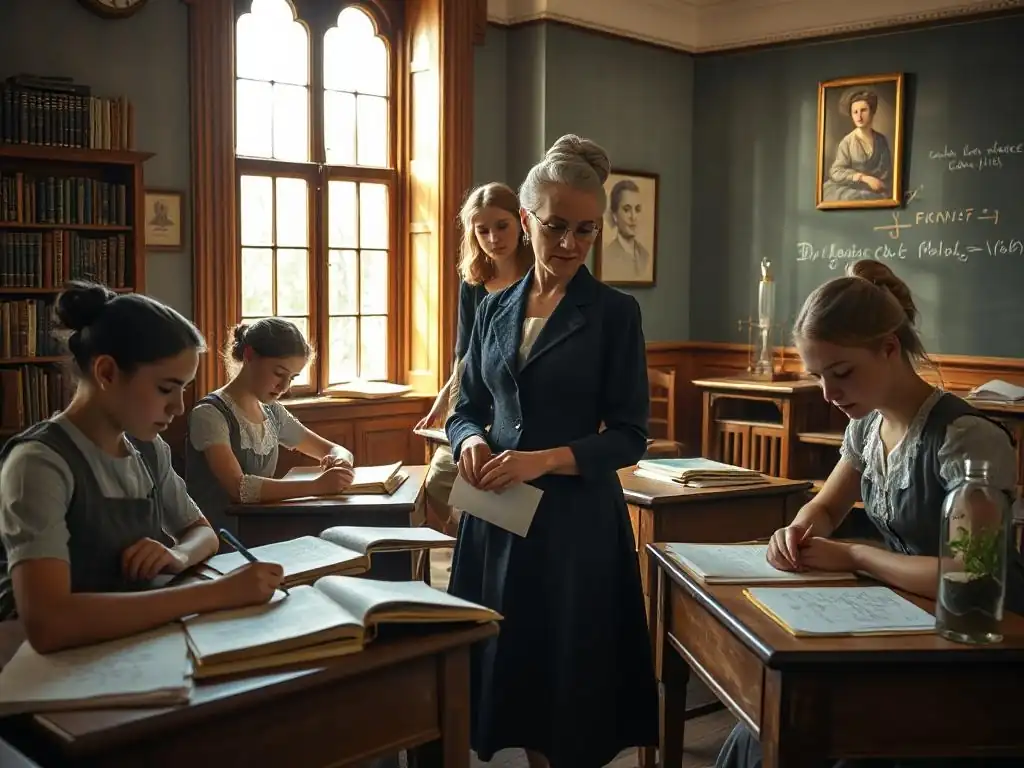
Welcome to WomenInScienceHistory.com, a dedicated space illuminating the remarkable legacies of women who shaped the scientific landscape. Prepare to be inspired as we delve into the captivating stories of female scientists throughout history, their groundbreaking discoveries, and the obstacles they overcame. This week, we explore a crucial aspect of their journey: the pivotal role of women educators in fostering a passion for science education and nurturing the next generation of female scientific minds.
Discover how these dedicated teachers planted the seeds of genius, and why their contributions are more vital than ever. Curious to learn more? Read on to uncover their untold stories!
- Introduction: The Undervalued Role of Women Educators in Science
- Early Pioneers: Women Educators Shaping Science Education
- Key Strategies Employed by Women Educators in Science
- Case Studies: Women Educators and Their Impact on Specific Female Scientists
- The Importance of Role Models: Women Educators as Scientific Inspirations
- Modern Women Educators: Continuing the Legacy in Science Education
- Resources and Support for Women Educators in Science
- The Future of Women in Science Education
- Conclusion: Celebrating the Enduring Legacy of Women Educators in Science
-
Frequently Asked Questions
- What role did early women educators play in fostering scientific interest among girls?
- What were some common challenges faced by women educators trying to promote science education for girls?
- How did these women educators contribute to breaking down gender stereotypes in science?
- Can you provide an example of a specific strategy used by women educators to engage girls in science?
- Why is it important to recognize the historical impact of women educators in science?
- Final Reflection: Nurturing Scientific Bloom
- Ignite Your Inner Scientist: Continue the Legacy!
Introduction: The Undervalued Role of Women Educators in Science
Highlighting the Impact of Female Teachers on Aspiring Female Scientists
The journey of many groundbreaking female scientists often begins with an inspiring figure in a classroom: a woman educator. These pioneering women, through their dedication and unique teaching methodologies, have served as crucial catalysts, igniting a passion for scientific inquiry in countless young girls. Their presence in the classroom provides tangible proof that women belong in scientific fields, challenging pervasive societal stereotypes from an early age.
Research consistently supports the profound impact of female teachers on girls' academic trajectories in STEM. For instance, a 2017 study published in the American Economic Review found that having a female teacher in elementary school significantly increased a girl's likelihood of taking advanced math courses later in high school by approximately 2-3 percentage points. This subtle yet powerful influence extends beyond mathematics, fostering confidence and self-efficacy in science, making the concept of a career in scientific research a more attainable reality for young women.
Overcoming Barriers: Women Educators Paving the Way for Future Generations
Historically, women educators in science navigated a landscape riddled with formidable barriers, including limited access to higher education, societal skepticism regarding female intellectual capabilities, and outright discrimination in professional settings. Despite these formidable obstacles, these determined women actively dismantled barriers, creating vital pathways for their female students to pursue scientific endeavors. They often had to fight for access to laboratories, advocate for comprehensive science curricula for girls, and sometimes even establish their own educational institutions.
Their resilience and unwavering commitment to science education for women were pivotal. By demonstrating exceptional competence and passion in fields often deemed "masculine," they not only educated but also served as living testaments to female intellectual prowess. This advocacy and example laid foundational groundwork, making it incrementally easier for subsequent generations of women to enter and thrive in scientific disciplines, cultivating a legacy of empowerment in science education.
Early Pioneers: Women Educators Shaping Science Education
Maria Mitchell and Her Innovative Astronomy Teaching
Maria Mitchell, America's first professional female astronomer, was also a revolutionary educator who profoundly shaped science education for women. As a professor of astronomy at Vassar College from 1865 to 1888, she eschewed traditional lecture-based learning in favor of a highly practical, hands-on approach. Mitchell insisted that her students engage directly with telescopes, perform their own calculations, and conduct independent observations of celestial phenomena, often late into the night.
Her teaching philosophy centered on direct experience and critical thinking, rather than rote memorization. She famously stated, "We are all children of the universe, and we are all connected to it." This approach nurtured not just knowledge, but genuine scientific curiosity and investigative skills. Among her notable students was Christine Ladd-Franklin, who, inspired by Mitchell, went on to become a pioneering mathematician and logician, demonstrating the lasting impact of Mitchell's innovative women educators science education strategies.
Almira Hart Lincoln Phelps's Contribution to Botany Curriculum
Almira Hart Lincoln Phelps was another influential early woman educator whose contributions significantly broadened access to science for women, particularly through her work in botany. Her seminal textbook, Familiar Lectures on Botany (1829), became one of the most widely used science textbooks in 19th-century America, selling over 300,000 copies by 1870. Phelps's genius lay in her ability to demystify complex scientific concepts, presenting botany in an accessible and engaging narrative style that appealed directly to young women.
Phelps encouraged systematic observation of the natural world, transforming what could have been a dry subject into an exciting exploration. She integrated clear illustrations and practical exercises, making scientific study approachable for students in female seminaries and academies across the nation. Her efforts were instrumental in establishing botany as a respectable and popular field of study for women, inspiring countless individuals to engage with the natural sciences and laying groundwork for the role of women educators in science education.
Challenges Faced by Early Women in Science Education
Early women educators in science faced an uphill battle against deeply entrenched societal norms and institutional biases. They often contended with the prevailing belief that women's intellectual capacities were inferior, particularly in rigorous fields like science and mathematics. This prejudice manifested in limited access to advanced scientific training, exclusion from scientific societies, and lower pay and recognition compared to their male counterparts, even when performing identical academic duties.
Furthermore, these educators frequently operated within educational systems that prioritized domestic skills over scientific literacy for girls. They had to tirelessly advocate for the inclusion of robust science curricula in girls' schools and colleges, often building departments from scratch with meager resources. Their perseverance in establishing and maintaining high standards in science education, despite significant systemic resistance, speaks volumes about their commitment to cultivating future female scientists.
Key Strategies Employed by Women Educators in Science
Inspiring Curiosity: Fostering a Love for Science in Female Students
One of the most effective strategies employed by women educators in science has been their ability to inspire genuine curiosity and a profound love for the subject. They achieve this by moving beyond textbook memorization, embracing hands-on experiments, real-world applications, and inquiry-based learning. For example, many educators would organize field trips to local ecosystems, museums, or even industrial sites, allowing students to witness scientific principles in action and connect classroom learning to practical applications.
These educators often employed a narrative approach, weaving stories of scientific discovery and the lives of scientists into their lessons, making the material relatable and exciting. By encouraging questions, fostering open discussion, and celebrating even the smallest scientific discoveries made by their students, they create an environment where intellectual exploration is not just permitted but actively encouraged. This approach is crucial for igniting the spark of scientific interest that can lead to lifelong engagement.
Mentorship and Guidance: Nurturing Future Female Scientists
Beyond the classroom, women educators have consistently served as vital mentors and guides, nurturing the intellectual and professional development of aspiring female scientists. This mentorship often extends beyond academic advice, encompassing career guidance, emotional support, and strategic networking. They help students navigate the complexities of higher education applications, identify research opportunities, and connect with professionals in their fields of interest.
Many female educators dedicate significant personal time to their mentees, reviewing papers, offering feedback on research proposals, and providing encouragement during challenging times. For instance, a professor might guide a promising undergraduate through her first research project, or help a graduate student find funding for a niche area of study. This personalized attention and unwavering belief in their students' potential are instrumental in building the confidence and resilience necessary for women to thrive in competitive scientific environments, underscoring the importance of women educators science education.
Creating Inclusive Learning Environments for Women in STEM
A cornerstone of successful women educators in science is their deliberate creation of inclusive learning environments that empower female students in STEM fields. These educators actively work to dismantle stereotype threat, a phenomenon where individuals perform poorly due to fear of confirming negative stereotypes about their group. They achieve this by fostering a culture of psychological safety, where mistakes are seen as learning opportunities and diverse perspectives are valued.
In these classrooms, collaborative learning is often prioritized over competitive individualism, encouraging girls to work together on complex problems and build shared understanding. Furthermore, women educators make a conscious effort to highlight the contributions of diverse scientists, including women and minorities, ensuring that all students see themselves reflected in the history and future of science. This holistic approach ensures that young women not only learn scientific facts but also feel a sense of belonging and capability within the scientific community.
Case Studies: Women Educators and Their Impact on Specific Female Scientists
Rachel Carson: How Mary T. Schaefer Influenced Her Scientific Journey
Rachel Carson, the pioneering environmental scientist and author of Silent Spring, found a pivotal mentor in Mary T. Schaefer, her biology professor at Pennsylvania College for Women (now Chatham University) in the late 1920s. Schaefer, a woman of rigorous scientific discipline and profound intellectual curiosity, recognized Carson's burgeoning talent and nurtured her passion for biology and writing. She encouraged Carson to pursue advanced studies in zoology at Johns Hopkins University, a path not commonly taken by women at the time.
Schaefer’s influence extended beyond academic guidance; she instilled in Carson a deep appreciation for the interconnectedness of nature and the importance of meticulous observation. She pushed Carson to develop her analytical skills while also valuing her unique ability to communicate complex scientific ideas eloquently. This foundational mentorship from a dedicated woman educator was crucial in shaping Carson’s scientific rigor and her unparalleled ability to translate scientific findings into compelling narratives that resonated with the public.
Barbara McClintock: The Role of Faculty at Cornell in Her Scientific Development
Barbara McClintock, Nobel laureate and groundbreaking geneticist, benefited significantly from a relatively progressive environment for women in science at Cornell University during the 1920s and 1930s. While not a single female educator stands out as her sole mentor, the collective influence of supportive faculty, many of whom were women or were open to female students, played a crucial role in her scientific development. This included professors within the botany department who encouraged her to pursue genetics, a nascent field at the time.
Cornell's botany department, unlike many others, was more welcoming to women, allowing McClintock to pursue her bachelor's, master's, and doctoral degrees in botany, with a specialization in cytogenetics. This institutional support, fostered by a forward-thinking academic culture that included several women who were themselves trailblazers, provided her with the freedom and resources to conduct her groundbreaking research on maize genetics. The presence of other women pursuing advanced scientific degrees also created a vital peer support network, further enabling her path.
Analyzing the Common Threads in Successful Female Science Education
Across these and many other success stories, several common threads emerge in how women educators cultivate future female scientists. A consistent theme is strong, personalized mentorship that goes beyond academic instruction, offering career guidance and emotional support. These educators often provide a challenging yet supportive curriculum, pushing students to excel while ensuring they feel capable and valued.
Another critical element is the creation of an inclusive and encouraging learning environment where intellectual curiosity is celebrated, and unconventional paths are supported. Whether it was Mitchell’s hands-on astronomy, Phelps’s accessible botany, or the nurturing academic culture at Cornell, these educators fostered environments where female students felt empowered to ask questions, experiment, and pursue their scientific passions without fear of judgment. Ultimately, the belief these women educators held in their students' potential proved to be a powerful catalyst for scientific achievement.
The Importance of Role Models: Women Educators as Scientific Inspirations

Seeing is Believing: The Power of Female Role Models in Science
The presence of women educators in science classrooms provides an invaluable visual and intellectual affirmation for young girls: seeing is truly believing. When girls encounter female teachers confidently leading science experiments, explaining complex theories, or discussing their own scientific journeys, it normalizes the idea of women in scientific roles. This direct exposure helps dismantle the pervasive stereotype that science is a male-dominated field, making it easier for girls to envision themselves pursuing STEM careers.
Research consistently indicates the positive effect of same-gender role models on academic aspirations and self-efficacy. A study conducted by the National Bureau of Economic Research in 2018 found that having a female STEM teacher significantly increased the likelihood of girls choosing to major in STEM fields in college. This demonstrates that female educators serve as tangible proof of possibility, inspiring confidence and providing a clear path forward for aspiring female scientists.
Breaking Down Stereotypes: Women Educators Challenging Gender Bias in STEM
Women educators in science play a critical role in actively challenging and breaking down persistent gender biases in STEM. They often employ pedagogical strategies that directly counteract common stereotypes, such as the notion that boys are inherently better at math or science. By ensuring equitable participation in classroom activities, promoting collaborative problem-solving, and providing personalized feedback that focuses on effort and growth rather than innate ability, they empower girls to overcome self-doubt.
These educators also make a conscious effort to integrate diverse examples of scientists into their curriculum, highlighting contributions from women and underrepresented groups throughout history. By showcasing women like Mae Jemison, Marie Curie, or Katherine Johnson, they broaden students' understanding of what a scientist "looks like" and challenge the narrow, often male-centric, image propagated by popular culture. This proactive approach helps to foster a more inclusive and equitable perception of scientific capability.
Girls Who Code: Promoting Women in Computer Science Education
Organizations like Girls Who Code exemplify the modern extension of women educators' influence, promoting women in computer science education on a large scale. Founded by Reshma Saujani in 2012, Girls Who Code aims to close the gender gap in technology by providing computer science education and mentorship to girls aged 10-18. While not all instructors are traditional "educators," the program's core is built on educational principles delivered by a network of dedicated individuals, many of whom are women in tech or education.
Through after-school clubs, summer immersion programs, and college loops, Girls Who Code provides hands-on coding experience, mentorship from female role models in tech, and a supportive community. By 2018, the organization had reached over 90,000 girls across all 50 U.S. states and several countries, with alumni going on to major in computer science at rates 15 times the national average. This initiative dramatically expands the reach of women educators science education, demonstrating how structured programs can inspire and equip the next generation of female technologists.
Modern Women Educators: Continuing the Legacy in Science Education
Mae Jemison and Her Advocacy for STEM Education
Dr. Mae C. Jemison, the first African American woman to travel to space, has dedicated much of her post-NASA career to advocating for STEM education, particularly for girls and underrepresented minorities. Through her organization, the Dorothy Jemison Foundation for Excellence, she launched initiatives like the "Look Up" program, designed to inspire young people to pursue science and technology by encouraging them to look up at the stars and consider their place in the universe.
Jemison emphasizes the importance of curiosity, critical thinking, and interdisciplinary approaches to solving global challenges. She frequently engages with students, teachers, and policymakers, stressing that science education must be accessible, engaging, and relevant to the diverse experiences of all learners. Her work embodies the spirit of a modern woman educator, using her platform to ensure that future generations, especially young women, are equipped and inspired to contribute to scientific advancement.
Hadi Partovi and His Contributions to Computer Science Education for Girls
Hadi Partovi, co-founder of Code.org, has made significant contributions to increasing access to computer science education, including for girls, which directly benefits the work of women educators in science. Code.org's mission is to ensure that every student in every school has the opportunity to learn computer science, regardless of gender or background. While Partovi is male, his initiatives have directly empowered countless women educators and aspiring female scientists.
Code.org provides free online coding courses, curriculum, and professional development for K-12 teachers, a substantial portion of whom are women. By 2021, Code.org reported that over 1.5 million teachers had signed up for their professional development, making computer science accessible to over 60 million students. This widespread training for educators, particularly women, equips them to teach computer science effectively, thereby increasing the number of girls entering the field and ensuring that women educators continue to cultivate future female technologists.
Addressing Current Challenges in Science Education for Women
Despite significant progress, modern women educators in science continue to face and address ongoing challenges in ensuring equitable science education for women. Persistent gender gaps remain in certain STEM fields, particularly in engineering (where women comprise only about 15% of the workforce) and computer science (where women hold approximately 26% of jobs). Stereotype threat and implicit biases can still subtly deter girls from pursuing advanced STEM pathways.
Modern women educators are tackling these issues by developing culturally responsive curricula, implementing inclusive teaching practices, and actively challenging gender stereotypes in their classrooms and communities. They advocate for increased funding for girls' STEM programs, push for equitable representation in STEM leadership, and work to create supportive networks for female students and professionals. Their efforts are crucial in ensuring that the pipeline for women in science remains strong and diverse.
Resources and Support for Women Educators in Science
Organizations and Initiatives Supporting Women in STEM Education
Numerous organizations and initiatives are dedicated to supporting women educators in STEM, recognizing their pivotal role in cultivating future female scientists. The National Science Teaching Association (NSTA), for instance, offers professional development, resources, and networking opportunities for science educators, including specific programs aimed at supporting women in the field. The American Association of University Women (AAUW) champions equity for women and girls through advocacy, education, and research, often providing grants and fellowships for women pursuing careers in education and STEM.
Other notable organizations include the National Girls Collaborative Project (NGCP), which connects organizations nationwide to increase the number of girls in STEM, and the Association for Women in Science (AWIS), which supports women across all STEM fields, including those in education. These groups provide vital resources, foster collaboration, and advocate for policies that strengthen the presence and impact of women educators science education.
Funding Opportunities for Women in Science Education Programs
Securing funding is often a challenge for educators, and specific opportunities exist to support women in science education programs. The National Science Foundation (NSF) offers various grants aimed at improving STEM education, including those that support initiatives designed to increase participation of women and girls. For example, the NSF's ADVANCE program works to increase the representation and advancement of women in academic STEM careers, often impacting women in education.
Private foundations, such as the Burroughs Wellcome Fund and the Ford Foundation, also provide grants for science education initiatives, some with specific focuses on gender equity or supporting female educators. Additionally, many universities and professional societies offer scholarships and fellowships specifically for women pursuing graduate degrees in science education or for programs developed by women educators aimed at engaging girls in STEM. These financial resources are crucial for developing and implementing impactful women educators science education programs.
Online Communities and Networks for Women Educators in Science
In today's interconnected world, online communities and networks provide invaluable support and collaboration opportunities for women educators in science. Platforms like Twitter, LinkedIn, and specialized forums host vibrant discussions where female educators can share best practices, exchange resources, discuss challenges, and celebrate successes. Groups such as "Women in STEM Education" on LinkedIn or dedicated Facebook communities allow for real-time problem-solving and peer mentorship.
These digital spaces facilitate professional development, offering access to webinars, virtual conferences, and shared curriculum materials. They also serve as vital emotional support networks, allowing women educators to connect with peers who understand the unique challenges and triumphs of their profession. This collective knowledge sharing and camaraderie empower women educators to continuously refine their approaches and amplify their impact in cultivating the next generation of female scientists.
The Future of Women in Science Education
Promoting Gender Equality in STEM Through Education
The future of gender equality in STEM is inextricably linked to the ongoing evolution and enhancement of science education, particularly through the lens of women educators. To achieve true parity, educational systems must continue to dismantle implicit biases, ensure equitable access to resources, and celebrate diverse scientific contributions from an early age. Women educators are at the forefront of this transformation, designing curricula and pedagogical approaches that actively promote inclusivity and challenge traditional gender roles within scientific fields.
Their continued advocacy for early and sustained exposure to STEM for girls, coupled with innovative teaching methods, is crucial. By fostering environments where girls feel confident, supported, and excited about science, these educators are laying the groundwork for a future where STEM fields accurately reflect the diversity of the global population, leading to more robust and innovative scientific solutions.
Empowering the Next Generation of Female Scientists
Empowering the next generation of female scientists requires a multi-faceted approach, with women educators playing a central role. This involves not only providing high-quality science instruction but also nurturing critical thinking skills, fostering resilience, and encouraging creativity. Educators must continuously update their own knowledge and skills, adapting to new scientific discoveries and technological advancements to keep their teaching relevant and inspiring.
Furthermore, it is essential to provide young women with opportunities for authentic scientific experiences, such as participation in research projects, science fairs, and mentorship programs with active female scientists. By connecting classroom learning to real-world scientific inquiry, women educators can solidify girls' interest and provide them with the practical skills and confidence needed to pursue advanced scientific studies and careers, ensuring a robust pipeline of future female scientists.
The Ongoing Need for Women Educators in Science
The enduring need for women educators in science cannot be overstated. As societies become increasingly reliant on scientific and technological innovation, a diverse and inclusive scientific workforce is paramount. Women educators serve as indispensable role models, mentors, and advocates, uniquely positioned to inspire and guide girls into scientific pathways. Their presence helps ensure that girls see themselves reflected in the scientific community, breaking down barriers and fostering a sense of belonging.
Moreover, female educators often bring diverse perspectives and teaching styles that can resonate uniquely with female students, addressing specific learning needs and challenges. Their continued presence and leadership in science education are fundamental not just for promoting gender equality, but for enriching the scientific enterprise as a whole, ensuring that the brightest minds from all backgrounds contribute to solving humanity's most pressing challenges.
Conclusion: Celebrating the Enduring Legacy of Women Educators in Science
Recognizing the Profound Impact of Women Teachers on Female Scientists
The historical narrative of women in science is incomplete without a profound acknowledgment of the women educators who have tirelessly cultivated future female scientists. From Maria Mitchell's hands-on astronomy at Vassar to the pervasive influence of Almira Hart Lincoln Phelps's botany textbooks, these women laid crucial foundations, often against immense societal resistance. Their unwavering commitment to providing high-quality science education for women has directly shaped the careers of countless pioneering female scientists, including figures like Rachel Carson and Barbara McClintock.
Their legacy underscores that the impact of women educators science education extends far beyond the transmission of facts; it encompasses mentorship, the creation of inclusive learning environments, and the powerful act of role modeling. These women have not only taught science but have also taught resilience, curiosity, and the belief in one's own scientific potential, making the seemingly impossible, possible.
Inspiring Future Generations to Pursue Science and Education
As we look to the future, the enduring legacy of women educators in science serves as a powerful inspiration for both aspiring scientists and future educators. Their stories highlight the critical importance of fostering scientific curiosity and critical thinking from an early age, demonstrating that passion for discovery can be ignited in any classroom. Recognizing their profound contributions encourages continued investment in and support for women in all facets of science education.
By celebrating these trailblazing women, we not only honor their past achievements but also motivate new generations of women to pursue both scientific inquiry and the noble profession of education. This synergistic relationship, where women educators inspire female scientists, who in turn can become educators themselves, forms a virtuous cycle essential for driving innovation, promoting diversity, and ensuring a brighter, more equitable future for science.
Frequently Asked Questions
What role did early women educators play in fostering scientific interest among girls?
Women educators often served as crucial role models, demonstrating that girls could succeed in science. They fostered interest by creating supportive learning environments and advocating for access to scientific materials.
What were some common challenges faced by women educators trying to promote science education for girls?
They faced societal resistance and the belief that science was a "male" domain. Access to resources and funding for female science education was also extremely limited.
How did these women educators contribute to breaking down gender stereotypes in science?
By their very presence and success, they challenged the prevailing gender stereotypes. They actively encouraged girls to pursue scientific studies, proving that women could excel in science.
Can you provide an example of a specific strategy used by women educators to engage girls in science?
Many used experiential learning methods, like nature walks and hands-on experiments, to make science engaging. They also used storytelling to connect scientific concepts to girls' everyday lives.
Why is it important to recognize the historical impact of women educators in science?
Recognizing their contributions helps to rewrite the historical narrative, ensuring that women's roles are acknowledged. It also inspires future generations by showcasing the impact of women in STEM fields.
Final Reflection: Nurturing Scientific Bloom
The stories shared within this article highlight a profound truth: the impact of women educators on shaping the landscape of science education is undeniable and continues to resonate today. Their dedication, often against societal odds, planted the seeds of curiosity and confidence in countless young women, fostering a generation of scientists who have revolutionized our understanding of the world. This legacy is not just historical; it's a living testament to the power of mentorship and the importance of representation in STEM fields.
The influence of these pioneering women educators extends far beyond the classroom. Their unwavering belief in the potential of their students created a ripple effect, inspiring future generations to challenge stereotypes and pursue their scientific passions. This ongoing impact reminds us that representation matters, and that seeing oneself reflected in leadership roles is crucial for fostering ambition and achievement. You cannot be what you cannot see,
as Marian Wright Edelman so eloquently stated. This quote encapsulates the profound significance of these women educators, who served as visible role models, proving that women could not only participate in science but also excel and lead.
As we reflect on the remarkable contributions of these women educators, let us consider the seeds we are planting today. What are we doing to ensure that all students, regardless of gender, have access to inspiring mentors and equitable opportunities in science? Let us strive to cultivate a world where every young woman feels empowered to pursue her scientific dreams, knowing that she stands on the shoulders of giants and has the potential to shape a brighter, more innovative future for us all.
Ignite Your Inner Scientist: Continue the Legacy!
Thank you for exploring the inspiring stories of these pioneering women educators and their remarkable students. You’ve now seen how dedication and mentorship can blossom into groundbreaking achievements. Now, let's carry that momentum forward.
Here's how you can contribute:
- Share this article with an aspiring female scientist or a passionate educator to inspire them with these empowering stories.
- Explore the "Women in Science History" website for more in-depth biographies and untold tales of scientific brilliance.
- Reflect on your own educational journey:Identify a teacher who significantly impacted your passion for learning and science and reach out to thank them.
What small act of encouragement can you provide today to nurture the next generation of female scientists?