
Before Silicon: The Indispensable "Human Computers" of Early Space Science (19001950)

Welcome to WomenInScienceHistory.com!
Dive into the untold stories of women who shaped scientific progress, often behind the scenes. In this captivating exploration of Early space human computers, discover how these brilliant minds, working tirelessly between 1900 and 1950, were indispensable to the burgeoning field of space science. What vital calculations did they perform, and what obstacles did they overcome to make their mark? Uncover the legacy that paved the way for future generations of women in science.
- Introduction: The Untold Story of Human Computers in Space Science
- The Rise of "Human Computers": Women in the Early Space Race
- Key Figures: Pioneering Women in Space Science Computing (1900-1950)
- The Vital Tasks Performed by Human Computers
- Tools and Techniques of Early Space Science Computing
- Challenges Faced by Women in Space Science Computing
- Impact and Legacy of Early Space Human Computers
- The Enduring Importance of Recognizing Early Women Space Science Computers
- Conclusion: Celebrating the Legacy of Human Computers in Early Space Science
-
Frequently Asked Questions
- What were "human computers" in the context of early space science?
- Why were women often chosen for the role of "human computer"?
- What types of calculations did "human computers" perform for space science?
- What challenges did "human computers" face in their roles?
- How did the work of "human computers" contribute to the success of early space science?
- Final Reflection: Honoring the Unsung Architects of Space
- Ignite Your Curiosity: Step into the Stars!
Introduction: The Untold Story of Human Computers in Space Science
Highlighting the Forgotten Contributions of Women in Early Space Exploration
The narrative of early space exploration often conjures images of powerful rockets and visionary engineers, yet it frequently overlooks a crucial, often unsung, workforce: the "human computers." These were predominantly women whose meticulous calculations formed the very bedrock of astronomical understanding and laid essential groundwork for what would become space science. Their contributions, spanning the first half of the 20th century, were not merely supplementary; they were indispensable, providing the precise data and analytical frameworks necessary for advancements before the advent of electronic computing.
These pioneering early space human computers engaged in tasks ranging from classifying stars and measuring cosmic distances to predicting celestial movements, all through manual computations. Their collective efforts at institutions like the Harvard College Observatory represent a significant chapter in scientific history, one that underscores the profound impact of women in shaping our understanding of the cosmos, despite facing considerable societal and professional barriers.
The Era Before Electronic Computing: A Look at Early 20th Century Space Science
The early 20th century was a pivotal period for astronomy, transitioning from largely observational practices to a more quantitative and astrophysical approach. Telescopes were capturing unprecedented amounts of data on photographic plates, but the challenge lay in systematically processing and interpreting this vast influx of information. Without the sophisticated algorithms and processing power of modern computers, every measurement, every classification, and every complex equation had to be performed by hand.
This era demanded an enormous workforce capable of precise, repetitive, and often tedious calculations. Astronomical research, particularly in areas like stellar spectroscopy and photometric analysis, generated mountains of raw data that required painstaking reduction and analysis. The meticulous work of these early space human computers transformed raw observations into meaningful scientific insights, enabling discoveries that fundamentally reshaped our cosmic perspective long before the first satellites orbited Earth.
The Rise of "Human Computers": Women in the Early Space Race
Defining "Human Computers": Skills and Responsibilities
"Human computers" were skilled individuals, primarily women, tasked with performing complex mathematical calculations and data processing manually or with basic mechanical aids. Their responsibilities were diverse and critical to scientific progress, particularly in astronomy. They meticulously analyzed photographic plates, measured star positions and brightness, calculated stellar distances, classified spectral types, and processed vast datasets derived from telescopic observations.
The role demanded exceptional precision, patience, and a strong aptitude for mathematics. These women often worked with logarithms, trigonometric tables, and early mechanical calculators, turning raw astronomical data into usable scientific information. For instance, they might spend hours measuring the minute shifts in stellar spectra to determine chemical compositions or calculating the precise periods of variable stars, foundational work for understanding stellar evolution and cosmic scale.
Why Women? Societal Context and Employment Opportunities in Early Computing
The prevalence of women in these "human computer" roles was largely a product of the societal and economic conditions of the late 19th and early 20th centuries. While male scientists were typically engaged in theoretical work, telescope operation, and publishing, women were often relegated to support roles. These positions were seen as an extension of "clerical" work, deemed suitable for women and, crucially, could be compensated at significantly lower rates than male scientific assistants.
Institutions like the Harvard College Observatory, under directors like Edward Pickering, actively recruited women for these computational tasks. They were often college-educated but faced limited professional opportunities in other fields. For example, at Harvard, women "computers" in the early 1900s might earn around 25 to 50 cents per hour, a fraction of what male assistants or professors earned, making them an economically attractive workforce for large-scale data processing. This combination of societal expectations and economic factors led to the rise of a highly skilled, predominantly female workforce that became the backbone of early astrophysical research.
Key Figures: Pioneering Women in Space Science Computing (1900-1950)
Annie Jump Cannon: Her Contributions to Stellar Classification
Annie Jump Cannon stands as one of the most prolific and influential early space human computers. Hired by Edward Pickering at the Harvard College Observatory in 1896, she became a master of stellar spectroscopy. Her monumental work involved visually examining photographic plates of stellar spectra and classifying hundreds of thousands of stars based on their temperatures and chemical compositions. She developed and refined the Harvard Classification Scheme, which is still the basis for stellar classification today (O, B, A, F, G, K, M).
Cannon's meticulous work led to the classification of approximately 350,000 stars over her career, a feat of incredible dedication and precision. Her classifications were published in the Henry Draper Catalogue and its extensions, providing an invaluable resource for astronomers worldwide. This systematic categorization allowed for fundamental insights into stellar evolution and the structure of the galaxy, cementing her legacy as a foundational figure in astrophysics.
Henrietta Swan Leavitt: Leading Calculations for Cepheid Variable Stars and Distance Measurement
Another luminary among the Harvard "computers" was Henrietta Swan Leavitt, whose work on variable stars provided a crucial breakthrough in measuring cosmic distances. From 1907, Leavitt painstakingly analyzed photographic plates of variable stars, particularly those in the Magellanic Clouds. Her detailed observations and calculations of Cepheid variable stars revealed a precise relationship between their luminosity and the period of their pulsation.
In 1912, Leavitt published her groundbreaking discovery: the brighter a Cepheid variable star, the longer its pulsation period. This period-luminosity relationship provided astronomers with a "standard candle" – a reliable method to determine the absolute brightness of these stars, and consequently, their distance from Earth. This discovery by an early space human computer revolutionized astrophysics, enabling Edwin Hubble to later calculate the distance to Andromeda and confirm the expansion of the universe, fundamentally altering humanity's understanding of the cosmos's scale.
Williamina Fleming: Overcoming Challenges in a Male-Dominated Field at Harvard College Observatory
Williamina Fleming's journey at the Harvard College Observatory exemplifies the challenges and triumphs of women in early science. Beginning as a housekeeper for Edward Pickering, she was hired in 1881 to organize the observatory's photographic plates, a task she performed with exceptional diligence. Her innate talent for observation and organization quickly became apparent, leading her to become one of the most prominent early space human computers.
Fleming oversaw the work of other women "computers" and was responsible for classifying tens of thousands of stars. She discovered numerous astronomical objects, including 59 gaseous nebulae, over 300 variable stars, and 10 novae. Notably, she is credited with the discovery of the Horsehead Nebula in 1888. Despite her immense contributions and leadership, she faced significant discrimination, often being paid less than male counterparts and having her work published under Pickering's name. Nevertheless, her dedication and extraordinary output paved the way for future generations of women in astronomy.
The Vital Tasks Performed by Human Computers
Calculating Trajectories: Essential for Space Observation and Early Rocketry
The meticulous calculation of trajectories was a cornerstone of early space science, even before the dream of spaceflight became a reality. Early space human computers were instrumental in predicting the precise paths of celestial bodies, a task vital for astronomical observation, navigation, and understanding orbital mechanics. These calculations involved complex equations of motion, accounting for gravitational forces and orbital perturbations.
For astronomers, accurate ephemerides – tables predicting celestial positions – were essential for pointing telescopes and planning observations of planets, comets, and asteroids. While not directly for rockets in the early 1900s, the foundational work in orbital mechanics performed by these human computers laid the mathematical groundwork that would be crucial for future rocket engineers. They were, in essence, the first "navigation systems" for conceptual space exploration, ensuring that scientists knew exactly where to look and what to expect in the night sky.
Data Analysis and Reduction: Interpreting Astronomical Observations
Astronomical observations in the early 20th century primarily relied on photographic plates, which captured light from celestial objects over extended periods. However, these raw plates were merely snapshots; they required extensive processing and interpretation to yield scientific data. This is where the early space human computers excelled in data analysis and reduction.
They would meticulously examine these plates, often under microscopes, to measure star positions, magnitudes (brightness), and the characteristics of spectral lines. For instance, they might identify faint spectral lines indicative of specific chemical elements or measure the precise shift in a star's position over time to determine its proper motion. This painstaking process transformed diffuse light patterns into quantifiable data points, allowing astronomers to build comprehensive catalogues, identify new celestial objects, and derive physical properties of stars and galaxies.
Creating Ephemerides: Predicting Celestial Positions with Precision
The creation of ephemerides was a highly specialized and labor-intensive task performed by human computers. An ephemeris is a table that gives the calculated positions of astronomical objects (like planets, comets, or asteroids) at specific times. For centuries, astronomers and navigators relied on these tables for accurate celestial tracking and navigation.
In the early 20th century, these tables were generated through incredibly complex and repetitive manual calculations, often involving intricate trigonometric functions and interpolation. The early space human computers would spend countless hours ensuring the accuracy of these predictions, as even minor errors could lead to significant observational discrepancies or navigational hazards. Their precise work allowed observatories to schedule telescopic observations effectively, facilitated the tracking of newly discovered comets and asteroids, and provided critical data for lunar and planetary studies, all fundamental to the growth of space science.
Tools and Techniques of Early Space Science Computing
Mechanical Calculators and Slide Rules: The Instruments of the Trade
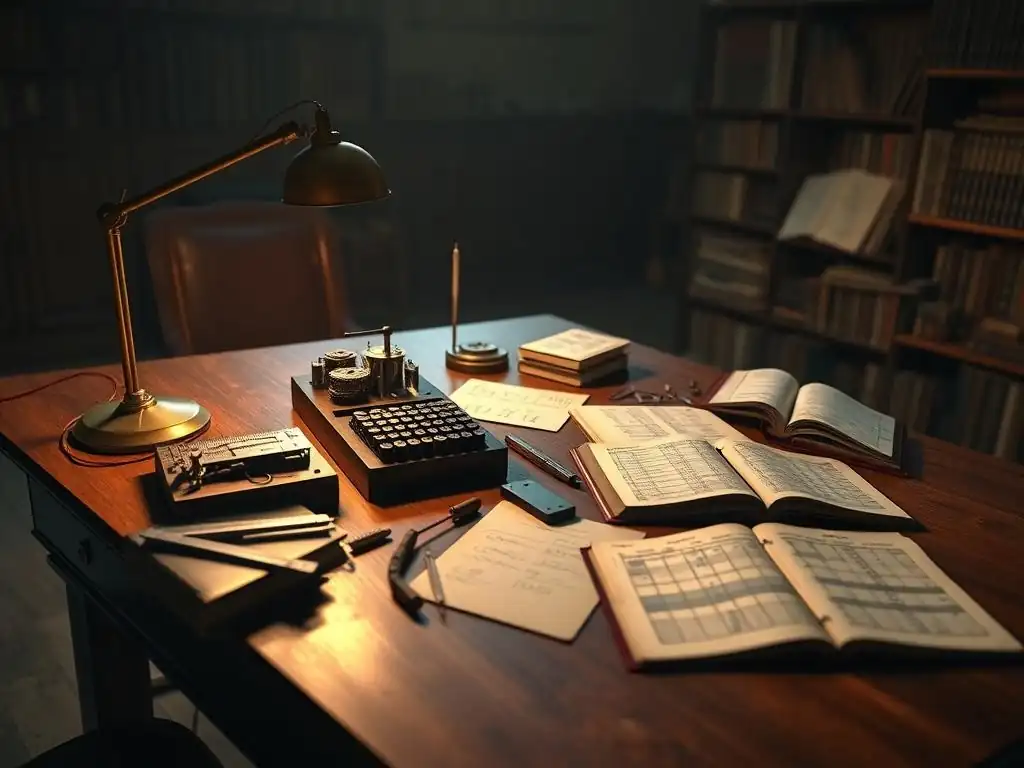
Before the advent of electronic computers, the primary tools for complex mathematical operations were mechanical calculators and slide rules. Early space human computers relied heavily on these devices to perform the vast number of additions, subtractions, multiplications, and divisions required for their astronomical calculations. Mechanical calculators, such as the Monroe or Marchant models that became more common later in the period, were hand-cranked or motor-driven machines that could automate basic arithmetic, significantly speeding up operations compared to pure manual calculation.
Slide rules, on the other hand, were used for quick estimations, multiplication, division, logarithms, and trigonometric functions. While not offering the precision of mechanical calculators, they were indispensable for quick checks and for calculations where extreme accuracy was not paramount. The proficiency of these women in operating these instruments, often for hours on end, was a testament to their dedication and skill in managing the immense computational workload of early space science.
Mathematical Methods: Logarithms, Trigonometry, and Manual Calculation
Beyond mechanical aids, the core of early space science computing relied on a deep understanding and application of fundamental mathematical methods. Early space human computers were highly adept at using logarithms, a technique that simplifies multiplication and division into addition and subtraction, crucial for handling large numbers and complex equations without electronic assistance. Trigonometry was equally vital for calculating angles, distances, and positions in a three-dimensional celestial sphere.
Much of the work, however, was pure manual calculation. This involved meticulous step-by-step arithmetic, often relying on pre-computed tables for sines, cosines, tangents, and logarithms. The accuracy of their work depended entirely on their attention to detail and ability to avoid errors across hundreds or thousands of individual operations. This manual rigor ensured the integrity of the data that formed the foundation of early astronomical catalogues and theories, demonstrating the intellectual depth required for these roles.
While the image of a "human computer" might suggest solitary work, the reality was often one of significant collaboration and teamwork. At institutions like the Harvard College Observatory, groups of early space human computers worked together in dedicated computing rooms, sharing knowledge, verifying calculations, and coordinating efforts on large-scale projects. This collective approach was essential for managing the enormous volume of data and computations.
Tasks were often divided, with some women specializing in particular types of measurements or calculations, and others cross-checking results to minimize errors. This collaborative environment fostered a sense of community and shared purpose, enabling complex projects like the creation of vast stellar catalogues or the analysis of entire photographic plate archives. The success of these pioneering scientific endeavors was not solely due to individual brilliance but also to the organized, efficient, and cooperative efforts of these dedicated teams.
Challenges Faced by Women in Space Science Computing
Despite their indispensable contributions, early space human computers faced significant discrimination and bias within the male-dominated scientific institutions of the early 20th century. They were often relegated to "technical" or "clerical" roles, even when their work was fundamentally scientific and required high levels of expertise. This categorization limited their professional advancement and recognition.
Salaries for women "computers" were notably lower than those for male colleagues performing similar or even less skilled tasks. For example, at Harvard, while some women earned around 25 cents per hour in the early 1900s, male assistants often received higher wages for equivalent or even less rigorous work. Opportunities for promotions, authorship on scientific papers, or leading research projects were scarce, reflecting a pervasive gender bias that undervalued their intellectual contributions and confined them to a subordinate status within the scientific hierarchy.
Limited Recognition: Overlooked Contributions in Scientific Publications
A pervasive challenge for early space human computers was the lack of proper recognition for their groundbreaking work. Many of the discoveries, classifications, and foundational data sets they meticulously compiled were attributed to the male directors of the observatories or appeared under institutional names rather than their individual names. This systemic oversight meant that their intellectual labor, which often involved original insights and meticulous problem-solving, went largely uncredited in the scientific literature.
For instance, while Henrietta Swan Leavitt's period-luminosity relationship was published, its full significance was often attributed to others, and she never received the Nobel Prize consideration that her discovery warranted. Similarly, Williamina Fleming's numerous discoveries were often simply listed in catalogues without individual recognition. This historical omission has only recently begun to be rectified, as historians of science work to highlight the vital and often overlooked contributions of these women to fields like space science and astronomy.
Balancing Work and Family: The Personal Sacrifices of Early Female Computers
Beyond professional discrimination, early space human computers also contended with the immense societal pressures and expectations placed upon women in the early 20th century, particularly regarding marriage and family. For many, pursuing a career in science meant making significant personal sacrifices, as professional opportunities for married women were severely limited, and societal norms often dictated that women leave the workforce upon marriage.
Institutions frequently had policies that discouraged or outright prohibited the employment of married women. This meant that many talented female computers either remained unmarried to continue their careers or, if they chose to marry, had to abandon their scientific pursuits. This forced choice represented a significant personal sacrifice and a loss of valuable intellectual capital for the scientific community, highlighting the profound personal costs incurred by these pioneering women in their dedication to space science.
Impact and Legacy of Early Space Human Computers
Laying the Groundwork for Modern Space Exploration
The meticulous work of early space human computers provided the indispensable foundational data and methodologies that paved the way for modern space exploration. Their comprehensive stellar catalogues, precise measurements of cosmic distances, and detailed understanding of celestial mechanics were not just academic exercises; they were the building blocks upon which later theoretical and practical developments in astrophysics and rocketry were constructed.
The accurate positions of stars, the understanding of stellar evolution, and the ability to measure vast cosmic distances, largely established by these women, were crucial for everything from celestial navigation to the development of propulsion systems. Without the detailed astronomical data they processed by hand, the conceptualization and eventual realization of human spaceflight and robotic probes would have been significantly delayed or impossible. They were the silent architects of the data universe that modern space science relies upon.
Inspiring Future Generations of Women in STEM
The rediscovery and celebration of the achievements of early space human computers serve as a powerful source of inspiration for future generations of women in STEM fields. Their stories, once largely confined to obscure historical archives, are now being brought to light, showcasing resilience, intellectual brilliance, and groundbreaking contributions in the face of significant adversity. These narratives demonstrate that women have always been at the forefront of scientific discovery, even when their work was undervalued or unacknowledged.
By highlighting the scientific rigor and profound impact of figures like Annie Jump Cannon, Henrietta Swan Leavitt, and Williamina Fleming, the historical record is not only corrected but also enriched. Their legacies provide tangible role models, encouraging young women and girls to pursue careers in science, technology, engineering, and mathematics, knowing that they stand on the shoulders of giants who painstakingly built the very foundations of our cosmic understanding.
The Transition to Electronic Computing: A Shift in the Landscape
The mid-20th century marked a significant transition in the landscape of scientific computing, as the first electronic computers began to emerge. While these machines initially complemented the work of early space human computers, their rapidly increasing speed and capacity for complex calculations eventually rendered manual computation largely obsolete. Projects that once took teams of human computers months or years could soon be completed in a fraction of the time by a single machine.
This shift, while a technological marvel, also marked the end of an era for the human computer workforce. Many women transitioned into programming roles for the new electronic machines, applying their analytical skills in a new context. However, the move away from manual computation underscored the monumental effort and intellectual power that these women had contributed for decades, bridging the gap between theoretical science and practical data processing before the digital age truly began.
The Enduring Importance of Recognizing Early Women Space Science Computers
Preserving the History of Women's Contributions to STEM
Recognizing the contributions of early space human computers is crucial for preserving a complete and accurate history of women's contributions to STEM. For too long, the narratives of scientific progress have been predominantly male-centric, overlooking the indispensable roles played by women in foundational research. Highlighting the work of these pioneering women corrects this historical imbalance, ensuring that their intellectual labor and scientific breakthroughs are properly acknowledged.
This preservation goes beyond mere recognition; it involves actively seeking out and documenting their stories, understanding the context of their work, and demonstrating how their efforts were intrinsically linked to major scientific advancements. By doing so, we ensure that their legacies are not forgotten and that future generations have a more nuanced and inclusive understanding of how scientific knowledge has been built over time, particularly in the complex and data-intensive field of space science.
Learning from the Past: Promoting Diversity and Inclusion in Science Today
The experiences of early space human computers offer invaluable lessons for promoting diversity and inclusion in science today. Their struggles with discrimination, lower pay, and limited recognition underscore the historical barriers women have faced in scientific fields. By examining these past injustices, we can better understand the systemic issues that continue to affect underrepresented groups in STEM.
This historical perspective informs contemporary efforts to create more equitable and inclusive scientific environments. It encourages institutions to actively address unconscious biases, promote fair compensation, ensure equitable opportunities for advancement, and properly credit all contributors to scientific research. The legacy of these remarkable early space human computers serves as a powerful reminder that true scientific progress flourishes when talent is recognized and nurtured, regardless of gender or background, ensuring that all voices contribute to the ongoing exploration of the universe.
Conclusion: Celebrating the Legacy of Human Computers in Early Space Science
Frequently Asked Questions
What were "human computers" in the context of early space science?
"Human computers" were primarily women employed to perform complex mathematical calculations before the advent of electronic computers. They were essential for processing data related to rocket trajectories and orbital mechanics.
Why were women often chosen for the role of "human computer"?
Women were often hired due to prevailing social norms that considered them more detail-oriented and patient for repetitive tasks. They were also often paid less than men for the same work.
What types of calculations did "human computers" perform for space science?
They calculated rocket trajectories, orbital paths, and aerodynamic data. This involved complex mathematical equations and meticulous data analysis, crucial for successful space missions.
What challenges did "human computers" face in their roles?
They often faced discrimination and a lack of recognition for their contributions. Their work was frequently attributed to male supervisors, diminishing their individual achievements.
How did the work of "human computers" contribute to the success of early space science?
Their accurate calculations were fundamental to the success of early rocket launches and satellite deployments. They provided the essential groundwork for the computer-driven space programs that followed.
Final Reflection: Honoring the Unsung Architects of Space
The narrative of space exploration often focuses on rockets and astronauts, but the indispensable role of "human computers" in early space science cannot be overstated. Their meticulous calculations, performed long before the advent of silicon-based computing, laid the very foundation upon which our understanding of the cosmos was built. Recognizing their contributions is not just historical accuracy; it's a vital reminder of the human ingenuity that drives scientific progress.
The legacy of these "human computers," predominantly women, continues to resonate today, challenging us to re-evaluate whose stories are told and whose contributions are valued. Their dedication and precision, often performed under challenging circumstances, serve as a powerful example of perseverance and intellectual rigor. We were doing science, and we were doing it well. We were contributing to something bigger than ourselves.
This quote encapsulates the profound sense of purpose that fueled their work, a purpose that should inspire us to seek meaning and impact in our own endeavors.
As we gaze towards the stars, let us remember the "human computers" who charted the course. Their story is a testament to the power of human intellect and the importance of recognizing the contributions of all who participate in the pursuit of knowledge. Consider how their dedication to precision and problem-solving can inform your own approach to challenges, and strive to emulate their unwavering commitment to excellence in all that you do. Let their legacy inspire you to reach for the stars, knowing that even the smallest contributions can have a profound impact on the world.
Ignite Your Curiosity: Step into the Stars!
Thank you for delving into the inspiring story of the "human computers" and their crucial role in early space science. Now, fuel your fascination and become part of their legacy by exploring further.
Here are a few ways to take action:
- Unearth hidden stories: Dive deeper by researching other pioneering women in science history not widely known.
- Share their impact: Spread awareness by sharing this article with friends, family, or colleagues who are passionate about space, STEM, or women's history.
- Explore related collections: Browse the Women in Science History online archives to discover related articles and historical documents.
What untold story from this era of scientific advancement are you most eager to discover next?