
The Audacity to Build: Early Women Civil Engineers and Their Iconic Structures

Welcome to WomenInScienceHistory.com!
Prepare to be inspired by the untold stories of women who defied expectations and shaped the world around us. This week, we delve into the fascinating world of engineering with " The Audacity to Build: Early Women Civil Engineers and Their Iconic Structures." Discover how these pioneering women overcame societal barriers to design and construct some of history's most impressive landmarks. What challenges did they face, and what lasting impact did their work have? Read on to uncover their remarkable contributions and the enduring legacy they've left behind.
- Introduction: Recognizing the Pioneering Women Civil Engineers
- Early Obstacles and Triumphs for Women in Civil Engineering
- Notable Early Women Civil Engineers: Profiles and Achievements
- Iconic Structures and Projects Led or Influenced by Women Engineers
- The Lasting Legacy of Early Women Civil Engineers
- Conclusion: Celebrating the Audacity and Brilliance of Women in Civil Engineering Historical Structures
-
Frequently Asked Questions
- What were some of the major obstacles faced by early women civil engineers?
- Did any women civil engineers contribute to the design or construction of famous historical structures?
- Why is it important to highlight the contributions of women in science history, especially in fields like civil engineering?
- What kind of groundbreaking work did these women civil engineers do?
- Where can I find more information about women civil engineers and their contributions to historical structures?
- Final Reflection: The Enduring Legacy of Audacity
- Build Your Own Legacy: Empower the Next Generation of Female Engineers!
Introduction: Recognizing the Pioneering Women Civil Engineers
Unveiling the Forgotten Stories of Women in Engineering History
For too long, the annals of history have largely overlooked the significant contributions of women, particularly in fields traditionally dominated by men, such as engineering. While the grand narratives of civil engineering marvels often focus on male innovators and construction teams, a closer look reveals the quiet yet profound impact of pioneering women who defied societal norms to shape the built environment. These early women civil engineers historical structures are not just feats of concrete and steel, but testaments to their extraordinary determination and intellect.
This article endeavors to bring these forgotten stories to the forefront, celebrating the audacious spirit of women who, against considerable odds, contributed their expertise to some of the world's most enduring and iconic structures. From the intricate calculations behind a monumental bridge to the meticulous data analysis that facilitated vast infrastructure projects, the fingerprints of these early female engineers are evident, even if their names have been historically obscured.
The Importance of Highlighting Women's Contributions to Civil Engineering
Highlighting the contributions of women civil engineers historical structures is not merely an academic exercise; it is a crucial step towards a more accurate and inclusive understanding of history. By acknowledging the ingenuity and perseverance of these female pioneers, we challenge long-held stereotypes about gender roles in STEM fields and provide much-needed visibility for role models who can inspire future generations. Their stories demonstrate that innovation and leadership know no gender boundaries.
Moreover, recognizing these achievements enriches our appreciation of the collective human effort that built the world around us. It underscores the fact that progress is often the result of diverse perspectives and unwavering commitment, even when individuals operate outside conventional recognition systems. Celebrating these historical figures helps to dismantle systemic biases and fosters an environment where the contributions of all individuals, regardless of gender, are equally valued in the ongoing development of civil engineering.
Early Obstacles and Triumphs for Women in Civil Engineering
Societal Barriers Faced by Female Engineering Pioneers
In the 19th and early 20th centuries, societal expectations rigidly confined women to domestic spheres, largely excluding them from professional careers, especially in demanding technical fields like civil engineering. Education beyond basic literacy was often deemed unnecessary or even inappropriate for women, and universities typically did not admit women into engineering programs. Those few women who dared to pursue such an education faced immense pressure and skepticism from families, peers, and institutions, often being the sole female in their classes or departments.
Beyond educational access, the professional landscape presented formidable barriers. Engineering was perceived as a rugged, masculine profession, requiring physical presence on construction sites and engagement in often dirty and dangerous work. Women were systematically denied opportunities for apprenticeships, employment, and membership in professional societies, which were critical for networking and career advancement. This pervasive gender bias meant that even highly qualified women often had to work in ancillary, less visible roles or rely on indirect influence to contribute to women civil engineers historical structures.
Overcoming Gender Bias in Engineering Education and Practice
Despite these profound societal and professional hurdles, a select few women demonstrated an extraordinary resolve to enter the field of civil engineering. Some pursued their education through unconventional means, such as self-study, private tutoring, or by being the first courageous few admitted to progressive universities that opened their doors to female students, such as Cornell University, which admitted women to its engineering programs in the early 20th century. These educational triumphs, however, were just the first step in a long battle against ingrained gender bias.
In practice, female engineers often had to prove their competence repeatedly, facing skepticism from male colleagues and clients. They frequently encountered situations where their technical expertise was questioned, or they were relegated to administrative or analytical tasks rather than being given direct design or project management responsibilities. Yet, through sheer persistence, exceptional skill, and a quiet determination, these women slowly began to chip away at the walls of prejudice, laying the groundwork for future generations of women civil engineers historical structures to be recognized for their direct contributions.
Notable Early Women Civil Engineers: Profiles and Achievements
Emily Warren Roebling: The Woman Behind the Brooklyn Bridge
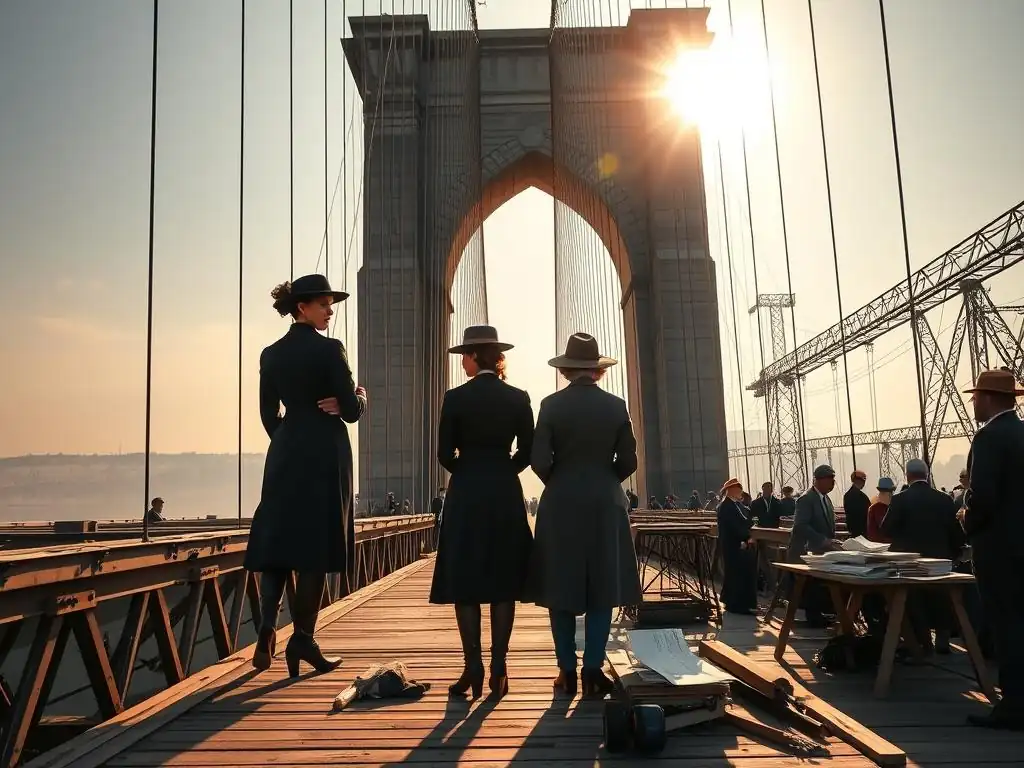
Emily Warren Roebling stands as an extraordinary figure in the history of civil engineering, particularly for her instrumental role in the completion of the Brooklyn Bridge. While not formally trained as an engineer, her practical education in the field was unparalleled. When her husband, Washington Roebling, the chief engineer of the Brooklyn Bridge, became incapacitated by caisson disease in 1872, Emily stepped into an unprecedented role, effectively taking over the day-to-day management and technical oversight of the monumental project for over a decade.
She immersed herself in the intricate details of bridge construction, studying higher mathematics, strength of materials, cable fabrication, and stress analysis. Emily became the primary liaison between her bedridden husband and the project site, interpreting his instructions, delivering orders to assistants and contractors, and reporting on progress. Her profound understanding of the bridge's complex engineering, combined with her exceptional administrative skills, ensured the successful completion of what would become one of the most iconic women civil engineers historical structures.
Emily Roebling's Role in the Brooklyn Bridge Construction
For over eleven years, from 1872 until the bridge's grand opening in 1883, Emily Roebling was the unwavering force behind the Brooklyn Bridge's construction. She meticulously managed the workforce, oversaw material procurement, and navigated the intricate political and financial challenges inherent in such a colossal undertaking. Her presence on site and her deep grasp of the engineering specifications allowed her to troubleshoot problems, negotiate with suppliers, and address concerns from city officials and the public.
Her involvement extended far beyond mere communication; she became an expert in the bridge's pneumatic caissons, its innovative steel wire cables, and its intricate suspension system. Emily Roebling was often the only person who fully comprehended the entirety of the project, from its theoretical design to its practical execution. Her tireless dedication ensured that work progressed smoothly, culminating in the triumphant opening of the bridge, a testament to her unrecognized but indispensable engineering prowess, making it a pioneering example of women civil engineers historical structures.
Roebling's Engineering Expertise and Leadership
Emily Roebling's self-taught engineering expertise was so profound that she commanded the respect of the project's engineers, contractors, and even the public. She demonstrated a deep understanding of the structural integrity of the bridge, capable of discussing technical specifications with the leading minds of the era. Her leadership was not just administrative; it was technical, ensuring that the design principles were faithfully executed and that construction met the highest standards of quality and safety.
Her intellectual contributions were so significant that she presented papers to engineering societies on aspects of the bridge's construction, even though she was not formally recognized as a member. At the bridge's opening ceremony in 1883, Abram S. Hewitt, a prominent politician, publicly acknowledged her pivotal role, stating that the bridge was "an everlasting monument to the sacrificing devotion of a woman and of her capacity for higher education and for her remarkable executive ability." Her legacy firmly establishes the Brooklyn Bridge as one of the most significant women civil engineers historical structures.
Nora Stanton Blatch Barney: A Trailblazer in Civil Engineering
Nora Stanton Blatch Barney, granddaughter of suffragist Elizabeth Cady Stanton, was a true pioneer in civil engineering and a fierce advocate for women's rights. In 1905, she made history by becoming the first woman in the United States to earn a degree in civil engineering from Cornell University. Immediately after graduation, she began her professional career at the American Bridge Company, a leading structural steel company, where she worked on designs for bridges and other structures.
Her early career also included a role at the New York Public Service Commission, where she contributed to the design of water supply systems and subway tunnels. In a significant milestone for women civil engineers historical structures, Blatch Barney also became the first woman admitted as a junior member of the American Society of Civil Engineers (ASCE) in 1905, a groundbreaking achievement that challenged the male-dominated professional landscape of the time.
Nora Stanton Blatch Barney's Engineering Career and Suffrage Activism
Nora Stanton Blatch Barney's engineering career was inextricably linked with her passionate activism for women's suffrage and equal rights. She firmly believed that women's intellectual capabilities were equal to men's and that they deserved full participation in all professions, including engineering. She used her professional achievements as tangible proof to advocate for greater opportunities for women, often speaking publicly about the need to break down barriers.
Throughout her career, Blatch Barney engaged in various engineering projects, including structural design, concrete construction, and later, real estate development and management. She was a vocal proponent of women entering technical fields, demonstrating through her own work that women could excel in demanding scientific and engineering roles. Her dual commitment to her profession and social justice set a powerful precedent for future generations of women civil engineers historical structures.
Challenges and Discrimination Faced by Blatch Barney
Despite her qualifications and significant contributions, Nora Stanton Blatch Barney faced persistent discrimination throughout her career, particularly from the American Society of Civil Engineers. After being admitted as a junior member in 1905, she applied for full membership in ASCE in 1916, having met all the technical and experience requirements. However, her application was repeatedly denied, solely due to her gender, despite ASCE's bylaws not explicitly excluding women.
In response to this blatant discrimination, Blatch Barney took legal action, suing ASCE in 1916 for denying her full membership. While her lawsuit was ultimately unsuccessful in forcing ASCE to grant her full membership at that time, it was a landmark case that drew public attention to the systemic gender bias in professional organizations. This legal battle highlighted the significant barriers that even highly accomplished early women civil engineers historical structures encountered in gaining full recognition and equality within their chosen profession.
Elsie Eaves: First Female Member of ASCE
Elsie Eaves made history in 1927 by becoming the first female full member of the American Society of Civil Engineers (ASCE), a pivotal moment for women in engineering. A graduate of the University of Colorado Boulder with a degree in Civil Engineering in 1920, Eaves embarked on a distinguished career that spanned over four decades, primarily with McGraw-Hill Publishing Co. Her work focused on the vital, yet often unsung, area of construction data and cost analysis, impacting countless projects across the nation.
Eaves joined Engineering News-Record and Construction Methods, two influential publications within the construction industry. Her meticulous approach to collecting, organizing, and analyzing vast amounts of data on construction trends, building permits, and project costs proved invaluable. Her contributions helped to professionalize the economic forecasting within the construction sector, making her an indispensable figure in the background of many women civil engineers historical structures.
Eaves' Contributions to Engineering Data and Cost Analysis
Elsie Eaves was instrumental in developing and maintaining what became known as the "Dodge Reports," comprehensive statistical analyses of construction activity and costs. These reports provided critical insights into market conditions, material costs, labor trends, and regional construction volumes. Her work transformed raw data into actionable intelligence, allowing engineers, contractors, and investors to make informed decisions about project feasibility, budgeting, and scheduling.
Her ability to synthesize complex economic and technical information made her a leading authority in construction economics. Eaves' data-driven insights helped to identify emerging trends, assess risks, and optimize resource allocation for large-scale infrastructure projects across the United States. Her contributions, though not directly involving the design of physical structures, were fundamental to the efficient planning and execution of numerous women civil engineers historical structures throughout the mid-20th century.
Breaking Barriers in Professional Organizations
Elsie Eaves' achievement in becoming the first female full member of ASCE in 1927 was a monumental step forward for women in civil engineering. While Nora Blatch Barney had been a junior member, Eaves' full membership signified a greater acceptance and recognition of women's professional capabilities within the most prestigious civil engineering organization in the United States. This opened the door for subsequent generations of women to gain equitable professional standing.
Her long and illustrious career, marked by unwavering professionalism and significant contributions to the industry, further solidified the legitimacy of women's presence in engineering. Eaves' success demonstrated that women possessed the intellectual rigor, analytical skills, and dedication required for a successful engineering career, effectively challenging the prevailing gender biases that had long excluded women from full participation and recognition in the field of women civil engineers historical structures.
Iconic Structures and Projects Led or Influenced by Women Engineers

The Brooklyn Bridge: A Testament to Women's Engineering Skill
The Brooklyn Bridge stands as a monumental testament to human ingenuity and, crucially, to the often-unacknowledged engineering skill of a woman. While John A. Roebling conceived the design and his son Washington Roebling oversaw much of its construction, it was Emily Warren Roebling who truly brought the project to fruition during its most challenging phase. Her decade of dedicated oversight, meticulous attention to detail, and profound understanding of complex engineering principles were indispensable to its completion.
Completed in 1883, this iconic structure, spanning the East River between Manhattan and Brooklyn, embodies the perseverance of early women civil engineers historical structures. It remains a symbol of innovation, having been the longest suspension bridge in the world at its opening, and a structure whose very existence owes a significant debt to the quiet, determined efforts of a woman who effectively served as its chief engineer.
The Puente de la Mujer: A Symbol of Modern Engineering Design
The Puente de la Mujer (Woman's Bridge) in Buenos Aires, Argentina, designed by renowned architect Santiago Calatrava and completed in 2001, serves as a modern symbol that, while not directly designed by an early female engineer, intentionally celebrates women's grace and strength. This striking pedestrian bridge, located in the Puerto Madero district, is one of the few bridges in the world that rotates 90 degrees to allow boat traffic to pass, showcasing cutting-edge engineering.
Its name, "Woman's Bridge," and its artistic design are intended to acknowledge women's influence and presence in society and architecture. The bridge's form, with a single mast from which cables suspend the deck, is said to represent a couple dancing the tango, with the mast being the man and the curved profile of the bridge representing the woman. This symbolic gesture aligns with a growing contemporary recognition of the historical and ongoing contributions of women to the built environment, building upon the legacy of women civil engineers historical structures.
Women's Influence on the Architectural Vision
While Santiago Calatrava is male, the very naming and artistic concept of the Puente de la Mujer implicitly acknowledge the pivotal role of women in shaping culture and urban landscapes. The bridge's aesthetic appeal and its symbolic resonance serve as a contemporary reminder to seek out and celebrate the often-unseen hands and minds, including those of women, that contribute to monumental architectural and engineering achievements.
This bridge, through its deliberate naming and elegant design, encourages a broader perspective on who influences our built environment. It represents a modern shift towards recognizing diversity in design and inspiration, a shift that owes much to the pioneering efforts of early women civil engineers historical structures who first broke barriers and paved the way for women to be seen as integral to the world of architecture and engineering.
Addressing Engineering Challenges in a Modern Context
The Puente de la Mujer is an engineering marvel, featuring a single, sharply angled mast that supports the entire structure via suspension cables. This cantilever spar cable-stayed bridge is designed to rotate on a central pylon, a complex mechanical feat that allows the central section to swing open for maritime traffic in a matter of minutes. This sophisticated design required advanced structural analysis and material science, pushing the boundaries of modern civil engineering.
Although a contemporary structure, its complex engineering challenges resonate with the historical ingenuity required for women civil engineers historical structures. It represents the ongoing evolution of the field, where innovative solutions are continually sought for complex urban demands. The bridge stands as a testament to the fact that engineering, whether historical or modern, thrives on bold vision and meticulous execution, qualities exemplified by both its designer and the pioneering women who paved the way.
The Hoover Dam: Unsung Contributions to a Monumental Project
The Hoover Dam, completed in 1936, stands as one of the most monumental engineering feats of the 20th century, a colossal structure that harnessed the Colorado River. While the narrative surrounding its construction often focuses on the thousands of male laborers and engineers, women also played crucial, albeit often unsung, roles in making this project a reality. Their contributions, though not always direct "engineering" in the traditional sense, were indispensable to the dam's success.
Women worked in a variety of essential support capacities at the Hoover Dam site and in the nascent town of Boulder City. They served as nurses, teachers for the workers' children, librarians, telephone operators, and in critical administrative and data management roles. These positions, while not always visible, were fundamental to maintaining the well-being of the workforce, organizing project logistics, and ensuring the smooth flow of information for such a massive undertaking, thereby influencing the broader scope of women civil engineers historical structures.
Data Analysis and Project Management Roles
Behind the scenes at the Hoover Dam, women were heavily involved in technical support and project management. In the drafting rooms and administrative offices, women performed meticulous calculations, managed vast archives of blueprints, and organized the immense volume of data generated by the construction. This included tracking material shipments, labor hours, expenditures, and progress reports, all of which required precision and an understanding of the project's technical demands.
Their work in data analysis and record-keeping was vital for effective project oversight, resource allocation, and scheduling. Without their diligent efforts in these areas, the sheer scale and complexity of the Hoover Dam project would have been unmanageable. These contributions highlight that the success of women civil engineers historical structures extends beyond direct design and construction to encompass the critical, often overlooked, administrative and analytical functions that underpin large-scale engineering endeavors.
Recognizing the Overlooked Contributions of Women
The historical narrative of the Hoover Dam, like many grand infrastructure projects of its era, tends to emphasize the male engineers and construction workers who physically built it. However, a more comprehensive view reveals that the collective effort required the contributions of diverse individuals in various capacities. Recognizing the women who supported the project, whether in technical support, administration, or community building, is essential for a complete understanding of its success.
These "unsung" contributions underscore the broader impact of women in shaping significant historical structures. By acknowledging their roles, we broaden the definition of what constitutes a contribution to civil engineering and ensure that the full spectrum of human effort behind these monumental achievements is properly celebrated. This expanded recognition is vital for appreciating the full scope of women civil engineers historical structures and their enduring legacy.
The Lasting Legacy of Early Women Civil Engineers
Inspiring Future Generations of Women in STEM
The stories of early women civil engineers historical structures, such as Emily Warren Roebling, Nora Stanton Blatch Barney, and Elsie Eaves, serve as powerful beacons of inspiration for future generations of women in STEM. Their audacious pursuit of careers in a field that actively resisted their presence demonstrates incredible resilience, intellectual prowess, and a profound commitment to their passion. By bringing their achievements to light, we provide tangible role models who challenge outdated notions of who can be an engineer.
These narratives show young girls and women that despite historical and ongoing barriers, it is possible to not only enter but also excel in civil engineering. Their triumphs illustrate that determination, combined with skill, can overcome significant obstacles, encouraging more diverse talent to consider contributing to the built world. The visibility of these pioneers helps to dismantle psychological barriers, fostering a belief that engineering is a field open to all who possess the aptitude and drive.
Breaking Down Stereotypes and Promoting Diversity in Engineering
The historical presence and contributions of women in civil engineering are instrumental in breaking down entrenched stereotypes about gender and capability. For decades, engineering was often portrayed as an exclusively male domain, requiring traits traditionally associated with men. The work of early women civil engineers historical structures directly refutes these narrow perceptions, demonstrating that women possess the analytical rigor, problem-solving skills, and leadership qualities essential for the profession.
Promoting diversity in engineering is not just about fairness; it is about fostering innovation and creating better solutions. Diverse teams, including those with a significant representation of women, bring different perspectives, experiences, and approaches to complex problems, leading to more robust and creative designs. The legacy of these pioneering women helps to cultivate a more inclusive culture within engineering, recognizing that a broader range of voices leads to a stronger, more adaptable, and more impactful field.
The Continuing Need for Recognition and Support for Women in Civil Engineering
Despite the groundbreaking efforts of early pioneers and the progress made, women remain significantly underrepresented in civil engineering today. While the percentage of women in engineering fields has increased, civil engineering still lags behind some other STEM disciplines. For instance, recent data from the U.S. Bureau of Labor Statistics indicates that women comprise approximately 16-17% of civil engineers in the United States, a figure that, while improved from single digits decades ago, still highlights a substantial gender gap.
This continuing disparity underscores the critical need for ongoing recognition and robust support for women in civil engineering. This includes promoting equitable opportunities, fostering inclusive workplace cultures, providing mentorship programs, and actively celebrating the achievements of both historical and contemporary female engineers. By continuing to highlight the profound impact of women civil engineers historical structures, we reinforce the message that women are integral to the profession's past, present, and future, and inspire further progress towards true gender parity.
Conclusion: Celebrating the Audacity and Brilliance of Women in Civil Engineering Historical Structures
A Call to Remember and Acknowledge the Contributions of Female Engineering Pioneers
The stories of early women civil engineers are narratives of incredible audacity and brilliance, often overshadowed by a male-centric historical record. From Emily Warren Roebling's indispensable role in the Brooklyn Bridge to Nora Stanton Blatch Barney's trailblazing educational and professional achievements, and Elsie Eaves' foundational contributions to construction data, these women defied the formidable barriers of their time to leave an indelible mark on the built world. It is imperative that their contributions to women civil engineers historical structures are not just remembered, but actively acknowledged and celebrated.
This article serves as a call to action for a more inclusive historical narrative, urging educators, historians, and the public to recognize the full scope of human ingenuity behind our iconic structures. By ensuring that the legacies of these female engineering pioneers are properly attributed and integrated into our collective memory, we honor their perseverance and provide a more accurate and inspiring account of civil engineering history.
The Future of Women in Civil Engineering: Building on a Strong Foundation
The groundwork laid by these courageous early women civil engineers has created a stronger, albeit still evolving, foundation for women entering the profession today. The increasing number of women enrolling in engineering programs and securing professional roles is a direct testament to the enduring impact of these pioneers. Their struggles and triumphs have paved the way for greater acceptance, improved opportunities, and growing recognition for female engineers.
As we look to the future, the civil engineering profession stands to benefit immensely from further diversifying its ranks. By actively supporting and promoting women in the field, we ensure a richer tapestry of ideas, more innovative solutions to complex challenges, and a built environment that truly reflects the needs and perspectives of all members of society. The legacy of women civil engineers historical structures provides a powerful impetus to continue building a future where every individual's contribution to engineering is fully valued and celebrated.
Frequently Asked Questions
What were some of the major obstacles faced by early women civil engineers?
They faced significant gender bias, limited educational opportunities, and difficulty gaining acceptance in a male-dominated field. Societal expectations often discouraged women from pursuing engineering careers.
Did any women civil engineers contribute to the design or construction of famous historical structures?
Yes, though often uncredited, some early women engineers were involved in various projects. Research is uncovering more evidence of their participation in historical infrastructure development.
Why is it important to highlight the contributions of women in science history, especially in fields like civil engineering?
It's crucial to recognize their achievements to challenge historical biases, inspire future generations of women, and provide a more complete and accurate representation of scientific progress.
What kind of groundbreaking work did these women civil engineers do?
They worked on projects ranging from bridge design and construction to water management and urban planning. Their contributions were often innovative and essential to the development of infrastructure.
Where can I find more information about women civil engineers and their contributions to historical structures?
Websites like WomenInScienceHistory.com, academic journals, and specialized archives offer resources. Search for biographies and research papers focusing on early female engineers.
Final Reflection: The Enduring Legacy of Audacity
The stories of these pioneering women, initially relegated to the margins of history, resonate powerfully today, reminding us that innovation and progress are born from challenging the status quo. Their contributions, often overlooked, stand as tangible testaments to their skill, resilience, and unwavering belief in their abilities, proving that talent knows no gender.
The impact of these early women civil engineers extends far beyond the physical structures they created. Their courage paved the way for future generations of women in STEM, inspiring them to break barriers and pursue their passions without limitation. The most common way people give up their power is by thinking they don't have any.
- Alice Walker. This quote encapsulates the spirit of these women who, despite facing immense societal pressures, dared to claim their power and shape the world around them.
Let us remember and celebrate the audacity of these women. Their stories are not just historical accounts; they are blueprints for a future where opportunity is truly equal. Consider the structures, both literal and metaphorical, that you are building in your own life. What barriers can you break? What legacy will you leave? Embrace the spirit of these pioneering women and dare to build a world where everyone has the chance to contribute their unique talents and shape a brighter future.
Build Your Own Legacy: Empower the Next Generation of Female Engineers!
Thank you for diving into the inspiring stories of these pioneering women! We hope you've discovered a renewed appreciation for their contributions and the impact women can have in STEM. Now, let's translate that inspiration into action!
- Share this article with a young woman who dreams of building a better world – you never know, you might ignite her passion!
- Explore resources and organizations dedicated to supporting women in STEM. Consider donating or volunteering your time.
- Think about a problem in your community that could be solved with engineering principles – what small steps can YOU take to contribute to a solution?
What's one thing you learned from these incredible women that you plan to apply to your own life or work?