
A Delicate Balance: The Internal Conflict of Duty vs. Discovery for Historical Women Scientists

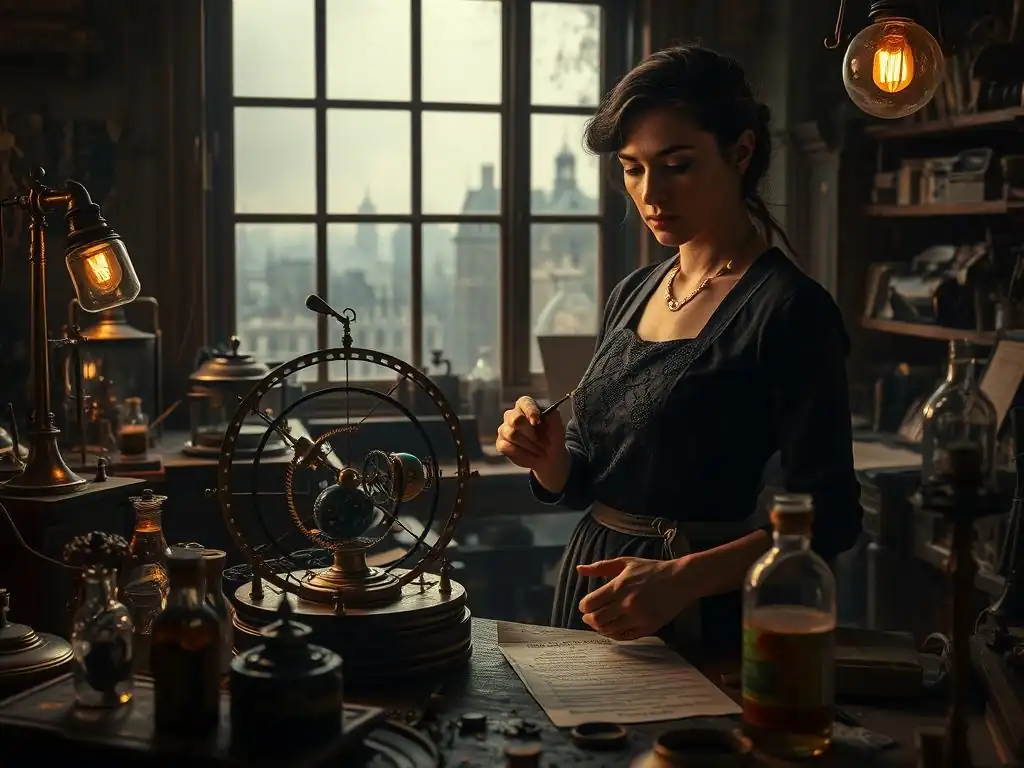
Welcome to WomenInScienceHistory.com, where we unearth the remarkable stories of women who shaped the scientific world. This week, we delve into a fascinating and often overlooked aspect of their lives: the internal conflict these brilliant minds faced, torn between their scientific passions and societal expectations. Prepare to explore the delicate balance of duty versus discovery and uncover the personal sacrifices made by these pioneering women scientists, a topic that has shaped their legacy. What drove them to persevere despite these internal struggles? Read on to find out.
- Introduction: Exploring the Internal Struggles of Women Scientists in History
- Societal Norms and Expectations: The Weight on Women's Shoulders
- The Internal Conflict: Duty vs. Discovery
- Examples of Historical Women Scientists and Their Internal Conflicts
- Strategies for Navigating the Conflict: How Women Scientists Found a Balance
- The Lasting Impact: The Legacy of Women Scientists and Their Internal Struggles
- Conclusion: Acknowledging and Addressing the Ongoing Challenges for Women in Science
-
Frequently Asked Questions
- What types of internal conflicts did women scientists historically face?
- How did societal expectations contribute to the internal conflict of duty for women scientists?
- What is the significance of highlighting the stories of women scientists on platforms like WomenInScienceHistory.com?
- How did the male-dominated nature of the scientific community impact women scientists' sense of duty and their ability to pursue discovery?
- In what ways did women scientists reconcile the internal conflict between duty and discovery?
- Final Reflection: Navigating the Labyrinth of Legacy
- Unearth Your Inner Pioneer!
Introduction: Exploring the Internal Struggles of Women Scientists in History
Women in Science History: Highlighting the Societal Pressures Faced by Female Scientists
Throughout history, women who dared to venture into the male-dominated realms of science faced an arduous journey, often fraught with immense societal pressures. These pressures stemmed from deeply entrenched gender roles that dictated a woman's primary sphere was the home, not the laboratory or the lecture hall. From the 17th century through much of the 20th, societal norms actively discouraged, and at times outright prevented, women from pursuing higher education or professional scientific careers, leading to significant limitations on their opportunities and recognition.
This pervasive social environment meant that even when women managed to gain an education or secure a research position, they frequently encountered skepticism, professional isolation, and a constant need to prove their intellectual capabilities. The struggle for resources, access to scientific networks, and fundamental recognition for their intellectual contributions was a pervasive reality. This often created a silent but profound "women scientists internal conflict duty," forcing them to reconcile their intellectual ambitions with the expectations of the world around them.
The Core Conflict: Balancing Personal Ambition with Societal Expectations in Scientific Pursuits
At the heart of the experience for many historical women scientists lay a profound internal conflict: the tension between their inherent drive for scientific discovery and the overwhelming weight of societal expectations. This wasn't merely an external battle against discrimination but an intense personal struggle to balance their intellectual passion with the duties imposed by family, domestic life, and prevailing cultural norms. The pursuit of knowledge, for many women, was seen as a deviation from their prescribed roles, leading to a constant negotiation of their identity and priorities.
This core conflict often manifested as a difficult choice between dedicating oneself fully to scientific research or fulfilling traditional domestic responsibilities. For a woman aspiring to be a physicist in the early 1900s, for example, the societal "duty" was often to marry and raise children, making her scientific "discovery" a secondary, often hidden, pursuit. This pervasive dilemma shaped their careers, personal lives, and ultimately, their contributions to science, making the "women scientists internal conflict duty" a central theme in their biographies.
Societal Norms and Expectations: The Weight on Women's Shoulders
Gender Roles and Scientific Pursuits: How Societal Expectations Limited Women's Opportunities
For centuries, prevailing gender roles rigidly defined women's place in society, largely confining them to the domestic sphere. This meant that access to formal education, especially in scientific disciplines, was severely restricted or entirely denied. In the 18th and 19th centuries, for instance, universities were almost exclusively male institutions, and women who sought scientific knowledge often had to rely on self-study, private tutors, or informal apprenticeships within their families, if such opportunities existed.
These societal expectations went beyond mere access to education; they permeated professional life. Even when women managed to acquire scientific training, they were often barred from holding official academic positions, joining scientific societies, or receiving salaries commensurate with their male counterparts. This systemic exclusion meant that a woman's scientific pursuits were frequently viewed as an amateur hobby rather than a legitimate career, creating an environment where their "women scientists internal conflict duty" was amplified by a lack of professional validation.
The Conflict Between Domestic Duty and Scientific Discovery: A Historical Perspective
The expectation that women manage households, raise children, and perform extensive domestic tasks was a formidable barrier to scientific engagement. For many historical women scientists, the day-to-day demands of running a home left little time, energy, or mental space for rigorous scientific inquiry, which typically required dedicated hours in laboratories, observatories, or libraries. This was particularly true before the widespread availability of household help or modern conveniences, often forcing women to choose between their intellectual aspirations and their perceived domestic "duty."
This conflict was a pervasive theme, from the unacknowledged contributions of women who assisted their scientific husbands to the struggles of those who attempted independent research. A woman might spend her mornings preparing meals and managing servants, only to dedicate her afternoons and evenings to astronomical observations or botanical classifications, often in isolation. This constant negotiation between the demands of the home and the call of discovery profoundly shaped their scientific output and their internal experience, highlighting a significant "women scientists internal conflict duty."
Marriage and motherhood presented particularly acute challenges for women pursuing scientific careers. In many historical contexts, a woman's entry into marriage was often seen as the end of any professional aspirations, as her primary role shifted entirely to her husband's household and the raising of children. For those who attempted to combine these roles, the societal disapproval could be intense, leading to isolation and criticism for seemingly neglecting their familial "duties."
The practical realities were equally daunting. Childcare responsibilities, often without adequate support, frequently forced women to abandon or significantly curtail their scientific work. Even for pioneering figures, the balance was precarious. For example, some early female astronomers would work late into the night after their children were asleep, or integrate their observations around their domestic schedules. This constant navigation of family obligations versus the demands of scientific contributions was a deeply personal and often exhausting "women scientists internal conflict duty."
The Internal Conflict: Duty vs. Discovery
The Psychological Impact of Suppressed Ambition on Women Scientists
The constant negotiation between societal expectations and personal ambition often took a severe psychological toll on historical women scientists. Having to suppress or downplay their intellectual curiosity and professional aspirations could lead to profound feelings of frustration, regret, and a sense of unfulfilled potential. Many women experienced isolation, as their scientific interests were often not understood or supported by their families or communities, deepening their internal struggle.
This suppression could manifest as chronic stress or a pervasive sense of guilt when they did manage to dedicate time to their scientific work, feeling they were neglecting their "duties." The "women scientists internal conflict duty" was not just about time management but about identity and self-worth. It was a battle fought within the confines of their own minds, often in silence, as they grappled with the societal message that their intellectual pursuits were secondary to their domestic roles.
The Ethical Dilemma: Prioritizing Family vs. Contributing to Scientific Advancement
For many women scientists, the conflict between duty and discovery presented a genuine ethical dilemma. Was it "selfish" to desire a career in science, especially when family members, particularly children, demanded attention and care? This was a common societal judgment, often internalized, that placed a heavy burden on women. The decision to dedicate significant time and energy to research could be perceived as a neglect of familial responsibilities, leading to profound moral quandaries.
This dilemma was often exacerbated by the lack of institutional support for working mothers or dual-career couples. Without childcare facilities, flexible work arrangements, or understanding colleagues, women faced an impossible choice. They had to weigh the potential for a groundbreaking scientific contribution against the immediate needs of their families, a profound "women scientists internal conflict duty" that few men of their era ever had to confront.
Case Studies: Examples of Women Scientists Grappling with Internal Conflict
The internal conflict between duty and discovery was not an abstract concept but a lived reality for countless historical women scientists. Their biographies are replete with instances where they grappled with these competing demands, often making profound sacrifices. The challenges faced by these pioneers serve as powerful illustrations of the deep-seated "women scientists internal conflict duty" that characterized their lives.
From the relentless demands of scientific research alongside motherhood, to navigating political persecution while pursuing fundamental physics, to fighting for recognition in a biased system, these women exemplify the multifaceted nature of this struggle. Their stories illuminate how profoundly societal pressures and personal circumstances shaped their ability to contribute to science, and how their internal strength allowed many to persist despite these immense hurdles.
Examples of Historical Women Scientists and Their Internal Conflicts
Marie Curie: A Pioneer's Struggle with Family Responsibilities and Scientific Passion
Marie Skłodowska Curie, a towering figure in the history of science, epitomizes the "women scientists internal conflict duty" through her relentless pursuit of radioactivity research alongside the demands of motherhood. She and her husband, Pierre Curie, conducted groundbreaking work in a drafty, poorly equipped shed, leading to the isolation of polonium and radium and ultimately sharing the Nobel Prize in Physics in 1903. Yet, during this intense period, Marie was also raising two young daughters, Irène and Ève.
After Pierre's tragic death in 1906, Marie not only took over his professorship at the Sorbonne – becoming the first woman to hold such a position – but also continued her research with even greater fervor, eventually winning an unprecedented second Nobel Prize, this time in Chemistry, in 1911. Despite her monumental scientific achievements, she faced immense public scrutiny, particularly regarding her personal life after Pierre's death, with accusations of impropriety that threatened to derail her career.
She bravely navigated these personal attacks while simultaneously managing her demanding research, her role as a single mother, and her public duties, showcasing an extraordinary balance of her scientific passion with her familial and societal responsibilities.
Lise Meitner: Balancing Jewish Heritage, Exile, and Nuclear Fission Research
Lise Meitner, an Austrian-Swedish physicist, faced a profound "women scientists internal conflict duty" exacerbated by her Jewish heritage and the political turmoil of 20th-century Europe. For decades, she collaborated closely with chemist Otto Hahn in Berlin, forming a highly productive partnership that led to critical insights into nuclear physics. Their joint work on neutron bombardment of uranium laid the groundwork for the discovery of nuclear fission.
However, with the rise of Nazism, Meitner, being Jewish, was forced to flee Germany in July 1938, abandoning her laboratory and her life's work. This forced emigration to Sweden created an immense internal conflict: the duty to survive and find safety versus her burning desire to continue her research and collaborate with Hahn.
Despite her exile, she continued to communicate with Hahn, providing the crucial theoretical interpretation that explained nuclear fission. Yet, due to her forced absence and the political climate, Otto Hahn alone received the Nobel Prize in Chemistry in 1944 for the discovery of nuclear fission, a profound injustice that highlighted how external duties and circumstances could overshadow and deny recognition for a woman's scientific contributions.
Rosalind Franklin: Balancing Data Interpretation and Recognition
Rosalind Franklin, a brilliant British biophysicist and X-ray crystallographer, exemplified the "women scientists internal conflict duty" in the context of professional recognition and gender bias within scientific institutions. Her meticulous work on X-ray diffraction images of DNA, particularly "Photo 51," provided critical data that was instrumental in elucidating the double helix structure of DNA. Working at King's College London in the early 1950s, Franklin faced a highly male-dominated and often unwelcoming environment.
Her internal conflict stemmed from the duty to rigorously interpret her groundbreaking data and the professional duty to assert her intellectual property and secure proper recognition, a struggle made immensely difficult by the prevailing gender bias. Her colleagues, notably Maurice Wilkins, shared her data without her explicit permission or knowledge with James Watson and Francis Crick, who subsequently published their DNA model in 1953, with Franklin's contribution largely unacknowledged at the time.
Franklin continued her significant work on viruses, but the systemic biases she faced, including a lack of equal treatment and recognition, forced her into a constant internal battle to maintain her scientific integrity and assert her rightful place in discoveries. She was posthumously recognized for her vital contribution to the discovery of the structure of DNA, decades after her early death, highlighting the enduring impact of this "women scientists internal conflict duty."
Support Systems and Mentorship: The Importance of Community for Women in Science
Despite the pervasive societal barriers, many historical women scientists found ways to navigate their "women scientists internal conflict duty" through various support systems. While formal mentorship programs were rare, informal networks of like-minded women, often through salons or correspondence, provided intellectual stimulation and emotional solidarity. These communities offered a rare space where their scientific aspirations were not only tolerated but celebrated.
In some fortunate instances, women found supportive male colleagues or family members – such as fathers, brothers, or husbands – who actively encouraged their scientific pursuits, provided resources, or even collaborated with them. Figures like Caroline Herschel, who worked closely with her astronomer brother William, or Marie Curie, who had a strong partnership with Pierre, exemplify how crucial such individual support could be in enabling women to pursue their scientific passions despite societal expectations. These relationships often served as a vital buffer against the isolating effects of their internal and external struggles.
Redefining Success: Shifting Perspectives on Achievement and Fulfillment
For many women scientists, navigating the "women scientists internal conflict duty" often involved a pragmatic redefinition of success. Traditional markers of scientific achievement, such as university professorships, prestigious awards, or membership in elite scientific societies, were often inaccessible to them. Consequently, some women found fulfillment in contributing to science in less conventional ways, such as through private research, extensive botanical or entomological collections, or by assisting male relatives in their scientific endeavors.
This shift in perspective allowed them to continue their intellectual pursuits even when formal recognition was denied. Their achievements might not have been heralded publicly during their lifetimes, but the personal satisfaction derived from discovery, meticulous observation, or the advancement of knowledge became its own reward. This internal recalibration of what constituted success was a powerful coping mechanism against the external limitations imposed by society.
Creative Solutions: Finding Innovative Ways to Integrate Duty and Discovery
Faced with the dual demands of domestic duty and scientific ambition, historical women scientists often devised remarkably creative solutions to integrate their passions. Some conducted extensive research from their homes, transforming spare rooms into makeshift laboratories or studies. For instance, many renowned botanists and entomologists meticulously cataloged specimens and conducted observations within their own gardens or local environments, fitting their scientific work around household chores.
Others found ways to publish their work under pseudonyms or anonymously to bypass gender bias and ensure their research reached the wider scientific community. There were also instances where women leveraged their domestic roles to facilitate scientific work, such as by hosting scientific gatherings in their homes, thereby creating informal intellectual hubs. These innovative approaches were not just practical necessities but testaments to their unwavering dedication to scientific discovery, allowing them to carve out a space for their intellectual lives amidst the prevailing "women scientists internal conflict duty."
The Lasting Impact: The Legacy of Women Scientists and Their Internal Struggles
Inspiring Future Generations: Lessons Learned from Historical Women Scientists
The stories of historical women scientists, particularly their navigation of the "women scientists internal conflict duty," serve as powerful and enduring sources of inspiration for future generations. Their perseverance in the face of immense societal pressure, gender discrimination, and personal sacrifice highlights an indomitable spirit of inquiry and dedication. Learning about their struggles and triumphs provides a crucial historical context for understanding the ongoing challenges women face in STEM fields today.
Their biographies offer valuable lessons on resilience, the importance of self-belief, and the courage to pursue one's passions despite formidable obstacles. By shedding light on the often-overlooked narratives of these pioneers, we not only give them the recognition they deserve but also empower aspiring female scientists to confront their own contemporary challenges with a deeper understanding of the legacy they inherit. Their lives are a testament to the fact that scientific talent knows no gender.
Challenging Societal Norms: The Ongoing Fight for Gender Equality in Science
The historical "women scientists internal conflict duty" was a direct consequence of deeply entrenched societal norms that limited women's roles and opportunities. While significant progress has been made, the fight for true gender equality in science continues. Contemporary women in STEM still face issues such as unconscious bias, the gender pay gap, and the persistent challenge of balancing career demands with family responsibilities, often without adequate institutional support.
By examining the historical context of these conflicts, we gain a clearer perspective on the systemic nature of these challenges. Recognizing how past societal expectations imposed severe internal conflicts on women scientists helps to dismantle the notion that any current disparities are due to individual choices rather than systemic issues. This understanding fuels the ongoing advocacy for equitable policies, inclusive environments, and a cultural shift that truly values diversity in scientific endeavors.
Recognizing the Full Contributions of Women in STEM: Moving Beyond Traditional Narratives
A crucial aspect of honoring the legacy of historical women scientists is to move beyond traditional, often male-centric, narratives of scientific discovery. Many women's contributions were minimized, attributed to male colleagues, or simply erased from historical records due to the very "women scientists internal conflict duty" they faced and the societal structures that undervalued their work. A more complete and accurate historical account is essential to fully appreciate the breadth and depth of their impact.
This involves actively seeking out and highlighting the stories of women who contributed to scientific progress, even if their work was conducted in unconventional settings or received delayed recognition. By acknowledging the unique challenges they overcame, including their internal struggles, we enrich our understanding of scientific history and ensure that future generations receive a more inclusive and truthful account of how knowledge has advanced. This broader recognition is vital for inspiring greater participation and equity in STEM fields.
Conclusion: Acknowledging and Addressing the Ongoing Challenges for Women in Science
The Importance of Understanding the Internal Conflict of Women Scientists
Understanding the historical "women scientists internal conflict duty" is not merely an academic exercise; it is fundamental to appreciating the extraordinary resilience and dedication of female pioneers in science. This deep-seated tension between personal ambition and societal expectations profoundly shaped their lives, forcing them to make difficult choices and often work in isolation or without due recognition. Recognizing this internal struggle sheds light on the unique pressures women faced and continue to face in scientific fields.
It allows us to move beyond simplistic narratives of individual genius and instead understand the systemic barriers that have historically impeded women's full participation in science. By acknowledging the immense internal battles fought by these women, we gain a more nuanced and empathetic perspective on their contributions, highlighting the sheer determination required to pursue discovery against such formidable odds.
Advocating for a More Equitable and Supportive Scientific Community
The historical "women scientists internal conflict duty" serves as a powerful reminder of the need for a more equitable and supportive scientific community today. While the overt societal pressures may have lessened, contemporary women in science still navigate complex challenges related to work-life balance, gender bias, and the disproportionate burden of domestic responsibilities. Addressing these issues requires more than just individual effort; it demands systemic change.
Advocating for policies that promote flexible work arrangements, accessible childcare, and equitable opportunities for advancement is crucial. Fostering a culture that actively champions diversity, recognizes diverse forms of contribution, and consciously works to eliminate bias will minimize the internal conflicts that still burden many women in STEM. By learning from the past, we can collectively strive to create an environment where all scientists, regardless of gender, can pursue discovery without the undue weight of societal or personal duties, ensuring that talent is never stifled by external pressures.
Frequently Asked Questions
What types of internal conflicts did women scientists historically face?
They often wrestled with balancing their scientific ambitions and societal expectations regarding their roles as wives, mothers, and caregivers. This created a constant tension between personal duty and professional pursuits.
How did societal expectations contribute to the internal conflict of duty for women scientists?
Societal norms frequently prioritized women's roles in the home, making it difficult for them to dedicate the necessary time and energy to scientific research and career advancement, leading to immense guilt.
What is the significance of highlighting the stories of women scientists on platforms like WomenInScienceHistory.com?
It helps to correct historical imbalances by acknowledging the contributions of women and provides role models for aspiring female scientists, inspiring future generations to pursue STEM fields.
How did the male-dominated nature of the scientific community impact women scientists' sense of duty and their ability to pursue discovery?
The exclusionary nature of the scientific community often forced women to prove themselves repeatedly, adding pressure and hindering their ability to fully dedicate themselves to research and innovation.
In what ways did women scientists reconcile the internal conflict between duty and discovery?
Some women found ways to integrate their family responsibilities with their scientific work, while others made difficult choices to prioritize either their scientific careers or their domestic lives, each path presenting its own challenges.
The stories of historical women scientists, as explored in this article, are not relics of a bygone era, but rather a vibrant echo resonating with the challenges faced by women in STEM even today. Their internal conflict between societal duty and the burning desire for scientific discovery reveals a persistent struggle for recognition and autonomy that continues to shape the landscape of scientific innovation.
The weight of expectation, the subtle (and sometimes not-so-subtle) pressures to conform, and the constant negotiation between personal ambition and societal roles are themes that transcend time. Understanding these historical struggles allows us to better appreciate the resilience and determination of women scientists, past and present. The most effective way to do it, is to do it.
- Amelia Earhart, a sentiment that resonates deeply with the spirit of women who dared to defy expectations and pursue their passions.
As we reflect on the delicate balance these women scientists navigated, let us consider how we can actively dismantle the barriers that still hinder women's full participation in STEM. Let us champion their voices, celebrate their achievements, and create a future where the pursuit of knowledge is not constrained by gender, but rather enriched by the diverse perspectives and unwavering dedication of all.
Unearth Your Inner Pioneer!
Thanks for exploring the often-untold stories of women who balanced duty and discovery! Now, it's your turn to build upon their legacy.
- Share one untold story of a woman in science you admire with a friend or family member today.
- Delve deeper: Research a specific scientific contribution made by a woman mentioned in this article.
- Join the conversation: Suggest a historical female scientist for us to profile on WomenInScienceHistory.com!
Which scientist's story resonated most with you, and why?