
Grassroots Geniuses: Women Scientists Revolutionizing Local Health in Developing Nations


Welcome to WomenInScienceHistory.com, a space dedicated to uncovering the remarkable stories of women who shaped the scientific landscape. Ever wondered how dedicated women scientists are tackling global health challenges at the grassroots level? Dive into our latest article to discover the inspiring work of "Grassroots Geniuses: Women Scientists Revolutionizing Local Health in Developing Nations," and explore the profound impact they're making in some of the world's most vulnerable communities. Uncover their innovative solutions, the obstacles they've overcome, and their unwavering dedication to improving lives. Prepare to be inspired!
Understanding the Unique Contributions of Female Researchers in Developing Countries
Women scientists in developing countries bring an invaluable perspective to the complex web of global health challenges. Their unique contributions often stem from a deep understanding of local contexts, cultural nuances, and the specific needs of their communities.
Unlike researchers who may parachute in from external institutions, these female scientists often have lived experiences that directly inform their research questions and methodologies, allowing them to identify overlooked health disparities and develop solutions that are culturally appropriate and sustainable. This intimate knowledge fosters trust within communities, which is crucial for effective public health interventions and the successful implementation of new healthcare strategies.
Furthermore, female researchers are often at the forefront of addressing health issues disproportionately affecting women and children, such as maternal mortality, reproductive health, and gender-based violence. Their presence in leadership roles within scientific and medical fields helps to break down traditional barriers, inspiring younger generations and ensuring that research priorities align with the most pressing societal needs. For instance, studies have indicated that health initiatives led by local women frequently achieve higher rates of community participation and adherence, particularly in sensitive areas like family planning or disease prevention, contributing significantly to overcoming global health challenges.
Women Scientists: A Critical Force for Improving Healthcare Access
The impact of women scientists extends far beyond the laboratory; they are a critical force actively improving healthcare access on the ground, directly confronting the global health challenges faced by developing nations. Many dedicate their efforts to developing innovative, low-cost solutions that are scalable and applicable in resource-limited settings. This includes pioneering research into affordable diagnostics, point-of-care technologies, and novel drug delivery systems that can circumvent infrastructure limitations. Their work is essential for bridging the gap between advanced medical knowledge and its practical application in remote villages or underserved urban areas.
Beyond technological advancements, these women are often involved in designing and implementing community health programs, training local healthcare workers, and advocating for policy changes that strengthen health systems. For example, their insights have led to the development of effective community health worker models that extend primary care services to the farthest reaches of rural populations, significantly improving vaccination rates, reducing child mortality, and managing endemic diseases. By focusing on practical, accessible, and community-driven healthcare solutions, women scientists are fundamentally transforming how healthcare is delivered and accessed, making tangible progress against persistent global health challenges.
- Understanding the Unique Contributions of Female Researchers in Developing Countries
- Women Scientists: A Critical Force for Improving Healthcare Access
- What is WomenInScienceHistory.com's primary focus?
- Why is it important to highlight the work of women scientists in global health?
- What kind of challenges did women scientists face historically?
- How are women scientists revolutionizing local health in developing nations?
- What is the overall goal of WomenInScienceHistory.com in showcasing these stories?
Pioneering Women Scientists: Case Studies in Local Health Innovation
Dr. Miriam Were: Championing Community-Based Healthcare in Kenya
Dr. Miriam Were, a distinguished Kenyan public health physician and advocate, stands as a towering figure in community-based healthcare. Born in Kenya in 1940, her illustrious career has been dedicated to improving health outcomes in Africa, particularly through empowering communities to take ownership of their health. Her work with the World Health Organization (WHO) and her grassroots initiatives in Kenya have consistently emphasized primary healthcare as the cornerstone of national health systems, directly addressing the global health challenges prevalent in the region.
Throughout her extensive career, Dr. Were has demonstrated an unwavering commitment to the idea that health is not merely the absence of disease but a state of complete physical, mental, and social well-being, achievable through collective action. Her pioneering efforts laid the groundwork for numerous successful community health programs across Africa, profoundly influencing public health policy and practice. She has received numerous accolades for her contributions, including the first Hideyo Noguchi Africa Prize in 2008 for her medical research and service, underscoring her monumental impact on global health.
Dr. Were's Innovative Approach to Primary Healthcare Delivery
Dr. Miriam Were's innovative approach to primary healthcare delivery centered on the philosophy of "health by the people, for the people." Recognizing that sustainable health improvements could only come from within communities, she championed the training and deployment of community health workers (CHWs) long before it became a widespread global strategy.
Her model focused on empowering local individuals with basic medical knowledge and skills, enabling them to provide essential health services, conduct health education, and facilitate referrals within their own villages. This decentralized approach dramatically improved access to care in remote areas of Kenya, where formal healthcare infrastructure was sparse.
One of the most significant impacts of her work was the reduction in preventable diseases and improved maternal and child health indicators in areas where her model was adopted. For example, in parts of rural Kenya where CHWs were active, rates of childhood immunization saw a notable increase, and there was a discernible reduction in diarrheal diseases due to improved sanitation practices promoted by these local health advocates. Dr. Were's emphasis on local ownership and self-reliance proved highly effective in transforming health behaviors and outcomes, demonstrating a powerful solution to persistent global health challenges.
Overcoming Obstacles: Dr. Were's Journey and Impact
Dr. Miriam Were's journey was not without its challenges, as she navigated limited resources, deeply entrenched cultural practices, and initial skepticism towards new approaches to healthcare delivery. Securing consistent funding for community-based initiatives and convincing traditional authorities of the efficacy of her grassroots models required immense perseverance and diplomatic skill. She often faced the arduous task of building trust in communities where healthcare services were historically inaccessible or mistrusted, requiring extensive dialogue and patient demonstration of tangible benefits.
Despite these obstacles, Dr. Were's tenacity and vision led to a profound and lasting impact on public health, not only in Kenya but across the African continent. Her work provided a blueprint for how primary healthcare could be effectively delivered in low-resource settings, influencing national health policies and inspiring countless public health professionals. Her legacy is one of empowering communities to be active participants in their health journeys, showcasing how dedicated women scientists can overcome significant global health challenges through innovative, community-led solutions.
Dr. Quarraisha Abdool Karim: Leading HIV Prevention Research in South Africa
Dr. Quarraisha Abdool Karim is a world-renowned South African epidemiologist whose groundbreaking research has fundamentally transformed HIV prevention strategies, particularly for women. As the Associate Scientific Director of the Centre for the AIDS Programme of Research in South Africa (CAPRISA), she has dedicated her career to understanding and combating the HIV/AIDS epidemic, which has disproportionately affected her home country. Her work represents a pivotal contribution to addressing one of the most pressing global health challenges of our time.
Her research has consistently focused on developing effective interventions that are accessible and empowering for women, recognizing their particular vulnerability to HIV infection in many societal contexts. Dr. Abdool Karim's scientific rigor and commitment to public health have earned her global recognition, including the prestigious L'Oréal-UNESCO For Women in Science Award in 2015, highlighting her extraordinary impact on the lives of millions. Her leadership in HIV prevention research continues to inspire and drive progress in the fight against AIDS worldwide.
Dr. Abdool Karim's Groundbreaking Research on Tenofovir Gel
Dr. Quarraisha Abdool Karim's most celebrated achievement is her co-leadership of the CAPRISA 004 trial, which conclusively demonstrated the effectiveness of Tenofovir gel as a microbicide to prevent HIV infection in women. This groundbreaking research, published in 2010, was the first study globally to show that a topical gel could safely and effectively reduce the risk of sexually transmitted HIV and genital herpes. The trial found a 39% reduction in HIV acquisition among women who used the gel consistently, a revelation that offered a new, female-controlled method of HIV prevention.
The significance of the Tenofovir gel findings cannot be overstated. Before this, prevention methods largely relied on male condoms or behavioral changes, often difficult for women to negotiate in many social settings. The gel provided women with a discreet tool to protect themselves, giving them autonomy over their sexual health. This scientific breakthrough paved the way for further research into pre-exposure prophylaxis (PrEP) and has influenced global guidelines for HIV prevention, offering a tangible solution to a critical facet of global health challenges.
Empowering Local Communities Through Dr. Abdool Karim's Work
Beyond the scientific breakthrough, Dr. Quarraisha Abdool Karim's work has profoundly empowered local communities, particularly women, in South Africa. Her research ethos is deeply rooted in community engagement, ensuring that studies are conducted ethically, with full participant understanding and involvement. This approach builds trust and ensures that interventions are not only scientifically sound but also culturally acceptable and practically implementable within the target populations. By engaging communities from the outset, her team ensured that the research directly addressed the needs and concerns of the women most affected by the epidemic.
The success of the Tenofovir gel trial empowered countless women by providing them with a concrete means of protection against HIV, fostering greater control over their sexual health and lives. Furthermore, Dr. Abdool Karim's leadership has inspired a new generation of African scientists, particularly women, to pursue careers in research and public health, contributing to building local scientific capacity. Her work serves as a powerful example of how scientific innovation, coupled with community empowerment, can effectively tackle significant global health challenges.
Dr. Agnes Binagwaho: Transforming Rwanda's Healthcare System
Dr. Agnes Binagwaho is a Rwandan pediatrician and public health leader who served as Rwanda's Minister of Health from 2011 to 2016. Her tenure was marked by remarkable progress in rebuilding and transforming Rwanda's healthcare system in the aftermath of the 1994 genocide. Dr. Binagwaho's visionary leadership, coupled with her deep commitment to social justice and equitable healthcare, has made her a globally recognized figure in public health, actively addressing the complex global health challenges faced by developing nations.
Under her guidance, Rwanda achieved significant milestones in health outcomes, often cited as a model for other low-income countries. Her approach emphasized a holistic, patient-centered system that prioritized prevention, community involvement, and the strategic use of technology. Beyond her governmental role, Dr. Binagwaho remains a prominent academic and advocate for global health equity, continuing to influence policy and practice through her research and teaching at various international institutions.
Dr. Binagaho's Sustainable Solutions for Improving Healthcare Access
As Minister of Health, Dr. Agnes Binagwaho implemented a series of sustainable solutions that dramatically improved healthcare access across Rwanda. One of her flagship initiatives was the expansion of the "Mutuelle de Santé," a community-based health insurance scheme that provided near-universal health coverage for the Rwandan population, ensuring that financial barriers did not prevent access to essential services. This innovative financing mechanism enabled millions of Rwandans to receive care they otherwise could not afford.
Under her leadership, Rwanda also significantly bolstered its community health worker program, deploying over 45,000 CHWs across the country by 2015, who played a crucial role in delivering basic health services, conducting health education, and facilitating referrals at the grassroots level. This decentralized approach, combined with robust vaccination campaigns, led to remarkable improvements in health indicators. For instance, Rwanda achieved a 70% decrease in child mortality between 2005 and 2015, and routine childhood immunization rates soared to over 90%, demonstrating the profound impact of her strategic interventions in tackling global health challenges.
Partnering with Global Organizations: Dr. Binagwaho's Collaborative Approach
Dr. Agnes Binagwaho's success in transforming Rwanda's healthcare system was significantly bolstered by her strategic emphasis on partnering with global organizations, academic institutions, and international NGOs. Recognizing the need for external expertise and resources, she actively fostered collaborations that brought vital support to Rwanda's health initiatives. These partnerships ranged from securing funding for specific programs to establishing educational exchanges and research collaborations that built local capacity and introduced cutting-edge medical practices.
For example, her ministry partnered with organizations like Partners In Health and the Clinton Health Access Initiative to strengthen medical infrastructure, improve HIV/AIDS treatment programs, and develop robust health information systems. These collaborations not only provided financial and technical assistance but also facilitated knowledge transfer and the adoption of best practices, ensuring that Rwanda’s health system was resilient and responsive. Dr. Binagwaho's collaborative approach exemplifies how leveraging global partnerships can accelerate progress and achieve sustainable health outcomes in confronting complex global health challenges.
The Impact of Women in Science on Community Health Outcomes
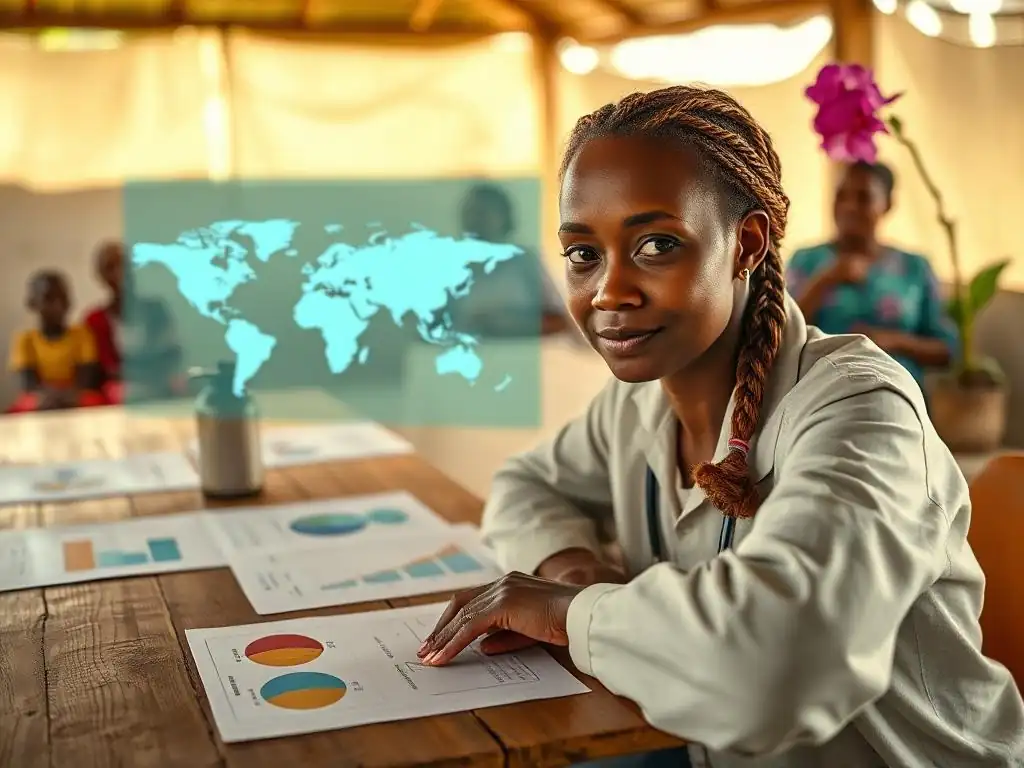
Measuring the Positive Effects of Female-Led Health Initiatives
The positive effects of female-led health initiatives on community health outcomes are increasingly evident and measurable, particularly in developing nations where women scientists are at the forefront of innovation and implementation. When women lead health programs, there is often a greater emphasis on holistic care, including reproductive health, maternal and child welfare, and nutrition, which are critical determinants of overall community well-being. Their leadership can foster greater trust and engagement within communities, especially among women and girls, leading to higher rates of participation in health screenings, vaccination campaigns, and health education programs.
Quantifiable improvements can be observed in various metrics: for instance, regions with strong female leadership in health often report lower rates of maternal and infant mortality, improved rates of childhood immunization, and better management of chronic and infectious diseases. Data from several sub-Saharan African countries, for example, suggests that communities where female health workers or scientists lead initiatives often see an increase in family planning uptake and a reduction in the incidence of preventable diseases. These outcomes underscore the profound impact of women scientists on addressing global health challenges effectively and equitably.
Women Scientists as Agents of Change: Empowering Communities and Driving Progress
Women scientists serve as powerful agents of change, not only through their direct scientific contributions but also by empowering communities and driving broader societal progress. Their presence in leadership roles within health and science challenges traditional gender norms, inspiring young girls and women to pursue education and careers in STEM fields. By demonstrating competence and leadership, they provide tangible role models who can transform aspirations into reality, fostering a new generation of local innovators and problem-solvers.
Beyond their scientific work, many women scientists actively engage in health literacy programs, dispelling myths, combating misinformation, and promoting evidence-based health practices within their communities. This educational outreach empowers individuals to make informed decisions about their health, leading to healthier behaviors and improved community resilience. Their work often has a ripple effect, strengthening local health systems, fostering community self-reliance, and advocating for policies that promote health equity and social justice, all contributing to overcoming global health challenges.
Overcoming Barriers: Challenges Faced by Women Scientists in Developing Countries
Addressing Gender Inequality in Scientific Research and Funding
Despite their profound impact, women scientists in developing countries frequently encounter significant barriers rooted in pervasive gender inequality within scientific research and funding ecosystems. These challenges often begin with unequal access to quality education, particularly in STEM fields, limiting their foundational knowledge and opportunities. As they progress, cultural biases and societal expectations can impose additional burdens, such as disproportionate domestic responsibilities or limited mobility, which hinder their ability to pursue demanding research careers.
Furthermore, women scientists often face discrimination in securing research grants and leadership positions. Studies indicate that female principal investigators in some developing regions receive significantly less funding compared to their male counterparts, limiting their capacity to conduct impactful research. A lack of mentorship opportunities, limited networking avenues, and persistent gender stereotypes within academic and research institutions also contribute to their underrepresentation in senior scientific roles, making it harder for them to address global health challenges on a larger scale.
Supporting Women Scientists: Creating Opportunities for Advancement and Leadership
To effectively support women scientists in developing countries and enable them to reach their full potential, it is imperative to create targeted opportunities for advancement and leadership. This includes implementing policies that promote gender equity in university admissions and research funding, ensuring fair access to resources and recognition. Establishing robust mentorship programs, where experienced female scientists guide and inspire emerging talent, is crucial for navigating career pathways and overcoming systemic biases.
Additionally, fostering strong professional networks and collaborative platforms specifically for women in science can provide invaluable peer support, knowledge sharing, and opportunities for joint research projects. Investing in flexible work arrangements and childcare support can also help alleviate the work-life balance challenges that disproportionately affect women. By actively dismantling barriers and cultivating an inclusive environment, we can empower more women scientists to lead groundbreaking research and drive sustainable solutions to global health challenges.
The Future of Women Scientists in Global Health: A Call to Action
Investing in Education and Mentorship Programs for Aspiring Female Scientists
The future of addressing global health challenges hinges significantly on nurturing the next generation of women scientists in developing nations. This requires a concerted effort to invest substantially in their education and provide robust mentorship programs from an early age. Access to quality STEM education, particularly for girls in rural and underserved areas, must be prioritized through scholarships, improved school infrastructure, and culturally sensitive curricula that encourage scientific inquiry. These foundational investments are crucial for building a strong pipeline of talent.
Beyond formal education, establishing comprehensive mentorship programs is vital. Experienced female scientists, both local and international, can provide invaluable guidance, share their expertise, and offer practical advice on navigating academic and professional landscapes. These mentorship relationships can help aspiring female scientists overcome self-doubt, build confidence, and connect with broader scientific networks, thereby equipping them with the tools and support needed to tackle complex global health challenges effectively.
Promoting Collaboration and Knowledge Sharing Among Women in Science Globally
To maximize the impact of women scientists in global health, it is essential to actively promote collaboration and knowledge sharing across borders. Creating and strengthening international networks and platforms dedicated to women in science can facilitate the exchange of research findings, best practices, and innovative solutions. These collaborative environments enable scientists from diverse backgrounds to learn from each other, share resources, and undertake joint research projects that address pressing global health challenges more comprehensively.
Such collaboration can also help bridge resource gaps, foster interdisciplinary approaches, and accelerate the translation of research into actionable health interventions. By building a global community of women scientists, we empower them to amplify their voices, advocate for evidence-based policies, and collectively drive progress towards a healthier and more equitable world. This synergistic approach ensures that their individual groundbreaking work contributes to a larger, more impactful collective effort.
Inspiring Future Generations: The Legacy of Women Scientists in Local Health
The remarkable contributions of women scientists in revolutionizing local health in developing nations leave an indelible legacy that profoundly inspires future generations. Their stories of perseverance, ingenuity, and unwavering dedication in the face of significant global health challenges serve as powerful beacons of hope and possibility. By highlighting the groundbreaking work of figures like Dr. Miriam Were, Dr. Quarraisha Abdool Karim, and Dr. Agnes Binagwaho, we not only celebrate their achievements but also demonstrate to young girls and women worldwide that science is a field where they can make a tangible and transformative difference.
This legacy extends beyond individual achievements; it cultivates a culture of scientific inquiry, community engagement, and compassionate leadership. The pioneering efforts of these women scientists have laid critical groundwork for stronger health systems, more equitable access to care, and empowered communities. Their narrative underscores the vital role that women play in addressing the world's most pressing health issues, encouraging aspiring female scientists to embrace the challenges and contribute their unique talents to solving global health challenges for generations to come.
Frequently Asked Questions
What is WomenInScienceHistory.com's primary focus?
The site celebrates the contributions of women to science throughout history by featuring biographies of pioneering female scientists and their work. It also addresses the challenges they faced in a male-dominated field.
Why is it important to highlight the work of women scientists in global health?
Highlighting their work helps inspire future generations and shed light on overlooked narratives. It acknowledges their significant impact on addressing global health challenges.
What kind of challenges did women scientists face historically?
They often faced discrimination and limited opportunities in male-dominated fields. This included barriers to education, research funding, and recognition for their achievements.
How are women scientists revolutionizing local health in developing nations?
These "grassroots geniuses" are developing innovative solutions tailored to specific local needs. They are addressing global health challenges with limited resources and ingenuity.
What is the overall goal of WomenInScienceHistory.com in showcasing these stories?
The goal is to inspire future generations of women in science by raising awareness of the remarkable contributions made by their predecessors and to promote diversity and inclusion in the scientific community.
Final Reflection: Empowering Change from the Ground Up
The stories shared throughout this article highlight the undeniable truth: local solutions, driven by local expertise, are paramount to addressing global health challenges. The dedication and ingenuity of these women scientists in developing nations prove that impactful change doesn't always originate from grand institutions, but rather from the passionate individuals deeply embedded within the communities they serve. Their work is a testament to the power of grassroots movements in revolutionizing healthcare access and outcomes.
This dedication not only transforms lives but also reshapes the narrative surrounding scientific innovation. It reminds us that brilliance is not confined by geography or gender, and that empowering women in science is crucial for achieving equitable and sustainable global health. Never doubt that a small group of thoughtful, committed citizens can change the world; indeed, it's the only thing that ever has.
- Margaret Mead. This quote resonates deeply with the spirit of these women, who are actively rewriting the future of healthcare in their communities.
As you reflect on the challenges and triumphs of these "Grassroots Geniuses," consider how you can contribute to a more equitable and healthier world. What skills, resources, or connections can you leverage to support women in science, particularly those working on the front lines of global health? Let their stories inspire you to champion local solutions, amplify marginalized voices, and become an advocate for change within your own sphere of influence.
Empower Change: Ignite Your Impact on Global Health!
Thank you for delving into the stories of these remarkable women and witnessing their dedication to transforming local health. Now, let’s translate inspiration into action and become part of this vital movement.
Here’s how you can make a difference today:
- Champion a Cause: Choose one specific global health initiative focused on empowering women scientists and donate to support their crucial research.
- Amplify Their Voices: Share this article with your network and start conversations about the importance of supporting grassroots science in developing nations. Encourage others to learn about and celebrate the contributions of these hidden figures.
- Mentor the Next Generation: Connect with local STEM programs and volunteer your time to mentor young women interested in pursuing careers in science and healthcare.
What small action will you take this week to honor the legacy of these pioneering women and contribute to a healthier future for all?