
Global Sisterhood in Orbit: The Stories of International Women Astronauts & Cosmonauts

Welcome to WomenInScienceHistory.com!
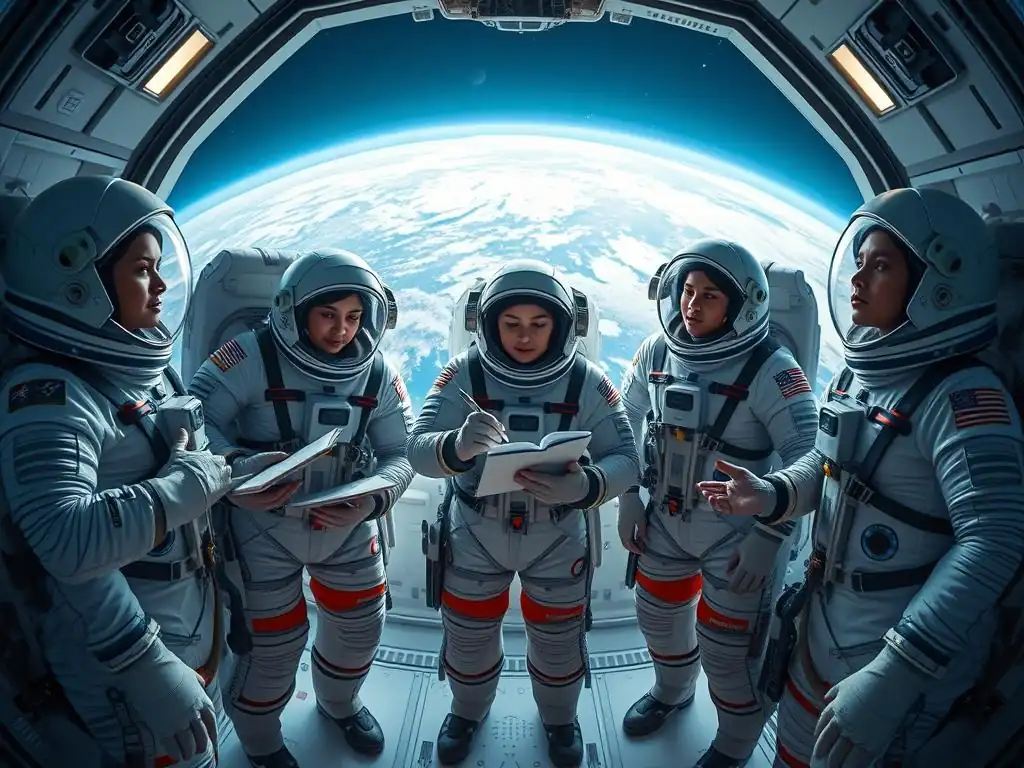
Dive into the captivating world of International Women Space Explorers, where we unveil the stories of extraordinary women who defied gravity and societal expectations to reach for the stars. Their journeys are a testament to resilience, innovation, and the unwavering pursuit of knowledge. Intrigued to learn about the global sisterhood pushing the boundaries of space exploration? Discover their inspiring contributions and the challenges they overcame as pioneers in the vast expanse of space.
- Introduction: Celebrating International Women Space Explorers
- Early Pioneers: Breaking Barriers in Space Exploration
- Expanding Horizons: International Women Astronauts
- Challenges and Triumphs: Navigating the Space Environment
- International Collaboration and Space Exploration
- Beyond Earth: The Future of International Women in Space
- Conclusion: Honoring the Contributions of International Women Space Explorers
-
Frequently Asked Questions
- What is the primary goal of "WomenInScienceHistory.com"?
- Why is it important to highlight the stories of international women astronauts and cosmonauts?
- What kind of challenges did early female astronauts and cosmonauts face?
- Who is a notable example of an early international woman space explorer highlighted on "WomenInScienceHistory.com"?
- How does "WomenInScienceHistory.com" aim to inspire future generations of women in STEM?
- Final Reflection: Reaching for a Shared Sky
- Ignite Your Own Cosmic Journey!
Introduction: Celebrating International Women Space Explorers
Women in Space History: A Legacy of Pioneering Female Astronauts
The journey of women into space marks one of humanity's most significant leaps, challenging long-held societal norms and demonstrating unparalleled courage. From the very first orbital flight by a woman, these pioneering female astronauts have carved out a remarkable legacy, proving their capabilities in the most demanding environment known to humankind. Their stories are not just tales of individual achievement but represent a collective push against the boundaries of possibility, inspiring generations to look upwards.
This legacy underscores the critical role played by international women space explorers in shaping the narrative of space exploration. Each mission, whether short or long-duration, has contributed invaluable scientific data, advanced technological understanding, and broadened our perspective on what humans can achieve beyond Earth's confines. These women have been instrumental in transforming space from an exclusive domain into a more inclusive frontier.
Addressing Gender Imbalances in Space Science
Historically, the field of space science, much like other STEM disciplines, has been predominantly male-dominated. For decades, the pool of astronaut candidates was largely drawn from military test pilots, a profession almost exclusively open to men, thus creating a significant gender imbalance from the outset. This systemic bias meant that talented women were often overlooked or faced substantial hurdles in pursuing their aspirations of reaching orbit.
While progress has been made, true gender parity in space exploration remains an ongoing endeavor. As of late 2023, out of over 600 individuals who have traveled to space, women account for approximately 11-12% of all astronauts and cosmonauts. Addressing this imbalance is crucial not only for equity but also for the scientific advancement of space programs, as diverse teams are proven to be more innovative and effective in solving complex challenges.
Early Pioneers: Breaking Barriers in Space Exploration
Valentina Tereshkova: The First Woman in Space
On June 16, 1963, Valentina Tereshkova, a textile factory worker and amateur parachutist, made history by becoming the first woman to orbit Earth aboard Vostok 6. Her flight lasted nearly three days, completing 48 orbits and logging more time in space than all American astronauts combined at that point. This monumental achievement was a significant propaganda victory for the Soviet Union during the height of the Space Race, showcasing their commitment to equality and scientific prowess.
Tereshkova's journey was far from easy, involving rigorous training and facing the immense pressures of a pioneering mission. Despite the challenges, her resilience and determination paved the way for future international women space explorers. After her historic flight, she continued to be a prominent figure, serving in various political roles and advocating for space exploration, solidifying her status as a global icon.
Overcoming Gender Stereotypes: Challenges Faced by Early Women Cosmonauts
The path for early women cosmonauts was fraught with deeply entrenched gender stereotypes and skepticism regarding their physical and psychological suitability for spaceflight. Following Tereshkova's flight, a nearly two-decade gap ensued before another woman, Svetlana Savitskaya, reached space in 1982. This pause was indicative of the prevailing attitudes that viewed women's involvement in space primarily as a symbolic gesture rather than a sustained commitment to their scientific contributions.
These pioneering women often encountered resistance and subtle forms of discrimination, with some officials questioning their ability to handle the extreme rigors of space or suggesting that spaceflight was "too dangerous" for women. They had to consistently prove their competence, endurance, and intellectual capacity, often exceeding the performance of their male counterparts, to dismantle these biases. Their perseverance laid the groundwork for a more inclusive future for women in space.
Expanding Horizons: International Women Astronauts
Sally Ride: America's First Woman in Space
Twenty years after Tereshkova's flight, on June 18, 1983, Sally Ride broke another significant barrier by becoming the first American woman in space aboard the Space Shuttle Challenger's STS-7 mission. A physicist with a Ph.D. from Stanford University, Ride joined NASA in 1978 as part of the first astronaut class to include women. Her role as a mission specialist involved deploying and retrieving satellites using the shuttle's robotic arm, demonstrating complex technical skills.
Ride's flight was a pivotal moment for the United States, inspiring countless young girls and women to pursue careers in science and engineering. After her two space missions, she became a vocal advocate for science education, particularly for girls, co-founding Sally Ride Science to promote STEM literacy. Her quiet determination and intellectual brilliance helped shatter the perception that space was exclusively a male domain.
Helen Sharman: The First British Woman in Space
Helen Sharman etched her name in history in May 1991, becoming the first British person, and the first British woman, to journey into space. Her path was unconventional; she was selected from a public competition as part of Project Juno, a privately funded British-Soviet mission to the Mir space station. Sharman, a chemist by profession, underwent rigorous training in Star City, Russia, alongside cosmonauts.
During her eight-day mission aboard Soyuz TM-12, Sharman conducted various scientific experiments, including medical and agricultural research. Her journey highlighted the potential for international collaboration beyond traditional government-led programs and inspired a new generation in the UK to consider careers in science and space. Sharman's unique entry into space demonstrated that diverse backgrounds could lead to the stars.
Asian Women in Space: Chiaki Mukai (Japan) and Yi So-yeon (South Korea)
Asia has also contributed significantly to the ranks of international women space explorers. Chiaki Mukai, a cardiovascular surgeon, became the first Japanese woman in space in 1994, flying aboard Space Shuttle Columbia on STS-65. She conducted extensive life science experiments in the Spacelab module. Mukai made a second flight in 1998 on STS-95, becoming the first Japanese citizen to fly twice into space, further cementing her legacy as a pioneering scientist and astronaut.
In 2008, Yi So-yeon made history as the first South Korean citizen, and the first South Korean woman, to travel to space. As a participant in the Russian Soyuz TMA-12 mission to the International Space Station (ISS), she conducted various scientific experiments for the Korea Aerospace Research Institute (KARI), focusing on areas like plant growth and the effects of microgravity on the human body. Her flight underscored the growing global participation in space exploration and the increasing representation of international women space explorers from diverse cultural backgrounds.

Physical and Psychological Demands: Training and Adaptation
The journey to becoming an astronaut or cosmonaut involves years of incredibly demanding physical and psychological training. Candidates undergo rigorous simulations of launch and landing, prolonged periods in extreme G-forces, and extensive survival training in diverse environments. Once in space, the human body experiences profound changes due to microgravity, including bone density loss at a rate of approximately 1-2% per month, muscle atrophy, and fluid shifts that impact vision and cardiovascular health.
Beyond the physical, the psychological demands are equally intense. Long-duration missions involve living in confined spaces, isolation from Earth, and working under immense pressure. International women space explorers, like their male counterparts, must develop exceptional resilience, adaptability, and teamwork skills to cope with these unique challenges. Their ability to not only endure but thrive in such conditions is a testament to their extraordinary dedication and human spirit.
Overcoming Discrimination and Bias in Space Programs
Despite their proven capabilities, international women space explorers have historically faced, and sometimes continue to face, various forms of discrimination and bias within space programs. Early on, this manifested as outright exclusion, as seen with the Mercury 13 program where highly qualified women pilots were denied the chance to become astronauts solely due to their gender. Even after women were admitted, subtle biases often persisted, such as assumptions about their physical strength or emotional stability.
These biases were gradually challenged and dismantled through persistent advocacy, policy changes within space agencies, and most importantly, the undeniable success of women in space. The triumphs of figures like Eileen Collins, the first female Space Shuttle pilot and commander, demonstrated that gender was irrelevant to competence in the demanding arena of spaceflight. Their perseverance has been crucial in fostering a more equitable environment for future generations of international women space explorers.
Unique Perspectives and Scientific Contributions
The inclusion of international women space explorers has brought invaluable diverse perspectives to space missions, enriching scientific research and operational approaches. Women astronauts have often contributed unique insights, particularly in areas like human physiology, psychology, and the long-term effects of microgravity on the female body, which were previously understudied. Their observations have led to a more comprehensive understanding of human adaptation to space.
Furthermore, the presence of women on space crews has fostered a more collaborative and empathetic environment, which can be crucial during high-stress situations. Their contributions span across various scientific disciplines, from pioneering biological experiments and materials science research to advanced robotics and Earth observation. The varied backgrounds and experiences of international women space explorers ultimately lead to more robust scientific outcomes and a broader interpretation of data.
International Collaboration and Space Exploration
International Space Station (ISS) and Global Collaboration
The International Space Station (ISS) stands as a monumental testament to global collaboration in space exploration, bringing together space agencies from the United States, Russia, Europe, Japan, and Canada. This orbiting laboratory has served as a crucible for fostering international cooperation, and critically, has enabled a significant increase in the number of international women space explorers participating in long-duration missions. Female astronauts and cosmonauts from diverse nations have served as mission specialists, flight engineers, and even commanders on the ISS.
The ISS has provided an unparalleled platform for women from different cultures and scientific backgrounds to live and work together for months at a time. This sustained collaboration has not only advanced scientific knowledge through thousands of experiments but also solidified interpersonal bonds, demonstrating that humanity can transcend national differences to achieve common goals in space. The ISS truly represents a global village in orbit.
Beyond the ISS, numerous joint missions have fostered a spirit of shared experience among international women space explorers. Programs like the Shuttle-Mir missions in the 1990s saw American women astronauts working alongside Russian cosmonauts, sharing expertise and adapting to different operational cultures. These joint ventures were crucial in building trust and laying the groundwork for the more extensive collaboration seen on the ISS.
The shared challenges of living and working in space, from adapting to microgravity to performing complex spacewalks, create an unbreakable bond among all astronauts, regardless of their nationality or gender. International women space explorers have often spoken about the unique camaraderie that develops from these intense shared experiences, transcending linguistic and cultural barriers. These bonds highlight a true global sisterhood, united by the common pursuit of discovery.
Inspiring the Next Generation of Space Explorers
The visibility of international women space explorers has had an immeasurable impact on inspiring the next generation globally. Seeing women from their own countries and cultures reach for the stars provides tangible role models, breaking down perceived barriers and demonstrating that a career in space is within reach for anyone with passion and dedication. This inspiration extends beyond direct space careers, encouraging young girls and boys alike to pursue STEM fields.
Astronauts and cosmonauts frequently engage in educational outreach, sharing their experiences and encouraging students to embrace science, technology, engineering, and mathematics. The stories of these pioneering international women space explorers are powerful narratives that can ignite curiosity and ambition, showing that the pursuit of knowledge and exploration knows no gender or national boundaries.
Beyond Earth: The Future of International Women in Space
Women's Role in Lunar and Martian Missions
As humanity sets its sights on returning to the Moon and eventually venturing to Mars, international women space explorers are poised to play critical roles in these ambitious endeavors. The Artemis program, led by NASA, explicitly aims to land the first woman and the first person of color on the lunar surface, marking a new era of diverse human exploration. Women astronauts are currently undergoing specialized training for lunar missions, preparing for the unique challenges of deep-space travel and surface operations.
Beyond the Moon, the prospect of human missions to Mars presents even greater complexities, including prolonged isolation and exposure to radiation. Women scientists and engineers are at the forefront of developing the technologies and strategies necessary for such long-duration missions. Their expertise in fields like astrobiology, geology, and human health in extreme environments will be indispensable for establishing a sustainable human presence on the Red Planet.
Future Missions: Advancements and Opportunities
The landscape of space exploration is rapidly evolving, with advancements in commercial spaceflight and the emergence of new spacefaring nations creating unprecedented opportunities for international women space explorers. Private companies are developing new spacecraft and habitats, potentially opening more avenues for diverse individuals to reach orbit and beyond. This expansion could lead to a significant increase in the number of women from a wider array of countries participating in space missions.
Moreover, ongoing research into advanced propulsion systems, life support technologies, and artificial intelligence will further enable longer and more complex missions. As these technological frontiers expand, so too will the roles and responsibilities for women in space. The future promises a more inclusive and globally representative cohort of astronauts and cosmonauts, continuing the legacy of breaking barriers and pushing the boundaries of human achievement.
The Enduring Legacy of International Women Space Explorers
The enduring legacy of international women space explorers is multifaceted, encompassing not only their individual achievements but also their collective impact on science, society, and the very perception of human capability. They have consistently demonstrated that gender is not a limiting factor in the most extreme and challenging of environments, shattering stereotypes and opening doors for future generations. Their contributions have significantly advanced our understanding of space, human physiology, and the universe itself.
This legacy extends to fostering a global perspective on space exploration, emphasizing collaboration over competition. The stories of these courageous women highlight resilience, intellect, and an unwavering commitment to discovery. Their pioneering spirit continues to inspire scientific curiosity and a sense of wonder, ensuring that the dream of space exploration remains vibrant and accessible to all, irrespective of gender or origin.
Conclusion: Honoring the Contributions of International Women Space Explorers
The Importance of Diversity and Inclusion
The journey of international women space explorers powerfully underscores the critical importance of diversity and inclusion in every field, especially one as complex and challenging as space exploration. Diverse teams, encompassing a range of genders, backgrounds, and perspectives, are consistently shown to be more innovative, adaptable, and effective in problem-solving. Excluding any group diminishes the collective human potential to achieve greatness.
Embracing diversity means not only providing equal opportunities but also actively fostering an environment where different voices are heard and valued. For space science, this translates into more comprehensive research, more robust missions, and a more accurate representation of humanity's aspirations beyond Earth. The continued commitment to diversity will ensure that the future of space exploration is truly a human endeavor, benefiting from the talents of all.
Celebrating Achievements and Impact
From Valentina Tereshkova's pioneering orbit to the women currently training for lunar missions, the achievements of international women space explorers are profound and deserving of widespread celebration. They have navigated the physical rigors of space, overcome systemic biases, and contributed invaluable scientific knowledge. Their impact extends far beyond the technical aspects of spaceflight, serving as powerful symbols of human resilience and ambition.
Their stories resonate globally, inspiring countless individuals to pursue their dreams, challenge limitations, and contribute to scientific advancement. By highlighting these remarkable women, we not only honor their past contributions but also illuminate the path for future generations of scientists, engineers, and explorers who will continue humanity's journey among the stars.
Resources for Further Exploration
To delve deeper into the inspiring stories of these extraordinary individuals, exploring detailed biographies, historical accounts, and official archives from space agencies around the world can provide rich insights. Numerous publications and documentaries offer in-depth narratives of the challenges and triumphs faced by women in space. Continued engagement with these historical accounts and ongoing missions will further illuminate the profound impact of international women space explorers on our understanding of the universe and ourselves.
Frequently Asked Questions
What is the primary goal of "WomenInScienceHistory.com"?
The site aims to celebrate the contributions of women to various scientific fields throughout history and inspire future generations by highlighting their often-overlooked narratives. It focuses on their groundbreaking work.
Why is it important to highlight the stories of international women astronauts and cosmonauts?
It's crucial to showcase their achievements because it challenges the historical bias in science and demonstrates that space exploration is a global endeavor involving diverse talent.
What kind of challenges did early female astronauts and cosmonauts face?
They often faced discrimination in a male-dominated field, limited opportunities for advancement, and societal expectations that discouraged women from pursuing scientific careers.
Who is a notable example of an early international woman space explorer highlighted on "WomenInScienceHistory.com"?
While the site features many, it would spotlight individuals like Valentina Tereshkova, the first woman in space, and other pioneering figures from various countries.
How does "WomenInScienceHistory.com" aim to inspire future generations of women in STEM?
By showcasing role models and highlighting the impactful contributions of women in science, the site provides inspiration and demonstrates that a career in STEM is achievable for all.
The stories of international women astronauts and cosmonauts, as we've explored, are not just tales of individual achievement, but a testament to the power of global collaboration and the unwavering pursuit of dreams. Their journeys, often fraught with challenges, resonate profoundly in a world increasingly interconnected and striving for greater inclusivity in STEM fields.
The impact of these pioneering women extends far beyond the confines of the spacecraft. Their courage and dedication serve as a beacon, inspiring generations of young girls to break barriers and pursue their passions, regardless of societal expectations. The stars don't look bigger, but they do look brighter from up here.
- Sally Ride, perfectly encapsulating the transformative perspective these women bring back to Earth.
As we look to the future, let us remember the lessons learned from these international women space explorers. Let their stories fuel our own aspirations, encouraging us to embrace collaboration, challenge limitations, and strive for a world where the sky – and beyond – is truly accessible to all.
Ignite Your Own Cosmic Journey!
Thank you for exploring the inspiring stories of these pioneering women! Now, it's time to honor their legacy by taking your own steps towards a brighter future, here on Earth and beyond.
Here are a few ways you can get involved:
- Share this article with three friends or family members to amplify the reach of these incredible stories and inspire the next generation.
- Explore STEM resources in your community: Volunteer at a local science club, attend a space-themed event, or mentor a young woman interested in science.
- Consider researching a lesser-known female astronaut or cosmonaut and write a short piece to expand the narrative of women in space exploration.
What small, actionable step will you take today to contribute to a world where women thrive in science and reach for the stars?