
Walk in Marie Curie's Footsteps: A Paris Travel Guide to Her Life & Labs

Welcome to WomenInScienceHistory.com!
Ever wondered what it was like to walk the same Parisian streets as Marie Curie, the groundbreaking scientist who reshaped our understanding of radioactivity? This site celebrates the remarkable contributions of women to science, and today, we invite you to step into the past with our Marie Curie Paris Travel Guide. Explore the landmarks that shaped her life, from her humble laboratory to the prestigious institutions where she made history.
Discover the hidden gems that offer a glimpse into her world, and uncover the challenges and triumphs that defined her extraordinary journey. Are you ready to follow in her footsteps?
- Discovering Marie Curie's Paris: A Historical Travel Guide
- Planning Your Marie Curie Paris Itinerary: Essential Information
- Marie Curie's Must-See Paris Landmarks: A Detailed Itinerary
- Enriching Your Marie Curie Paris Experience: Beyond the Landmarks
- Conclusion: Celebrating Marie Curie's Enduring Impact on Paris and Science
-
Frequently Asked Questions
- What is the main focus of this Marie Curie Paris Travel Guide?
- Where can I find information about Marie Curie's laboratories in Paris?
- What kind of challenges did Marie Curie face as a woman in science, particularly in Paris?
- Is this travel guide only for scientists or those interested in science?
- How does this guide aim to inspire future generations?
- Final Reflection: Illuminating Curie's Enduring Legacy
- Ignite Your Inner Curie: Embark on a Parisian Discovery!
Discovering Marie Curie's Paris: A Historical Travel Guide
Introduction: Tracing the Footsteps of a Scientific Pioneer in Paris
Embarking on a Marie Curie Paris travel guide journey is an unparalleled opportunity to connect with one of history's most extraordinary scientific minds. Marie Skłodowska Curie, the first woman to win a Nobel Prize and the only person to win in two different scientific fields (Physics in 1903 and Chemistry in 1911), dedicated her life to unraveling the mysteries of radioactivity. Paris was not merely her workplace but the crucible where her groundbreaking discoveries in physics and chemistry took shape, a city that bore witness to her triumphs, her struggles, and her enduring legacy.
This historical travel guide invites you to step into her world, exploring the very streets, laboratories, and institutions that defined her remarkable career. From the hallowed halls of academia to the quiet intensity of her research spaces, each landmark offers a tangible link to her tireless pursuit of knowledge. By following this Marie Curie Paris travel guide, you will not only gain a deeper understanding of her scientific contributions but also appreciate the societal context in which she operated, paving the way for future generations of women in science.
Planning Your Marie Curie Paris Itinerary: Essential Information
Best Time to Visit Paris for Curie Enthusiasts
For those planning a Marie Curie Paris travel guide itinerary, the ideal time to visit is during the spring (April to June) or early autumn (September to October). These seasons offer mild and pleasant weather, making it comfortable to explore the city's historical sites on foot. Average temperatures in April range from 10°C to 15°C, while October sees similar averages between 10°C and 16°C, providing an inviting atmosphere for historical exploration without the extreme heat of summer or the chill of winter.
Visiting during these shoulder seasons also means fewer crowds compared to the peak summer months of July and August, when many Parisians are on holiday and popular sites can be exceptionally busy. Additionally, some smaller museums or historical institutions might have reduced hours or closures in August, so planning your trip outside this period ensures full access to all the crucial landmarks on your Marie Curie Paris travel guide journey.
Getting Around Paris: Transportation Options for Exploring Curie's Legacy
Navigating Paris to explore Marie Curie's legacy is made effortless by the city's comprehensive public transportation system. The Métro is undoubtedly the most efficient way to travel, with numerous lines connecting all major historical sites. A "Carnet" of 10 single-use tickets costs approximately 16.90 EUR, offering flexibility for multiple journeys. For longer stays, a weekly Navigo Découverte pass, covering zones 1-5, provides unlimited travel for about 22.80 EUR, proving cost-effective for extensive exploration.
While the Métro is convenient, walking offers a unique opportunity to immerse yourself in the Parisian ambiance, particularly in the Latin Quarter where many Curie-related sites are clustered. For instance, the Sorbonne, the Panthéon, and the Curie Museum are all within a reasonable walking distance of each other. Taxis and ride-sharing services are also readily available for those prioritizing convenience, though they represent a more expensive option for traversing the city.
Accommodation in Paris: Staying Near Curie's Landmarks
When planning your Marie Curie Paris travel guide and seeking accommodation, the Latin Quarter (5th arrondissement) is an exceptionally strategic choice. This historic district, home to the Sorbonne University and within easy reach of the Panthéon and the Curie Museum, immerses visitors in the intellectual and academic heart of Paris. Hotels in this area range from charming boutique establishments to more budget-friendly options, with mid-range hotel prices typically ranging from 150 EUR to 250 EUR per night, depending on the season and specific amenities.
Alternatively, the Saint-Germain-des-Prés neighborhood (6th arrondissement) offers a more upscale experience with its vibrant literary cafés and art galleries, while still providing convenient access to many of Marie Curie's significant locations. For those focusing on the Institut du Radium, staying in the Montparnasse area (14th arrondissement) could also be a practical option. Regardless of your chosen district, booking your accommodation well in advance, especially for spring or autumn visits, is highly recommended to secure the best rates and availability.
Marie Curie's Must-See Paris Landmarks: A Detailed Itinerary
The Panthéon: Honoring Curie's Legacy Among French Greats
The Panthéon stands as a monumental testament to France's greatest figures, and its inclusion on any Marie Curie Paris travel guide is essential. In 1995, Marie Curie, along with her husband Pierre, was interred in the Panthéon, making her the first woman to be honored in this national mausoleum solely on her own merits. This solemn act recognized her unparalleled contributions to science and her status as a national hero, nearly 60 years after her passing. The grand neoclassical architecture of the building, originally built as a church, now serves as a powerful symbol of French secular values and intellectual achievement.
Within the crypt of the Panthéon, visitors can find the tombs of Marie and Pierre Curie, a profoundly moving experience that underscores the magnitude of their scientific partnership and individual brilliance. Their presence among luminaries like Victor Hugo, Voltaire, and Rousseau highlights the profound impact of their discoveries on human knowledge and progress. The Panthéon offers a moment of quiet reflection, allowing visitors to ponder the legacy of a woman who broke countless barriers and reshaped our understanding of the physical world.
The Curie Museum: A Journey Through Scientific Discovery
Central to any Marie Curie Paris travel guide is the Musée Curie, located at 1 Rue Pierre et Marie Curie, 75005 Paris. This captivating museum is housed in the very laboratory where Marie Curie conducted her groundbreaking research on radioactivity from 1914 until her death in 1934. The fact that admission is free makes it an accessible and invaluable resource for anyone wishing to delve into the daily life of a scientific pioneer.
The museum's exhibits meticulously preserve the atmosphere of her early 20th-century workspace. Visitors can peer into Marie Curie's original office, which remains largely untouched, and explore the chemistry laboratory where she and Pierre isolated radium and polonium. Displays feature original scientific instruments, personal artifacts, and historical documents, providing a tangible connection to the development of nuclear physics and its applications in medicine. It's a truly immersive experience that brings the history of science to life.
Sorbonne University: Where Curie's Academic Journey Began
Sorbonne University holds immense significance in Marie Curie's life, marking the true beginning of her academic and professional ascent in Paris. She enrolled in 1891, overcoming significant financial hardships and societal barriers to pursue her passion for science. Her dedication led her to achieve degrees in Physics and Mathematical Sciences, and in 1906, she made history by becoming the first woman to hold a professorship at the Sorbonne, taking over the physics chair previously held by her late husband, Pierre.
While access to all internal university buildings might be limited for casual visitors, a stroll through the historic courtyards and around the impressive architecture of the Sorbonne offers a profound sense of the intellectual environment that shaped her. The grand Amphithéâtre Richelieu, where she delivered her inaugural lecture, stands as a symbol of her triumph over adversity. Exploring the surrounding Latin Quarter, a vibrant hub of intellectual activity, further evokes the stimulating atmosphere in which she flourished.
Institut du Radium: Curie's Research Hub and Legacy
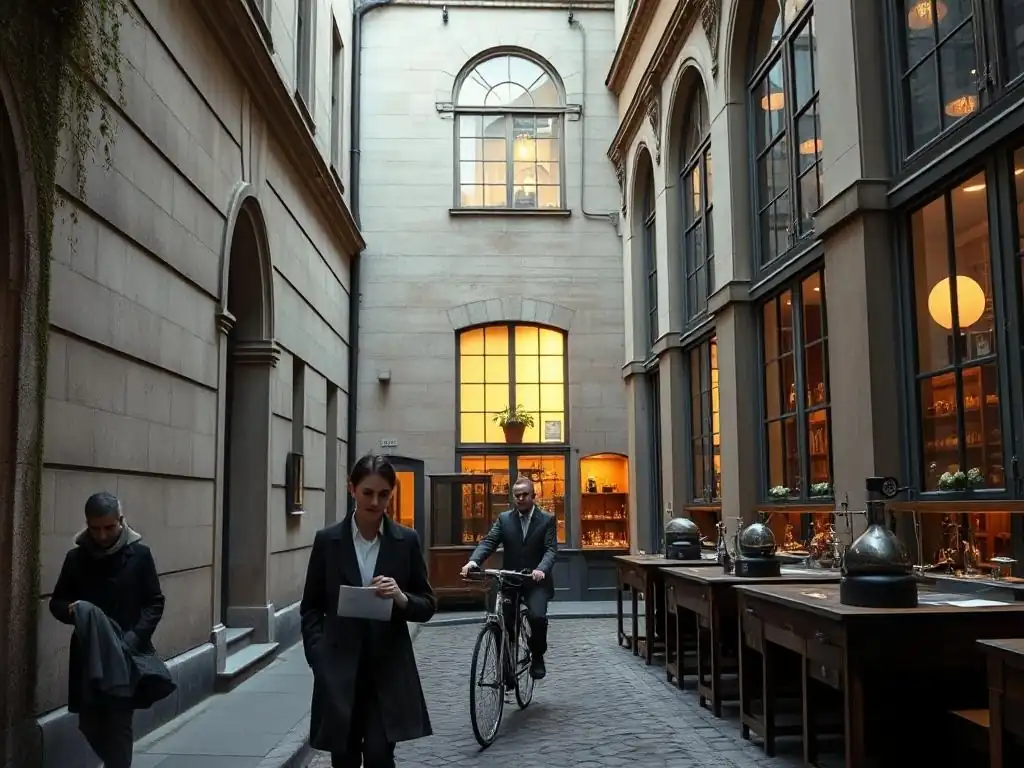
The Institut du Radium, established in 1914, was specifically designed for Marie Curie's continued research into radioactivity and its applications. This institution, now part of the larger Institut Curie, became her primary research hub, where she trained numerous researchers and conducted pivotal experiments that advanced the understanding of radiation therapy. It was here that her work directly contributed to the development of early cancer treatments, showcasing her vision for applying fundamental scientific discoveries to practical medical solutions.
The institute was strategically divided into two main sections: the physics and chemistry laboratory, which Marie Curie personally directed, and the biological and medical laboratory, headed by Dr. Claudius Regaud. This collaborative structure fostered interdisciplinary innovation, driving forward both basic research and clinical applications. While the Musée Curie offers a public window into her specific laboratory, the larger Institut Curie continues its world-renowned work in cancer research, a living testament to Marie Curie's enduring legacy.
Rue Pierre Curie: Walking the Streets of Curie's Paris
Walking along Rue Pierre Curie offers a poignant and often overlooked dimension to a Marie Curie Paris travel guide. This street, originally known as Rue de l'Arbalète, was renamed in 1906 in honor of Pierre Curie after his tragic death, implicitly commemorating Marie's parallel and equally significant contributions. It connects several key sites associated with their lives and work, symbolizing the intertwined nature of their scientific partnership and personal journey.
A reflective walk down Rue Pierre Curie allows visitors to imagine the daily commutes of the Curies between their home, their laboratories, and the university. It is on this very street that the Institut du Radium, now home to the Curie Museum, is located, grounding the theoretical aspects of their work in a tangible Parisian setting. This quiet, unassuming street is an essential, albeit subtle, part of understanding the geographical and personal context of Marie Curie's life in the heart of Paris.
Enriching Your Marie Curie Paris Experience: Beyond the Landmarks
Marie Curie Biographies: Deepening Your Understanding
To truly enrich your Marie Curie Paris travel guide experience, immersing yourself in biographies of her life is highly recommended. Reading accounts of her journey before or during your trip can bring the historical landmarks to vivid life, providing crucial context for the challenges she overcame and the triumphs she celebrated. Ève Curie's "Madame Curie," written by her daughter, offers an intimate and personal perspective, revealing the human side of the scientific icon and her family life amidst groundbreaking discoveries.
For a more comprehensive and historically detailed account, "Marie Curie: A Life" by Susan Quinn provides an extensively researched narrative, delving into the scientific, social, and political landscapes that shaped her career. These biographies transform a simple visit to a historical site into a profound journey through time, allowing you to connect specific events, struggles, and breakthroughs with the very places where they occurred, from the research benches of the Institut du Radium to the lecture halls of the Sorbonne.
Paris Science Museums: Expanding Your Scientific Exploration
Beyond the specific Curie landmarks, Paris offers a wealth of other science museums that can broaden your understanding of scientific progress during and after Marie Curie's era. The Cité des Sciences et de l'Industrie, located in Parc de la Villette, is Europe's largest science museum. It boasts vast interactive exhibits covering diverse scientific disciplines, including physics, chemistry, and biology, providing a wider context for the revolutionary nature of Curie's work in radioactivity and its impact on the 20th century.
Another notable destination is the Musée des Arts et Métiers, which houses a remarkable collection of historical scientific instruments and inventions. While not directly focused on Marie Curie, its extensive displays of early scientific apparatus, from Foucault's Pendulum to pioneering engines, illustrate the technological and intellectual landscape in which she operated. Exploring these collections enhances appreciation for the tools and knowledge available to scientists of her time, further deepening your Marie Curie Paris travel guide journey.
Curie-Themed Souvenirs: Bringing Home a Piece of History
Bringing home a piece of your Marie Curie Paris travel guide experience is a wonderful way to commemorate your journey. The gift shop at the Musée Curie offers a curated selection of thoughtful souvenirs, including books on Marie Curie's life and work, postcards featuring historical images, and small replicas of scientific instruments. These items serve as tangible reminders of her enduring legacy and the profound impact she had on science.
Beyond the museum, explore the charming independent bookstores in the Latin Quarter, which often carry specialized scientific literature, historical prints, or unique memorabilia related to the Belle Époque era of Parisian intellectual life. Look for items that resonate with her spirit of inquiry, such as notebooks, pens, or even simple scientific diagrams. These souvenirs will not only be mementos of your trip but also inspiring reminders of Marie Curie's dedication and brilliance.
Conclusion: Celebrating Marie Curie's Enduring Impact on Paris and Science
Concluding your Marie Curie Paris travel guide journey reveals that the city is more than just a backdrop to her story; it is an integral part of her scientific identity. From the rigorous academic pursuits at the Sorbonne to the groundbreaking discoveries within the Institut du Radium, each landmark visited offers a profound glimpse into the dedication, resilience, and unparalleled intellect that defined Marie Curie. Her legacy, celebrated within the hallowed crypt of the Panthéon, transcends mere scientific achievement, serving as an enduring beacon of inspiration for women in STEM fields across the globe.
Paris, through these meticulously preserved sites, continues to narrate the tale of a woman who defied societal norms and transformed our understanding of the universe. Her unwavering spirit of inquiry and perseverance remain as vibrant today as they were over a century ago. A Marie Curie Paris travel guide is not merely a tourist itinerary; it is an educational pilgrimage, a testament to the enduring impact of a truly extraordinary scientist whose contributions continue to resonate throughout the world of science and beyond.
Frequently Asked Questions
What is the main focus of this Marie Curie Paris Travel Guide?
This guide focuses on helping you walk in Marie Curie's footsteps in Paris, exploring the locations significant to her life and scientific career. It's about connecting with her history through physical spaces.
Where can I find information about Marie Curie's laboratories in Paris?
The guide will point you to locations like the Institut du Radium (now the Curie Museum) where Marie Curie conducted groundbreaking research. It provides information about visiting these sites.
What kind of challenges did Marie Curie face as a woman in science, particularly in Paris?
The guide acknowledges the challenges faced by Marie Curie, including the prevalence of sexism and lack of support for women in scientific fields at the time.
Is this travel guide only for scientists or those interested in science?
No, it's designed for anyone interested in history, culture, and remarkable women. You don't need a science background to appreciate Marie Curie's story and its Parisian context.
How does this guide aim to inspire future generations?
By showcasing Marie Curie's determination and achievements, the guide hopes to inspire future scientists, especially women, to pursue their passions and overcome obstacles in STEM fields.
Final Reflection: Illuminating Curie's Enduring Legacy
The journey through Marie Curie's Paris, as detailed in this guide, is more than just a sightseeing tour; it's a pilgrimage to the heart of scientific discovery and unwavering dedication. The enduring relevance of Curie's story lies in her relentless pursuit of knowledge in the face of adversity, a spirit that continues to inspire scientists and dreamers today. Her legacy transcends the laboratory, resonating with anyone who has ever dared to challenge the status quo and push the boundaries of human understanding.
This exploration of Curie's Parisian haunts underscores the profound impact she had, and continues to have, on our cultural and social landscape. Witnessing the spaces where she lived, worked, and made groundbreaking discoveries fosters a deep appreciation for her sacrifices and triumphs. Her story reminds us that scientific progress is not just about equations and experiments, but also about passion, perseverance, and the courage to question everything. Nothing in life is to be feared, it is only to be understood. Now is the time to understand more, so that we may fear less.
This quote encapsulates Curie's unwavering spirit and serves as a powerful reminder to embrace curiosity and challenge our own limitations.
As you close this guide, take a moment to reflect on the lessons learned from Marie Curie's extraordinary life. Let her unwavering dedication to science, her resilience in the face of hardship, and her commitment to making the world a better place inspire you to pursue your own passions with unwavering zeal. Embrace the spirit of inquiry, challenge conventional wisdom, and never be afraid to walk your own path, illuminating the world with your unique talents and contributions, just as Marie Curie did.
Ignite Your Inner Curie: Embark on a Parisian Discovery!
Thank you for exploring Marie Curie's extraordinary life and legacy with us! We hope this guide inspires you to connect with her story on a deeper level. Now, it’s your turn to make history!
Here’s how you can bring her spirit to life:
- Plan your Parisian pilgrimage: Visit the Musée Curie, explore her former laboratory, and trace her footsteps through the city's scientific heart.
- Unearth more hidden gems: Delve into WomenInScienceHistory.com to find other remarkable figures and their stories.
- Share the inspiration: Spread this guide with fellow science enthusiasts and history buffs to ignite their passion for women in science.
What part of Marie Curie's Paris would you explore first and why?