
"A Woman's Place": Deconstructing the Societal Cage That Limited Female Scientists


Welcome to WomenInScienceHistory.com!
Dive into the untold stories of brilliant minds who defied expectations and reshaped the scientific landscape. This week, we explore "A Woman's Place": Deconstructing the Societal Cage That Limited Female Scientists. Discover the historical challenges these pioneering women faced, and how their unwavering dedication broke barriers, leaving an indelible mark on science. What societal hurdles did they overcome, and what can we learn from their resilience? Read on to uncover the powerful narratives that history often overlooked...
- Introduction: Unveiling Historical Challenges Faced by Women Scientists
- Societal Norms as Barriers: Understanding the Obstacles
- The Impact of Male-Dominated Scientific Communities
- Deconstructing the Cage: Examples of Overcoming Societal Limitations
- The Price of Admission: The Psychological Toll on Women in Science
- Breaking Down the Barriers: Strategies for Change
- The Legacy of Women Scientists: Inspiring Future Generations
- Conclusion: Continuing the Fight for Equality in Science
-
Frequently Asked Questions
- What were some of the societal barriers that historically hindered women's participation in science?
- How did the prevailing cultural norms contribute to the underrepresentation of women in scientific fields?
- What specific institutional obstacles did women scientists encounter in the past?
- How did the lack of female role models impact aspiring women scientists?
- In what ways did women overcome these challenges and make significant contributions to science despite the obstacles?
- Final Reflection: Breaking the Chains of Limitation
- Unleash Your Inner Scientist: Break Barriers, Inspire Change!
Introduction: Unveiling Historical Challenges Faced by Women Scientists
The Societal Cage: Setting the Stage for Gender Inequality in Science
Throughout much of history, the prevailing societal structures created an invisible, yet formidable, "cage" around women, severely limiting their participation and recognition in intellectual and professional spheres, especially in science. This metaphorical cage was constructed from deeply ingrained cultural norms, legal restrictions, and educational barriers that dictated a woman's primary role was within the domestic realm. Such constraints meant that the aspirations of countless brilliant minds were stifled, and the world was deprived of their potential contributions to scientific advancement.
The common belief was that women lacked the intellectual capacity or the emotional fortitude for rigorous scientific inquiry, or that such pursuits were unfeminine and would detract from their marital duties. This pervasive ideology ensured that women scientists historical challenges were not merely individual struggles but systemic hurdles embedded in the very fabric of society. These challenges ranged from outright denial of education to subtle forms of discrimination, all contributing to a landscape where female scientific pioneers were the exception, not the norm.
Amplifying the Voices of Forgotten Pioneers
This article aims to deconstruct that societal cage, examining the specific mechanisms through which women were historically excluded from science and how they often found ingenious ways to circumvent these barriers. By shining a light on these often-forgotten narratives, we seek to understand the profound impact of gender bias on scientific progress and to celebrate the resilience of those who dared to challenge the status quo. Their stories are not just tales of individual triumph but critical insights into the broader women scientists historical challenges that shaped the scientific landscape.
We will delve into the lives and works of pioneering female scientists, whose contributions, though often overshadowed or attributed to male counterparts, were pivotal. Understanding their struggles and achievements is essential for a complete and accurate understanding of scientific history, and for inspiring future generations to strive for true equality in all fields of knowledge. Their voices, once silenced, now resonate as powerful testaments to enduring dedication and intellect.
Societal Norms as Barriers: Understanding the Obstacles
The "Separate Spheres" Ideology: How It Confined Women's Roles
One of the most potent societal norms that acted as a barrier to women in science was the "separate spheres" ideology, prevalent from the 18th century onwards. This doctrine posited that society was naturally divided into two distinct realms: the public sphere, dominated by men and encompassing work, politics, and intellectual pursuits, and the private sphere, reserved for women and centered on home, family, and morality. Scientific research, being a public and intellectual endeavor, was firmly placed within the male domain.
This rigid demarcation meant that women were largely excluded from formal education, laboratories, scientific societies, and professional networks crucial for scientific development. For instance, universities like Cambridge did not grant full degrees to women until 1948, despite women having attended lectures and passed examinations for decades prior. This systemic exclusion fundamentally shaped the women scientists historical challenges, relegating their scientific aspirations to private study, often without formal recognition or resources.
Domestic Expectations: Balancing Family and Scientific Pursuits
Beyond ideological constraints, the overwhelming domestic expectations placed upon women created a significant practical barrier to scientific careers. Women were primarily expected to manage households, raise children, and support their husbands' careers, often without domestic help. For any woman attempting to pursue scientific work, this meant a relentless double burden, effectively demanding two full-time commitments.
Many early female scientists, if they married, either postponed or forewent having children, or relied heavily on supportive family members to manage domestic duties. For example, astronomer Maria Mitchell, a prominent figure in the 19th century, was able to pursue her passion largely due to her father's encouragement and her unconventional lifestyle for the era. The constant pressure to fulfill domestic roles often limited the time and energy available for demanding research, forcing many to conduct their work in isolation or to abandon their scientific ambitions altogether, a stark reality of women scientists historical challenges.
Limited Access to Scientific Training for Women
Perhaps the most direct and debilitating obstacle faced by aspiring female scientists was the severe limitation on their access to formal scientific training. For centuries, educational institutions, particularly universities, were largely closed to women, or if they admitted them, it was often into programs deemed "appropriate" for women, such as home economics or teaching, rather than rigorous scientific disciplines.
Even when women gained entry to higher education, they often encountered segregated facilities, fewer resources, and a curriculum that was less comprehensive than that offered to men. For instance, in the late 19th and early 20th centuries, many women who wished to study medicine or natural sciences had to travel abroad to institutions that were more progressive, such as those in Switzerland or France.
This systemic denial of robust scientific education meant that women scientists historical challenges often began at the very first step, making the path to becoming a recognized scientist extraordinarily arduous and often dependent on private tutors or self-study.
The Impact of Male-Dominated Scientific Communities
Barriers to Collaboration and Recognition
Once women managed to gain some scientific training, they often faced formidable barriers within male-dominated scientific communities, particularly concerning collaboration and recognition. Scientific progress thrives on the exchange of ideas, peer review, and collective effort, yet women were frequently excluded from informal networks, professional societies, and conferences where crucial discussions and collaborations took place. This exclusion meant their work often went unnoticed or uncredited.
Many female scientists found their contributions marginalized, their names omitted from publications, or their ideas appropriated by male colleagues. For example, Lise Meitner, a brilliant physicist, played a crucial role in the discovery of nuclear fission but was famously overlooked for the Nobel Prize awarded to her male collaborator, Otto Hahn, in 1944. This systemic erasure and lack of acknowledgement were pervasive women scientists historical challenges, making it incredibly difficult for female scientists to build reputations or secure independent research positions.
Unequal Access to Resources
Another significant hurdle was the unequal access to essential resources, including laboratory space, advanced equipment, funding, and research positions. Even when women were employed in scientific institutions, they were often relegated to low-status, poorly paid, or unpaid assistant roles, typically as "computors" or technicians, rather than being given the autonomy and resources to lead their own research.
During the early 20th century, women in institutions like the Harvard College Observatory, despite performing critical astronomical calculations, were paid significantly less than their male counterparts—sometimes as little as 25 cents an hour—and were rarely given the opportunity to use the telescopes themselves. This disparity in resources directly impeded their ability to conduct groundbreaking research and publish independently, thereby exacerbating the women scientists historical challenges in achieving parity and recognition within their fields.
The Absence of Female Role Models in Science
The pervasive absence of visible female role models in prominent scientific positions had a profound and multifaceted impact. For aspiring young women, seeing so few women in leadership roles, as professors, or as celebrated researchers, implicitly reinforced the societal message that science was not a viable or appropriate career path for them. This lack of representation created a self-perpetuating cycle, where fewer women entered the field, leading to even fewer role models.
Furthermore, the scarcity of female mentors meant that women entering science often lacked guidance specific to navigating a male-dominated environment. They had fewer individuals to turn to for advice on balancing career and family, combating sexism, or advocating for their own work. This isolation, coupled with the constant societal messaging, contributed to self-doubt and imposter syndrome among many female scientists, adding a significant psychological dimension to the women scientists historical challenges.
Deconstructing the Cage: Examples of Overcoming Societal Limitations
Marie Curie: A Case Study of Perseverance Against Adversity
Marie Skłodowska Curie stands as an unparalleled example of perseverance against the formidable women scientists historical challenges. Born in Poland in 1867, she faced immediate educational barriers, as women were barred from higher education in her native country. Undeterred, she moved to Paris, enrolling at the Sorbonne, where she earned degrees in physics and mathematical sciences. Her early career was marked by financial hardship and intense dedication, often studying in unheated attics.
Her groundbreaking work with her husband, Pierre Curie, on radioactivity led to the discovery of polonium and radium. Despite their shared labor, Marie often had to fight for recognition. She was awarded the Nobel Prize in Physics in 1903 alongside Pierre and Henri Becquerel, becoming the first woman to win a Nobel Prize.
After Pierre's tragic death, she continued her research and became the first female professor at the Sorbonne. In 1911, she received an unprecedented second Nobel Prize, this time in Chemistry, for her isolation of pure radium, a testament to her singular scientific achievement and resilience in the face of persistent sexism and professional isolation.
Rosalind Franklin: Challenging Gender Roles Through Scientific Achievement
Rosalind Franklin, a brilliant British chemist and X-ray crystallographer, exemplified challenging gender roles through her meticulous scientific achievements, even as she faced significant women scientists historical challenges. Her precise X-ray diffraction images of DNA, particularly "Photo 51," were absolutely crucial in determining the double helix structure of DNA. Working in a male-dominated lab at King's College London in the early 1950s, Franklin encountered a professional environment rife with sexism.
She was often treated as an assistant rather than a peer, denied access to the common room reserved for male faculty, and her data was shared with James Watson and Francis Crick without her knowledge or permission. Despite these professional indignities and the subsequent lack of immediate recognition for her pivotal contribution—the Nobel Prize for the DNA structure was awarded posthumously to Watson, Crick, and Maurice Wilkins—Franklin continued her impactful research on the molecular structures of viruses until her untimely death in 1958. Her story highlights the systemic barriers that often obscured the contributions of female scientists.
Female Scientists Supporting Each Other
While many women scientists historical challenges stemmed from isolation, some found strength and solidarity in supporting each other, forming informal networks and communities that provided crucial intellectual and emotional lifelines. These networks often emerged in the absence of formal recognition or institutional support, demonstrating the ingenuity and resilience of women in science.
One notable example is the community of women astronomers at the Harvard College Observatory in the late 19th and early 20th centuries. Hired as "human computers," women like Annie Jump Cannon, Henrietta Swan Leavitt, and Antonia Maury performed painstaking calculations and classifications of stellar spectra. While their work was initially undervalued, they collectively laid the foundation for modern astrophysics.
They supported each other, shared knowledge, and fostered an environment where their individual contributions, though often unsung, were part of a larger, collaborative effort that defied the prevailing norms of solitary male genius. These informal alliances were vital in navigating the professional landscape and advancing scientific understanding.
The Price of Admission: The Psychological Toll on Women in Science
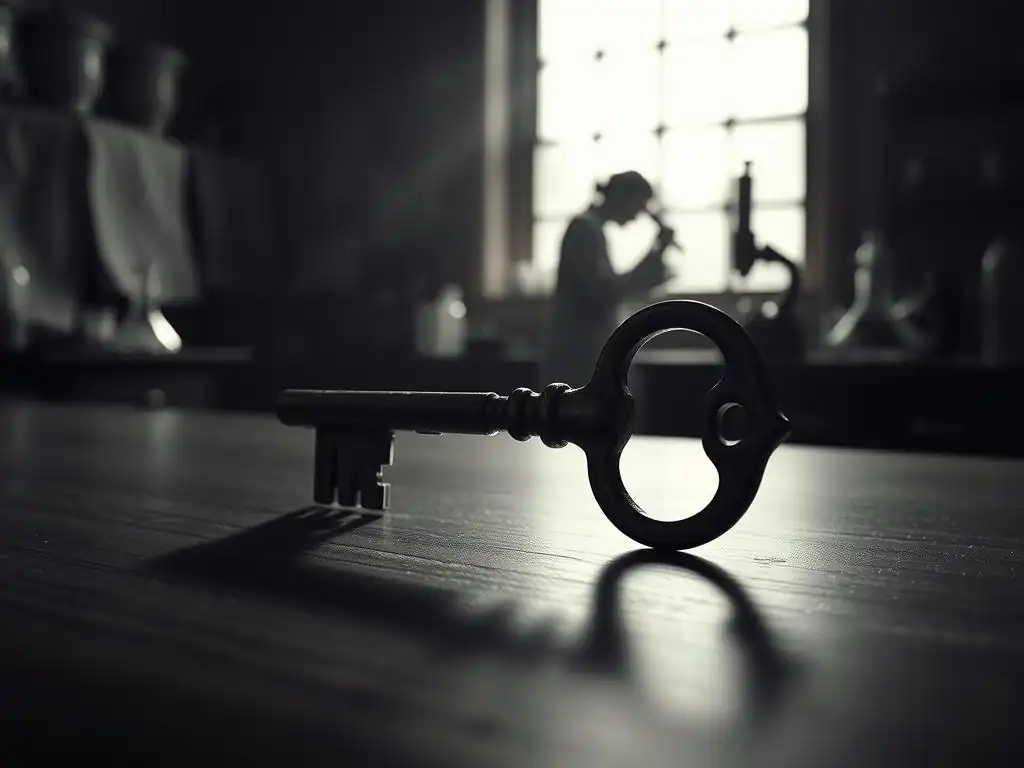
Doubting Abilities in a Male-Dominated Field
The constant exposure to skepticism, dismissal, and outright prejudice in male-dominated scientific fields often took a severe psychological toll on female scientists, leading to profound self-doubt. This phenomenon, often termed "imposter syndrome," meant that even highly accomplished women might internalize the societal message that they were not truly capable or did not belong, despite their achievements. They might attribute their successes to luck rather than skill, fearing exposure as a fraud.
This psychological burden was particularly acute for women scientists historical challenges, as they often had no female peers or mentors to validate their experiences or challenge their self-perceptions. For instance, a woman presenting groundbreaking research might find her findings scrutinized more harshly or her intelligence questioned in ways a male colleague's would not be, subtly eroding her confidence over time. The emotional labor of constantly battling these biases was immense, diverting energy from their scientific pursuits.
Managing Expectations and Identity in a Hostile Environment
Navigating a scientific career in a hostile, male-centric environment forced many women to constantly manage societal expectations and their own professional identity. They often faced a difficult choice: conform to traditional feminine roles and risk being seen as less serious scientists, or adopt more "masculine" traits and risk being deemed unfeminine or aggressive. This tightrope walk created significant internal conflict and external pressure.
For many, this meant suppressing aspects of their personal lives or making difficult decisions about marriage and family. Some chose to remain unmarried or childless to devote themselves entirely to their work, perceiving it as a necessary sacrifice to overcome women scientists historical challenges.
Others, like Irène Joliot-Curie, Marie Curie's daughter and a Nobel laureate in chemistry, managed to balance family life with a scientific career, but often under intense scrutiny and with the tacit understanding that their domestic responsibilities still fell primarily on them. The constant need to adapt and prove oneself added layers of stress to an already demanding profession.
Facing Criticism Based on Gender, Not Merit
Perhaps one of the most disheartening psychological burdens was facing criticism and professional setbacks based explicitly on gender rather than the merit of their scientific work. This could manifest as dismissive comments, patronizing attitudes, or outright refusal to acknowledge their contributions. Women's scientific arguments were sometimes undermined by personal attacks or stereotypes about their emotionality or intellectual inferiority.
An example of this was the pervasive skepticism faced by early female medical doctors, whose diagnoses were often questioned more readily than those of their male counterparts, regardless of their expertise. This constant invalidation forced female scientists to work twice as hard to gain half the recognition, requiring extraordinary resilience and self-belief to continue. The emotional exhaustion from this relentless, gender-based scrutiny was a pervasive and often unacknowledged aspect of women scientists historical challenges, impacting their well-being and professional trajectory.
Breaking Down the Barriers: Strategies for Change
Fighting for Equal Opportunities in Science
The fight for equal opportunities in science has been a long and arduous journey, marked by persistent advocacy and systemic changes. Historically, this involved women challenging discriminatory admissions policies in universities and demanding access to scientific curricula. Early women's colleges, such as Wellesley and Smith in the United States, played a crucial role by providing rigorous scientific education to women when mainstream institutions did not.
Later efforts focused on legislative changes and policy reforms to ensure fair hiring practices, equal pay, and opportunities for promotion within scientific institutions. For instance, the passage of Title IX in the United States in 1972, prohibiting sex-based discrimination in federally funded education programs, significantly expanded opportunities for women in STEM fields. These ongoing battles have slowly chipped away at the ingrained women scientists historical challenges, opening doors that were once firmly shut.
Challenging Gender Stereotypes from a Young Age
A crucial strategy for breaking down barriers involves challenging gender stereotypes from the earliest stages of education and development. The pervasive notion that science is a "masculine" pursuit often deters girls from engaging with STEM subjects, even before they reach higher education. Encouraging girls to pursue their curiosity in science, technology, engineering, and mathematics requires a concerted effort from parents, educators, and society at large.
This involves providing engaging STEM education in schools, showcasing diverse female role models in science, and actively dismantling biases that suggest girls are less capable in these areas. Initiatives like science camps for girls, mentorship programs, and educational materials that feature female scientists are vital in fostering a positive self-image and nurturing scientific interest from a young age, thereby proactively addressing the roots of women scientists historical challenges.
Creating Inclusive Scientific Environments
Beyond addressing historical inequities, fostering truly inclusive scientific environments is paramount for ensuring that women not only enter but also thrive and lead in STEM fields. This involves implementing robust policies against harassment and discrimination, promoting transparent hiring and promotion processes, and actively working to mitigate implicit biases that can affect decision-making.
Creating an inclusive culture also means valuing diverse perspectives, fostering collaborative atmospheres, and ensuring that all voices are heard and respected. Mentorship and sponsorship programs specifically designed to support women in science can provide crucial guidance and advocacy. By consciously building environments where women feel supported, respected, and empowered, institutions can move beyond merely addressing past women scientists historical challenges to actively cultivating a future where gender is no longer a barrier to scientific excellence and innovation.
The Legacy of Women Scientists: Inspiring Future Generations
The Impact of Pioneer Women in Science
The legacy of pioneer women in science is profound and far-reaching, extending well beyond their individual discoveries to fundamentally alter the landscape of scientific inquiry. Despite facing immense women scientists historical challenges, their perseverance led to breakthroughs in fields as diverse as astronomy, physics, chemistry, medicine, and computer science. Their work not only advanced human knowledge but also paved the way for future generations of female scientists.
Figures like Dorothy Hodgkin, who elucidated the structures of penicillin and insulin, or Maria Goeppert Mayer, who developed the nuclear shell model, demonstrated unequivocally that scientific brilliance knows no gender. Their achievements, often accomplished with fewer resources and greater societal resistance, serve as powerful testaments to intellect and determination, inspiring countless individuals to pursue scientific careers and challenging the very notion of who can be a scientist.
Challenges and Opportunities for Women in Science Today
While significant progress has been made since the era of overt women scientists historical challenges, women in science today still encounter various obstacles, albeit often more subtle ones. Issues such as the persistent gender pay gap, the "leaky pipeline" phenomenon where women leave STEM fields at higher rates than men, and unconscious biases in hiring, promotion, and grant allocation remain prevalent. Women are still underrepresented in leadership positions and certain STEM disciplines, particularly engineering and computer science.
However, contemporary opportunities for women in science are also expanding rapidly. Increased awareness of gender bias, dedicated funding initiatives for women-led research, and growing networks of female scientists and allies are fostering more supportive environments. The digital age has also democratized access to information and collaboration, potentially mitigating some of the historical isolation faced by women. These evolving dynamics present both ongoing hurdles and exciting new avenues for advancement.
Encouraging Girls and Women to Pursue STEM Careers
The ongoing encouragement of girls and women to pursue STEM careers is critical not only for individual empowerment but for the overall advancement of science and society. Diverse teams bring diverse perspectives, leading to more innovative solutions and a broader range of scientific questions being asked. Addressing the remaining women scientists historical challenges means actively nurturing talent from a young age and supporting women throughout their academic and professional journeys.
This involves sustained efforts in education, mentorship, and policy reform. It means celebrating the achievements of contemporary female scientists and ensuring their stories are amplified. By dismantling lingering stereotypes and creating truly equitable and inclusive environments, we can ensure that the scientific community fully harnesses the intellectual power of all its members, driving progress and addressing the complex global challenges of the future.
Conclusion: Continuing the Fight for Equality in Science
Celebrating Achievements and Acknowledging Remaining Challenges
The journey of women in science, from facing formidable women scientists historical challenges to achieving groundbreaking discoveries against all odds, is a testament to human resilience and intellectual power. We celebrate the incredible achievements of pioneers who defied societal norms and contributed immeasurably to our understanding of the world. Their stories are not just historical footnotes but powerful narratives that highlight the profound impact of gender bias and the enduring spirit of scientific inquiry.
Yet, while much has been gained, it is crucial to acknowledge that the fight for full equality in science is far from over. Subtle biases, systemic barriers, and a lack of representation in leadership positions continue to affect women in STEM fields today. The "societal cage" may have been significantly dismantled, but its lingering shadows still influence opportunities and perceptions.
A Call to Action
Therefore, this exploration of women scientists historical challenges serves as a powerful call to action. It urges us to remain vigilant against all forms of discrimination, to actively champion diversity and inclusion in scientific institutions, and to ensure that future generations of female scientists inherit a truly equitable landscape. We must continue to inspire young girls to pursue their scientific curiosities without reservation, provide robust support systems for women throughout their STEM careers, and celebrate every achievement, big or small.
By learning from the past and actively working towards a more inclusive future, we can ensure that science benefits from the full spectrum of human talent, driving innovation, and solving the world's most pressing problems with the collective brilliance of all. The legacy of those who broke through the societal cage demands nothing less.
Frequently Asked Questions
What were some of the societal barriers that historically hindered women's participation in science?
Women faced limited access to education, societal expectations to prioritize domestic roles, and outright gender discrimination in academic and professional settings.
How did the prevailing cultural norms contribute to the underrepresentation of women in scientific fields?
Cultural norms often reinforced the idea that science was a masculine pursuit, discouraging women from pursuing scientific careers and undervaluing their contributions. This created a biased environment.
What specific institutional obstacles did women scientists encounter in the past?
Women were frequently denied access to laboratories, research funding, and faculty positions, creating a lack of opportunity. They also faced exclusion from scientific societies and publications.
How did the lack of female role models impact aspiring women scientists?
The absence of visible and successful female scientists made it difficult for young women to envision themselves in scientific careers, leading to a lack of encouragement. This is a crucial aspect of historical challenges.
In what ways did women overcome these challenges and make significant contributions to science despite the obstacles?
Despite the barriers, many women persevered through dedication and skill, often working in supportive networks, independently, or alongside male relatives to conduct research and make groundbreaking discoveries. Their resilience is inspiring.
Final Reflection: Breaking the Chains of Limitation
The stories of women scientists, once relegated to the shadows of history, resonate with a fierce urgency today. Their struggles against systemic barriers and societal expectations are not relics of the past, but echoes that continue to reverberate in the present. We see the lingering effects of bias in STEM fields, the persistent gender pay gap, and the underrepresentation of women in leadership roles. Understanding these historical challenges is crucial to dismantling the remaining obstacles and fostering a truly equitable scientific community.
This journey through the past has profoundly underscored the enduring power of resilience and the importance of challenging ingrained prejudices. Witnessing the unwavering dedication of these women, despite facing constant discouragement and outright discrimination, serves as a powerful reminder of the potential that is stifled when talent is overlooked based on gender. There is no limit to what we, as women, can accomplish.
- Michelle Obama. This quote encapsulates the spirit of these pioneering women and the boundless possibilities that emerge when societal cages are shattered.
Now, armed with this knowledge and inspired by their unwavering spirit, let us commit to actively dismantling the remaining barriers that hinder women in science. Let us champion inclusivity, challenge biases, and create a world where every aspiring scientist, regardless of gender, has the opportunity to reach their full potential and contribute to the advancement of knowledge. The future of science depends on it.
Unleash Your Inner Scientist: Break Barriers, Inspire Change!
Thank you for exploring the stories of these incredible women and the societal barriers they faced. Now, it’s your turn to carry their legacy forward and ensure future generations of female scientists thrive.
Here's how you can contribute:
- Advocate for equal opportunities in STEM fields: Become a champion for women in science at your school, workplace, or community.
- Share the stories of unsung female scientists on social media to raise awareness and inspire others.
- Encourage young girls to pursue their passion for science by mentoring or volunteering in STEM programs.
What concrete action will you take today to help break down barriers for women in science?