
From Lab Bench to Laptop: Engaging K12 Online Biographies of Pioneering Women Scientists

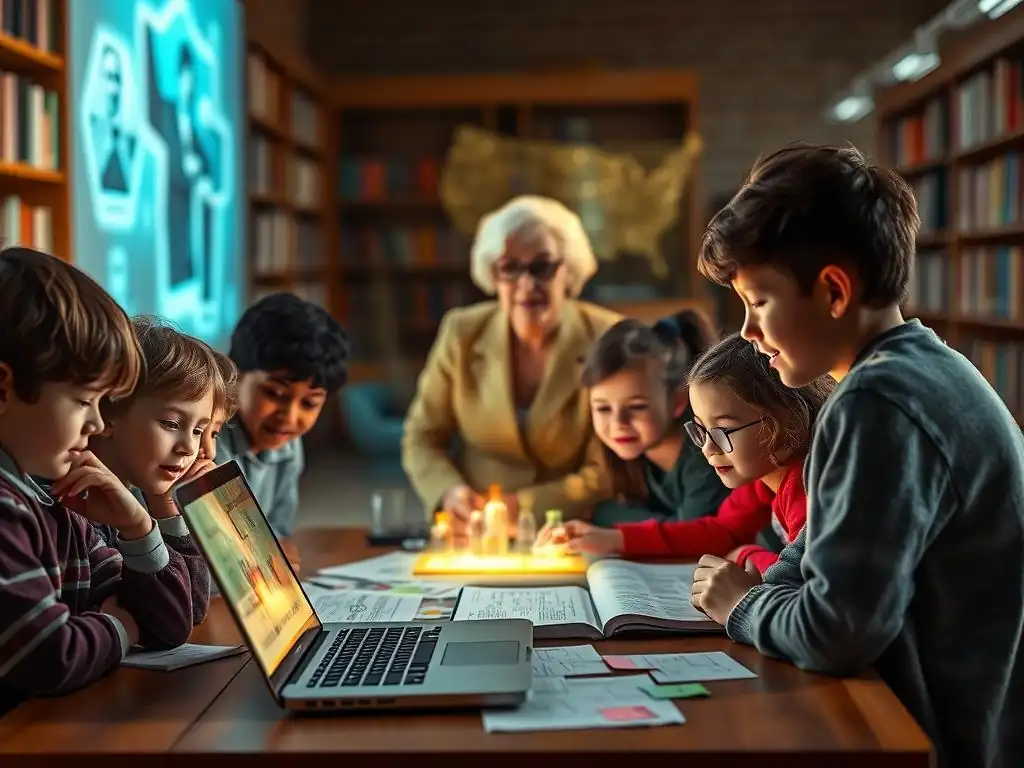
Welcome to WomenInScienceHistory.com!
Delve into the captivating world of scientific discovery and uncover the untold stories of remarkable women who shaped our understanding of the universe. This site is dedicated to illuminating their contributions and inspiring future generations. Are you looking for engaging ways to introduce young learners to the impact of women in STEM?
Our latest article, "From Lab Bench to Laptop: Engaging K12 Online Biographies of Pioneering Women Scientists," explores valuable resources for educators to bring these incredible narratives to life. Discover how you can use compelling online biographies to inspire the next generation of women scientists online K12 and foster a lifelong love of science. Curious to know more?
This article explores the best online resources for bringing the inspiring stories of women scientists to life for K-12 students. Discover engaging biographies, interactive activities, and lesson plans designed to spark curiosity and promote STEM education. We'll highlight resources with high potential for affiliate partnerships and contextual advertising.
-
The Best Online Resources for K12 Women Scientists' Biographies
- 1. Biography.com: Women in Science Collection - A Comprehensive Overview
- 2. National Geographic Kids: Scientist Profiles - Engaging Content for Younger Audiences
- 3. The National Women's History Museum: Online Exhibitions & Biographies - In-Depth Explorations
- 4. "Women in Science: 50 Fearless Pioneers Who Changed the World" by Rachel Ignotofsky - A Curated Book & Resource Guide
- 5. Association for Women in Science (AWIS): Career Resources and Profiles - Connecting Students with Contemporary Scientists
- Maximizing Engagement with Online Women Scientists' Biographies in the K12 Classroom
- Conclusion: Inspiring Future Generations of Women Scientists Online
-
Frequently Asked Questions
- What is the primary goal of "WomenInScienceHistory.com" regarding K12 education?
- What type of content can K12 educators expect to find on the website?
- How does "WomenInScienceHistory.com" address the historical imbalance in science representation?
- What makes "WomenInScienceHistory.com" a valuable resource for online K12 learning?
- How can "WomenInScienceHistory.com" help students better understand the scientific process?
- Final Reflection: Inspiring Future Generations
- Ignite Curiosity: Champion Untold Stories!
The Best Online Resources for K12 Women Scientists' Biographies
Exploring the history of women in science is now easier than ever with these fantastic online resources.
1. Biography.com: Women in Science Collection - A Comprehensive Overview
Biography.com offers an expansive collection of profiles on groundbreaking women scientists, making it an excellent starting point for K-12 students and educators. Its accessible format and clear language make complex scientific achievements understandable, covering figures from Nobel laureates like Marie Curie to environmental pioneers such as Rachel Carson. This platform provides a robust foundation for students seeking to learn about women scientists online K12, offering concise yet informative summaries that highlight their contributions and the challenges they faced.
Educators can effectively utilize Biography.com for various learning objectives. For instance, the profile of Dr. Mae Jemison, the first African American woman in space, can spark discussions on aerospace engineering and the intersection of medicine and space exploration. Similarly, exploring Rosalind Franklin's entry can initiate a conversation about the discovery of DNA structure and the often-overlooked contributions of female researchers in collaborative scientific endeavors, providing a vital resource for studying women scientists online K12.
2. National Geographic Kids: Scientist Profiles - Engaging Content for Younger Audiences
National Geographic Kids excels in making the lives of women scientists captivating for elementary and middle school students. The resource features simplified biographies, vibrant illustrations, and interactive elements such as quizzes, transforming learning into an enjoyable experience. Its content often focuses on explorers and naturalists, aligning with topics like wildlife conservation and environmental science, which resonate well with younger learners eager to discover women scientists online K12.
A prime example is the profile of Jane Goodall, whose pioneering work with chimpanzees introduces concepts of ethology and the importance of long-term field research. Another compelling figure is marine biologist Sylvia Earle, whose story can inspire discussions about oceanography and the critical need to protect marine ecosystems. These engaging narratives make the achievements of these women scientists relatable and inspiring for young minds, fostering early interest in STEM fields.
3. The National Women's History Museum: Online Exhibitions & Biographies - In-Depth Explorations
The National Women's History Museum provides a treasure trove of richly detailed biographies and online exhibitions, offering a deeper dive into the contributions of women scientists. This resource is particularly well-suited for older K-12 students, from middle school to high school, who can engage with primary source documents and comprehensive historical narratives. It allows for a more nuanced understanding of the historical context surrounding these women's scientific breakthroughs and the societal barriers they navigated.
For example, their online resources on Dr. Chien-Shiung Wu, often hailed as the "First Lady of Physics," can be used to explore her critical work on the Manhattan Project and her groundbreaking experiment that disproved the law of parity conservation, showcasing her profound impact despite systemic challenges. Similarly, students can delve into the life of Katherine Johnson, a pivotal NASA mathematician, through the museum's materials, highlighting her essential calculations for space missions like Project Mercury and the Apollo program, making the study of these women scientists online K12 a truly in-depth experience.
4. "Women in Science: 50 Fearless Pioneers Who Changed the World" by Rachel Ignotofsky - A Curated Book & Resource Guide
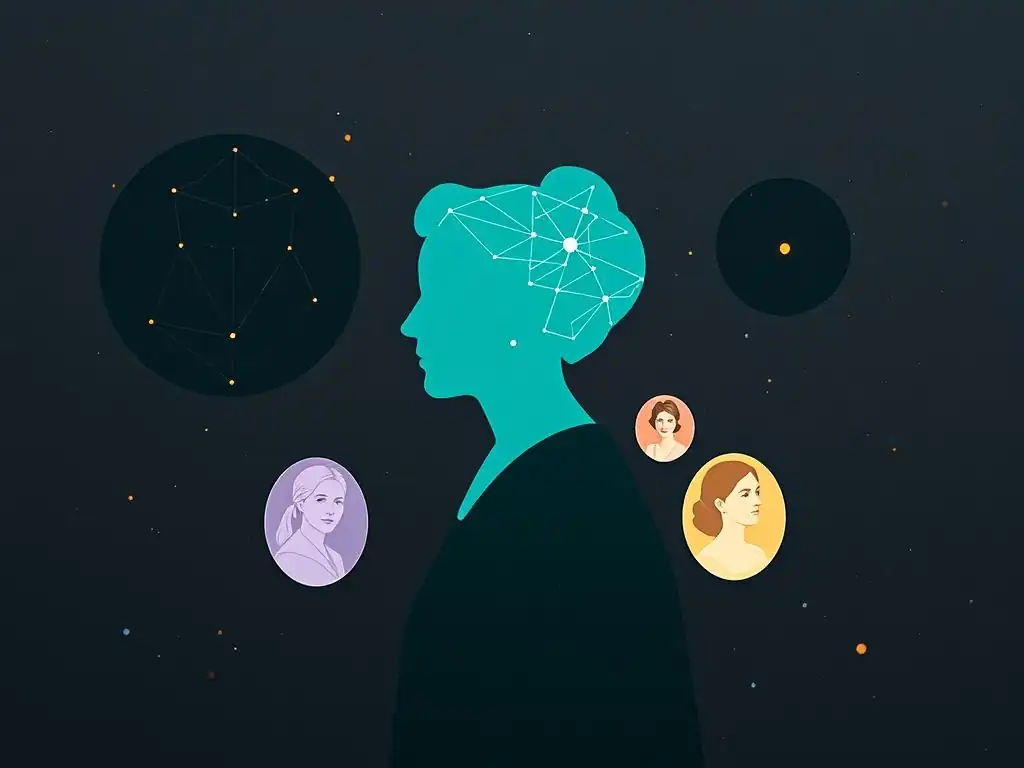
Rachel Ignotofsky's "Women in Science: 50 Fearless Pioneers Who Changed the World" stands out as a beautifully illustrated and highly accessible resource for K-12 classrooms. This book provides a curated collection of 50 concise biographies, making it an excellent starting point for students to discover a diverse range of women scientists across various disciplines and historical periods. Its engaging blend of art and scientific information makes complex ideas approachable for young learners.
Educators can leverage this book in multiple ways. A chapter on Ada Lovelace, considered the first computer programmer, can serve as an introduction to early computing concepts and the history of technology. Alternatively, exploring the life of Maria Sibylla Merian, a 17th-century entomologist and artist, can open discussions about early natural history illustration and meticulous scientific observation, demonstrating how historical women scientists paved the way for modern scientific inquiry.
5. Association for Women in Science (AWIS): Career Resources and Profiles - Connecting Students with Contemporary Scientists
The Association for Women in Science (AWIS) offers valuable resources that highlight contemporary women scientists and provide insights into current STEM careers. This focus on living scientists provides K-12 students with relatable role models, making STEM fields feel more tangible and accessible than solely focusing on historical figures. AWIS helps bridge the gap between academic learning and real-world application, showcasing the diverse paths modern women scientists take.
Educators can utilize AWIS profiles to introduce students to cutting-edge research in fields such as biotechnology or environmental science. For instance, exploring the work of a female materials scientist developing sustainable packaging can spark student interest in engineering solutions for environmental challenges. AWIS serves as an inspiring platform for K-12 students to envision themselves in future STEM roles, connecting them directly with the vibrant and varied careers of today's women scientists.
Maximizing Engagement with Online Women Scientists' Biographies in the K12 Classroom
Beyond simply reading biographies, consider incorporating these strategies to enhance student engagement.
Leveraging Interactive Activities & Projects
Moving beyond passive reading to active engagement is crucial for deeply embedding the stories of women scientists in students' minds. Project-based learning offers an excellent avenue for this, allowing students to creatively interpret and present their research. Activities could include designing digital timelines of a scientist's life, creating virtual museum exhibits showcasing their discoveries, or producing short documentaries that highlight their impact, all utilizing the wealth of women scientists online K12 resources.
For instance, students could research Lise Meitner's contributions to nuclear fission using various online biographies, then develop an interactive presentation detailing her scientific work and the significant challenges she faced as a female physicist in the early 20th century. Another engaging project might involve using data from online sources about marine biologist Eugenie Clark to design a hypothetical conservation campaign for sharks, demonstrating the practical application of scientific knowledge gleaned from studying these inspiring women scientists.
Integrating Online Resources into Lesson Plans
Seamlessly weaving online biographies and related content into existing STEM curricula can significantly enrich the learning experience. This process involves carefully selecting appropriate online resources that align with specific age groups and learning objectives, ensuring that the narratives of women scientists are not merely supplementary but integral components of the lesson. This approach helps to normalize the presence and contributions of women in science.
For a unit on genetics, educators could integrate online profiles of Barbara McClintock to introduce the concept of transposable elements and genetic mapping, followed by a discussion on her Nobel Prize-winning work and the initial skepticism she faced. In a physics class, exploring the contributions of Vera Rubin through online articles can lead to a deeper understanding of dark matter and the expansion of the universe, showing how women scientists online K12 resources can significantly enhance core science topics and provide diverse perspectives.
Showcasing the Impact of Women in STEM - Highlighting Achievements & Overcoming Challenges
It is vital to go beyond merely presenting facts and instead narrate the compelling human stories behind the scientific breakthroughs of women scientists. This involves emphasizing the real-world impact of their discoveries—from life-saving vaccines to advancements in space travel and environmental protection—as well as acknowledging the systemic challenges like gender bias and lack of recognition that many of these pioneering women overcame. This dual focus provides a more complete and inspiring picture.
Consider discussing how Dr. Katalin Karikó's unwavering perseverance with mRNA technology, despite initial skepticism and funding challenges, ultimately led to the development of life-saving COVID-19 vaccines, illustrating the profound global impact of dedicated scientific work. Alternatively, exploring the story of Mary Golda Ross, the first Native American female engineer, who made significant contributions to aerospace design and satellite technology, showcases how her innovative thinking shaped modern communication systems, inspiring students to recognize the tangible legacies of these remarkable women scientists online K12.
Conclusion: Inspiring Future Generations of Women Scientists Online
By leveraging these online resources and engaging activities, educators can bring the inspiring stories of women scientists to life for K-12 students, fostering a passion for STEM and empowering the next generation of female innovators.
Frequently Asked Questions
What is the primary goal of "WomenInScienceHistory.com" regarding K12 education?
The site aims to inspire future generations by showcasing the biographies of pioneering women scientists, making their stories accessible and engaging for K12 students online.
What type of content can K12 educators expect to find on the website?
Educators can find biographies of female scientists, discussions of their groundbreaking work, and information about the challenges they faced in their careers.
How does "WomenInScienceHistory.com" address the historical imbalance in science representation?
The platform actively sheds light on the overlooked narratives of women in science, providing a counter-narrative to the male-dominated history often presented in traditional K12 curricula.
What makes "WomenInScienceHistory.com" a valuable resource for online K12 learning?
The website offers easily accessible and engaging online biographies, specifically designed to appeal to K12 students and promote interest in science careers.
How can "WomenInScienceHistory.com" help students better understand the scientific process?
By exploring the lives and work of diverse scientists, students gain insight into the various paths and perspectives that contribute to scientific advancement, fostering a more inclusive understanding.
Final Reflection: Inspiring Future Generations
The journey of exploring the lives of pioneering women scientists, from their initial lab bench struggles to their digital presence on our laptops, underscores the vital importance of accessible role models for K12 students. These online biographies are not just historical accounts; they are living testaments to perseverance, ingenuity, and the power of challenging societal norms, directly impacting how young minds perceive the possibilities within STEM fields.
The impact of these stories extends far beyond the classroom. By making these narratives readily available online, we empower a generation to see themselves reflected in the faces of those who dared to dream big and break barriers. You can't be what you can't see.
This simple truth highlights the profound influence these biographies can have, shaping aspirations and fostering a sense of belonging within the scientific community for young women and girls.
Now, consider the legacy we are building. How can you, as an educator, parent, or simply an engaged individual, champion these stories? Explore these online resources, share them widely, and ignite the spark of curiosity in the next generation of women scientists. Let us ensure that the path they forge is paved with inspiration, knowledge, and the unwavering belief in their own potential to change the world.
Ignite Curiosity: Champion Untold Stories!
Thank you for delving into the inspiring world of pioneering women scientists! Now that you’ve explored the potential of online biographies to engage K12 students, it's time to translate that inspiration into action.
- Share this article with a teacher, parent, or student you know to spark their interest in women in science and their amazing stories.
- Dive deeper into WomenInScienceHistory.com and nominate a woman scientist whose biography deserves a place in our growing archive, ensuring her legacy inspires future generations.
- Organize a virtual or in-person "Women in Science" read-aloud event in your community to share these biographies with young learners and start important conversations.
What's one woman scientist's story that you believe every student should know, and how would you bring it to life?