
Primary School Discoveries: Online Picture Books & Simple K5 STEM Activities on Women Scientists

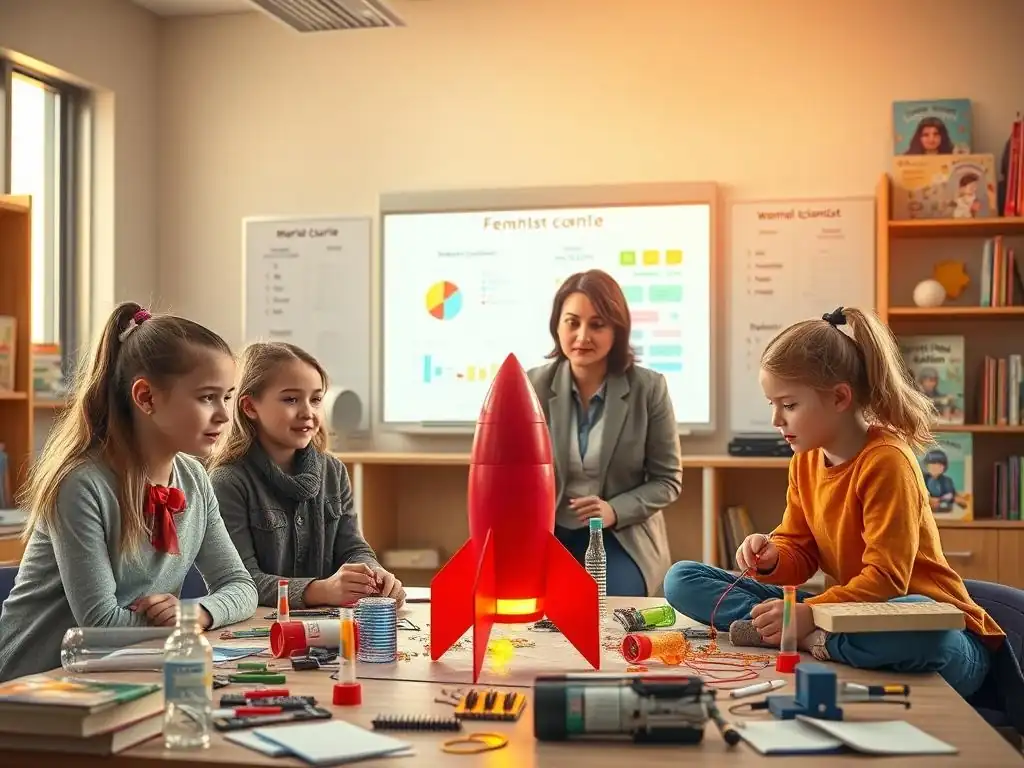
Welcome to WomenInScienceHistory.com, where we illuminate the remarkable stories of women who shaped the scientific world! Ever wonder how to introduce young learners to these inspiring figures? This week, we're diving into engaging and accessible resources for educators, focusing on women scientists elementary STEM activities. Prepare to discover online picture books and simple K5 STEM activities that bring these groundbreaking stories to life – sparking curiosity and fostering a love for science in the next generation. What amazing discoveries await your students? Let's explore!
- Inspiring Young Minds: Women Scientists Elementary STEM Activities
- How to Use Online Picture Books to Introduce Women in Science
- Easy K5 STEM Activities Inspired by Women Scientists
- Resources for Educators: Further Exploration of Women in Science
- Monetization Strategies: Integrating Affiliate Links & High CPC Opportunities
- Conclusion: Empowering Future Generations Through Women in Science STEM.
-
Frequently Asked Questions
- What kind of content does WomenInScienceHistory.com offer?
- Why is it important to learn about women scientists in elementary school?
- What are "Primary School Discoveries" on WomenInScienceHistory.com?
- What are some examples of STEM activities related to women scientists featured on the site?
- How can WomenInScienceHistory.com help educators incorporate women scientists into their curriculum?
- Final Reflection: Inspiring Future Female Scientists
- Ignite Curiosity: Explore Science with Inspiring Women!
Inspiring Young Minds: Women Scientists Elementary STEM Activities
Introducing young learners to the groundbreaking achievements of women in science is a powerful way to ignite curiosity and foster a lifelong love for STEM fields. By highlighting the contributions of pioneering female scientists from an early age, educators and parents can effectively challenge traditional stereotypes and demonstrate that scientific exploration is a field open to everyone. Engaging children through accessible formats like online picture books and hands-on activities makes these complex topics relatable and memorable.
The integration of "Women scientists elementary STEM activities" into early education curricula provides a foundational understanding of scientific principles while simultaneously empowering children with diverse role models. These activities not only teach basic science, technology, engineering, and mathematics concepts but also weave in narratives of perseverance, innovation, and critical thinking. This holistic approach ensures that children develop both cognitive skills and an appreciation for the human stories behind scientific progress, laying the groundwork for future scientific inquiry.
How to Use Online Picture Books to Introduce Women in Science
Selecting Engaging Picture Books Featuring Women Scientists
When choosing online picture books to introduce young children to women in science, the primary focus should be on age-appropriateness, compelling narratives, and visually appealing illustrations. Look for books that simplify complex scientific concepts into digestible stories, often personifying the scientists themselves or their discoveries.
For instance, a book might highlight Marie Curie's discovery of radium through a narrative of persistent experimentation, or feature Jane Goodall's groundbreaking work with chimpanzees by focusing on her empathetic connection with animals. The goal is to find stories that resonate with a K5 audience, emphasizing curiosity, problem-solving, and the joy of discovery rather than exhaustive biographical detail.
Beyond engaging storytelling, consider books that showcase a diverse range of women scientists from various fields and backgrounds, including those who overcame significant societal barriers. This broad representation helps children see themselves reflected in the stories and recognize that science is a global endeavor.
Many online platforms and educational publishers now offer digital versions of popular titles that celebrate figures like Katherine Johnson, whose mathematical brilliance was crucial to early space missions, or Dr. Mae Jemison, the first African American woman in space. Selecting books that also offer interactive elements or clear, concise language can further enhance the learning experience, making the introduction to "Women scientists elementary STEM activities" both informative and entertaining.
Maximizing Learning: Discussion Prompts & Activities After Reading
To truly maximize the educational impact of online picture books about women scientists, incorporating discussion prompts and follow-up activities is crucial. After reading, engage children with open-ended questions that encourage critical thinking and empathy, such as "What challenges do you think [scientist's name] faced, and how did she overcome them?" or "How did [scientist's name]'s discovery change the world?" These prompts help children connect the narrative to broader themes of resilience and impact, fostering a deeper understanding of the scientist's journey and contribution. Encouraging children to articulate their thoughts also reinforces their comprehension and builds valuable communication skills.
Following the discussion, simple, hands-on activities can solidify the learning and transform abstract concepts into tangible experiences. For instance, after reading about a botanist, children could plant seeds in a small cup and observe their growth over time, or after a story about an astronomer, they might draw their own constellations.
These "Women scientists elementary STEM activities" bridge the gap between storytelling and practical application, allowing children to explore the scientific principles introduced in the book. Such activities not only make the learning process more dynamic but also inspire children to conduct their own miniature experiments, mirroring the spirit of the scientists they just learned about.
Easy K5 STEM Activities Inspired by Women Scientists
Rosalind Franklin & DNA: Building a Model
Rosalind Franklin's invaluable contributions to understanding the structure of DNA are often overlooked, yet her X-ray diffraction images, particularly Photograph 51, were pivotal in revealing the double helix. Her meticulous work provided the crucial visual evidence that informed Watson and Crick's model, revolutionizing biology and medicine. Introducing children to her story highlights the importance of observation, data collection, and the foundational role of often unsung heroes in scientific breakthroughs. Her story emphasizes that careful experimentation and precise imaging are vital steps in scientific discovery.
For a simple K5 STEM activity inspired by Rosalind Franklin, children can build a basic DNA model using readily available materials. Provide pipe cleaners of two different colors for the "backbone" and various colored beads for the "rungs" (base pairs).
Guide them to twist the pipe cleaners together to form a spiral staircase shape, then thread the beads onto smaller pieces of pipe cleaner or string to connect the two main strands. This hands-on "Women scientists elementary STEM activity" visually represents the double helix, helping children grasp the concept of DNA as the building block of life in an engaging and memorable way.
Ada Lovelace & Coding: Simple Sequencing
Ada Lovelace, the daughter of Lord Byron, is widely regarded as the world's first computer programmer, having written algorithms for Charles Babbage's Analytical Engine in the mid-19th century. She envisioned that machines could do more than just calculations, foreseeing their potential for creating music and art. Her forward-thinking insights laid the groundwork for modern computing and programming, demonstrating a remarkable understanding of computational logic decades before the first electronic computers existed. Her narrative underscores the power of theoretical thinking and imaginative foresight in scientific and technological progress.
To introduce K5 learners to the foundational concepts of coding, inspired by Ada Lovelace, a simple sequencing activity is ideal. Create a "robot" game where children give a series of instructions to a "robot" (another child or an adult) to perform a task, like moving from one side of the room to another, picking up an object, or drawing a simple shape. Use simple commands like "move forward two steps," "turn right," or "pick up."
Children can draw or write these commands in sequence, essentially creating a basic algorithm. This "Women scientists elementary STEM activity" teaches logical thinking, step-by-step problem-solving, and the importance of precise instructions, which are core elements of programming.
Mae Jemison & Space Exploration: Building a Rocket
Dr. Mae Jemison made history as the first African American woman to travel to space aboard the Space Shuttle Endeavour in 1992. Beyond her pioneering journey, she is a physician, engineer, and educator, embodying the interdisciplinary nature of STEM. Her story is a testament to breaking barriers and pursuing ambitious dreams, inspiring countless individuals to reach for the stars. Jemison's dedication to science and her advocacy for STEM education highlight the importance of diverse representation in scientific fields and the boundless potential of human exploration.
Inspired by Mae Jemison's incredible journey, a simple K5 STEM activity involves building and launching a small, safe "rocket." Children can construct their rockets using readily available materials such as empty paper towel rolls, plastic bottles, construction paper, and tape.
For a basic launch mechanism, a simple air pump or a mixture of baking soda and vinegar inside a sealed bottle (with a small opening for pressure release) can be used to demonstrate propulsion. This "Women scientists elementary STEM activity" allows children to explore basic principles of engineering and physics, such as thrust and aerodynamics, in a fun and tangible way, connecting directly to the excitement of space exploration.
Resources for Educators: Further Exploration of Women in Science
Websites Dedicated to Women in STEM History
Numerous online platforms are specifically dedicated to chronicling the rich history of women in STEM fields, offering invaluable resources for educators and learners alike. These websites serve as comprehensive digital archives, providing detailed biographies, timelines of significant discoveries, and often photographic evidence or primary source materials. They play a crucial role in correcting historical omissions and ensuring that the contributions of women are recognized and celebrated. Many of these sites offer curated content that can be easily adapted for various educational levels, from concise summaries for K5 learners to in-depth analyses for older students.
These dedicated websites often feature interactive exhibits, lesson plans, and educational guides designed to help educators integrate the stories of women scientists into their curricula. For instance, one might find a virtual tour of a historical laboratory or a collection of letters written by a pioneering female researcher.
Such resources provide rich context and authentic insights into the challenges and triumphs faced by women throughout scientific history. Accessing these specialized platforms ensures that educators have a reliable and engaging source of information to enrich their "Women scientists elementary STEM activities" and broader STEM lessons, fostering a deeper appreciation for the diverse tapestry of scientific achievement.
Curated Lists of Women Scientists Elementary STEM Resources
For educators seeking to seamlessly integrate the stories of women scientists into their K5 STEM curriculum, curated lists of resources are an invaluable asset. Many educational organizations, non-profit initiatives, and academic institutions compile and vet comprehensive lists of age-appropriate books, activity guides, videos, and lesson plans specifically focused on female scientific pioneers.
These lists often categorize resources by scientific discipline, age range, or specific learning objectives, making it exceptionally easy for busy educators to find relevant and high-quality materials without extensive individual research. The curated nature of these lists ensures that the content is accurate, engaging, and aligned with educational standards.
These curated collections frequently highlight innovative "Women scientists elementary STEM activities" that have been successfully implemented in classrooms. They might include suggestions for hands-on experiments, creative art projects, or storytelling prompts that bring the lives and work of scientists like Hypatia, Maria Sibylla Merian, or Dorothy Hodgkin to life for young learners.
The benefit of these organized resources is that they save educators significant time in preparation, allowing them to focus more on delivery and student engagement. By leveraging these thoughtfully compiled lists, educators can confidently introduce inspiring narratives and practical STEM explorations, fostering a strong foundation in science for the next generation.
Monetization Strategies: Integrating Affiliate Links & High CPC Opportunities
Strategic Placement of Affiliate Links
For a website like WomenInScienceHistory.com, strategic placement of affiliate links can generate revenue while simultaneously providing valuable resources to the audience. When discussing online picture books or STEM activity kits, naturally integrate links to products that directly align with the content.
For example, within a section describing a specific K5 STEM activity inspired by a woman scientist, an affiliate link to a recommended kit or book that supports that activity would be highly relevant. The key is to ensure these links feel like genuine recommendations that enhance the user's experience by offering a convenient path to acquire the tools or materials needed for the "Women scientists elementary STEM activities."
Furthermore, consider creating resource pages or recommended reading lists where multiple affiliate links can be grouped. This allows for a concentrated placement of product suggestions without disrupting the flow of informational articles. Transparency about affiliate partnerships is essential to maintain trust with the audience. By focusing on products that genuinely benefit the target demographic—educators and parents seeking high-quality resources for teaching about women in science—the website can build a reputation as a valuable hub, leading to sustained click-through rates and commissions.
Targeting High CPC Keywords
Targeting high Cost Per Click (CPC) keywords is a crucial monetization strategy, particularly for display advertising revenue, by attracting advertisers willing to pay more for ad impressions or clicks. For WomenInScienceHistory.com, this involves identifying keywords that not only relate to the content but also indicate a higher commercial intent from the searcher.
For instance, while "women scientists elementary STEM activities" is a core informational keyword, incorporating variations like "best STEM kits for elementary students" or "educational resources for young scientists" can attract advertisers selling these products. These terms often have a higher CPC because they suggest the user is closer to making a purchase decision.
Integrating these high CPC keywords naturally throughout the article, especially in sections discussing practical applications or recommended tools, can significantly boost ad revenue. For example, a paragraph about building a DNA model could subtly mention "educational science kits for kids," which might trigger more lucrative ad placements. The goal is to optimize content not just for organic search visibility but also for its potential to attract valuable ad impressions. By carefully weaving these commercially viable phrases into the rich, informative narratives about women in science, the website can maximize its earning potential while maintaining its educational integrity.
Conclusion: Empowering Future Generations Through Women in Science STEM.
The journey of discovery for young minds begins with exposure to inspiring narratives and engaging hands-on experiences. By leveraging online picture books and simple K5 STEM activities, we can effectively introduce children to the remarkable achievements of women in science, challenging preconceived notions and fostering a sense of limitless possibility. These early interactions with "Women scientists elementary STEM activities" are not just about learning facts; they are about cultivating curiosity, resilience, and a passion for inquiry that can last a lifetime.
Empowering future generations means providing them with diverse role models and accessible pathways into STEM fields. The stories of women scientists, often overlooked in traditional curricula, offer powerful lessons in perseverance, innovation, and the courage to break barriers. Through thoughtfully designed activities and readily available resources, we can ensure that every child sees themselves reflected in the world of science, encouraging them to ask questions, explore solutions, and ultimately, contribute to the scientific advancements of tomorrow.
Frequently Asked Questions
What kind of content does WomenInScienceHistory.com offer?
The site offers biographies of pioneering female scientists, discussions on their groundbreaking work, and insights into the challenges they faced in their careers. It focuses on highlighting their contributions to various scientific fields.
Why is it important to learn about women scientists in elementary school?
Introducing children to women scientists at a young age helps to break down stereotypes and encourages girls' participation in STEM activities. It fosters inclusivity and broadens their understanding of who can be a scientist.
What are "Primary School Discoveries" on WomenInScienceHistory.com?
"Primary School Discoveries" features online picture books and simple K5 STEM activities focused on women scientists. These resources are designed to be engaging and accessible for young learners.
Examples might include building models inspired by a female engineer's inventions or conducting experiments related to a female biologist's research. These activities aim to connect learning to real-world applications and inspire curiosity.
How can WomenInScienceHistory.com help educators incorporate women scientists into their curriculum?
The website provides a wealth of resources, including biographies, activity ideas, and discussion prompts. These materials can be easily integrated into existing STEM lessons to highlight the contributions of women.
Final Reflection: Inspiring Future Female Scientists
The journey through online picture books and simple K5 STEM activities, as explored in this article, underscores the critical importance of early exposure to female role models in science. By introducing young children to the remarkable achievements of women scientists, we lay the foundation for a more inclusive and equitable future in STEM fields. This is not just about filling a diversity quota; it's about unlocking the full potential of our future generations.
The impact of showcasing these women extends far beyond the classroom. It shapes perceptions, challenges stereotypes, and ignites a spark of curiosity in young minds, particularly in girls, who may otherwise feel discouraged from pursuing STEM. Witnessing the enthusiasm of a child as they build a simple circuit inspired by Marie Curie's work is a testament to the power of representation. You can't be what you can't see,
as Marian Wright Edelman so eloquently stated. This rings true now more than ever, highlighting the necessity of making visible the contributions of women who have shaped our scientific understanding.
Now, consider the ripple effect. How can you, as a parent, educator, or simply an engaged citizen, further amplify these voices? Seek out resources, share stories, and encourage young learners to explore the world around them with a scientific lens. Let us collectively cultivate an environment where every child, regardless of gender, feels empowered to pursue their passions and contribute to the advancement of science, technology, engineering, and mathematics. The future of innovation depends on it.
Ignite Curiosity: Explore Science with Inspiring Women!
Thank you for diving into the world of remarkable women scientists and engaging STEM activities! Now, let’s keep the excitement going.
- Dive into our free online picture books, perfect for sparking a love of science in young minds. This is your first step to making learning fun and accessible.
- Discover more about amazing women in science and explore new STEM activities tailored for K-5 students on WomenInScienceHistory.com.
- Share this article with fellow parents, teachers, or anyone passionate about encouraging young scientists!
What's one experiment inspired by a woman scientist that you're excited to try with your child or students this week?