
Sophie Wilson: The Engineer Behind the Acorn MicroComputer and ARM Processor Architecture

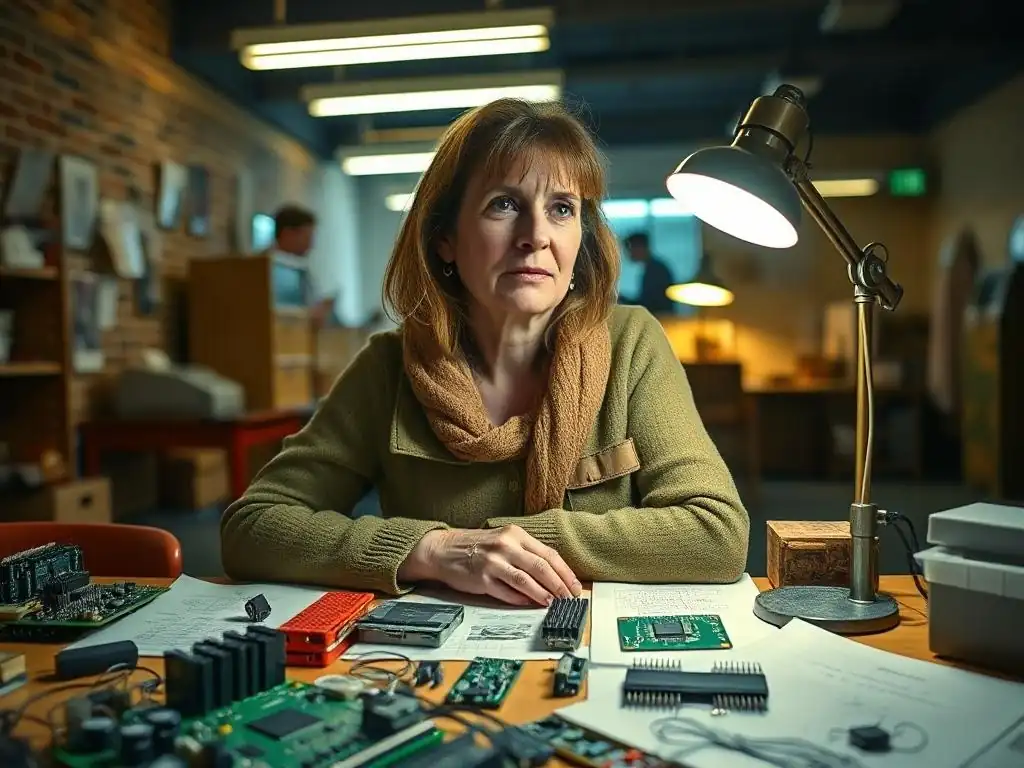
Welcome to WomenInScienceHistory.com!
Delve into the remarkable untold stories of women who shaped the scientific world. Today, we shine a spotlight on Sophie Wilson, a name synonymous with innovation in computer architecture. Ever wondered about the brilliant mind behind the Acorn MicroComputer and the revolutionary ARM processor architecture that powers billions of devices today? Prepare to uncover the fascinating journey of this pioneering engineer and discover how she overcame obstacles to leave an indelible mark on technology. Read on to explore her incredible contributions and be inspired by her legacy!
- Introduction to Sophie Wilson: A Pioneer in Computer Engineering
- Early Life and Education
- Sophie Wilson at Acorn Computers: The Birth of the Acorn Microcomputer
- The Creation of the ARM Processor Architecture
- The ARM Processor: From Acorn to Global Dominance
- Recognition and Awards
- Challenges and Perspectives as a Woman in Engineering
- Lasting Legacy and Influence
- Conclusion: An Engineering Visionary
-
Frequently Asked Questions
- What were some of Sophie Wilson's earliest contributions to the world of computing?
- What is the ARM processor, and why is Sophie Wilson significant to its development?
- What challenges did Sophie Wilson likely face as a woman in the predominantly male field of computer engineering?
- How did the Acorn Microcomputer contribute to the development of the ARM processor?
- What impact has Sophie Wilson's work had on the world of technology?
- Final Reflection: The Enduring Legacy of Innovation
- Unveil Your Inner Innovator
Introduction to Sophie Wilson: A Pioneer in Computer Engineering
Highlighting Sophie Wilson's Impact on Computing History
Sophie Wilson stands as one of the most influential, yet often unsung, figures in modern computer engineering. Her groundbreaking work, particularly in the development of the Acorn Microcomputer and the revolutionary ARM processor architecture, has profoundly shaped the landscape of digital technology. Wilson's contributions laid the foundational groundwork for the personal computing revolution and, critically, for the mobile devices that dominate our lives today, making the Sophie Wilson ARM processor legacy truly ubiquitous.
Her visionary approach to processor design, emphasizing efficiency and simplicity, proved to be far ahead of its time. This foresight allowed ARM architecture to scale from early educational computers to the powerful smartphones, tablets, and embedded systems that now number in the billions worldwide. Her innovative spirit and technical prowess cemented her status as a pivotal figure in the history of computing, inspiring generations of engineers and innovators.
Introducing the Acorn Microcomputer and ARM Processor Legacy
The Acorn Microcomputer, particularly the BBC Micro, became a cornerstone of computer literacy in the United Kingdom during the 1980s. Designed with an emphasis on education, it brought programming and digital exploration into homes and classrooms, igniting a passion for technology in countless individuals. Sophie Wilson was instrumental in its development, crafting its core software and influencing its hardware design.
However, it was the subsequent creation of the ARM (Acorn RISC Machine) processor that truly solidified her enduring legacy. Born from the need for a more powerful and efficient successor to the 8-bit processors of the era, the ARM architecture pioneered the Reduced Instruction Set Computing (RISC) philosophy in commercial microprocessors. This design choice, championed by Sophie Wilson, led to chips that were not only smaller and consumed less power but were also highly performant, paving the way for the dominance of the Sophie Wilson ARM processor in diverse applications.
Early Life and Education
Early Interest in Electronics and Programming
Sophie Wilson's fascination with electronics and programming emerged at an early age, demonstrating a natural aptitude for logical systems and problem-solving. Growing up in a household where both her parents were teachers—her father a physics teacher and her mother a literature teacher—she was exposed to an environment that fostered intellectual curiosity and critical thinking. This early exposure to analytical disciplines likely nurtured her inherent inclination towards the intricacies of technology.
Her childhood was characterized by an active exploration of how things worked, often involving disassembling and reassembling electronic devices. This hands-on approach to learning, combined with an innate curiosity about the underlying principles of computing, set the stage for her future groundbreaking contributions. It was this foundational passion that would eventually lead her to design some of the most influential computing architectures in history.
Cambridge University and the Path to Computer Science
Wilson pursued her higher education at the University of Cambridge, enrolling at Selwyn College in 1975 to study Mathematics. While her initial focus was theoretical, the burgeoning field of computer science at Cambridge provided a fertile ground for her practical interests. She quickly gravitated towards the university's computer laboratory, where she gained hands-on experience with early computer systems and programming languages.
Her time at Cambridge was crucial in honing her analytical skills and deepening her understanding of computer architecture. It was during this period that she developed a profound appreciation for efficient design and the elegance of streamlined code, principles that would later become hallmarks of her work on the Acorn Microcomputer and the revolutionary Sophie Wilson ARM processor. This academic foundation, combined with her innate talent, prepared her perfectly for her pivotal role at Acorn Computers immediately after graduating.
Sophie Wilson at Acorn Computers: The Birth of the Acorn Microcomputer
Joining Acorn Computers: A Pivotal Moment
Sophie Wilson joined Acorn Computers in 1978, a relatively nascent company at the time, co-founded by Hermann Hauser and Chris Curry. Her arrival marked a pivotal moment for the fledgling enterprise, as she immediately began to make significant technical contributions. At Acorn, Wilson found an environment ripe for innovation, where her skills in hardware design and low-level programming could flourish.
Her initial projects involved developing microcomputer systems for various applications, quickly demonstrating her ability to translate complex technical requirements into elegant and functional designs. Her dedication and profound technical understanding rapidly established her as a key figure within the small, agile team, setting the stage for her most influential work.
Designing the Acorn System
Wilson played a crucial role in the design and development of Acorn's early computer systems, including the Acorn System 1, which was released shortly after she joined the company. This modular 8-bit microcomputer kit was designed for hobbyists and educational institutions, providing an accessible entry point into computing. Her work on its architecture and software laid important groundwork for subsequent, more ambitious projects.
Her contributions extended beyond mere programming; she was deeply involved in the architectural decisions that shaped these early machines. This hands-on approach to both hardware and software design allowed her to create cohesive and efficient systems, distinguishing Acorn's offerings in a rapidly evolving market.
The BBC Micro and the Development of BBC BASIC
Perhaps Sophie Wilson's most widely recognized contribution to the personal computing landscape was her central role in the development of the BBC Micro. In 1981, the British Broadcasting Corporation (BBC) launched a Computer Literacy Project, seeking a microcomputer to accompany its educational television series. Acorn Computers won the competitive bid, largely due to Wilson's and Steve Furber's rapid prototyping and design capabilities. The BBC Micro went on to sell over 1.5 million units across the UK and beyond, profoundly impacting computer education.
Crucially, Wilson was the primary designer of BBC BASIC, the programming language that became synonymous with the BBC Micro. She famously wrote BBC BASIC in just one week, demonstrating an extraordinary blend of speed, efficiency, and foresight in language design. This version of BASIC was highly optimized for the 6502 processor and included advanced features for graphics and sound, making it an exceptionally powerful tool for teaching programming. Her work on the BBC Micro and BBC BASIC solidified her reputation as a formidable engineer and a visionary in accessible computing.
The Creation of the ARM Processor Architecture
Addressing the Limitations of Existing Processors
By the mid-1980s, Acorn Computers recognized a critical limitation in the 8-bit and early 16-bit processors they were using, such as the MOS 6502 in the BBC Micro. While these chips had been revolutionary, they were beginning to show their age in terms of performance, power consumption, and complexity for increasingly ambitious computing tasks. Acorn needed a processor that could handle advanced graphics and multi-tasking for their next generation of computers, particularly the Acorn Archimedes.
Existing complex instruction set computing (CISC) processors, like Intel's x86 series, were becoming increasingly convoluted, requiring more transistors and consuming more power for each instruction. This complexity translated into higher costs and reduced efficiency, prompting Sophie Wilson and her colleague Steve Furber to explore a radically different approach to processor design. They envisioned a simpler, more efficient architecture that could overcome these inherent limitations.
The Revolutionary RISC Design
Sophie Wilson and Steve Furber spearheaded the development of the Acorn RISC Machine (ARM) processor, which embraced the principles of Reduced Instruction Set Computing (RISC). Unlike CISC architectures, which use a large set of complex instructions that often take multiple clock cycles to execute, RISC processors utilize a smaller, highly optimized set of simple instructions, each designed to execute in a single clock cycle. This fundamental design philosophy was revolutionary for commercial microprocessors at the time.
The advantages of the RISC approach were manifold: simpler instruction decoding, smaller chip sizes, lower power consumption, and the potential for higher clock speeds and more efficient pipelining. The Sophie Wilson ARM processor design focused on executing instructions quickly and efficiently, offloading complex operations to software rather than embedding them in hardware. This elegant simplicity would prove to be one of ARM's most enduring strengths.
Key Contributions to the ARM Processor's Development
Sophie Wilson's contributions to the ARM processor's development were extensive and foundational. She was responsible for the instruction set architecture (ISA) of the first ARM processor, known as ARM1, which was functional by April 1985. Her design decisions for the ISA were critical in defining the processor's efficiency and flexibility. She meticulously crafted each instruction, ensuring it was both powerful and simple to implement in hardware.
Working alongside Steve Furber, who focused on the physical chip design, Wilson concentrated on the logical architecture and the microcode that would bring the processor to life. Her deep understanding of compiler design also influenced the ARM instruction set, ensuring it was highly amenable to efficient code generation. This collaborative yet distinct division of labor resulted in a highly optimized and groundbreaking processor that laid the groundwork for the global dominance of the Sophie Wilson ARM processor architecture.
The ARM Processor: From Acorn to Global Dominance

ARM's Adoption in Mobile Devices and Embedded Systems
The ARM processor, initially designed for Acorn's personal computers, found its true calling in the nascent world of mobile and embedded systems. In 1990, Acorn spun off its processor design division into a new company, ARM Holdings (originally Advanced RISC Machines Ltd), with Apple and VLSI Technology as key investors. This strategic move allowed ARM to license its architecture to a broader range of manufacturers, significantly expanding its reach.
Early adopters included Apple for its Newton handheld device in 1993, which showcased ARM's low power consumption and small form factor. However, it was the explosion of mobile phones in the late 1990s and early 2000s that truly propelled ARM to global dominance. Its energy efficiency became paramount for battery-powered devices, leading to its widespread adoption in virtually every smartphone and tablet on the market today. It's estimated that over 95% of smartphones globally are powered by ARM-based chips, a testament to the foresight of the Sophie Wilson ARM processor design.
The Impact of ARM Architecture on Modern Computing
The impact of ARM architecture on modern computing is profound and far-reaching. Its low power consumption and high performance per watt have not only enabled the mobile revolution but also fueled the growth of the Internet of Things (IoT), where billions of small, connected devices rely on ARM processors. From smart home devices and wearables to automotive infotainment systems and industrial controls, ARM is the silent workhorse behind much of our connected world.
More recently, ARM has made significant inroads into server markets and even desktop computing, with companies like Apple transitioning their Mac lineup to custom ARM-based silicon (e.g., Apple M1/M2 chips). This shift underscores the architecture's scalability and versatility, challenging the long-held dominance of traditional x86 processors in these domains. The Sophie Wilson ARM processor architecture has fundamentally reshaped how we think about computing power, emphasizing efficiency and ubiquity.
Work at Broadcom
After her pivotal work at Acorn Computers and her foundational contributions to ARM, Sophie Wilson transitioned to Broadcom, a global semiconductor company, in 1999. At Broadcom, she continued her illustrious career in processor design and architecture, contributing to a wide range of advanced technologies. Her roles involved developing integrated circuits for networking, broadband communication, and other high-performance applications.
Her expertise in efficient processor design remained invaluable, as she worked on the architecture of various Broadcom chips, including those used in set-top boxes and network infrastructure. Her tenure at Broadcom further solidified her reputation as a leading authority in microchip design, continuing to innovate in the complex world of silicon engineering.
Recognition and Awards
Celebrating Achievements in Engineering
Sophie Wilson's remarkable contributions to computer engineering have garnered significant recognition throughout her distinguished career. Her work on the Acorn Microcomputer and, most notably, the ARM processor architecture, has been celebrated for its profound and lasting impact on the technology industry. She is widely regarded as one of the most significant engineers of her generation, whose innovations have touched billions of lives globally.
Her achievements stand as a testament to her technical brilliance and unwavering dedication, highlighting the critical role of fundamental research and design in shaping technological progress. This recognition extends beyond the technical community, acknowledging her influence on education and the broader digital landscape.
Awards and Honors
Wilson has received numerous prestigious awards and honors that underscore her monumental contributions:
- 2008: She was elected a Fellow of the Royal Academy of Engineering (FREng), one of the highest distinctions for an engineer in the UK.
- 2011: Awarded a Commander of the Order of the British Empire (CBE) in the Queen's Birthday Honours for services to computing. This honor formally acknowledged her exceptional impact on the field.
- 2012: Received the IEEE Computer Society's Women of Innovation Award, recognizing her pioneering work and leadership in computing.
- 2013: Elected a Fellow of the Royal Society (FRS), a fellowship of the world's most eminent scientists, a testament to her foundational scientific contributions.
- 2014: Awarded the Lovie Lifetime Achievement Award for her role in creating the ARM processor, which powers the majority of mobile devices worldwide.
- 2020: Received the Charles Stark Draper Prize for Engineering from the National Academy of Engineering, alongside Steve Furber, for their contributions to the invention, development, and commercialization of the ARM microprocessor. This is one of the most prestigious engineering awards globally.
These accolades collectively underscore the immense significance of the Sophie Wilson ARM processor legacy and her enduring influence on modern technology.
Challenges and Perspectives as a Woman in Engineering
Overcoming Gender Bias in the Tech Industry
Sophie Wilson began her career in the late 1970s, a period when the technology industry, particularly hardware and low-level programming, was even more overwhelmingly male-dominated than it is today. While specific public accounts of her personal experiences with gender bias are rare, it is undeniable that she navigated an environment where women in engineering faced systemic challenges, including limited opportunities, skepticism, and a lack of visible female role models. Her very presence and success in such a demanding and innovative field were, in themselves, a powerful act of overcoming societal and professional barriers.
Her unwavering focus on technical excellence and her demonstrable ability to deliver groundbreaking designs served as a potent counterpoint to any potential biases. By consistently producing world-class work, such as the Sophie Wilson ARM processor architecture, she carved out a space for herself based purely on merit and innovation, setting an example for future generations of women in STEM.
Perspective on Diversity in STEM Fields
While Sophie Wilson is known for her reserved and technically focused public persona, her career implicitly advocates for diversity in STEM fields. Her story demonstrates that intellectual capacity and innovative spirit are not bound by gender. Her success highlights the immense value that diverse perspectives bring to complex problem-solving and technological advancement.
The challenges she overcame, even if not explicitly documented, serve as a narrative of resilience and the importance of fostering inclusive environments where talent, regardless of background, can thrive. Her legacy inspires ongoing efforts to encourage more women and underrepresented groups to pursue careers in engineering and computer science, emphasizing that the best innovations often come from a variety of viewpoints and experiences.
Lasting Legacy and Influence
Inspiring Future Generations
Sophie Wilson's life and work serve as a profound source of inspiration for future generations, particularly for young women considering careers in science, technology, engineering, and mathematics (STEM). Her story dismantles stereotypes about who can be a successful engineer, demonstrating that groundbreaking innovation is accessible to anyone with talent, dedication, and a passion for problem-solving. By showcasing her pivotal role in creating foundational technologies like the ARM processor, her narrative encourages aspiring engineers to pursue their curiosities and push the boundaries of what's possible.
Her career illustrates that significant impact can be achieved through deep technical expertise and a commitment to elegant, efficient design. For students learning about computer architecture or embedded systems today, the Sophie Wilson ARM processor stands as a testament to the power of a well-conceived idea and its ability to shape the world.
The Enduring Impact of the Acorn Microcomputer and ARM Processor
The enduring impact of the Acorn Microcomputer and the ARM processor architecture cannot be overstated. The BBC Micro, a machine heavily influenced by Wilson's design, introduced an entire generation in the UK to computing and programming, fostering a nationwide interest in technology that continues to resonate. Its educational legacy laid the groundwork for future digital literacy initiatives.
However, it is the ARM processor that represents Wilson's most pervasive and long-lasting contribution. From its humble beginnings as a chip for Acorn's desktop computers, it has evolved into the dominant architecture for mobile computing, powering over 95% of the world's smartphones and countless other embedded devices.
Its power efficiency has been critical to the rise of portable electronics, enabling devices with long battery lives and powerful capabilities. The Sophie Wilson ARM processor is not just a piece of hardware; it is the silent, efficient engine behind the mobile revolution, the Internet of Things, and increasingly, cloud infrastructure and personal computing, ensuring her influence will continue for decades to come.
Conclusion: An Engineering Visionary
Reaffirming Importance to Computer History
Sophie Wilson's place in computer history is unequivocally that of a visionary and a foundational architect. Her work on the Acorn Microcomputer provided a crucial educational tool that shaped a generation, while her conceptualization and implementation of the ARM processor architecture fundamentally altered the trajectory of computing. She championed a design philosophy centered on efficiency and simplicity, a radical departure at the time, which ultimately proved to be the key to widespread adoption in a diverse array of devices.
Her technical prowess, combined with her foresight, enabled the creation of a processor that could scale from low-power embedded systems to high-performance computing, making the Sophie Wilson ARM processor one of the most influential technological innovations of the late 20th century. Her contributions are not merely footnotes but central chapters in the ongoing narrative of digital evolution.
The Future of ARM Technology and Continued Influence
The future of ARM technology appears boundless, and with it, the continued influence of Sophie Wilson's foundational work. As computing shifts towards pervasive intelligence, edge computing, and specialized AI accelerators, the core tenets of ARM's design—energy efficiency, scalability, and modularity—remain highly relevant. ARM is increasingly making inroads into data centers, automotive technology, and even supercomputing, challenging traditional architectures in new frontiers.
The architectural principles established by Wilson decades ago continue to guide the evolution of ARM processors, ensuring they remain at the forefront of innovation. Her legacy is not just historical; it is an active and dynamic force shaping the next wave of technological advancements, from quantum computing interfaces to highly integrated system-on-chips. The Sophie Wilson ARM processor architecture is poised to remain a cornerstone of global technology for the foreseeable future, a testament to her enduring genius.
Frequently Asked Questions
What were some of Sophie Wilson's earliest contributions to the world of computing?
Sophie Wilson's early contributions include designing the Acorn System 1 and co-designing the BBC Microcomputer. These were pivotal in bringing computing to homes and schools in the UK.
What is the ARM processor, and why is Sophie Wilson significant to its development?
The ARM processor is a type of reduced instruction set computer (RISC) architecture used in most mobile devices. Sophie Wilson was a key designer of the original ARM processor architecture.
What challenges did Sophie Wilson likely face as a woman in the predominantly male field of computer engineering?
She likely faced challenges such as gender bias, limited opportunities for advancement, and underrepresentation in leadership roles within the industry.
How did the Acorn Microcomputer contribute to the development of the ARM processor?
The Acorn Microcomputer created a need for a more powerful and efficient processor, leading to the development of the Acorn RISC Machine (ARM), which later became the ARM processor.
What impact has Sophie Wilson's work had on the world of technology?
Sophie Wilson's work has had a profound impact, as the ARM processor architecture she helped design powers billions of devices worldwide, shaping the landscape of modern technology.
Final Reflection: The Enduring Legacy of Innovation
The journey of Sophie Wilson, from crafting the Acorn Microcomputer to pioneering the ARM processor architecture, underscores the profound impact of visionary engineering on the technological landscape. Her story, far from being a historical footnote, resonates powerfully today, as ARM technology powers billions of devices worldwide, shaping how we interact with the digital world every single moment.
The influence of Wilson's work extends far beyond the circuits and code; it has fundamentally reshaped the cultural and social landscape, enabling mobile computing, the Internet of Things, and countless other innovations. Witnessing the pervasive reach of ARM technology, one cannot help but feel a deep sense of gratitude for the ingenuity and dedication of individuals like Sophie Wilson, who dared to imagine a different future. The best way to predict the future is to invent it.
- Alan Kay. This quote perfectly encapsulates Wilson's approach, not just predicting the future of computing, but actively building it.
As we reflect on Sophie Wilson's remarkable contributions, let us be inspired to embrace our own potential for innovation and creativity. Consider how you, too, can contribute to shaping the future, whether through technological advancements, artistic expression, or simply by fostering a spirit of curiosity and exploration in your own life. The legacy of Sophie Wilson reminds us that even the most complex and impactful technologies begin with a single spark of inspiration, waiting to be ignited.
Unveil Your Inner Innovator
Thank you for exploring Sophie Wilson's incredible journey with us! We hope you found inspiration in her story and the impact of her contributions. Now, it's time to translate that inspiration into action.
- Dive deeper into computer architecture: Start by exploring free online courses on ARM architecture or the history of microcomputers.
- Share Sophie Wilson's story: Spread her inspiring journey with your network and on social media to highlight the impact of women in STEM.
- Reflect on your own problem-solving approach: Identify a complex problem you're facing and brainstorm three unconventional solutions, inspired by Wilson's innovative thinking.
How will you channel your newfound inspiration into building the future?