
Colonial Encounters: European Women Documenting New World Flora and Fauna (Pre1800)

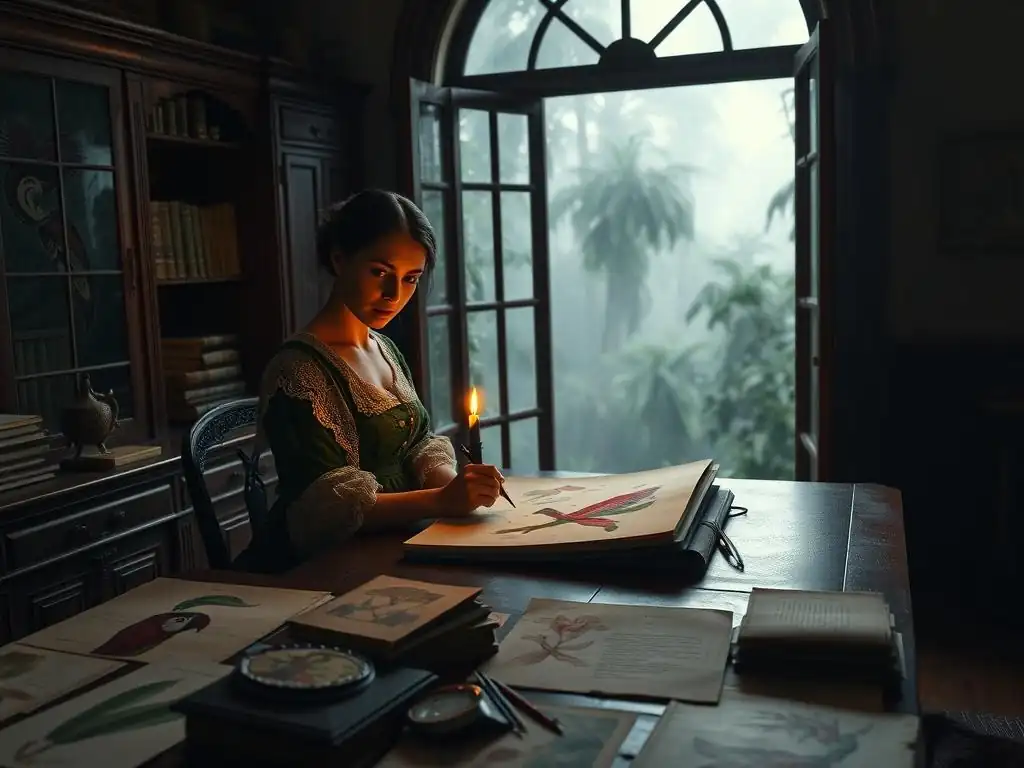
Welcome to WomenInScienceHistory.com!
Delve into the captivating world of science through the lens of remarkable women. Ever wondered how European scientific understanding of the Americas blossomed? Our latest exploration unearths the fascinating stories of European women documenting New World flora and fauna before 1800. Discover their invaluable contributions to environmental science and the unique perspectives they brought to a world teeming with newly discovered life. Prepare to be amazed by their resilience, ingenuity, and the lasting impact of their observations. What secrets will these colonial encounters reveal? Keep reading to find out!
Unveiling the Contributions: Early Women in Ecology & Naturalism
The history of natural sciences, particularly ecology and naturalism, often highlights the contributions of male explorers and scientists, overlooking the significant work of their female counterparts. Yet, long before the 19th century, a remarkable cohort of European women embarked on journeys, both physical and intellectual, to document the rich and unfamiliar biodiversity of the New World. These pioneering naturalists, often operating outside formal academic structures, played a crucial role in expanding Europe's understanding of American flora and fauna, laying foundational groundwork for later ecological studies.
Their contributions, though frequently marginalized or uncredited in historical accounts, were vital for the burgeoning fields of botany and zoology. These early European women documenting New World species faced immense societal barriers, including limited access to education, scientific institutions, and independent travel. Despite these obstacles, their passion for natural history drove them to meticulously observe, illustrate, and collect, providing invaluable records that continue to inform our understanding of pre-colonial biodiversity.
- What motivated European women to document the flora and fauna of the New World during the colonial era?
- What challenges did these women face in pursuing their scientific endeavors?
- What types of documentation did these women produce, and how were they used?
- How did the colonial context influence the perspectives and representations of the natural world by these women?
- Where can I find more information about specific European women who documented the New World before 1800?
The Untold Stories: European Women's Contributions to New World Natural History (Pre-1800)
Rediscovering Lost Voices: Women's Role in Early New World Botanical and Zoological Documentation
For centuries, the narratives of European women documenting New World natural history remained largely untold, buried beneath the more prominent accounts of male explorers and collectors. These women, whether accompanying expeditions, residing in colonial settlements, or working with specimens sent back to Europe, offered unique perspectives and often more detailed artistic and written observations than their male contemporaries. Their meticulous attention to detail, particularly in botanical and entomological illustration, captured the intricate beauty and ecological relationships of species previously unknown to European science.
The rediscovery of these voices is crucial for a more complete and accurate understanding of scientific exploration during the colonial era. For instance, while male naturalists might focus on collecting specimens for classification, many European women documenting New World life cycles, such as the metamorphosis of insects or the symbiotic relationships between plants and animals. This holistic approach, foundational to modern ecology, often went unacknowledged, underscoring the need to re-examine historical records to fully appreciate their profound impact.
Pre-1800 European Women's Expeditions and Scientific Observation in the New World
Motivations and Challenges: Exploring New World Environments Through a Female Lens
The motivations driving European women documenting New World environments were diverse, ranging from accompanying husbands or fathers on colonial ventures to a deep personal curiosity about the natural world. Some sought to escape societal constraints, finding a degree of intellectual freedom and purpose in the vast, untamed landscapes of the Americas. Others were driven by economic necessity, leveraging their artistic or observational skills to contribute to family income or to secure their own livelihoods through scientific illustration and specimen collection.
However, these expeditions were fraught with formidable challenges unique to women of the era. They faced perilous sea voyages, harsh living conditions, tropical diseases, and the inherent dangers of exploring unfamiliar territories. Beyond the physical hardships, they contended with profound societal expectations that often deemed such pursuits unfeminine or inappropriate. Access to scientific tools, formal training, and recognition was severely limited, forcing them to rely on self-education, informal networks, and sheer determination to pursue their scientific passions.
In 18th-century Europe, formal scientific institutions like universities and academies were largely closed to women, relegating their intellectual pursuits to the domestic sphere. Yet, natural history, particularly botany and botanical illustration, was considered a suitable and even genteel pastime for women, aligning with notions of domesticity and artistic refinement. This seemingly restrictive social convention inadvertently opened a unique avenue for European women documenting New World flora and fauna, allowing them to engage in serious scientific work under the guise of an acceptable hobby.
Many women leveraged this narrow window of opportunity, transforming their private studies into rigorous scientific endeavors. They meticulously cataloged plants, observed animal behaviors, and produced exquisite, scientifically accurate illustrations that were often superior to those by their male counterparts. While their work might have been framed as an amateur pursuit, the precision, detail, and scientific rigor embedded in their observations and artworks provided invaluable contributions to the growing body of knowledge about the New World, demonstrating how they skillfully navigated prevailing gender roles to advance scientific understanding.
Key Figures: European Women Pioneers in New World Flora and Fauna Documentation
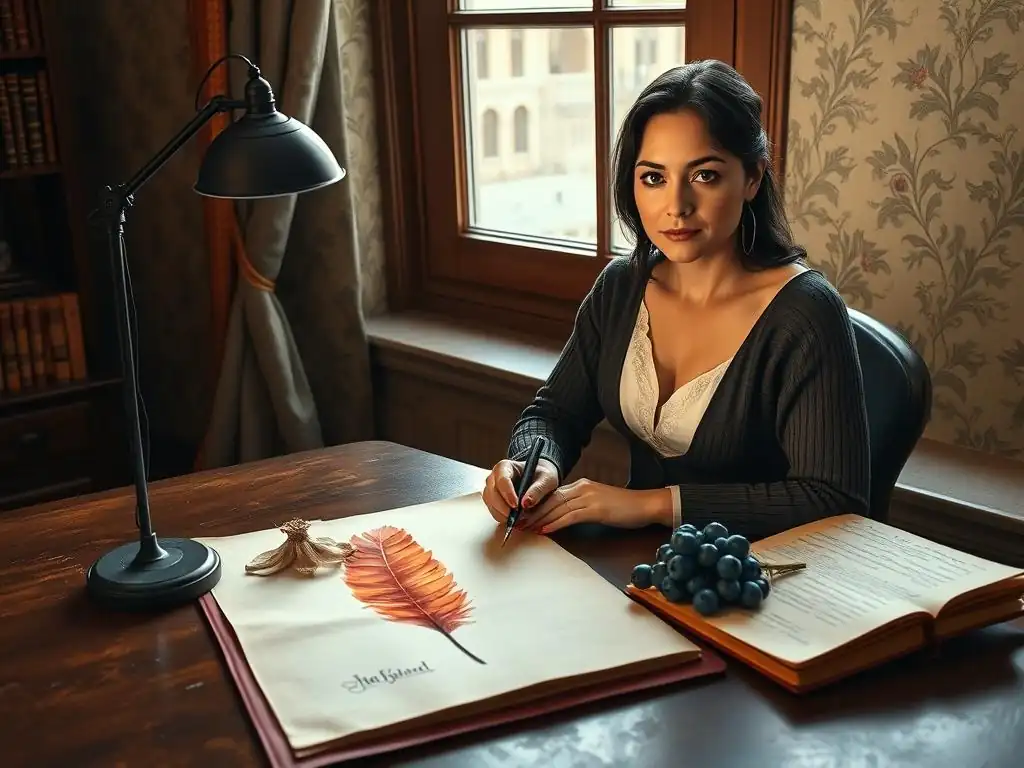
Maria Sibylla Merian: Documenting Surinam's Insects and Plants
Maria Sibylla Merian (1647–1717) stands as a monumental figure among European women documenting New World biodiversity. Driven by an insatiable curiosity about insect metamorphosis, she undertook an extraordinary, self-funded expedition to Surinam in 1699, at the age of 52, accompanied only by her daughter. This two-year journey was unprecedented for a woman of her time, as most naturalists relied on specimens sent back to Europe; Merian insisted on observing the creatures in their natural habitats.
Her magnum opus, Metamorphosis Insectorum Surinamensium (1705), is a testament to her groundbreaking work. It features 60 exquisite hand-colored engravings depicting the life cycles of insects, often shown alongside their host plants, a revolutionary ecological approach for her era. Merian's detailed observations and illustrations, which included species like the Goliath beetle and various butterflies, provided invaluable insights into the complex relationships between insects and plants in the tropical rainforest, significantly advancing entomology and botany.
Jeanne Baret: Documenting the Amazon's Flora
Jeanne Baret (1740–1807) holds the distinction of being the first woman to circumnavigate the globe, a feat achieved during Louis Antoine de Bougainville's expedition aboard the Étoile (1766–1769). Disguised as a man, "Jean Baret," she served as the assistant to the expedition's naturalist, Philibert Commerson. While her contributions were largely overshadowed and uncredited during her lifetime, Baret played a critical role in the botanical collection and documentation throughout the voyage, particularly during their stops in South America.
During their extensive exploration of the Amazon basin and other New World territories, Baret demonstrated remarkable botanical expertise, collecting thousands of plant specimens, often under arduous conditions. Her keen eye and diligent efforts were instrumental in amassing a collection of over 6,000 plant species, many new to European science, including the iconic Bougainvillea. Her story exemplifies the hidden contributions of European women documenting New World natural history, often in the face of extreme personal risk and societal prejudice.
Elizabeth Blackwell: Illustrating New World Medicinal Plants
While Elizabeth Blackwell (c. 1707–1758) did not travel to the New World, her monumental work, A Curious Herbal (1737–1739), significantly contributed to the documentation of flora, including many species imported from the Americas. Faced with her husband's debts and imprisonment, Blackwell undertook the arduous task of drawing, engraving, and coloring nearly 500 plates of medicinal plants, many of which were then being introduced to European gardens and apothecaries from various parts of the world, including the New World.
Her herbal, lauded for its accuracy and artistic merit, became an indispensable resource for apothecaries and physicians across Europe. Among the meticulously rendered plants were species like tobacco and quinine, both originating from the Americas, which were gaining importance in European medicine. Blackwell's dedication and skill in illustrating these plants from specimens demonstrated how European women documenting New World flora could contribute profoundly to scientific knowledge even without direct expeditionary travel, by meticulously recording and disseminating information about newly discovered species.
Methods and Tools: Documenting Nature in the Pre-Photographic Era
The Art of Scientific Illustration: Capturing New World Species with Precision
In the pre-photographic era, scientific illustration was the primary means of documenting and communicating new discoveries in natural history. European women documenting New World flora and fauna often distinguished themselves through their exceptional artistic skill and meticulous attention to detail. They employed various mediums, such as watercolor, gouache, and pen-and-ink, to create highly accurate and aesthetically pleasing representations of plants and animals.
These illustrations were not merely artistic renderings; they served as critical scientific data, capturing morphological details, coloration, and even aspects of behavior that could not be conveyed through written descriptions alone. Maria Sibylla Merian's work, for instance, revolutionized entomological illustration by depicting insects in their full life cycles and within their ecological contexts, showcasing the precision and scientific value of this art form as practiced by pioneering women.
Utilizing Written Descriptions and Specimen Collection Techniques
Beyond visual documentation, European women documenting New World species also relied heavily on detailed written descriptions and the careful collection of specimens. These written accounts, often found in personal journals, letters, and published works, provided crucial contextual information about the habitat, behavior, and local uses of the species observed. They captured data that illustrations alone could not convey, such as the scent of a flower, the texture of a leaf, or the specific ecological niche of an animal.
Specimen collection was equally vital, allowing for physical study and comparison back in Europe. Methods for preserving specimens, though rudimentary by modern standards, included drying and pressing plants for herbaria, or preserving insects and small animals in alcohol. The logistical challenges of transporting these delicate specimens across vast oceans, often for many months, were immense, yet the perseverance of these women ensured that invaluable physical evidence of New World biodiversity reached European scientific circles.
Collaborations and Networks: Sharing and Disseminating Knowledge Amongst Women
Despite the societal barriers, European women documenting New World natural history often operated within informal, yet robust, networks of like-minded individuals. These networks facilitated the exchange of knowledge, specimens, and ideas, bypassing the formal institutions that often excluded women. Correspondence between female naturalists, botanists, and patrons across Europe and the colonies was common, allowing them to share observations and receive guidance.
These collaborations extended to working relationships with family members, particularly daughters, who often served as apprentices and assistants, contributing significantly to the fieldwork and artistic production. Such informal systems of knowledge dissemination were crucial for the advancement of natural history during this period, demonstrating how women leveraged personal connections and shared passions to collectively enrich the scientific understanding of the New World.
Impact and Legacy: The Enduring Significance of Women's New World Natural History Records
Preserving Biodiversity Knowledge: The Value of Early Botanical and Zoological Records
The records created by European women documenting New World flora and fauna hold enduring significance as invaluable historical datasets. Their detailed illustrations and descriptions provide a crucial baseline for understanding the biodiversity of the Americas before extensive human-induced changes. For example, Merian's detailed depictions of Surinamese insects and plants offer a window into ecosystems that have since been profoundly altered or degraded.
These early botanical and zoological records are essential for modern conservation efforts, allowing scientists to track species distribution changes, identify historical habitats, and assess the impact of environmental shifts over centuries. The precision with which these women documented species, often noting local names and uses, contributes to ethnobotanical and ethnozoological knowledge, highlighting the foresight and lasting value of their pioneering scientific endeavors.
The contributions of European women documenting New World natural history gradually chipped away at the entrenched gender norms that sought to exclude women from serious scientific pursuits. While formal recognition was slow to come, the undeniable quality and accuracy of their work, particularly in scientific illustration and meticulous observation, earned them respect among a growing number of male scientists and patrons. Their publications and collections provided tangible evidence of women's intellectual capabilities and scientific rigor.
By demonstrating their profound understanding of complex biological systems and their ability to undertake challenging expeditions, these women implicitly challenged the prevailing notion that science was an exclusively male domain. Their legacy is not just in the specimens they collected or the images they created, but in paving the way for future generations of women in science, subtly but powerfully asserting women's right to participate fully in intellectual and scientific discovery.
Contribution to Major Natural History Collections and Herbaria
The meticulous work of European women documenting New World natural history significantly enriched the nascent natural history collections and herbaria across Europe. Specimens collected by figures like Jeanne Baret, or illustrations produced by Maria Sibylla Merian and Elizabeth Blackwell, eventually found their way into the foundational collections of prestigious institutions. These included institutions like the Muséum national d'Histoire naturelle in Paris, the Natural History Museum in London, and various university herbaria.
These invaluable contributions form a critical part of the global scientific heritage, providing researchers today with access to historical biological data. The specimens and artworks collected by these pioneering women serve as type specimens and historical benchmarks, allowing for comparative studies of evolution, distribution, and ecological change. Their efforts ensured that the unique biodiversity of the New World was preserved for scientific study and appreciation for centuries to come.
Further Research: Exploring the Contributions of Women to Early Environmental Science
Investigating the Role of Indigenous Knowledge in Women's Natural History Work
Further research is crucial to fully understand the intricate tapestry of knowledge exchange that shaped the work of European women documenting New World flora and fauna. It is highly probable that many of these women, particularly those conducting fieldwork, relied on the invaluable expertise of indigenous peoples. Local guides, healers, and community members possessed generations of knowledge about the medicinal properties of plants, the behavior of animals, and the ecological relationships within their environments.
Analyzing the extent to which indigenous knowledge systems informed these women's observations, collections, and illustrations is a vital area for future study. This investigation could shed light on how cross-cultural interactions influenced the scientific understanding of the New World, and perhaps, how some women naturalists, through their more informal and less hierarchical interactions compared to some male counterparts, may have been more open to incorporating indigenous perspectives.
Analyzing the Influence of Colonial Power Dynamics on Women's Scientific Endeavors
The context of colonial expansion undeniably shaped the endeavors of European women documenting New World natural history. Research into how colonial power dynamics influenced their access to resources, their safety, and the interpretation and reception of their scientific findings is essential. This includes examining the ethical implications of collecting specimens from colonized lands and the often unacknowledged role of indigenous labor in these scientific pursuits.
Understanding the colonial lens through which these women viewed and documented the New World can provide deeper insights into the biases and limitations inherent in early environmental science. Such analysis can illuminate how their work, while groundbreaking, was simultaneously embedded within and influenced by the broader geopolitical and social structures of their time, offering a more nuanced perspective on the history of women in science.
Frequently Asked Questions
What motivated European women to document the flora and fauna of the New World during the colonial era?
European women were motivated by a combination of scientific curiosity, a desire to contribute to natural history, and sometimes, a need to support scientific expeditions led by their male relatives.
What challenges did these women face in pursuing their scientific endeavors?
These women faced significant challenges including limited access to formal education, societal expectations that confined them to domestic roles, and lack of recognition for their scientific contributions in a male-dominated field.
What types of documentation did these women produce, and how were they used?
Their documentation included detailed botanical and zoological illustrations, written descriptions of new species, and collections of specimens. These were used for scientific study, publication in books, and to inform European understanding of the New World.
How did the colonial context influence the perspectives and representations of the natural world by these women?
The colonial context shaped their perspectives by reflecting European biases and values, often overlooking Indigenous knowledge and perspectives. Their representations were sometimes used to justify colonial expansion and exploitation of resources.
Where can I find more information about specific European women who documented the New World before 1800?
Websites like WomenInScienceHistory.com provide biographies of pioneering female scientists, highlighting their contributions and the challenges they overcame. You can also find their work in historical archives and libraries.
Final Reflection: Echoes of Exploration
The stories of European women documenting the New World's flora and fauna before 1800, as explored in this article, are more than just historical accounts; they are powerful reminders of the enduring human drive to understand and record the natural world. Their contributions, often overlooked, reveal the complex interplay of scientific curiosity, colonial ambition, and personal resilience that shaped our understanding of biodiversity.
The impact of these women's work resonates even today, influencing how we perceive and interact with the environment. Their meticulous observations and artistic renderings laid the groundwork for future scientific exploration and continue to inspire a deeper appreciation for the delicate balance of ecosystems. The real voyage of discovery consists not in seeking new landscapes, but in having new eyes.
- Marcel Proust. This quote encapsulates the essence of their contributions: they offered new perspectives on a world previously unknown, forever changing how it was perceived.
Let us, therefore, remember these pioneering women as we navigate our own encounters with the natural world. May their dedication to observation and documentation inspire us to cultivate a similar sense of wonder and responsibility, ensuring that future generations can continue to marvel at the beauty and complexity of our planet.
Unveil the Botanical World Through Their Eyes!
Thank you for exploring the incredible contributions of European women documenting the New World's flora and fauna. Now, let's keep their spirit of discovery alive!
Here's how you can delve deeper:
- Rediscover a forgotten artist: Choose one female artist/naturalist mentioned and research her work in depth – share your findings on your social media with the hashtag #WomenInScienceHistory.
- Dive into a local botanical garden: Seek out examples of plants documented during that era and imagine the challenges these women faced.
- Contribute to the knowledge base: If you know of other women who documented New World flora and fauna pre-1800, share their names and brief details in the comments below!
Which plant or animal, first documented by these pioneering women, most captivates your imagination?