
Voices from the Vanguard: Oral Histories of MidCentury Women Engineering Pioneers

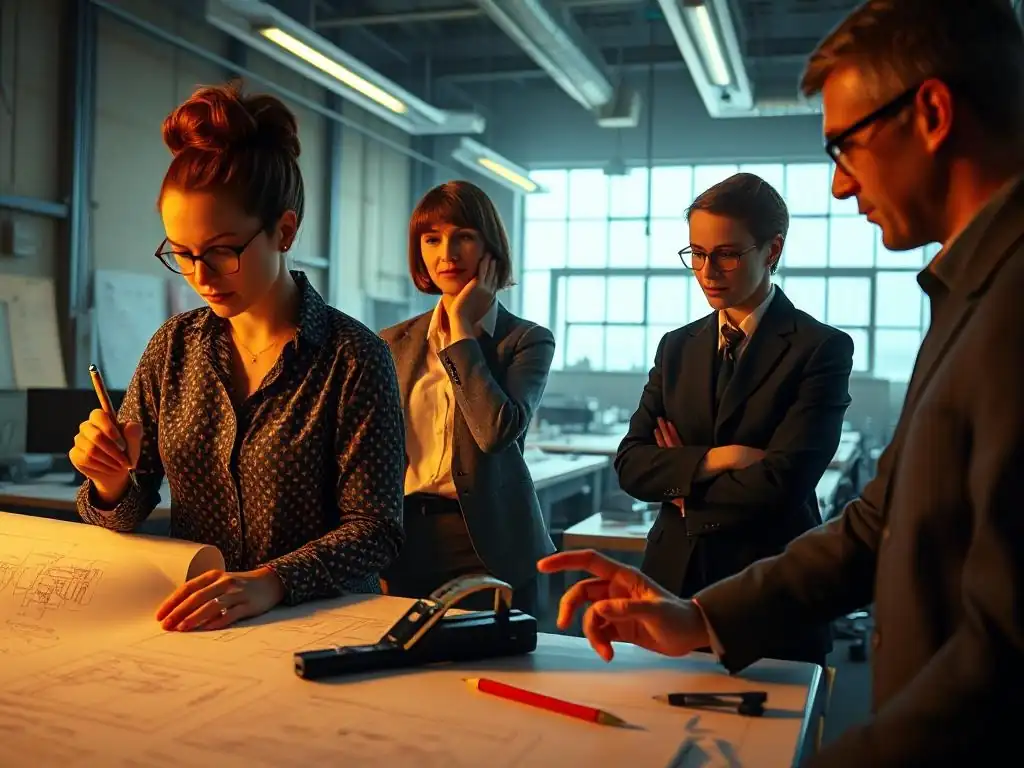
Welcome to WomenInScienceHistory.com!
Delve into the untold stories of remarkable women who shaped the scientific landscape. Explore the extraordinary lives and groundbreaking contributions of female scientists, often forging their paths in the face of adversity. Today, we shine a light on a pivotal era with " Voices from the Vanguard: Oral Histories of Midcentury Women Engineering Pioneers." Discover their personal narratives and the challenges they overcame, offering an unparalleled glimpse into the world of engineering and technology during a transformative time. What drove these women to excel? Uncover their inspirations and legacies within the fascinating world of engineering.
- Introduction: Unveiling the Stories of Midcentury Women in Engineering
- Pioneering Women Engineers: Breaking Barriers in a Male-Dominated Field
- Case Studies: Oral Histories of Specific Midcentury Women Engineering Pioneers
- Common Themes and Challenges Faced by Midcentury Women Engineers
- The Legacy of Midcentury Women Engineering Pioneers: Inspiring Future Generations
- Conclusion: Celebrating the Voices and Achievements of Midcentury Women Engineering Pioneers
-
Frequently Asked Questions
- What defines a "Midcentury Woman Engineering Pioneer" according to the site?
- What types of information does WomenInScienceHistory.com provide about these women?
- Why is it important to highlight the stories of midcentury women engineering pioneers?
- What kind of challenges did midcentury women engineering pioneers typically face?
- How can WomenInScienceHistory.com help researchers or students interested in this topic?
- Final Reflection: Echoes of Innovation, Seeds of Change
- Unearth Her Story: Your Next Chapter Begins Now!
Introduction: Unveiling the Stories of Midcentury Women in Engineering
The Underrepresented History of Female Engineers (1950-1970)
The midcentury era, spanning roughly from 1950 to 1970, represented a period of immense technological advancement and industrial growth. Yet, within the burgeoning fields of engineering, the presence of women was conspicuously rare. For instance, in 1950, women earned less than 1% of all engineering bachelor's degrees in the United States, a figure that saw only marginal increases, perhaps to around 1.5% by 1970.
This stark reality underscores how male-dominated the profession was, making the handful of midcentury women engineering pioneers who broke through these barriers truly exceptional. Their contributions, often overlooked in traditional historical accounts, were made against a backdrop of deeply entrenched societal and professional biases.
Despite the prevailing cultural expectations that often steered women away from technical careers, a determined cohort of midcentury women engineering pioneers pursued their passion for innovation and problem-solving. These women not only navigated rigorous academic programs but also faced significant skepticism and discrimination in the workplace. Their stories are vital to understanding the full scope of engineering history, revealing how ingenuity and resilience flourished even in the most challenging environments. Unearthing their narratives provides a richer, more accurate portrayal of the diverse talents that propelled scientific and technological progress during this transformative period.
Importance of Oral Histories in Documenting Women's Contributions to Engineering
Oral histories serve as an indispensable tool for illuminating the experiences of individuals whose contributions might otherwise remain undocumented or marginalized in official records. For midcentury women engineering pioneers, whose numbers were small and whose professional journeys often diverged from conventional paths, these first-person accounts are particularly crucial. They capture the nuances of daily life, the emotional weight of discrimination, and the personal triumphs that are often absent from formal reports or academic papers. Through direct interviews, these women's voices transcend mere statistics, offering a vivid window into their motivations, struggles, and profound satisfactions.
Moreover, oral histories provide invaluable qualitative data, revealing the informal networks, coping mechanisms, and specific instances of both prejudice and support that shaped the careers of midcentury women engineering pioneers. They allow researchers to understand the subtle cultural dynamics of the workplace, from overt sexism to the quiet acts of mentorship that helped some women succeed. By preserving these unique narratives, oral history projects ensure that the legacy of these trailblazing engineers is not only remembered but also deeply understood, inspiring future generations by showcasing the human spirit behind the technical achievements.
Pioneering Women Engineers: Breaking Barriers in a Male-Dominated Field
Overcoming Gender Bias in Midcentury Engineering Education
During the midcentury, aspiring midcentury women engineering pioneers faced formidable obstacles even before entering the professional workforce, starting with their education. Many engineering schools, particularly in the early 1950s, either did not admit women or imposed strict quotas, making access incredibly difficult. Even when admitted, female students often encountered implicit and explicit biases from faculty and male peers. Anecdotal evidence from that era recounts instances of professors discouraging women from continuing their studies, suggesting they pursue "more suitable" careers, or creating unwelcoming classroom environments where women felt isolated.
To succeed in such an environment, midcentury women engineering pioneers had to demonstrate exceptional academic prowess and unwavering determination. They often felt the pressure to outperform their male classmates just to prove their right to be there. This constant need to validate their intellectual capabilities, coupled with a severe lack of female faculty role models, made the pursuit of an engineering degree a profoundly challenging endeavor. Their perseverance through these educational hurdles laid the foundation for their later professional achievements, marking them as true pioneers who defied the norms of their time.
Early Career Challenges for Women in Engineering: A Historical Perspective
Upon graduating, midcentury women engineering pioneers encountered a new set of formidable barriers in the workplace. Discrimination in hiring was rampant, with many companies preferring male candidates regardless of qualifications. Even when hired, women were often relegated to less visible or less impactful roles, such as drafting, technical writing, or calculation, rather than design, research, or leadership positions. This underutilization of their skills was compounded by significant pay disparities, with women frequently earning less than male counterparts for equivalent work, often a difference of 30% or more for similar roles in the 1950s.
The workplace culture itself presented significant challenges. Engineering was largely an "old boys' club," characterized by informal networks and social dynamics that often excluded women. Midcentury women engineering pioneers frequently reported feeling isolated, struggling to find mentors, and enduring microaggressions or outright harassment. They were expected to be exceptionally competent, yet also palatable within a masculine environment, a complex "double bind." Overcoming these systemic and cultural hurdles required immense resilience, self-advocacy, and an unwavering commitment to their engineering pursuits.
Case Studies: Oral Histories of Specific Midcentury Women Engineering Pioneers
Elsie Eaves: Her Journey and Impact on Civil Engineering
Early Life and Influences: Elsie Eaves's Path to Engineering
Elsie Eaves (1898-1983) embarked on her engineering journey at a time when very few women dared to venture into such a field. She graduated from the University of Colorado Boulder in 1920 with a degree in civil engineering, an extraordinary achievement for a woman in the early 20th century. Her early influences likely included a supportive family environment that encouraged her intellectual curiosity and a natural aptitude for mathematics and problem-solving. This strong foundation propelled her toward a career that defied prevailing societal expectations, setting her on a path to become a significant midcentury woman engineering pioneer.
After her graduation, Elsie Eaves gained practical experience working on various civil engineering projects, including the design of hydro-electric plants and bridges. Her early career demonstrated a breadth of technical skills and a dedication to the practical application of engineering principles. These foundational experiences were crucial as she transitioned into a long and influential role as a statistical editor for Engineering News-Record (ENR), a position she held for decades and which allowed her to shape discourse and understanding within the civil engineering sector well into the midcentury.
Key Projects and Innovations by Elsie Eaves during the Midcentury
During the midcentury, Elsie Eaves's primary and most impactful work revolved around her role at Engineering News-Record. She became renowned for her meticulous and comprehensive statistical surveys of construction costs and trends across the United States. Her annual "Cost of Construction" reports, published in ENR, became indispensable resources for the industry, providing critical benchmarks, forecasts, and analyses that guided major infrastructure and building projects throughout the 1950s and 1960s. Her ability to synthesize vast amounts of data into actionable insights was a pioneering effort in construction economics.
Furthermore, Eaves conducted groundbreaking surveys on vital topics such as apartment construction and slum clearance in the 1950s. These reports provided essential data for urban planners, policymakers, and developers during a period of significant post-war expansion and urban renewal. Her work helped to quantify the economic realities of construction, influencing investment strategies and policy decisions. Elsie Eaves's dedication to data-driven insights made her an authoritative voice and an unsung hero among midcentury women engineering pioneers who shaped the physical landscape of the nation.
Reflections on Gender Dynamics in the Engineering Workplace
Elsie Eaves's long and distinguished career, which spanned well into the midcentury, provides a compelling narrative of navigating a deeply male-dominated profession. While her technical competence was undeniable and she achieved significant recognition, her oral histories and biographical accounts implicitly or explicitly address the subtle and overt gender dynamics she encountered. As one of the very few women in senior technical roles, she frequently had to contend with the skepticism and unfamiliarity of colleagues and clients who were unaccustomed to seeing a woman in such an authoritative position.
Despite these challenges, Eaves earned immense respect through her sheer professionalism and the undeniable accuracy and utility of her work. Her ability to operate effectively within the prevailing professional norms, while quietly challenging them by her very presence, made her a powerful, if understated, agent of change. Her story exemplifies the quiet determination and intellectual rigor that characterized many midcentury women engineering pioneers, highlighting how individual excellence could, over time, erode some of the barriers faced by women in the engineering workplace.
Lillian Gilbreth: A Trailblazer in Industrial Engineering
Education and Mentorship: Lillian Gilbreth's Support System
Lillian Gilbreth (1878-1972), often hailed as the "mother of modern management," possessed a remarkable academic background that laid the groundwork for her pioneering work in industrial engineering. She earned a Ph.D. in psychology from Brown University in 1915, a significant intellectual achievement for a woman of her era. While her formal engineering training was largely acquired through self-study and her collaborative work with her husband, Frank Gilbreth, her psychological expertise provided a unique and invaluable perspective on human factors in efficiency and management.
Following Frank's untimely death in 1924, Lillian Gilbreth courageously continued their shared work, effectively becoming a singular force in a field they had largely co-created. Her career extended robustly into the midcentury, where she served as a professor at Purdue University and later as a prolific consultant. Throughout these decades, she became an informal mentor to countless students and professionals, both male and female. Her sustained presence as a leading expert provided a rare and profoundly influential role model for aspiring midcentury women engineering pioneers, demonstrating that intellectual leadership knew no gender.
Lillian Gilbreth's Contributions to Time and Motion Study
While much of the foundational work on time and motion studies was developed in collaboration with her husband, Lillian Gilbreth continued to evolve and apply these principles throughout the midcentury. Her unique contribution was her unwavering focus on the human element, advocating for worker well-being, ergonomics, and job satisfaction – a remarkably progressive stance for the 1950s and 1960s. She transformed the field from a mere pursuit of efficiency into one that considered the psychological and physical comfort of the worker, impacting workplace design and operational flow across diverse industries, from manufacturing assembly lines to hospital operating rooms.
Gilbreth's innovations included the design of the "Gilbreth Kitchen," a model of efficiency for home economics, and the improvement of surgical procedures, showcasing the broad applicability of industrial engineering principles. Her consulting work during the midcentury helped businesses streamline operations, reduce fatigue, and increase productivity by integrating human factors into design. Her enduring influence solidified industrial engineering as a discipline centered on optimizing human effort and productivity, directly shaping how companies structured their work and how midcentury women engineering pioneers approached complex organizational problems.
Advice for Future Generations of Women in Engineering
Throughout her extensive career, particularly in the midcentury when women were slowly beginning to consider technical fields, Lillian Gilbreth frequently offered invaluable advice. She emphasized the importance of self-reliance, continuous learning, and identifying one's unique contributions. She encouraged women to develop strong technical skills and to remain undeterred by societal expectations or professional biases. Her message was one of quiet persistence and intellectual confidence, urging women to believe in their own capabilities and to pursue their passions regardless of external pressures.
Gilbreth often highlighted the critical need for women to bring their distinct perspectives to engineering challenges, arguing that diversity of thought invariably leads to more innovative and comprehensive solutions. Her own life served as a powerful testament to her philosophy: a woman who not only thrived in a male-dominated field but also profoundly shaped its trajectory. Her counsel, articulated through lectures, writings, and personal interactions, provided a beacon of encouragement for midcentury women engineering pioneers and inspired countless others to carve out their own paths in engineering.
Beatrice Hicks: Pushing Boundaries in Electrical Engineering
Balancing Family and Career: A Midcentury Woman Engineer's Perspective
Beatrice Hicks (1919-1979) embodied the challenges and triumphs of a midcentury woman engineering pioneer balancing a demanding professional career with personal life expectations. She earned her B.S. in chemical engineering in 1939 and an M.S. in electrical engineering in 1949, launching her career just as the midcentury period began. This was an era when societal norms strongly pushed women into domestic roles, making her pursuit of advanced degrees and a high-level technical career at companies like Western Electric a remarkable feat. Hicks herself married in 1948 and concurrently pursued her graduate degree and leadership roles.
Her ability to manage both a highly technical role, such as designing and testing quartz crystal oscillators vital for telecommunications and military applications at Western Electric, and significant professional responsibilities, including co-founding and leading the Society of Women Engineers (SWE), illustrates extraordinary dedication. Hicks's experiences provide a crucial perspective on how midcentury women engineering pioneers navigated the often-conflicting demands of personal and professional life, particularly in an era with limited support structures for working mothers or dual-career households. Her story is a testament to the resilience required to thrive in multiple challenging spheres.
Beatrice Hicks's Advocacy for Women in STEM
Beatrice Hicks was not only a brilliant engineer but also a visionary advocate for women in STEM. In 1950, recognizing the isolation and lack of support for women in the field, she co-founded the Society of Women Engineers (SWE) and became its first president. SWE rapidly emerged as a critical organization for midcentury women engineering pioneers and subsequent generations, providing a much-needed network, mentorship opportunities, and a collective voice to address discrimination and promote women's inclusion in engineering. This was a groundbreaking initiative when women in engineering were largely invisible and unsupported.
Under Hicks's leadership, SWE grew significantly, offering professional development programs, scholarship opportunities, and a platform for advocacy. Her tireless efforts to establish and nurture SWE were instrumental in creating a supportive community that directly impacted the careers and morale of countless midcentury women engineering pioneers. Through SWE, Hicks helped to dismantle systemic barriers, empower women to pursue and excel in engineering, and ensure that their contributions would be recognized and celebrated, laying the groundwork for greater diversity in the field.
Legacy and Lasting Impact of Beatrice Hicks's Work
Beatrice Hicks's legacy extends far beyond her specific technical contributions in electrical engineering; her most profound and enduring impact lies in her pioneering advocacy for women in STEM. The Society of Women Engineers (SWE), which she so instrumental in establishing, remains a powerful global force for gender equity in engineering today, boasting tens of thousands of members worldwide. Her foresight in recognizing the urgent need for a dedicated professional organization for women engineers fundamentally transformed the landscape for future generations of female engineers.
By providing a vital sense of community, professional legitimacy, and a unified voice, Hicks's work through SWE helped to normalize the idea of women in engineering during the midcentury and beyond. Her efforts paved the way for increased female participation, enhanced professional recognition, and the gradual erosion of gender bias within the engineering profession. She ensured that the contributions of midcentury women engineering pioneers would not be forgotten and that the path for future women in engineering would be smoother, more equitable, and more inclusive.
Common Themes and Challenges Faced by Midcentury Women Engineers

The "Double Bind": Expectations and Stereotypes in the Workplace
One pervasive challenge faced by midcentury women engineering pioneers was the "double bind." This phenomenon forced women into an impossible situation: if they exhibited traditionally "feminine" traits, they were often dismissed as not serious or competent engineers, lacking the necessary rigor for the field. Conversely, if they adopted more "masculine" traits, such as assertiveness or directness, they were often labeled as aggressive, unfeminine, or difficult to work with. This constant scrutiny and judgment meant that their professional identity was perpetually under negotiation, regardless of their technical brilliance.
This double bind manifested in various ways, from being mistaken for secretaries or administrative staff to having their technical opinions dismissed or undervalued in meetings. Midcentury women engineering pioneers frequently encountered skepticism about their commitment to their careers, with assumptions made about their family responsibilities or marital status overshadowing their professional capabilities. This pervasive need to constantly prove their competence and navigate contradictory expectations added an immense psychological burden to their already demanding technical roles.
Lack of Mentorship and Role Models for Women in Engineering
The extreme scarcity of women in engineering during the midcentury meant that midcentury women engineering pioneers often operated in professional isolation, largely devoid of female mentors. Unlike their male counterparts who could readily find senior engineers to guide their careers, offer advice on navigating corporate hierarchies, or share insights into technical challenges, women had few, if any, female role models to look up to. This lack of visible successful women in the field made charting a career path significantly more challenging and often left them feeling unsupported and alone.
While some male mentors might have been supportive, they often lacked the lived experience to fully understand the unique gender-specific challenges related to discrimination, work-life balance, or subtle biases. Consequently, midcentury women engineering pioneers frequently had to forge their own paths, relying on their own resilience and ingenuity to overcome obstacles. This absence of a clear roadmap or established female networks made their achievements all the more remarkable, highlighting their extraordinary self-reliance and pioneering spirit.
The Impact of Soci societal Attitudes on Women's Engineering Careers
Beyond the workplace, broader societal attitudes exerted immense pressure on midcentury women engineering pioneers. The post-World War II era saw a strong cultural emphasis on women returning to traditional domestic roles, with popular media and educational institutions often reinforcing the notion that a woman's primary place was in the home. Engineering, perceived as a quintessentially "masculine" pursuit, was particularly affected by these stereotypes, creating a generally unwelcoming social environment for women aspiring to or working in the field.
These prevailing societal attitudes influenced everything from parental encouragement for STEM subjects in girls to the implicit biases in hiring and promotion within corporations. Many midcentury women engineering pioneers had to contend not only with explicit workplace discrimination but also with the implicit or explicit disapproval from family, friends, and society at large. This external pressure often discouraged women from pursuing or continuing engineering careers, making the persistence of those who remained a profound testament to their dedication, intellectual passion, and unwavering commitment to their chosen profession.
The Legacy of Midcentury Women Engineering Pioneers: Inspiring Future Generations
How Their Contributions Shaped Modern Engineering Practices
The contributions of midcentury women engineering pioneers, though often made in the shadows of their male counterparts, profoundly shaped modern engineering practices. For example, Elsie Eaves's meticulous data analysis and construction cost reporting laid foundational groundwork for modern construction economics and project management, standardizing how the industry understood and predicted market trends.
Lillian Gilbreth's pioneering work in industrial engineering, with its emphasis on human factors and efficiency, revolutionized workplace design and productivity, influencing everything from ergonomic principles to supply chain optimization. Beatrice Hicks's technical expertise in electrical engineering, coupled with her advocacy, advanced specific technologies and created the organizational structures necessary for professional growth.
Beyond their individual technical achievements, these midcentury women engineering pioneers subtly but significantly shifted perceptions within the profession. Their very presence, despite initial resistance, demonstrated that intellectual rigor and innovative problem-solving were not exclusive to one gender. Their insistence on quality, their unique problem-solving approaches, and their steadfast dedication set high standards that influenced colleagues and paved the way for a more diverse and inclusive engineering workforce in subsequent decades. Their legacy is embedded not just in the technologies they helped develop, but in the evolving culture of engineering itself.
The Continuing Need for Gender Equality in STEM Fields
Despite the groundbreaking efforts of midcentury women engineering pioneers and the progress made in subsequent decades, the journey towards true gender equality in STEM fields, particularly engineering, is far from complete. While the percentage of women earning engineering degrees has increased, they still remain significantly underrepresented in many disciplines and leadership roles. For instance, in 2022, women constituted only approximately 15% of the engineering workforce in the United States, a figure that highlights the persistent gender gap in a field critical to innovation and economic growth.
Achieving genuine gender equality requires ongoing efforts in education, workplace culture, and public perception. This includes fostering inclusive environments in universities, actively combating unconscious biases in hiring and promotion, ensuring equitable pay, and providing robust mentorship opportunities for women. The stories of midcentury women engineering pioneers serve as powerful reminders that diversity of thought and experience is crucial for scientific advancement and that continued advocacy is essential to dismantle remaining barriers and ensure that all talent, regardless of gender, can contribute fully to the future of engineering.
Resources for Learning More About Women in Engineering History
For those inspired by the resilience and ingenuity of midcentury women engineering pioneers, numerous resources exist to delve deeper into their fascinating stories. Organizations such as the Society of Women Engineers (SWE) maintain extensive archives, including oral histories, personal papers, and historical records that illuminate the lives and careers of these trailblazing women. University special collections across the globe, particularly those with strong engineering programs, often house unique collections related to their female alumni and faculty who defied norms.
Additionally, academic journals focusing on the history of technology, gender studies, and industrial history frequently publish scholarly articles that shed light on the often-hidden contributions of women to engineering. Exploring biographies, compiled oral history collections available through university libraries or historical societies, and historical publications provides invaluable insights into the challenges and triumphs of midcentury women engineering pioneers. These resources are vital for ensuring that their legacies are not only recognized but also continually celebrated and understood by future generations.
Conclusion: Celebrating the Voices and Achievements of Midcentury Women Engineering Pioneers
The oral histories of midcentury women engineering pioneers offer an invaluable and often overlooked window into a transformative period in scientific and technological development. These first-person accounts powerfully convey the immense courage, intellectual prowess, and unwavering resilience required to forge careers in a field that was largely unwelcoming and often overtly discriminatory. Their narratives reveal not just their technical achievements, but also the personal sacrifices, the subtle victories, and the sheer determination that defined their professional journeys.
Ultimately, the achievements of these midcentury women engineering pioneers not only shaped the trajectory of various engineering disciplines but also fundamentally paved the way for future generations of women in STEM. Their voices, preserved through oral histories, are not merely historical artifacts; they are vibrant inspirations for continued advocacy, reminding us of the enduring importance of diversity, inclusion, and equity in all scientific and engineering endeavors. Celebrating their contributions ensures that their groundbreaking work and profound impact continue to resonate, inspiring a more inclusive and innovative future.
Frequently Asked Questions
What defines a "Midcentury Woman Engineering Pioneer" according to the site?
The site focuses on women who made significant contributions to engineering fields during the mid-20th century (roughly 1940s-1960s), often overcoming significant barriers. They were true pioneers in their field.
What types of information does WomenInScienceHistory.com provide about these women?
The website offers biographies, detailed accounts of their groundbreaking work, and discussions of the challenges they faced due to gender bias in the scientific community.
Why is it important to highlight the stories of midcentury women engineering pioneers?
Highlighting their stories helps to recognize their overlooked contributions, inspire future generations of women in STEM, and challenge the historical narrative of male dominance in engineering.
What kind of challenges did midcentury women engineering pioneers typically face?
They often encountered gender discrimination, limited access to educational opportunities, and were frequently excluded from leadership positions and professional networks.
How can WomenInScienceHistory.com help researchers or students interested in this topic?
The website serves as a valuable resource for accessing information about these women, providing primary and secondary sources, and offering a platform for further research and exploration of their legacies.
Final Reflection: Echoes of Innovation, Seeds of Change
The stories we've heard, the voices resurrected from the mid-20th century, are more than just historical accounts; they are a vital blueprint for the future of engineering. These Midcentury women engineering pioneers faced obstacles we can scarcely imagine today, yet their ingenuity and perseverance laid the groundwork for the progress we now take for granted. Their experiences serve as a potent reminder that innovation thrives on diversity and that silencing voices ultimately stifles progress.
The impact of these women extends far beyond the blueprints they drafted and the calculations they performed. Their presence, often a lonely one, in male-dominated spaces, subtly but powerfully shifted the cultural landscape. Their struggles and triumphs resonate deeply, reminding us of the ongoing fight for equity and inclusion in STEM fields. You have to see it to be it,
a sentiment echoed by many of these pioneers, underscores the critical importance of representation and mentorship for future generations.
Let us not allow these voices to fade back into the archives. Instead, let their stories fuel our commitment to creating a more equitable and inclusive engineering community. Consider how you can actively champion diversity, mentor aspiring engineers from underrepresented backgrounds, and ensure that the legacy of these Midcentury women engineering pioneers continues to inspire innovation for generations to come. Their courage paved the way; now, it's our turn to build upon their foundation.
Unearth Her Story: Your Next Chapter Begins Now!
Thank you for exploring the remarkable journeys of these pioneering women engineers. We hope their stories have inspired you to appreciate their contributions and consider your role in continuing their legacy. Ready to take action?
- Dive deeper: Nominate a deserving woman engineer for recognition on WomenInScienceHistory.com!: Help us amplify her achievements.
- Share their stories: Spread inspiration by sharing this article with your network on social media. Let's ensure these voices are heard far and wide.
- Explore further: Visit WomenInScienceHistory.com and discover other unsung heroines who shaped the world we live in.
What untold stories of women in engineering are you eager to uncover and share with the world?