
Before Caroline Herschel: Unsung Female SkyWatchers of Earlier Centuries

Welcome to WomenInScienceHistory.com!
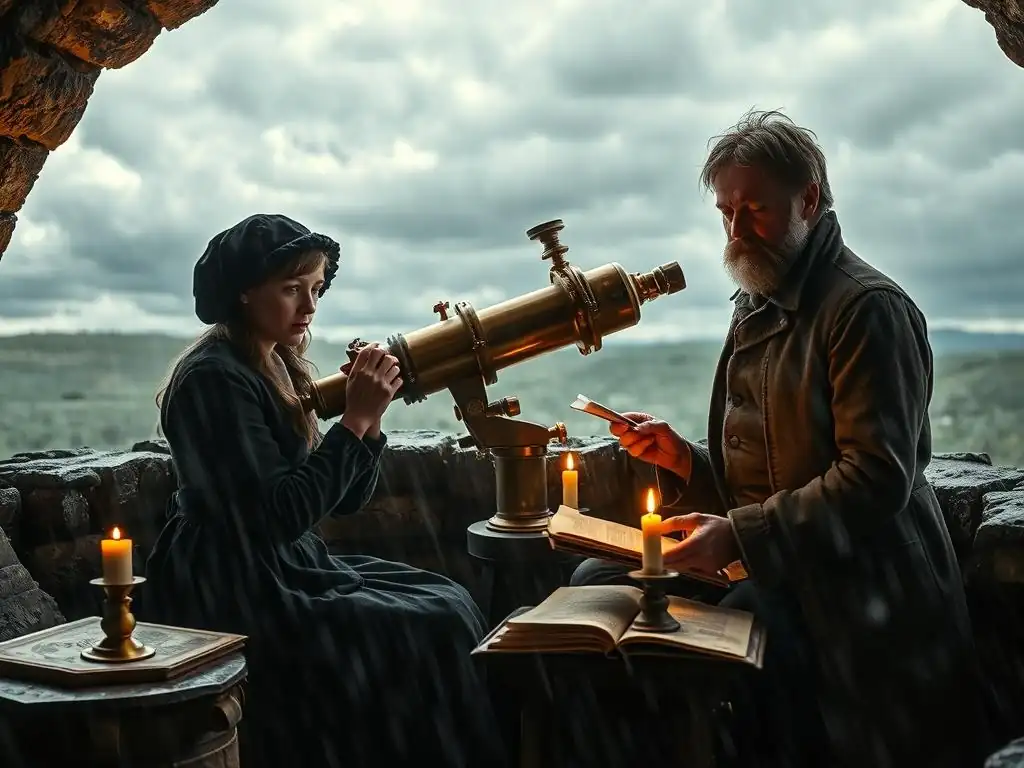
Discover the untold stories of brilliant minds often relegated to the shadows of history. In an era dominated by men, who were the women daring to gaze at the cosmos long before telescopes became commonplace? This article unveils the fascinating world of early female astronomers observing the heavens, exploring their contributions and the unique obstacles they overcame. Prepare to be inspired and enlightened as we delve into their groundbreaking work!
- Introduction: Recognizing Pre-Herschel Female Contributions to Astronomy
- Early Women's Roles in Observational Astronomy
- Notable Pre-18th Century Female Skywatchers and Their Observations
- Instruments and Techniques Used by Early Female Astronomers
- The Social and Cultural Context: Barriers Faced by Women in Science
- Documenting and Preserving the Legacy of Early Female Astronomers
- The Significance of These Early Skywatchers for Women in Science History
- Conclusion: Celebrating the Unsung Heroines of Early Astronomy
-
Frequently Asked Questions
- What are some of the main challenges faced by early female astronomers?
- Why is it important to highlight the contributions of early female astronomers?
- Beyond Caroline Herschel, who are some other early female astronomers observing the skies?
- How did early female astronomers contribute to the field despite facing discrimination?
- Where can I find more information about early female astronomers observing?
- Final Reflection: Illuminating Forgotten Constellations
- Ignite Your Inner Astronomer!
Introduction: Recognizing Pre-Herschel Female Contributions to Astronomy
The Importance of Acknowledging Early Female Astronomers
The history of astronomy is often recounted through the achievements of prominent male figures, yet a closer examination reveals a rich tapestry of contributions made by women long before the celebrated work of Caroline Herschel in the late 18th century. These early female astronomers observing the cosmos faced immense societal and educational barriers, making their scientific pursuits and discoveries all the more remarkable. Unearthing their stories is crucial not only for historical accuracy but also for inspiring contemporary generations by demonstrating the enduring human drive to understand the universe, regardless of gender.
Acknowledging these pioneering figures broadens our understanding of scientific progress itself, showcasing how knowledge was cultivated in diverse settings, from private observatories to domestic studies. It highlights the often collaborative nature of scientific work, where women frequently served as crucial partners, assistants, or even independent researchers whose efforts were overshadowed or uncredited. Their resilience and intellectual curiosity ensured that the flame of astronomical inquiry continued to burn, laying foundational groundwork for future advancements in the field.
Challenging the Historical Narrative of Astronomy
The traditional narrative of astronomy largely overlooks the significant roles played by women, perpetuating a skewed view of scientific evolution. This omission is not merely an oversight but a reflection of historical biases that often marginalized women's intellectual contributions. By actively seeking out and publicizing the work of early female astronomers observing the night sky, we can dismantle these biases and present a more inclusive and truthful account of scientific history. This reframing challenges the notion that scientific genius was exclusive to men, revealing a more complex and diverse intellectual landscape.
Revising this narrative involves delving into archival records, personal correspondence, and lesser-known publications to piece together the fragments of these women's lives and work. It means recognizing that many women contributed through meticulous observation, complex calculations, and the creation of astronomical tools, even if their names did not appear as primary authors or their work was attributed to male relatives. The effort to recover these lost narratives is a vital step in ensuring that the full spectrum of human ingenuity is recognized and celebrated within the annals of science.
Early Women's Roles in Observational Astronomy
Beyond the Myth: Women's Active Participation in Stargazing
Contrary to popular belief, women were not merely passive observers or domestic helpmates in the early days of astronomy; many were active participants in stargazing and scientific inquiry. While formal education and professional positions were largely inaccessible to them, women often learned astronomy through apprenticeships within their families, frequently assisting fathers, brothers, or husbands who were engaged in scientific pursuits. This hands-on experience, often beginning in childhood, provided them with practical skills in observation, instrument handling, and data recording, making them adept early female astronomers observing the celestial sphere.
For instance, in Germany, during the 17th and early 18th centuries, a tradition of family-based astronomical work allowed women like Maria Winkelmann Kirch to become highly skilled observers. She famously discovered the Comet of 1702, a discovery that was initially attributed to her husband, Gottfried Kirch, highlighting the systemic challenges in gaining individual recognition. These women's contributions were often integral to the daily operations of private observatories, involving tedious yet critical tasks such as calculating ephemerides, preparing instruments, and meticulously recording celestial phenomena, ensuring the accuracy and continuity of astronomical data.
Domestic Astronomy: Women's Contributions from Home Observatories
The home often served as the primary, and sometimes only, observatory for many early female astronomers observing the cosmos. Without access to university facilities or institutional funding, women utilized their domestic spaces to conduct astronomical observations, calculations, and studies. These home observatories, whether a dedicated room, a rooftop platform, or simply a window with a clear view, became centers of intellectual activity where women could pursue their scientific passions, often alongside their domestic responsibilities.
This "domestic astronomy" was not a lesser form of science but a practical adaptation to societal constraints. Women would often grind lenses, construct simple instruments, and diligently plot star positions or planetary movements from their homes, contributing to the growing body of astronomical knowledge. For example, some women were responsible for maintaining astronomical clocks, transcribing observations, or performing the complex mathematical computations necessary for predicting celestial events. Their work, though often unseen by the wider scientific community, was fundamental to the advancement of astronomical understanding in an era when formal scientific institutions were still largely closed to them.
Notable Pre-18th Century Female Skywatchers and Their Observations
Maria Cunitz: Silesian Astronomer and Mathematician
Maria Cunitz (1610-1664) was a remarkable Silesian astronomer and mathematician, largely self-taught, who made significant contributions to the field of astronomical computation. Born into a highly educated family, she mastered multiple languages, including Latin, Greek, Hebrew, and Arabic, and possessed a profound understanding of mathematics, medicine, and ancient history. Her intellectual prowess allowed her to delve deeply into astronomy, a field typically reserved for men, becoming an exemplary early female astronomer observing the universe through calculations.
Her most significant work, Urania Propitia, published in 1650, was a groundbreaking simplification and correction of Johannes Kepler's Rudolphine Tables, which were notoriously difficult to use due to their complex logarithms. Cunitz's tables provided a more accessible and accurate method for calculating planetary ephemerides, making them invaluable for astronomers and navigators of her time. The book was written in German, rather than Latin, further increasing its accessibility and demonstrating her desire to make astronomical knowledge more widely available to a broader audience.
Cunitz's Contributions to Astronomical Tables
Maria Cunitz's Urania Propitia was a monumental achievement in the history of astronomical computation. Recognizing the difficulties inherent in Kepler's Rudolphine Tables, Cunitz embarked on an ambitious project to recalculate and simplify them, eliminating the need for logarithms by using a more straightforward decimal system. This simplification drastically reduced the potential for errors in calculations and made the tables far more practical for everyday use by astronomers and navigators. Her work demonstrated an extraordinary level of mathematical skill and meticulous attention to detail.
The publication of Urania Propitia not only showcased Cunitz's intellectual brilliance but also served as a testament to her dedication to making science more accessible. Her tables were widely recognized for their accuracy and utility, drawing praise from contemporary scholars. This work solidified her reputation as a formidable mathematician and an important figure among early female astronomers observing the celestial mechanics through rigorous computation, contributing significantly to the operational tools of astronomy.
Overcoming Barriers to Publication
Publishing a scientific treatise as a woman in the 17th century was an extraordinary feat, and Maria Cunitz faced significant barriers to the dissemination of Urania Propitia. The prevailing societal norms of the time often relegated women to domestic roles, and intellectual pursuits, especially in fields like astronomy, were considered unfeminine and unsuitable. Despite her profound knowledge and the undeniable quality of her work, Cunitz initially published the book under her husband's name, Elias von Löwen, to ensure its acceptance and credibility within the male-dominated scientific community.
However, von Löwen, recognizing her singular genius, later added a preface to the second edition, explicitly crediting Cunitz as the sole author and acknowledging her immense talent and dedication. This public recognition was a rare and courageous act for the time, helping to establish Cunitz's rightful place in scientific history. Her ability to produce such a complex and accurate work independently, coupled with the eventual acknowledgment of her authorship, serves as an inspiring example of an early female astronomer observing and contributing to science against formidable odds.
Elisabetha Koopman Hevelius: "Mother of all Astronomers"
Elisabetha Koopman Hevelius (1647-1693) was a pioneering astronomer from Danzig (Gdańsk), who played a vital, though often understated, role in the astronomical observations and publications of her husband, Johannes Hevelius. Born into a wealthy merchant family, Elisabetha was educated from a young age and developed a keen interest in astronomy, mathematics, and science. Her intellectual curiosity and aptitude for observation quickly drew her into Johannes's world, where she became an indispensable collaborator in his renowned private observatory.
Often referred to as the "Mother of all Astronomers" by some contemporaries, Elisabetha's contributions were far from merely supportive; she was a skilled observer, calculator, and instrument maker. She spent countless hours alongside Johannes, meticulously recording positions of stars, comets, and other celestial phenomena, often under challenging conditions. Her dedication and precise work were fundamental to the creation of one of the most comprehensive star catalogs of the 17th century, making her a crucial figure among early female astronomers observing the night sky.
Hevelius's Collaboration with Johannes Hevelius
Elisabetha Hevelius's collaboration with her husband, Johannes Hevelius, was one of the most productive partnerships in 17th-century astronomy. Their private observatory in Danzig was state-of-the-art for its time, featuring large, custom-built instruments that required multiple individuals to operate effectively. Elisabetha was actively involved in all aspects of their astronomical work, from setting up and calibrating instruments like the large sextants and quadrants to making direct observations and meticulously recording data. She was known for her precise eyesight and steady hand, which were critical for accurate measurements.
Their joint efforts culminated in several seminal works, most notably Prodromus Astronomiae (1690), a comprehensive star catalog and atlas. This monumental work included the positions of 1,564 stars, far more than any previous catalog, and was largely based on observations made by both Johannes and Elisabetha. Her direct involvement in these observations, often conducted for hours in the cold night air, underscores her role as a dedicated and skilled early female astronomer observing and documenting the celestial sphere alongside her husband.
Continuing Astronomical Work After Johannes's Death
Tragically, Johannes Hevelius died in 1687, leaving Elisabetha with the immense task of completing and publishing their unfinished astronomical works. This period truly showcased her intellectual strength and unwavering commitment to science. Rather than abandoning the monumental projects they had undertaken together, Elisabetha took on the responsibility of editing, preparing, and overseeing the publication of Prodromus Astronomiae and Machina Coelestis, Pars Posterior (1690), the second volume of their detailed observatory descriptions.
Her determination ensured that their collective life's work was brought to fruition and made available to the wider scientific community. She meticulously checked and proofread the manuscripts, handled the complex logistics of printing, and even wrote parts of the prefaces, demonstrating her deep understanding of the material. This act of scholarly perseverance solidified her legacy not just as a collaborator but as an independent force in 17th-century astronomy, ensuring that the legacy of these early female astronomers observing the heavens continued to inspire.
Nicole-Reine Lepaute: Calculator of the 1759 Comet's Return
Nicole-Reine Lepaute (1723-1788) was an exceptionally talented French mathematician and astronomer whose rigorous calculations significantly advanced the precision of astronomical predictions in the mid-18th century. Though often overshadowed by her male contemporaries, her meticulous work on celestial mechanics was groundbreaking. Born into a family connected to the royal clockmaking industry, Lepaute received an unusually good education for a woman of her time, developing a profound aptitude for mathematics and an insatiable curiosity about the cosmos.
Her most famous achievement involved the incredibly complex and arduous calculation of the precise return of Halley's Comet in 1759, a feat that required months of continuous, painstaking computation. This work established her as one of the foremost mathematical minds of her era, showcasing how early female astronomers observing the universe could contribute profoundly through theoretical and computational astronomy, even when direct telescopic observation was not their primary role. Her dedication to accuracy and her ability to handle immense numerical tasks were unparalleled.
Lepaute's Calculations and Predictions
Nicole-Reine Lepaute's most celebrated contribution was her monumental calculation of the return of Halley's Comet in 1759. This was no trivial task; it involved predicting the comet's trajectory while accounting for the gravitational perturbations of Jupiter and Saturn, which significantly altered its orbital path. Working with the renowned astronomers Alexis Clairaut and Joseph Lalande, Lepaute dedicated herself to this project for nearly a year and a half, often working for up to 14 hours a day without interruption.
Her calculations were incredibly precise, predicting the comet's perihelion (closest approach to the Sun) to within a month of its actual appearance. This level of accuracy was unprecedented for its time and demonstrated a mastery of celestial mechanics and computational rigor that few could match. Lepaute's work was indispensable to the success of the prediction, solidifying her reputation as a mathematical prodigy and a pivotal figure among early female astronomers observing and predicting celestial phenomena with unparalleled accuracy.
Recognition and Collaboration with Male Astronomers
Despite the societal prejudices against women in science, Nicole-Reine Lepaute did receive some level of recognition for her extraordinary abilities, primarily through her collaborations with leading male astronomers. Joseph Lalande, in particular, openly acknowledged her vital role in the Halley's Comet project, praising her "indefatigable zeal" and her "talent for calculation." This public commendation from a prominent scientist was rare for a woman in her position and helped to bring her work to wider attention, even if her full contributions were not always universally credited.
Beyond the comet prediction, Lepaute also collaborated with Lalande on his Ephemerides des mouvements célestes, a comprehensive astronomical almanac, where she contributed numerous calculations for solar and lunar eclipses, as well as planetary positions. Her work on these almanacs provided crucial data for navigators and astronomers alike. Her ability to work effectively within these male-dominated scientific circles, earning the respect of her peers through sheer intellectual prowess, highlights her unique position as an early female astronomer observing and shaping the mathematical landscape of 18th-century astronomy.
Instruments and Techniques Used by Early Female Astronomers
Limited Access, Ingenious Solutions: Resourcefulness in Observation
Early female astronomers observing the heavens often faced significant disadvantages compared to their male counterparts, particularly in terms of access to sophisticated instruments and dedicated observatories. Universities and scientific societies, which typically housed the most advanced equipment, were largely closed to women. This forced many female skywatchers to rely on personal resources, family connections, or their own ingenuity to acquire or construct the tools necessary for their astronomical pursuits.
Despite these limitations, their resourcefulness was remarkable. Women frequently adapted existing domestic tools or collaborated with family members who had access to workshops to create or modify instruments. For instance, some may have used simple cross-staffs or quadrant replicas, or even relied on the naked eye for initial observations before attempting more precise measurements. This adaptability underscores their profound dedication to astronomy, demonstrating that the pursuit of knowledge could thrive even in the absence of institutional support.
Types of Instruments Available: Quadrants, Sextants, and Astrolabes
Before the widespread adoption of powerful refracting telescopes, early female astronomers observing the cosmos primarily relied on instruments designed for measuring angles and positions rather than magnifying distant objects. Common tools included quadrants, sextants, and astrolabes. Quadrants, typically large, quarter-circle instruments, were used to measure the altitude of celestial bodies above the horizon, critical for determining latitude and time. Elisabetha Hevelius, for example, would have used large quadrants and sextants in her husband's observatory for their precise star cataloging.
Sextants, similar in principle but often more portable, allowed for accurate angular measurements between two celestial objects, essential for navigation and mapping the sky. Astrolabes, ancient and versatile instruments, could be used to determine the time of day or night, find the position of celestial bodies, and even solve problems related to spherical astronomy.
While less common for detailed positional astronomy by the 17th century, their foundational principles were often understood. These instruments, though rudimentary by modern standards, were the cutting-edge technology of their time, and proficiency in their use was paramount for any serious early female astronomer observing the night sky.
The Role of Astronomical Tables and Calculations
Beyond direct observation, the creation and use of astronomical tables and complex calculations were central to the work of many early female astronomers. Before the advent of powerful computing tools, all predictions of celestial events—such as eclipses, planetary conjunctions, or comet returns—relied entirely on laborious manual calculations. Women like Maria Cunitz and Nicole-Reine Lepaute excelled in this highly demanding intellectual work, often spending countless hours performing intricate arithmetic.
Astronomical tables provided pre-calculated data for the positions of celestial bodies at various times, derived from previous observations and theoretical models. These tables were indispensable for navigation, timekeeping, and further astronomical research. The ability to create, verify, and apply these tables, as demonstrated by Cunitz's Urania Propitia and Lepaute's work on ephemerides, was a testament to their exceptional mathematical prowess. Their contributions in this area highlight that being an early female astronomer observing the universe extended far beyond merely looking through a telescope; it encompassed deep mathematical insight and computational rigor.
Societal Expectations and Gender Roles
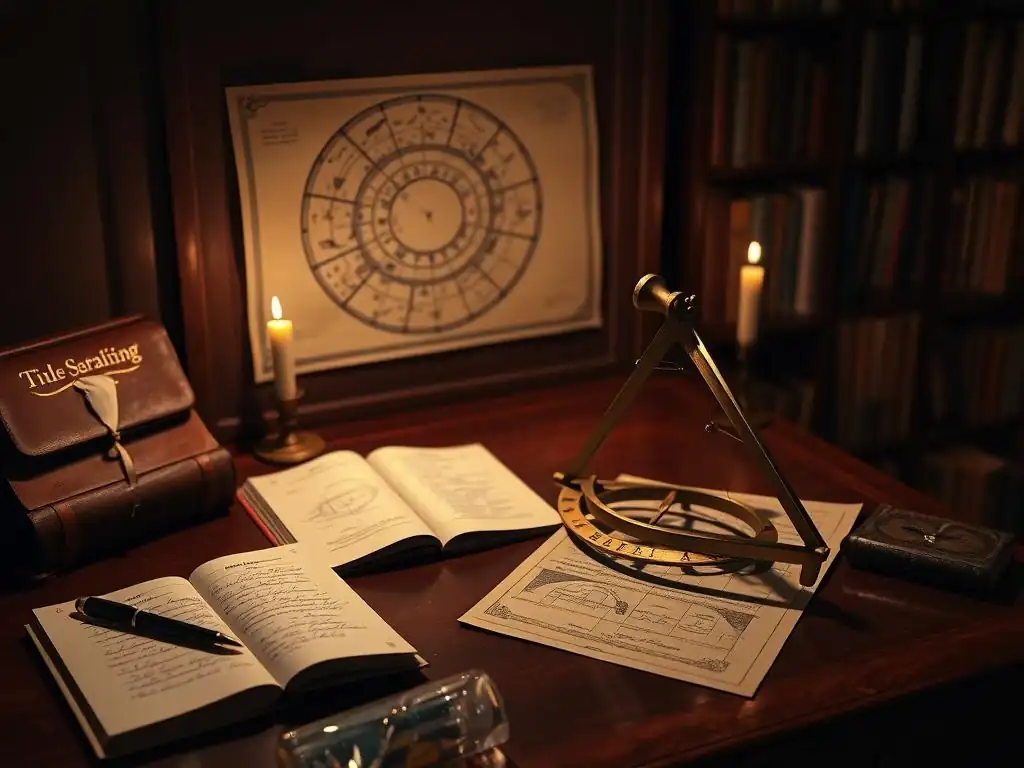
The prevailing societal expectations and rigid gender roles of earlier centuries posed immense barriers for women aspiring to engage in scientific pursuits, including astronomy. Women were primarily confined to the domestic sphere, responsible for household management, child-rearing, and maintaining the social fabric of the family. Intellectual endeavors, especially those requiring public engagement or formal education, were largely deemed inappropriate and unfeminine. This cultural framework often discouraged women from even developing an interest in science, let alone pursuing it professionally.
For an early female astronomer observing the night sky, defying these expectations required extraordinary determination and often the support of an enlightened family member. Those who did pursue science risked social ostracization or ridicule. Their work was often seen as a hobby rather than a serious intellectual contribution, and their achievements frequently went unacknowledged or were attributed to male relatives. The pressure to conform to domestic roles meant that scientific work had to be squeezed in around demanding household duties, further limiting the time and energy available for rigorous study and observation.
Lack of Formal Education Opportunities
Perhaps the most significant barrier faced by early female astronomers was the near-complete absence of formal educational opportunities. Universities, academies, and professional training institutions were exclusively male domains for centuries, effectively barring women from accessing structured curricula, libraries, and scientific instruments. This meant that any woman who wished to study astronomy had to be self-taught or rely on informal apprenticeships, typically within her own family.
This lack of formal schooling meant that women like Maria Cunitz, who became polymaths through self-study, were exceptional rather than the norm. They had to acquire knowledge through private tutors, family libraries, or by painstakingly translating and studying scientific texts on their own. This informal learning environment, while sometimes effective, lacked the rigorous peer review, structured curriculum, and collaborative opportunities that male scholars enjoyed, making the achievements of early female astronomers observing the cosmos all the more remarkable given the immense educational disadvantage they faced.
Even when early female astronomers managed to acquire knowledge and make significant discoveries, navigating the male-dominated scientific world presented a formidable challenge. Scientific societies, which were crucial for disseminating research, establishing reputations, and fostering intellectual exchange, did not admit women as members. This exclusion meant that women's work often remained outside formal scientific discourse, struggling for recognition and validation.
Moreover, the publication process itself was fraught with difficulties. As seen with Maria Cunitz, women often had to publish under a male pseudonym or rely on male relatives to vouch for their work, as their own names might not lend sufficient credibility. Even when their contributions were acknowledged, they were frequently relegated to the role of "assistant" or "collaborator" rather than independent scientists. The struggle to gain individual recognition and overcome the systemic biases of the time was a constant battle for any early female astronomer observing and contributing to scientific knowledge.
Documenting and Preserving the Legacy of Early Female Astronomers
The Importance of Historical Research and Archival Work
Documenting and preserving the legacy of early female astronomers is a critical endeavor that requires meticulous historical research and extensive archival work. Unlike their male counterparts, whose records are often more readily available in institutional archives, the lives and scientific contributions of women were frequently recorded in private family papers, personal letters, or obscure local records, if at all. This makes the task of uncovering their stories akin to detective work, piecing together fragments of information from disparate sources.
Historians must delve into these less conventional archives, examining wills, household inventories, and even parish records to find clues about women's intellectual activities. This painstaking process is essential to reconstruct their lives, identify their scientific contributions, and understand the context in which they operated. Without dedicated efforts in historical research and archival preservation, the invaluable legacy of these early female astronomers observing the cosmos risks remaining hidden or being lost entirely to history.
Recovering Lost Narratives: Reconstructing Women's Contributions
The process of recovering lost narratives involves not just finding evidence but also reinterpreting existing historical records through a gender-sensitive lens. Many accounts of early scientific work were written by men and often minimized or omitted the contributions of women who worked alongside them. Therefore, historians must critically analyze these sources, looking for subtle mentions, indirect references, or even silences that might indicate a woman's involvement.
Reconstructing women's contributions often means highlighting their roles as collaborators, calculators, or instrument makers, even when they were not the primary discoverers. For instance, understanding Elisabetha Hevelius's role requires acknowledging her active participation in observations and the completion of her husband's works. By actively seeking out and foregrounding these often-uncredited efforts, we can paint a more complete and accurate picture of how science truly progressed, ensuring that the work of early female astronomers observing the universe receives its rightful place in history.
Challenges in Finding Information: Scarcity of Primary Sources
One of the most significant challenges in documenting early female astronomers is the scarcity of primary sources. Unlike male scholars who often had extensive correspondence, published numerous papers, and were subjects of biographical accounts, women's lives were less frequently recorded in detail, especially their intellectual pursuits. Many women did not have the opportunity to publish under their own names, and their personal papers were less likely to be preserved in formal archives.
This paucity of primary sources means that information about these women is often fragmented, anecdotal, or buried within the records of their male relatives. Historians frequently rely on references in the letters or publications of their male colleagues, which may provide only glimpses of their true capabilities. Overcoming this challenge requires innovative research methodologies, cross-referencing disparate sources, and a persistent commitment to unearthing every available piece of evidence to illuminate the lives and contributions of these remarkable early female astronomers observing the celestial realm.
The Significance of These Early Skywatchers for Women in Science History
Paving the Way for Future Generations of Female Astronomers
The early female astronomers observing and studying the cosmos, though often unsung, played an indispensable role in paving the way for future generations of women in science. Their very existence and their demonstrable intellectual capabilities challenged the prevailing notions that women were inherently unsuited for scientific work. By meticulously carrying out observations, performing complex calculations, and even publishing their findings, they provided tangible proof that women possessed the intellect and dedication required for scientific excellence.
While their paths were arduous and their recognition limited, their pioneering efforts created small cracks in the formidable wall of societal barriers. Each woman who pursued astronomy, whether openly or behind the scenes, contributed to a slow but steady shift in perceptions, making it slightly less unthinkable for a woman to engage in scientific inquiry. Their legacy thus lies not only in their individual discoveries but also in their collective courage to defy norms, setting a precedent that would eventually lead to greater opportunities for women like Caroline Herschel and countless others who followed.
Inspiring Contemporary Women in STEM Fields
The stories of these early female astronomers observing the universe serve as powerful sources of inspiration for contemporary women in STEM fields today. In a world still grappling with gender disparities in science and technology, learning about women who pursued their passions against overwhelming odds can be incredibly motivating. Their resilience, intellectual curiosity, and determination to contribute to knowledge, even without formal recognition, resonate deeply with modern challenges faced by women in male-dominated professions.
By highlighting figures like Maria Cunitz and Elisabetha Hevelius, WomenInScienceHistory.com provides role models who demonstrate that scientific talent knows no gender. These narratives encourage young women to pursue their scientific interests, reminding them that they are part of a long and rich lineage of female innovators. Understanding the historical struggles also provides context for ongoing efforts to achieve true equity in STEM, empowering current and future generations of female scientists to continue breaking barriers and making their own groundbreaking contributions.
Reframing the History of Astronomy to Include Women's Voices
The ultimate significance of these early female astronomers observing the heavens lies in their power to reframe the entire history of astronomy. For too long, the narrative has been incomplete, presenting a biased view of scientific progress that largely excludes the contributions of half of humanity. By actively integrating women's voices and achievements into the historical record, we create a more accurate, inclusive, and nuanced understanding of how scientific knowledge has evolved.
This reframing is not merely about adding a few names to a list; it is about fundamentally altering our perception of who can be a scientist and how science is done. It acknowledges the diverse pathways to knowledge, the collaborative efforts often overlooked, and the immense personal sacrifices made by those who defied societal norms. By celebrating the unsung heroines who gazed at the stars before Caroline Herschel, we enrich the historical tapestry of astronomy, ensuring that the full spectrum of human ingenuity is recognized and honored for generations to come.
Conclusion: Celebrating the Unsung Heroines of Early Astronomy
Acknowledging the Enduring Impact of Pre-Herschel Female Skywatchers
The contributions of early female astronomers observing the cosmos, preceding the more widely recognized work of Caroline Herschel, represent a crucial yet often overlooked chapter in the history of science. Figures like Maria Cunitz, Elisabetha Hevelius, and Nicole-Reine Lepaute, among others, demonstrated extraordinary intellectual prowess, dedication, and resilience in an era where scientific pursuits were largely inaccessible to women. Their meticulous observations, complex calculations, and published works, even when faced with significant societal barriers, laid foundational groundwork for future astronomical advancements.
Their enduring impact lies not only in their specific scientific achievements, such as corrected astronomical tables or comet predictions, but also in their very existence as pioneering female scholars. They challenged the prevailing gender norms, proved women's intellectual capabilities, and, in doing so, subtly but profoundly paved the way for subsequent generations of women to enter the scientific arena. Their stories remind us that scientific progress is a collective human endeavor, enriched by diverse perspectives and contributions that transcend gender.
Despite significant progress in recent years, the quest to uncover and share the stories of early female astronomers observing the universe is far from complete. Many women's contributions remain hidden in obscure archives or uncredited in historical records. Historians and enthusiasts alike must continue to diligently search for new evidence, re-examine existing sources with a critical eye, and reconstruct these fragmented narratives to ensure their rightful place in scientific history.
By actively promoting these stories through platforms like WomenInScienceHistory.com, we not only honor the legacy of these unsung heroines but also inspire future generations. Celebrating their perseverance and intellectual triumphs helps to dismantle persistent stereotypes and encourages more young women to pursue careers in STEM. The ongoing effort to illuminate the full breadth of women's historical contributions to astronomy is essential for a more accurate, inclusive, and inspiring understanding of humanity's enduring fascination with the cosmos.
Frequently Asked Questions
What are some of the main challenges faced by early female astronomers?
Early female astronomers faced significant challenges, including limited access to education and research opportunities, societal biases that questioned their intellectual capabilities, and the lack of recognition for their contributions.
Why is it important to highlight the contributions of early female astronomers?
Highlighting their contributions is crucial because it corrects historical inaccuracies, inspires future generations of women in STEM, and demonstrates that women have always been integral to scientific advancement, even when their stories were suppressed.
Beyond Caroline Herschel, who are some other early female astronomers observing the skies?
While the article focuses on those before Herschel, it alludes to many. Identifying them by name is challenging due to limited records, but the article emphasizes that many women assisted male family members, or were involved in calculations and data analysis that went uncredited.
How did early female astronomers contribute to the field despite facing discrimination?
They often contributed through assisting male relatives, making meticulous observations, performing complex calculations, and publishing under male pseudonyms or anonymously, demonstrating their dedication and skill despite societal barriers.
Where can I find more information about early female astronomers observing?
Websites like WomenInScienceHistory.com are valuable resources. Additionally, explore historical archives, scientific journals, and biographies of prominent scientists to uncover more hidden stories of women's contributions to astronomy.
Final Reflection: Illuminating Forgotten Constellations
The stories of these early female astronomers, often relegated to the shadows of history, resonate powerfully today. Their dedication to unraveling the mysteries of the cosmos, despite societal barriers, serves as a potent reminder of the untapped potential that exists when opportunity is denied. We must actively seek out and celebrate these forgotten contributions to ensure a more complete and accurate understanding of our scientific past.
The impact of these women, though often unacknowledged, continues to shape our understanding of the scientific landscape. Their perseverance in the face of adversity underscores the importance of inclusivity and the richness that diversity brings to scientific inquiry. We are all in the gutter, but some of us are looking at the stars.
- Oscar Wilde. This quote, though not directly about astronomy, perfectly captures the spirit of these women who, despite their limited circumstances, dared to reach for the heavens.
Let us all take a moment to reflect on the courage and resilience of these early female astronomers. Consider how their stories inspire us to challenge existing narratives and to actively seek out and amplify the voices of those who have been historically marginalized. Embrace the spirit of curiosity and unwavering determination that defined their lives, and let it guide you in your own pursuit of knowledge and understanding. The universe is vast and full of wonders, and it awaits those who dare to look.
Ignite Your Inner Astronomer!
Thank you for delving into the stories of these often-overlooked female skywatchers. You've now seen how women throughout history have quietly contributed to our understanding of the cosmos. Let's keep their spirit of discovery alive!
Here's how you can connect with their legacy and further your own astronomical journey:
- Rediscover a forgotten female astronomer. Choose one of the figures highlighted in this article and delve deeper into their life and work. Share your findings on social media using #WomenInAstronomyHistory.
- Join a local astronomy club or online stargazing community. Connect with fellow enthusiasts, share your observations, and learn from experienced stargazers.
- Organize a stargazing event in your community, highlighting the contributions of women in astronomy.
What star will you be searching for tonight?