
Unsung Heroines of the Normal Distribution: Forgotten Women in Statistics

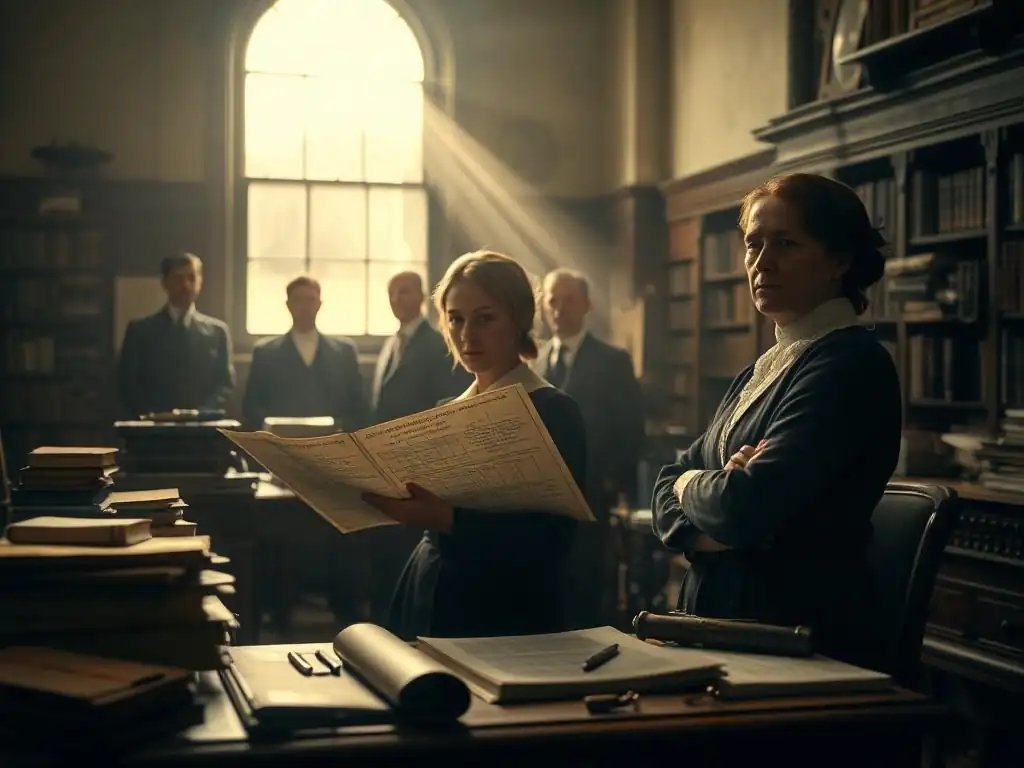
Welcome to WomenInScienceHistory.com!
Have you ever wondered about the unseen hands that shaped the world of statistics? Dive into the remarkable, yet often overlooked, stories of Forgotten women statistics pioneers. Prepare to be surprised as we unveil their groundbreaking contributions and the hurdles they overcame in a field traditionally dominated by men. Their legacy deserves to be remembered – are you ready to discover it?
- Introduction: Recognizing the Overlooked Contributions of Women Statisticians
- Pioneering Women in Statistics: Breaking Barriers
- Challenges Faced by Women in Early Statistics
- The Impact of Forgotten Women Statistics Pioneers
- Rediscovering and Celebrating Women's Contributions to Statistics
- Conclusion: Acknowledging the Lasting Legacy of Women in Statistics
-
Frequently Asked Questions
- What does "Forgotten women statistics pioneers" mean in the context of WomenInScienceHistory.com?
- Why is it important to highlight the contributions of forgotten women in statistics?
- What kind of challenges did these "forgotten women statistics pioneers" typically face?
- Besides biographies, what other types of content can I expect to find on WomenInScienceHistory.com regarding these women?
- How can I contribute to WomenInScienceHistory.com's mission of uncovering and celebrating these forgotten figures?
- Final Reflection: Illuminating the Shadows of Statistical History
- Empower Future Statisticians: Ignite the Next Generation!
Introduction: Recognizing the Overlooked Contributions of Women Statisticians
The Normal Distribution and its Historical Context
The normal distribution, often recognized as the Gaussian distribution, stands as one of the most fundamental and ubiquitous concepts in statistics. Its characteristic bell-shaped curve describes phenomena ranging from human heights and blood pressure to measurement errors and financial market fluctuations.
First formally introduced by Abraham de Moivre in 1733 and later elaborated by Pierre-Simon Laplace and Carl Friedrich Gauss, this distribution became the cornerstone of classical statistical inference, enabling researchers to model uncertainty and make informed decisions across natural sciences, social sciences, and engineering. Its pervasive applicability stems from the Central Limit Theorem, which states that the distribution of sample means tends towards a normal distribution, regardless of the population's distribution, as the sample size increases.
Historically, the development of statistical theory and its application has often been attributed predominantly to male figures, with their contributions meticulously documented and celebrated. While giants like Karl Pearson, Ronald Fisher, and Jerzy Neyman undoubtedly made immense strides, their work often built upon or was complemented by the less visible, yet equally crucial, efforts of numerous pioneering individuals. This traditional narrative, however, has inadvertently obscured the significant intellectual endeavors of many women who navigated formidable societal and academic barriers to advance the field.
Why Spotlight Forgotten Women Statistics Pioneers?
The historical omission of women from scientific narratives is a widespread issue, and statistics is no exception. Many women made foundational contributions to statistical theory, methodology, and application, but their work was often marginalized, left uncredited, or simply overshadowed by their male contemporaries.
This oversight not only diminishes their personal achievements but also presents an incomplete and skewed picture of scientific progress, suggesting a field developed exclusively by a narrow demographic. Recognizing these forgotten women statistics pioneers is not merely an act of historical correction; it is an imperative for a more accurate and inclusive understanding of how statistical science evolved.
Spotlighting these unsung heroines serves multiple vital purposes. Firstly, it provides a richer, more nuanced history of statistics, revealing the diverse intellectual landscape that shaped its development. Secondly, by unearthing the stories of these forgotten women statistics pioneers, we provide invaluable role models for current and future generations of aspiring scientists, particularly young women, demonstrating that brilliance and innovation know no gender. Their perseverance in the face of systemic challenges offers powerful lessons in resilience and dedication, inspiring a new wave of statisticians to break barriers and contribute to the ever-expanding frontiers of quantitative knowledge.
Pioneering Women in Statistics: Breaking Barriers
Florence Nightingale David: A Statistician Beyond Nursing
Florence Nightingale David (1909–1993) was a formidable British statistician who made profound contributions to mathematical statistics, particularly in the development of statistical tables and combinatorial probability. Despite sharing her famous name with the founder of modern nursing, David forged her own path as a distinguished academic, becoming one of the earliest female professors of statistics in the United States.
She earned her Ph.D. from University College London in 1938 under the supervision of Karl Pearson and later his son, Egon Pearson, working directly within a lineage of statistical giants. Her early career was marked by a deep engagement with the theoretical underpinnings of statistical inference, a field that was rapidly professionalizing.
David's extensive body of work, spanning over 100 research papers and several influential books, showcased her exceptional analytical rigor and dedication to making complex statistical methods accessible. She held positions at University College London, Cambridge University, and ultimately at the University of California, Riverside, where she established and chaired the Department of Statistics. Her research interests were broad, encompassing areas from order statistics and discrete distributions to the history of probability. She was a Fellow of the American Statistical Association and the Institute of Mathematical Statistics, a testament to her standing among her peers.
Florence Nightingale David's Early Research and Statistical Contributions
F.N. David's early research was heavily influenced by the biometric school of thought, focusing on the practical application of theoretical distributions. A significant portion of her work involved the meticulous computation and tabulation of statistical functions, which were indispensable tools for researchers before the advent of widespread computing.
Her collaboration with Egon Pearson on the "Biometrika Tables for Statisticians" series, first published in 1954, was a monumental undertaking that provided accurate and comprehensive tables for various probability distributions, including the normal, chi-squared, t, and F distributions. These tables were critical for practitioners to perform hypothesis tests and construct confidence intervals, enabling the widespread adoption of statistical methods in diverse scientific disciplines.
Beyond her work on tables, David made significant theoretical contributions to combinatorial probability and the theory of runs. For instance, her research on the distribution of order statistics provided fundamental insights into the properties of ranked data, which are crucial in non-parametric statistics and quality control. She also investigated the power of statistical tests, helping to refine the methodology for determining the effectiveness of different testing procedures. Her rigorous approach to mathematical statistics laid a robust foundation for subsequent generations of statisticians, solidifying her place as one of the most impactful forgotten women statistics pioneers.
David's Work on the Normal Distribution and its Applications
While the normal distribution itself was well-established by David's time, her contributions significantly enhanced its practical utility and theoretical understanding in various contexts. Her work on developing precise statistical tables, as mentioned, directly facilitated the application of normal distribution theory. For example, researchers could use her tables to quickly find critical values for z-tests (based on the standard normal distribution) or to determine probabilities associated with normally distributed data, without needing to perform complex calculations manually. This made the interpretation of data, particularly in fields like biology and engineering, far more efficient and accurate.
Furthermore, David's research on the distribution of sample statistics, which often converge to a normal distribution due to the Central Limit Theorem, provided deeper insights into the behavior of estimators. Her work on order statistics, for instance, involved understanding the distributions of ranked values drawn from samples, which often approximate normal distributions, especially for large sample sizes.
This theoretical work had direct applications in quality control, where the analysis of extreme values or the median of a sample is critical for monitoring production processes. Her meticulous contributions, though often behind-the-scenes, were instrumental in embedding the normal distribution firmly into the everyday toolkit of applied statisticians.
Gertrude Mary Cox: Shaping Experimental Design and Analysis
Gertrude Mary Cox (1900–1978) was an American statistician who revolutionized the field of experimental design, particularly in agricultural research. Her visionary leadership and practical approach transformed how scientific experiments were conceived, conducted, and analyzed, ensuring greater statistical rigor and efficiency. Cox embarked on her statistical career relatively late, earning her M.S. in statistics from Iowa State College in 1938, a period when the field was rapidly expanding but still lacked standardized methodologies for complex experiments. She quickly distinguished herself through her keen understanding of applied statistics and her exceptional organizational skills.
Cox's most enduring legacy lies in her instrumental role in establishing and leading major statistical departments and research centers. She became the head of the Department of Experimental Statistics at North Carolina State College in 1940, making her one of the first women to lead such a department in the United States. Under her guidance, this department grew into a powerhouse of statistical innovation, attracting top talent and producing groundbreaking research. Her work was not confined to academia; she actively consulted with researchers across various disciplines, demonstrating the practical power of well-designed experiments.
Gertrude Cox's Groundbreaking Work in Experimental Design
Gertrude Cox's seminal contribution to statistics is undoubtedly her work on experimental design, culminating in the highly influential book "Experimental Designs," co-authored with William G. Cochran and first published in 1950. This textbook became the definitive guide for designing experiments across a multitude of fields, from agriculture and biology to industrial research.
The book systematically laid out principles for various designs, including randomized complete block designs, Latin squares, factorial designs, and incomplete block designs, explaining their underlying assumptions and appropriate analytical methods. It emphasized the importance of randomization, replication, and local control to minimize bias and improve the precision of experimental results.
For example, Cox's designs were crucial in agricultural studies to accurately compare the yields of different crop varieties or the efficacy of various fertilizers. Before her work, many experiments were conducted without proper statistical controls, leading to unreliable or misleading conclusions. Her methodologies allowed researchers to isolate the effects of specific treatments while accounting for variability due to extraneous factors, such as soil differences across a field. This systematic approach to experimental planning significantly improved the quality and reliability of scientific research, establishing Gertrude Cox as a pivotal figure among forgotten women statistics pioneers.
Cox's Role in Establishing Statistical Departments and Research
Beyond her methodological contributions, Gertrude Cox was an extraordinary institution builder. In 1940, she was appointed head of the newly created Department of Experimental Statistics at North Carolina State College, a testament to her vision and leadership. Within a few years, she expanded its scope, leading to the establishment of the Institute of Statistics of the Consolidated University of North Carolina in 1944, encompassing departments at both North Carolina State and the University of North Carolina at Chapel Hill. This institute became a leading center for statistical research, education, and consultation, fostering an environment of interdisciplinary collaboration.
Cox's leadership was characterized by her ability to attract and mentor talented statisticians, creating a vibrant research community. She was known for her pragmatic approach, encouraging the application of statistical methods to solve real-world problems. For instance, she oversaw numerous collaborative projects with agricultural scientists, biologists, and engineers, demonstrating the practical value of rigorous statistical methodology. Her efforts not only solidified the discipline of statistics as a distinct academic field but also ensured its widespread integration into scientific research, leaving an enduring legacy of excellence in statistical education and application.
Olive Jean Dunn: Contributions to Multiple Comparisons
Olive Jean Dunn (1915–2002) was an American statistician renowned for her groundbreaking work on multiple comparison procedures, a critical area in statistical inference. Her research provided robust methods for analyzing data when researchers conduct multiple statistical tests simultaneously, a common scenario in many scientific fields.
Dunn earned her Ph.D. in mathematical statistics from the University of California, Los Angeles (UCLA) in 1956, and remained a distinguished professor there throughout her career. Her work addressed a fundamental problem that arises when multiple hypotheses are tested on the same dataset, which can inflate the probability of making a Type I error (a false positive conclusion).
The challenge of multiple comparisons became increasingly apparent as scientific research became more complex, involving numerous variables and group comparisons. Before Dunn's contributions, researchers often proceeded with individual tests without adequate adjustment, leading to potentially misleading findings. Dunn recognized this critical flaw and dedicated her efforts to developing rigorous statistical techniques to control the overall error rate, ensuring more reliable and valid scientific conclusions. Her approachable writing style and clear explanations made complex statistical concepts accessible to a broad audience of researchers.
Olive Jean Dunn's Research on Multiple Comparison Procedures
Olive Jean Dunn's most famous contribution is the development of the Dunn procedure, often referred to as the Bonferroni-Dunn method, for adjusting p-values in multiple comparisons. This procedure is a conservative yet widely applicable method that controls the family-wise error rate (FWER), which is the probability of making at least one Type I error among a set of tests.
Dunn's method involves dividing the desired overall significance level (e.g., 0.05) by the number of comparisons being made, resulting in a stricter alpha level for each individual test. Alternatively, it can involve multiplying the individual p-values by the number of comparisons.
For example, if a researcher is comparing three groups (A, B, C) and performs three pairwise comparisons (A vs. B, A vs. C, B vs. C) at an overall alpha level of 0.05, the Dunn procedure would suggest using a significance level of 0.05/3 ≈ 0.0167 for each individual test. This adjustment significantly reduces the chance of falsely concluding a difference when none exists.
Her work provided a practical and easily implementable solution to a pervasive problem in statistical analysis, making it an indispensable tool in fields like medical trials, psychology experiments, and social science surveys, cementing her legacy as a key forgotten women statistics pioneer.
Dunn's Impact on Statistical Inference and Hypothesis Testing
Olive Jean Dunn's research profoundly impacted the rigor and validity of statistical inference and hypothesis testing. By providing a clear and accessible method for controlling the family-wise error rate, she significantly improved the reliability of research findings where multiple comparisons were unavoidable. Her work helped to prevent the proliferation of false positive results, which could otherwise lead to incorrect scientific conclusions, wasted resources, or even harmful policy decisions. Her methods became standard practice in fields where numerous variables are analyzed, such as clinical trials comparing multiple drug treatments or psychological studies assessing several cognitive measures.
Beyond the specific procedure, Dunn's contributions fostered a greater awareness among researchers about the pitfalls of multiple testing and the importance of appropriate statistical adjustments. Her clear exposition of these issues in her influential papers and textbooks educated generations of statisticians and applied researchers. Her emphasis on caution and accuracy in interpreting statistical results has left a lasting mark on the principles of sound scientific methodology, reinforcing the need for careful consideration of experimental design and analysis in all empirical research.
Dorothy Wrinch: From Mathematics to Molecular Structures and Statistics
Dorothy Maud Wrinch (1894–1976) was an extraordinary British mathematician and theoretical chemist whose interdisciplinary career spanned pure mathematics, logic, philosophy of science, and pioneering work in molecular biology. A graduate of Girton College, Cambridge, Wrinch initially distinguished herself in mathematics, becoming the first woman to receive a D.Sc. from Oxford University in 1929. Her intellectual curiosity led her to bridge disparate fields, applying rigorous mathematical and statistical thinking to complex biological problems, long before the advent of bioinformatics or computational biology. Her journey exemplifies the innovative spirit of forgotten women statistics pioneers.
Wrinch's most notable, albeit controversial, endeavor was her development of the "cyclol" theory of protein structure in the 1930s. This theory proposed a highly geometric, cage-like structure for proteins, departing from the then-prevailing linear chain models. While her theory was ultimately disproven by later experimental evidence, particularly X-ray crystallography, her approach was highly innovative for its time, demonstrating a sophisticated application of mathematical principles, including statistical reasoning, to a nascent field of molecular biology. Her work, though contentious, stimulated significant debate and research into protein structure.
Dorothy Wrinch's Interdisciplinary Approach and Statistical Modeling
Dorothy Wrinch's cyclol theory was a bold attempt to apply advanced mathematical and statistical principles to deduce the three-dimensional structure of proteins based on limited chemical data. She used concepts from topology, geometry, and graph theory to propose a highly ordered, repeating pattern of amino acids that formed a polyhedral cage. Her statistical modeling involved calculating the probability of certain amino acid sequences fitting into these proposed structures, and she explored the combinatorial possibilities of these arrangements. This was a pioneering effort in quantitative structural biology, seeking to derive complex molecular architecture from first principles.
For example, Wrinch's models involved precise angles and distances, and she used statistical analysis to compare theoretical predictions with available experimental data, such as molecular weights and densities. She posited that proteins might form specific geometric arrangements, such as a "cyclol 6" configuration, which could explain certain observed properties. While her specific models were incorrect, her methodology of using abstract mathematical concepts and statistical reasoning to interpret and predict molecular structures was remarkably forward-thinking. She demonstrated an early, albeit imperfect, form of computational chemistry, utilizing statistical analysis to sift through structural possibilities.
Wrinch's Controversial Theories and Statistical Analyses
The cyclol theory faced significant opposition from leading scientists, most notably Linus Pauling, who championed alternative models based on chemical bonding principles. The controversy surrounding Wrinch's theory highlights the challenges of interdisciplinary research and the difficulty of validating complex theoretical models with insufficient experimental data. Despite the eventual disproof of the cyclol structure by X-ray crystallography, Wrinch's rigorous mathematical and statistical approach to the problem was a testament to her intellectual courage. She meticulously analyzed available data, applying statistical tests to support her arguments, even if those arguments ultimately proved incorrect.
Her work, however, was not without merit in its broader implications. It forced the scientific community to consider the possibilities of highly organized, complex protein structures and spurred the development of more precise experimental techniques. Wrinch's use of statistical arguments to support her theoretical constructs, even in a controversial context, showcased her advanced analytical skills and her belief in the power of quantitative methods to unlock scientific mysteries. Her story underscores the often-overlooked contributions of forgotten women statistics pioneers who dared to venture into uncharted scientific territory, pushing the boundaries of what was known.
Challenges Faced by Women in Early Statistics
Gender Bias and Limited Opportunities in Academia
For many forgotten women statistics pioneers, the academic landscape of the early to mid-20th century was riddled with systemic gender bias, significantly limiting their opportunities for advancement and recognition. Women were often denied entry into prestigious universities, or if admitted, faced discrimination in obtaining faculty positions, especially at higher ranks. Even highly qualified women with doctoral degrees were frequently relegated to lower-paying, temporary, or research-only roles without the security or prestige of professorships. For instance, while some women like Florence Nightingale David eventually achieved professorships, it was often after years of struggle and in institutions that were more progressive.
Moreover, female academics often faced a double standard, needing to demonstrate exceptional competence to merely be considered equal to their male counterparts. They were frequently excluded from informal networks, professional societies, and editorial boards, which were crucial for career progression and intellectual exchange. This exclusion meant fewer opportunities for collaboration, publication, and the dissemination of their work, making it harder for their contributions to gain widespread recognition and influence. The pervasive belief that women were less capable of rigorous scientific thought contributed to an environment where their intellectual prowess was constantly scrutinized and undervalued.
Overcoming Societal Expectations and Professional Barriers
Beyond academic institutions, societal expectations placed immense pressure on women, often prioritizing domestic roles and family responsibilities over professional careers. Many forgotten women statistics pioneers had to navigate these deeply ingrained norms, balancing demanding research and teaching careers with personal lives that were expected to conform to traditional gender roles. The "marriage bar," a policy prevalent in some institutions and industries, explicitly prohibited married women from employment, forcing many to choose between their careers and personal lives, or to conceal their marital status.
Professional barriers extended to a lack of mentorship and sponsorship from established male scientists, who often preferred to support male protégés. Women were also underrepresented in leadership positions, which further perpetuated the cycle of limited opportunities. Access to funding, research facilities, and even basic resources like office space or laboratory equipment could be more challenging for women. These professional obstacles, coupled with societal pressures, created a formidable environment that required extraordinary dedication and resilience for women to pursue and succeed in statistical sciences.
The Fight for Recognition and Equal Access in Statistical Fields
The fight for recognition was a continuous uphill battle for many forgotten women statistics pioneers. Their original research and methodological innovations were sometimes overlooked, downplayed, or even implicitly attributed to male collaborators or supervisors. This lack of attribution meant that their intellectual property and scientific breakthroughs did not receive the credit they deserved, hindering their professional advancement and obscuring their place in history. For example, while Gertrude Cox was a co-author on "Experimental Designs," the primary author credit often went to W. G. Cochran in common discourse, subtly diminishing her equal contribution.
Equal access to professional organizations and publishing platforms was also a significant challenge. While some women eventually gained membership in statistical societies, their representation in leadership roles or on influential committees remained minimal for decades.
Publishing in top-tier journals was often more difficult, and their work might have been subjected to more rigorous scrutiny or skepticism simply due to their gender. These systemic inequalities meant that despite their profound contributions, many forgotten women statistics pioneers struggled to achieve the same level of visibility and influence as their male counterparts, leaving a considerable void in the historical record of statistical science.
The Impact of Forgotten Women Statistics Pioneers

Shaping Statistical Methodologies and Applications
The contributions of these forgotten women statistics pioneers were far from peripheral; they profoundly shaped the very methodologies and applications that underpin modern statistics. Florence Nightingale David's meticulous work on statistical tables, for instance, transformed theoretical distributions into practical tools, making complex calculations accessible to a broad range of researchers and accelerating the adoption of statistical inference in diverse fields. Her efforts provided the foundational numerical resources that enabled the widespread use of normal distribution theory and other critical statistical tests.
Similarly, Gertrude Cox's pioneering work in experimental design revolutionized how scientific studies were conducted, particularly in agriculture. Her systematic approaches to randomization, blocking, and factorial designs led to more efficient and reliable experiments, ensuring that conclusions drawn from data were statistically sound. Olive Jean Dunn's development of multiple comparison procedures addressed a critical flaw in hypothesis testing, ensuring that researchers could draw more accurate conclusions when analyzing multiple variables or groups.
Even Dorothy Wrinch's controversial but mathematically rigorous approach to protein structure, though ultimately disproven, pushed the boundaries of interdisciplinary statistical modeling. Together, these women developed, refined, and disseminated the core tools that continue to be used across all empirical sciences.
Inspiring Future Generations of Women in STEM
By rediscovering and celebrating the stories of these forgotten women statistics pioneers, we provide powerful and tangible role models for future generations. For too long, the narrative of scientific achievement has been dominated by male figures, inadvertently suggesting that STEM fields are not for women. Highlighting the intellectual prowess, resilience, and groundbreaking work of women like F.N. David, Gertrude Cox, Olive Jean Dunn, and Dorothy Wrinch directly challenges these stereotypes. Their journeys demonstrate that women have always been at the forefront of scientific discovery, even when their contributions were overlooked.
These narratives are crucial for inspiring young girls and women to pursue careers in quantitative fields like statistics, mathematics, and data science. Seeing women who overcame significant societal and professional barriers to achieve scientific excellence can empower new generations to believe in their own potential and to persist in their academic and career aspirations. Their stories serve as a testament to the fact that talent and innovation are not confined by gender, encouraging a more diverse and inclusive pipeline of future STEM leaders.
Legacy and Continued Relevance of Their Work
The legacy of these forgotten women statistics pioneers is not merely historical; their work continues to be profoundly relevant in contemporary statistical practice. Gertrude Cox's principles of experimental design remain fundamental to clinical trials, agricultural research, and industrial quality control. Olive Jean Dunn's multiple comparison adjustments are still widely taught and applied in medical research, psychology, and social sciences to ensure the validity of findings from complex datasets. Florence Nightingale David's contributions to combinatorial probability and statistical tables laid groundwork that evolved into modern computational statistics.
Their perseverance in the face of widespread gender bias and limited opportunities also serves as a powerful testament to their dedication and intellectual courage. Their foundational contributions paved the way for the increased participation and recognition of women in statistics today. The methodologies they developed or refined continue to underpin many of the sophisticated statistical analyses performed globally, ensuring that their intellectual footprints are deeply embedded in the ongoing progress of scientific inquiry and the application of statistical methods.
Rediscovering and Celebrating Women's Contributions to Statistics
Archival Research and Historical Analysis
The process of rediscovering the forgotten women statistics pioneers is an ongoing and vital endeavor that relies heavily on meticulous archival research and rigorous historical analysis. This involves delving into university records, personal correspondences, institutional reports, and obscure publications that may not have received widespread attention at the time.
Researchers piece together fragmented narratives, identifying instances where women's contributions were uncredited, misattributed, or simply not given the prominence they deserved. For example, examining the meeting minutes of old statistical societies or the acknowledgements in early textbooks can reveal crucial insights into collaborative efforts and intellectual influences that were later overlooked.
This historical detective work is essential for constructing a more complete and accurate history of statistics. It involves not only identifying individual achievements but also understanding the systemic barriers these women faced and how they navigated them. By bringing these stories to light, historians and statisticians are actively correcting long-standing omissions and ensuring that the full breadth of talent and innovation that shaped the field is recognized. This detailed approach allows for a nuanced understanding of their contributions, moving beyond mere recognition to a deeper appreciation of their intellectual journeys.
Modern-Day Recognition and Awards
In recent decades, there has been a concerted effort by professional organizations and academic institutions to acknowledge and celebrate the contributions of forgotten women statistics pioneers. This recognition often takes the form of posthumous awards, named lectureships, and dedicated biographical publications. For instance, the American Statistical Association (ASA) established the Gertrude M. Cox Award for distinguished service to statistics, honoring her immense impact on the field. Similarly, the Royal Statistical Society (RSS) recognizes Florence Nightingale David with a prestigious award for her work in combinatorial probability and statistical tables.
These modern-day recognitions are crucial for reinserting these women into the mainstream historical narrative of science. They provide formal acknowledgment of their intellectual legacy and ensure that their names become synonymous with the foundational advancements they championed. Such initiatives not only honor the individuals themselves but also serve as powerful symbols, inspiring current and future generations by demonstrating that the statistical community values and celebrates diversity of thought and contribution, regardless of historical gender bias.
Promoting Diversity and Inclusion in Statistics Today
The rediscovery and celebration of forgotten women statistics pioneers directly inform and strengthen contemporary efforts to promote diversity and inclusion within the field of statistics. Understanding the historical struggles faced by women in academia and research provides valuable context for addressing ongoing gender disparities and systemic biases. By highlighting these stories, educational institutions and professional organizations can demonstrate a tangible commitment to creating more equitable and inclusive environments for all aspiring statisticians. This historical awareness fosters a culture where diversity is not just an ideal but a recognized strength.
Initiatives aimed at increasing the representation of women and other underrepresented groups in statistical science programs, faculty positions, and leadership roles are gaining momentum. Mentorship programs, scholarships, and networking opportunities are designed to support and empower these groups.
Celebrating the legacies of women like Gertrude Cox and Olive Jean Dunn encourages current female statisticians to persist and excel, knowing that their contributions are valued and their place in the field is legitimate. Ultimately, promoting diversity today is about ensuring that the statistical community fully harnesses the talents of all individuals, leading to richer insights and more innovative solutions for the complex problems of the future.
Conclusion: Acknowledging the Lasting Legacy of Women in Statistics
Honoring the Forgotten Women Statistics Pioneers
The journey through the lives and achievements of Florence Nightingale David, Gertrude Mary Cox, Olive Jean Dunn, and Dorothy Wrinch reveals a powerful truth: women have been integral to the development of modern statistics, often working against formidable odds. These forgotten women statistics pioneers were not merely observers or assistants; they were innovators, theoreticians, and institution-builders whose intellectual courage and scientific rigor laid crucial groundwork for the field as we know it today.
Their contributions, ranging from the meticulous tabulation of statistical functions and revolutionary experimental designs to critical advancements in multiple comparisons and interdisciplinary modeling, profoundly shaped statistical methodologies and applications across countless scientific disciplines.
Honoring these women is an act of historical justice, correcting a narrative that has too long overlooked their profound impact. It is a recognition of their individual brilliance and their collective resilience in the face of systemic gender bias, limited opportunities, and often, a lack of due credit. Their stories serve as compelling reminders that scientific progress is a collaborative human endeavor, enriched by diverse perspectives and contributions, irrespective of gender.
The Importance of Continued Research and Recognition
The process of rediscovering and celebrating forgotten women statistics pioneers is by no means complete. There are undoubtedly many more unsung heroines whose stories await discovery in archives and historical records. Continued dedicated research is essential to unearth these narratives, to meticulously document their achievements, and to understand the full scope of their influence on statistical science. This ongoing historical work is not merely an academic exercise; it is fundamental to building a comprehensive and accurate history of science that truly reflects the contributions of all who shaped it.
Furthermore, sustained recognition through awards, named positions, and educational initiatives ensures that these legacies are not forgotten again. By actively embedding their stories into curricula and public discourse, we can ensure that future generations of statisticians grow up with a more inclusive understanding of their field's history, recognizing the diverse individuals who contributed to its advancements. This continuous effort reinforces the value of inclusivity and diversity within scientific communities.
Encouraging Future Generations of Women in Statistical Sciences
Ultimately, the most profound impact of celebrating these forgotten women statistics pioneers lies in their power to inspire future generations. Their journeys demonstrate that passion, intellect, and perseverance can overcome even the most daunting barriers. By providing visible and compelling role models, we can encourage young girls and women to pursue careers in statistical sciences, empowering them to see themselves as future leaders and innovators in this critical field.
The statistical sciences continue to evolve rapidly, offering exciting opportunities for groundbreaking research and application. By honoring the past and promoting an inclusive future, we ensure that the next wave of statisticians will be diverse, dynamic, and equipped to tackle the complex challenges of the 21st century. The legacy of these pioneering women is a beacon, illuminating the path for new generations of female statisticians to make their own indelible marks on the world.
Frequently Asked Questions
What does "Forgotten women statistics pioneers" mean in the context of WomenInScienceHistory.com?
It refers to female statisticians whose contributions, especially in areas like the Normal Distribution, have been historically marginalized or overlooked in mainstream narratives.
Why is it important to highlight the contributions of forgotten women in statistics?
Highlighting these women helps correct historical inaccuracies and acknowledges the diverse range of talent that contributed to the field. It also inspires future generations, particularly young women, to pursue careers in STEM.
What kind of challenges did these "forgotten women statistics pioneers" typically face?
They often faced gender bias, limited access to education and resources, and were sometimes denied credit for their work, which contributed to their lack of recognition within the scientific community.
Besides biographies, what other types of content can I expect to find on WomenInScienceHistory.com regarding these women?
The site may include discussions of their groundbreaking research, analysis of the socio-historical context in which they worked, and explorations of the impact their work had on subsequent scientific advancements.
How can I contribute to WomenInScienceHistory.com's mission of uncovering and celebrating these forgotten figures?
You can share the website's content, suggest potential subjects for biographies, or even contribute research and writing related to overlooked female statisticians and their achievements.
Final Reflection: Illuminating the Shadows of Statistical History
The stories of the forgotten women statistics pioneers we've explored are not just historical anecdotes; they are a stark reminder that progress is rarely a solitary endeavor. Their contributions, often overshadowed by their male counterparts, laid the very foundation upon which modern statistical analysis stands. Recognizing their brilliance is not merely an act of historical correction, but a crucial step in fostering a more inclusive and equitable future for STEM fields.
This journey into the past has profoundly underscored the importance of acknowledging the often-unseen hands that shape our present. It's a humbling reminder that innovation thrives on diverse perspectives, and that silencing voices, however unintentionally, diminishes the collective potential of humanity. The most effective way to do it, is to do it.
- Amelia Earhart. This quote, though not directly related to statistics, encapsulates the spirit of these women who persevered despite the societal barriers they faced, simply by doing the work.
Now, as you reflect on the lives and legacies of these unsung heroines, consider the biases, both conscious and unconscious, that may exist in your own field, your own community, your own mind. What voices are being silenced? What contributions are being overlooked? Let the stories of these forgotten women statistics pioneers inspire you to actively seek out and amplify those voices, ensuring that future generations inherit a more complete and equitable understanding of the world.
Empower Future Statisticians: Ignite the Next Generation!
Thanks for delving into the stories of these remarkable women! We hope their journeys have inspired you and highlighted the often-overlooked contributions of women in statistics. Ready to champion their legacy and shape the future?
Here are a few ways you can take action:
- Share this article with your network and help amplify the voices of these pioneering women in statistics.
- Explore our website, WomenInScienceHistory.com, and nominate a modern-day woman statistician whose achievements deserve recognition.
- Organize a local event highlighting the achievements of women in STEM, focusing on unsung heroines in statistics.
What small but significant step will you take this week to ensure the contributions of women statisticians are never forgotten?