
Powering Progress: Women's Crucial Role in Early 19th C. Electrical Engineering

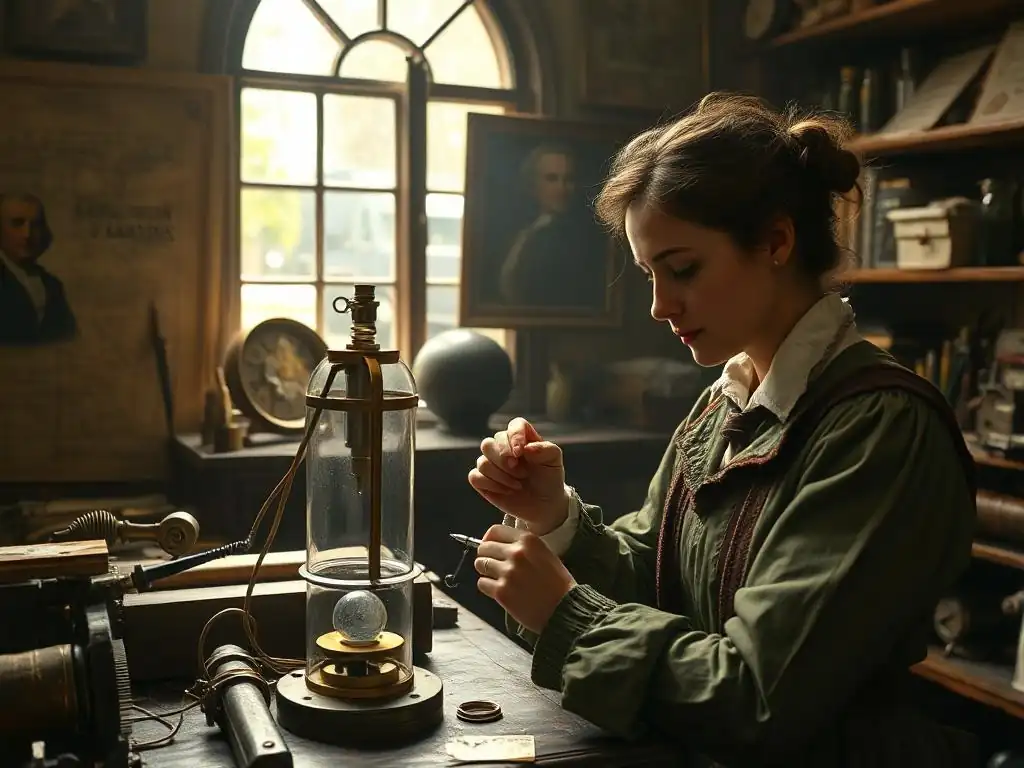
Welcome to WomenInScienceHistory.com, where we illuminate the often-untold stories of brilliant women who shaped the world of science. Ever wondered about the unsung heroes behind the electrifying innovations of the past? Dive into our exploration of Women's role in early electrical engineering and discover the groundbreaking contributions of female pioneers who powered progress, despite facing immense challenges. Their ingenuity and determination will surprise and inspire you. Continue reading to uncover their remarkable legacies...
- Powering Progress: Women's Crucial Role in Early Electrical Engineering
- Introduction: Unveiling Women's Contributions to Early Electrical Engineering
- The Dawn of Electrical Engineering: A Male-Dominated Landscape
- Pioneering Women and Their Impact on Early Electrical Engineering
- Specific Contributions: Women's Influence on Early Electrical Technologies
- Overcoming Obstacles: Challenges Faced by Women Electrical Engineers
- The Legacy of Early Women in Electrical Engineering
- Recognizing the Enduring Impact of Women's Role Early Electrical Engineering
-
Frequently Asked Questions
- What were some of the key challenges faced by women in early electrical engineering during the 19th century?
- Can you name a prominent woman who made significant contributions to electrical engineering in the early 19th century?
- How did women contribute to the field of electrical engineering in roles beyond being engineers themselves?
- Why is it important to highlight the contributions of women in science, particularly in fields like electrical engineering?
- How does "WomenInScienceHistory.com" aim to promote awareness of women's contributions to science?
- Final Reflection: Illuminating the Unseen Contributions
- Ignite Your Spark: Champion Women in STEM!
Powering Progress: Women's Crucial Role in Early Electrical Engineering
Introduction: Unveiling Women's Contributions to Early Electrical Engineering
Highlighting Overlooked Female Pioneers in Electrical Innovation
The annals of early electrical engineering often paint a picture dominated by male figures—inventors, theorists, and industrialists. However, a closer examination reveals a compelling narrative of women who, despite profound societal limitations and systemic barriers, made significant, albeit often uncredited, contributions to this burgeoning field. Their involvement ranged from foundational scientific observation and meticulous data analysis to the practical application and dissemination of electrical knowledge, fundamentally shaping the trajectory of electrical advancements in the 19th century.
This article endeavors to illuminate the often-eclipsed stories of these pioneering women, emphasizing their ingenuity and perseverance. By exploring their intellectual labor and practical engagement, we aim to demonstrate that women's role early electrical engineering was far more pervasive and influential than traditional historical accounts suggest, laying crucial groundwork for future innovations in areas like telegraphy, lighting, and power generation.
The Dawn of Electrical Engineering: A Male-Dominated Landscape
Societal Barriers Faced by Women in 19th Century Science and Engineering
The 19th century was characterized by rigid societal norms that largely confined women to the domestic sphere, viewing their primary roles as wives and mothers. Public life, including professional careers in science and engineering, was considered the exclusive domain of men. This deeply entrenched patriarchal structure meant that women attempting to pursue intellectual or technical endeavors often faced severe social ostracism, ridicule, and a widespread belief that their intellect was inherently inferior or unsuited for rigorous scientific inquiry.
These prevailing attitudes created immense psychological and practical barriers. Women who dared to express an interest in fields like electrical engineering were often met with skepticism, their ambitions dismissed as unfeminine or frivolous. This pervasive societal pressure effectively discouraged many talented women from even contemplating a career in science, leading to a significant underrepresentation that masked their true capabilities and desire for intellectual engagement.
The Limited Access to Education and Opportunities for Women Engineers
Formal educational pathways for women in the early 19th century were exceedingly scarce, particularly in higher education and specialized fields like science and engineering. Universities and technical colleges were almost exclusively male institutions, offering no admission to women until much later in the century, and even then, often with significant restrictions. This meant that women interested in electrical principles or practical applications had to rely on self-study, private tutors, or informal apprenticeships, severely limiting their access to cutting-edge research and laboratory facilities.
Beyond education, professional opportunities were virtually non-existent. Women were largely barred from joining scientific societies, securing research positions, or working in emerging industries. Even if they acquired significant expertise, their work was rarely recognized or compensated on par with their male counterparts. This systemic exclusion from formal networks and professional spaces profoundly constrained the ability of women to fully develop and apply their talents in early electrical engineering.
Pioneering Women and Their Impact on Early Electrical Engineering
Hertha Ayrton: A Case Study in Early Electrical Engineering
Hertha Ayrton, born Phoebe Sarah Marks in 1854, stands as a remarkable example of a woman who defied the limitations of her era to make significant contributions to electrical engineering. An alumna of Girton College, Cambridge, she dedicated much of her career to studying the electric arc, a vital component in early lighting and industrial applications. Her meticulous research delved into the "hissing" phenomenon of the carbon arc lamp, identifying the underlying causes and proposing solutions that dramatically improved the stability and efficiency of these crucial illumination devices.
Ayrton's work was not merely theoretical; she held several patents related to arc lamps and electrical current. She was the first woman to read her own paper before the Institution of Electrical Engineers (IEE) in 1899, a groundbreaking moment that challenged the prevailing gender norms of the scientific establishment. Her investigations into the formation of sand ripples, initially a side project, also demonstrated her keen observational skills and ability to apply physical principles, further solidifying her reputation as a formidable scientist and engineer whose insights directly influenced the practical development of early electrical technologies.
Mary Somerville: Her Contributions to Science Education and Influence on Electrical Thinking
While not an electrical engineer in the modern sense, Mary Somerville (1780-1872) was a Scottish polymath whose profound contributions to mathematics and physical science profoundly influenced the intellectual climate that fostered early electrical engineering. Her seminal work, On the Connexion of the Physical Sciences (1834), was a groundbreaking text that synthesized diverse scientific fields, making complex concepts accessible to a wider audience. This book included detailed explanations of electromagnetism, current, and potential, drawing upon the pioneering work of figures like Michael Faraday and André-Marie Ampère.
Somerville's ability to clearly articulate the intricate relationships between different branches of physics, including the then-nascent field of electricity, was invaluable. Her writings helped to popularize and disseminate foundational knowledge about electrical phenomena, inspiring subsequent generations of scientists and engineers. She was a powerful advocate for scientific education and played a crucial role in shaping public understanding of scientific principles, thereby indirectly but significantly contributing to the intellectual bedrock upon which early electrical engineering could flourish.
Specific Contributions: Women's Influence on Early Electrical Technologies
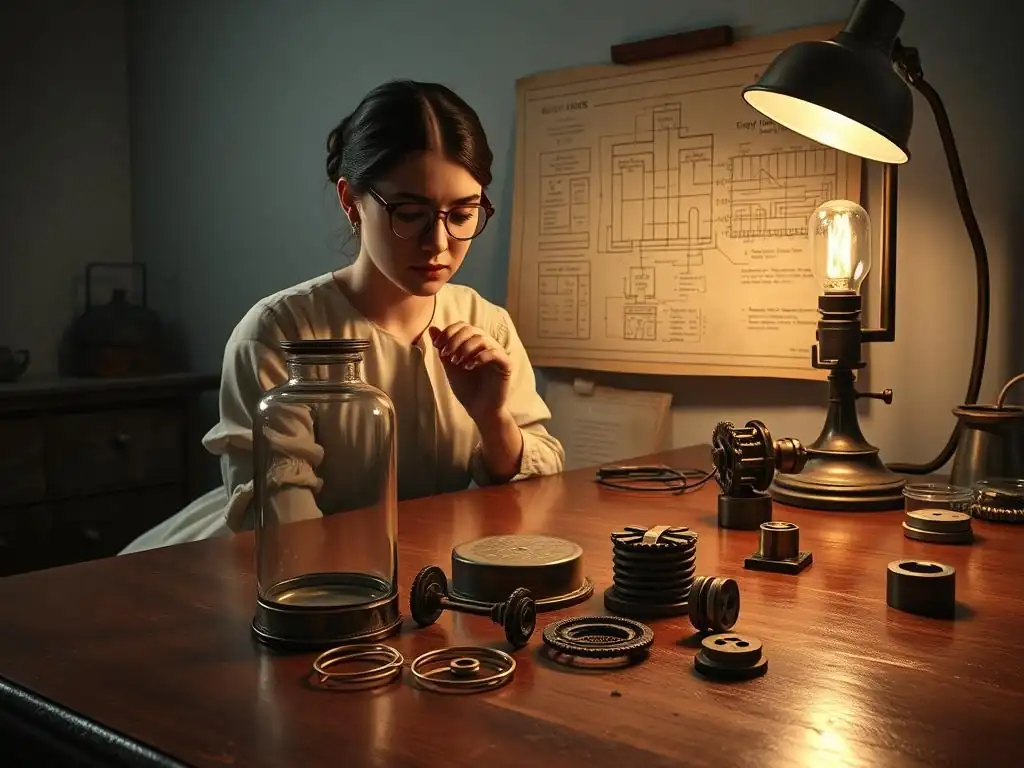
Women's Role in Scientific Observation and Data Analysis
In the burgeoning field of electrical science, meticulous observation and accurate data analysis were paramount. While men often took public credit for discoveries, women frequently served as uncredited or under-credited assistants, particularly in private laboratories or domestic settings. They meticulously recorded experimental observations, performed complex calculations, and analyzed vast amounts of data generated from early electrical experiments, such as those involving static electricity, batteries, or rudimentary circuits.
This often-invisible labor was critical for the validation of theories, the calibration of instruments, and the refinement of experimental procedures. For instance, the wives, sisters, or daughters of prominent electrical pioneers might spend countless hours noting precise readings from galvanometers, timing discharges from Leyden jars, or documenting the effects of varying currents. This detailed and systematic work, though not always recognized as "scientific" in its own right, provided the empirical bedrock upon which the principles of early electrical engineering were built.
Women's Involvement in the Production of Scientific Instruments
The development of early electrical technologies depended heavily on the availability and precision of scientific instruments—from simple voltaic piles to more complex telegraphic devices. While the design principles were often attributed to male inventors, the actual manufacturing and assembly of these intricate instruments frequently involved skilled artisans, including women. In small workshops and nascent factories, women were often employed for tasks requiring dexterity and precision, such as winding fine copper wires for electromagnets, assembling delicate components of early galvanometers, or insulating wires for telegraph cables.
This practical involvement, though sometimes categorized as "craft" rather than "engineering," was indispensable. The quality and reliability of these hand-assembled components directly impacted the functionality of early electrical apparatus. Without their precise handiwork and attention to detail, the theoretical advancements in electricity would have struggled to translate into tangible, working technologies, highlighting a crucial aspect of women's role early electrical engineering.
The Impact of Female Educators on Disseminating Electrical Knowledge
Beyond formal research and industry, women played a significant role in disseminating knowledge about electrical principles to a broader audience. Excluded from university lecture halls, many educated women turned to writing popular science books, offering private lessons, or organizing informal scientific demonstrations for the public and younger generations. These efforts were crucial in demystifying the new and exciting concepts of electricity and magnetism, making them accessible to those outside the academic elite.
Through engaging narratives and clear explanations, these female educators helped to cultivate a public understanding of electrical phenomena, sparking curiosity and inspiring future innovators. Their popular works often provided practical examples and simple experiments that could be replicated at home, thereby fostering a broader appreciation for the potential applications of electricity. This educational outreach was a vital, often unacknowledged, contribution to the intellectual infrastructure that supported the growth of early electrical engineering.
Overcoming Obstacles: Challenges Faced by Women Electrical Engineers
Gender Bias and Discrimination in Scientific Societies
One of the most significant hurdles faced by women aspiring to contribute to early electrical engineering was the pervasive gender bias embedded within scientific and professional societies. Prestigious organizations like the Royal Society or the Institution of Electrical Engineers (IEE) were exclusively male for much of the 19th century, barring women from membership, presentations, and participation in crucial intellectual discourse. Even when exceptional women like Hertha Ayrton achieved remarkable breakthroughs, they often faced immense resistance.
Ayrton, for instance, was nominated for a fellowship of the Royal Society in 1902 but was rejected on the grounds that, as a married woman, she could not be considered a "person" in the legal sense required for the Society's charter. This systemic discrimination deprived women of vital networking opportunities, access to collaborative research, and the formal recognition essential for career advancement, severely limiting the public acknowledgment of women's role early electrical engineering.
The Struggle for Recognition and Publication of Research
Even when women managed to conduct groundbreaking research, they faced an uphill battle for recognition and publication. Scientific journals and peer review processes were often biased against female authors, leading to their work being dismissed, delayed, or even attributed to male colleagues or family members. This systemic marginalization meant that many significant contributions by women remained uncredited, lost to history, or appeared under male pseudonyms or as anonymous works.
The struggle for authorship and intellectual property was compounded by the lack of institutional support. Without university affiliations or established professional standing, women found it incredibly difficult to navigate the male-dominated publishing landscape. This suppression of their voices not only diminished their individual legacies but also distorted the historical record, obscuring the true extent of women's influence on the development of early electrical technologies.
Limited Access to Funding and Research Opportunities
A fundamental challenge for women pursuing electrical engineering in the 19th century was the severe lack of access to funding and research opportunities. Without formal academic or industrial positions, women were largely excluded from grants, endowments, and institutional budgets that supported scientific inquiry. This meant that any research they undertook often had to be self-funded, relying on personal savings or the generosity of family members.
Furthermore, access to well-equipped laboratories, specialized instruments, and technical assistance was largely unavailable to women. This forced many pioneering female scientists to conduct their experiments in makeshift home laboratories, with limited resources and often outdated equipment. This profound disparity in access to essential resources naturally constrained the scale, scope, and ultimate impact of their potential contributions to the advancements in early electrical engineering.
The Legacy of Early Women in Electrical Engineering
Inspiring Future Generations of Female Scientists and Engineers
The stories of these pioneering women, who persevered against immense societal and institutional barriers, serve as powerful sources of inspiration for contemporary and future generations. By highlighting their intellectual prowess, unwavering determination, and significant contributions to early electrical engineering, we challenge entrenched stereotypes about gender roles in STEM fields. Their resilience in the face of widespread skepticism and discrimination demonstrates that scientific curiosity and engineering aptitude are not bound by gender.
Learning about figures like Hertha Ayrton and Mary Somerville empowers young girls and women today to envision themselves in scientific and engineering careers. Their historical achievements prove that women have always been capable of groundbreaking work, fostering a sense of belonging and encouraging more diverse participation in fields that continue to shape our world.
The Continued Fight for Gender Equality in STEM Fields
The historical struggles faced by women in early electrical engineering are not merely relics of the past; they resonate with ongoing challenges for gender equality in STEM fields today. While overt legal and educational barriers have largely been dismantled, subtle biases, unconscious discrimination, and persistent representation gaps continue to affect women in science, technology, engineering, and mathematics. The historical context provides valuable insights into the deeply rooted nature of these issues.
Understanding the systematic exclusion and marginalization of women in the 19th century helps inform current efforts to create more inclusive and equitable environments. By recognizing the historical precedents, we can better address contemporary issues such as the "leaky pipeline" phenomenon, stereotype threat, and the underrepresentation of women in leadership positions within electrical engineering and related industries, ensuring that the fight for true gender equality continues.
Recognizing the Enduring Impact of Women's Role Early Electrical Engineering
The Importance of Documenting and Celebrating Their Achievements
The full and accurate history of scientific and technological progress cannot be written without acknowledging the crucial, often overlooked, contributions of women. Documenting and celebrating the achievements of women in early electrical engineering is not merely about historical accuracy; it is about providing a more comprehensive and inspiring narrative for everyone. By actively researching and disseminating these stories, we ensure that these pioneering figures receive the recognition they were often denied in their lifetimes.
Platforms dedicated to women in science history play a vital role in this endeavor, bringing these hidden narratives to light and integrating them into mainstream historical accounts. This collective effort ensures that the groundbreaking work of women, from theoretical insights to practical applications, is rightfully acknowledged as an integral part of the foundational developments in electrical engineering.
Further Research and Exploration of Women's Untold Stories in Electrical Engineering
Despite recent efforts, much remains to be discovered about women's role early electrical engineering. Many contributions may still be hidden in archives, uncredited patents, or anonymous publications. Continued academic and popular research is essential to unearth these untold stories, exploring the nuanced ways in which women participated, whether as formal researchers, skilled technicians, educators, or unacknowledged collaborators.
This ongoing exploration is crucial not only for enriching our understanding of history but also for fostering a more inclusive future in STEM. By actively seeking out and amplifying the voices of women from the past, we reinforce the message that diversity of thought and perspective is vital for innovation. A complete understanding of the origins of electrical engineering must fully embrace and celebrate the significant and enduring impact of women's contributions.
Frequently Asked Questions
What were some of the key challenges faced by women in early electrical engineering during the 19th century?
Women faced significant societal barriers and gender discrimination in accessing education and professional opportunities. They were often excluded from formal training and faced skepticism about their abilities.
Can you name a prominent woman who made significant contributions to electrical engineering in the early 19th century?
While specific individuals might be less documented from that early era, the article emphasizes the cumulative contributions of many unnamed or lesser-known women. These women often worked as calculators and assistants.
How did women contribute to the field of electrical engineering in roles beyond being engineers themselves?
Women often played crucial roles as human computers, performing complex calculations essential for electrical system design and analysis. They were also involved in testing and quality control.
Why is it important to highlight the contributions of women in science, particularly in fields like electrical engineering?
Highlighting these stories helps to rectify historical omissions, inspire future generations of female scientists, and demonstrate the diversity of talent in STEM fields. It showcases women’s role in scientific history.
How does "WomenInScienceHistory.com" aim to promote awareness of women's contributions to science?
The website provides biographies, articles, and discussions about pioneering female scientists. It aims to shed light on their groundbreaking work and the challenges they overcame, inspiring future generations.
Final Reflection: Illuminating the Unseen Contributions
The narrative of electrical engineering's genesis is often dominated by male figures, but as we've explored, the untold stories of women's contributions are vital to understanding the full picture. Their ingenuity, dedication, and often unrecognized labor were integral to powering the progress of the early 19th century, a truth that resonates powerfully even today as we continue to strive for inclusivity and equity in STEM fields.
The impact of these pioneering women extends far beyond the technical advancements they helped achieve. Their stories serve as a potent reminder that innovation thrives on diverse perspectives and that excluding any group limits our collective potential. The most effective way to do it, is to do it.
- Amelia Earhart. This quote, though not directly related to electrical engineering, perfectly encapsulates the spirit of these women who, despite societal barriers, persevered and made significant contributions.
As we close this chapter on the early days of electrical engineering, let us not forget the women who helped illuminate the path forward. Consider how their resilience and ingenuity can inspire you to challenge conventional narratives, champion inclusivity in your own sphere of influence, and recognize the often-unseen contributions of others. Let their legacy be a beacon, guiding us towards a future where every voice is heard and every talent is valued.
Ignite Your Spark: Champion Women in STEM!
Thank you for diving into the often-overlooked history of women in electrical engineering. We hope you've discovered a newfound appreciation for their pioneering contributions. Now, it's time to carry their torch forward.
Here's how you can make a difference:
- Amplify their stories: Share this article with your network to help rewrite the narrative of STEM history.
- Delve deeper: Explore other untold stories of women in science at WomenInScienceHistory.com.
- Inspire the next generation: Mentor a young woman interested in STEM and show her the power of her potential.
What small step will you take today to ensure the contributions of women in STEM are never forgotten?