
Defying Newton's World: 18th Century Women Navigating MaleDominated Physics

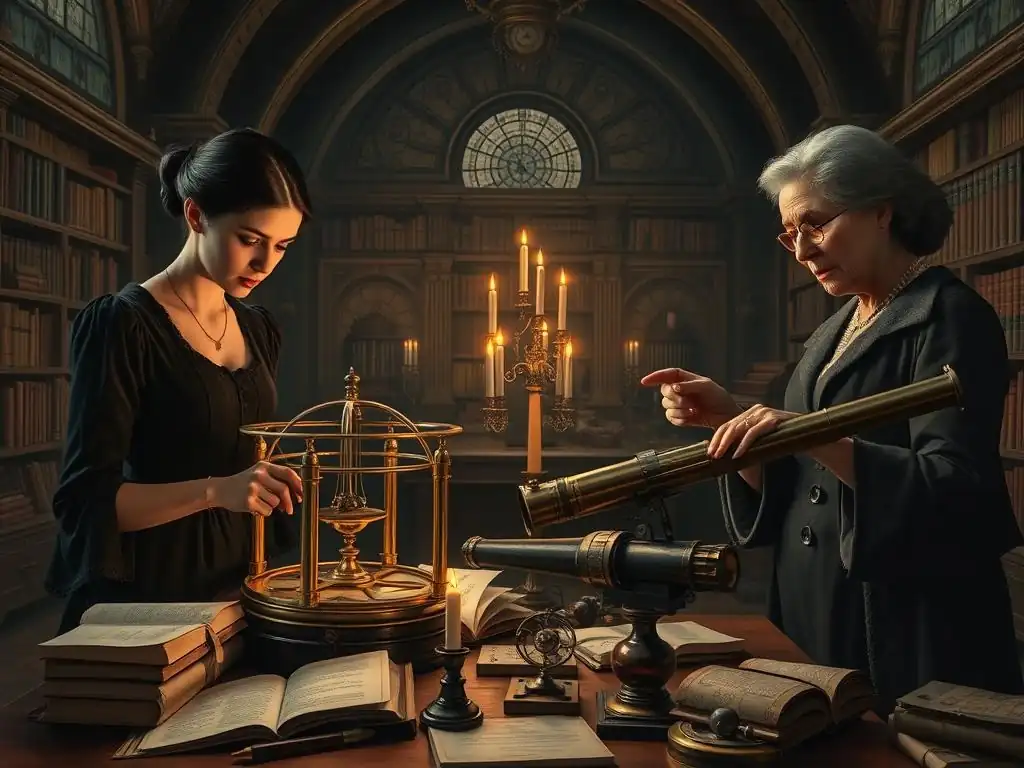
Welcome to WomenInScienceHistory.com, where we unearth the untold stories of remarkable women who shaped the scientific landscape. Ever wondered how women navigated the rigid world of 18th-century physics? Dive into our latest article, "Defying Newton's World: 18th Century Women Navigating MaleDominated Physics," and discover the brilliant minds who dared to challenge the status quo and make groundbreaking contributions to the field. Prepare to be inspired by their resilience and ingenuity as we explore women in physics history!
- Introduction: Unveiling the Untold Stories of Women in Physics History
- The Landscape of 18th Century Physics: A Male Bastion
- Notable Women Who Challenged the Status Quo in Physics
- Contributions Beyond Recognition: The Hidden Labor of Women in Physics
- The Legacy of 18th Century Women in Physics: Inspiring Future Generations
- Conclusion: Reclaiming the Narrative of Women in Physics History
-
Frequently Asked Questions
- What were some of the major obstacles women faced in pursuing physics in the 18th century?
- How did some women manage to contribute to physics despite these obstacles?
- Can you provide an example of a woman who made significant contributions to physics in the 18th century?
- Why is it important to study the history of women in physics?
- What impact did the contributions of 18th-century women in physics have on the field?
- Final Reflection: Embracing the Unseen Forces
- Unleash Your Inner Physicist: The Legacy Continues!
Introduction: Unveiling the Untold Stories of Women in Physics History
The Underrepresentation of Women in 18th Century Science
The 18th century, a period often celebrated for the Enlightenment and significant scientific advancements, paradoxically remained largely inaccessible to women. Societal norms rigidly confined women to domestic spheres, emphasizing roles as wives and mothers, thereby severely limiting their engagement with public life, including scholarly pursuits.
Formal educational institutions, such as universities and scientific academies, were almost exclusively male domains, effectively barring women from structured learning and research environments. This pervasive exclusion meant that any woman aspiring to participate in scientific endeavors faced immense social pressure and institutional barriers, leading to a profound underrepresentation of women in physics history during this era.
This entrenched gender bias ensured that the contributions of the few women who did manage to engage with science were often overlooked, minimized, or attributed to male counterparts. The prevailing belief that women lacked the intellectual capacity for rigorous scientific thought further solidified their marginalization. Consequently, the narratives of pioneering women in physics history from the 18th century are often fragmented, requiring diligent historical excavation to bring their remarkable achievements to light. Their stories are not merely footnotes but crucial chapters in the broader narrative of scientific development, highlighting extraordinary perseverance in the face of systemic adversity.
The Significance of Recognizing Women's Contributions to Physics History
Recognizing the contributions of 18th-century women to physics is not simply an act of historical revisionism; it is fundamental to constructing a complete and accurate understanding of scientific progress. For too long, the history of science has been presented as a predominantly male narrative, obscuring the critical roles played by women who, despite profound limitations, pushed the boundaries of knowledge. By acknowledging figures like Émilie du Châtelet, Laura Bassi, and Caroline Herschel, we challenge the misconception that women were absent or inconsequential in the development of physics.
Moreover, highlighting these untold stories serves as a powerful source of inspiration for future generations. When young women see that their predecessors, even in the most challenging historical contexts, made significant scientific breakthroughs, it fosters a sense of possibility and encourages them to pursue careers in STEM fields. Reclaiming the narrative of women in physics history not only corrects past injustices but also actively promotes a more inclusive and equitable scientific community today, demonstrating that intellectual curiosity and scientific talent know no gender.
The Landscape of 18th Century Physics: A Male Bastion
The Dominance of Newtonian Physics and its Impact
The 18th century was profoundly shaped by the legacy of Isaac Newton, whose Philosophiæ Naturalis Principia Mathematica, published in 1687, had solidified the foundations of classical mechanics. Newtonian physics, with its emphasis on universal gravitation, laws of motion, and mathematical rigor, became the prevailing paradigm, influencing scientific thought across Europe. Academies like the Royal Society in London and the French Academy of Sciences served as central hubs for discussing, validating, and disseminating these ideas, but membership and participation in these esteemed bodies were almost exclusively reserved for men, creating an impenetrable barrier for women.
This male-dominated intellectual environment meant that the interpretation, application, and further development of Newtonian principles were largely controlled by male scholars. Aspiring female physicists found themselves on the periphery, unable to formally engage in the vibrant scientific discourse that characterized the era. While some, like Émilie du Châtelet, managed to deeply immerse themselves in Newtonian thought, their contributions often had to navigate a system designed to exclude them, making their impact on women in physics history all the more extraordinary.
Societal Barriers for Women Entering Scientific Fields
Beyond the institutional hurdles, 18th-century women faced formidable societal barriers that actively discouraged their entry into scientific fields. Prevailing social conventions dictated that a woman's primary purpose was domesticity: managing a household, raising children, and supporting her husband. Intellectual pursuits, particularly those as rigorous as physics, were considered unfeminine and potentially detrimental to a woman's health or reproductive capabilities. This pervasive cultural attitude meant that women who displayed scientific inclination were often met with skepticism, ridicule, or outright disapproval from family and society.
Furthermore, the very concept of a "professional woman" was virtually nonexistent. There were no established career paths or financial incentives for women to pursue science independently. Any scientific work undertaken by women was typically done in private, often as an extension of a male relative's work, or entirely self-funded, relying on personal wealth and intellectual drive rather than institutional support. This lack of professional recognition and the omnipresent societal pressure created an almost insurmountable obstacle for women in physics history seeking to make their mark.
Limited Access to Education and Resources for Aspiring Female Physicists
The most significant practical barrier for aspiring female physicists in the 18th century was the severe lack of access to formal education and scientific resources. Universities, which were the primary centers for advanced scientific instruction and research, did not admit women. Girls' education, where it existed, focused primarily on domestic skills, basic literacy, and accomplishments like music or needlework, not on subjects like mathematics, logic, or natural philosophy. This educational disparity created a vast knowledge gap between men and women from an early age.
Consequently, any woman who wished to delve into physics had to rely on unconventional means: private tutoring, self-study through books, or learning informally from male relatives who were scientists. Access to laboratories, scientific instruments, and collections of natural specimens was also extremely limited. For instance, while male students could attend public dissections or observe astronomical instruments at observatories, women were generally excluded from such practical, hands-on experiences. This systemic deprivation of educational opportunities and resources profoundly hindered the emergence and recognition of women in physics history.
Notable Women Who Challenged the Status Quo in Physics
Émilie du Châtelet: A Pioneer in Newtonian Physics Interpretation
Gabrielle Émilie Le Tonnelier de Breteuil, Marquise du Châtelet (1706–1749), was an extraordinary French natural philosopher and mathematician whose intellectual prowess shone brightly in an era largely unreceptive to female scholars. Born into an aristocratic family, she received an education far superior to that of most women of her time, including instruction in Latin, Greek, English, German, and Italian, alongside mathematics and science. Her passionate engagement with the leading scientific ideas of her day, particularly Newtonian physics, set her apart as a formidable intellectual force.
Du Châtelet's deep understanding and critical engagement with complex scientific theories enabled her to not only master existing knowledge but also to contribute original insights. She meticulously studied the works of prominent thinkers like Isaac Newton, Gottfried Wilhelm Leibniz, and René Descartes, often corresponding with and debating their ideas with leading intellectuals of the era, such as Voltaire, with whom she had a long-standing intellectual partnership. Her salon at Cirey-sur-Blaise became a hub for scientific and philosophical discourse, a testament to her dedication to the advancement of knowledge.
Émilie du Châtelet's Translation and Commentary on Newton's Principia Mathematica
One of Émilie du Châtelet's most monumental achievements was her translation of Isaac Newton's Philosophiæ Naturalis Principia Mathematica from Latin into French, a project she undertook during the final years of her life. This was not merely a linguistic conversion but a profound intellectual endeavor, as she provided extensive commentary and clarifications, making the complex theories of Newtonian physics accessible to a broader French-speaking audience. Her translation, Principes mathématiques de la philosophie naturelle, published posthumously in 1759, remains the standard French translation of Newton's seminal work to this day.
Her commentary often expanded upon Newton's ideas, offering her own interpretations and derivations, particularly regarding the concept of force and the laws of motion. She meticulously verified Newton's calculations and provided algebraic rather than geometric proofs for many propositions, reflecting her strong mathematical background and her desire to make the text more comprehensible. This rigorous and insightful work solidified her position as a leading interpreter of Newtonian physics and a foundational figure among women in physics history.
Contributions to Leibnizian Physics and Energy Conservation
Beyond her work on Newton, Émilie du Châtelet was a keen proponent of Leibnizian physics and made significant contributions to the understanding of energy conservation. In her major work, Institutions de Physique (Lessons in Physics), published in 1740, she explored both Newtonian and Leibnizian concepts, particularly engaging with the vis viva (living force) controversy. This debate centered on whether a body's force was proportional to its velocity (
She demonstrated through various examples and logical arguments that the true measure of force in a moving body should be proportional to its mass multiplied by the square of its velocity. Her analysis, based on experiments involving falling bodies and collisions, provided a crucial step towards the modern understanding of the conservation of mechanical energy. This theoretical insight showcased her original thinking and her ability to synthesize and advance complex physical theories, making her a pivotal, though often underappreciated, figure in the early development of energy principles within physics.
Overcoming Gender Barriers: Du Châtelet's Intellectual Perseverance
Émilie du Châtelet faced considerable gender barriers throughout her intellectual career, yet her perseverance was unwavering. As a woman, she was barred from formal scientific societies like the French Academy of Sciences, which meant she could not present her papers directly or participate in official scientific discussions. Her engagement with science had to occur primarily through private study, correspondence with male colleagues, and the intellectual salon she hosted. Despite her undeniable talent and profound contributions, she was often subject to societal scrutiny and criticism for pursuing intellectual endeavors deemed inappropriate for her sex.
Her determination to engage with the most complex scientific questions of her time, often working late into the night, reflected a profound commitment to knowledge over social convention. She famously dressed in men's clothes to gain access to certain intellectual gatherings or to study in male-dominated coffee houses, illustrating her resolve to overcome limitations. Du Châtelet's life stands as a powerful testament to intellectual courage and the relentless pursuit of scientific truth, securing her place as an iconic figure among women in physics history who defied societal norms.
Laura Bassi: The First Woman Professor of Physics
Laura Maria Caterina Bassi Veratti (1711–1778) was an extraordinary Italian scientist who broke unprecedented ground for women in academia. Born in Bologna, which was then part of the Papal States, Bassi received an exceptional private education from a young age, mastering Latin, Greek, philosophy, mathematics, and natural sciences. Her remarkable intellect and rapid progress quickly caught the attention of prominent scholars and civic leaders in Bologna, leading to a series of groundbreaking appointments that challenged the established gender norms of the 18th century.
Bassi's career was marked by a unique blend of theoretical knowledge and practical experimentation, coupled with an unwavering commitment to public education. She leveraged her unique position to advocate for women's access to higher education and to demonstrate the intellectual capabilities of women, not just in theory but through active participation in scientific discourse and discovery. Her pioneering efforts paved the way, however slowly, for future generations of women in physics history to enter the academic world.
Bassi's Academic Journey and Professorship at the University of Bologna
Laura Bassi's academic journey culminated in an unparalleled achievement for women in the 18th century: her appointment as a professor at the University of Bologna. In 1732, at the age of 21, she was publicly examined in a rigorous academic disputation, after which she was awarded a doctoral degree in philosophy, making her one of the first women in Europe to receive such a qualification.
Immediately following this, she was appointed to a professorship in philosophy at the University of Bologna. While her initial appointment was largely ceremonial, granting her status but limited teaching duties, Bassi tirelessly advocated for more active involvement.
By 1738, she secured the right to deliver public lectures, a privilege typically reserved for male professors. Over the decades, she gradually gained more responsibilities, eventually becoming a professor of experimental physics and holding a chair in physics at the university. Her dedication to her role and her persistent efforts to secure greater teaching autonomy demonstrated her commitment to a true academic career, making her a trailblazer for women in physics history within the confines of a university setting.
Experimental Physics Demonstrations and Public Lectures
Laura Bassi was not merely a theoretical scholar; she was a hands-on experimental physicist. She established a well-equipped private laboratory in her home, where she conducted numerous experiments, particularly in Newtonian mechanics and electricity, which was a burgeoning field at the time. Her demonstrations were meticulously prepared and often performed for students, visiting scholars, and even public audiences, showcasing her mastery of scientific principles and her ability to engage effectively with observable phenomena.
Her public lectures were highly anticipated events, attracting significant crowds, including members of the Bologna elite and foreign visitors. Bassi delivered over thirty public lectures during her career, covering a wide range of physics topics, from gravity and optics to the properties of matter and the then-novel phenomena of electricity. These public performances were crucial in demonstrating her intellectual rigor and practical skills, dispelling contemporary doubts about women's capacity for scientific inquiry and solidifying her reputation as a leading figure among women in physics history.
Challenging Gender Norms in Academia and Scientific Discourse
Laura Bassi's entire career was a bold challenge to the deeply entrenched gender norms of 18th-century academia and scientific discourse. By holding a university professorship and actively teaching and experimenting, she directly defied the societal expectation that women belonged exclusively in the domestic sphere. Her public examinations, doctoral defense, and regular lectures were highly visible events that forced the male-dominated academic establishment to acknowledge a woman's intellectual capabilities in a very public manner.
Despite her achievements, Bassi still faced limitations; for instance, she had to seek special permission to lecture and was paid less than her male colleagues for equivalent work. However, her unwavering presence and consistent excellence slowly eroded some of these barriers. She became a member of the Bologna Academy of Sciences in 1732, further integrating her into the formal scientific community. Bassi's life and career provided a powerful precedent, proving that women could not only understand but also actively contribute to the most complex scientific fields, thus inspiring future generations of women in physics history.
Caroline Herschel: Astronomy and Cataloging Celestial Objects
Caroline Lucretia Herschel (1750–1848) was a German-born British astronomer whose meticulous observations and cataloging work made profound contributions to astronomy, a field deeply intertwined with physics. Initially trained as a singer, her life took a dramatic turn when she joined her brother William Herschel, a renowned astronomer, in England. While often overshadowed by her brother's fame, Caroline was a brilliant and dedicated scientist in her own right, whose independent discoveries and systematic approach to celestial mapping left an indelible mark on women in physics history.
Her work not only involved assisting her brother in his groundbreaking telescopic surveys but also encompassed her own independent observational programs. She possessed an extraordinary capacity for sustained, rigorous work and a keen eye for detail, which were essential for the demanding tasks of astronomical observation and data reduction. Caroline Herschel's achievements underscore the vital role that women played, often in supportive but indispensable capacities, in the advancement of scientific knowledge during the 18th century.
Herschel's Collaboration with William Herschel
Caroline Herschel's astronomical career began as the indispensable assistant to her brother, William Herschel, who was revolutionizing observational astronomy with his large-aperture telescopes. From the late 1770s onwards, she dedicated herself entirely to assisting William, performing tasks such as grinding and polishing telescope mirrors, recording his observations during long night watches, and meticulously transcribing and reducing vast amounts of raw data. This collaborative effort was crucial to William's discovery of Uranus in 1781 and his subsequent systematic surveys of the heavens.
Her role extended far beyond that of a mere scribe; Caroline often calculated the positions of celestial objects, corrected errors in existing star catalogs, and managed the immense logistical demands of their observatory. For instance, during William's ambitious "sweeps" of the night sky, Caroline would sit at a desk near the telescope, recording his verbal observations as he scanned the heavens. Her unwavering dedication and precision freed William to focus on observation, making her an integral, though often uncredited, partner in his groundbreaking work.
Discoveries of Comets and Nebulae
Despite her primary role as William's assistant, Caroline Herschel made numerous independent discoveries that cemented her reputation as a pioneering astronomer. Using a small reflecting telescope given to her by William for her own use, she systematically searched for new celestial objects. Between 1786 and 1797, she discovered eight comets, five of which were officially recognized as her first discoveries. Her first comet discovery, Comet C/1786 P1 (Herschel), was particularly significant as it marked the first comet discovered by a woman, gaining her immediate recognition in the scientific community.
Beyond comets, Caroline also discovered fourteen new nebulae and significantly revised and expanded existing star catalogs. She meticulously compiled a Catalogue of Nebulae and Clusters of Stars (1798), which included 2,500 nebulae and star clusters, many of which were William's discoveries but required her precise organization and verification. Her rigorous approach to observation and cataloging vastly improved the accuracy and completeness of astronomical data, contributing fundamentally to the understanding of the universe.
Recognition and Contributions to Astronomical Cataloging
Caroline Herschel's exceptional contributions eventually earned her formal recognition, a rare feat for women in the 18th century. In 1787, King George III of England granted her an annual salary of £50 (equivalent to approximately £7,000-£8,000 in early 21st-century terms) for her work as William's assistant, making her the first woman in Britain to receive a salary as a scientist. This marked a significant milestone for women in physics history, providing official acknowledgement of her professional status.
Her most enduring legacy lies in her meticulous cataloging work. After William's death, she spent years compiling and correcting his observations, resulting in a comprehensive General Catalogue of Nebulae and Clusters (1820), which was essential for future astronomical research.
In recognition of her extraordinary work, the Royal Astronomical Society awarded her its Gold Medal in 1828 (shared with William), and she was elected an honorary member of the Society in 1835, alongside Mary Somerville, making them the first two women to receive such an honor. Her dedication to precision and her groundbreaking discoveries ensured her rightful place as a pivotal figure in the history of observational astronomy and women in physics history.
Assisting Male Scientists: The Uncredited Contributions
While the achievements of women like du Châtelet, Bassi, and Herschel are increasingly recognized, countless other women in the 18th century contributed to physics and other scientific fields in less visible, often uncredited ways. Wives, daughters, sisters, and even domestic servants of male scientists frequently provided essential, yet unacknowledged, support. This hidden labor included a wide range of tasks: preparing experimental setups, meticulously recording data during observations, performing tedious and complex calculations, copying manuscripts, and even maintaining scientific instruments or libraries.
For example, many scientific breakthroughs attributed solely to male figures would have been impossible without the consistent, often invisible, assistance of female family members who managed the household, allowing the male scientist to dedicate himself fully to research, or who directly participated in the scientific work itself. This support was rarely recognized with co-authorship or formal acknowledgement, reflecting the deeply ingrained gender biases of the time. Understanding this pervasive "invisible labor" is crucial for a complete picture of women in physics history.
Women in Instrument Making and Scientific Observation
Beyond direct assistance in research, women also played roles in the practical aspects of science, including instrument making and routine scientific observation. While often considered skilled artisan work rather than "science" in the academic sense, the construction and maintenance of scientific instruments were fundamental to experimental physics. Women might have been involved in workshops producing lenses, thermometers, barometers, or other apparatus, contributing to the precision and reliability of scientific tools. Though often unrecorded by name, their craftsmanship was vital for the advancement of experimental inquiry.
Furthermore, some women engaged in prolonged and repetitive observational tasks, such as recording meteorological data, tracking celestial movements for almanacs, or monitoring natural phenomena. These tasks, while not always leading to groundbreaking discoveries, provided the essential empirical data upon which scientific theories were built. For instance, while not always in formal scientific roles, women in various capacities contributed to the accumulation of knowledge that underpinned advancements in fields like thermodynamics or optics, enriching the broader narrative of women in physics history.
The Importance of Recognizing Unacknowledged Female Labor in Physics History
Recognizing the unacknowledged labor of women in 18th-century physics is vital for several reasons. Firstly, it provides a more accurate and comprehensive history of scientific progress, revealing the full spectrum of individuals who contributed to knowledge creation. Ignoring these contributions perpetuates a distorted view of the past, suggesting that scientific development was solely the domain of a select few men. Secondly, it highlights the systemic inequalities that prevented women from gaining formal recognition for their intellectual and practical contributions.
By examining the diaries, letters, and household accounts of historical figures, researchers are increasingly uncovering evidence of this hidden work. This ongoing re-evaluation challenges traditional narratives and underscores the fact that scientific breakthroughs are often the result of collective effort, not just individual genius. Acknowledging this uncredited labor enriches the history of women in physics history and provides a more nuanced understanding of the challenges and contributions of women in science.
The Legacy of 18th Century Women in Physics: Inspiring Future Generations
Breaking Barriers and Paving the Way for Female Scientists
The 18th-century women who engaged with physics, whether as celebrated scholars or unacknowledged assistants, played a crucial role in breaking down deeply entrenched barriers. Figures like Émilie du Châtelet, Laura Bassi, and Caroline Herschel, through their sheer intellectual brilliance and unwavering determination, demonstrated unequivocally that women were capable of rigorous scientific thought, complex mathematical reasoning, and significant original contributions. Their individual successes, though exceptional and often hard-won, served as powerful counter-examples to the prevailing societal belief that science was exclusively a male domain.
While their direct impact on the overall number of women in science in their own time was limited, their very existence and documented achievements provided a nascent foundation for future generations. Their stories became whispered legends or published accounts that, over time, chipped away at institutional resistance and social prejudice. These pioneers, by daring to pursue their scientific passions, laid critical groundwork, however subtle, for the eventual entry of more women into scientific fields, becoming foundational figures in the ongoing narrative of women in physics history.
The Ongoing Struggle for Gender Equality in Physics
Despite the pioneering efforts of 18th-century women, the struggle for gender equality in physics and other STEM fields continues into the present day. While formal barriers to education and employment have largely been dismantled in many parts of the world, women remain underrepresented in physics, particularly at higher academic and leadership levels. For instance, statistics from recent years often show that women earn around 20-25% of physics bachelor's degrees and even fewer at the doctoral level in many Western countries, and their representation in tenured faculty positions is typically lower still.
This ongoing disparity highlights that deeply ingrained societal biases, subtle forms of discrimination, and systemic issues continue to impact women's participation and progression in physics. Addressing these challenges requires not only promoting access but also fostering inclusive environments, challenging unconscious biases, and ensuring equitable opportunities for mentorship, funding, and recognition. The historical context of women in physics history provides a valuable lens through which to understand and tackle these contemporary issues.
Celebrating the Achievements of Women in Physics History and Promoting Inclusion
Celebrating the achievements of 18th-century women in physics is more than an academic exercise; it is an active step towards promoting greater inclusion and diversity in science today. By bringing their stories to light through platforms like "Women in Science History," we provide visible role models for young girls and women considering careers in physics. Seeing historical figures who defied immense odds to pursue their scientific passions can inspire confidence and demonstrate that a career in physics is a viable and rewarding path for women.
Moreover, a more complete and accurate history of women in physics history helps to reshape public perception and challenge stereotypes about who can be a scientist. It fosters a more welcoming and equitable environment within the scientific community itself, encouraging institutions to actively seek out and support diverse talent. By honoring the past, we build a future where scientific excellence is recognized and cultivated regardless of gender, ensuring that all voices contribute to the advancement of knowledge.
Conclusion: Reclaiming the Narrative of Women in Physics History
The Importance of Continued Research and Recognition
The journey to fully reclaim the narrative of women in physics history is an ongoing one, requiring continued dedicated research and recognition. Many stories of women who contributed to 18th-century physics, both directly and indirectly, remain undiscovered or insufficiently explored in historical archives. Scholars are increasingly delving into overlooked letters, personal accounts, and institutional records to uncover these hidden contributions, piece by piece. This meticulous work is essential for constructing a truly comprehensive and accurate history of science that reflects the diverse participation of all individuals.
Furthermore, beyond mere discovery, sustained recognition is crucial. This involves integrating these stories into educational curricula, public exhibitions, and popular science narratives, ensuring that figures like Émilie du Châtelet, Laura Bassi, and Caroline Herschel are no longer footnotes but central characters in the history of physics. Such efforts are vital for correcting historical omissions and for fostering a more inclusive understanding of scientific development for women in physics history.
Inspiring Future Generations of Women in STEM Fields
The powerful stories of 18th-century women who defied immense odds to engage with physics serve as profound sources of inspiration for future generations of women in STEM fields. By showcasing their intellectual courage, resilience, and groundbreaking achievements, we provide tangible proof that women have always been, and continue to be, integral to scientific progress. These narratives can ignite curiosity, foster ambition, and provide a sense of belonging for young girls and women who might otherwise feel marginalized or excluded from traditionally male-dominated disciplines like physics.
Seeing these historical role models can help dismantle lingering stereotypes and encourage young women to pursue their scientific passions with confidence. The struggles and triumphs of these pioneering women in physics history offer valuable lessons in perseverance, critical thinking, and the pursuit of knowledge against all odds, creating a powerful legacy that resonates with aspiring scientists today.
Highlighting the Enduring Impact of 18th Century Women in Physics
The enduring impact of 18th-century women in physics extends far beyond their immediate contributions. Figures like Émilie du Châtelet, with her profound interpretation of Newtonian and Leibnizian physics, Laura Bassi, as the first woman professor of physics, and Caroline Herschel, with her meticulous astronomical discoveries and cataloging, were not just anomalies; they were foundational figures whose work, though often uncredited, shaped the trajectory of scientific inquiry. Their theoretical insights, experimental rigor, and observational precision contributed significantly to the growing body of physical knowledge.
Their legacy underscores the critical importance of diversity in scientific thought and practice. By highlighting their often-overlooked contributions, we enrich our understanding of the history of physics and acknowledge the broad spectrum of talent that has always driven scientific advancement. The remarkable achievements of these 18th-century women in physics history serve as a timeless reminder of the power of intellect and determination, ensuring their rightful place in the annals of scientific discovery.
Frequently Asked Questions
What were some of the major obstacles women faced in pursuing physics in the 18th century?
Women faced significant social and institutional barriers, including limited access to education and exclusion from scientific societies. They were often relegated to assisting male relatives rather than pursuing independent research.
How did some women manage to contribute to physics despite these obstacles?
Some women gained knowledge through private tutoring or by working alongside male family members who were scientists. Others published anonymously or under male pseudonyms to overcome societal biases and gain recognition.
Can you provide an example of a woman who made significant contributions to physics in the 18th century?
Émilie du Châtelet is a prominent example, known for her translation and commentary on Newton's Principia Mathematica, which significantly advanced understanding of Newtonian physics in France. She also made original contributions to energy conservation theory.
Why is it important to study the history of women in physics?
Studying their history helps to correct historical inaccuracies and acknowledge the contributions of overlooked scientists. It also inspires future generations by showcasing the resilience and ingenuity of women in STEM.
What impact did the contributions of 18th-century women in physics have on the field?
Their contributions, though often minimized, helped to advance scientific knowledge and challenge the notion that science was solely a male domain. They paved the way for greater female participation in physics in later centuries.
Final Reflection: Embracing the Unseen Forces
The stories of these 18th-century women, once relegated to the footnotes of scientific history, resonate powerfully today. Their struggle for recognition in a field dominated by men mirrors the ongoing fight for equity and inclusion in STEM fields. Understanding their challenges and triumphs provides invaluable insight into the systemic barriers that continue to hinder women's progress and underscores the urgent need for continued advocacy and support.
The impact of these pioneering women extends far beyond the realm of physics. Their perseverance in the face of adversity serves as a potent reminder that intellectual curiosity and the pursuit of knowledge should know no gender. Their lives challenge us to question ingrained biases and to actively create spaces where diverse voices can flourish. The important thing is never to stop questioning.
- Albert Einstein, a sentiment these women embodied long before his time.
As we close this chapter on their remarkable journeys, let us carry forward their spirit of defiance and determination. Consider how you can actively champion inclusivity in your own sphere of influence, whether it's through mentorship, advocacy, or simply by amplifying the voices of those who are often unheard. Their legacy calls us to build a future where every individual, regardless of gender, has the opportunity to explore the wonders of the universe and contribute to the advancement of scientific knowledge.
Unleash Your Inner Physicist: The Legacy Continues!
Thank you for exploring the inspiring journeys of these pioneering women. You've now seen how they shattered barriers and redefined physics in the 18th century. Now, it's your turn to connect with their legacy and help build a more inclusive future for science.
Here's how you can keep their spirit alive:
- Embark on your own scientific journey: Dedicate just 30 minutes this week to learning something new about physics. Explore a concept that intrigues you, watch an educational video, or try a simple experiment at home.
- Amplify their stories: Share this article with three friends or colleagues who you think would be inspired by these women's achievements. Let's spread their stories far and wide!
- Suggest a Hidden Figure: Do you know of an 18th-century woman scientist that wasn't named in our article? Submit her name and a brief summary of her accomplishments to our website, and help us expand this important historical record.
What small step will you take today to honor the contributions of these remarkable women and inspire future generations of scientists?