
The Interactive Classroom: Engaging K12 Students with Online Narratives of Women in Scientific History

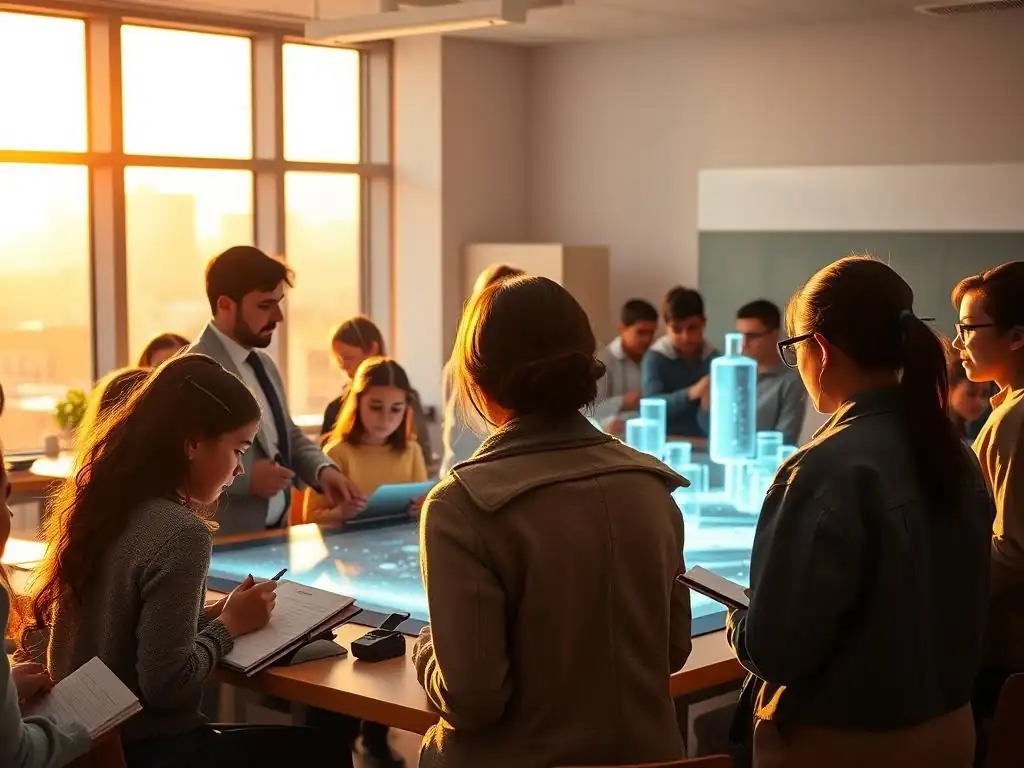
Welcome to WomenInScienceHistory.com!
Dive into the inspiring world of women in science education and discover how their stories can transform your K12 classroom. Explore our innovative resources designed to engage students with the groundbreaking narratives of female scientists. But what are the most effective ways to bring these historical figures to life and ignite a passion for STEM? Read on to uncover interactive strategies and lesson plans that will empower the next generation of female scientists and engineers.
-
How to Integrate Stories of Women in Science Education into Your K-12 Curriculum
- Why Focus on Women in STEM History for K-12? Boosting STEM Engagement
- Step 1: Finding Engaging Online Narratives of Female Scientists
- Step 2: Choosing the Right Interactive Tools to Bring Stories to Life
- Step 3: Creating Interactive Activities Based on Women in Science Narratives
- Step 4: Assessing Student Learning and Reinforcing Key Concepts in Women in STEM History
- Step 5: Expanding the Learning Experience Beyond the Classroom: Resources for Continued Engagement with Women in Science
- Maximizing the Impact of Women in Science Education in Your K-12 Classroom
-
Frequently Asked Questions
- What is WomenInScienceHistory.com about?
- How can WomenInScienceHistory.com be used in K12 women in science education?
- What kinds of resources does WomenInScienceHistory.com offer for teachers?
- What challenges did women in science face historically, according to WomenInScienceHistory.com?
- How does WomenInScienceHistory.com aim to inspire future generations of women in science?
- Final Reflection: Empowering Futures Through Untold Stories
- Ignite Discovery: Empower the Next Generation of Female Scientists!
How to Integrate Stories of Women in Science Education into Your K-12 Curriculum
Why Focus on Women in STEM History for K-12? Boosting STEM Engagement
Integrating the narratives of women in STEM history into K-12 curricula is crucial for addressing the persistent gender gap in various scientific fields and for boosting overall STEM engagement. While women constitute approximately 48% of the U.S. workforce, they represent only about 28% of the STEM workforce, with even lower percentages in fields like engineering and computer science.
By highlighting the groundbreaking achievements of female scientists from an early age, educators can dismantle stereotypes and broaden students' perceptions of who can excel in science, technology, engineering, and mathematics. This exposure helps cultivate a more inclusive and inspiring learning environment for all students.
Furthermore, showcasing diverse role models in women in science education can significantly impact students' self-efficacy and career aspirations. Research indicates that students who see themselves represented in educational materials are more likely to pursue subjects that align with those representations.
Stories of resilience, innovation, and perseverance from figures like Dr. Mae Jemison, the first African American woman in space, or Barbara McClintock, a Nobel laureate in genetics, provide tangible proof that intelligence and scientific aptitude are not limited by gender. This narrative approach fosters a deeper connection to scientific principles and encourages a greater number of students, especially girls, to consider STEM pathways.
Step 1: Finding Engaging Online Narratives of Female Scientists
Exploring the WomenInScienceHistory.com Database: A Treasure Trove of Resources
Dedicated online platforms like WomenInScienceHistory.com serve as invaluable resources for educators seeking authentic and compelling narratives of female scientists. This curated database offers meticulously researched biographies, historical contexts, and summaries of groundbreaking discoveries, making it an ideal starting point for enriching women in science education. Educators can easily navigate the site to find stories relevant to specific scientific disciplines, historical periods, or curriculum topics, streamlining the lesson planning process. The platform often features detailed accounts of challenges faced by these pioneering women, providing rich material for discussions on equity and perseverance.
For instance, an educator might discover the story of Lise Meitner, whose crucial work on nuclear fission was overlooked for the Nobel Prize awarded solely to her male collaborator, Otto Hahn. Or they might delve into the astronomical contributions of Henrietta Leavitt, whose discovery of the period-luminosity relationship in Cepheid variables revolutionized the measurement of cosmic distances. These narratives, readily available on such dedicated sites, allow teachers to introduce students to the human side of scientific discovery, demonstrating the profound impact of women in science on our understanding of the world.
Leveraging Open Educational Resources (OER) for Women in Science Education
Beyond specialized databases, Open Educational Resources (OER) offer a vast and continually expanding collection of free, openly licensed materials that can significantly enhance women in science education. OER platforms, often hosted by universities, governmental bodies, or non-profit organizations, provide access to a diverse array of content, including historical documents, public domain images, scholarly articles, and even full courses. These resources allow educators to supplement and diversify the narratives found on dedicated sites, offering multiple perspectives and deeper dives into specific scientific achievements.
For example, an educator could find digitized letters from Marie Curie detailing her struggles and triumphs in the early 20th-century scientific community, or public domain footage of Rosalind Franklin's original X-ray diffraction images of DNA. These primary sources can provide students with a direct connection to the past, fostering a more profound appreciation for the contributions of women in STEM. By adapting and integrating OER, teachers can create unique and comprehensive learning experiences that bring the stories of female scientists to life in dynamic ways, enriching the curriculum without incurring additional costs.
Step 2: Choosing the Right Interactive Tools to Bring Stories to Life
Interactive Whiteboard Software: Enhancing Visual Learning about Women in Science
Interactive whiteboard (IWB) software offers a dynamic platform for engaging K-12 students with the narratives of female scientists through visual and tactile interaction. Features such as drag-and-drop activities, annotation tools, and multimedia integration transform passive viewing into active participation. For instance, teachers can use an IWB to create an interactive timeline of Ada Lovelace's life, allowing students to tap on different milestones to reveal details about her groundbreaking work on the Analytical Engine, widely recognized as the first computer program. This visual mapping helps students grasp the chronological development of scientific ideas and the pivotal roles women played.
Moreover, IWBs enable educators to dissect complex scientific concepts associated with women in science in an accessible format. A teacher might display a diagram of a cell and, using the annotation tools, highlight the contributions of Lynn Margulis to the endosymbiotic theory, illustrating how her ideas transformed our understanding of cellular evolution. Students can then interact directly with the diagram, labeling parts or adding notes, reinforcing their learning. This hands-on approach with interactive whiteboard software makes the stories of women in science education more memorable and comprehensible for diverse learners.
Virtual Reality (VR) Field Trips: Immersing Students in the World of Female Scientists
Virtual Reality (VR) technology presents an unparalleled opportunity to immerse students in the historical contexts and scientific environments where female scientists made their breakthroughs. While bespoke VR experiences for every historical figure may be limited, general VR applications can be adapted to transport students. Imagine a VR "field trip" to a simulated Victorian-era laboratory where students can virtually explore the instruments Mary Anning, the pioneering paleontologist, might have used to unearth her significant fossil discoveries. This level of immersion fosters a visceral connection to the past and the challenges faced by women in STEM.
Another application could involve a VR simulation of the cosmos, allowing students to "observe" the celestial phenomena that inspired astronomers like Maria Mitchell, the first American woman to discover a comet. Such experiences can vividly illustrate the conditions under which these women worked and the magnitude of their contributions. Though VR technology might require specialized equipment, even 360-degree videos accessible via smartphones with cardboard viewers can offer a similar immersive effect, making the narratives of women in science education feel more tangible and immediate.
Gamified Learning Platforms: Making Women in Science Education Fun and Engaging
Gamified learning platforms leverage the inherent appeal of games to boost student motivation and engagement in women in science education. Tools like Kahoot!, Quizizz, or even custom-built digital games can transform learning about female scientists into an exciting challenge. For example, an educator could design a "Who Am I?" quiz where clues about a scientist's life and discoveries are progressively revealed, prompting students to identify figures like Katherine Johnson, whose calculations were critical to NASA's space missions. This competitive yet collaborative format encourages active recall and deeper processing of information.
Furthermore, these platforms can be used to create more elaborate simulations or digital escape rooms. A digital escape room could challenge students to "unlock" facts about Dorothy Hodgkin's Nobel Prize-winning work in X-ray crystallography by solving puzzles related to molecular structures, thereby experiencing a simplified version of scientific investigation. The instant feedback and reward systems inherent in gamified learning foster a positive attitude towards learning about women in STEM, making the process both educational and enjoyable, and significantly enhancing the impact of women in science education.
Step 3: Creating Interactive Activities Based on Women in Science Narratives
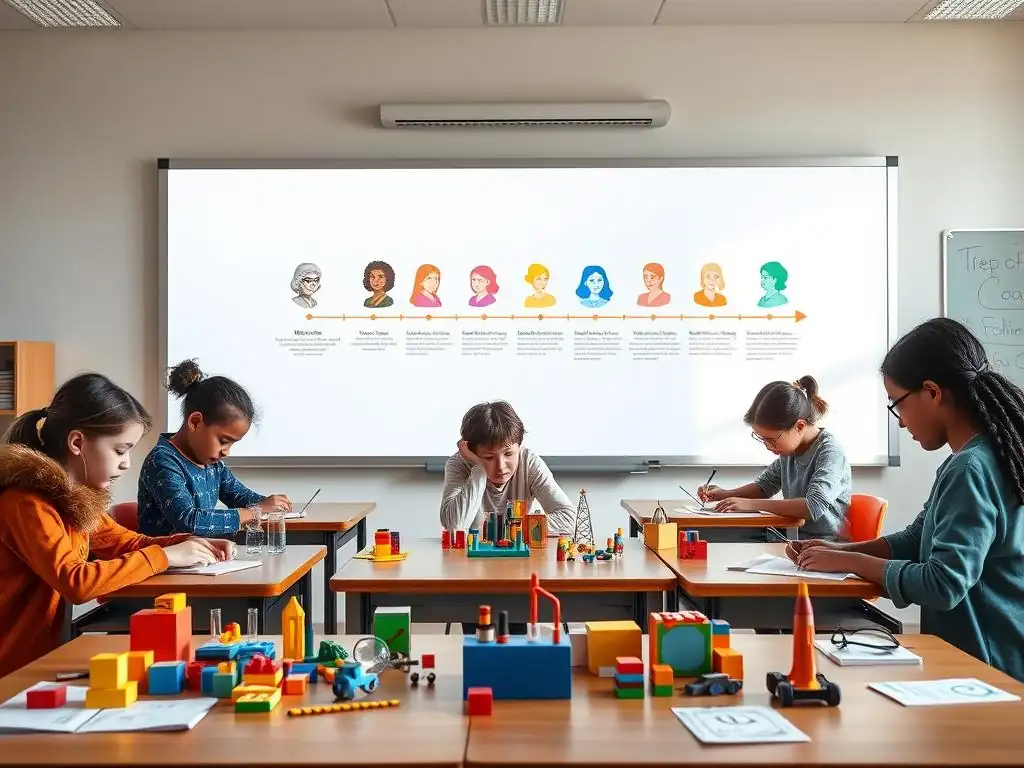
Developing Collaborative Projects: Researching and Presenting on Female Scientists
Collaborative projects are an excellent way to deepen student understanding and engagement with the stories of female scientists. By working in groups, students develop essential teamwork, communication, and critical thinking skills. For example, groups could be assigned a specific female scientist, such as Chien-Shiung Wu, known as the "First Lady of Physics," and tasked with researching her life, experimental work, and the impact of her contributions on physics. They might then create a digital presentation, an interactive poster, or even a short dramatic skit to present their findings to the class.
These projects can also encourage comparative analysis. One group might research Hypatia of Alexandria, the ancient Greek mathematician and philosopher, while another investigates Rosalind Franklin's contributions to DNA structure. Students could then compare the societal challenges faced by these women across different eras, fostering a nuanced understanding of historical context and systemic barriers. This hands-on approach to women in science education empowers students to become experts on their chosen scientist and effectively communicate their learning.
Designing Interactive Simulations: Experiencing the Challenges Faced by Women in STEM
Interactive simulations provide a powerful, empathetic learning experience by allowing students to "walk in the shoes" of female scientists and confront the challenges they faced. These simulations can range from simple role-playing scenarios to more elaborate digital environments. For instance, students could engage in a simulated "scientific conference" where they present a groundbreaking discovery while facing implicit bias or skepticism, mirroring the experiences of many women in STEM who struggled for recognition, such as Nettie Stevens, whose discovery of sex chromosomes was initially attributed to a male colleague.
Another type of simulation could involve a "funding application" scenario, where students must justify their research proposal while navigating historical gender discrimination, similar to the hurdles faced by early female researchers trying to secure grants. Such activities are not merely about historical facts; they build empathy and a deeper appreciation for the resilience and determination of women in science. By experiencing these obstacles firsthand, students gain a more profound understanding of the systemic issues that historically impacted women in science education and continue to influence the STEM landscape.
Utilizing Digital Storytelling Tools: Empowering Students to Share the Stories of Women in Science
Digital storytelling tools offer a creative and engaging avenue for students to synthesize their learning about female scientists and share these narratives in compelling ways. Platforms for creating animated videos, podcasts, digital comics, or interactive timelines allow students to become the narrators of history. For example, students could create a short animated film detailing Marie Curie's discovery of radium and polonium, or produce a podcast interview with an "imagined" Rachel Carson discussing the environmental impact of Silent Spring.
This process not only reinforces their understanding of the scientist's life and work but also develops crucial 21st-century skills in research, writing, and multimedia production. Students might choose to highlight lesser-known figures, such as Mary Golda Ross, the first Native American female engineer, and craft a narrative that brings her significant contributions to aerospace to a wider audience. Empowering students to tell these stories transforms them from passive recipients of information into active creators, fostering a deeper connection to the legacy of women in science education.
Step 4: Assessing Student Learning and Reinforcing Key Concepts in Women in STEM History
Incorporating Formative Assessments: Checking for Understanding Throughout the Lesson
Formative assessments are essential tools for continuously monitoring student understanding and guiding instruction throughout lessons on women in science education. Quick checks, such as exit tickets asking students to name one significant contribution of a female scientist discussed that day, or a "think-pair-share" activity on the societal challenges faced by a particular woman in STEM, provide immediate feedback. For example, after learning about Rosalind Franklin, students might be asked to summarize her specific contribution to the discovery of DNA's structure.
Online polling tools or short digital quizzes can also be integrated after each segment of a narrative or discussion. These provide a quick snapshot of comprehension, allowing educators to identify areas where students might be struggling and adjust their teaching strategy in real-time. This continuous feedback loop ensures that students are actively processing and retaining the key concepts and narratives related to women in science, making the learning process more effective and responsive to their needs.
Utilizing Summative Assessments: Evaluating Student Mastery of Women in Science Education
Summative assessments provide a comprehensive evaluation of student mastery of the content related to women in science education at the end of a unit or course. While traditional tests can gauge factual recall, more creative and project-based assessments can demonstrate deeper understanding and synthesis of the material. For instance, students could be tasked with writing a persuasive essay arguing for the inclusion of a specific female scientist, such as Emmy Noether, whose foundational work in abstract algebra revolutionized mathematics, into a hypothetical "Science Hall of Fame," citing her significant contributions and enduring impact.
Another effective summative assessment could involve students curating a "virtual museum exhibit" showcasing the lives and scientific achievements of several women in STEM. This project would require them to research, synthesize information, and present it in an engaging, informative manner, complete with explanatory text, timelines, and perhaps even digital artifacts. Such comprehensive assessments allow students to demonstrate not only their knowledge of individual female scientists but also their understanding of the broader historical and societal context of women in science.
Step 5: Expanding the Learning Experience Beyond the Classroom: Resources for Continued Engagement with Women in Science
Recommending Books and Documentaries About Women in Science
Extending the learning experience beyond the classroom is vital for fostering a sustained interest in women in science. Educators can recommend a curated list of age-appropriate books and documentaries that delve deeper into the lives and work of female scientists. For younger students, picture books about figures like Jane Goodall or biographical graphic novels about Marie Curie can spark initial curiosity. For older students, more in-depth biographies such as "Hidden Figures," detailing the African American women mathematicians at NASA, or documentaries exploring contemporary women in STEM, offer rich narratives and insights.
These resources provide students with opportunities for independent exploration and allow them to discover new inspiring figures or delve further into topics that pique their interest. They also serve as excellent discussion starters for families, encouraging continued engagement with women in science education outside of school hours. By providing diverse literary and visual resources, educators can reinforce the message that scientific discovery is a lifelong journey and that women have always been, and continue to be, at its forefront.
Promoting STEM Clubs and Organizations Focused on Women in Science
Promoting participation in STEM clubs and organizations specifically focused on women in science is an impactful way to provide hands-on experience, mentorship, and a supportive community for students. Many schools and local communities offer "Girls in STEM" initiatives, robotics clubs, or science fair opportunities that actively encourage female participation. These environments allow students to apply scientific principles in practical settings, collaborate with peers, and receive guidance from mentors who are often women working in STEM fields.
For example, a student interested in engineering might join a club that designs and builds a small robot, drawing inspiration from pioneers like Edith Clarke, who developed graphical methods for solving electrical power transmission problems. Or, a student passionate about environmental science might participate in a citizen science project, echoing the impactful work of Rachel Carson. Such extracurricular engagement not only builds confidence and practical skills but also connects students to a broader network of individuals passionate about women in science, fostering a sense of belonging in the STEM community.
Encouraging Students to Explore STEM Careers Through Online Resources
Connecting historical narratives of women in science to contemporary career opportunities is crucial for inspiring future generations. Educators should encourage students to explore online resources that provide detailed information about various STEM careers, including typical responsibilities, required education, and potential salary ranges. Many professional organizations, universities, and government agencies offer dedicated sections profiling successful women in STEM, providing tangible examples of diverse career paths.
Interactive career exploration tools, often found on educational websites, can also be highly effective. These tools might feature quizzes that match students' interests and aptitudes with relevant STEM fields, or video interviews with contemporary female scientists discussing their day-to-day work, challenges, and rewards. By providing clear pathways and relatable role models, these online resources help students envision themselves in these roles, reinforcing the long-term relevance and impact of women in science education on their future career choices.
Maximizing the Impact of Women in Science Education in Your K-12 Classroom
Measuring the Impact: How to Assess the Effectiveness of Your Interactive Lessons
Assessing the effectiveness of integrating women in science education into the K-12 curriculum requires a multifaceted approach beyond traditional grades. Educators can utilize pre- and post-lesson surveys to gauge shifts in student attitudes towards STEM, their perceptions of female scientists, and their self-efficacy in scientific subjects. For instance, a survey might ask students to list five scientists they admire before and after a unit, looking for an increase in the number of female scientists mentioned. Tracking student participation rates in STEM-related extracurricular activities or science fairs can also serve as an indicator of increased interest.
Qualitative data, such as student reflections, journal entries, or anecdotal observations, can provide rich insights into the impact. Teachers might notice increased confidence in girls during science discussions, more diverse role models cited in student projects, or a greater willingness among all students to engage with complex scientific problems. The quality and depth of student research projects on female scientists, particularly those demonstrating critical analysis of historical context and societal challenges, also serve as strong indicators of successful engagement with women in STEM history.
Overcoming Challenges: Addressing Common Obstacles in Integrating Women in STEM History
Integrating comprehensive women in science education into an already packed K-12 curriculum can present several challenges, including limited time, a perceived lack of readily available resources, or teacher unfamiliarity with the topic. It is important to acknowledge these hurdles and approach integration incrementally. Instead of attempting a complete curriculum overhaul, educators can start by weaving one or two compelling narratives of female scientists into existing units. For example, when teaching genetics, introduce Barbara McClintock; during a unit on radioactivity, highlight Marie Curie.
To address resource scarcity, educators can leverage curated online platforms like WomenInScienceHistory.com, which provide reliable and accessible content, significantly reducing the burden of finding and vetting materials. Professional development opportunities focused on women in STEM history can equip teachers with the knowledge and confidence to effectively teach these narratives. Collaborative planning among teachers within a school or district can also facilitate the sharing of resources, lesson plans, and best practices, ensuring a more widespread and impactful integration of women in science education.
The Future of Women in Science Education: Trends and Innovations to Watch
The future of women in science education is poised for significant advancements, driven by emerging technologies and a growing recognition of the importance of diverse representation. One prominent trend is the increasing availability of AI-powered educational tools that can personalize learning experiences, adapting content about female scientists to individual student needs and learning styles. Imagine AI tutors guiding students through the contributions of Hypatia of Alexandria or providing interactive challenges based on the scientific method as applied by Rachel Carson.
Furthermore, there is a growing emphasis on interdisciplinary approaches that highlight the connections between science, art, and humanities through the lives of women in STEM. This could involve creating digital humanities projects that explore the artistic interpretations of scientific discoveries by women, or using historical fiction to narrate their journeys. The continued growth of global collaborations and open-access digital initiatives will also make these inspiring narratives accessible to an even wider audience worldwide, ensuring a robust, inclusive, and inspiring future for women in science education.
Frequently Asked Questions
What is WomenInScienceHistory.com about?
WomenInScienceHistory.com is a website dedicated to celebrating the contributions of women to various scientific fields throughout history. It features biographies, discussions of their work, and the challenges they faced.
How can WomenInScienceHistory.com be used in K12 women in science education?
The site offers engaging online narratives of pioneering women scientists that can be incorporated into lesson plans. These stories can inspire students and provide real-world examples of scientific achievement.
What kinds of resources does WomenInScienceHistory.com offer for teachers?
The website primarily provides biographies and accounts of women's contributions to science. Teachers can use these as supplementary material or as a basis for classroom discussions and projects.
What challenges did women in science face historically, according to WomenInScienceHistory.com?
The website highlights the challenges of working in male-dominated fields, including lack of recognition, limited opportunities, and gender bias in research and academia.
How does WomenInScienceHistory.com aim to inspire future generations of women in science?
By showcasing the achievements and perseverance of women scientists, the website hopes to encourage young girls to pursue STEM fields. It aims to demonstrate that science is for everyone, regardless of gender.
Final Reflection: Empowering Futures Through Untold Stories
The journey through the interactive classroom, exploring the narratives of women in scientific history, culminates in a powerful realization: representation truly matters. The stories we tell, and who gets to tell them, shapes the aspirations and perceptions of future generations. By actively engaging K12 students with these often-overlooked contributions, we are not just teaching history; we are building a more inclusive and equitable future for science.
This exploration has underscored the profound influence these narratives have on dismantling stereotypes and inspiring young minds. Witnessing the spark of recognition and empowerment in students as they connect with these historical figures is deeply moving. It reinforces the critical need to actively seek out and amplify these voices. You can't be what you can't see.
This quote, often attributed to Marian Wright Edelman, perfectly encapsulates the transformative power of representation in shaping aspirations and breaking down barriers.
Now, as we close this chapter, let us carry forward the lessons learned. Let us all become advocates for women in science education, actively seeking out and sharing their stories. Let us create spaces where every student, regardless of gender, feels empowered to pursue their scientific passions and contribute to a brighter, more innovative future. The power to inspire change lies within each of us; let's use it to illuminate the path for generations to come.
Ignite Discovery: Empower the Next Generation of Female Scientists!
Thank you for exploring how interactive narratives can revolutionize science education! Now, let’s empower students to connect with the incredible stories of women in science.
- Dive into our FREE resource library at WomenInScienceHistory.com to instantly access lesson plans, interactive narratives, and discussion guides designed to bring these inspiring stories to life in your classroom.
- Share this article with fellow educators passionate about STEM and equitable learning, sparking a movement to integrate these crucial narratives.
- Nominate a female scientist, past or present, whose story deserves to be told, and help us expand our collection of interactive narratives.
How will you use these stories to inspire your students to break barriers and redefine the future of science?