
Tabitha Babbitt's Circular Saw: A Shaker Innovation That Reshaped Woodworking

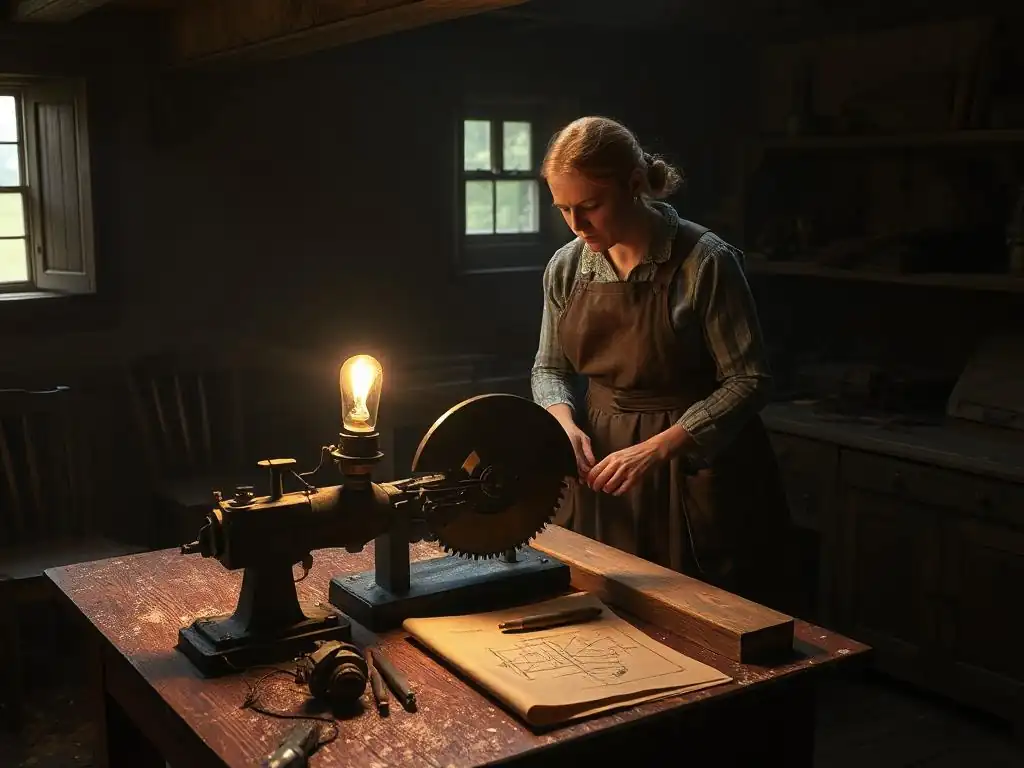
Welcome to WomenInScienceHistory.com, where we unearth the remarkable stories of women who shaped the world of science! Did you know that a Shaker woman played a pivotal role in the evolution of woodworking? Delve into the innovative mind of Tabitha Babbitt and discover how her ingenuity led to the creation of the circular saw, a groundbreaking invention that revolutionized the timber industry. Prepare to be inspired by her story and the lasting impact of Shaker women's contributions to engineering and technology. Continue reading to unravel the details of this fascinating piece of scientific history…
- Introduction: Unveiling the Shaker Circular Saw Innovation
- The Shaker Community and its Emphasis on Innovation
- The Genesis of the Circular Saw: Tabitha Babbitt's Ingenious Solution
- Impact of Babbitt's Circular Saw on Woodworking
- Debunking Myths and Misconceptions about the Circular Saw's Origin
- The Legacy of Tabitha Babbitt: A Symbol of Shaker Ingenuity and Women's Innovation
- Challenges Faced by Women Inventors in the 19th Century
- The Circular Saw Today: A Testament to Babbitt's Ingenuity
- Further Research and Resources on Shaker Inventions and Women in Science
-
Frequently Asked Questions
- How did Tabitha Babbitt's invention impact woodworking?
- Was Tabitha Babbitt's invention patented?
- What were the challenges faced by women scientists during Tabitha Babbitt's time?
- How did the Shaker community's values influence Tabitha Babbitt's approach to innovation?
- What is the significance of highlighting women in science history like Tabitha Babbitt?
- Final Reflection: The Enduring Legacy of Shaker Ingenuity
- Unearth Your Inner Inventor!
Introduction: Unveiling the Shaker Circular Saw Innovation
The Often-Unacknowledged Contributions of Shaker Inventors
The Shaker communities, known for their distinctive religious beliefs and communal lifestyle, were also prolific inventors. Driven by principles of utility, simplicity, and self-sufficiency, they constantly sought to improve tools and processes for daily living and craftsmanship. Their ingenuity led to a remarkable array of practical innovations, many of which subtly integrated into mainstream society without widespread attribution to their Shaker origins.
From the common clothespin, designed to secure laundry more efficiently, to the flat-bottomed broom, which swept floors more thoroughly than its round predecessors, Shaker ingenuity touched countless aspects of 19th-century life. While these inventions significantly streamlined household chores and workshop activities, their creators, bound by communal principles that eschewed personal fame or patenting, often remained anonymous, their contributions quietly woven into the fabric of American technological progress.
Introducing Tabitha Babbitt: A Pioneering Shaker Inventor
Among the many unheralded Shaker innovators, Tabitha Babbitt stands out as a remarkable figure whose ingenuity left an indelible mark on the world of woodworking. Born in 1779, Babbitt was a member of the Shaker community in Harvard, Massachusetts, where she lived a life dedicated to communal values and practical improvements. Her keen observational skills and inventive spirit led her to conceive of a groundbreaking tool that would revolutionize an entire industry.
Tabitha Babbitt is widely credited within Shaker history as the inventor of the circular saw, an innovation that dramatically improved the efficiency of timber processing. Her contribution represents a pivotal moment in the history of Shaker women circular saw innovation, demonstrating how practical needs within a structured community could foster significant technological advancements, even from unexpected sources.
The Shaker Community and its Emphasis on Innovation
Shaker Values and their Influence on Technological Advancement
Shaker philosophy profoundly influenced their approach to invention and craftsmanship. Core values such as "Hands to Work, Hearts to God" emphasized diligence, productivity, and the pursuit of perfection in all earthly endeavors. This ethos translated into a relentless drive to create tools and methods that were not only functional and durable but also aesthetically pleasing and efficient, thereby honoring God through their labor.
Their commitment to self-sufficiency meant that Shaker communities had to produce nearly everything they needed, from food and textiles to furniture and tools. This necessity fostered an environment ripe for innovation, as they continuously sought to improve their processes to reduce labor, save time, and maximize output. Their inventions were pragmatic solutions to real-world problems, designed to serve the community's collective needs rather than individual profit.
Shaker Women's Role in Craftsmanship and Innovation
Unlike the patriarchal society of the 19th century, Shaker communities were structured on principles of gender equality, with women holding significant roles in both spiritual leadership and daily administration. This egalitarian structure meant that women were actively involved in all aspects of communal life, including productive labor, craftsmanship, and even invention. They worked alongside men in fields, workshops, and kitchens, contributing equally to the community's economic well-being.
This unique social framework provided an environment where women's intellectual and practical contributions were not just tolerated but actively encouraged and valued. Shaker women were known for their skill in various crafts, from weaving and tailoring to food preservation and medicinal practices. Tabitha Babbitt's invention of the circular saw is a powerful testament to this environment, showcasing how Shaker women circular saw innovation was a natural outcome of their empowered and productive roles within the community.
The Genesis of the Circular Saw: Tabitha Babbitt's Ingenious Solution
Observing the Inefficiency of Two-Man Pit Saws
Before the advent of the circular saw, the primary method for cutting logs into planks was the arduous process of "pit sawing." This involved two men, one standing above the log and another in a pit below, manipulating a long, two-handled saw in a reciprocating, up-and-down motion. This method was incredibly labor-intensive, slow, and often yielded inconsistent cuts, with a significant amount of wood wasted due to the wide kerf of the saw blade.
Tabitha Babbitt, likely working in or observing the Shaker workshops where timber was processed for furniture and construction, keenly recognized the inefficiencies inherent in this traditional method. She observed the tremendous physical effort required, the slow pace of production, and the limitations of the back-and-forth motion. Her perceptive eye sought a more streamlined and less wasteful approach to this fundamental task.
Babbitt's Inspiration: Adapting the Spinning Wheel's Motion
The spark of Babbitt's genius lay in her ability to draw an analogy from a common tool of her time: the spinning wheel. She observed the continuous, rotary motion of the spinning wheel, which efficiently transformed raw fibers into thread. It occurred to her that if a saw blade could move in a continuous rotary fashion, rather than a reciprocating one, it would cut more efficiently and with less wasted energy.
This conceptual leap was profound. Instead of a blade moving back and forth, cutting only on the downstroke, a circular blade could cut continuously, making each revolution productive. This insight formed the core of her Shaker women circular saw innovation, a conceptual shift from linear to rotational cutting that would revolutionize woodworking.
The First Model: Description and Functionality of Babbitt's Saw
While precise blueprints of Tabitha Babbitt's original circular saw model are not available (as Shakers did not patent their inventions), historical accounts suggest her initial design emerged around 1813. It was likely a relatively small, experimental saw, perhaps hand-cranked or foot-powered, featuring a round metal disc with teeth cut into its perimeter. This prototype would have been used to demonstrate the principle of continuous cutting.
The functionality of Babbitt's saw was simple yet revolutionary: as the circular blade rotated, its teeth continuously engaged with the wood, allowing for a smooth, uninterrupted cut. This direct and efficient action eliminated the wasted motion of the return stroke inherent in pit saws, marking a significant advancement in applied mechanics and setting the stage for larger, mechanized versions of the circular saw.
Impact of Babbitt's Circular Saw on Woodworking
Increased Efficiency and Productivity in Shaker Workshops
The immediate impact of Tabitha Babbitt's circular saw within the Shaker communities was a dramatic increase in efficiency and productivity. The new saw allowed for faster processing of timber into planks and boards, significantly reducing the labor and time required for this fundamental task. For instance, a single circular saw operated by one or two individuals could achieve the output that previously necessitated several pairs of pit sawyers, freeing up valuable labor for other communal activities.
This enhanced productivity directly contributed to the Shakers' renowned craftsmanship and their ability to produce high-quality furniture, wooden wares, and building materials more rapidly. The circular saw's continuous cutting action also resulted in smoother, more consistent cuts, reducing waste and improving the overall quality of their finished products, which were often sold outside the community to generate income.
The Spread of Circular Saw Technology Beyond the Shaker Community
Although the Shakers refrained from patenting their inventions, their innovations were not kept secret. Visitors to Shaker communities often observed their advanced tools and efficient production methods. The practical benefits of the circular saw were undeniable, and its design principles quickly spread beyond the confines of the Shaker villages through observation and adaptation.
While Tabitha Babbitt's invention predates many of the patented circular saws in the United States, its influence on subsequent designs is clear. The concept of a rotating blade for continuous cutting was adopted and refined by others, leading to its eventual widespread adoption in commercial sawmills. This diffusion underscores the profound impact of Shaker women circular saw innovation on the broader industrial landscape.
Revolutionizing Timber Processing: From Hand Tools to Machine Power
Tabitha Babbitt's circular saw marked a critical turning point in timber processing, signaling a shift from purely manual, laborious methods to mechanized power. Her invention laid the groundwork for the modern sawmill, transforming the industry from a slow, physically demanding craft into a more efficient, industrial operation. The circular saw became the centerpiece of sawmills, enabling the rapid production of standardized lumber.
This revolution in timber processing had far-reaching implications for construction, furniture manufacturing, and other wood-dependent industries. Faster and cheaper lumber production fueled urban growth and industrial expansion throughout the 19th and 20th centuries. The simple yet ingenious design of Babbitt's saw was a foundational step in the mechanization of an essential industry, forever changing how wood was cut and utilized.
Debunking Myths and Misconceptions about the Circular Saw's Origin
Addressing Common Misattributions of the Circular Saw Invention
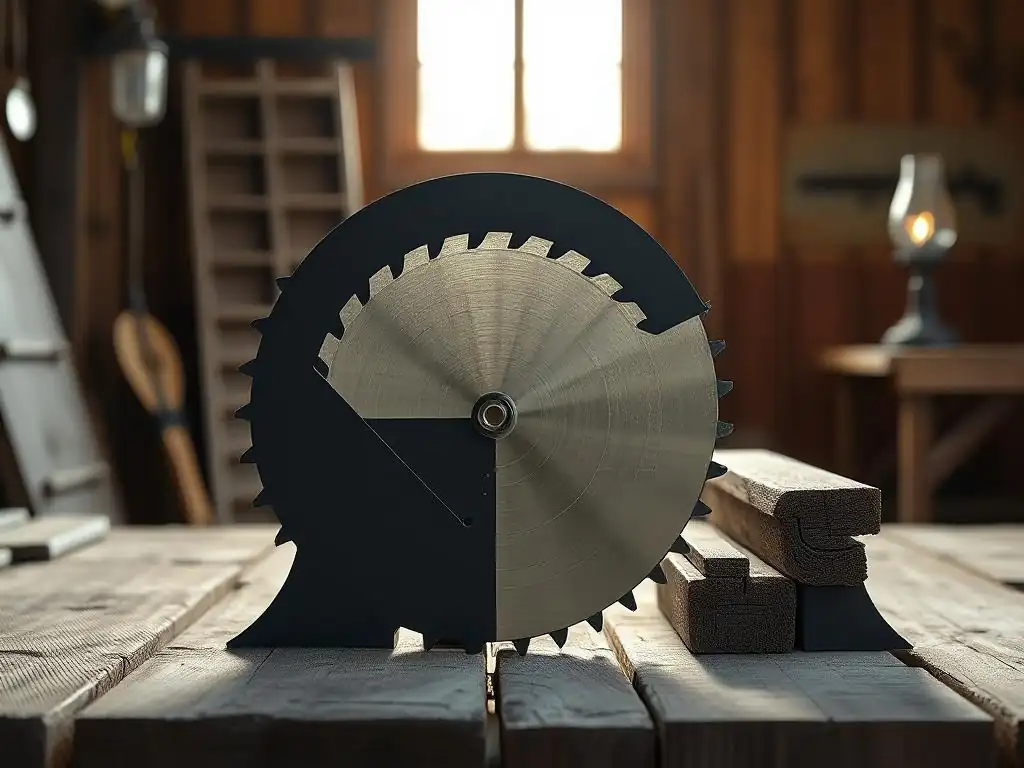
The invention of the circular saw is often mistakenly attributed to several male inventors, primarily due to the historical emphasis on patent records. For instance, Samuel Miller received a British patent for a circular saw in 1777, and Walter Taylor in England developed a circular saw for block-making in the 1790s. In the United States, Benjamin Cummings was granted a patent for a circular saw in 1814. While these individuals certainly contributed to the development and commercialization of the circular saw, their patented designs postdate Tabitha Babbitt's practical application.
These misattributions arise because Shakers, by their communal principles, did not seek individual patents for their inventions. Their innovations, while impactful, were often documented through internal community records or anecdotal accounts rather than formal legal protections. This lack of patent documentation has historically led to the overshadowing of their contributions by those who did file for patents.
Highlighting Tabitha Babbitt's Undisputed Contribution
Despite the existence of earlier patents for similar concepts, historical accounts within the Shaker community and various historical texts strongly support Tabitha Babbitt's independent invention and practical application of the circular saw. Shaker historian Philemon Stewart, for example, documented Babbitt's invention around 1813, noting her observation of the pit saw's inefficiency and her subsequent development of the circular blade. This predates Benjamin Cummings's 1814 U.S. patent and represents an independent conceptual breakthrough.
Babbitt's contribution is distinguished by its practical implementation within a working industrial setting (the Shaker workshops) and its direct influence on improving daily tasks. Her ingenuity lay not just in conceiving the idea but in demonstrating its immediate utility and superior efficiency, solidifying her place as the true pioneer of the practical circular saw in America and a key figure in Shaker women circular saw innovation.
The Importance of Acknowledging Women's Inventions in Historical Records
The case of Tabitha Babbitt underscores a broader issue in the history of science and technology: the frequent omission or misattribution of women's inventions. For centuries, societal norms, limited access to education and formal institutions, and discriminatory patent laws often prevented women from receiving due credit for their ingenuity. Many female inventors, like Babbitt, operated outside conventional systems, making their contributions harder to trace and acknowledge.
Correcting these historical oversights is crucial for a complete and accurate understanding of technological progress. Recognizing women like Babbitt not only gives them the credit they deserve but also inspires future generations by demonstrating that innovation is not exclusive to any gender. It highlights the countless untold stories of female pioneers who, against significant odds, shaped the modern world.
The Legacy of Tabitha Babbitt: A Symbol of Shaker Ingenuity and Women's Innovation
Babbitt's Influence on Subsequent Saw Designs
Tabitha Babbitt's fundamental concept of a continuously rotating blade for cutting wood became the cornerstone for nearly all subsequent saw designs. Her initial innovation, though simple, proved the immense efficiency of rotary motion over reciprocating motion for sawing. This principle was then scaled up and refined by countless engineers and manufacturers, leading to the development of industrial-sized circular saws for sawmills, as well as smaller, more precise machines for various woodworking tasks.
From the massive blades used to fell and process entire trees to the precise table saws in modern workshops and the versatile handheld circular saws used by carpenters, the core idea remains Babbitt's. Her Shaker women circular saw innovation provided the foundational design that has been continuously adapted and improved, demonstrating remarkable foresight and practicality.
Celebrating Women Inventors in Engineering and Technology
Tabitha Babbitt stands as a powerful symbol of women's often-unrecognized contributions to engineering and technology. In an era when formal scientific and engineering fields were largely closed to women, her practical ingenuity allowed her to make a significant mechanical invention. Her story challenges the historical narrative that technological progress was solely driven by men.
By celebrating figures like Babbitt, we highlight the diverse origins of innovation and the fact that brilliant minds exist across all demographics. Her work in a male-dominated field, even if within the unique context of the Shaker community, provides an early example of a woman excelling in mechanical design and problem-solving, paving the way for future generations of female engineers and technologists.
Inspiring Future Generations of Female Innovators
The story of Tabitha Babbitt is more than just a historical anecdote; it is a source of inspiration for future generations, particularly young women considering careers in STEM fields. Her ability to observe a problem, conceive an elegant solution, and implement it effectively, despite the limited recognition of her time, serves as a powerful example of ingenuity and perseverance.
By bringing stories like Babbitt's to the forefront, WomenInScienceHistory.com aims to break down lingering stereotypes about who can be an inventor or an engineer. Her legacy underscores that innovation stems from curiosity, observation, and a desire to improve the world, qualities that are universal and not confined by gender. Recognizing her Shaker women circular saw innovation encourages young minds to pursue their own inventive paths.
Challenges Faced by Women Inventors in the 19th Century
Societal Barriers and Limited Access to Resources
The 19th century presented immense societal barriers for women seeking to engage in invention or scientific pursuits. Prevailing gender roles largely confined women to the domestic sphere, limiting their access to formal education in science, engineering, or mechanics. They were often excluded from workshops, laboratories, and professional networks where ideas were exchanged and refined. Even if a woman had an inventive idea, securing funding, materials, or skilled labor to develop a prototype was incredibly challenging without male sponsorship.
Furthermore, legal frameworks often disadvantaged women. In many places, married women could not legally own property or control their earnings, making it difficult for them to file for patents in their own name or profit independently from their inventions. These systemic obstacles meant that countless women inventors operated in obscurity, their contributions either lost to history or attributed to male relatives.
Overcoming Gender Bias in Science and Engineering
Beyond structural limitations, women inventors faced pervasive gender bias within scientific and engineering communities. Their ideas were often dismissed as frivolous, impractical, or simply beyond a woman's intellectual capacity. Even if an invention was recognized as valuable, it might be trivialized or its creator's role downplayed. This bias contributed to a culture where women's ingenuity was systematically undervalued and underrecorded.
The unique social structure of the Shaker community provided a rare exception to these widespread biases. Within their egalitarian framework, women were encouraged to contribute their talents, including their inventive capacities, without the same societal prejudices. This environment allowed for the emergence of a Shaker women circular saw innovation like Tabitha Babbitt's, which might have been stifled or ignored in the broader patriarchal society.
The Importance of Recognizing the Obstacles Faced by Female Pioneers
Understanding the formidable obstacles faced by women inventors in the 19th century is crucial for a complete and nuanced historical perspective. It highlights not only the ingenuity of individuals like Tabitha Babbitt but also their remarkable resilience and determination in an era that actively discouraged their contributions. Acknowledging these challenges helps us appreciate the extraordinary nature of their achievements.
Moreover, recognizing these historical barriers sheds light on ongoing disparities in STEM fields and informs contemporary efforts to promote diversity and inclusion. By understanding the systemic issues that historically marginalized women in science and engineering, we can better work towards creating an equitable environment where all innovators, regardless of gender, receive the recognition and support they deserve.
The Circular Saw Today: A Testament to Babbitt's Ingenuity
Modern Applications of the Circular Saw
Today, the circular saw is an indispensable tool found in virtually every woodworking shop, construction site, and DIY enthusiast's garage. Its applications are incredibly diverse, ranging from large-scale industrial lumber mills that process entire forests into building materials to precision table saws used for intricate furniture making. Handheld circular saws provide portability for carpenters on job sites, while miter saws offer accurate angle cuts for trim work.
Specialized versions exist for cutting various materials beyond wood, including metal, plastic, and masonry, using different blade types. The ubiquity and versatility of the circular saw in modern industry and craft are a testament to the enduring power of its fundamental design principle, first conceived by Tabitha Babbitt.
The Enduring Impact of a Simple Yet Revolutionary Design
The core principle of the circular saw—a rotating blade with teeth that continuously cuts through material—remains unchanged since Tabitha Babbitt's initial insight. This simple yet revolutionary design transformed timber processing from a laborious, manual task into a highly efficient, mechanized operation. It dramatically increased productivity, reduced waste, and made lumber more accessible and affordable, fueling industrial growth and construction booms.
Babbitt's Shaker women circular saw innovation was more than just a new tool; it was a conceptual breakthrough that laid the groundwork for an entire category of power tools. Its enduring impact on how we process materials speaks volumes about the profound effect a single, well-conceived idea can have on the world.
Acknowledging Babbitt's Contribution to Modern Woodworking Technology
While modern circular saws are far more sophisticated, powered by electricity or gas engines, and equipped with advanced safety features, their fundamental operating principle originates with Tabitha Babbitt. Her unpatented invention, born from practical necessity within the Shaker community, set the trajectory for an entire industry.
It is crucial to acknowledge Babbitt's pioneering role in the history of woodworking technology. Her story reminds us that innovation can come from unexpected places and that the contributions of women, though often overlooked by traditional historical records, are foundational to many of the technologies we rely on today.
Further Research and Resources on Shaker Inventions and Women in Science
Frequently Asked Questions
How did Tabitha Babbitt's invention impact woodworking?
Tabitha Babbitt's circular saw significantly improved efficiency in woodworking. It allowed for faster and more consistent cutting compared to traditional methods, drastically reducing the time needed to process wood.
Was Tabitha Babbitt's invention patented?
No, Tabitha Babbitt's circular saw was not patented. As a Shaker, she believed that inventions should be shared for the common good of the community rather than for personal gain.
What were the challenges faced by women scientists during Tabitha Babbitt's time?
Women scientists faced significant social and professional barriers during that era. They were often excluded from formal education and faced discrimination in a male-dominated scientific community.
How did the Shaker community's values influence Tabitha Babbitt's approach to innovation?
The Shaker community valued simplicity, practicality, and communal benefit. These values likely influenced Tabitha Babbitt to create an invention that was efficient, useful, and intended for the good of all.
What is the significance of highlighting women in science history like Tabitha Babbitt?
Highlighting women in science history provides role models for future generations. It also helps to correct the historical record by acknowledging the often-overlooked contributions of women to scientific advancements.
Final Reflection: The Enduring Legacy of Shaker Ingenuity
The story of Tabitha Babbitt and her circular saw is more than just a historical anecdote; it's a powerful reminder that innovation often arises from unexpected places and from individuals traditionally excluded from the dominant narrative. Today, as we strive for greater inclusivity in STEM fields and recognize the contributions of marginalized voices, Babbitt's ingenuity serves as a potent symbol of untapped potential and the transformative power of diverse perspectives.
This narrative has profoundly influenced how we understand the Shaker community and the role of women within it. It challenges the stereotype of Shakers as merely simple craftspeople, revealing them as innovative thinkers who actively sought to improve their lives and work. Do all your work as though you had a thousand years to live, and as you would if you knew you must die tomorrow.
This Shaker proverb encapsulates the dedication and foresight that drove Babbitt's invention and continues to inspire us to approach our own endeavors with purpose and diligence.
As you reflect on Tabitha Babbitt's contribution, consider how her story resonates with your own life. What seemingly small problems are you uniquely positioned to solve? What innovative solutions can you bring to your community, drawing inspiration from the spirit of Shaker ingenuity? Let Babbitt's legacy encourage you to embrace your own creative potential and leave a lasting impact on the world around you.
Unearth Your Inner Inventor!
Thank you for delving into the inspiring story of Tabitha Babbitt and her groundbreaking invention. Now, it's your turn to harness that spirit of innovation and ingenuity!
Here's how you can take action:
- Embrace hands-on creativity: Dedicate just 30 minutes this week to a DIY project, no matter how small. Channel your inner Tabitha and see what you can create!
- Explore the world of Shaker craftsmanship: Learn about the Shaker community's emphasis on simplicity, functionality, and innovation.
- Share Tabitha's story: Help inspire others by spreading the word about this remarkable woman in science history with your friends and followers.
What small act of creation will you undertake this week to honor Tabitha Babbitt's legacy?