
The Unsung Architects: How Women Quietly Shaped Early Science & Tech Policy

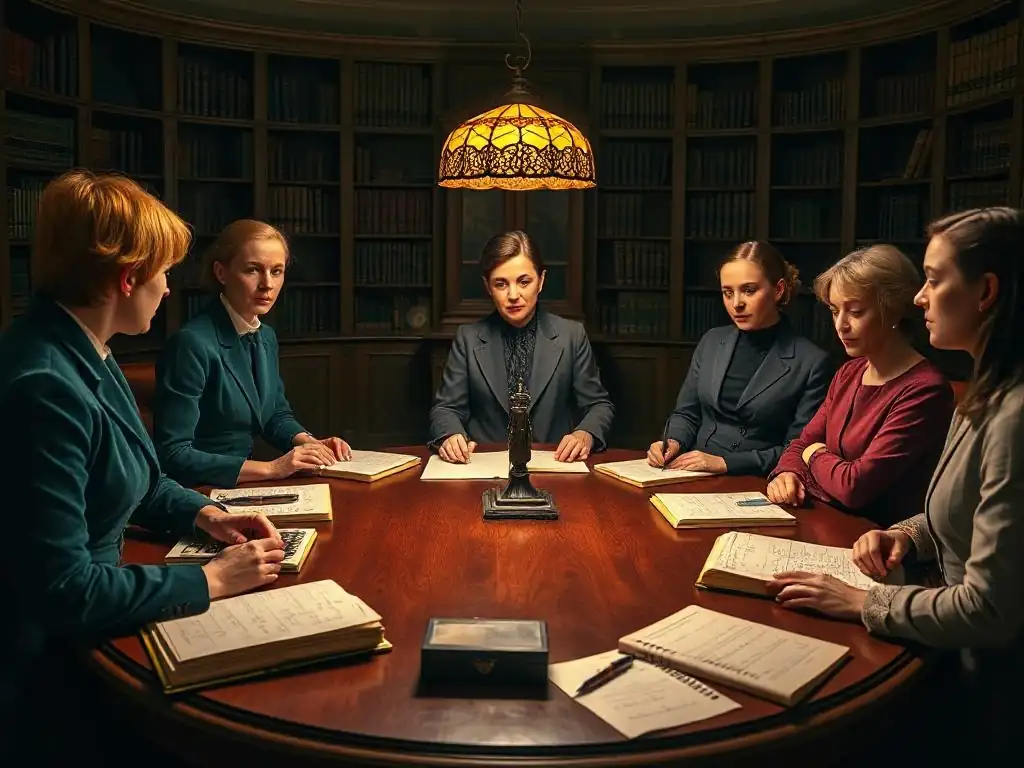
Welcome to WomenInScienceHistory.com, where we uncover the untold stories of remarkable women who defied expectations and revolutionized the scientific landscape. Did you know that women also played a crucial, yet often overlooked, role in the genesis of science and technology policy? Dive into our latest article, " The Unsung Architects: How Women Quietly Shaped Early Science & Tech Policy," to discover how these brilliant minds navigated a complex world and left an indelible mark. Prepare to be inspired by their resilience and ingenuity – their legacy is more profound than you might imagine. Read on to find out how!
- Trailblazing Voices: Women Shaping Early Science & Tech Policy in the US
- Introduction: Unveiling Women's Impact on Early Science and Technology Policy
- Early Pioneers: Female Scientists and Their Impact on Policy Decisions
- Key Areas of Influence: Women Shaping Science and Tech Policy
- Case Studies: Concrete Examples of Women's Policy Impact
- The Legacy Continues: Inspiring Future Generations of Women in STEM Policy
- Conclusion: Amplifying the Voices of Women in Science and Technology Policy
-
Frequently Asked Questions
- What is the primary focus of WomenInScienceHistory.com?
- Why is it important to highlight the contributions of women in early science and tech policy?
- What kinds of challenges did women face in shaping early science and tech policy?
- How does WomenInScienceHistory.com aim to inspire future generations?
- What does the title "The Unsung Architects" imply about women's role in early science and tech policy?
- Final Reflection: Amplifying Unheard Voices
- Ignite Your Inner Pioneer: Champion Women in Science!
Trailblazing Voices: Women Shaping Early Science & Tech Policy in the US
Introduction: Unveiling Women's Impact on Early Science and Technology Policy
Recognizing the Overlooked Role of Women in Shaping Scientific Progress
For too long, the narrative of scientific and technological advancement has predominantly highlighted male figures, often sidelining the foundational contributions of women. In the nascent stages of science and tech policy in the United States, women were not merely peripheral observers but active, albeit often uncredited, architects of progress.
They engaged in rigorous research, tireless advocacy, and community-building efforts that directly informed and influenced critical public health, environmental, and educational policies. Their work, though frequently conducted outside formal power structures, was instrumental in laying the groundwork for many of the regulatory frameworks we benefit from today, demonstrating the significant, if quiet, impact of women shaping early tech policy.
This historical oversight stems from a combination of societal biases and institutional barriers prevalent in the late 19th and early 20th centuries. Women were routinely excluded from universities, professional societies, and government advisory roles, which were largely male preserves. Consequently, their groundbreaking studies and policy recommendations were often channeled through less visible avenues, such as women's clubs, settlement houses, or home economics departments, making their direct influence on legislation less apparent to historical record-keepers focused on formal political processes.
Understanding Why Women's Contributions to Tech Policy are Often Unacknowledged
The reasons for the persistent unacknowledgment of women shaping early tech policy are multifaceted, deeply rooted in the socio-cultural landscape of the time. Women who pursued scientific careers often found themselves relegated to "feminine" domains like home economics, nursing, or public health education, rather than being granted roles in research or policy-making that were considered masculine and authoritative. While these fields were vital for societal well-being and often involved scientific principles, they were frequently devalued compared to engineering or physics, thus diminishing the perceived importance of their scientific and policy contributions.
Furthermore, many women scientists and advocates worked collaboratively or through informal networks, making it difficult to attribute specific policy changes to individual female efforts. Their influence was often exerted indirectly, through public awareness campaigns, data collection that informed male legislators, or by demonstrating practical solutions that later became codified into law.
For instance, while male politicians might have sponsored legislation, the scientific evidence and public demand that propelled it often originated from the meticulous work and persistent lobbying of women's organizations. This "invisible labor" meant that their impact on policy, though profound, lacked the formal recognition often afforded to men in similar, but more visible, roles.
Early Pioneers: Female Scientists and Their Impact on Policy Decisions
Alice Hamilton and Her Contributions to Occupational Health Policy
Alice Hamilton stands as a formidable figure among women shaping early tech policy, particularly in the realm of occupational health. A physician and pioneering researcher, she became a leading expert in industrial toxicology in the early 20th century, a field virtually unexplored at the time. Hamilton meticulously investigated dangerous industrial practices, traveling to factories across the United States to study the effects of hazardous substances like lead, mercury, and carbon monoxide on workers. Her groundbreaking fieldwork involved interviewing workers, observing manufacturing processes, and meticulously documenting symptoms, providing irrefutable evidence of the link between industrial exposure and chronic illness.
Her seminal work, including her 1925 book Industrial Poisons in the United States, provided the scientific foundation for much of the nascent occupational safety legislation. Hamilton's findings directly influenced state and federal governments to enact protective measures, such as ventilation standards, limits on exposure to toxic chemicals, and requirements for safer working conditions. She was appointed to various government committees, including the Medical Advisory Committee of the U.S. Department of Labor, lending her expertise directly to policy formulation and demonstrating how rigorous scientific investigation by women shaping early tech policy could translate into tangible improvements in public well-being.
Ellen Swallow Richards: Advocating for Sanitary Engineering through Public Health Policy
Ellen Swallow Richards, a chemist and the first woman admitted to the Massachusetts Institute of Technology (MIT) in 1873, was a visionary among women shaping early tech policy, particularly in sanitary engineering and public health. Recognizing the critical link between environmental conditions and human health, she applied scientific principles to everyday life, pioneering the field of home economics (then called oekology). Richards conducted extensive research on water quality, food adulteration, and sanitation, demonstrating how microscopic contaminants in water supplies led to widespread illness.
Her advocacy extended beyond the laboratory. Richards played a crucial role in the late 1880s in the Massachusetts State Board of Health's comprehensive survey of the state's inland waters, a pioneering effort that established scientific methods for water quality analysis and led to the first state water quality standards in the nation.
She also championed pure food laws, consumer education, and improved domestic hygiene, influencing the development of school lunch programs and general public health practices. Her work laid essential groundwork for modern public health policies, showcasing how women shaping early tech policy through scientific application and public education could significantly improve societal health outcomes.
Overcoming Barriers: Challenges Faced by Women in Early Science Policy
Despite their profound intellectual contributions and tireless efforts, women shaping early tech policy faced immense systemic barriers that limited their formal recognition and direct influence. Societal norms often dictated that women's primary roles were domestic, and scientific pursuits were seen as unfeminine or intellectually beyond their capacity. This led to widespread discrimination in educational institutions, where women were often denied admission, scholarships, or access to advanced laboratory facilities, even if they demonstrated exceptional talent. For instance, while some institutions like MIT eventually admitted women, others, such as Johns Hopkins, maintained strict gender segregation for decades.
Even when women secured scientific positions, they frequently encountered the "glass ceiling," being relegated to lower-paying, less prestigious roles or denied promotions and leadership opportunities. They were often excluded from male-dominated professional societies and informal networks where scientific discourse and policy decisions were often shaped. This forced many women shaping early tech policy to exert their influence through less direct channels, such as public lecturing, writing for popular audiences, or organizing through women's clubs and advocacy groups, which, while effective, often meant their contributions were not formally acknowledged in the same way as those of their male counterparts.
Key Areas of Influence: Women Shaping Science and Tech Policy
Public Health Initiatives: Women's Advocacy for Improved Sanitation and Food Safety
The late 19th and early 20th centuries saw a dramatic increase in public health awareness, driven significantly by women shaping early tech policy at the grassroots and scientific levels. Recognizing the devastating impact of unsanitary conditions and adulterated food on families, women's organizations and individual female scientists became fervent advocates for reform. Women involved in settlement houses, for example, documented the horrific living conditions in urban slums, providing critical data that informed housing reforms and sanitation policies. They championed initiatives for clean water, proper waste disposal, and safe food handling, often organizing community education campaigns to raise awareness.
The General Federation of Women's Clubs, boasting over a million members by the early 20th century, was a powerful force in lobbying for public health legislation. Their sustained pressure contributed significantly to the passage of landmark legislation like the 1906 Pure Food and Drug Act, which established federal standards for food and drug safety.
This act, a direct result of decades of advocacy by concerned citizens, many of whom were women, mandated truthful labeling and prohibited the sale of harmful products, fundamentally altering the landscape of consumer protection and demonstrating the collective power of women shaping early tech policy through persistent advocacy.
Environmental Regulations: The Role of Women in Promoting Conservation and Resource Management
The early environmental movement also owes a significant debt to women shaping early tech policy through their conservation efforts and advocacy for resource management. While figures like John Muir are widely celebrated, countless women actively worked to protect natural resources and promote sustainable practices.
Women's clubs played a vital role in establishing national parks, preserving forests, and advocating for the protection of wildlife. For instance, the efforts of the Garden Club of America and the National Audubon Society, both with strong female leadership and membership, were instrumental in raising public awareness about deforestation and the decimation of bird populations for fashion.
These women understood that environmental degradation had direct impacts on public health and quality of life. They campaigned for clean air and water long before formal environmental agencies existed, laying the conceptual groundwork for future environmental regulations. Their advocacy for rational resource use and the preservation of natural beauty contributed to the ethos of conservation that would later become enshrined in federal policy, illustrating how women shaping early tech policy extended beyond immediate public health to encompass broader ecological concerns.
Education and Scientific Literacy: Pioneering Women's Efforts to Advance Science Education in Schools
A crucial, yet often overlooked, area where women shaping early tech policy made significant strides was in advancing science education and promoting scientific literacy. Recognizing that informed citizens were essential for a healthy democracy and a progressive society, women educators and reformers championed the inclusion of science in school curricula. At a time when science education for girls was often rudimentary or nonexistent, pioneering women developed innovative teaching methods, authored textbooks, and trained future generations of teachers in scientific principles.
Figures like Anna Botsford Comstock, a leading entomologist and nature educator at Cornell University in the late 19th and early 20th centuries, were instrumental in popularizing nature study in schools. Her work emphasized direct observation and hands-on learning, influencing science pedagogy nationwide.
Women faculty in normal schools (teacher training colleges) also played a critical role, ensuring that future teachers were equipped to teach science effectively. Their efforts not only expanded educational opportunities for all children but also cultivated a more scientifically literate populace, indirectly influencing future policy decisions by creating an informed citizenry capable of understanding and engaging with scientific and technological issues.
Case Studies: Concrete Examples of Women's Policy Impact

The Marine Biological Laboratory Story: How Women Led Scientific Research and Education Initiatives
The Marine Biological Laboratory (MBL) in Woods Hole, Massachusetts, founded in 1888, stands as a remarkable testament to the role of women shaping early tech policy through institutional leadership and scientific collaboration. Unlike many traditional universities of its time, MBL was unusually inclusive, providing women scientists with unparalleled opportunities for research, teaching, and leadership.
From its inception, a significant percentage of its researchers and faculty were women, far exceeding the representation found in most academic institutions. Women like Cornelia Clapp, a zoologist, not only conducted groundbreaking research but also served as influential mentors and held administrative roles, shaping the laboratory's scientific agenda and educational philosophy.
This inclusive environment allowed women to conduct cutting-edge research in fields like embryology, genetics, and marine biology, contributing directly to the body of scientific knowledge that would later inform policy decisions. MBL also served as a model for scientific collaboration and education, demonstrating that gender diversity could foster intellectual excellence and innovation. The laboratory's success, driven in part by the leadership and contributions of its female scientists, showcased an alternative approach to scientific institutions, one where women shaping early tech policy could do so from positions of direct influence within a leading research environment.
Rachel Carson's Fight for Environmental Awareness and Policy Reform
Rachel Carson's monumental work, Silent Spring, published in 1962, represents one of the most impactful instances of women shaping early tech policy in modern history. A marine biologist and writer, Carson meticulously documented the devastating effects of synthetic pesticides, particularly DDT, on the environment and human health. Her book, a meticulously researched and eloquently written exposé, challenged the prevailing notion that chemicals were benign tools for progress and exposed the widespread ecological damage caused by unchecked pesticide use. She synthesized complex scientific data into a compelling narrative that resonated with the public.
Silent Spring became an instant bestseller, selling over two million copies and galvanizing public opinion. It prompted widespread alarm and directly led to a presidential investigation by President John F. Kennedy's Science Advisory Committee, which largely validated Carson's findings. Her advocacy spurred a national conversation about environmental protection and public health, ultimately leading to the nationwide ban on DDT in the United States in 1972 and the eventual creation of the Environmental Protection Agency (EPA). Carson's work unequivocally demonstrates how one woman's scientific rigor and powerful communication could fundamentally reshape environmental policy and public consciousness.
Analyzing the Successes and Challenges of These Early Policy Initiatives
The initiatives championed by these pioneering women shaping early tech policy achieved remarkable successes, though not without significant challenges. On the success side, the work of figures like Alice Hamilton and Ellen Swallow Richards directly led to tangible improvements in public health, such as reduced rates of industrial poisoning and waterborne diseases like typhoid. The Pure Food and Drug Act, heavily influenced by women's advocacy, significantly improved consumer safety.
Rachel Carson's efforts resulted in a paradigm shift in environmental policy, leading to the ban of harmful chemicals and the establishment of dedicated environmental protection agencies. These changes saved countless lives and protected vital ecosystems.
However, the path was fraught with challenges. Women often faced fierce resistance from powerful industrial lobbies and entrenched patriarchal systems that dismissed their scientific findings or undermined their credibility. Their work was frequently underfunded, and they often had to fight for basic recognition. Even after policy changes were enacted, continuous vigilance was required to ensure enforcement and prevent backsliding. The ongoing struggle for gender equality in STEM fields and policy-making roles today underscores that while these early women shaping early tech policy achieved monumental victories, the battle for full inclusion and equitable influence remains.
The Legacy Continues: Inspiring Future Generations of Women in STEM Policy
Lessons Learned from the Early Pioneers of Women Shaping Early Tech Policy
The stories of women shaping early tech policy offer invaluable lessons for contemporary science and technology governance. Firstly, they highlight the indispensable power of meticulous, evidence-based scientific research as the foundation for sound policy. Whether it was Alice Hamilton's detailed studies of industrial toxins or Rachel Carson's exhaustive research on pesticides, rigorous data collection and analysis were crucial to their success. Secondly, their experiences underscore the importance of public education and persistent advocacy. These women understood that scientific knowledge had to be translated into accessible language and that public awareness was a powerful catalyst for legislative change.
Finally, their journeys reveal the resilience required to challenge the status quo. Despite facing systemic discrimination and skepticism, these pioneers persevered, often working collaboratively to amplify their voices. Their strategies—combining scientific expertise with social activism and community engagement—remain highly relevant for women shaping early tech policy today, particularly when addressing complex issues like climate change, artificial intelligence ethics, or global health disparities.
The Importance of Recognizing and Celebrating Women's Contributions
Recognizing and celebrating the historical contributions of women shaping early tech policy is not merely an academic exercise; it is a critical imperative for inspiring future generations. By highlighting these overlooked narratives, we provide powerful role models for young women and girls who might otherwise not see themselves reflected in the traditionally male-dominated fields of science, technology, engineering, and mathematics (STEM), and especially in policy. Understanding that women have always been at the forefront of scientific and technological innovation and policy reform can dismantle persistent stereotypes about gender and aptitude.
Moreover, acknowledging these pioneers corrects an incomplete historical record, fostering a more accurate and inclusive understanding of scientific progress. When young women learn about figures like Ellen Swallow Richards or Rachel Carson, they are empowered to pursue their own scientific interests and to envision themselves as influential leaders in policy-making, knowing that women shaping early tech policy have a rich and impactful lineage. This visibility is crucial for encouraging greater female participation and leadership in STEM fields globally.
Paving the Way for More Inclusive and Equitable Science and Technology Policies
The legacy of women shaping early tech policy provides a roadmap for creating more inclusive and equitable science and technology policies in the future. Their experiences underscore the critical need for diverse perspectives at every stage of policy formulation—from research and development to implementation and oversight. Actively promoting gender diversity in scientific advisory boards, government agencies, and corporate leadership is essential to ensure that policies are comprehensive, address a wider range of societal needs, and avoid unintended biases.
For instance, while progress has been made, women still comprise only about 28% of the STEM workforce in the United States as of 2022, with even fewer in leadership or policy-making roles. This persistent gap highlights the ongoing need for initiatives that support and elevate women in STEM. By learning from the historical ingenuity of women shaping early tech policy, we can better advocate for equitable funding for women-led research, mentorship programs, and policies that dismantle systemic barriers, ensuring that future technological advancements and their governance truly serve all segments of society.
Conclusion: Amplifying the Voices of Women in Science and Technology Policy
A Call to Action: Recognizing the Ongoing Need for Women's Leadership
The historical record unequivocally demonstrates that women shaping early tech policy were not exceptions but essential forces in advancing public health, environmental protection, and scientific literacy. Their foresight, scientific rigor, and unwavering commitment to societal well-being were instrumental in addressing the complex challenges of their time. Today, as humanity confronts new and more intricate technological and scientific dilemmas—from climate change and pandemics to artificial intelligence ethics and cybersecurity—the need for diverse perspectives, particularly those of women, is more critical than ever.
It is a call to action for institutions, governments, and individuals to actively seek out, elevate, and empower women in all facets of science and technology policy. Their unique insights, often shaped by different life experiences and problem-solving approaches, are indispensable for crafting robust, equitable, and effective policies that truly serve the global community. Ignoring this rich pool of talent and perspective would be a profound disservice to future generations, underscoring the ongoing and vital need for women shaping early tech policy at every level.
The Future of Science and Technology Policy: Embracing Inclusivity and Diversity
The future of science and technology policy hinges on its ability to embrace true inclusivity and diversity. The pioneering efforts of women shaping early tech policy laid the foundation for many of the protections and advancements we now take for granted.
Their legacy serves as a powerful reminder that progress is not solely the domain of a select few, but the result of collective intelligence and varied experiences. By actively dismantling barriers, fostering equitable opportunities, and celebrating contributions from all backgrounds, we can create a policy landscape that is more resilient, innovative, and reflective of the diverse society it aims to serve.
This means not only recognizing past contributions but also proactively nurturing the next generation of female leaders in STEM policy. Investing in science education for girls, promoting mentorship, and ensuring fair representation in leadership positions are crucial steps. Ultimately, a truly effective and ethical science and technology policy framework will be one that fully integrates the perspectives and leadership of women, building upon the invaluable groundwork laid by the women shaping early tech policy who quietly, yet profoundly, transformed the world.
Frequently Asked Questions
What is the primary focus of WomenInScienceHistory.com?
The site primarily focuses on celebrating the contributions of women to science throughout history by providing biographies and discussions. It also highlights the challenges women faced in male-dominated fields.
Why is it important to highlight the contributions of women in early science and tech policy?
It's crucial to recognize their influence and ensure a complete historical record. Many women's contributions were overlooked or deliberately minimized in the past.
What kinds of challenges did women face in shaping early science and tech policy?
They often faced discrimination and exclusion from formal roles and recognition. This included being denied access to education and professional opportunities.
How does WomenInScienceHistory.com aim to inspire future generations?
By showcasing the achievements and resilience of female scientists and policymakers. Their stories serve as powerful examples for young women pursuing STEM fields.
What does the title "The Unsung Architects" imply about women's role in early science and tech policy?
It suggests that women played a significant but often unacknowledged role in developing these areas. It aims to bring their contributions to light.
Final Reflection: Amplifying Unheard Voices
The stories we've unearthed, detailing the contributions of women to early science and tech policy, are not simply historical footnotes; they are vital blueprints for a more equitable future. Their struggles and triumphs resonate powerfully today, reminding us that progress demands the active inclusion of diverse perspectives, especially in shaping the technologies that will define our world.
The impact of these unsung architects continues to ripple through the cultural and social landscape, challenging the pervasive narrative of male dominance in STEM. Recognizing their legacy is not just about correcting historical inaccuracies; it's about empowering future generations of women to pursue their passions and contribute their unique talents to the technological frontier. Until lions have their own historians, tales of the hunt will always glorify the hunter.
- African Proverb. This proverb perfectly encapsulates the need to actively seek out and amplify the voices that have been historically marginalized.
Now, consider the implications of these untold stories. How can we actively dismantle the systemic barriers that continue to silence brilliant minds? Let us all commit to becoming active allies, amplifying the voices of women in science and technology, and ensuring that the future of innovation is shaped by a truly representative chorus. The responsibility rests with each of us to build a world where every voice is heard and valued.
Ignite Your Inner Pioneer: Champion Women in Science!
Thank you for exploring the untold stories of women who shaped science and technology policy. Now it's time to translate that inspiration into action and help rewrite history!
Here’s how you can contribute:
- Boldly amplify their voices: Share this article with your network and spark conversations about the vital contributions of women in shaping science and tech policy. This single action can help rewrite the narrative and inspire future generations.
- Delve deeper into the untold: Explore other remarkable stories on WomenInScienceHistory.com, uncovering hidden figures and forgotten achievements.
- Plant a seed of change: Propose featuring a specific woman in science policy you admire on WomenInScienceHistory.com. Your suggestion could help us highlight another unsung hero!
What small, concrete step will you take today to ensure these pioneering women receive the recognition they deserve?