
The Physics of Sound: Were 18th Century Women Listening Differently?

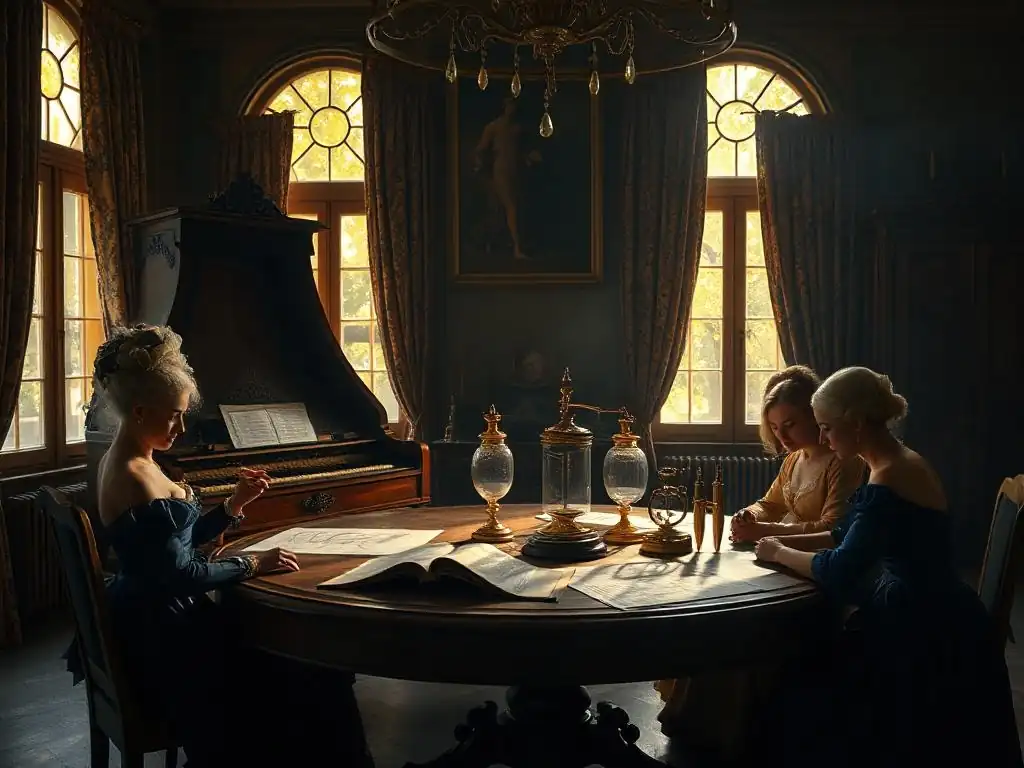
Welcome to WomenInScienceHistory.com!
Dive into the often-unheard stories of brilliant minds and groundbreaking discoveries. Ever wondered how societal norms shaped scientific pursuits? Our exploration into the world of 18th century women physics begins here, challenging assumptions and uncovering fascinating perspectives. Were their contributions simply overlooked, or were they approaching the physics of sound with a unique, insightful ear? Join us as we listen closely to the echoes of the past and uncover the hidden harmonies of women in science.
- Introduction: 18th Century Women in Physics and the Perception of Sound
- The Physics of Sound in the 18th Century: A Scientific Perspective
- Gender and Sensory Perception: Exploring Potential Differences in Hearing
- 18th Century Women's Engagement with Sound: Music, Nature, and Society
- Challenging the Narrative: Did 18th Century Women Experience Sound Differently?
- Implications and Legacy: 18th Century Women Physics and Our Understanding of Sound
- Conclusion: Rethinking 18th Century Women's Auditory World
-
Frequently Asked Questions
- What were some of the biggest obstacles faced by 18th-century women interested in physics?
- Did any 18th-century women make notable contributions to the field of physics, specifically related to sound?
- How did the prevailing social attitudes of the 18th century impact the recognition of women's scientific work?
- What kind of resources or support networks, if any, were available to women interested in pursuing physics in the 18th century?
- Why is it important to study the contributions of women in science, particularly in historical periods like the 18th century?
- Final Reflection: Echoes of Enlightenment, Resonances of Today
- Unveil Your Auditory World: Listen Like a Scientist!
Introduction: 18th Century Women in Physics and the Perception of Sound
Women's Role in 18th Century Scientific Thought: A Brief Overview
In the 18th century, formal scientific institutions, such as universities and academies, were largely closed to women. Despite these significant societal barriers, many women found alternative avenues for intellectual engagement and scientific discourse. Salons, private studies, and extensive correspondence networks became crucial spaces where women, often from aristocratic or wealthy bourgeois backgrounds, could participate in the intellectual life of the Enlightenment. Figures like Émilie du Châtelet, though primarily known for her work on Newton's Principia and her contributions to mathematics and philosophy, exemplify the intellectual prowess of some 18th-century women who actively engaged with the natural sciences.
While direct participation in the formal study of the physics of sound or other branches of 18th century physics was rare for women, their indirect influence and engagement were more widespread than often acknowledged. Some women, like Laura Bassi in Bologna, achieved remarkable academic positions, becoming professors of physics and natural philosophy, lecturing and conducting experiments.
Though Bassi was an anomaly, her existence proves that intellectual capacity and scientific interest were not exclusive to men. The broader intellectual climate of the Enlightenment, which emphasized reason and empirical observation, undoubtedly touched the lives of many educated women, shaping their understanding of the natural world, including the phenomena of sound.
The Emerging Field of Acoustics in the 18th Century
The 18th century marked a pivotal period for the study of acoustics, transitioning from philosophical speculation to a more rigorous, mathematical, and experimental science. Natural philosophers of the era were increasingly interested in understanding the fundamental nature of sound: Was it a wave or a particle? How did it travel through different media? What governed its pitch, intensity, and timbre? This period saw a concerted effort to apply Newtonian mechanics and calculus to the study of vibrating bodies and the propagation of sound, laying the groundwork for modern acoustics.
The burgeoning interest in music, particularly the development of new musical instruments and the refinement of orchestral performance, also fueled scientific inquiry into sound. Questions about harmony, resonance, and the mechanics of sound production were not merely aesthetic but also deeply scientific. This interdisciplinary curiosity meant that the physics of sound was not confined to academic circles but permeated broader intellectual and artistic discussions, making it a subject of fascination for a diverse audience, including many educated 18th century women who were immersed in musical culture.
The Physics of Sound in the 18th Century: A Scientific Perspective
Understanding Sound Waves: Theories and Experiments of the Time
By the 18th century, the wave theory of sound, largely advanced by Christiaan Huygens in the late 17th century, was gaining significant traction over earlier corpuscular theories. Scientists began to understand sound as a propagation of vibrations through a medium, typically air, though water and solids were also considered. Experiments were often rudimentary but insightful, involving observations of vibrating strings, organ pipes, and bells to study phenomena like pitch, resonance, and the generation of overtones.
Attempts to measure the speed of sound were also refined during this period. While Isaac Newton had made early theoretical calculations in his Principia Mathematica (1687), his theoretical speed was approximately 968 feet per second, significantly lower than observed values.
Subsequent experiments, notably by scientists like William Derham in the early 18th century, who used observations of cannon fire, provided more accurate empirical values closer to 1100 feet per second. Leonhard Euler, later in the century, further developed mathematical descriptions of sound propagation, treating sound as a pressure wave in a fluid medium, which significantly advanced the theoretical understanding of the physics of sound.
Key Figures in 18th Century Acoustics: Euler, Sauveur, Chladni
Leonhard Euler stands as a titan in 18th-century physics and mathematics, profoundly influencing the field of acoustics. His work on the wave equation for vibrating strings and air columns provided the essential mathematical framework for understanding musical harmony and the physics of sound. In his Tentamen novae theoriae musicae (1739) and later works, Euler meticulously applied calculus to describe the behavior of sound waves, laying the analytical foundation for future acoustic research. His contributions were fundamental to treating sound as a quantifiable physical phenomenon.
Joseph Sauveur, a French mathematician, though active in the late 17th and early 18th centuries, is often credited with coining the term "acoustics" around 1701 and systematically studying harmonics and overtones. His precise measurements of fundamental frequencies and their higher partials were groundbreaking.
Later in the century, Ernst Chladni, a German physicist and musician, revolutionized the empirical study of sound with his "Chladni figures" in the 1780s. By sprinkling sand on vibrating metal plates, he visually demonstrated nodal patterns, making the abstract concept of sound waves tangible and providing compelling evidence for the wave theory of sound, significantly advancing the empirical understanding of 18th century physics of sound.
Limitations of 18th Century Acoustic Science
Despite the significant strides made, 18th-century acoustic science faced considerable limitations, primarily due to the rudimentary nature of available instrumentation and experimental techniques. Accurate measurement of sound properties like intensity and timbre proved challenging without sophisticated recording devices or precise frequency analyzers. Experiments often relied on human perception and subjective interpretation, which, while valuable for qualitative observation, lacked the precision required for comprehensive quantitative analysis.
Conceptually, the full complexity of sound as a three-dimensional pressure wave, including phenomena like diffraction, interference, and the intricacies of sound absorption, was still largely unexplored. While the wave theory gained acceptance, its nuances and applications to complex environments were yet to be fully understood. This meant that while the basic physics of sound was being deciphered, the nuanced understanding we possess today, particularly regarding psychoacoustics and the interaction of sound with complex structures, was far beyond the reach of 18th-century science, leaving room for a wide range of subjective experiences.
Gender and Sensory Perception: Exploring Potential Differences in Hearing
In the 18th century, sensory experiences, including hearing, were not perceived as purely physiological phenomena but were heavily influenced by prevailing social norms, cultural expectations, and gender roles. Society often dictated how individuals, particularly women, were expected to perceive and react to their environment. For instance, women were frequently associated with heightened emotional sensitivity and delicate constitutions, which extended to their sensory interpretations. This societal framing could lead to a perceived difference in how 18th century women processed and responded to auditory stimuli, emphasizing their supposed "finer" sensibilities.
This social construction meant that women were often encouraged to cultivate an acute awareness of subtle social cues, the nuances of conversational tones, and the intricacies of musical performance within domestic or salon settings. While men might have been culturally primed to focus on sounds related to public life, commerce, or warfare, 18th-century women were often expected to be attuned to the more refined or intimate soundscapes of their immediate social sphere. This cultural conditioning, rather than any inherent biological difference, likely shaped what sounds were prioritized, noticed, and interpreted within their daily lives.
Anatomical and Physiological Considerations: Theories of Female "Delicacy" and Nervous Sensitivity
18th-century medical and philosophical discourse often propagated theories about inherent physiological differences between the sexes, particularly emphasizing female "delicacy" and heightened nervous sensitivity. Philosophers like Jean-Jacques Rousseau, for example, articulated views that women were naturally more impressionable and sensitive, physically and emotionally, than men. These theories, though lacking empirical scientific basis by modern standards, suggested that women's nervous systems were finer and more reactive, making them theoretically more susceptible to sensory input, including the effects of sound.
These pervasive beliefs about female physiology influenced how 18th century women's experiences, including their auditory perceptions, were understood and discussed. It was often assumed that women might experience loud noises more intensely or react more acutely to certain auditory stimuli due to their supposed "delicate nerves." While these ideas largely served to justify existing social hierarchies and gender roles rather than accurately describing biological reality, they undeniably shaped the narrative around female sensory perception and the expectations placed upon 18th century women, even in relation to the physics of sound and its impact.
The distinct social roles prescribed for 18th century women significantly influenced the auditory environments they inhabited and the sounds they encountered daily. Women, particularly those of the gentry and aristocracy, spent a considerable amount of time in domestic spaces—drawing rooms, parlors, and private gardens. Here, their soundscapes were dominated by the sounds of household management, the chatter of children, the rustle of silks, the clinking of teacups, and the melodies of private musical performances. Their public sphere exposure was often more constrained, influencing the range and type of sounds they would typically experience.
In contrast, men's social roles often led them to different auditory environments: bustling marketplaces, boisterous taverns, political assemblies, scientific lectures, or even battlefields. These distinct exposures meant that men and 18th century women often navigated vastly different "soundscapes," leading to varied habits of listening, different sensitivities to specific frequencies or volumes, and distinct interpretations of common sounds. While the fundamental physics of sound remained constant, the social context undoubtedly shaped how those sounds were perceived, attended to, and given meaning by individuals based on their gendered experiences.
18th Century Women's Engagement with Sound: Music, Nature, and Society
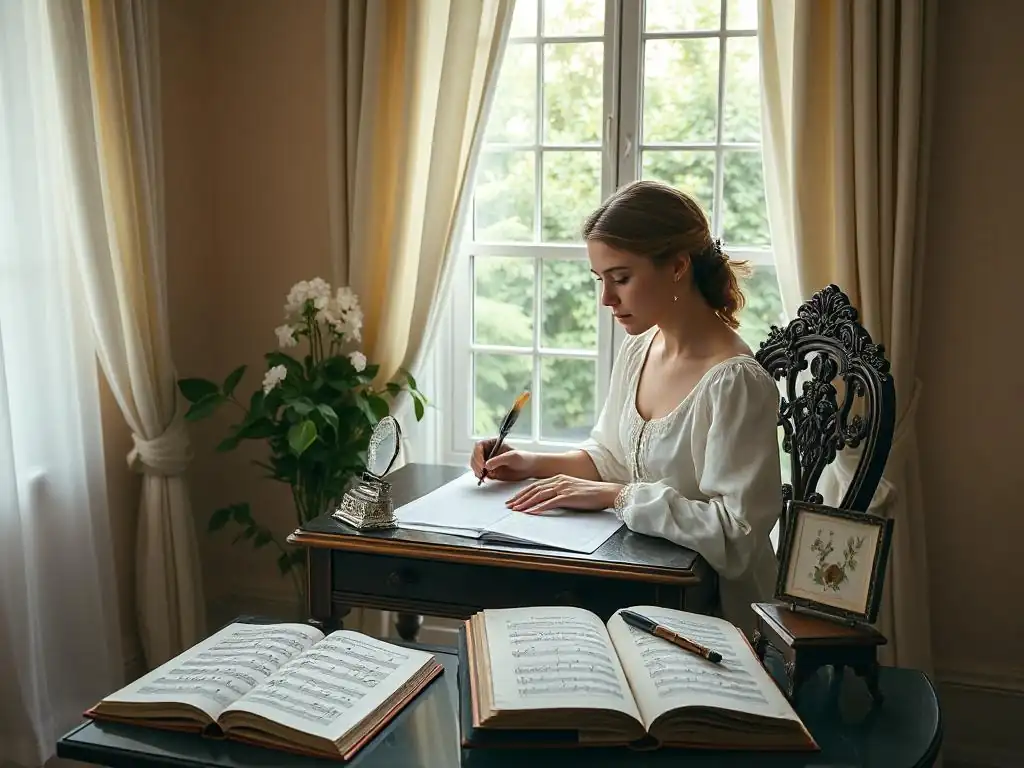
Women's Participation in Musical Culture: Performance and Patronage
18th-century women played an exceptionally prominent role in musical culture, both as performers and patrons. It was common, particularly among the upper and middle classes, for young women to receive extensive training in music, excelling in instruments like the harpsichord, fortepiano, and guitar, as well as in singing.
Private musical performances in salons were a cornerstone of social life, where women often showcased their talents, contributing significantly to the auditory landscape of these gatherings. Maria Anna Mozart, Wolfgang Amadeus Mozart's older sister, known as Nannerl, was a renowned keyboard prodigy and composer in her own right, though her career was curtailed by societal expectations.
Beyond performance, wealthy 18th century women frequently acted as crucial patrons of music. They hosted musical soirées, commissioned works from composers, and financially supported musicians, thereby directly influencing the development and dissemination of musical forms. This deep and active engagement with music meant that many 18th century women possessed a sophisticated understanding of musical aesthetics and, by extension, an intuitive grasp of the physics of sound as manifested in harmony, rhythm, and timbre. Their lives were intimately interwoven with structured sound, fostering a unique auditory sensibility.
Soundscapes of the 18th Century: Urban and Rural Environments
The 18th century presented vastly different soundscapes depending on whether one resided in an urban center or a rural area, and 18th century women experienced both. Major cities like London, Paris, or Vienna were cacophonous hubs characterized by the constant din of horse-drawn carriages, the cries of street vendors announcing their wares ("Hear ye, hear ye! "), the ringing of church bells marking the hours, and the sounds emanating from artisan workshops such as blacksmiths, coopers, and weavers. Public announcements and the general murmur of crowds added to the urban auditory tapestry.
Conversely, rural environments offered a soundscape dominated by the sounds of nature: birdsong, the rustling of leaves, the flow of rivers, and the sounds of agricultural work like plowing and harvesting. Human-generated noise was generally much lower, leading to a more tranquil and, at times, starkly silent experience compared to city life. The specific soundscape a woman inhabited, whether the bustling streets of a capital or the quiet fields of a country estate, profoundly shaped her daily auditory experience and what sounds she perceived as normal, noteworthy, or intrusive.
Sound was an indispensable element of 18th-century social communication, extending far beyond mere spoken words. The subtle nuances of voice — tone, inflection, volume — were crucial in conveying social status, emotional states, and adherence to etiquette. In social gatherings, 18th century women, often central to navigating complex social hierarchies, would have been acutely attuned to non-verbal auditory cues, such as the rustle of a silk gown, the clink of porcelain teacups, or the delicate sound of a fan opening and closing, all of which conveyed unspoken messages within polite society.
Furthermore, sound played a vital role in the numerous rituals and ceremonies that structured 18th-century life. Church bells signaled religious observances and civic events, while celebratory fanfares accompanied royal processions and public festivals. The specific sounds associated with courtly rituals, from the formal pronouncements of a monarch to the hushed murmurs of courtiers, created distinct auditory backdrops that conveyed power and tradition. As active participants and astute observers, 18th century women would have had their auditory experiences deeply shaped by these structured sound events, which often carried profound social, religious, or political meaning.
Challenging the Narrative: Did 18th Century Women Experience Sound Differently?
Examining Primary Sources: Letters, Diaries, and Scientific Writings
To explore whether 18th century women experienced sound differently, historians often turn to primary sources such as personal letters, diaries, and, where available, scientific writings. These documents can offer invaluable, albeit often anecdotal, insights into individual perceptions of sound. For instance, a woman's diary might detail her exquisite pleasure at a musical concert, her irritation at the clamor of street vendors, or her appreciation for the quietude of a rural setting. Such accounts provide glimpses into their subjective auditory worlds, highlighting what sounds were significant to them.
However, the challenge in using these sources lies in their inherent subjectivity and lack of systematic recording. Personal accounts are not designed to provide objective data on sensory perception or the physics of sound. Furthermore, while some 18th century women, like Laura Bassi, did engage with physics, their formal scientific writings rarely delve into their personal, subjective experience of sound. The available evidence often focuses on intellectual engagement with scientific concepts or social observations, rather than detailed introspections on physiological hearing differences among 18th century women physics enthusiasts.
Reconstructing the Auditory World of 18th Century Women
Historians employ various methodologies to reconstruct the auditory world, or "soundscape," of the 18th century, which helps contextualize the sounds 18th century women would have encountered. This involves drawing on diverse sources: legal records detailing noise complaints, literary descriptions of urban and rural environments, musical scores indicating instrumentation and performance practices, and architectural plans that suggest how sound might have propagated within buildings. By piecing together these fragments, scholars can infer the presence and prevalence of certain sounds, from the clatter of carriages on cobblestones to the hushed conversations in a drawing-room.
Despite these efforts, reconstructing the subjective experience of these sounds remains a formidable challenge. While we can deduce that an 18th-century woman would have heard church bells, it is far more difficult to ascertain whether she found them comforting, monotonous, or irritating. The nuances of individual perception – how different frequencies were processed, how loudness was interpreted, or what emotional responses sounds evoked – are notoriously difficult to retrieve from historical records. This limitation underscores the difficulty in definitively answering whether 18th century women "listened differently" in a truly physiological or subjective sense.
Addressing the Limitations of Historical Evidence: The Problem of Subjectivity
The central question of whether 18th century women experienced sound differently is inherently challenging due to the pervasive problem of subjectivity in historical evidence. While the objective physics of sound dictates how sound waves propagate and interact with the ear, the perception and interpretation of those sounds are deeply individual and influenced by numerous factors, including cultural background, personal biases, and attention. Historical documents rarely provide the kind of detailed, introspective accounts needed to definitively prove or disprove subtle physiological differences in auditory perception between groups.
Therefore, while social roles, cultural expectations, and gendered education undoubtedly shaped how 18th century women engaged with, interpreted, and responded to sound, there is no conclusive historical or scientific evidence to suggest a fundamental biological difference in their auditory apparatus compared to men of the same period. The narrative of "delicate" female nerves, while prevalent in the 18th century, was a social construct rather than a physiological reality. The question is thus largely one of experience and cultural conditioning rather than inherent biological variation in the basic physics of sound perception.
Implications and Legacy: 18th Century Women Physics and Our Understanding of Sound
The Significance of Studying Gender and Sensory Perception in History
Studying gender and sensory perception in history is profoundly significant because it moves beyond a purely technical or biographical account of scientific progress to incorporate crucial social, cultural, and gender dimensions. This approach highlights how scientific inquiry, including the understanding of the physics of sound, is not conducted in a vacuum but is deeply intertwined with prevailing societal beliefs, norms, and power structures. It reveals how ideas about gender influenced who could participate in scientific discourse and how phenomena were interpreted.
Furthermore, by examining historical perceptions, we gain a critical lens through which to scrutinize our own contemporary assumptions about sensory experience and gender. It demonstrates how categories like "male" and "female" have been historically constructed and how these constructions shaped not only social roles but also scientific observations and interpretations, even in seemingly objective fields like the physics of sound. This interdisciplinary inquiry enriches our understanding of both history and the human experience.
Connecting 18th Century Insights to Modern Acoustic Research
While 18th-century acoustic science was rudimentary by today's standards, its insights and limitations still resonate with modern acoustic research. Understanding the historical soundscape, for instance, provides valuable context for urban planning, architectural acoustics, and even the preservation of historical sound environments. Knowing what sounds were prevalent and how they were perceived by 18th century women and men helps us appreciate the evolution of noise pollution, the design of concert halls, and the impact of sound on daily life across centuries.
Moreover, the historical exclusion of 18th century women from formal physics, including acoustics, underscores the enduring importance of diverse perspectives in scientific fields. Modern acoustic research increasingly recognizes the multifaceted nature of sound perception, incorporating insights from psychology, sociology, and cultural studies. The historical narrative of women's engagement, though often indirect, highlights the value of considering how social factors influence sensory experience, a concept increasingly relevant in contemporary studies of sound and human well-being.
Inspiring Future Generations: Women in Science and the Pursuit of Knowledge
By exploring the complex relationship of 18th century women with scientific ideas, even in areas like the physics of sound where their direct, recognized contributions were limited, we illuminate their intellectual curiosity, resilience, and often overlooked engagement with the world of natural philosophy. This narrative challenges the historical invisibility of women in science, demonstrating that their presence and intellectual contributions, however constrained, were real and meaningful. It counters the simplistic notion that women were absent from scientific thought.
Ultimately, highlighting the intellectual journeys of 18th century women, even when their roles in formal physics were restricted, serves to inspire contemporary and future generations of women in STEM fields. It reinforces the message that the pursuit of knowledge is a universal human endeavor, transcending historical barriers and societal expectations. By acknowledging their struggles and their subtle contributions, we empower new generations of women to pursue their scientific passions, ensuring that their voices and discoveries in the physics of sound, and all fields of science, are heard and celebrated.
Conclusion: Rethinking 18th Century Women's Auditory World
Frequently Asked Questions
What were some of the biggest obstacles faced by 18th-century women interested in physics?
Women faced significant societal barriers and lack of access to formal education and scientific institutions, hindering their opportunities to contribute to physics. They were often excluded from scientific discourse and considered intellectually inferior.
While less documented than their male counterparts, some women participated in scientific experiments and philosophical discussions related to sound, often within privileged social circles. Further research is needed to fully uncover their contributions.
Prevailing patriarchal attitudes often attributed scientific discoveries and insights to male collaborators or family members, overshadowing the contributions of women. Their work was frequently undervalued or dismissed due to gender biases.
What kind of resources or support networks, if any, were available to women interested in pursuing physics in the 18th century?
Limited resources existed, but some women benefited from private tutoring, access to family libraries, or connections with enlightened male relatives or mentors. These were exceptions rather than the norm.
Why is it important to study the contributions of women in science, particularly in historical periods like the 18th century?
Understanding their struggles and achievements helps correct historical narratives and inspire future generations. It also reveals the systemic biases that historically marginalized women in STEM fields.
Final Reflection: Echoes of Enlightenment, Resonances of Today
The exploration of sound physics and its potential impact on the listening experiences of 18th-century women reveals more than just historical acoustics; it illuminates the subtle yet powerful ways societal structures can shape even our most fundamental sensory perceptions. Understanding how scientific knowledge, or the lack thereof, intersected with gendered expectations offers a crucial lens through which to examine contemporary biases and inequalities.
The implications of this historical investigation resonate deeply within our current cultural landscape. It reminds us that knowledge, access, and even the way we perceive the world are not neutral, but are often filtered through the lens of power and privilege. The mind is not a vessel to be filled, but a fire to be kindled.
- Plutarch. This quote encapsulates the spirit of inquiry that should drive us to question the assumptions that underpin our understanding of the world, particularly when considering the experiences of marginalized voices.
As we reflect on the physics of sound and its potential influence on 18th-century women, let us also consider the echoes of these historical inequalities in our own lives. What biases might be shaping your perceptions? What voices might you be missing? Let the pursuit of knowledge be a journey of empathy and understanding, allowing us to create a more equitable and resonant world for all.
Unveil Your Auditory World: Listen Like a Scientist!
Thank you for exploring the fascinating intersection of sound, physics, and 18th-century women's lives. Now that you’ve gained a new appreciation for the science behind listening, it's time to put that knowledge into action and deepen your connection with the world of sound.
- Conduct your own sound experiment: Record different sounds around you and analyze their frequencies using a spectrum analyzer app on your phone. Can you identify how the environment shapes the sounds? This is a primary way to engage directly with the article's content.
- Share this article with friends who might be interested in the history of acoustics and women in science, sparking discussions about the impact of gender on scientific understanding.
- Explore the acoustic properties of a familiar space, like your living room or a park. Change one element, like adding a rug or opening a window, and note how the sound changes.
What new sounds will you discover by listening like a scientist?