
Early Data Processing: The Female Workforce Behind the Dawn of the Information Revolution

Welcome to WomenInScienceHistory.com!
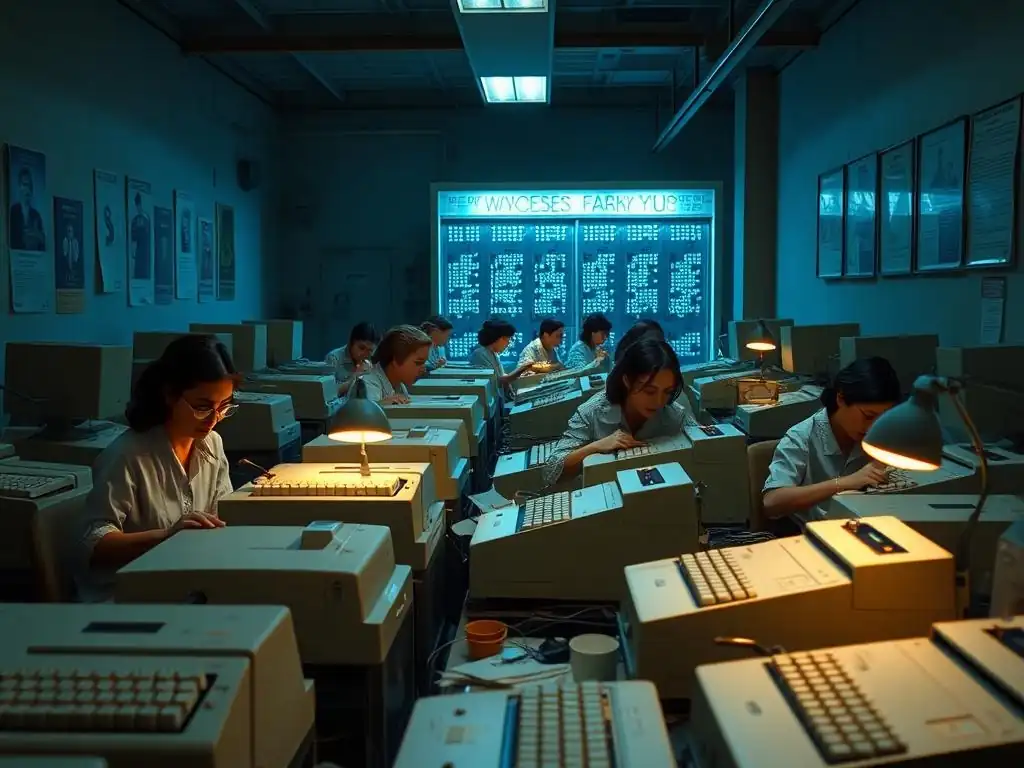
Did you know that the dawn of the Information Revolution wasn't solely a story of circuits and code? Delve into the fascinating, often untold, story of Women in Data Processing, and uncover the crucial role these unsung heroines played in shaping the digital landscape. Their contributions were essential, yet frequently overlooked. Prepare to be amazed by their ingenuity and resilience as we explore their pioneering work and the societal barriers they overcame. Intrigued? Keep reading to discover how these women powered the early days of computer science and laid the foundation for the technology we use today.
- Introduction: Recognizing the Unsung Heroines of Early Computing
- The Pre-Digital Era: Women and the Rise of Mechanical Computation
- The Dawn of Electronic Data Processing: Opportunities and Challenges for Women
- Pioneering Women in Data Processing: Case Studies
- The Social and Cultural Context: Gender Roles in Early Computing
- The Legacy of Women in Early Data Processing: Shaping the Future of Technology
- Conclusion: Acknowledging and Honoring the Female Architects of the Information Age
-
Frequently Asked Questions
- What role did women play in early data processing?
- Why were women often hired for data processing roles during the early stages?
- What types of tasks did women typically perform in data processing?
- What challenges did women face in the field of data processing?
- How does "WomenInScienceHistory.com" address the history of women in data processing?
- Final Reflection: Honoring the Unsung Architects
- Unveil the Hidden Stories: Become a Data Pioneer!
Introduction: Recognizing the Unsung Heroines of Early Computing
Highlighting the Pivotal Role of Women in Data Processing
The genesis of the information revolution, particularly in its nascent stages of data processing, owes an immeasurable debt to a workforce often relegated to the footnotes of history: women. From the manual calculation "human computers" of the pre-digital age to the pioneering programmers of the first electronic machines, women were indispensable to the systematic organization, analysis, and interpretation of vast datasets. Their meticulous work, precision, and innovative problem-solving skills were not merely supplementary but foundational, shaping the very architecture of early computational systems and laying the groundwork for modern data science.
Without the foundational contributions of these women in data processing, the rapid acceleration of scientific discovery, military strategizing, and commercial efficiency during the mid-20th century would have been significantly hampered. They were the silent engines of progress, transforming raw information into actionable insights and demonstrating an early aptitude for logical thinking and complex systems management that was crucial for the emerging field of computing.
The Overlooked History of Female Data Processing Pioneers
Despite their critical involvement, the narratives surrounding the early days of computing and data processing frequently omit or downplay the contributions of women. Historical accounts often focus on the male engineers and inventors of hardware, overshadowing the women who operated, programmed, and debugged these complex machines. This oversight has led to a significant gap in our understanding of how the information age truly began, perpetuating a skewed perception of the field's origins.
Unearthing and celebrating the stories of these female data processing pioneers is not just an act of historical correction; it is essential for inspiring future generations and providing a more accurate, inclusive picture of scientific and technological advancement. Their experiences highlight the systemic barriers they faced and the sheer determination required to excel in a field that was simultaneously groundbreaking and culturally resistant to recognizing their intellectual prowess.
The Pre-Digital Era: Women and the Rise of Mechanical Computation
Women as "Computers": Performing Complex Calculations Manually
Before the advent of electronic computers, the term "computer" referred to a person, predominantly a woman, who performed complex calculations manually. These "human computers" were crucial for scientific, engineering, and military endeavors that required processing vast amounts of numerical data. For instance, at the Harvard College Observatory in the late 19th and early 20th centuries, women like Henrietta Leavitt and Annie Jump Cannon meticulously analyzed photographic plates, cataloging stars and deriving critical astronomical data. Their work, though manual, was an early form of data processing, involving systematic classification and quantitative analysis.
During World War II, the demand for rapid and accurate calculations skyrocketed, particularly for ballistics trajectories and aerodynamic data. The National Advisory Committee for Aeronautics (NACA), the predecessor to NASA, employed hundreds of women as human computers at centers like Langley Memorial Aeronautical Laboratory. These "calculators" processed thousands of equations daily, ensuring the accuracy of flight data for aircraft design, a monumental task that was essential to the war effort and significantly advanced the field of aeronautics.
Early Machines and the Division of Labor: Women's Expertise with Tabulating Equipment
The introduction of mechanical tabulating machines, such as those developed by Herman Hollerith for the 1890 U.S. Census, marked a pivotal shift towards automated data processing. These machines used punch cards to record and process information, dramatically speeding up tasks that were once done by hand. Women were primarily employed to operate this new technology, becoming skilled keypunch operators and tabulating machine specialists. Their role involved accurately transcribing data onto punch cards and then running these cards through sorting and tabulating machines to generate reports.
This division of labor saw women handling the intricate, repetitive, and precise work of data input and machine operation, leveraging their dexterity and attention to detail. Companies like IBM (International Business Machines) heavily recruited women for these roles in their service bureaus and corporate offices throughout the 1930s and 1940s. The proficiency of these women in data processing using mechanical equipment was instrumental in the growth of large-scale business operations, government statistics, and scientific research.
The Impact of World War II on Women's Involvement in Data Analysis
World War II acted as a powerful catalyst for women's increased involvement in data analysis and computation. With men departing for military service, women stepped into critical roles across various sectors, including those requiring advanced computational skills. The military's urgent need for rapid data processing for cryptography, logistics, and ballistics led to the establishment of specialized computational units largely staffed by women. For example, at the University of Pennsylvania's Moore School of Electrical Engineering, where the ENIAC was later developed, women were employed by the U.S. Army's Ballistic Research Laboratory to calculate firing tables.
These women, often with backgrounds in mathematics or physics, performed complex differential equations by hand and with mechanical calculators, sometimes working around the clock. Their contributions were vital to military operations, providing crucial data that guided strategic decisions and improved the accuracy of artillery. This wartime necessity not only expanded opportunities for women in data processing but also laid a direct pathway for their transition into the emerging field of electronic computing.
The Dawn of Electronic Data Processing: Opportunities and Challenges for Women
ENIAC Programmers: The First Generation of Female Computer Programmers
The Electronic Numerical Integrator and Computer (ENIAC), unveiled in 1946, is widely recognized as the world's first general-purpose electronic digital computer. What is less known is that its initial programming team consisted of six remarkable women: Kathleen Antonelli, Jean Bartik, Betty Holberton, Marlyn Meltzer, Frances Spence, and Ruth Teitelbaum. These women were recruited from the pool of human computers at the Moore School of Electrical Engineering and tasked with the monumental challenge of making the ENIAC operational.
Their work involved physically wiring and re-wiring the massive machine to execute complex ballistic trajectories. They meticulously translated mathematical equations into machine instructions, debugging the system by tracing wires and identifying faulty connections. Despite their intellectual rigor and groundbreaking work, they were initially viewed merely as "operators" and were largely excluded from official photographs and recognition, a stark example of the overlooked history of women in data processing.
Breaking Barriers: Women Leading the Way in Early Software Development
As electronic computing evolved, so did the need for more sophisticated ways to interact with machines. Women continued to break barriers, moving beyond hardware operation to become pioneers in early software development. Grace Hopper, a U.S. Navy Rear Admiral, stands out as a visionary in this regard. She developed the first compiler (A-0 System) in 1952, which allowed programmers to write code in a more human-readable form, rather than machine-specific binary. Her work laid the foundation for modern programming languages and significantly democratized access to computing.
Hopper's innovations, including her instrumental role in the development of COBOL (Common Business-Oriented Language) in the late 1950s, made computers accessible for business and administrative data processing, enabling widespread commercial adoption. Other women contributed significantly to algorithm design and the theoretical underpinnings of computer science, demonstrating that their intellectual contributions were at the forefront of this burgeoning field.
Data Entry and Keypunch Operations: A Female-Dominated Field
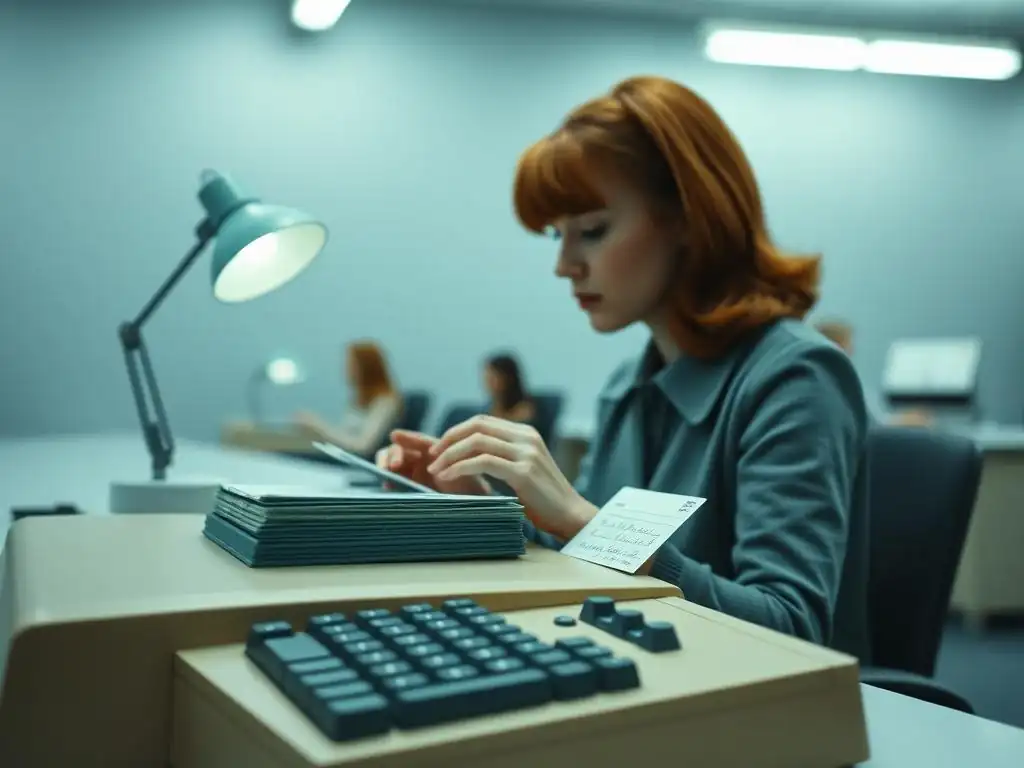
While programming and system design were intellectually demanding, the sheer volume of data required for early electronic computers led to the creation of new roles, predominantly filled by women: data entry and keypunch operators. These positions, often seen as clerical, were absolutely essential for the functioning of early computer systems. Operators meticulously transcribed information from paper documents into punch cards or magnetic tape, which then served as the primary input for mainframe computers.
The accuracy and speed of these operators directly impacted the reliability of data processing and the utility of the computational output. Tens of thousands of women worked in these roles across government agencies, banks, insurance companies, and large corporations throughout the 1950s, 60s, and 70s. Though often lower in status, their collective effort in this female-dominated field provided the vital raw material that fueled the information age, underscoring their critical, if often unsung, contribution to the growth of data processing.
Pioneering Women in Data Processing: Case Studies
Grace Hopper: A Visionary in Compiler Technology and Programming Languages
Rear Admiral Grace Murray Hopper (1906-1992) was a towering figure in early computer science and a true pioneer in data processing. After joining the U.S. Naval Reserve during World War II, she worked on the Harvard Mark I computer.
Her most significant contribution came with the development of the A-0 System in 1952, the world's first compiler. This revolutionary tool allowed programmers to write symbolic code that could be translated into machine instructions, freeing them from the tedious and error-prone task of writing in binary. This innovation dramatically simplified programming and made it accessible to a wider range of users, laying the groundwork for all subsequent programming languages.
Hopper also played a crucial role in the creation of FLOW-MATIC, one of the first data processing languages to use English-like commands, which she developed for UNIVAC I in 1955-1959. Her advocacy for natural language programming was instrumental in shaping COBOL (Common Business-Oriented Language), which became the most widely used business programming language for decades, processing trillions of dollars in transactions annually. Her philosophy was that computers should speak English, not the other way around, profoundly influencing the accessibility and widespread adoption of data processing technologies.
Jean Bartik: A Key Programmer of the ENIAC
Jean Bartik (1925-2011), born Betty Jean Jennings, was one of the six original programmers of the ENIAC, the world's first general-purpose electronic digital computer. Recruited by the U.S. Army during World War II, she began as a human computer calculating ballistic trajectories. When selected for the ENIAC project, Bartik and her colleagues were tasked with the daunting challenge of programming the enormous machine without manuals or specific training. They had to understand the ENIAC's architecture deeply, physically wiring the machine to execute complex sequences of operations.
Bartik's expertise was critical in designing the master program for the ENIAC, allowing it to perform a series of operations rather than just one-off calculations. Her work on debugging and operating the ENIAC was foundational to its successful deployment. After the ENIAC, she continued her pioneering work on early computers like the BINAC and the UNIVAC I, contributing to the development of early software tools and demonstrating exceptional analytical and problem-solving skills in the nascent field of electronic data processing.
Ida Rhodes: A Pioneer in Programming and Algorithm Development
Ida Rhodes (1900-1986) was another unsung heroine whose contributions to early data processing were significant. A mathematician by training, she joined the National Bureau of Standards (NBS) in 1947, becoming a key figure in the development of early computer applications. Rhodes was instrumental in designing and implementing programs for the UNIVAC I and its successor, the UNIVAC II, particularly for the U.S. Census Bureau. Her work focused on translating complex statistical and logical problems into executable computer instructions, a fundamental skill for early data processing.
In 1952, Rhodes created the first computer program specifically designed for analyzing census data, revolutionizing how demographic information was processed and understood. She also contributed to the development of CENSAC (Census Automatic Computer) and was a strong advocate for standardizing programming languages and data formats, recognizing the need for interoperability in a rapidly expanding field. Her meticulous work in algorithm development and practical application of computing for large-scale data processing laid important groundwork for modern statistical analysis and government data management.
The Perception of Data Processing as "Women's Work"
Ironically, while the design and engineering of computer hardware were largely perceived as male domains, the operational aspects of early data processing—including programming, data entry, and machine operation—were often framed as "women's work." This perception stemmed from prevailing gender stereotypes that associated women with clerical roles, precision, patience, and attention to detail, much like typists or telephone operators. Employers found it easier to market these roles to women, positioning them as an extension of traditional female occupations.
Advertisements in the 1960s, for example, sometimes depicted women happily working at keypunch machines or sorting punch cards, reinforcing the idea that these were suitable, even ideal, careers for women. This gendering of roles, while providing opportunities for women to enter the nascent computing field, simultaneously devalued the intellectual complexity of tasks like programming and data management, contributing to the later historical erasure of their significant contributions to data processing and computer science.
Challenges Faced by Women in a Male-Dominated Scientific Landscape
Despite their undeniable talent and critical contributions, women in early data processing and computing faced significant challenges in a largely male-dominated scientific and engineering landscape. They often encountered professional discrimination, limited opportunities for advancement, and a lack of recognition for their intellectual contributions. Many were relegated to lower-status "support" roles, even when their work was technically demanding and innovative. For instance, the ENIAC programmers were initially not even considered "programmers" but rather "operators" who merely followed instructions.
Women were frequently paid less than their male counterparts for similar work, and their paths to leadership positions or academic recognition were often blocked by systemic biases. The prevailing cultural norms of the time often made it difficult for women to balance professional ambitions with societal expectations regarding family and domestic roles, further complicating their careers in a demanding and rapidly evolving industry.
The Fight for Recognition and Equal Opportunities in the Tech Industry
The struggle for recognition and equal opportunities for women in data processing and the broader tech industry has been a long and ongoing battle. As computing evolved and became more lucrative and intellectually prestigious, the perception of programming shifted from a "clerical" task suitable for women to a highly skilled, male-dominated profession. This shift, beginning in the late 1970s and accelerating in the 1980s, saw a significant decline in the percentage of women pursuing computer science degrees and entering programming roles.
Pioneering women in data processing often had to actively advocate for their work to be acknowledged and for their skills to be valued equally. Their quiet determination and intellectual resilience in the face of skepticism and bias paved the way for future generations. Today, efforts to highlight their stories and address ongoing gender disparities in STEM fields continue, aiming to ensure that the foundational role of women in data processing is fully understood and celebrated, inspiring a more inclusive future for technology.
The Legacy of Women in Early Data Processing: Shaping the Future of Technology
The Foundation for Modern Computing: Building Blocks Laid by Female Pioneers
The intellectual and practical contributions of women in early data processing were not merely historical footnotes; they were fundamental building blocks upon which modern computing was constructed. Their innovations in compiler technology, algorithm development, and systematic data management directly paved the way for the sophisticated software and data processing systems we rely on today. Without Grace Hopper's vision for human-readable programming languages, the development of accessible software would have been significantly delayed. The meticulous work of the ENIAC programmers in debugging and optimizing early electronic machines established best practices for system development.
These female pioneers demonstrated the critical importance of effective data organization and processing, laying the groundwork for fields like database management, enterprise resource planning, and even the nascent stages of artificial intelligence. Their early efforts in handling and interpreting large datasets directly prefigured the challenges and opportunities presented by today's "big data" revolution, demonstrating that the foresight and ingenuity of women in data processing shaped the very essence of the digital world.
Inspiring Future Generations: The Enduring Impact of Women's Contributions
The stories of women in data processing serve as powerful inspiration for future generations, particularly young women considering careers in STEM. By highlighting their groundbreaking achievements in the face of significant societal and professional barriers, these narratives challenge persistent stereotypes about who belongs in technology and what capabilities women possess. Seeing that women were at the forefront of the information age's inception can empower girls and young women to pursue their interests in computer science, programming, and data analysis with confidence.
The enduring impact of their contributions extends beyond technological innovation; it is a testament to perseverance, intellectual curiosity, and the ability to thrive in challenging environments. Celebrating these unsung heroines helps to create a more inclusive historical narrative and encourages a new generation to see themselves as active participants and innovators in shaping the future of technology, much like the pioneering women in data processing did.
Preserving the History: Documenting and Celebrating the Achievements of Women in Data Processing
Preserving the history of women in early data processing is crucial to ensuring that their foundational contributions are not forgotten. This involves dedicated archival efforts, oral history projects, and academic research to document their lives, work, and the challenges they overcame. Institutions, museums, and websites like WomenInScienceHistory.com play a vital role in collecting and disseminating these stories, making them accessible to a wider audience.
By actively celebrating the achievements of women in data processing, we not only correct historical omissions but also provide tangible role models for today's tech landscape. Educating the public about their pivotal roles ensures that the full, rich tapestry of computing history is understood, fostering a greater appreciation for the diverse minds that built the digital world and inspiring continued efforts towards gender equity in STEM fields.
Conclusion: Acknowledging and Honoring the Female Architects of the Information Age
Reaffirming the Importance of Recognizing Women's Contributions to Science History
The journey through the early days of data processing unequivocally reveals that women were not peripheral figures but central architects of the information age. From the meticulous calculations of "human computers" to the intricate wiring of the ENIAC and the visionary development of programming languages, women consistently demonstrated intellectual prowess, technical skill, and unwavering dedication. Their work was far from merely clerical; it was intellectually rigorous, profoundly innovative, and absolutely indispensable to the birth and early growth of computer science and data processing.
Acknowledging their pivotal roles is not just about correcting historical oversight; it is about providing a complete and accurate narrative of scientific progress. Their stories underscore the fact that innovation is a product of diverse minds and perspectives, often flourishing in unexpected places and under challenging circumstances. The history of data processing is inextricably linked to the ingenuity and perseverance of its female pioneers.
Encouraging Further Research and Exploration of Women's Roles in Early Computing
While significant strides have been made in bringing these stories to light, much remains to be explored regarding women's roles in early computing and data processing. Further research is essential to uncover more hidden narratives, analyze the socio-economic factors that shaped their careers, and understand the full scope of their impact. There are countless more unsung heroines whose contributions are yet to be fully documented and celebrated.
By encouraging continued exploration, we ensure that the legacy of these remarkable women continues to inspire and inform. Their pioneering spirit, intellectual contributions, and resilience in the face of systemic barriers serve as a powerful reminder of the enduring impact of women in data processing and their profound influence on the world we inhabit today.
Frequently Asked Questions
What role did women play in early data processing?
Women were critical to early data processing, often performing the bulk of the manual calculations and operating early computing machines. Their contributions were essential to the burgeoning field.
Why were women often hired for data processing roles during the early stages?
Employers often believed women were better suited for the meticulous and repetitive tasks involved in early data processing. They were also often paid lower wages than their male counterparts.
What types of tasks did women typically perform in data processing?
Women commonly performed tasks such as manual calculations, punch card programming, and operating electromechanical calculators. These were considered crucial jobs, even if often undervalued.
What challenges did women face in the field of data processing?
Women faced gender bias, limited opportunities for advancement, and often received less recognition for their contributions compared to their male colleagues.
How does "WomenInScienceHistory.com" address the history of women in data processing?
The website aims to highlight the overlooked narratives of women in science, including their significant contributions to early data processing. It seeks to inspire future generations by showcasing these stories and challenging historical biases.
Final Reflection: Honoring the Unsung Architects
The legacy of early data processing, often overlooked, is inextricably linked to the contributions of women who formed the backbone of this nascent field. Today, as we grapple with the complexities of artificial intelligence and big data, it's crucial to remember the foundational work performed by these often-unrecognized pioneers. Their meticulous labor and innovative problem-solving laid the groundwork for the digital world we inhabit.
The impact of these women extends beyond mere technical skill; it represents a significant, yet frequently erased, chapter in the history of women in STEM. Recognizing their contributions is not just about historical accuracy, but about inspiring future generations of women to pursue careers in technology and data science. We stand on the shoulders of giants,
and in the realm of early data processing, those giants were often women, whose names deserve to be etched into the annals of technological history.
As we navigate the ever-evolving landscape of data processing, let us not forget the women who paved the way. Consider how their dedication and ingenuity shaped the industry, and how we can honor their memory by actively promoting inclusivity and equity in the field today. Let their story be a constant reminder that progress is built upon the contributions of all, and that recognizing the past is essential for shaping a more equitable future.
Thank you for exploring the untold stories of the women who shaped early data processing. You've now glimpsed the crucial role they played in the dawn of the information age. Ready to keep their legacy alive?
Here’s how you can get involved:
- Dive deeper by researching and sharing the story of one unsung woman in early data processing. Who will you choose to bring to light?
- Explore local archives or historical societies for related documents, photos, or stories that enhance the narrative.
- Share this article with three friends or colleagues who appreciate the impact of women in tech and inspire them to learn more!
Which untold story of female data pioneers will you help rediscover today?