
Euphemia Lofton Haynes: A Mathematical Legacy Forged in Education and Faith

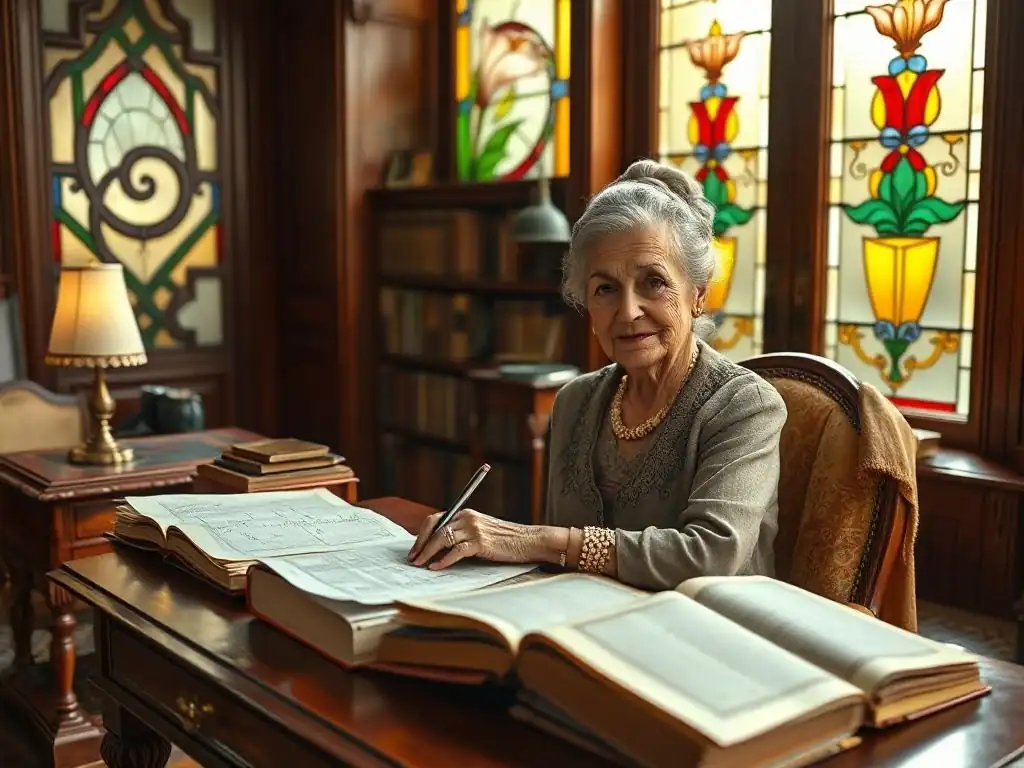
Welcome to WomenInScienceHistory.com, where we unearth the remarkable stories of women who shaped the scientific landscape. Delve into the often-untold histories of groundbreaking researchers and innovators. Today, we spotlight a towering figure in mathematics and education: Euphemia Lofton Haynes. But what made her mathematical legacy so impactful, and how did her faith and dedication to education intertwine to create a lasting impact? Prepare to discover the inspiring journey of a true pioneer.
- Introduction: Celebrating Euphemia Lofton Haynes' Mathematical Contributions
-
Euphemia Lofton Haynes' Pioneering Career in Education
- Teaching Mathematics in Washington D.C. Public Schools
- Breaking Barriers: Haynes' Role as the First African American Woman to Earn a Ph.D. in Mathematics
- The Impact of Her Doctoral Dissertation on Abstract Algebra
- Professor Haynes at Miner Teachers College and D.C. Teachers College: Shaping Future Educators
- Euphemia Lofton Haynes' Contributions Beyond the Classroom
- Euphemia Lofton Haynes' Mathematical Legacy: Impact and Influence
- Euphemia Lofton Haynes: A Life Dedicated to Faith, Education, and Mathematics
- Conclusion: Honoring Euphemia Lofton Haynes' Enduring Mathematical Legacy
-
Frequently Asked Questions
- What is Euphemia Lofton Haynes best known for?
- What were some of the challenges Euphemia Lofton Haynes faced in her career?
- How did Euphemia Lofton Haynes contribute to education?
- How did Euphemia Lofton Haynes' faith influence her work?
- What is the lasting significance of Euphemia Lofton Haynes' mathematical legacy?
- Final Reflection: Illuminating a Legacy of Mathematical Empowerment
- Ignite Your Inner Mathematician: Step into Euphemia's Legacy!
Introduction: Celebrating Euphemia Lofton Haynes' Mathematical Contributions
Euphemia Lofton's Family Background and Early Influences
Euphemia Lofton Haynes was born Euphemia Lofton on September 11, 1890, in Washington D.C., into a family that deeply valued education and community service. Her father, William S. Lofton, was a prominent dentist and businessman, while her mother, Lavinia J. Lofton, was a kindergarten teacher. This environment fostered a strong intellectual curiosity and a commitment to learning from an early age, laying the groundwork for what would become a remarkable Euphemia Lofton Haynes mathematical legacy.
The Lofton household provided a stable and intellectually stimulating upbringing, emphasizing academic excellence and civic responsibility. Growing up in Washington D.C., a vibrant center for African American intellectual and social life, Euphemia was exposed to a community that championed education as a path to progress and empowerment, shaping her early perspectives on the transformative power of knowledge.
Academic Beginnings: From Elementary School to Miner Normal School
Haynes began her educational journey in the public schools of Washington D.C., demonstrating early academic promise. After completing her elementary and secondary education, she enrolled in Miner Normal School, a distinguished institution primarily dedicated to training African American educators. This school, known for its rigorous curriculum and commitment to pedagogical excellence, provided Haynes with a robust foundation in teaching methods and core subjects.
At Miner Normal School, Haynes honed her skills in mathematics and developed a passion for education that would define her long and impactful career. The foundational knowledge and pedagogical training she received there were crucial in preparing her for a future dedicated to shaping young minds and would later contribute significantly to her Euphemia Lofton Haynes mathematical legacy.
Higher Education: Earning Degrees from Smith College and The Catholic University of America
Euphemia Lofton Haynes continued her academic pursuits, earning a Bachelor of Arts degree in mathematics from Smith College in 1914. This achievement was significant, as opportunities for African American women in higher education, especially in STEM fields, were exceedingly rare during that period. Her dedication to advanced learning was further demonstrated when she earned a Master's degree in education from the University of Chicago in 1930, broadening her expertise in educational theory and practice.
Her most groundbreaking academic achievement came in 1943 when she earned her Ph.D. in mathematics from The Catholic University of America. This made her the first African American woman in the United States to receive a doctoral degree in mathematics, a monumental milestone that shattered racial and gender barriers in academia. This historic accomplishment is a cornerstone of the profound Euphemia Lofton Haynes mathematical legacy.
Euphemia Lofton Haynes' Pioneering Career in Education
Teaching Mathematics in Washington D.C. Public Schools
Euphemia Lofton Haynes dedicated over 47 years of her life to the Washington D.C. public school system, serving as a teacher and administrator with unwavering commitment. She began her teaching career in 1917 and taught mathematics at various institutions, including M Street High School (later renamed Dunbar High School), a prestigious academic high school for African American students. Her tenure at Dunbar and later at Armstrong High School saw her not only teaching but also heading the mathematics department, influencing countless students.
Her passion for mathematics was infectious, and she was known for her rigorous yet supportive approach to teaching. In a segregated school system, Dr. Haynes provided a high-quality education, ensuring that her students, many of whom faced significant societal obstacles, received the best possible instruction in mathematics, thereby shaping a critical part of her Euphemia Lofton Haynes mathematical legacy.
Breaking Barriers: Haynes' Role as the First African American Woman to Earn a Ph.D. in Mathematics
The year 1943 marked a pivotal moment in American academic history and for the Euphemia Lofton Haynes mathematical legacy when she successfully defended her doctoral dissertation at The Catholic University of America. This achievement made her the first African American woman to earn a Ph.D. in mathematics in the United States. In an era rife with racial segregation and gender discrimination, her accomplishment was not merely personal but a powerful statement about intellectual capability and perseverance.
Her doctoral degree was a beacon of hope and inspiration, demonstrating that despite systemic barriers, African American women could reach the pinnacle of academic achievement in highly technical fields. This groundbreaking feat opened doors and challenged perceptions, paving the way for future generations of minority scholars in mathematics and science.
The Impact of Her Doctoral Dissertation on Abstract Algebra
Dr. Haynes' doctoral dissertation was titled "The Determination of Sets of Independent Conditions Characterizing Certain Special Cases of Symmetric Correspondences." This intricate work delved into the realm of abstract algebra, specifically focusing on the properties of symmetric correspondences. While not a widely accessible topic, her research demonstrated a sophisticated understanding of advanced mathematical concepts and original thought.
Her dissertation, supervised by Dr. Aubrey E. Landry, showcased her intellectual rigor and her ability to contribute to theoretical mathematics. Although its direct impact on the broader field of abstract algebra might not be as widely cited as some contemporary works, its significance lies in the context of her pioneering achievement, solidifying her Euphemia Lofton Haynes mathematical legacy as a scholar capable of high-level mathematical inquiry.
Professor Haynes at Miner Teachers College and D.C. Teachers College: Shaping Future Educators
Beyond her work in public high schools, Dr. Haynes also served as a professor of mathematics and later as the head of the division of mathematics at Miner Teachers College. This institution was crucial for training African American teachers, and her leadership there profoundly influenced mathematics education for future generations. When Miner Teachers College merged with Wilson Teachers College to form D.C. Teachers College in 1955, she continued her influential role.
At Miner and D.C. Teachers Colleges, Dr. Haynes was instrumental in shaping the pedagogical approaches of aspiring educators. She instilled in her students not only a deep understanding of mathematics but also effective methods for teaching it, ensuring that her commitment to educational excellence extended far beyond her own classroom and amplified her Euphemia Lofton Haynes mathematical legacy.
Euphemia Lofton Haynes' Contributions Beyond the Classroom

Euphemia Lofton Haynes' deep Catholic faith was inextricably linked to her dedication to education and social justice. She was a devout Catholic and a lifelong member of St. Augustine Catholic Church in Washington D.C., where she was actively involved in various parish activities. Her faith fueled her conviction that education was a fundamental right and a powerful tool for uplifting marginalized communities.
This commitment extended to her service on the Archdiocesan School Board of Washington, D.C., where she advocated for equitable access to quality education within the Catholic school system. Her work reflected a belief that spiritual and intellectual development were intertwined, and she tirelessly championed initiatives that served the holistic needs of students, aligning her faith with her broader Euphemia Lofton Haynes mathematical legacy.
Community Involvement and Advocacy for Educational Equity
Beyond her formal roles, Dr. Haynes was a tireless advocate for educational equity and community improvement. She actively participated in numerous organizations dedicated to advancing the rights and opportunities of African Americans. Her involvement included leadership positions in groups such as the National Council of Negro Women, the American Association of University Women, and the League of Women Voters.
Through these platforms, she worked to address systemic disparities in educational resources and quality, particularly in segregated schools. Her advocacy was rooted in the belief that every child, regardless of race or socioeconomic status, deserved access to excellent educational opportunities, further cementing her Euphemia Lofton Haynes mathematical legacy not just as an academic, but as a social reformer.
Haynes' Role in Integrating the Catholic School System in Washington D.C.
One of Dr. Haynes' most significant contributions to social justice was her instrumental role in the desegregation of the Catholic school system in Washington D.C. She served on the D.C. Board of Education from 1960 to 1968, and notably, she was the first woman to chair the board, holding the position from 1966 to 1967. During her tenure, she championed policies and initiatives aimed at integrating the city's schools.
Her leadership was crucial in navigating the complex and often contentious process of desegregation. Dr. Haynes' persistent advocacy helped dismantle segregationist practices within the Catholic school system, providing African American students with access to integrated educational environments. This profound social impact is an integral part of her Euphemia Lofton Haynes mathematical legacy, extending her influence beyond the classroom walls.
Board Memberships and Civic Engagement
Dr. Haynes' civic engagement was extensive and multifaceted. In addition to her pivotal role on the D.C. Board of Education, she held numerous other significant board memberships. These included serving on the Washington Urban League, the National Association for the Advancement of Colored People (NAACP), and the National Association of University Women. Her involvement in these organizations demonstrated her broad commitment to civil rights and community development.
Her active participation in these diverse groups underscored her belief in collective action to achieve social change. Whether through advocating for better housing, employment opportunities, or educational reform, Dr. Haynes consistently leveraged her influence to improve the lives of others, leaving an indelible mark on her community and solidifying the multifaceted nature of her Euphemia Lofton Haynes mathematical legacy.
Euphemia Lofton Haynes' Mathematical Legacy: Impact and Influence
Inspiring Generations of African American Mathematicians and Educators
Euphemia Lofton Haynes' achievement as the first African American woman to earn a Ph.D. in mathematics served as an unparalleled source of inspiration. Her pioneering spirit demonstrated to countless African American students, particularly young women, that excellence in STEM fields was attainable despite societal barriers. Her very existence as a highly educated mathematician challenged prevailing racial and gender stereotypes of her time.
Through her long career in education, first as a high school teacher and later as a college professor, she directly mentored and influenced generations of students. Many of her former pupils went on to pursue careers in mathematics and education, carrying forward the torch of her dedication and expertise. This direct influence on aspiring scholars is a tangible aspect of her enduring Euphemia Lofton Haynes mathematical legacy.
Haynes' Influence on Mathematics Education
Dr. Haynes' pedagogical philosophy emphasized a deep understanding of mathematical concepts and the development of critical thinking skills. She was known for her rigorous teaching methods, but also for her unwavering support and encouragement of her students. As a professor at Miner Teachers College and D.C. Teachers College, she played a crucial role in shaping the curriculum and instructional practices for future mathematics educators.
Her commitment to high standards and effective teaching methodologies had a ripple effect throughout the Washington D.C. school system. She ensured that the teachers she trained were well-equipped to deliver quality mathematics instruction, thereby elevating the overall standard of education in the city. Her influence on mathematics education remains a cornerstone of her Euphemia Lofton Haynes mathematical legacy.
The Significance of Her Contributions to Abstract Algebra
While Dr. Haynes' doctoral dissertation in abstract algebra was not a widely popularized work, its significance lies in its intellectual rigor and its historical context. Her ability to contribute to such a complex and theoretical field of mathematics demonstrated her profound intellectual capabilities and her commitment to advancing mathematical knowledge. At a time when African American women were largely excluded from such academic pursuits, her research stood as a testament to her scholarly prowess.
The very act of completing a Ph.D. in abstract algebra, a highly specialized branch of mathematics, was a groundbreaking achievement that expanded the perceived boundaries of what African American women could accomplish. Her work in this area, though perhaps not directly shaping modern algebraic theory, is an undeniable component of her Euphemia Lofton Haynes mathematical legacy, symbolizing intellectual triumph over adversity.
Scholarships and Programs Honoring Her Legacy
The profound impact of Euphemia Lofton Haynes continues to be recognized and celebrated through various honors and programs established in her name. The Catholic University of America, her alma mater, established the Euphemia Lofton Haynes Award for Excellence in Teaching, which recognizes outstanding faculty members who exemplify her dedication to education. This award perpetuates her high standards for teaching and mentorship.
Furthermore, scholarships and initiatives at institutions like the University of the District of Columbia (which incorporates the legacy of Miner Teachers College) continue to honor her. These programs aim to support students, particularly those from underrepresented backgrounds, who are pursuing studies in mathematics and education, ensuring that the inspirational Euphemia Lofton Haynes mathematical legacy continues to foster new generations of scholars and educators.
Euphemia Lofton Haynes: A Life Dedicated to Faith, Education, and Mathematics
The Intersection of Faith and Mathematics in Haynes' Life
For Euphemia Lofton Haynes, faith, education, and mathematics were not disparate elements but interwoven threads in the fabric of her life. Her deep Catholic faith provided a moral compass and a framework for her relentless pursuit of social justice and educational equity. She viewed teaching as a vocational calling, a means to serve God and her community by empowering individuals through knowledge.
Her belief in the inherent dignity of every person, rooted in her spiritual convictions, fueled her efforts to dismantle segregation and ensure fair access to education for all. This intersection of faith and intellect allowed her to approach complex mathematical problems with the same dedication and precision she applied to the social challenges of her time, making her Euphemia Lofton Haynes mathematical legacy uniquely holistic.
Haynes' Lasting Impact on Her Students and Community
Dr. Haynes' influence extended far beyond the academic content she taught. She was a mentor, an advocate, and a role model who inspired her students to strive for excellence and to use their education for the betterment of society. Many of her students went on to become successful educators, mathematicians, and leaders in their own right, carrying forward the values and principles she instilled in them.
Her work on the D.C. Board of Education and her tireless advocacy for desegregation had a profound and lasting impact on the entire community. By helping to integrate the school system, she opened doors of opportunity for countless African American children, fundamentally altering their educational trajectories and life chances. This far-reaching community impact is a testament to her enduring Euphemia Lofton Haynes mathematical legacy.
Remembering Euphemia Lofton Haynes: A Trailblazer in Mathematics and Education
Euphemia Lofton Haynes is remembered as a true trailblazer whose life exemplified dedication to intellectual pursuit, educational excellence, and social justice. Her pioneering achievement as the first African American woman with a Ph.D. in mathematics broke critical barriers and paved the way for future generations of minority scholars in STEM fields. Her career as an educator, administrator, and civic leader left an indelible mark on the landscape of American education, particularly in Washington D.C.
Her unwavering commitment to her faith, her students, and her community underscores the multifaceted nature of her contributions. She did not merely teach mathematics; she used her mathematical prowess and her position to advocate for a more equitable and just society. Her story continues to inspire, reminding us of the power of perseverance and the profound impact one individual can have, making her Euphemia Lofton Haynes mathematical legacy a source of ongoing inspiration.
Conclusion: Honoring Euphemia Lofton Haynes' Enduring Mathematical Legacy
Frequently Asked Questions
What is Euphemia Lofton Haynes best known for?
Euphemia Lofton Haynes is best known for being the first African American woman to earn a PhD in mathematics. Her legacy extends to her dedication to mathematics education and her work in improving the D.C. public school system.
What were some of the challenges Euphemia Lofton Haynes faced in her career?
As a Black woman in the early 20th century, Haynes faced significant racial and gender discrimination in the male-dominated field of mathematics. She persevered through these challenges, becoming a pioneer for future generations.
How did Euphemia Lofton Haynes contribute to education?
Haynes dedicated her life to education, teaching mathematics at various levels, including public schools and universities. She advocated for equal educational opportunities for all students, particularly those from marginalized communities.
How did Euphemia Lofton Haynes' faith influence her work?
Haynes was a devout Catholic, and her faith was intertwined with her commitment to social justice and education. She believed in the power of education to uplift individuals and communities.
What is the lasting significance of Euphemia Lofton Haynes' mathematical legacy?
Haynes' legacy is a testament to her brilliance and perseverance. She inspired countless students and paved the way for more women and minorities to pursue careers in STEM fields, leaving a lasting impact on mathematics and education.
Final Reflection: Illuminating a Legacy of Mathematical Empowerment
The story of Euphemia Lofton Haynes, as we've explored, is not simply a historical account, but a vibrant testament to the power of perseverance and the transformative potential of education. Her mathematical legacy continues to resonate deeply, particularly in a world still striving for equitable access to STEM fields. Haynes' dedication to both mathematics and education serves as a powerful reminder that true progress lies in empowering future generations through knowledge and opportunity.
The impact of Haynes' life extends far beyond the classroom. Her unwavering commitment to social justice, fueled by her deep faith, shaped her approach to education and her dedication to uplifting marginalized communities. Her story underscores the crucial intersection of intellect, compassion, and action, reminding us that true leadership lies in using our talents to serve others. The pursuit of truth and the pursuit of justice are inseparable.
This quote, though not directly attributed to Haynes, perfectly encapsulates the spirit that drove her life and continues to inspire those who seek to follow in her footsteps.
As we conclude this exploration of Euphemia Lofton Haynes' mathematical legacy, let us not simply admire her achievements from afar. Instead, let us internalize the lessons of her life: the importance of unwavering dedication, the power of education to transform lives, and the responsibility we all share to create a more just and equitable world.
Consider how you can, in your own sphere of influence, champion the pursuit of knowledge, advocate for access to education, and embody the spirit of service that defined Euphemia Lofton Haynes' remarkable life. Let her story be a catalyst for action, inspiring you to build a brighter future for all.
Ignite Your Inner Mathematician: Step into Euphemia's Legacy!
Thank you for exploring the inspiring journey of Euphemia Lofton Haynes! We hope her dedication has sparked a new appreciation for the power of perseverance and the importance of representation in STEM. Now, let's translate that inspiration into action!
- Follow Euphemia's Path: Research historically Black colleges and universities (HBCUs) and consider supporting their STEM programs, ensuring future generations have access to quality education. This is the most direct way to honor her commitment.
- Share Euphemia's story! Encourage others to discover her accomplishments and discuss how we can build a more inclusive scientific community.
- Explore the intersection of faith and mathematics in your own life. How can these seemingly different worlds connect and inspire you?