
Unsung Architects of Change: Black Women Scientists in the Civil Rights Movement

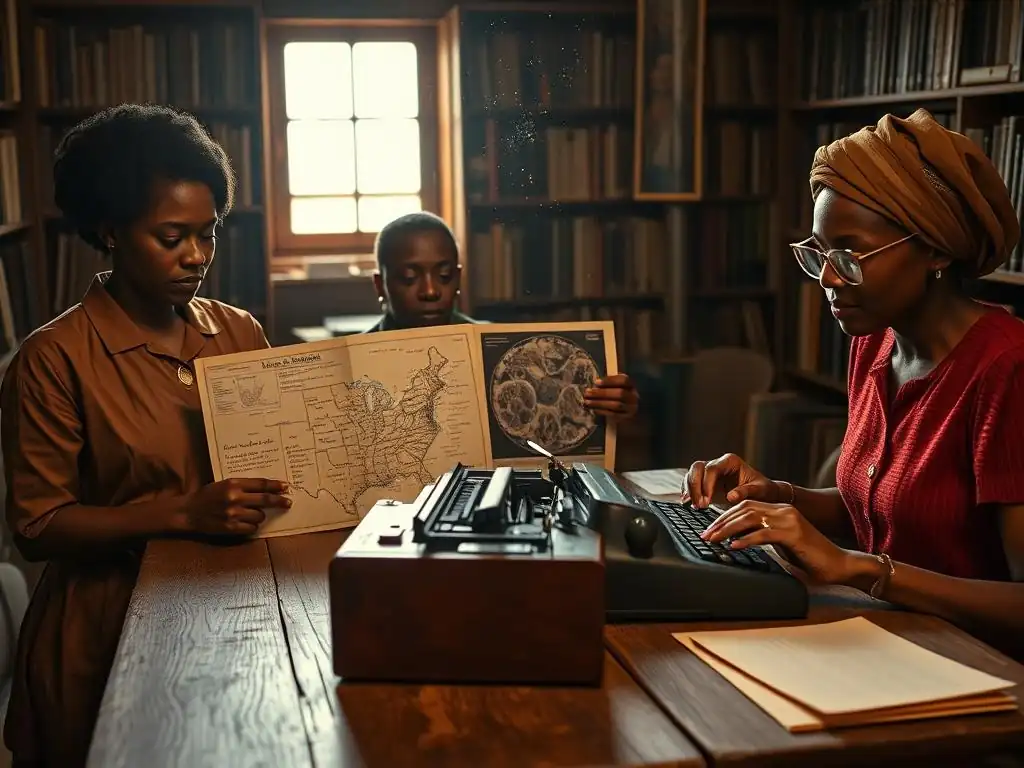
Welcome to WomenInScienceHistory.com, where we unearth the stories of remarkable women who shaped the scientific landscape. Did you know that the struggle for civil rights was also profoundly influenced by the often-unrecognized contributions of Black women in science? Dive into our latest article, " Unsung Architects of Change: Black Women Scientists in the Civil Rights Movement," to explore the vital roles these brilliant minds played in advancing both scientific knowledge and social justice.
Prepare to be inspired by their resilience, ingenuity, and unwavering commitment to a better world – a story that deserves to be told. What challenges did they face, and how did their scientific expertise fuel the fight for equality? Read on to discover the incredible impact of these unsung heroes.
- Introduction: The Intersection of Science, Race, and the Civil Rights Movement
- The Societal Landscape: Challenges Faced by Black Women in STEM During the Civil Rights Era
- Pioneering Black Women Scientists and Their Impact on the Civil Rights Movement
- The Influence of Scientific Research on Civil Rights Advocacy
- Beyond the Lab: Black Women Scientists as Community Leaders and Activists
- Legacy and Lasting Impact: Honoring the Contributions of Black Women in Science and the Civil Rights Movement
- Conclusion: Celebrating the Unsung Heroes of Science and Civil Rights
-
Frequently Asked Questions
- How did Black women scientists contribute to the Civil Rights Movement?
- What challenges did Black women scientists face during the Civil Rights era?
- Can you give an example of a Black woman scientist who made a significant contribution to the Civil Rights Movement?
- Why is it important to recognize the contributions of Black women scientists in the Civil Rights Movement?
- Where can I find more information about Black women scientists and their involvement in the Civil Rights Movement?
- Final Reflection: Amplifying Voices of Scientific Courage
- Ignite Change: Embrace the Legacy of Black Women Scientists!
Introduction: The Intersection of Science, Race, and the Civil Rights Movement
Highlighting the Overlooked Contributions of Black Women Scientists
For too long, the narrative of scientific progress has largely omitted the groundbreaking contributions of Black women. These remarkable individuals not only pushed the boundaries of scientific knowledge but also navigated the formidable barriers of racial and gender discrimination. Their stories are a testament to resilience, intellect, and an unwavering commitment to both discovery and social justice. They were often the unsung architects, shaping the future of science while simultaneously fighting for fundamental Black women civil rights.
Their work, whether in laboratories, classrooms, or medical facilities, was inherently an act of defiance against a system designed to exclude them. By excelling in fields where their presence was discouraged or outright denied, Black women scientists laid critical groundwork for future generations and demonstrated the profound interconnectedness of scientific advancement and the fight for human dignity. Their contributions were not merely technical; they were deeply interwoven with the broader struggle for equality.
Defining "Civil Rights" in the Context of Scientific Advancement
The term "Civil Rights" often evokes images of protests, marches, and legislative battles, primarily focused on voting rights, desegregation, and equal access to public accommodations. However, the movement's scope extended far beyond these visible acts, encompassing the fundamental right to equal opportunity in all facets of life, including education, employment, and professional recognition within scientific fields. For Black women, achieving civil rights meant gaining access to quality scientific education, securing positions commensurate with their skills, and having their intellectual contributions acknowledged.
In this context, scientific advancement itself became a battleground for civil rights. The pursuit of knowledge and excellence by Black women in STEM fields was a powerful assertion of their intellectual capacity and human worth, directly challenging racist and sexist stereotypes. Their very presence in these spaces, coupled with their impactful research and advocacy, was a direct contribution to the Black women civil rights movement, demanding recognition and equity in an arena that had historically denied them.
The Societal Landscape: Challenges Faced by Black Women in STEM During the Civil Rights Era
Segregation and Discrimination in Education and Employment
During the Civil Rights Era, systemic segregation and discrimination were pervasive, deeply impacting Black women's access to quality education and employment in STEM fields. Jim Crow laws enforced racial separation in schools, from elementary levels to universities, often leaving Black institutions severely underfunded and underequipped compared to their white counterparts. For instance, while some Historically Black Colleges and Universities (HBCUs) like Spelman College or Howard University provided excellent science programs, their resources were often stretched thin, and their graduates faced immense hurdles entering predominantly white institutions or professional environments.
Beyond education, employment opportunities were severely limited. Black women faced a "double bind" of racism and sexism, often relegated to domestic work or teaching in segregated schools, regardless of their scientific qualifications. Even when highly educated, they encountered discriminatory hiring practices, lower pay, and explicit exclusion from prestigious research facilities or corporate labs. For example, even at federal agencies like NASA, Black women like Katherine Johnson worked in segregated computing pools for years before integration began to dismantle these overt barriers, highlighting the profound professional challenges these brilliant minds faced.
Limited Access to Resources and Opportunities in Scientific Fields
The challenges for Black women in science extended beyond mere access to education and employment; they also faced significant limitations in resources and opportunities critical for scientific advancement. This included a dearth of funding for research projects at Black institutions, restricted access to cutting-edge laboratory equipment, and exclusion from professional scientific societies and conferences. These societies were vital for networking, presenting research, and staying abreast of new developments, yet many were racially segregated until well into the mid-20th century.
Furthermore, opportunities for mentorship and collaboration, crucial for career progression in science, were scarce. White male scientists, who dominated the field, often overlooked or actively excluded their Black female counterparts. This isolation meant that Black women scientists frequently had to forge their own paths, relying on self-determination and the support of their limited networks within the Black community. Their persistence in the face of these resource disparities underscores their profound commitment to science and their inherent contribution to Black women civil rights by simply refusing to be sidelined.
Overcoming Systemic Barriers: Stories of Resilience and Determination
Despite the formidable systemic barriers, Black women scientists demonstrated extraordinary resilience and determination. Their stories are not just about overcoming obstacles but about achieving excellence in spite of them. Many leveraged the strong academic foundations provided by HBCUs, which served as vital havens for intellectual development and professional training that were otherwise inaccessible. These institutions fostered a sense of community and provided crucial support systems that enabled Black women to pursue scientific careers.
Their determination manifested in various ways: diligently pursuing advanced degrees, meticulously conducting research with limited resources, and advocating for their own recognition and that of their peers. For instance, Dr. Marie Maynard Daly, the first Black woman in the U.S. to earn a Ph.D. in chemistry (1947), conducted significant research on the causes of heart attacks, despite the prevailing biases.
These women often had to work twice as hard to prove their capabilities, their very presence in scientific fields serving as a powerful act of resistance and a foundational element of the Black women civil rights struggle for intellectual equity.
Pioneering Black Women Scientists and Their Impact on the Civil Rights Movement
Dorothy Lavinia Brown: Contributions to Surgery and Child Welfare Advocacy
Dr. Dorothy Lavinia Brown (1919-2004) stands as a monumental figure, becoming the first African American woman surgeon in the South. A graduate of Meharry Medical College, a historically Black institution, she broke barriers in a field overwhelmingly dominated by white men. Her surgical expertise, particularly in pediatric and general surgery, provided critical medical care to a community often underserved by the segregated healthcare system. Her presence and skill within a medical faculty in Nashville, Tennessee, directly challenged the racial and gender norms of the era, offering a tangible example of Black excellence in a highly specialized field.
Beyond her surgical prowess, Dr. Brown was a fervent advocate for child welfare. She famously became the first single woman in Tennessee to legally adopt a child in 1968, challenging societal norms and shining a light on the needs of orphaned children, many of whom were Black and faced additional societal disadvantages. Her commitment to providing a loving home and her broader advocacy for children's rights were deeply intertwined with the Black women civil rights movement, emphasizing the importance of family stability and social support for all members of the community, regardless of race or circumstance.
How Dorothy Lavinia Brown's Medical Expertise Supported Civil Rights Efforts
Dr. Dorothy Lavinia Brown's medical expertise was a direct contribution to civil rights efforts through her dedication to providing high-quality healthcare in a deeply segregated society. As a surgeon at Meharry Medical College and later at Riverside Hospital in Nashville, she served a predominantly Black community that often had limited access to skilled medical professionals. Her unwavering commitment to patient care, irrespective of their socioeconomic status, ensured that essential surgical services were available to those who might otherwise have been denied them due to racial discrimination in other healthcare institutions.
Her role as a leading surgeon and educator at Meharry also meant she was training future generations of Black medical professionals, thereby expanding the capacity of the Black community to provide for its own healthcare needs. This self-sufficiency and the establishment of institutions that served Black populations were crucial components of the broader Black women civil rights movement, aiming to dismantle dependency on discriminatory systems. Dr. Brown's medical practice was, in essence, an act of community empowerment and a quiet, yet powerful, assertion of the right to equitable healthcare.
Dorothy Lavinia Brown's Personal Experiences with Racial and Gender Injustice
Dr. Dorothy Lavinia Brown faced significant racial and gender injustice throughout her life and career. As a young student, she experienced the harsh realities of segregation, which often meant inferior educational facilities and limited opportunities. Even after graduating at the top of her class from Meharry Medical College, she encountered resistance and skepticism as she sought to enter the male-dominated field of surgery. Her initial attempts to secure an internship were met with rejection, as hospitals were reluctant to take on a Black woman in such a demanding role.
Despite these setbacks, her persistence led her to become the first Black woman general surgeon in the South. However, her journey was far from easy, navigating environments where her capabilities were constantly questioned, and she often had to work harder to prove her worth. Her quiet dignity and unwavering focus on her medical calling were her responses to the systemic prejudice. Her personal triumphs over these injustices served as an inspiring example for many, subtly but powerfully advancing the cause of Black women civil rights by demonstrating exceptional competence in the face of adversity.
Mae C. Jemison: Breaking Barriers in Engineering, Medicine, and Space Exploration
Dr. Mae C. Jemison (b. 1956) is a living embodiment of breaking barriers, renowned as the first African American woman to travel to space. Her journey, rooted in a strong background in chemical engineering from Stanford University and a medical degree from Cornell University, exemplifies the expansive capabilities of Black women in STEM. Before her historic space flight aboard the Space Shuttle Endeavour in 1992, Jemison served as a medical doctor for the Peace Corps in West Africa, demonstrating a deep commitment to global health and human well-being.
Jemison's career transcended conventional boundaries, seamlessly integrating science, medicine, and social advocacy. Her public visibility as an astronaut provided an unprecedented role model for young Black women and girls, powerfully challenging stereotypes about who belongs in advanced scientific and technological fields. Her work since NASA has focused on integrating science and technology with societal issues, reflecting a holistic approach to progress that resonates deeply with the spirit of the Black women civil rights movement.
Mae C. Jemison's Role in Promoting STEM Education and Challenging Stereotypes
Following her NASA career, Dr. Mae C. Jemison dedicated herself to promoting STEM education and challenging persistent stereotypes. She founded The Jemison Group, Inc., a technology consulting firm, and the Dorothy Jemison Foundation for Excellence, named after her mother. Through this foundation, she launched "The Earth We Share" (TEWS), an international science camp that encourages critical thinking and problem-solving skills among youth, particularly those from underrepresented backgrounds. This initiative directly addresses the historical disparities in science education access.
Jemison's very presence as an African American woman astronaut shattered preconceived notions about who could excel in the highest echelons of science and exploration. Her articulate advocacy for diversity in STEM, emphasizing that scientific progress benefits from a multitude of perspectives, has been instrumental in inspiring countless young people. She consistently highlights that seeing someone who looks like you achieve great things is crucial for aspiration, making her a powerful figure in the ongoing Black women civil rights effort to achieve full representation and equity in all professional spheres.
Mae C. Jemison's Advocacy for Global Health and Sustainable Development
Dr. Mae C. Jemison's commitment to global health and sustainable development is a core aspect of her post-NASA work, extending the principles of civil rights beyond national borders. Her experiences as a Peace Corps medical officer in Liberia and Sierra Leone in the 1980s provided her with firsthand knowledge of health disparities and the challenges of resource-limited environments. This foundation fueled her passion for leveraging science and technology to improve human conditions worldwide.
She has been a vocal advocate for addressing issues such as access to clean water, disease prevention, and sustainable energy solutions. Her current work with the 100 Year Starship project, an initiative to ensure human interstellar travel capability within 100 years, is not just about space exploration but also about fostering breakthroughs that benefit life on Earth, emphasizing global collaboration and sustainable practices.
Her vision for a better future, where science serves humanity equitably, aligns with the broader goals of justice and equality championed by the Black women civil rights movement, demonstrating how scientific leadership can contribute to a more just world.
Katherine Johnson: Advancing Mathematics and Space Exploration While Fighting for Equality
Katherine Johnson (1918-2020) was a pivotal figure at NASA, whose extraordinary mathematical prowess was instrumental in the success of early U.S. space missions. As one of the "human computers" at the segregated West Area Computing unit of Langley Research Center, her precise calculations were indispensable. A graduate of West Virginia State College, Johnson's journey from a young prodigy to a critical component of the space race highlights the intellectual brilliance often hidden behind the veil of racial segregation. Her work directly contributed to national security and scientific advancement at the height of the Cold War.
Johnson's story, brought to wider public attention through the book and film "Hidden Figures," powerfully illustrates the resilience and genius of Black women working within a racially discriminatory system. Her unwavering focus on accuracy and her insistence on understanding the underlying principles of the calculations she performed earned her respect, even from engineers who initially doubted her capabilities. Her quiet but undeniable impact on some of humanity's greatest scientific endeavors underscores the profound contributions of Black women civil rights pioneers in STEM.
Katherine Johnson's Calculations Supporting Critical NASA Missions
Katherine Johnson's mathematical calculations were absolutely critical to the success of several groundbreaking NASA missions, shaping the course of space exploration. Her most famous contribution was verifying the electronic computer's calculations for John Glenn's orbital flight in 1962. Glenn famously requested that Johnson personally recheck the machine's figures before his historic mission, trusting her judgment implicitly. Her work provided the crucial launch window and trajectory data that ensured his safe return, a testament to her unparalleled accuracy and reliability.
Beyond Project Mercury, Johnson's expertise extended to the Apollo program. She calculated the trajectory for the Apollo 11 mission to the Moon in 1969, including calculations for the lunar lander's rendezvous with the command module. Her work was fundamental to the success of the moon landing, a monumental achievement for humanity. These contributions, performed with slide rules, pencils, and an extraordinary mind, solidified her place as an indispensable figure in space history and a quiet giant of the Black women civil rights movement, proving Black intellectual capability beyond doubt.
Katherine Johnson's Impact on Representation in STEM
Katherine Johnson's impact on representation in STEM, though recognized much later in her life, is profound. Her very presence and indispensable work at the highest levels of American scientific endeavor challenged the prevailing racist and sexist notions that Black women were intellectually inferior or incapable of complex scientific thought. Working in segregated facilities at Langley, Johnson quietly but powerfully demonstrated that talent knows no racial or gender bounds. Her brilliance forced colleagues and superiors to acknowledge her contributions, transcending the discriminatory structures around her.
Her story serves as a powerful narrative for aspiring scientists, particularly Black women, illustrating that perseverance, exceptional skill, and a commitment to one's craft can lead to extraordinary achievements, even in the face of systemic adversity. While she wasn't an overt activist, her professional excellence was an act of civil rights, opening doors and shifting perceptions simply by excelling. The widespread recognition of her story in recent years has greatly amplified her legacy, inspiring countless young minds to pursue STEM careers and contributing significantly to the ongoing fight for Black women civil rights in professional spaces.
The Influence of Scientific Research on Civil Rights Advocacy

Using Data and Evidence to Combat Racial Bias and Discrimination
Scientific research played a crucial, though often understated, role in the Civil Rights Movement by providing irrefutable data and evidence to combat racial bias and discrimination. While social scientists like Kenneth and Mamie Clark (whose doll experiments demonstrated the psychological damage of segregation) are well-known, Black women scientists across various fields also contributed to this evidentiary base. Public health researchers, for instance, meticulously documented racial disparities in health outcomes, life expectancy, and access to medical care, effectively dismantling the myth of "separate but equal" in healthcare.
These data-driven insights provided concrete proof of systemic inequality, making it harder for segregationists to deny the harmful impacts of their policies. For example, studies on environmental racism, though more prominent later, had their roots in early observations by community-minded scientists about how hazardous waste sites disproportionately affected Black neighborhoods. The objective nature of scientific findings lent credibility to civil rights arguments, transforming moral pleas into evidence-based demands for justice and serving as a powerful tool in the Black women civil rights advocacy arsenal.
Scientific Studies Supporting the Argument for Equality
Beyond documenting disparities, scientific studies provided foundational arguments for the inherent equality of all races, directly countering pseudoscientific justifications for discrimination. Anthropologists, biologists, and geneticists, including pioneering Black women in these fields, contributed to a growing body of knowledge that debunked race-based theories of intelligence or capability. Their work emphasized the genetic unity of humankind and the social construction of race, thereby undermining the intellectual basis for segregation and racial hierarchy.
While specific Black women scientists may not have been the sole authors of these foundational studies, their very presence in these fields, coupled with their contributions to research and scholarship, reinforced the scientific community's move away from racist ideologies. By pursuing rigorous scientific inquiry, they helped to establish an evidence-based foundation for the legal and social arguments for equality. This intellectual battle was just as vital as the legal and political ones in advancing Black women civil rights and dismantling the ideological underpinnings of racism.
The Role of Black Women Scientists in Promoting Scientific Literacy within the Black Community
Black women scientists played a critical role in promoting scientific literacy within the Black community, a crucial step for empowerment and informed advocacy. Many served as educators in HBCUs, where they not only taught complex scientific principles but also mentored generations of Black students, instilling in them a passion for discovery and critical thinking. These institutions became vital hubs for intellectual development, providing opportunities that were often denied elsewhere.
Furthermore, some Black women scientists engaged directly with their communities through public health initiatives, educational outreach programs, and community workshops. They demystified scientific concepts, explaining their relevance to everyday life, from nutrition and sanitation to environmental health. By fostering a greater understanding of science, they empowered the Black community to engage more effectively with issues affecting their well-being and to advocate for evidence-based solutions, thereby strengthening the intellectual capacity of the Black women civil rights movement.
Beyond the Lab: Black Women Scientists as Community Leaders and Activists
Many Black women scientists were not confined to laboratories or academic institutions; they were also deeply engaged in grassroots movements and broader social change initiatives within their communities. Their scientific training often provided them with unique analytical skills and a methodical approach to problem-solving, which they applied to social issues. For instance, some participated in local NAACP chapters, voter registration drives, or efforts to desegregate public facilities, leveraging their respected positions to advocate for change.
Their involvement often stemmed from a profound understanding that their scientific work could not be separated from the societal context in which it was performed. They saw the fight for civil rights as intrinsically linked to the advancement of human well-being, a principle central to many scientific disciplines like medicine and public health. Their dual roles as scientists and activists underscore the multifaceted nature of the Black women civil rights movement, where every domain became a site for advocating for justice.
Advocating for Educational Reform and Equal Access to Healthcare
Black women scientists frequently leveraged their expertise and personal experiences to advocate passionately for educational reform and equal access to healthcare, two pillars of the civil rights agenda. Having often navigated segregated and under-resourced educational systems themselves, they understood the profound impact of unequal schooling on opportunities for Black youth. They championed initiatives to improve funding for Black schools, integrate institutions, and ensure high-quality STEM education for all students.
In healthcare, Black women physicians, nurses, and public health professionals were at the forefront of advocating for equitable medical treatment and services. They documented disparities, worked in under-resourced community clinics, and pushed for policy changes to address health inequities. Their professional insights gave their advocacy efforts significant weight, highlighting how systemic racism directly translated into poorer health outcomes for Black communities. These efforts were central to the Black women civil rights movement's goal of achieving holistic well-being and justice.
Mentoring and Inspiring Future Generations of Black Scientists
A crucial, yet often unquantifiable, contribution of Black women scientists was their role in mentoring and inspiring future generations. Given the scarcity of Black women in STEM fields during the Civil Rights Era, these pioneers often served as the only role models for aspiring young Black girls and women. They provided guidance, encouragement, and practical advice, helping to navigate academic and professional challenges that were unique to their racial and gender identities.
Many dedicated their lives to teaching at HBCUs, where they actively cultivated talent and fostered a supportive environment for Black students to excel in science. Their personal journeys, marked by resilience and groundbreaking achievements, served as powerful testaments to what was possible despite systemic barriers. By investing in the next generation, they ensured the continuity of the struggle for equity in STEM and solidified the long-term impact of the Black women civil rights movement within the scientific community.
Legacy and Lasting Impact: Honoring the Contributions of Black Women in Science and the Civil Rights Movement
The legacy of Black women scientists in the Civil Rights Movement profoundly underscores the interconnectedness of scientific advancement, social justice, and the pursuit of equality. Their lives and work demonstrate that science is not a neutral, isolated endeavor but is deeply embedded within societal structures and values. For these women, the pursuit of knowledge was inextricably linked to the fight for human dignity and the dismantling of oppressive systems.
Their achievements illuminate how intellectual rigor can be a powerful tool for liberation, challenging prevailing biases and providing evidence for systemic change. By excelling in fields that sought to exclude them, they proved that talent and intellect transcend arbitrary racial and gender boundaries. This interconnectedness remains a vital lesson, reminding us that true scientific progress must always be accompanied by a commitment to social equity, a principle central to the ongoing relevance of Black women civil rights today.
The Ongoing Fight for Representation and Inclusion in STEM
Despite the groundbreaking efforts of these pioneers, the fight for representation and inclusion in STEM fields is far from over. Black women remain significantly underrepresented in many scientific and engineering disciplines. For example, recent data indicates that Black women constitute less than 3% of the STEM workforce in the United States, and face persistent challenges in career advancement, mentorship, and pay equity. This highlights that while overt segregation has been dismantled, subtle biases and systemic barriers continue to exist.
The legacy of the Civil Rights Movement for Black women in science compels a continued commitment to diversity, equity, and inclusion initiatives within academia, industry, and government. Efforts must focus not only on increasing the pipeline of Black women entering STEM but also on creating truly inclusive environments where they can thrive, lead, and receive equitable recognition for their contributions. The journey for full representation and the realization of Black women civil rights in science continues, building on the foundations laid by these early trailblazers.
Inspiring Future Generations of Black Women Scientists to Become Agents of Change
The stories of Black women scientists in the Civil Rights Movement serve as a powerful source of inspiration for future generations. Their resilience, intellectual brilliance, and commitment to both scientific discovery and social justice provide a compelling blueprint for young Black women considering careers in STEM. These narratives demonstrate that a career in science can be a profound avenue for personal fulfillment and a powerful platform for social change.
By highlighting their triumphs over adversity, these stories encourage aspiring scientists to pursue their passions relentlessly, to challenge existing norms, and to use their scientific knowledge to address pressing societal issues. The legacy of these pioneers is not merely historical; it is a living call to action, empowering the next wave of Black women to become agents of change in science, technology, engineering, and mathematics, ensuring that the Black women civil rights movement's impact continues to shape a more equitable future.
Conclusion: Celebrating the Unsung Heroes of Science and Civil Rights
Emphasizing the Importance of Recognizing the Contributions of Black Women
The contributions of Black women scientists to both the advancement of scientific knowledge and the progress of the Civil Rights Movement are profound and undeniable, yet they have too often remained unsung. Their dual struggle against racial and gender discrimination, coupled with their intellectual brilliance and unwavering dedication, makes them true heroes. Recognizing their stories is not merely an act of historical correction; it is an essential step in fully understanding the complex tapestry of American history and the multifaceted nature of the fight for equality.
By shining a light on these remarkable individuals, we acknowledge their significant impact on fields ranging from mathematics and medicine to space exploration and environmental science. Their achievements laid critical groundwork for future generations, demonstrating that excellence knows no boundaries and that the pursuit of justice can be found in every endeavor, including the scientific one. Their legacy enriches our collective understanding of Black women civil rights and the diverse forms of activism that shaped a nation.
Call to Action: Continuing the Fight for Equity and Inclusion in STEM
The stories of Black women scientists in the Civil Rights Movement serve as a powerful call to action for continuing the fight for equity and inclusion in STEM today. While significant progress has been made, systemic barriers persist, and Black women remain underrepresented in leadership roles and certain scientific disciplines. It is imperative that we actively work to dismantle these remaining obstacles through targeted mentorship programs, equitable hiring practices, and inclusive workplace cultures.
We must advocate for policies that promote diversity at all levels of STEM education and employment, from K-12 initiatives to university admissions and corporate boardrooms. Supporting organizations dedicated to empowering Black women in STEM and amplifying their voices are crucial steps. By doing so, we honor the legacy of these pioneers and ensure that the vital work of achieving full Black women civil rights in scientific fields continues, paving the way for a more diverse, innovative, and just scientific community.
Further Research and Resources on Black Women Scientists and the Civil Rights Movement.
Frequently Asked Questions
How did Black women scientists contribute to the Civil Rights Movement?
Black women scientists played a vital role by using their skills in research, data analysis, and community organizing to support the movement's goals. They often provided crucial evidence and insights for legal battles and social change.
What challenges did Black women scientists face during the Civil Rights era?
They faced a double burden of both racial and gender discrimination, often experiencing exclusion from mainstream scientific institutions and limited opportunities for advancement. Their contributions were often overlooked or minimized.
Can you give an example of a Black woman scientist who made a significant contribution to the Civil Rights Movement?
Although not always explicitly acknowledged, many Black women in STEM fields used their skills to support their communities. For example, some contributed to health initiatives addressing disparities faced by Black communities.
Why is it important to recognize the contributions of Black women scientists in the Civil Rights Movement?
Recognizing their contributions helps to correct historical inaccuracies and provides role models for future generations of Black women in STEM. It also highlights the intersectionality of race, gender, and scientific achievement.
Where can I find more information about Black women scientists and their involvement in the Civil Rights Movement?
Websites like WomenInScienceHistory.com and other resources dedicated to women in STEM and Black history offer biographies, articles, and other materials. Look for resources that specifically highlight Black women's achievements.
Final Reflection: Amplifying Voices of Scientific Courage
The stories we've explored within these pages, highlighting the unacknowledged contributions of Black women scientists during the Civil Rights Movement, resonate profoundly today. In a world still grappling with systemic inequalities and the persistent underrepresentation of marginalized voices in STEM, their resilience and ingenuity serve as a potent reminder of the power of intersectionality and the urgent need to amplify their legacies.
The impact of these women extends far beyond the laboratory. Their unwavering dedication to scientific pursuits, coupled with their activism, shaped not only the Civil Rights Movement but also the very fabric of our understanding of science and social justice. In recognizing the humanity of others, we find our own.
This quote encapsulates the spirit of these unsung architects of change, who fought for equality while simultaneously pushing the boundaries of scientific knowledge.
Let us, therefore, carry forward the torch of their courage and commitment. Consider how you can actively champion inclusivity and equity in your own spheres of influence, whether it be through mentorship, advocacy, or simply by amplifying the voices of those who have been historically marginalized. The legacy of these Black women scientists urges us to build a future where scientific excellence and social justice are inextricably linked, creating a world where every voice is heard and every contribution is valued.
Ignite Change: Embrace the Legacy of Black Women Scientists!
Thank you for diving into the stories of these incredible women and their contributions to science and civil rights. Now, it's your turn to build upon their legacy of impact.
Here's how you can get involved:
- Become a Champion of Equity in STEM. Advocate for programs that support underrepresented groups in science and technology within your community or workplace.
- Explore our "Hidden Figures" reading list for further inspiration. Share your favorite pick to expand the reach of these stories.
- Share this article with your network to broaden the reach of these inspiring stories, and challenge friends or family members to discover one black woman who inspires them.
What steps will you take to honor these trailblazing women and continue their fight for equality in science?