
From Margin to Mainstream: Social Movements That Catapulted Women into Scientific Prominence


Welcome to WomenInScienceHistory.com, where we unearth the remarkable stories of women who shaped the scientific landscape. This week, we delve into the powerful forces behind change with " From Margin to Mainstream: Social Movements That Catapulted Women into Scientific Prominence." Discover how women in science movements paved the way for groundbreaking discoveries and shattered gender barriers. What were the key catalysts, and how did these movements impact the world we know today? Explore the article and uncover the inspiring narratives of resilience and progress.
- Introduction: The Rise of Women in Science Through Social Change
- The Historical Context: Barriers Faced by Women Scientists
- Early Seeds of Change: Pioneering Women and Their Impact
- Social Movements as Catalysts for Women in Science
- Mid-20th Century Shifts: World War II and Beyond
- The Modern Era: Continued Advocacy and Progress
- Key Social Movements Impacting Women in Science: A Closer Look
- The Legacy of Social Movements: A More Inclusive Scientific Landscape
- The Ongoing Struggle: Challenges and Opportunities for Women in Science Today
- Conclusion: Celebrating Progress and Embracing Future Change for Women in Science Movements
-
Frequently Asked Questions
- What are some of the major social movements that have helped women enter scientific fields?
- What types of challenges did women in science face due to the male-dominated nature of the field?
- How does WomenInScienceHistory.com contribute to the women in science movements?
- What is the significance of recognizing the historical contributions of women in science?
- What is the long-term impact of women's increased participation in science?
- Final Reflection: Empowering Scientific Futures
- Ignite Change: Champion Women in Science!
For centuries, the contributions of women to science were largely relegated to the periphery, often unacknowledged, underfunded, or entirely overlooked. Despite possessing profound intellectual curiosity and groundbreaking capabilities, women faced immense systemic barriers that limited their access to education, research opportunities, and professional recognition.
However, the trajectory of women in science has been profoundly shaped by powerful social movements that challenged the status quo, demanding equality and advocating for their rightful place in the scientific community. These collective actions, ranging from early feminist thought to modern diversity initiatives, have been instrumental in transforming the landscape of science, moving women from the margins to the mainstream.
This article delves into the critical role that various women in science movements have played throughout history. We will explore how societal shifts, advocacy, and persistent efforts have dismantled historical obstacles, paving the way for greater inclusion and recognition of female scientists. From the nascent stages of women's rights to contemporary calls for equity in STEM, understanding these transformative movements is essential to appreciating the progress made and the ongoing work required to achieve full gender parity in scientific fields.
The Historical Context: Barriers Faced by Women Scientists
Systemic Discrimination in Scientific Fields
Historically, systemic discrimination was deeply embedded within scientific institutions, effectively barring women from meaningful participation. Universities, research laboratories, and prestigious scientific societies operated under a pervasive male-dominated culture, often explicitly excluding women from admission, employment, and membership. Women who managed to pursue scientific interests were frequently relegated to uncredited assistant roles, even when conducting primary research, or were denied authorship on papers to which they significantly contributed. This informal "invisible college" of male scientists further marginalized women, preventing them from accessing crucial networks, mentorship, and opportunities for collaboration that were vital for career progression.
Even when women secured advanced degrees, their professional prospects remained severely limited. For instance, in the early 20th century, a woman holding a Ph.D. in physics or chemistry often found her career path restricted to teaching at women's colleges or working as a low-paid, uncredited research assistant in a male scientist's lab.
While men with similar qualifications moved into professorships or industrial research, women were consistently denied equivalent positions. This pervasive discrimination meant that groundbreaking work by women often went unrecognized, and their contributions were frequently appropriated or overshadowed by their male counterparts, effectively erasing their presence from historical scientific narratives.
Societal Expectations and Limited Opportunities for Women in STEM
Beyond institutional barriers, deeply ingrained societal expectations severely limited opportunities for women to engage in science, technology, engineering, and mathematics (STEM). Prevailing cultural norms dictated that a woman's primary role was within the domestic sphere, focusing on homemaking and child-rearing, rather than intellectual or professional pursuits. Science, with its demands for rigorous training, long hours, and often public recognition, was largely deemed an unsuitable and even "unfeminine" vocation. These societal pressures began early, with girls often receiving less encouragement than boys in mathematics and science education, and sometimes being actively steered towards humanities or domestic sciences.
This pervasive cultural bias translated directly into limited educational and professional pathways. In many countries, formal education for girls beyond basic literacy was either non-existent or heavily curtailed, particularly in scientific subjects. Even as educational opportunities expanded in the late 19th and early 20th centuries, vocational guidance often directed young women away from STEM fields.
For example, by the 1920s, fewer than 5% of all engineering degrees in the United States were awarded to women, a statistic that remained largely unchanged for several decades, reflecting the powerful deterrent of social expectations. This pervasive discouragement effectively created a self-reinforcing cycle, limiting the pipeline of female talent entering scientific disciplines.
Lack of Mentorship and Support Networks for Female Scientists
The overwhelming male dominance in scientific fields led to a significant lack of mentorship and robust support networks for aspiring and practicing female scientists. With very few women holding senior academic or research positions, young female researchers had limited access to role models who could guide their careers, provide strategic advice, or advocate on their behalf. Male mentors, even when well-intentioned, often lacked a full understanding of the unique challenges women faced in a patriarchal scientific environment, and some were unwilling to invest in female proteges, viewing them as less committed or capable.
This absence of formal and informal networks contributed to professional isolation for many women in science. Essential career-building activities, such as presenting at conferences, participating in collaborative projects, or securing research funding, often relied on personal connections and informal introductions within male-dominated circles. Women were frequently excluded from these "old boys' clubs," which were crucial for career advancement, knowledge exchange, and gaining recognition. This lack of access to supportive communities and experienced mentors made it exceedingly difficult for female scientists to navigate institutional hurdles, secure promotions, or gain the visibility necessary for their work to be acknowledged and celebrated.
Early Seeds of Change: Pioneering Women and Their Impact
Marie Curie: Overcoming Barriers to Pioneer Radioactivity Research
Marie Skłodowska Curie (1867-1934) stands as an unparalleled example of a woman who defied immense societal and institutional barriers to achieve scientific greatness. Born in Warsaw, then under Russian rule, she faced a system that prohibited women from attending university. Undeterred, she pursued her education through the clandestine "Floating University" before moving to Paris in 1891 to study at the Sorbonne, where she finally gained formal scientific training. It was in a rudimentary laboratory setting that she, alongside her husband Pierre Curie, embarked on the groundbreaking research into radioactivity that would revolutionize physics and chemistry.
Her relentless dedication led to the discovery of two new elements, polonium and radium, and the development of techniques for isolating radioactive isotopes. Despite her monumental contributions, Curie faced significant sexism throughout her career. She became the first woman to win a Nobel Prize (Physics, 1903) and remains the only person to win Nobel Prizes in two different scientific fields (Physics and Chemistry, 1911).
Yet, even with this unprecedented recognition, she was denied membership in the French Academy of Sciences by a single vote in 1911, highlighting the persistent resistance to acknowledging women's intellectual authority. Her unwavering commitment and extraordinary achievements served as a powerful inspiration for subsequent women in science movements, demonstrating the immense potential of female intellect when given the opportunity.
The Influence of Early Feminist Thought on Scientific Pursuits
While not directly scientific in nature, early feminist thought played a crucial foundational role in advocating for women's intellectual capabilities and their right to education, thereby indirectly influencing scientific pursuits. Thinkers like Mary Wollstonecraft, in her 1792 treatise A Vindication of the Rights of Woman, vehemently argued against the prevailing notion that women were inherently inferior intellectually.
She posited that any perceived differences were due to a lack of proper education and opportunities, not inherent biological limitations. These philosophical arguments provided a critical intellectual framework that challenged traditional gender roles and laid the groundwork for future demands for educational equity.
These early feminist ideas, though slow to translate into widespread change, began to chip away at the entrenched societal norms that confined women to the domestic sphere. By the mid-19th century, the burgeoning women's rights movement began to explicitly demand access to higher education, including subjects traditionally reserved for men, such as mathematics and natural sciences.
Though progress was incremental, the persistent advocacy for women's intellectual development and the right to formal schooling, even if initially focused on general education rather than specific scientific training, created a more fertile ground for the eventual emergence of women in science movements that would directly address access to STEM fields.
Breaking Barriers: Initial Steps Toward Inclusion in Scientific Societies
For centuries, scientific societies served as exclusive bastions of male intellectual exchange and professional advancement, effectively excluding women from critical networks and recognition. Membership in these prestigious organizations was often a prerequisite for obtaining research funding, publishing findings, and gaining professional credibility. Women, regardless of their scientific acumen, were systematically denied entry, reinforcing their marginalization within the scientific community. The path to inclusion was arduous, requiring persistent advocacy and the undeniable brilliance of pioneering women to force a reckoning with these discriminatory practices.
Slowly, and often after considerable pressure, some societies began to open their doors to women, though usually as a result of specific women in science movements or the exceptional achievements of individual women. For instance, the American Chemical Society, founded in 1876, began admitting women as members in 1890, a relatively early step compared to many European counterparts. However, it took many more decades for women to achieve significant leadership roles or equal representation within such organizations.
A stark example is the Royal Society of London, founded in 1660, which did not admit its first female Fellows, Kathleen Lonsdale and Marjory Stephenson, until 1945. These initial steps, while symbolic, marked a crucial shift, signaling a grudging acknowledgment of women's scientific contributions and paving the way for further demands for equity.
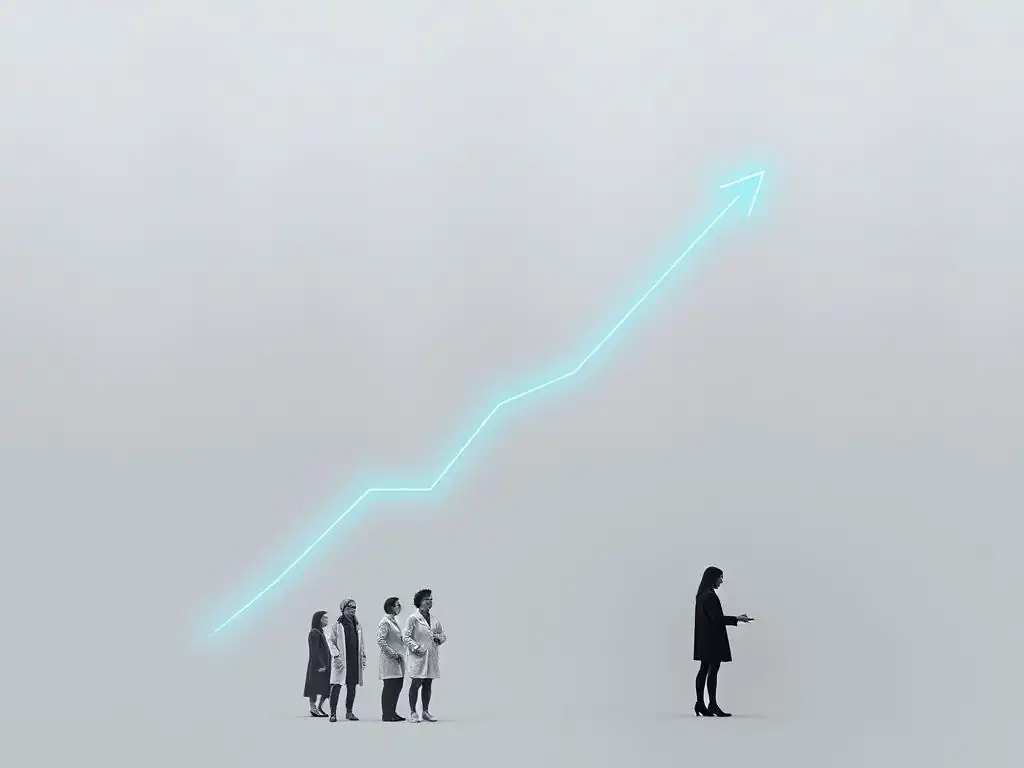
The First-Wave Feminism and its Impact on Scientific Education
The First-Wave Feminist movement, predominantly active from the mid-19th century to the early 20th century, profoundly impacted the landscape of scientific education for women, albeit indirectly at first. This movement primarily focused on securing fundamental rights for women, most notably property rights, political suffrage, and access to education.
While not always explicitly targeting scientific fields, the core demand for equal educational opportunities was a critical prerequisite for women to even consider scientific pursuits. By advocating for women's intellectual capabilities and challenging the notion of female intellectual inferiority, first-wave feminists created a social climate more amenable to women pursuing higher learning.
A key outcome of this era was the establishment and expansion of educational institutions for women. While many early women's colleges initially focused on liberal arts, the underlying principle of providing rigorous academic training laid the groundwork for future scientific curricula. The fight for access to co-educational universities also gained momentum.
Though women often faced skepticism and limited resources in these settings, the very presence of women in university lecture halls, even for subjects like mathematics and natural philosophy, was a direct consequence of the broader push for female emancipation. These efforts, though foundational, were essential stepping stones for the later women in science movements that would specifically target STEM disciplines.
The Suffrage Movement: Demanding Equal Rights in Education and Employment
The Suffrage Movement, a central component of First-Wave Feminism, played a pivotal role in advancing women's rights, including their access to education and employment, which indirectly but significantly benefited women in science. The core tenet of the suffrage movement was that women, as citizens, deserved equal political rights, including the right to vote.
This demand for political equality was intrinsically linked to broader arguments for women's autonomy and their right to participate fully in public life, which extended to professional spheres previously dominated by men. The argument was that if women could contribute to society through their vote, they could certainly contribute through their intellect and labor in any field, including science.
The fight for suffrage brought unprecedented public attention to the systemic inequalities faced by women. As suffragists argued for women's intellectual capacity and their ability to make informed decisions, they inadvertently bolstered the case for women's entry into professions like science. The movement's success in securing the right to vote in many countries by the early 20th century (e.g., the 19th Amendment in the U.S. in 1920) marked a turning point.
It empowered women politically and psychologically, fostering a sense of entitlement to equal opportunities in all aspects of life, including academic and professional scientific careers. This foundational shift in political and social discourse created a more fertile ground for subsequent women in science movements to advocate for specific reforms within STEM.
The Rise of Women's Colleges and Their Contribution to Scientific Training
The establishment and growth of women's colleges, particularly in the late 19th and early 20th centuries, were crucial developments directly influenced by early social movements for women's education. These institutions, such as Vassar, Smith, Wellesley, and Bryn Mawr in the United States, were founded on the principle that women deserved rigorous intellectual training comparable to that offered to men. Unlike co-educational universities, which often relegated women to separate, less rigorous programs or excluded them entirely from science labs, women's colleges actively encouraged female students to pursue challenging academic fields, including the sciences.
These colleges often provided dedicated science laboratories, hired pioneering female faculty members, and fostered an environment where women could excel without the pervasive gender bias found in male-dominated institutions. Many early female scientists who made significant contributions to various fields were graduates of these women's colleges.
For example, astronomer Maria Mitchell, the first American woman to work as a professional astronomer, taught at Vassar College, inspiring generations of female scientists. While not always directly part of organized women in science movements, these institutions served as vital incubators for female scientific talent, demonstrating women's capacity for scientific inquiry and creating a pipeline of educated women ready to challenge the status quo in broader scientific communities.
Mid-20th Century Shifts: World War II and Beyond
Women's Contributions to Science During World War II
World War II acted as an unexpected and powerful catalyst for women's entry into scientific and technical roles, driven by urgent national needs rather than explicit social movements for gender equality. As millions of men were conscripted into military service, women were called upon to fill critical labor shortages across various industries, including those vital to the war effort.
This included roles in factories producing munitions and aircraft, but also increasingly in scientific research, engineering, and technical support. Women stepped into positions as chemists, physicists, engineers, mathematicians, and technicians, working on everything from radar development and cryptography to penicillin production and atomic research.
For instance, women were instrumental as "computers" (human calculators) at facilities like the National Advisory Committee for Aeronautics (NACA), the precursor to NASA, performing complex mathematical calculations for aeronautical design. Similarly, at Bletchley Park in the UK, women comprised a significant portion of the codebreaking teams, applying their mathematical and linguistic skills to decipher enemy communications.
This period demonstrated unequivocally that women possessed the intellectual capacity and practical skills necessary for demanding scientific and technical work. Though many women were displaced from these roles once men returned from war, their wartime contributions shattered deeply entrenched stereotypes and provided a powerful precedent for future women in science movements advocating for permanent inclusion.
Post-War Expansion of Educational Opportunities for Women
The immediate post-World War II era saw a complex interplay of forces impacting women's educational opportunities. While many women were encouraged to return to traditional domestic roles, the war had also exposed the vast untapped potential of female intellect and labor. This, combined with broader societal shifts and the continued advocacy of early women in science movements, led to a gradual, though uneven, expansion of educational access for women.
The G.I. Bill in the United States, while primarily benefiting returning servicemen, also indirectly contributed to an overall expansion of higher education infrastructure, making it more accessible to a wider demographic, including some women.
Moreover, the burgeoning Cold War era placed a renewed emphasis on scientific and technological advancement, prompting governments and educational institutions to invest more heavily in STEM education. While this investment was initially gender-blind, it created more university places and programs that women could eventually access.
Though women still faced significant barriers in male-dominated science departments, the sheer increase in the number of university students and the diversification of fields offered meant that more women than ever before were entering higher education, including some pursuing scientific degrees. This incremental widening of access provided a crucial foundation for the more explicit demands for gender equality in STEM that would characterize the later 20th-century women in science movements.
The Second-Wave Feminist Movement and its Focus on Gender Equality in STEM
The Second-Wave Feminist Movement, emerging prominently in the 1960s and 1970s, brought a powerful and explicit focus on gender equality across all societal institutions, including science and education. Moving beyond the suffrage focus of the first wave, this movement tackled issues of workplace discrimination, equal pay, reproductive rights, and systemic sexism. For women in science, this translated into direct challenges to the discriminatory practices that continued to limit their access, advancement, and recognition in STEM fields. Activists highlighted the "pipeline problem," where talented women were disproportionately leaving science careers due to bias, lack of opportunities, and hostile work environments.
Central to the Second Wave's impact on science was its emphasis on dismantling institutional barriers and challenging ingrained biases. Organizations like the National Organization for Women (NOW), founded in 1966, actively lobbied for legislation and policy changes that would ensure equal opportunities for women in education and employment, directly impacting STEM.
The movement also encouraged women to enter non-traditional fields, including the sciences, and provided support networks for those who did. This period saw increased scrutiny of hiring practices, promotion processes, and funding allocation within scientific institutions, laying the groundwork for significant legal and policy reforms that would profoundly shape women in science movements for decades to come.
The Modern Era: Continued Advocacy and Progress
Title IX and its Impact on Women's Access to Science Education
A landmark legislative achievement directly influenced by the Second-Wave Feminist Movement was Title IX of the Education Amendments of 1972 in the United States. This federal civil rights law prohibits discrimination on the basis of sex in any education program or activity receiving federal financial assistance. While often associated with women's sports, Title IX's impact on women's access to science education has been profound and far-reaching. By mandating equal opportunities, it compelled universities and schools to dismantle discriminatory practices in admissions, scholarships, facilities, and academic programs, including those in STEM.
Before Title IX, it was not uncommon for science departments to have quotas limiting female enrollment or to offer fewer resources to female students. The enforcement of Title IX meant that institutions could no longer legally deny women access to science courses, laboratories, or degree programs solely based on their gender. This led to a significant increase in the enrollment of women in undergraduate and graduate science and engineering programs.
For example, women's share of bachelor's degrees in engineering, though still low, began to rise noticeably in the decades following Title IX's implementation, from less than 1% in the early 1970s to over 20% by the 2010s. Title IX fundamentally reshaped the educational pipeline for women in science, providing a legal framework for continued women in science movements to push for full equity.
The Rise of Women in STEM Organizations and Advocacy Groups
The modern era has witnessed the proliferation of dedicated women in science movements and advocacy groups specifically focused on promoting gender equity in STEM fields. Recognizing that legislative changes alone were insufficient to dismantle deeply ingrained biases and cultural barriers, these organizations emerged to provide targeted support, mentorship, and collective advocacy. Groups such as the Association for Women in Science (AWIS), founded in 1971, and the Society of Women Engineers (SWE), established in 1950, have played crucial roles in creating communities for female scientists and engineers, offering networking opportunities, career development resources, and a platform for collective action.
These organizations actively lobby for policy changes, conduct research on gender disparities in STEM, and develop programs to encourage girls and young women to pursue scientific careers. They provide critical mentorship programs, scholarships, and awards to support women at various stages of their scientific journeys. Furthermore, they serve as vocal advocates against discrimination and harassment in scientific workplaces, bringing attention to persistent challenges. Their sustained efforts have been instrumental in raising awareness, shaping public discourse, and driving institutional change, ensuring that the momentum generated by earlier social movements continues to propel women forward in scientific prominence.
Addressing Unconscious Bias and Promoting Inclusive Scientific Environments
In the modern era, women in science movements have increasingly shifted their focus to more subtle, yet pervasive, barriers such as unconscious bias and the need to cultivate truly inclusive scientific environments. While overt discrimination has become less common due to legal protections, implicit biases about gender, race, and other characteristics continue to influence hiring, promotion, funding decisions, and perceptions of competence in science. Research has shown, for instance, that equally qualified female candidates may be rated lower or offered less pay than their male counterparts in scientific job applications.
To counter this, advocacy efforts now concentrate on implementing unconscious bias training in academic and research institutions, developing standardized and objective evaluation criteria, and promoting diverse hiring committees. The goal is to move beyond simply increasing the number of women to ensuring that scientific workplaces are equitable, supportive, and free from microaggressions and exclusionary practices.
This includes fostering a culture where diverse perspectives are valued, and where women feel a sense of belonging and psychological safety. These ongoing initiatives are crucial for retaining women in the scientific pipeline and enabling them to thrive, ensuring that the scientific community truly reflects the diverse talents of society.

The Equity in STEM Movement: Fighting for Fair Representation
The Equity in STEM Movement is a contemporary, broad-based women in science movement dedicated to achieving fair representation and equitable treatment for women across all scientific and technological disciplines. This movement acknowledges that while progress has been made, significant disparities persist, particularly at senior leadership levels and in fields like engineering and computer science. It encompasses various advocacy groups, academic initiatives, and institutional reforms aimed at addressing systemic inequalities in funding, promotion, recognition, and workplace culture.
A core focus of this movement is to challenge the "leaky pipeline" phenomenon, where women enter STEM fields at early stages but disproportionately leave before reaching leadership positions. Data consistently shows that women hold a smaller percentage of full professorships in STEM compared to their representation at the assistant professor level.
For example, while women earned approximately 50% of science and engineering bachelor's degrees in the U.S. in 2018, they held only about 28% of tenured or tenure-track faculty positions in STEM. The Equity in STEM Movement works to identify and dismantle the factors contributing to this attrition, such as insufficient mentorship, lack of work-life balance, and persistent gender bias, advocating for policies like paid parental leave, flexible work arrangements, and transparent promotion processes.
The MeToo Movement: Addressing Harassment and Discrimination in Scientific Workplaces
While not exclusively a women in science movement, the broader MeToo Movement, which gained significant global traction in 2017, had a profound and necessary impact on addressing sexual harassment and discrimination within scientific workplaces. This movement empowered countless individuals, including women in STEM, to share their experiences of harassment, assault, and systemic misconduct. The revelations brought to light the pervasive nature of these issues in academic institutions, research labs, and professional conferences, often perpetrated by powerful male figures in positions of authority.
The MeToo Movement spurred a critical reckoning within the scientific community, leading to increased scrutiny of institutional policies, reporting mechanisms, and accountability for perpetrators. Major scientific organizations and funding bodies, such as the National Academies of Sciences, Engineering, and Medicine, and the National Science Foundation, began to issue reports and implement stricter guidelines regarding sexual harassment, recognizing it as a form of research misconduct that undermines scientific integrity.
This movement has forced institutions to move beyond simply having policies on paper to actively investigating complaints, sanctioning offenders, and creating safer environments. It has been a powerful force in validating the experiences of women in science who have suffered in silence, contributing to a broader cultural shift towards greater transparency and zero tolerance for harassment.
The Black Lives Matter Movement: Highlighting the Intersectionality of Gender and Race in Science
The Black Lives Matter (BLM) Movement, a powerful social and political movement advocating against systemic racism and violence towards Black people, has significantly influenced women in science movements by highlighting the critical concept of intersectionality. While earlier feminist movements often focused primarily on gender, BLM underscored that the experiences of women in science are not monolithic; rather, they are profoundly shaped by the intersection of gender with race, ethnicity, socioeconomic status, and other identities.
For Black women and other women of color in STEM, discrimination and marginalization are compounded by both sexism and racism, leading to unique and often more severe barriers.
The BLM movement has prompted increased awareness and action within scientific communities to address racial disparities and promote diversity, equity, and inclusion (DEI) beyond just gender. It has led to calls for disaggregated data collection to understand the specific challenges faced by women of color in STEM, and for targeted initiatives to support their recruitment, retention, and advancement.
For example, data from the National Science Foundation shows that while women of color earn degrees in STEM, their representation in faculty positions, particularly at research-intensive universities, remains disproportionately low. The BLM movement has pushed for a more holistic approach to DEI in science, recognizing that true equity for women in science requires addressing all forms of systemic discrimination that impact diverse groups of women.
Increased Representation of Women in Leadership Roles in Science
The cumulative impact of various women in science movements has led to a noticeable, albeit still insufficient, increase in the representation of women in leadership roles across scientific fields. Decades of advocacy for equal opportunities, legal protections, and the dismantling of discriminatory practices have opened pathways that were historically closed. While women still face significant challenges in reaching the very top echelons of science, more women are now serving as department chairs, deans, research institute directors, and even university presidents.
For instance, the percentage of women holding full professorships in U.S. universities, while still lagging behind men, has steadily increased over the past few decades, reflecting a slow but positive trend towards greater representation in senior academic roles. Similarly, in major scientific organizations and professional societies, women are increasingly elected to leadership positions, influencing policy, funding decisions, and the overall direction of scientific research.
This growing presence in leadership is crucial not only for symbolic representation but also for driving further institutional change, mentoring future generations of female scientists, and ensuring that diverse perspectives are integrated into scientific governance and decision-making processes.
Changing Perceptions of Women's Capabilities in Scientific Fields
Perhaps one of the most profound legacies of women in science movements is the gradual but significant shift in societal perceptions regarding women's capabilities and rightful place in scientific fields. For centuries, deeply entrenched stereotypes portrayed women as inherently less rational, less capable of abstract thought, or simply unsuited for the rigors of scientific inquiry. These biases created a self-fulfilling prophecy, discouraging girls from pursuing STEM and undermining the credibility of women who did. However, persistent advocacy, the undeniable achievements of pioneering female scientists, and increased visibility have begun to dismantle these harmful preconceptions.
Today, while some biases still linger, the idea of a woman being a scientist, engineer, or mathematician is far more normalized than it was even a few decades ago. Educational curricula increasingly feature the contributions of female scientists, and media portrayals are slowly diversifying. This change in perception is critical because it influences parental encouragement, classroom dynamics, and the self-efficacy of young girls considering STEM careers.
It also impacts how peers and colleagues perceive female scientists, fostering a more respectful and equitable environment. This evolving understanding is essential for attracting and retaining diverse talent in science, moving towards a future where scientific aptitude is recognized regardless of gender.
Inspiring Future Generations of Women Scientists
The enduring legacy of women in science movements is most powerfully seen in their capacity to inspire future generations of women scientists. By highlighting the struggles and triumphs of pioneering female researchers, and by actively creating more inclusive educational and professional pathways, these movements have provided tangible role models and a clearer vision for young women aspiring to scientific careers. The increased visibility of women in STEM through media, educational programs, and public discourse serves as a powerful antidote to historical invisibility.
Mentorship programs, scholarships specifically for women in STEM, and dedicated outreach initiatives are direct outcomes of these movements, designed to encourage girls from an early age to explore science and technology. Seeing successful women in labs, in leadership positions, and on television screens helps to break down internalized barriers and broadens girls' perceptions of what is possible.
For instance, the number of women earning doctoral degrees in science and engineering in the U.S. has significantly increased, from less than 10% in the 1960s to over 40% in recent years, demonstrating a growing pipeline of highly qualified female researchers. This inspiration is not merely anecdotal; it translates into concrete educational and career choices, ensuring a more diverse and innovative scientific workforce for the future.
The Ongoing Struggle: Challenges and Opportunities for Women in Science Today
The Gender Pay Gap in STEM Fields
Despite significant progress driven by women in science movements, the gender pay gap remains a persistent and troubling challenge in STEM fields. Even when controlling for factors like education, experience, and specific occupation, women in science and engineering often earn less than their male counterparts.
This disparity is not only unfair but also serves as a disincentive for women to remain in STEM careers, particularly as they advance. Research consistently highlights this issue; for example, a 2020 report by the Pew Research Center found that women in STEM occupations in the U.S. earned 74 cents for every dollar earned by men, a gap wider than the overall gender pay gap across all occupations.
This pay gap is influenced by a complex interplay of factors, including negotiating disparities, unconscious bias in salary setting, and the disproportionate burden of caregiving responsibilities often falling on women, which can lead to career interruptions or part-time work. Addressing this requires continued advocacy for salary transparency, stricter enforcement of equal pay laws, and institutional commitments to regular pay equity audits. Furthermore, challenging the cultural norms that undervalue women's labor is crucial. The ongoing struggle for fair compensation is a central focus for contemporary women in science movements, recognizing that economic equity is fundamental to true professional equality.
The Persistence of Gender Bias in Scientific Research and Funding
While overt discrimination has largely diminished, subtle yet pervasive gender bias continues to impact women in scientific research and access to funding. This bias can manifest in various ways, from how research proposals are evaluated to how scientific contributions are attributed. Studies have shown that grant applications submitted by female principal investigators may be rated lower, or receive less funding, than those from male counterparts, even when the scientific merit is equivalent. Similarly, women's work may be cited less frequently, or their contributions downplayed, particularly in collaborative research settings.
This implicit bias is often unconscious, stemming from societal stereotypes about leadership, competence, and scientific authority. It affects not only individual careers but also the direction and quality of scientific inquiry, as valuable research perspectives from women may be overlooked or underfunded. Addressing this requires ongoing efforts by women in science movements to promote awareness of unconscious bias, implement blind review processes for grants and publications where feasible, and mandate diverse representation on funding panels and editorial boards. Ensuring equitable access to research resources and recognition is critical for fostering an inclusive scientific environment where all talent can flourish.
The Importance of Continued Advocacy and Support for Women in Science
The journey from margin to mainstream for women in science is far from complete, underscoring the critical importance of continued advocacy and robust support systems. While significant strides have been made, persistent challenges such as the gender pay gap, unconscious bias, and the disproportionate impact of caregiving responsibilities on women's careers demonstrate that the fight for full equity is ongoing. The gains achieved thus far are a testament to the power of collective action and the unwavering dedication of women in science movements, but these gains are not irreversible and require constant vigilance.
Continued advocacy is essential to lobby for stronger institutional policies, equitable funding models, and cultural shifts that truly value diversity and inclusion in STEM. This includes pushing for transparent promotion criteria, flexible work arrangements, and robust anti-harassment policies. Equally important are support networks, mentorship programs, and communities that empower women in science to thrive, share experiences, and collectively address challenges. Investing in these initiatives ensures that future generations of female scientists not only enter the field but also remain, succeed, and ultimately lead, enriching the scientific enterprise with their diverse perspectives and groundbreaking contributions.
Conclusion: Celebrating Progress and Embracing Future Change for Women in Science Movements
The journey of women in science, from being largely confined to the margins to increasingly occupying prominent positions, is a compelling narrative of perseverance, intellectual brilliance, and the transformative power of social change. For centuries, women faced immense systemic barriers, societal expectations, and a profound lack of support that actively excluded them from scientific pursuits.
Yet, through the relentless efforts of various women in science movements, these obstacles have been steadily dismantled, paving the way for greater inclusion and recognition. From the foundational demands of early feminist thought to the targeted advocacy of modern STEM equity initiatives, each movement has contributed to reshaping the scientific landscape.
We have witnessed the undeniable impact of pioneers like Marie Curie, the crucial role of women's colleges, the unexpected opportunities forged during wartime, and the legislative breakthroughs like Title IX. More recently, movements like MeToo and Black Lives Matter have compelled the scientific community to confront issues of harassment, discrimination, and intersectional bias, fostering a deeper commitment to creating truly inclusive environments.
While celebrating the significant progress—marked by increased representation in leadership, changing perceptions, and the inspiration of future generations—it is vital to acknowledge the ongoing struggles, including the persistent gender pay gap and subtle biases. The future of science depends on embracing continued change, fostering unwavering advocacy, and nurturing a culture where every mind, regardless of gender, can contribute fully to the advancement of knowledge.
Frequently Asked Questions
Several movements, including the suffrage movement and second-wave feminism, played a crucial role. They pushed for equal educational and professional opportunities for women, opening doors to science.
What types of challenges did women in science face due to the male-dominated nature of the field?
Women often encountered discrimination in hiring, promotion, and access to resources. They also faced gender bias that undermined their contributions and limited their opportunities for recognition.
How does WomenInScienceHistory.com contribute to the women in science movements?
The website highlights the achievements and struggles of pioneering female scientists, providing inspiration and visibility. This helps to challenge existing narratives and encourage future generations of women in STEM.
What is the significance of recognizing the historical contributions of women in science?
Acknowledging their contributions helps to correct historical imbalances and dismantle gender stereotypes in science. It also inspires young women to pursue careers in STEM fields by showing them role models.
What is the long-term impact of women's increased participation in science?
Greater diversity in science leads to more innovative research and better solutions to global challenges. Different perspectives and experiences enrich the scientific community and broaden its impact.
Final Reflection: Empowering Scientific Futures
The journey of women in science, as explored throughout this article, is far from a historical footnote; it is a continuing narrative of empowerment and progress. The social movements that propelled women into scientific prominence weren't just about breaking barriers; they were about fundamentally reshaping the landscape of knowledge itself, and their reverberations are felt powerfully in today's scientific community.
The impact of these movements extends far beyond the laboratory, influencing societal perceptions and inspiring future generations. Witnessing the persistent fight for equality underscores the importance of continued advocacy and mentorship. You educate a man; you educate a man. You educate a woman; you educate a generation.
This African proverb encapsulates the profound ripple effect of empowering women in science, a ripple that continues to expand and enrich our world.
As we reflect on the triumphs and challenges detailed in this article, consider how you can contribute to fostering a more inclusive and equitable scientific environment. Let us all commit to amplifying the voices of women in science, supporting their endeavors, and ensuring that future generations inherit a world where their potential knows no bounds.
Ignite Change: Champion Women in Science!
Thank you for delving into the inspiring journeys of women who defied odds and reshaped science! Now, let's translate that inspiration into action.
Here’s how you can fuel the movement:
- Nominate a trailblazing woman scientist you admire for recognition on WomenInScienceHistory.com. Let's amplify her impact!
- Share this article with your network to inspire others and spread awareness about the vital role of women in scientific discovery.
- Start a local book club dedicated to reading biographies of women in science, fostering discussion and celebrating their legacies.
How will you contribute to ensuring that future generations of women scientists receive the recognition they deserve?