
Powering Modern Lasers: Donna Strickland's NobelWinning Optics (HS Physics Lesson)


Welcome to WomenInScienceHistory.com, where we illuminate the remarkable contributions of women to science throughout history! Ever wondered how the powerful lasers used in everything from eye surgery to manufacturing work? Delve into the fascinating world of laser physics with our latest article, " Powering Modern Lasers: Donna Strickland's Nobel-Winning Optics (HS Physics Lesson)." Uncover the secrets behind Donna Strickland's groundbreaking work and its impact on modern technology, plus discover how you can incorporate this inspiring story into your high school physics curriculum. Intrigued? Keep reading to unlock a Donna Strickland laser physics lesson that will captivate and educate!
- Powering Modern Lasers: Chirped Pulse Amplification (HS Physics Lesson)
- Introduction to Chirped Pulse Amplification and Laser Physics
- Understanding the Fundamentals of Laser Physics
- The Challenge: Achieving High-Intensity Laser Pulses
- Chirped Pulse Amplification (CPA): A Detailed Explanation
- Contributions to CPA Development
- Applications of High-Intensity Lasers Enabled by CPA
- Hands-On Activity: Modeling Pulse Stretching and Compression
- Assessing Student Understanding: CPA and Laser Physics Quiz
- Further Exploration: Resources for Learning More About Laser Physics and CPA
- The Future of CPA and Laser Technology
-
Frequently Asked Questions
- What is Donna Strickland best known for in the field of laser physics?
- What is Chirped Pulse Amplification (CPA) and why is it significant?
- What challenges did Donna Strickland face as a woman in science?
- How does understanding Donna Strickland's work relate to a high school physics lesson?
- Where can I learn more about other women who have made significant contributions to science?
- Final Reflection: Illuminating the Future with Innovation
- Unleash Your Inner Innovator: Explore the World of Laser Physics!
Powering Modern Lasers: Chirped Pulse Amplification (HS Physics Lesson)
Introduction to Chirped Pulse Amplification and Laser Physics
Chirped Pulse Amplification: Revolutionizing High-Intensity Laser Technology
Chirped Pulse Amplification (CPA) stands as a monumental breakthrough in laser physics, fundamentally changing how scientists and engineers generate and utilize high-intensity laser pulses. Before CPA, the quest for higher laser power was severely limited by the inherent damage thresholds of optical materials. As a laser pulse's energy increased, its peak power would quickly reach a point where it would literally vaporize or ionize the lenses, mirrors, and amplifier crystals it passed through. This barrier meant that achieving truly intense, ultrashort pulses—those lasting mere femtoseconds (quadrillionths of a second) with peak powers in the terawatt range—was largely impossible.
The revolutionary aspect of CPA, developed by Donna Strickland and Gérard Mourou in the mid-1980s, lies in its ingenious three-step process: stretching, amplifying, and then compressing laser pulses. By temporally stretching a short, low-energy pulse, its peak power is dramatically reduced, allowing it to be amplified to very high energies without damaging the optical components.
After amplification, the pulse is re-compressed to its original ultrashort duration, but now with vastly amplified energy, resulting in an unprecedented peak power. This innovation earned Strickland and Mourou the Nobel Prize in Physics in 2018, recognizing their profound impact on laser science and its myriad applications.
The Significance of Chirped Pulse Amplification in Laser Applications
The advent of Chirped Pulse Amplification has unlocked capabilities across numerous scientific, medical, and industrial fields that were previously unimaginable. Prior to CPA, the most powerful lasers could only achieve peak intensities orders of magnitude lower than what is now routinely possible. This limitation meant that precise, non-thermal interactions with materials, or the ability to probe extreme states of matter, remained out of reach. CPA transformed lasers from powerful tools into instruments capable of manipulating matter at its fundamental level.
In practical terms, CPA made possible a new generation of laser applications requiring extreme precision and minimal collateral damage. For instance, in medicine, it enabled the widespread adoption of highly precise laser eye surgery. In manufacturing, it allowed for "cold" micromachining, where materials are cut or drilled with virtually no heat-affected zone. For scientific research, CPA lasers became indispensable for studying phenomena like laser-plasma interactions, generating X-rays, and even accelerating particles to relativistic speeds in tabletop setups. Understanding this significance is a core component of any comprehensive Donna Strickland laser physics lesson.
Lesson Overview: Understanding the Principles and Applications of CPA
This high school physics lesson aims to provide a clear and engaging exploration of Chirped Pulse Amplification, building upon fundamental concepts of laser physics. Students will first gain a foundational understanding of what a laser is and its unique properties, such as coherence and monochromaticity. We will then delve into the challenges faced by traditional laser amplification methods when attempting to achieve high-intensity pulses, setting the stage for why CPA was such a necessary and brilliant invention.
The core of this Donna Strickland laser physics lesson will meticulously walk through the three crucial steps of the CPA process: pulse stretching, amplification, and compression, detailing the underlying physics of each stage. Beyond the theoretical principles, the lesson will highlight the transformative applications of CPA-enabled high-intensity lasers across various sectors, from medical procedures to cutting-edge scientific research. A hands-on activity will further solidify understanding, allowing students to visualize the concepts of pulse manipulation, culminating in an assessment to gauge comprehension and encourage further exploration into the fascinating world of photonics.
Understanding the Fundamentals of Laser Physics
What is a Laser? A Basic Introduction to Light Amplification
A laser is a device that emits light through a process of optical amplification based on the stimulated emission of electromagnetic radiation. The acronym LASER stands for Light Amplification by Stimulated Emission of Radiation. Unlike conventional light sources, which emit light spontaneously and in all directions, a laser produces a highly concentrated beam of light with very specific properties. The fundamental principle involves atoms or molecules being excited to higher energy states. When these excited particles are stimulated by a photon of the correct energy, they emit an identical photon, leading to a cascade effect where light is amplified.
This amplification occurs within an optical resonator, typically formed by two mirrors, one fully reflective and the other partially reflective. The gain medium (the material that undergoes stimulated emission, such as a crystal, gas, or semiconductor) is placed between these mirrors. Light bounces back and forth, continually stimulating more emission and gaining intensity, until a portion of the amplified light escapes through the partially reflective mirror as a coherent laser beam. This mechanism ensures that the emitted light is amplified and directed, setting it apart from ordinary light sources.
Key Concepts: Coherence, Monochromaticity, and Directionality of Laser Light
Laser light possesses several distinct properties that make it uniquely useful for a vast array of applications, including those enabled by Chirped Pulse Amplification. The first key property is coherence, meaning the light waves are in phase with each other, both spatially and temporally. Spatial coherence implies that light waves across the beam's cross-section maintain a constant phase relationship, allowing for tight focusing. Temporal coherence means the light waves maintain a constant phase relationship over time and distance, enabling phenomena like interference and holography.
The second crucial characteristic is monochromaticity, which refers to the laser's emission of light at a single, very narrow range of wavelengths (a single "color"). While a white light bulb emits a broad spectrum of colors, a typical laser might emit light at a specific wavelength like 632.8 nanometers (red light from a Helium-Neon laser) or 1064 nanometers (infrared from a Nd:YAG laser), with a spectral linewidth often much less than a nanometer.
Finally, directionality describes how laser light travels in a very narrow, nearly parallel beam with minimal divergence. This allows laser beams to propagate over long distances or be focused into extremely small spots, concentrating their energy intensely, a critical feature exploited in the Donna Strickland laser physics lesson on CPA.
Types of Lasers: From Gas Lasers to Solid-State Lasers
Lasers come in various forms, each utilizing different gain media and pumping mechanisms to produce light with specific characteristics. Gas lasers, such as Helium-Neon (HeNe) lasers and Carbon Dioxide (CO2) lasers, use a gas mixture as their active medium. HeNe lasers are known for their stable, low-power red beams, commonly used in barcode scanners and alignment systems. CO2 lasers are highly efficient, producing high-power infrared light suitable for industrial cutting and welding. These lasers often operate in a continuous wave (CW) mode, providing a steady output of light.
Solid-state lasers employ a solid material, typically a crystal or glass doped with rare-earth ions, as the gain medium. Examples include Neodymium-doped Yttrium Aluminum Garnet (Nd:YAG) lasers and Titanium-doped Sapphire (Ti:Sapphire) lasers.
Nd:YAG lasers are versatile, used for various applications from medical surgery to material processing, and can operate in both CW and pulsed modes. Ti:Sapphire lasers are particularly important in the context of CPA because they are tunable over a broad range of wavelengths and can generate extremely short pulses (down to femtoseconds), making them the preferred choice for high-intensity, ultrashort pulse systems that utilize the Donna Strickland laser physics principles.
The Challenge: Achieving High-Intensity Laser Pulses
The Problem of Material Damage in High-Power Lasers
Before the development of Chirped Pulse Amplification, a significant hurdle in laser technology was the inherent limitation imposed by the optical damage threshold of the materials used in laser systems. When a laser pulse propagates through components like lenses, mirrors, and especially the amplifier medium itself, its instantaneous power can become so immense that it physically alters or destroys the material. This phenomenon, known as laser-induced breakdown, occurs when the electric field of the light becomes strong enough to ionize the atoms within the material, leading to plasma formation and subsequent material damage, such as pitting, cracking, or melting.
For ultrashort pulses, even a moderate amount of energy concentrated into a very brief duration translates to an extremely high peak power. For example, a 1-Joule pulse lasting 10 picoseconds has a peak power of 100 Gigawatts. Such powers, when focused or even just passing through optical components, would inevitably exceed the material's damage threshold, which for common optical glasses like fused silica is typically around 10-20 GW/cm² for picosecond pulses. This fundamental physical barrier meant that amplifying ultrashort pulses beyond a certain energy level was impossible without destroying the very components designed to handle them.
Limits of Traditional Laser Amplification Techniques
Traditional laser amplification techniques, prior to CPA, involved directly amplifying short laser pulses. In these setups, a seed pulse (a short, low-energy pulse) would be sent directly into a series of amplifier stages. Each stage would add more energy to the pulse, increasing its overall intensity. However, as the pulse gained energy while maintaining its short duration, its peak power would rise exponentially. This rapid increase in instantaneous power meant that the pulse quickly reached the damage threshold of the amplifier medium itself, as well as subsequent optical components like mirrors and windows.
Consider a laser system designed to produce 1-picosecond pulses. If you tried to amplify such a pulse directly to, say, 1 Joule, the peak power would be 1 Terawatt. This immense power density would instantly destroy the amplifier crystal or any other optical element in its path. Engineers and scientists were therefore stuck in a dilemma: they could either produce high-energy pulses that were long (nanoseconds or longer) or ultrashort pulses that were very low in energy. The combination of high energy and ultrashort duration—the hallmark of high-intensity lasers—remained elusive, highlighting the urgent need for an innovative solution.
Introducing Chirped Pulse Amplification (CPA): A Breakthrough Solution
The limitations of traditional amplification methods presented a seemingly insurmountable barrier to generating truly high-intensity laser pulses. The breakthrough came with the invention of Chirped Pulse Amplification (CPA) by Donna Strickland and Gérard Mourou in 1985 while Strickland was a doctoral student at the University of Rochester. Their ingenious solution directly addressed the problem of material damage by separating the processes of energy amplification and pulse compression. Instead of trying to amplify a short pulse directly, which leads to immediate damage, CPA modifies the pulse before amplification.
The core idea of CPA is deceptively simple yet profoundly effective: stretch the ultrashort laser pulse in time, amplify this now much longer (and thus lower peak power) pulse, and then compress it back to its original ultrashort duration after it has gained significant energy. This approach allows the laser pulse to accumulate massive amounts of energy while its peak power remains below the damage threshold of the optical components during the amplification phase.
It was this elegant solution, a cornerstone of the Donna Strickland laser physics lesson, that opened the door to the era of petawatt-class lasers and revolutionized numerous fields of science and technology.
Chirped Pulse Amplification (CPA): A Detailed Explanation
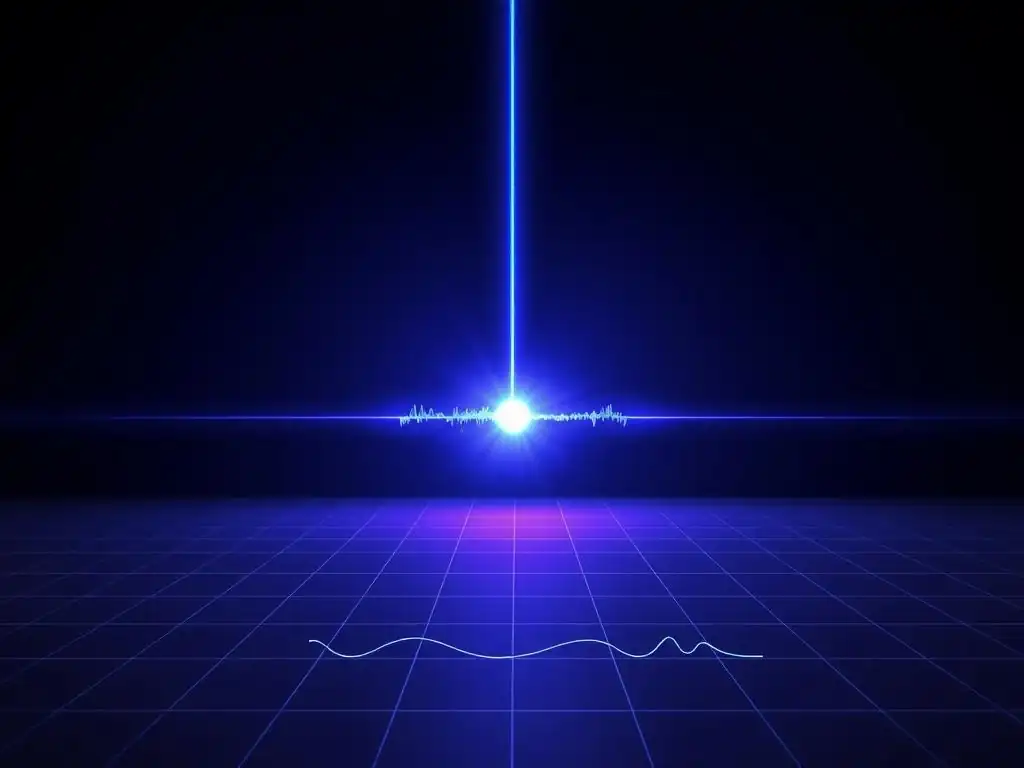
The CPA Process: Stretching, Amplifying, and Compressing Laser Pulses
Chirped Pulse Amplification is a three-stage process meticulously designed to overcome the intensity limitations of optical materials. It cleverly manipulates the temporal and spectral characteristics of a laser pulse to allow for high-energy amplification without damage, followed by a re-concentration of that energy into an ultrashort burst.
Step 1: Stretching the Laser Pulse (Temporal Expansion)
The first critical step in the CPA process involves taking a short, low-energy "seed" laser pulse and stretching it out in time. This is typically achieved by passing the pulse through a "stretcher," which often consists of a pair of diffraction gratings. Diffraction gratings work by dispersing light based on its wavelength, much like a prism separates white light into a rainbow. In a stretcher, different frequencies (or "colors") within the laser pulse travel slightly different path lengths. For example, lower frequencies (redder light) might be forced to travel a longer path than higher frequencies (bluer light).
This differential path length causes the pulse to become "chirped," meaning its frequency varies across its temporal profile – for instance, lower frequencies might arrive first, followed by higher frequencies. A typical 100-femtosecond (10^-13 second) pulse, which might have a peak power of a few kilowatts, can be stretched by a factor of 10,000 to 100,000 times, becoming a pulse lasting 1 to 10 nanoseconds (10^-9 second). This temporal expansion dramatically reduces the pulse's instantaneous peak power by the same factor, making it safe to amplify.
Step 2: Amplifying the Stretched Pulse (Energy Enhancement)
Once the laser pulse has been stretched and its peak power significantly reduced, it is then directed into a laser amplifier. This amplifier typically uses a gain medium, such as a Titanium-doped Sapphire (Ti:Sapphire) crystal, which is "pumped" by another high-energy laser. The pumping laser excites the atoms in the Ti:Sapphire crystal to a higher energy state, creating a population inversion. As the stretched, low-peak-power pulse passes through this excited medium, it stimulates the emission of more photons, causing the pulse to gain enormous amounts of energy.
Because the pulse is now spread out over a much longer duration (nanoseconds), its instantaneous peak power remains well below the damage threshold of the amplifier crystal and other optical components, even as its total energy increases dramatically. For example, a pulse that started with nanojoules of energy can be amplified to millijoules or even joules of energy during this stage. This energy enhancement is crucial for achieving the extremely high peak powers in the final compressed pulse, a core principle in any Donna Strickland laser physics lesson.
Step 3: Compressing the Amplified Pulse (Reconstructing High Intensity)
The final and equally crucial step in the CPA process is to compress the high-energy, stretched pulse back to its original ultrashort duration. This is achieved using a "compressor," which is typically another pair of diffraction gratings, often arranged in an inverse configuration to the stretcher. The compressor essentially reverses the frequency-dependent delay introduced by the stretcher. The frequencies that traveled a longer path in the stretcher now travel a shorter path in the compressor, and vice-versa.
As the different frequencies within the pulse are re-aligned in time, they constructively interfere, causing the pulse to collapse back into its original femtosecond or picosecond duration. This re-concentration of the now vastly amplified energy into an ultrashort time frame results in an incredibly high peak power. A pulse that was amplified to 1 Joule of energy and compressed to 100 femtoseconds will have a peak power of 10 Terawatts (10^13 Watts), an intensity unimaginable before CPA. This ability to generate such intense, ultrashort pulses is the true power of the Donna Strickland laser physics lesson.
Visualizing CPA: Using Animated Diagrams to Explain the Process
While this text cannot display visual elements, it is essential to emphasize the power of animated diagrams in explaining the Chirped Pulse Amplification process, especially in a high school setting. An effective animation would begin by showing a very short, intense "seed" pulse, represented as a narrow, tall peak. As it enters the "stretcher" (depicted as a series of gratings), the animation would show the pulse broadening significantly in time, becoming much wider and shorter in amplitude, visually representing the reduction in peak power. Different colors within the pulse could spread out, illustrating the chirp.
Next, the animation would show this stretched pulse passing through an "amplifier" (e.g., a crystal). Here, the pulse would remain wide, but its height would increase substantially, symbolizing its gain in total energy while maintaining a low peak power. Finally, the amplified, stretched pulse would enter the "compressor" (another set of gratings).
The animation would then depict the pulse rapidly narrowing in width and growing dramatically in height, symbolizing the reconstruction of its ultrashort duration and immense peak power. Such a visual journey makes the complex temporal and spectral manipulation of CPA much more intuitive and memorable for students learning about Donna Strickland's laser physics principles.
Contributions to CPA Development
Key Collaborations in the Development of CPA
The groundbreaking development of Chirped Pulse Amplification was primarily the result of the collaborative work between Donna Strickland and her Ph.D. supervisor, Gérard Mourou, at the University of Rochester's Laboratory for Laser Energetics in the mid-1980s. Their seminal paper, "Compression of amplified chirped optical pulses," was published in Optics Communications in 1985. At the time, Donna Strickland was a doctoral student, and the development of CPA formed a significant part of her dissertation. This highlights the profound impact a young researcher can have on a field, serving as an inspiring example in any Donna Strickland laser physics lesson.
Their collaboration was crucial because Mourou had identified the fundamental problem of optical damage in high-power laser systems, and Strickland, through her rigorous experimental work and theoretical understanding, devised the elegant solution of stretching, amplifying, and compressing. While their initial experiments were conducted with relatively modest laser systems compared to today's petawatt lasers, the fundamental principle they established proved scalable and universally applicable. Their innovative approach not only solved a long-standing problem in laser physics but also opened up entirely new avenues for research and technological development, fundamentally reshaping the landscape of high-intensity laser science globally.
Impact of CPA: Applications in Science, Medicine, and Industry
The impact of Chirped Pulse Amplification on science, medicine, and industry has been nothing short of transformative. In science, CPA enabled the creation of ultrashort, high-intensity laser pulses that allow researchers to study matter under extreme conditions, such as those found in stars or planetary cores. This includes fields like high-energy-density physics, where materials are compressed and heated to extraordinary temperatures, and attosecond science, which probes electron dynamics on incredibly short timescales. CPA lasers are also instrumental in developing compact particle accelerators, potentially revolutionizing medical imaging and fundamental particle physics.
In medicine, CPA has directly led to significant advancements, most notably in ophthalmology. Femtosecond lasers, which utilize CPA principles, are now standard for precise corneal flap creation in LASIK eye surgery, offering unparalleled precision and safety compared to traditional mechanical methods. These lasers are also used in cataract surgery and other delicate ophthalmic procedures.
For industry, CPA-enabled lasers facilitate advanced materials processing, including "cold ablation" for micromachining. This allows for extremely precise cutting, drilling, and engraving of various materials—from delicate polymers to hard metals—with minimal heat-affected zones, crucial for manufacturing intricate components in electronics, automotive, and aerospace industries. The pervasive influence of CPA underscores the importance of the Donna Strickland laser physics lesson.
Applications of High-Intensity Lasers Enabled by CPA
Laser Eye Surgery: Correcting Vision with Precision and Speed
One of the most widespread and impactful applications of high-intensity lasers enabled by Chirped Pulse Amplification is laser eye surgery, particularly Femtosecond LASIK. Before the advent of CPA, LASIK procedures relied on a mechanical blade (microkeratome) to create the corneal flap, which carried risks of complications. With CPA, however, ultrashort femtosecond laser pulses can be precisely focused within the cornea to create microscopic bubbles, effectively separating corneal tissue without a blade. This technique is incredibly precise, with typical spot sizes around a few micrometers and pulse durations of less than 500 femtoseconds.
The advantage of using CPA-enabled femtosecond lasers is their ability to perform "photodisruption" with minimal collateral damage. The energy from the ultrashort pulse is delivered so rapidly that it vaporizes the tissue at the focal point before significant heat can spread to surrounding areas.
This results in cleaner, more predictable flap creation, leading to faster healing, reduced risk of infection, and improved visual outcomes for millions of patients worldwide. The precision and safety offered by these lasers have made corrective eye surgery a routine and highly successful procedure, directly benefiting from the principles taught in a Donna Strickland laser physics lesson.
Materials Processing: Cutting, Welding, and Engraving with Lasers
High-intensity lasers, made possible by CPA, have revolutionized materials processing, offering unparalleled precision and efficiency in manufacturing. The key advantage lies in their ability to perform "cold ablation." When an ultrashort laser pulse (typically femtoseconds to picoseconds) interacts with a material, its energy is deposited so quickly that the material is vaporized almost instantaneously, before heat has time to conduct to the surrounding area. This minimizes thermal damage, resulting in extremely clean cuts, virtually no burrs, and a minimal heat-affected zone (HAZ).
This contrasts sharply with traditional laser processing using longer pulses, which can cause melting, charring, and significant HAZ, leading to microcracks or degradation of material properties. CPA-enabled lasers are used for a myriad of applications, including drilling high-aspect-ratio holes in aerospace components, precise cutting of medical devices like stents, engraving intricate patterns on brittle materials like glass or ceramics without cracking, and even micromachining delicate electronic components. For instance, a 100-femtosecond laser can drill a 10-micrometer diameter hole through a 1-millimeter thick silicon wafer in milliseconds with superior quality compared to a nanosecond laser.
Scientific Research: Exploring Fundamental Physics with Intense Laser Fields
The ability to generate incredibly high-intensity laser fields has opened up entirely new frontiers in scientific research, allowing physicists to explore fundamental interactions between light and matter under extreme conditions. CPA lasers are indispensable tools in laboratories worldwide, enabling experiments that push the boundaries of our understanding of the universe.
Example: Studying Laser-Plasma Interactions
One prominent area of research is the study of laser-plasma interactions. When an ultrashort, high-intensity laser pulse interacts with a gas or solid target, its electric field can be so strong (often exceeding 10^18 W/cm²) that it rapidly ionizes the material, creating a plasma. These interactions are fundamental to fields such as inertial confinement fusion, where powerful lasers are used to compress and heat fuel pellets to achieve conditions for nuclear fusion.
For example, the National Ignition Facility (NIF) uses hundreds of laser beams to deliver megajoules of energy to a target, indirectly leveraging concepts of high-energy delivery enabled by CPA principles. Furthermore, CPA lasers are used to develop compact particle accelerators, where electrons or ions are accelerated to relativistic speeds (approaching the speed of light) over distances of millimeters rather than kilometers, promising applications in medicine and fundamental physics.
Example: High Harmonic Generation
Another fascinating application is High Harmonic Generation (HHG). When an intense, ultrashort laser pulse interacts with a noble gas, it can cause electrons to be ripped from their atoms and then driven back by the laser's oscillating electric field. As the electron recombines with the ion, it emits photons at very high multiples (harmonics) of the original laser frequency.
This process generates coherent X-ray radiation, specifically in the extreme ultraviolet (EUV) and soft X-ray regions of the spectrum. These X-rays have pulse durations in the attosecond range (10^-18 seconds), making them the shortest bursts of light ever created. This allows scientists to observe and control electron motion within atoms and molecules, providing unprecedented insights into fundamental chemical and physical processes on their intrinsic timescales.
Medical Imaging: Advancements in Optical Coherence Tomography
While not a direct application of the peak power of CPA lasers, the underlying principles of ultrashort pulse generation and broad spectral bandwidth, often originating from or related to technologies developed for CPA, have significantly advanced medical imaging techniques like Optical Coherence Tomography (OCT). OCT is a non-invasive imaging modality that uses light to capture micrometer-resolution, three-dimensional images from within optical scattering media, such as biological tissues. It is analogous to ultrasound but uses light waves instead of sound waves, enabling much higher resolution.
Modern OCT systems often utilize broadband light sources, which can be generated by techniques like supercontinuum generation, itself often initiated by ultrashort pulses from femtosecond lasers. The broader the bandwidth of the light source, the higher the axial (depth) resolution of the OCT image. For example, OCT is widely used in ophthalmology for high-resolution imaging of the retina, allowing for early detection and monitoring of diseases like glaucoma and macular degeneration. It also finds applications in dermatology for imaging skin lesions and in cardiology for visualizing arterial plaques, providing crucial diagnostic information without invasive procedures.
Hands-On Activity: Modeling Pulse Stretching and Compression
Activity Overview: Simulating Pulse Stretching and Compression
This hands-on activity aims to provide students with a tangible and visual understanding of the abstract concepts of pulse stretching and compression, which are central to Chirped Pulse Amplification. While we cannot replicate the actual laser process in a high school classroom, we can model the underlying principle: the spatial separation and recombination of different "colors" (wavelengths/frequencies) of light, which is analogous to how a laser pulse's frequencies are separated and recombined in time.
This activity will help students grasp how a short pulse can be "spread out" and then re-compressed, a key part of the Donna Strickland laser physics lesson.
The goal is for students to observe how a broad spectrum of light can be dispersed (stretched in space) and then, theoretically, recombined (compressed). This directly relates to how a laser pulse's constituent frequencies are separated by a stretcher and then re-aligned by a compressor. The activity will encourage critical thinking about how path length differences for different wavelengths lead to temporal manipulation in real CPA systems.
Materials Needed: Diffraction Grating, Prism, or Simulation Software
For this activity, students can use readily available materials to model the principle of dispersion:
- Physical Materials:
- A white light source (e.g., a bright flashlight, a projector, or sunlight).
- A diffraction grating (a piece of an old CD/DVD can serve as a simple grating, or dedicated inexpensive gratings can be purchased).
- A white screen or wall to project the spectrum.
- Optional: A prism for comparison, which also disperses light.
- Ruler and protractor for more quantitative observations (optional).
- Alternative: Simulation Software:
- Access to an online physics simulation tool that can model wave propagation, dispersion, and interference patterns. Many free educational simulations are available that demonstrate how light interacts with gratings or prisms. This allows for more controlled experimentation with parameters.
Procedure: Step-by-Step Instructions for the CPA Model
Here are the steps for a simplified modeling activity:
- Set up the Light Source: Position the white light source to shine directly onto a white screen or wall in a darkened room.
- Introduce the Grating (Stretcher Model): Place the diffraction grating in the path of the white light beam, a few centimeters in front of the screen.
- Observe Dispersion: Observe how the white light is split into its constituent colors (a spectrum) on the screen. Note that different colors are dispersed at different angles, creating a spatial separation. Discuss how this spatial separation of colors is analogous to the temporal separation of frequencies within a laser pulse in a real CPA stretcher.
- Discuss Path Lengths: Guide students to understand that if this were a laser pulse, the different "colors" (frequencies) would be traveling slightly different path lengths as they reflect off the grating, causing them to arrive at different times. This is the "chirp."
- Conceptualize Compression: Ask students to imagine how they could "recombine" these colors back into a single white spot. Lead them to the idea of a second, identical grating placed after the first, but oriented to reverse the dispersion. This second grating would act as the "compressor," bringing all the colors (frequencies) back together at a single point, just as the compressor in CPA brings all the frequencies of the amplified pulse back together in time.
Discussion: Relating the Model to the Actual CPA Process
After the activity, facilitate a discussion to connect the simple model to the complex realities of Chirped Pulse Amplification:
- "How does the spatial separation of colors on our screen relate to the temporal stretching of a laser pulse in the first stage of CPA?" (Answer: Both involve separating different frequencies/wavelengths, but in CPA it's a temporal separation, not just spatial.)
- "What would happen if we could perfectly position a second grating after the first, oriented to converge the colors? How does this represent the compressor's role?" (Answer: It would recombine the colors, just as the compressor recombines the chirped frequencies, making the pulse short again.)
- "Why is it crucial that the pulse is stretched before amplification and compressed after amplification in a real CPA system?" (Answer: To keep the peak power low during amplification and avoid damaging components, then to achieve high peak power only at the very end.)
- "How does this simple model help us understand Donna Strickland's ingenious solution to a major problem in laser physics?" (Answer: It illustrates the fundamental principle of manipulating light's spectral components to control its temporal duration and peak power.) This reinforces the "Donna Strickland laser physics lesson" objective.
Assessing Student Understanding: CPA and Laser Physics Quiz
Sample Quiz Questions: Testing Knowledge of CPA and its Applications
To assess student comprehension of Chirped Pulse Amplification and foundational laser physics principles, the following sample quiz questions can be used. These questions are designed to test both conceptual understanding and the ability to explain the process and its significance, tying back to the core aspects of the Donna Strickland laser physics lesson.
What is Chirp in the context of CPA?
Expected Answer: In the context of Chirped Pulse Amplification, "chirp" refers to a phenomenon where the different frequencies (or colors) within a laser pulse are temporally separated. When a pulse is "chirped," its frequency changes over its duration; for example, lower frequencies might lead the pulse, followed by higher frequencies, or vice-versa.
This is intentionally introduced during the stretching phase of CPA, typically by passing the pulse through a dispersive element like a diffraction grating, causing different frequencies to travel different path lengths and thus arrive at different times. The purpose of chirping is to reduce the instantaneous peak power of the pulse, making it safe for high-energy amplification.
Explain the role of the compressor in the CPA process.
Expected Answer: The compressor is the final and crucial stage in the Chirped Pulse Amplification process, following the amplification of the stretched pulse. Its primary role is to reverse the temporal stretching (the "chirp") introduced by the stretcher, thereby re-concentrating the high-energy pulse back into its original, ultrashort duration. Typically consisting of another pair of diffraction gratings, the compressor is designed to impart the opposite dispersion to the amplified pulse compared to the stretcher.
This means that frequencies that were delayed by the stretcher are now advanced by the compressor, and vice-versa, causing all the constituent frequencies of the pulse to arrive simultaneously at the output. The result is an ultrashort pulse (e.g., femtoseconds or picoseconds) with enormously high peak power (terawatts or petawatts), which is the ultimate goal of CPA and the key to its diverse applications.
Further Exploration: Resources for Learning More About Laser Physics and CPA
Recommended Reading: Books and Articles on Laser Physics and CPA
For students eager to delve deeper into the fascinating world of laser physics and Chirped Pulse Amplification, several resources can provide more detailed theoretical background and practical insights. Introductory university-level physics textbooks often have dedicated chapters on optics and lasers, explaining concepts like stimulated emission, optical resonators, and laser types. For a more focused understanding of the foundational principles, "Principles of Lasers" by Orazio Svelto is a classic and comprehensive resource, although it may be more advanced for high school students.
For those interested in the specific history and technical details of CPA, searching for the original 1985 paper by Donna Strickland and Gérard Mourou, "Compression of amplified chirped optical pulses," published in Optics Communications, offers direct insight into their groundbreaking work. Additionally, popular science articles and reputable scientific magazines often feature accessible explanations of CPA and its applications, providing excellent supplementary reading for a Donna Strickland laser physics lesson.
Online Resources: Websites and Videos Explaining CPA
The internet offers a wealth of educational resources that can complement classroom learning about laser physics and CPA. Many university physics departments and research laboratories maintain websites with sections dedicated to explaining their laser research, often including clear diagrams and animations of CPA. Websites like the Nobel Prize official site provide excellent background on Donna Strickland's and Gérard Mourou's work, including accessible explanations and interviews.
Furthermore, educational platforms and science communication channels on video-sharing sites often feature engaging videos that visually explain the complex processes of laser operation and Chirped Pulse Amplification. Searching for terms like "Chirped Pulse Amplification explained," "femtosecond laser principles," or "Donna Strickland Nobel Prize laser physics" can yield a variety of helpful visual and auditory learning aids. These online resources can greatly enhance a student's understanding by providing visual context for the concepts discussed in a Donna Strickland laser physics lesson.
Understanding laser physics and advanced techniques like Chirped Pulse Amplification can open doors to a wide array of exciting and impactful career paths in the rapidly growing field of photonics, which is the science and technology of light. Graduates with expertise in this area are highly sought after in various sectors. For instance, research scientists work in universities, national laboratories, and private R&D firms, pushing the boundaries of laser technology, developing new applications, or exploring fundamental light-matter interactions.
Optical engineers design and build laser systems for specific purposes, ranging from precision manufacturing tools to advanced medical devices and defense applications. Medical physicists specialize in applying lasers and other light-based technologies in healthcare, such as in surgery, diagnostics, and therapy. In industry, roles exist in manufacturing engineering, quality control, and product development, where lasers are used for micro-machining, welding, and advanced material processing. A strong grasp of the principles taught in a Donna Strickland laser physics lesson can provide a solid foundation for pursuing these innovative and rewarding careers.
The Future of CPA and Laser Technology
Current Research and Development in CPA
The field of Chirped Pulse Amplification and high-intensity laser technology continues to be an area of intense research and development globally. Scientists are constantly pushing the boundaries of what is possible, striving for even higher peak powers, shorter pulse durations, and increased repetition rates. Current research efforts include developing Exawatt (10^18 Watts) and even Zeptowatt (10^21 Watts) class lasers, which are orders of magnitude more powerful than currently available systems. This involves exploring new gain media with higher damage thresholds and broader amplification bandwidths, as well as developing more robust and efficient grating designs for stretching and compression.
Another significant area of focus is increasing the repetition rate of these high-power lasers, moving from single-shot or low-repetition-rate systems to those capable of thousands or even millions of pulses per second. This would enable more efficient applications, such as high-throughput industrial processing or faster data acquisition in scientific experiments. Furthermore, research is ongoing into compacting these powerful laser systems, aiming to reduce their footprint and cost, making them more accessible for broader use in various research and industrial settings.
Potential Future Applications of High-Intensity Lasers.
The ongoing advancements in CPA technology promise to unlock an array of transformative future applications, some of which are still in their conceptual stages. One of the most ambitious goals is the development of compact laser-driven particle accelerators that could replace kilometer-long conventional accelerators, revolutionizing medical therapy (e.g., proton therapy for cancer) and fundamental physics research. The extreme intensities could also pave the way for more efficient inertial confinement fusion energy, offering a cleaner and virtually limitless power source.
Beyond energy, high-intensity lasers might be used for space debris removal, where powerful laser pulses could ablate tiny amounts of material from orbital junk, nudging it into a decaying orbit. In materials science, the ability to create and study matter under extreme pressures and temperatures could lead to the discovery of novel materials with unprecedented properties.
Furthermore, the generation of even shorter attosecond pulses could allow for real-time imaging of chemical reactions and the control of electron dynamics in new ways, opening up entirely new fields of quantum optics and information processing. The legacy of the Donna Strickland laser physics lesson will continue to inspire these future breakthroughs.
Frequently Asked Questions
What is Donna Strickland best known for in the field of laser physics?
Donna Strickland is best known for her groundbreaking work on chirped pulse amplification (CPA), a technique that revolutionized the power of lasers. She was awarded the Nobel Prize in Physics for this invention.
What is Chirped Pulse Amplification (CPA) and why is it significant?
CPA involves stretching, amplifying, and then compressing laser pulses. This allows for the creation of ultra-short, high-intensity laser pulses without damaging the amplifying material. It is significant because it enabled breakthroughs in many scientific and industrial applications.
What challenges did Donna Strickland face as a woman in science?
While not always explicitly stated, the website suggests that Strickland faced challenges common to women in male-dominated scientific fields. This often included lack of recognition and systemic biases that hindered their progress.
How does understanding Donna Strickland's work relate to a high school physics lesson?
Strickland's work on CPA provides a real-world example of advanced optics principles in action. It demonstrates how seemingly complex physics can lead to revolutionary technologies and is a compelling case study for aspiring scientists.
Where can I learn more about other women who have made significant contributions to science?
WomenInScienceHistory.com offers biographies and discussions highlighting the contributions of numerous female scientists throughout history. The site is a valuable resource for discovering overlooked narratives and inspiring future generations.
Final Reflection: Illuminating the Future with Innovation
The journey through Donna Strickland's groundbreaking work in chirped pulse amplification (CPA) reminds us that true innovation lies in challenging established paradigms. Her Nobel Prize-winning research, now accessible through a high school physics lens, isn't just a historical achievement; it's a testament to the power of curiosity and perseverance in pushing the boundaries of scientific understanding, directly impacting fields from medicine to manufacturing today.
The impact of Strickland's work extends far beyond the laboratory. Her story serves as a powerful reminder that scientific breakthroughs often stem from unconventional thinking and a willingness to question assumptions. It's a narrative that resonates deeply, particularly for aspiring scientists and engineers. We need to celebrate women physicists because they’re out there. I’m honored to be one of those women.
- Donna Strickland. This quote encapsulates the importance of representation and the inspiration her success provides to future generations.
As we conclude this exploration of Donna Strickland's legacy, I invite you to consider how her spirit of innovation can be applied in your own life. How can you challenge conventional wisdom, embrace curiosity, and persevere in the face of obstacles to illuminate your own path and contribute to a brighter future? Let Strickland's story be a beacon, guiding you to explore the boundless possibilities that lie within the realm of scientific discovery and beyond.
Unleash Your Inner Innovator: Explore the World of Laser Physics!
Thank you for diving into the fascinating world of Donna Strickland and her groundbreaking laser technology. We hope you’ve gained a new appreciation for the power of innovation and the women who are shaping our future. Now, it's time to put that inspiration into action!
- Deepen your understanding: Recreate a simplified version of the Chirped Pulse Amplification experiment to get a hands-on feel for the concepts. Gather household items and create a model that explains the process.
- Share Strickland's story: Spread the word about Donna Strickland's achievements and inspire others with her journey. Use social media or start a conversation!
- Explore related fields: Delve into other areas of optics and photonics. Discover new applications for laser technology and how it impacts our daily lives.
What real-world problem can you solve by applying the principles of laser physics?