
The "First Lady of Physics" Ignored? ChienShiung Wu's Fight for Recognition (HS Lesson)

Welcome to WomenInScienceHistory.com!
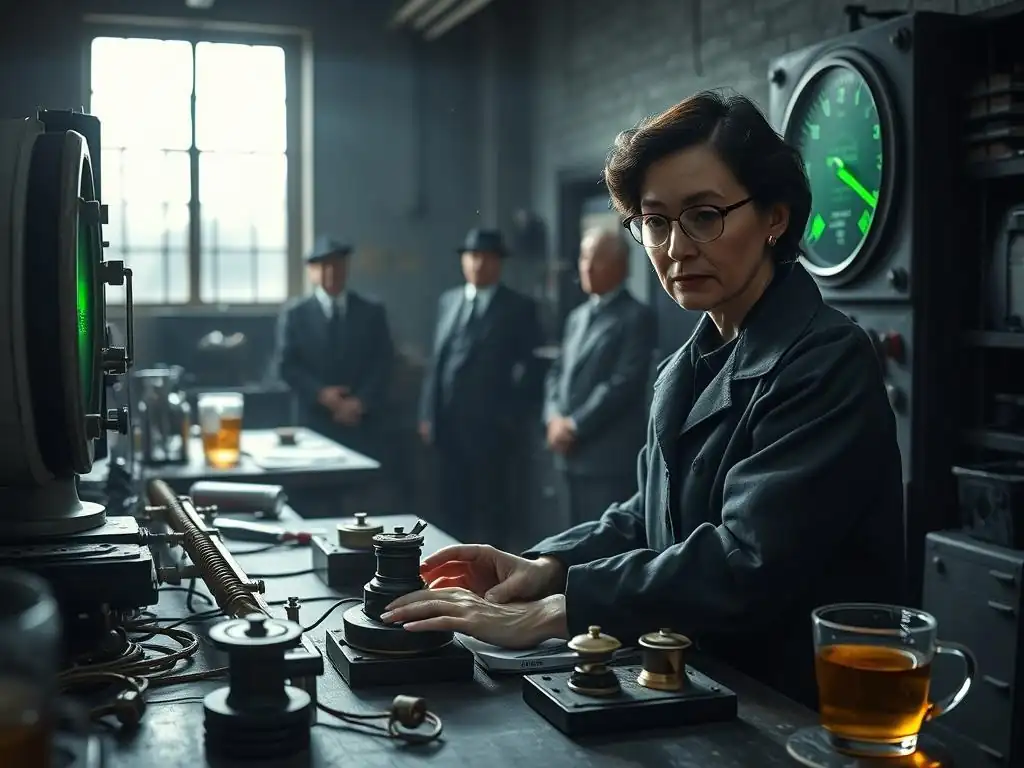
Dive into the compelling story of Chien-Shiung Wu, the " First Lady of Physics," and uncover the struggles she faced in gaining the recognition she deserved. This lesson explores the often-overlooked contributions of this brilliant scientist and prompts a crucial question: why were her groundbreaking achievements not fully celebrated? Prepare to explore the challenges and triumphs of a remarkable woman in science, and consider what we can learn from the battles for Chien-Shiung Wu recognition struggles.
- Chien-Shiung Wu: Unveiling Parity Violation and Overcoming Gender Bias in Physics (HS Lesson)
- Introduction: Exploring Chien-Shiung Wu's Scientific Breakthroughs and the Fight for Recognition
- Lesson Plan: Investigating the Wu Experiment and the Complexities of Recognition
- Activity 1: Introducing Chien-Shiung Wu - A Pioneer in Experimental Physics
- Activity 2: Deconstructing the Wu Experiment - Unveiling Parity Violation
-
Activity 3: Examining the Recognition of Wu's Work: Gender Bias in Scientific Awards
- Primary Source Analysis: Examining the 1957 Nobel Prize Announcement and Reactions to Wu's Exclusion
- Discussion: Analyzing the Roles of Collaboration, Publication Practices, and Gender in Nobel Recognition
- Connecting to Modern Issues: Examining Current Initiatives Promoting Diversity and Inclusion in STEM
- Activity 4: Project-Based Learning: Student Research on the Applications of Parity Violation
- Activity 5: Critical Thinking and Debate: "Was Wu's Exclusion from the Nobel Prize Justified?"
-
Assessment: Gauging Student Understanding of Parity Violation and the Recognition Process
- Quiz Questions: Assessing Knowledge of the Wu Experiment, Parity Violation, and Nobel Prize Criteria
- Essay Prompt: Analyzing the Factors Contributing to Chien-Shiung Wu's Exclusion from the 1957 Nobel Prize
- Project Evaluation: Assessing the Depth of Research, Clarity of Presentation, and Critical Analysis
- Resources for Educators: Expanding Knowledge of Parity Violation and Women in Physics
- Conclusion: Celebrating Chien-Shiung Wu's Scientific Legacy and Advocating for Equity
-
Frequently Asked Questions
- What is the primary focus of WomenInScienceHistory.com?
- Why is Chien-Shiung Wu a significant figure in science history?
- What were some of the "ChienShiung Wu recognition struggles" she faced?
- What challenges did women in science, like Chien-Shiung Wu, typically encounter in the past?
- How does WomenInScienceHistory.com aim to address the historical underrepresentation of women in science?
- Final Reflection: Illuminating Wu's Enduring Legacy
- Unleash Your Inner Wu: Champion Science!
Chien-Shiung Wu: Unveiling Parity Violation and Overcoming Gender Bias in Physics (HS Lesson)
Introduction: Exploring Chien-Shiung Wu's Scientific Breakthroughs and the Fight for Recognition
Why Teach About Chien-Shiung Wu's Contributions and Challenges?
Teaching about Chien-Shiung Wu offers a unique opportunity to explore not only a pivotal moment in modern physics but also the systemic barriers faced by women in science. Her groundbreaking experiment in 1956, which definitively disproved the conservation of parity in weak interactions, revolutionized particle physics and fundamentally reshaped our understanding of the universe's fundamental symmetries. This discovery was so profound that it earned her theoretical colleagues, Tsung-Dao Lee and Chen-Ning Yang, the Nobel Prize in Physics in 1957, yet Wu herself was famously overlooked, highlighting significant ChienShiung Wu recognition struggles.
Beyond the scientific breakthrough, Wu's story serves as a powerful narrative of resilience, intellectual rigor, and the persistent issue of gender bias in academia. Students can learn about the meticulous experimental design required for such a discovery, the challenges of working with cryogenic temperatures (around 0.006 Kelvin) and strong magnetic fields, and the broader context of scientific collaboration and recognition. Her life illustrates how even the most undeniable scientific contributions can be overshadowed by societal prejudices, making her ChienShiung Wu recognition struggles a crucial historical case study.
Connecting Wu's Story to Broader Themes of Scientific Discovery and Gender Inequality
Chien-Shiung Wu's journey from a brilliant student in China to a leading experimental physicist in the United States encapsulates the universal pursuit of scientific knowledge. Her work on the Manhattan Project, where she contributed to the development of radiation detection, showcased her early technical prowess and dedication. The parity violation experiment itself is a testament to the scientific method: a theoretical prediction, followed by rigorous experimental verification that either confirms or refutes it, leading to a paradigm shift.
However, Wu's story also powerfully illustrates the historical and ongoing gender inequality within scientific fields. The widespread ChienShiung Wu recognition struggles and her exclusion from the Nobel Prize, despite her indispensable role, reflect a pervasive pattern often referred to as the "Matilda effect," where the achievements of women in science are systematically overlooked or attributed to male colleagues. By examining her experiences, students can critically analyze how societal biases impact scientific careers, award processes, and the overall landscape of STEM, fostering a deeper understanding of the need for equitable recognition for all scientists.
Lesson Plan: Investigating the Wu Experiment and the Complexities of Recognition
Objective: Analyzing Wu's Experimental Design, Results, and the Societal Context of Her Achievements
The primary objective of this lesson plan is for students to develop a comprehensive understanding of Chien-Shiung Wu's pioneering work, specifically her 1956 experiment that demonstrated parity violation. Students will delve into the intricate experimental setup, including the use of super-cooled Cobalt-60 and precisely aligned magnetic fields, to grasp the scientific principles behind her groundbreaking discovery. They will be able to articulate what parity symmetry is and how its violation in weak interactions fundamentally altered the landscape of particle physics, moving beyond the initial ChienShiung Wu recognition struggles.
Furthermore, a crucial objective is to analyze the societal context surrounding Wu's achievements and the subsequent ChienShiung Wu recognition struggles. Students will critically examine the circumstances of the 1957 Nobel Prize in Physics, discussing the roles of collaboration, publication practices, and pervasive gender bias in scientific awards. This analysis aims to foster an understanding of how historical and systemic issues can impact the recognition of scientific contributions, particularly for women in STEM, providing a nuanced perspective beyond mere scientific facts.
Target Audience: High School Physics Students (Grades 11-12)
This lesson plan is specifically designed for high school physics students in Grades 11-12, who typically possess foundational knowledge in atomic structure, nuclear physics basics, and fundamental forces. The concepts of symmetry, weak interactions, and quantum mechanics will be introduced at an accessible level, building upon their existing understanding of physics principles. The narrative of Chien-Shiung Wu's life and her scientific journey, including the ChienShiung Wu recognition struggles, provides a compelling human element that can enhance engagement and make complex physics concepts more relatable.
The curriculum is structured to challenge students to think critically about both scientific methodology and societal issues. By engaging with primary sources, participating in debates, and conducting independent research, students will develop higher-order thinking skills essential for advanced scientific study. The discussion of ChienShiung Wu recognition struggles and gender bias also aligns with broader educational goals of promoting critical awareness of social justice and equity within academic disciplines, preparing students for future roles as informed citizens and potential scientists.
Time Allotment: 3 Class Periods (Approximately 50 Minutes Each)
This lesson plan is designed to be implemented over three dedicated class periods, each lasting approximately 50 minutes, allowing for sufficient depth in exploring both the scientific and societal aspects of Chien-Shiung Wu's work. The first period will focus on introducing Wu's biography and the conceptual background of parity, setting the stage for the complexity of her experiment and the subsequent ChienShiung Wu recognition struggles. This initial session will include a video resource to aid conceptual understanding.
The second period will delve into the intricate details of the Wu experiment, meticulously explaining the setup and results, followed by a critical examination of the ChienShiung Wu recognition struggles in the context of the 1957 Nobel Prize. The final period will be dedicated to project-based learning, allowing students to research the broader implications of parity violation, and a structured debate on the justification of Wu's Nobel exclusion. This structure ensures a comprehensive exploration, balancing theoretical understanding with historical analysis and student-led inquiry.
Activity 1: Introducing Chien-Shiung Wu - A Pioneer in Experimental Physics
Presenting Wu's Biography: From Shanghai to the Manhattan Project and Beyond
Chien-Shiung Wu's remarkable life began in Liuhe, China, in 1912, where she received an exceptional education, fostered by her progressive father who founded a girls' school. She excelled academically, graduating from National Central University in Nanjing in 1934 with a degree in physics. Her ambition led her to pursue graduate studies in the United States, arriving in 1936 to enroll at the University of California, Berkeley, where she earned her Ph.D. in 1940 under the guidance of Ernest Lawrence, a Nobel laureate.
During World War II, Wu joined the Manhattan Project, working at Columbia University on the gaseous diffusion process for uranium enrichment, specifically focusing on the detection of radiation and the separation of uranium isotopes. Her expertise in experimental beta decay and nuclear physics was already well-established. After the war, she continued her research at Columbia, meticulously building the complex experimental apparatus that would lead to her most celebrated discovery, which, despite its profound impact, would also lead to significant ChienShiung Wu recognition struggles.
Key Achievements: Highlighting the Wu Experiment and its Impact on the Standard Model
Chien-Shiung Wu's most monumental achievement was her 1956 experiment that definitively disproved the conservation of parity in weak nuclear interactions. Until then, parity conservation, which states that a physical system behaves identically to its mirror image, was considered a fundamental law of physics. Wu's experiment, conducted with colleagues at the National Bureau of Standards, involved cooling Cobalt-60 nuclei to extremely low temperatures (a few thousandths of a degree above absolute zero) and aligning their spins using a strong magnetic field.
When the Cobalt-60 nuclei underwent beta decay, Wu observed that more electrons were emitted in the direction opposite to the nuclei's spin than in the same direction. This asymmetry provided conclusive evidence that parity was violated in weak interactions, a finding that stunned the physics community. This discovery fundamentally reshaped the Standard Model of particle physics, opening new avenues for understanding the fundamental forces and particles that govern the universe. Despite the immediate and profound impact of her work, Wu’s ChienShiung Wu recognition struggles became a notable part of physics history.
Video Resource: "The Elegant Universe: Einstein's Dream" (Nova Documentary Excerpt on Parity)
To effectively introduce the abstract concept of parity and its violation, an excerpt from the Nova documentary "The Elegant Universe: Einstein's Dream" can serve as an invaluable visual resource. This documentary, based on Brian Greene's book, provides clear and engaging explanations of complex physics theories, including symmetry principles. The relevant segment will likely focus on illustrating what parity symmetry means in a physical context, perhaps using analogies of mirror images and how certain phenomena might appear different when viewed through a mirror.
Viewing this excerpt will help students build a foundational conceptual understanding of symmetry before delving into the specifics of the Wu experiment. It can provide a visual context for how physicists think about fundamental laws and why the idea of parity violation was so revolutionary. This preliminary understanding will be crucial for appreciating the magnitude of Chien-Shiung Wu's discovery and the subsequent ChienShiung Wu recognition struggles that arose from its confirmation.
Activity 2: Deconstructing the Wu Experiment - Unveiling Parity Violation
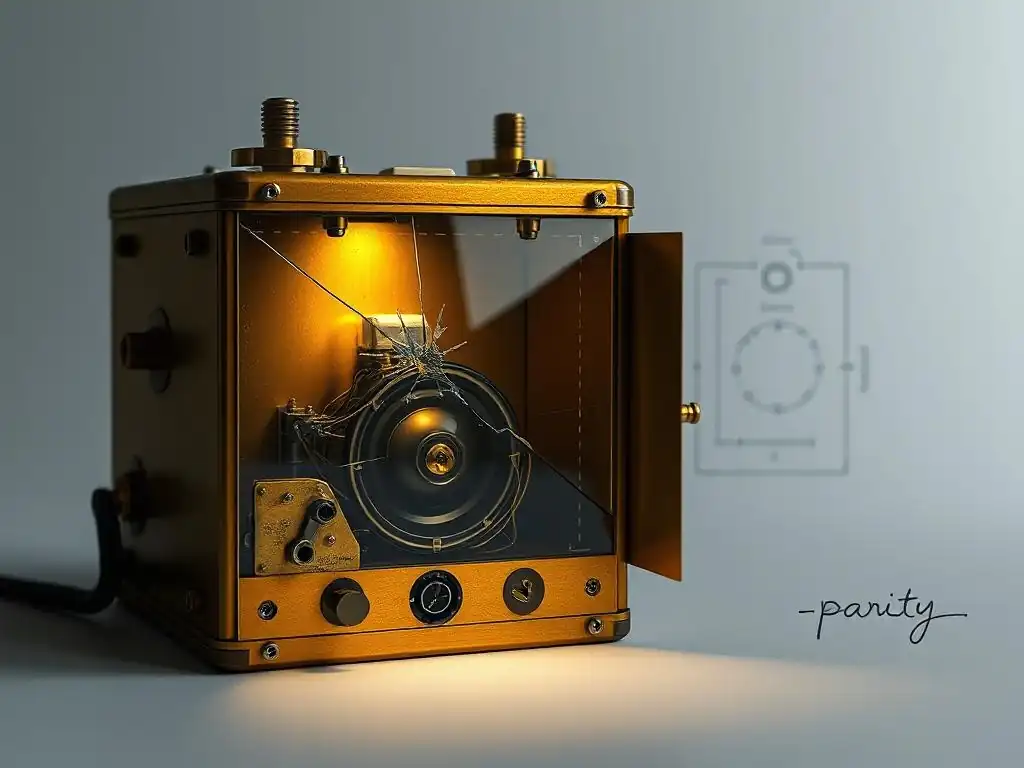
Explaining Parity Violation: A Clear Explanation of Symmetry and Its Breakdown in Weak Interactions
Parity can be understood as a type of symmetry that relates a physical process to its mirror image. Imagine a physical event, such as a ball rolling down a ramp. If you were to watch this event in a mirror, the reflected event would still appear to obey the same laws of physics. For decades, physicists believed that all fundamental forces of nature—gravity, electromagnetism, and the strong and weak nuclear forces—conserved parity. This meant that the mirror image of any physical process would also be a perfectly valid physical process.
However, in 1956, theoretical physicists Tsung-Dao Lee and Chen-Ning Yang questioned this assumption for the weak nuclear force, which governs processes like radioactive beta decay. They proposed that parity might not be conserved in these interactions. Chien-Shiung Wu's experiment provided the definitive proof. Her results showed that the weak force indeed "prefers" a certain handedness, meaning it distinguishes between left and right, thus breaking the mirror symmetry. This groundbreaking revelation fundamentally altered a core tenet of physics, underscoring the significance of her work and the subsequent ChienShiung Wu recognition struggles.
The Wu Experiment Setup: Using Diagrams and Explanations of Cryogenics and Magnetic Alignment
The Wu experiment was a marvel of experimental precision and engineering, requiring extreme conditions to achieve its results. The core setup involved a sample of Cobalt-60, a radioactive isotope that undergoes beta decay, emitting electrons. To observe parity violation, the Cobalt-60 nuclei needed to be aligned, meaning their nuclear spins had to point in a specific direction. This was achieved by cooling the Cobalt-60 to incredibly low temperatures—a mere 0.006 Kelvin (or -273.144 degrees Celsius), just above absolute zero—within a cryostat, and then placing it in a strong uniform magnetic field.
As the Cobalt-60 nuclei decayed, Wu and her team meticulously measured the direction of the emitted electrons relative to the direction of the nuclei's spin. If parity were conserved, electrons should be emitted equally in both directions (with and against the spin). However, the experiment revealed a clear asymmetry: more electrons were emitted in the direction opposite to the nuclear spin. This definitive directional preference provided the undeniable evidence of parity violation. The complexity and ingenuity of this setup highlight Wu's extraordinary skill as an experimentalist, making her ChienShiung Wu recognition struggles even more poignant.
Recommended Resource: Ptable.com (Interactive Periodic Table with Isotope Information)
To enhance understanding of the specific elements and isotopes involved in the Wu experiment, Ptable.com serves as an excellent interactive resource. Students can navigate to Cobalt (Co) on the periodic table and explore its various isotopes, specifically focusing on Cobalt-60. The website provides valuable information such as its atomic number (27), atomic mass, and common decay modes. For Cobalt-60, students can find details about its beta decay process, its half-life of approximately 5.27 years, and the energy of the emitted beta particles.
Exploring Ptable.com allows students to visualize the characteristics of the radioactive source used in the experiment and understand why Cobalt-60 was chosen for its specific decay properties. It provides a tangible connection between the abstract concept of nuclear decay and the real-world experimental setup. This resource can help solidify students' knowledge of nuclear physics fundamentals, providing essential context for appreciating the scientific rigor behind the Wu experiment and the subsequent impact of her ChienShiung Wu recognition struggles.
Activity 3: Examining the Recognition of Wu's Work: Gender Bias in Scientific Awards
Primary Source Analysis: Examining the 1957 Nobel Prize Announcement and Reactions to Wu's Exclusion
The 1957 Nobel Prize in Physics was awarded to Tsung-Dao Lee and Chen-Ning Yang "for their penetrating investigation of the so-called parity laws, which has led to important discoveries regarding the elementary particles." While their theoretical prediction was brilliant, it was Chien-Shiung Wu's meticulous and groundbreaking experiment that provided the undeniable empirical proof. The Nobel announcement itself, and the subsequent scientific discourse, conspicuously omitted Wu's name, leading to widespread surprise and disappointment within the physics community. Many colleagues and scientists openly questioned why the experimentalist who had confirmed the theory, arguably the more challenging part, was not included.
For instance, physicist Richard Feynman, a Nobel laureate himself, reportedly remarked on the injustice of Wu's exclusion. The very nature of the Nobel Prize, which often favors theoretical breakthroughs over experimental confirmation, came under scrutiny, especially in this context. Analyzing contemporary newspaper articles, scientific journal editorials, and personal accounts from that period can reveal the immediate reactions and the nascent recognition of ChienShiung Wu recognition struggles, even if the deeper systemic issues of gender bias were not fully articulated at the time.
Discussion: Analyzing the Roles of Collaboration, Publication Practices, and Gender in Nobel Recognition
The exclusion of Chien-Shiung Wu from the 1957 Nobel Prize highlights complex dynamics within scientific recognition. While Lee and Yang's theoretical work was pivotal, Wu's experiment was not merely a confirmation; it was a technically demanding and innovative feat that required years of preparation and execution. Discussions should focus on the nature of scientific collaboration, where credit can often be unevenly distributed, sometimes favoring theorists over experimentalists, or senior figures over junior researchers.
Moreover, the historical context of publication practices and the prevailing gender bias played a significant role. Women in science, like Lise Meitner (who discovered nuclear fission but was overlooked for the Nobel Prize awarded to Otto Hahn) or Rosalind Franklin (whose X-ray diffraction images were crucial for the discovery of DNA's structure but who died before the Nobel was awarded to Watson, Crick, and Wilkins), frequently faced similar ChienShiung Wu recognition struggles. This historical pattern suggests that societal norms and biases often influenced who received credit and prestigious awards, rather than solely objective scientific merit.
Connecting to Modern Issues: Examining Current Initiatives Promoting Diversity and Inclusion in STEM
While the 1957 Nobel Prize decision remains a historical injustice, Chien-Shiung Wu's story has spurred ongoing efforts to address diversity and inclusion in STEM. Today, numerous organizations and initiatives are actively working to promote equitable recognition and opportunities for women and underrepresented groups in science. For example, the American Physical Society's Committee on the Status of Women in Physics (CSWP) advocates for women physicists and provides resources to combat gender bias.
Globally, organizations like UNESCO's "Women in Science" program highlight the achievements of female scientists and work to dismantle systemic barriers. Many scientific institutions now implement blind review processes for grants and awards, conduct unconscious bias training, and establish mentorship programs specifically for women and minorities. These modern initiatives aim to prevent future ChienShiung Wu recognition struggles by fostering a more inclusive and equitable scientific environment, ensuring that contributions are recognized based on merit, regardless of gender or background.
Activity 4: Project-Based Learning: Student Research on the Applications of Parity Violation
Research Assignment: Students Investigate Applications of Parity Violation in Particle Physics and Cosmology
Students will embark on a research assignment to explore the profound implications and applications of parity violation, a discovery stemming from Chien-Shiung Wu's experiment. They should investigate how this fundamental principle is crucial in understanding various phenomena in particle physics and cosmology. Examples of research topics include the role of parity violation in beta decay, the properties of neutrinos (which are inherently "left-handed" or "right-handed"), and the search for new particles and forces beyond the Standard Model.
Furthermore, students can delve into the cosmic implications, such as the matter-antimatter asymmetry in the universe. The Big Bang should have produced equal amounts of matter and antimatter, but our universe is overwhelmingly composed of matter. Parity violation, alongside other CP (charge-parity) violations, is a key ingredient in explaining this cosmic imbalance, as theorized by Andrei Sakharov in his conditions for baryogenesis. This research will highlight the enduring legacy of Wu's discovery, despite her initial ChienShiung Wu recognition struggles.
Recommended Resources: CERN Document Server, arXiv.org, INSPIRE-HEP
To conduct their research, students should be guided to reputable scientific databases and preprint servers. The CERN Document Server (CDS) offers access to a vast collection of publications, preprints, and experimental data from the European Organization for Nuclear Research, providing insights into cutting-edge particle physics research. arXiv.org is an open-access repository for preprints in physics, mathematics, computer science, and other fields, allowing students to access the latest research findings before formal peer review.
INSPIRE-HEP (High Energy Physics) is a comprehensive database for particle physics literature, indexing millions of articles, preprints, and conference proceedings. These resources provide access to primary and secondary scientific literature, allowing students to delve into the technical details of parity violation's applications. By utilizing these platforms, students will learn to navigate professional scientific databases, a crucial skill for future academic pursuits and for understanding the depth of research that followed the initial ChienShiung Wu recognition struggles.
Presentation Guidelines: Emphasizing the Scientific Significance and Potential Impact of Research
For the project presentation, students should be guided to emphasize both the scientific significance and the potential impact of their chosen application of parity violation. Presentations should clearly explain the physics concepts involved, using diagrams, analogies, or simplified models where appropriate, to convey complex ideas to their peers. They should articulate why their chosen application is important to the field of physics or cosmology and how it builds upon the foundational discovery made by Chien-Shiung Wu.
Students should also consider the broader implications of their research, such as how understanding parity violation contributes to our knowledge of the universe's origins, the search for new physics, or even potential technological advancements. The presentations should be structured logically, include a bibliography of sources, and demonstrate a clear understanding of the scientific content. This activity reinforces the idea that scientific discoveries, even those accompanied by ChienShiung Wu recognition struggles, have far-reaching and often unforeseen consequences that continue to shape our understanding of reality.
Activity 5: Critical Thinking and Debate: "Was Wu's Exclusion from the Nobel Prize Justified?"
Presenting Arguments Based on Scientific Merit, Collaboration Dynamics, and Societal Context
The debate on whether Chien-Shiung Wu's exclusion from the 1957 Nobel Prize was justified requires students to synthesize information from all previous activities, considering scientific merit, collaboration dynamics, and the societal context of the time. Arguments for her inclusion often center on her indispensable experimental proof: the Nobel Prize was awarded for the confirmation of parity violation, and Wu's experiment was the definitive confirmation. Her meticulous experimental design and execution were unparalleled, transforming a theoretical prediction into an established scientific fact.
Conversely, arguments sometimes made for her exclusion might refer to the Nobel Committee's historical tendency to award theoretical predictions, or the perception that experimental work is secondary to theoretical insight. However, these counter-arguments often fall short when considering the profound technical challenges and the direct impact of Wu's work on the prize's subject matter. The debate should highlight how the ChienShiung Wu recognition struggles exemplify the complex interplay between individual brilliance, collaborative science, and the prevailing societal norms that influenced recognition.
Structured Debate: Encouraging Evidence-Based Reasoning and Respectful Discussion
To facilitate a productive and insightful discussion, the activity should be structured as a formal debate. Students can be divided into teams, one arguing for the justification of Wu's exclusion (from a historical context perspective, even if flawed) and another arguing against it, emphasizing the injustice. Each team should prepare opening statements, rebuttals, and closing arguments, drawing upon specific facts from Wu's biography, details of the experiment, and historical information about the Nobel Prize and gender bias in science.
A moderator should ensure that the debate remains focused on evidence-based reasoning and that all participants engage in respectful discussion, even when presenting opposing viewpoints. This format encourages critical thinking, public speaking skills, and the ability to construct persuasive arguments based on factual information. The debate will allow students to grapple with the complexities of historical injustices and the enduring legacy of ChienShiung Wu recognition struggles.
Evaluating the Impact: Discussing the Long-Term Effects of Wu's Exclusion on Women in Physics
Beyond the immediate injustice to Chien-Shiung Wu, a crucial part of this activity is to discuss the long-term effects of her exclusion on women in physics and science as a whole. Wu's omission contributed to the "Matilda effect," where the achievements of women scientists are systematically underrecognized or misattributed. This historical pattern can create a discouraging environment for aspiring female scientists, perpetuating the myth that women are less capable or less significant contributors to groundbreaking research.
The discussion should explore how such exclusions can impact the visibility of women in STEM, potentially leading to fewer role models and a less diverse scientific workforce. However, it's also important to acknowledge that despite the ChienShiung Wu recognition struggles, her story has become a powerful symbol of advocacy for equity in science. Her legacy now serves as a reminder of the importance of recognizing all contributions, inspiring new generations to challenge biases and work towards a more inclusive scientific community where talent and dedication are universally celebrated.
Assessment: Gauging Student Understanding of Parity Violation and the Recognition Process
Quiz Questions: Assessing Knowledge of the Wu Experiment, Parity Violation, and Nobel Prize Criteria
To assess student understanding of the scientific content, a short quiz can be administered. Questions should cover key aspects of the Wu experiment, such as the specific isotope used (Cobalt-60), the extreme temperatures required (0.006 Kelvin), and the observed asymmetry in electron emission. Questions on parity violation should assess their ability to define it, explain its breakdown in weak interactions, and identify its significance in particle physics.
Additionally, the quiz should include questions related to the Nobel Prize criteria, the year of the 1957 award, and the names of the theoretical physicists who received it. This will gauge their factual recall of the historical context surrounding the ChienShiung Wu recognition struggles. Example questions could include: "What was the primary observation made in the Wu experiment that demonstrated parity violation?" or "Briefly explain why the conservation of parity was considered a fundamental law before Wu's experiment."
Essay Prompt: Analyzing the Factors Contributing to Chien-Shiung Wu's Exclusion from the 1957 Nobel Prize
A comprehensive essay prompt will allow students to synthesize their learning and demonstrate critical analytical skills. The prompt could be: "Analyze the various factors that contributed to Chien-Shiung Wu's exclusion from the 1957 Nobel Prize in Physics, despite her indispensable experimental confirmation of parity violation. Your essay should discuss the scientific merit of her work, the dynamics of scientific collaboration, and the broader societal context of gender bias in science during that era."
This essay requires students to move beyond simple recall, demanding a nuanced argument supported by evidence gathered throughout the lesson. It directly addresses the core of the ChienShiung Wu recognition struggles, encouraging students to explore the interplay of scientific contribution and historical injustice. Evaluation will focus on the clarity of their thesis, the coherence of their arguments, their use of specific examples, and their ability to critically analyze complex historical and societal factors.
Project Evaluation: Assessing the Depth of Research, Clarity of Presentation, and Critical Analysis
The project-based learning activity (Activity 4) will be assessed using a rubric that evaluates the depth of research, clarity of presentation, and critical analysis. For research, the rubric will consider the breadth of sources used (e.g., whether they accessed academic databases like CERN Document Server or arXiv.org), the accuracy of the scientific information presented, and the relevance of their chosen application of parity violation.
For clarity of presentation, the rubric will assess how well students communicate complex physics concepts to their peers, the organization of their presentation, and the effective use of visual aids. Finally, critical analysis will be evaluated based on their ability to connect their research back to the foundational discovery by Chien-Shiung Wu and its broader implications, demonstrating an understanding of the enduring significance of her work despite the ChienShiung Wu recognition struggles. This multifaceted assessment ensures that students are evaluated on both their scientific comprehension and their ability to engage with the historical and societal dimensions of the topic.
Resources for Educators: Expanding Knowledge of Parity Violation and Women in Physics
Books: "Madame Wu Chien-Shiung: The First Lady of Physics Research" by Chiang Tsai-Chien
For educators seeking a deeper understanding of Chien-Shiung Wu's life and scientific contributions, "Madame Wu Chien-Shiung: The First Lady of Physics Research" by Chiang Tsai-Chien is an invaluable resource. This biography offers a detailed and intimate account of Wu's journey from her childhood in China to her groundbreaking work in nuclear physics in the United States. It meticulously chronicles her experimental genius, her perseverance in a male-dominated field, and the scientific context of her most famous discovery.
The book provides rich insights into the technical challenges of the parity violation experiment and the intellectual environment at Columbia University and the National Bureau of Standards. Crucially, it also delves into the personal and professional challenges Wu faced, shedding light on the systemic ChienShiung Wu recognition struggles that plagued her career and the careers of many women scientists of her era. This text can serve as a primary source for educators to enrich their lesson content and provide a more nuanced narrative to students.
Websites: American Physical Society Committee on the Status of Women in Physics (CSWP)
The American Physical Society's Committee on the Status of Women in Physics (CSWP) is an essential online resource for educators and students interested in promoting gender equity in physics. The CSWP website provides valuable data, reports, and articles on the representation of women in physics at various career stages, from undergraduate studies to senior faculty positions. It offers insights into the challenges women face, such as unconscious bias, lack of mentorship, and issues related to work-life balance.
Educators can find resources on best practices for fostering inclusive environments, guidelines for addressing gender bias in classrooms and research settings, and information on various awards and programs designed to support women in physics. By exploring the CSWP website, educators can gain a contemporary perspective on the issues of recognition and equity that continue to be relevant, drawing parallels to the historical ChienShiung Wu recognition struggles and providing a foundation for discussing ongoing advocacy efforts.
Lesson Plans: Physics Teaching Resources (AAPT) on Particle Physics and Nuclear Physics
The American Association of Physics Teachers (AAPT) offers a wealth of lesson plans and teaching resources that can complement this unit on Chien-Shiung Wu. Their website provides peer-reviewed materials on various topics in physics, including particle physics and nuclear physics, which are directly relevant to the Wu experiment. These resources often include detailed explanations of complex concepts, hands-on activities, and discussion prompts that can be adapted for high school classrooms.
Educators can find materials that delve deeper into the Standard Model, the four fundamental forces, and specific nuclear decay processes, providing a broader scientific context for understanding parity violation. These supplementary lesson plans can help reinforce the core physics principles, allowing students to build a more robust understanding of the scientific content. Integrating these resources can enhance the overall learning experience, ensuring that the scientific significance of Wu's work is fully appreciated alongside the discussion of her ChienShiung Wu recognition struggles.
Conclusion: Celebrating Chien-Shiung Wu's Scientific Legacy and Advocating for Equity
Reinforcing the Importance of Recognizing Contributions from All Scientists
Chien-Shiung Wu's profound scientific legacy serves as a powerful reminder of the imperative to recognize contributions from all scientists, regardless of gender, race, or background. Her experiment, which definitively disproved a fundamental law of physics, was a monumental achievement that reshaped our understanding of the universe. The fact that her indispensable work was initially overlooked for the Nobel Prize underscores a historical bias that has systematically diminished the achievements of women in science.
By highlighting Wu's story, we reinforce the principle that scientific progress is a collective human endeavor, built upon the diverse insights and rigorous work of countless individuals. Acknowledging and celebrating every significant contribution fosters a more accurate and inclusive historical narrative of science. It sends a clear message that scientific merit should be the sole criterion for recognition, ensuring that future generations of groundbreaking scientists do not face similar ChienShiung Wu recognition struggles.
Inspiring Future Generations to Pursue Careers in Physics and STEM Fields
The narrative of Chien-Shiung Wu is not just a historical account of injustice; it is a profound source of inspiration. Her unwavering dedication to experimental precision, her intellectual courage in challenging established theories, and her sheer resilience in the face of adversity provide an exceptional role model for aspiring scientists. For young women, in particular, seeing how Wu navigated and excelled in a male-dominated field can ignite a passion for physics and other STEM disciplines.
Her story demonstrates that profound impact can be achieved through rigorous scientific inquiry and persistent effort. By studying her life and work, students can envision themselves as future innovators and problem-solvers, contributing to the ongoing quest for scientific understanding. The ChienShiung Wu recognition struggles serve as a testament to her strength and the enduring power of scientific truth, motivating students to pursue their intellectual curiosities and make their own marks on the world.
Call to Action: Encouraging Students to Advocate for Fair Recognition and Equal Opportunities in Science
The lesson on Chien-Shiung Wu culminates in a powerful call to action, empowering students to become active advocates for fair recognition and equal opportunities in science. Understanding Wu's ChienShiung Wu recognition struggles should not merely be an academic exercise but a catalyst for change. Students can be encouraged to critically evaluate how scientific contributions are recognized in contemporary contexts, questioning biases and championing equitable practices.
This advocacy can take many forms: supporting organizations that promote women and underrepresented groups in STEM, speaking out against gender bias in their own communities, or simply being aware of and challenging stereotypes about who can be a scientist. By actively engaging with these issues, students can contribute to building a more inclusive and just scientific community where the brilliance of individuals like Chien-Shiung Wu is celebrated without reservation, and where every scientist receives the recognition they rightfully deserve.
Frequently Asked Questions
What is the primary focus of WomenInScienceHistory.com?
The site focuses on celebrating the contributions of women in various scientific fields throughout history, highlighting their biographies and groundbreaking work. It aims to inspire future generations by shedding light on often overlooked narratives.
Why is Chien-Shiung Wu a significant figure in science history?
Chien-Shiung Wu was a pioneering physicist known for her groundbreaking experimental work in nuclear physics, particularly her experiment that disproved the law of parity conservation. She is often called the "First Lady of Physics".
What were some of the "ChienShiung Wu recognition struggles" she faced?
Despite her crucial role in the Wu experiment, her male colleagues received the Nobel Prize while she was notably excluded. This fueled discussions about gender bias in scientific recognition.
What challenges did women in science, like Chien-Shiung Wu, typically encounter in the past?
Women in science often faced discrimination and limited opportunities in male-dominated fields. These included biases in funding, recognition, and access to positions of authority, reflecting systemic sexism.
How does WomenInScienceHistory.com aim to address the historical underrepresentation of women in science?
The website actively works to highlight the achievements of female scientists, providing a platform for their stories and contributions to be widely recognized. This effort aims to rectify historical omissions and promote inclusivity in science.
Final Reflection: Illuminating Wu's Enduring Legacy
The story of Chien-Shiung Wu, a brilliant physicist whose contributions were often overshadowed, resonates powerfully today. Her struggle for recognition in a male-dominated field serves as a stark reminder of the systemic biases that continue to hinder the progress of women and minorities in STEM. Understanding her journey is not just about acknowledging past injustices; it's about actively dismantling the barriers that still exist.
This narrative of perseverance against adversity has profoundly shaped my understanding of scientific history and its ongoing impact on the cultural landscape. It underscores the vital importance of actively seeking out and celebrating the contributions of those whose voices have been historically marginalized. I wonder whether the tiny atoms and particles, obeying the quantum laws, have their own will?
- Chien-Shiung Wu. This quote, reflecting her deep curiosity and unwavering dedication to understanding the universe, should inspire us to question the established narratives and seek a more complete and equitable understanding of scientific progress.
As we reflect on Chien-Shiung Wu's extraordinary life and career, let us commit to fostering a more inclusive and equitable scientific community. Consider how you can actively champion the voices of underrepresented individuals in your own sphere of influence, ensuring that their contributions are not only recognized but celebrated. Let Wu's story be a catalyst for change, inspiring us all to build a future where brilliance is valued regardless of gender, race, or background.
Unleash Your Inner Wu: Champion Science!
Thank you for diving into the inspiring story of Chien-Shiung Wu! Now that you’ve uncovered her groundbreaking contributions, it’s time to channel that knowledge into action and celebrate her legacy.
Here's how you can get involved:
- Become a champion for science education: Nominate a passionate science teacher for an award that recognizes their dedication.
- Share Wu's story: Spread awareness by sharing this article with your friends, family, or students, inspiring them with Wu's resilience and brilliance.
- Delve deeper: Explore other unsung heroes of science on WomenInScienceHistory.com and uncover more hidden figures.
What steps will you take today to ensure that pioneers like Chien-Shiung Wu finally get the recognition they deserve?